Want more images or videos?
Request additional images or videos from the seller
1 of 5

Murat Brierre
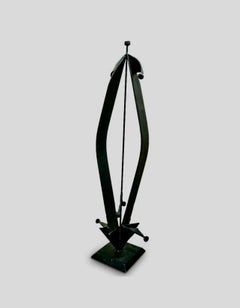
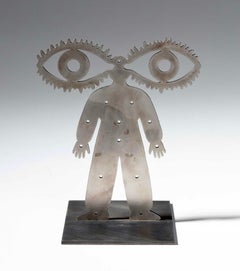
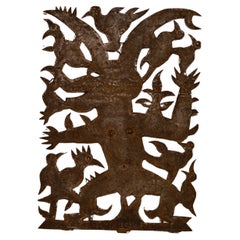
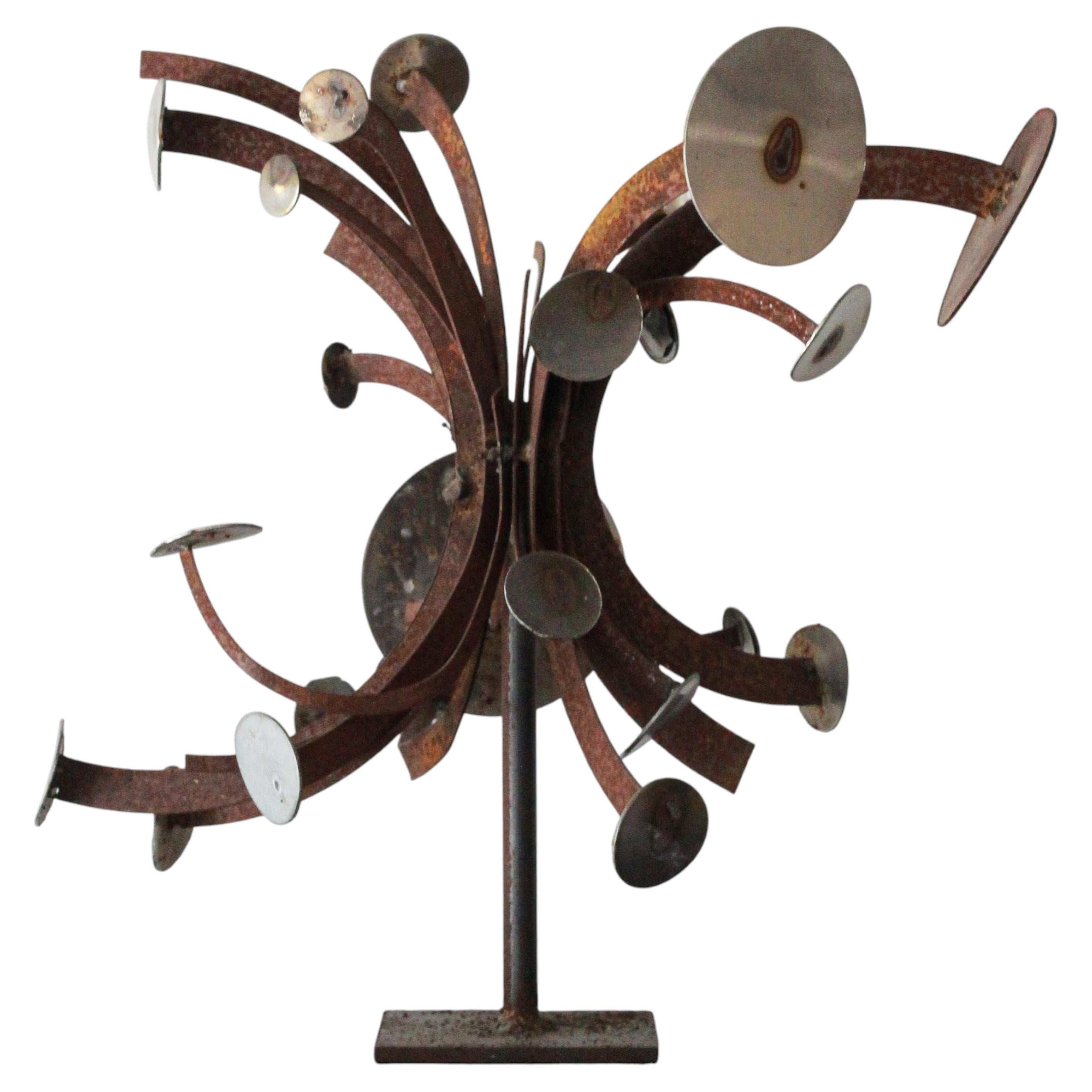
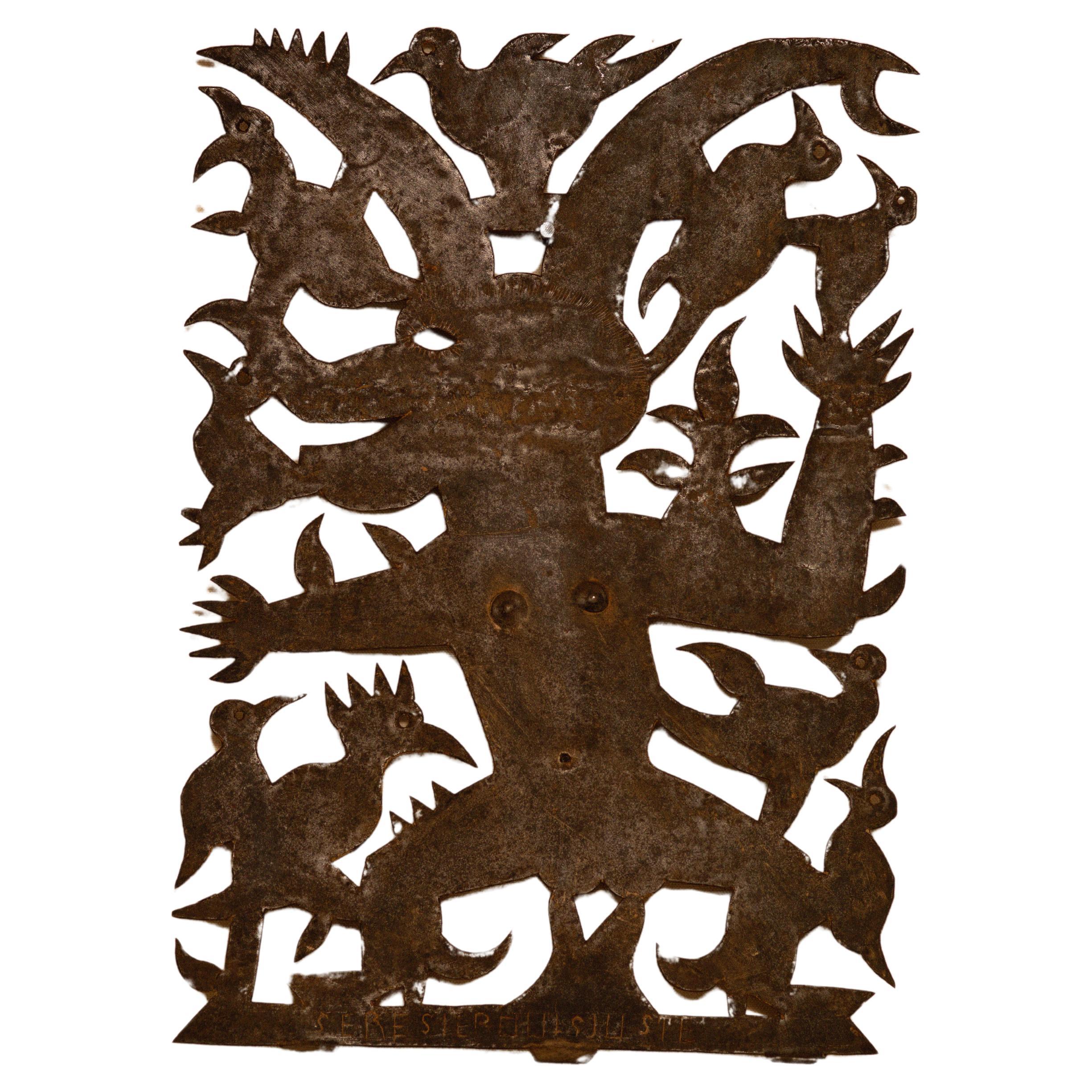
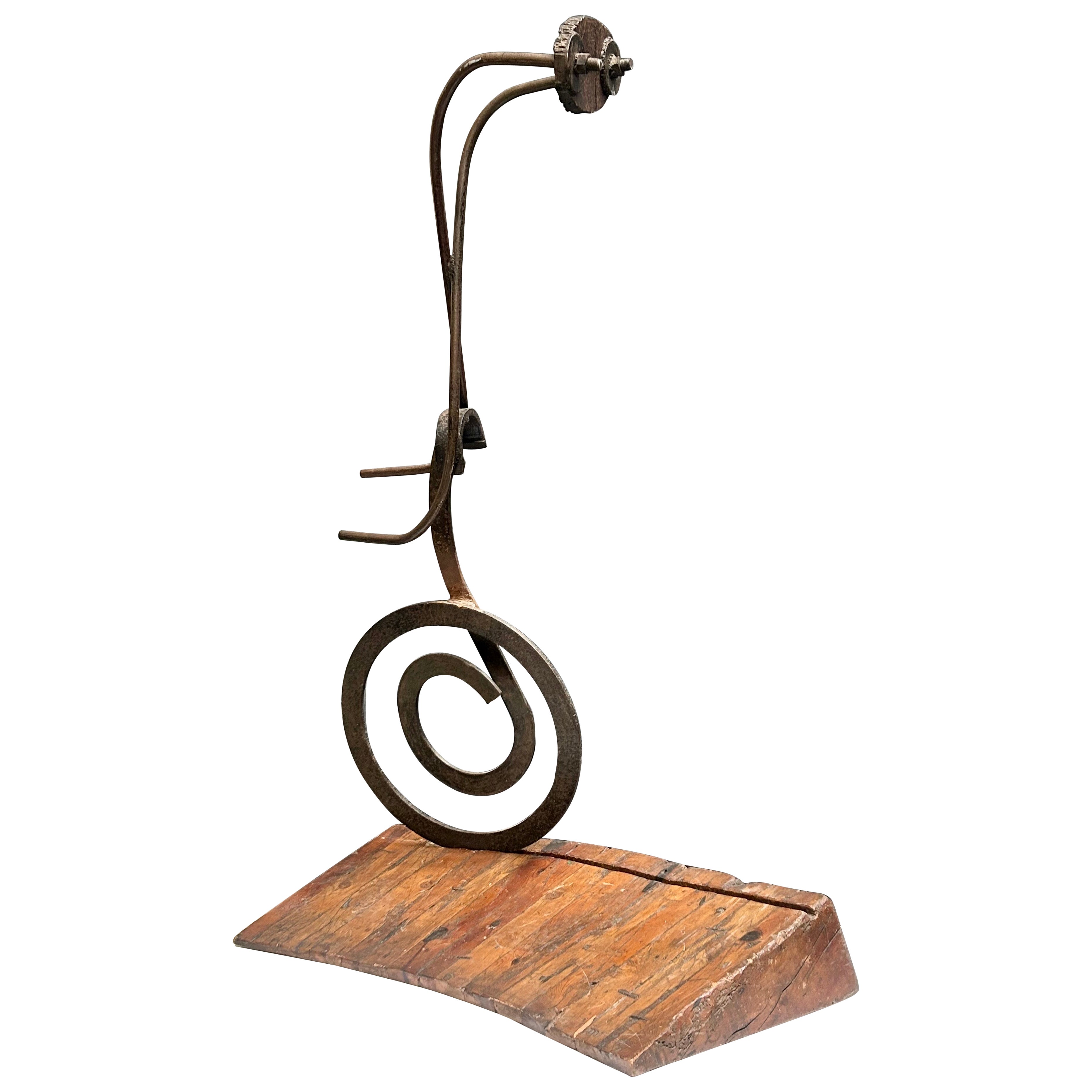
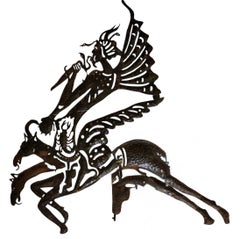
Haitian Folk Art Outsider Art Steel Drum Metal Work Sculpture Murat Brierre

$1,200
£896.99
€1,046.66
CA$1,685.04
A$1,714.05
CHF 978.74
MX$20,732.32
NOK 11,412.68
SEK 11,587.54
DKK 7,824.55

About the Item

Murat Brierre or Murat Briere (1938–1988) was one of Haiti's principal metal sculptors. He was influenced by George Liautaud, but his work acquired its own, highly experimental style, often focusing on multi-faceted and conjoined figures, fantastically personified elements, and unborn babies visible within larger creatures. He sculpted works that reflected both Christian and Haitian Vodou themes. Murat BRIERRE was born in Mirebalais in 1938. He first worked as a builder, cabinetmaker and blacksmith before being introduced to Le Centre d’Art in 1966. After trying painting with DeWitt Peters, he realized that metal sculpture was best suited for him and studied under Georges Liautaud in order to learn the métier. He also made very beautiful linocuts. Francine Murat quickly recognized his talent and considered Brierre to be one of the best Haitian sculptors. He passed away in 1988 at the age of 50. Brierre’s works have been exhibited in France, the United States, Switzerland, Germany, Israel, Mexico and Jamaica, in such places as the Abbaye de Daoulas, the Grand Palais, the Brooklyn Museum, the Modern Art Museum of Mexico and the Musée du Montparnasse. His work is part of the permanent collections at the Waterloo Museum, the Davenport Museum, the Milwaukee Art Museum, Le Centre d’Art, the Musée d’art Haïtien du Collège Saint-Pierre and the Musée de Panthéon National Haïtien. References Phyllis Kind Gallery Haitian collection, Figge Art Museum
  • Creator:
    Murat Brierre (1938 - 1988, Haitian)
  • Dimensions:
    Height: 27 in (68.58 cm)Diameter: 27 in (68.58 cm)
  • Medium:
  • Movement & Style:
  • Period:
  • Condition:
  • Gallery Location:
    Surfside, FL
  • Reference Number:
    1stDibs: LU38217703342

More From This Seller

View All
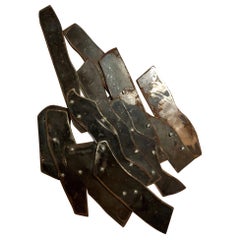
Large Masterwork Haitian Folk Art Steel Drum Metal Work Sculpture Murat Brierre

Large Masterwork Haitian Folk Art Steel Drum Metal Work Sculpture Murat Brierre

By Murat Brierre

Located in Surfside, FL

This work is hand signed. It is not dated. Murat Brierre or Murat Briere (1938–1988) was one of Haiti's principal metal sculptors. He was influenced by George Liautaud, but his work acquired its own, highly experimental style, often focusing on multi-faceted and conjoined figures, fantastically personified elements, and unborn babies visible within larger creatures. He sculpted works that reflected both Christian and Haitian Vodou themes. Murat BRIERRE was born in Mirebalais in 1938. He first worked as a builder, cabinetmaker and blacksmith before being introduced to Le Centre d’Art in 1966. After trying painting with DeWitt Peters, he realized that metal sculpture was best suited for him and studied under Georges Liautaud in order to learn the métier. He also made very beautiful linocuts. Francine Murat quickly recognized his talent and considered Brierre to be one of the best Haitian sculptors. He passed away in 1988 at the age of 50. Brierre was known for his recycling of surplus steel oil drum lids. Brierre worked as a brick mason, cabinetmaker, tile setter, and blacksmith. He was born in Mirebalais or Port-au-Prince, Haiti and was the younger of two brothers. His older brother, Edgar Brierre, was a painter and sculptor. The brother's signed their works with only their last name, creating some confusion within their professional circles about the authorship of their work. Brierre's sculptures typically ranged from three to six feet in length and reflected Christian, Haitian Vodou, and folklore themes. Brierre was also a painter, but ultimately chose to work with metal because he felt that the material was saturated with spiritual energy. It was a laborious process. The oil drum lids were hammered flat, drawn onto, then cut with a razor. The sheet was then cut with a chisel before finishing was completed with a file. By the mid1970s, Brierre's sculptures included pronounced areas of cut outs surrounding long curved lines of metal. Brierre's iron sculpture titled Chien de Mer overlays a dog head onto the body of a fish. Haiti has long celebrated a rich artistic and cultural heritage. Georges Liautaud (1899–1991) ignited the Haitian metal sculpture movement in the 1950s in Croix-des-Bouquets, Haiti. A blacksmith by trade, he fashioned crosses for public cemeteries before creating more elaborate cut-metal works. Liautaud disseminated the distinctly Haitian art form to emerging artists, such as Murat Brièrre (1938–88) and the Louisjuste brothers, Sérésier, Janvier, and Joseph (1940–89). They, in turn, taught others in Croix-des-Bouquets, including Gabriel Bien-Aimé (b. 1951) and Serge Jolimeau (b. 1952), Haiti’s two leading metal sculptors working today. Discarded steel oil drums have historically served as the base material for Haitian metal artists. The drums’ lids are cut open with a chisel and hammer and a long vertical split is made along the side of the drums. The interiors are filled with dried sugarcane or grass and lit on fire to remove any grime; once cool, the drums are flattened into sheets. Designs are chalked on; pieces are then cut and sculpted using only hand tools and further enhanced by hammering, embossing, cutting holes, and bending the metal. Sculptures reflect everyday life portraits, imaginative themes, and motifs of Haitian Vodou, an African Diasporic religion. Some of the many forms that appear include angels and winged creatures, mermaids and other aquatic figures, musical bands, animals, and earthly, paradisiacal scenes. Solo exhibitions 1967 – Haitian Art Gallery, New York 1968 – Centre d'Art, Port-au-Prince, Haiti; Bradley Galleries, Milwaukee, Wisconsin; Georgetown Graphics Gallery, Washington D.C.; Menschoff Gallery, Chicago; John Michael Kohler Arts Center, Sheboygan, Wisconsin; Roko Gallery, New York 1969 – Centre d'Art, Port-au-Prince, Haiti; Showcase Gallery, Washington D.C.; Botolph Group, Boston 1970 – Centre d'Art, Port-au-Prince, Haiti 1972 – Centre d'Art, Port-au-Prince, Haiti; Roko Gallery, New York 1979 – Areta Contemporary Design, Boston Group exhibitions 1969 – Davenport Art Gallery, Iowa 1974 – Davenport Art Gallery, Iowa 1978 – Brooklyn Museum, New York (traveling) 1982 – Studio Museum in Harlem, New York 1983 – Chicago Public Library Cultural Center 1985 – Davenport Art Gallery, Iowa 1987 – Musée du Panthéon National, Port-au-Prince, Haiti 1988 – Galeries Nationales d'Exposition du Grand Palais, Paris 1989 – Museum of Art, Ft. Lauderdale, Florida 2006 – Phyllis Kind Gallery in conjunction with the Outsider Art Fair, New York 2024 Ayiti Toma II: Faith, Family, and Resistance, Luhring Augustine, Tribeca, New York 2023 Haitian Metal Sculpture, SFO Museum, California, USA 2015 Celebrating African American Art, Flomenhaft Gallery, Chelsea, New York, USA An important exhibition of works by outstanding African American artists. Included were: Emma Amos, Benny Andrews, Romare Bearden, Murat Brierre, Beverly Buchanan...

Category

Mid-20th Century Outsider Art Figurative Sculptures

Materials

Iron

Large Mario Almaguer Cuban Art Welded Painted Steel Abstract Sculpture Modernism

Large Mario Almaguer Cuban Art Welded Painted Steel Abstract Sculpture Modernism

Located in Surfside, FL

Mario Almaguer (b. Marianao, Cuba, 1955) He moved to the U.S. in 1994 to Miami where since has been living and working. Essentially self-taught, he embraced sculpture as his mean for expression. Without any kind of formal academic education or training in the arts, perseverance and praxis made him an artist. His work has been influenced by cuban master Agustin Cardenas and british Henry Moore. In his early years until 1994 he produced a large amount of small and medium scale wooden sculptures. From 1994 to the present, Almaguer creates and produces steel sculptures. It's with his works on steel where he encounters a strong expression with a striking liberty hard to deliver in wood. His monumental sculptures were recently exhibited at Miami Dade...

Category

21st Century and Contemporary Abstract Abstract Sculptures

Materials

Steel

Mid Century Modern Brutalist Welded Expressionist Sculpture After Paul Evans

Mid Century Modern Brutalist Welded Expressionist Sculpture After Paul Evans

Located in Surfside, FL

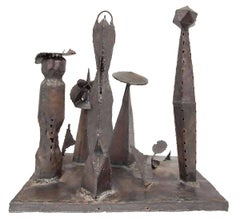
In this bronze sculpture the artist (unknown) has welded together a group of totems or monuments into a unified piece. T Neo-Dada Abstract Sculpture: Assemblages In contrast, abstra...

Category

Mid-20th Century Abstract Expressionist Abstract Sculptures

Materials

Metal

1960s Pop Art Unique Cast Bronze Sculpture Americana Folk Art William King

1960s Pop Art Unique Cast Bronze Sculpture Americana Folk Art William King

By William King (b.1925)

Located in Surfside, FL

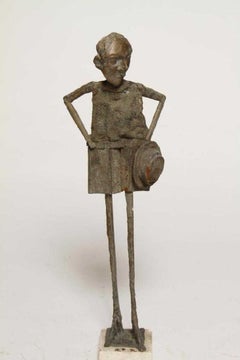
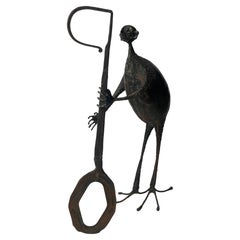
Mid-Century Modern wrought iron sculpture a person with oversize top, shorts, and carrying a hat, signed, artist's monogram and cipher, further mounted on a plaster base. 28" H. This a unique piece. It is interesting in that it speaks of a transition, leading into the later aluminum public pieces that kind of defined his work in the 70's. According to his estate this is most probably cast bronze. It might possibly be wrought iron.. William Dickey King was born in 1925 in Jacksonville, Florida and grew up in the Coconut Grove neighborhood of Miami. As a boy, William King made model airplanes and helped his father and older brother build furniture and boats. “I was 19, 20, my mother gave me a hundred bucks, says, ʻGet out of this state and don’t come back until you’re 65; there is nothing here for you,’ ” Bill King recalled in a video interview for the Smithsonian museum. He came to New York, where he attended the Cooper Union and began selling his early sculptures even before he graduated. He later studied with the sculptor Milton Hebald and traveled to Italy on a Fulbright grant. He was a contemporary, at the Cooper Union, of Alex Katz and Lois Dodd, his first wife, and remained close in many ways to their common aesthetic grounding, shared also with younger sculptors such as Red Grooms and Marisol Escobar. The hallmark of King’s early work was radical experiment keeping company with social connection and hedonism. The mix of big, important, innovative ideas and immediate, sensory, in-the-moment experience was a kind of visual jazz. For this was not just the time of Franz Kline’s big open defiant brushstrokes and Jackson Pollock’s all-over mists of intricately drooling line, but of Charlie Parker and Dizzy Gillespie. If we look at the works that King made in the early 1950s when he got back from his Fulbright to Italy we see free, experimental, open forms that take their cue from jazz as much as art in their fusion of virtuosity and cool.American sculptor King is most noted for his long-limbed figurative public art sculptures depicting people engaged in everyday activities such as reading or conversing. He created his busts and figures in a variety of materials, including clay, wood, metal, and textiles. Mr. King worked in clay, wood, bronze, vinyl, burlap and aluminum. He worked both big and small, from busts and toylike figures to large public art pieces depicting familiar human poses — a seated, cross-legged man reading; a Western couple (he in a cowboy hat, she in a long dress) holding hands; a tall man reaching down to tug along a recalcitrant little boy; a crowd of robotic-looking men walking in lock step. Mr. King’s work often reflected the times, taking on fashions and occasional politics. In the 1960s and 1970s, his work featuring African-American figures (including the activist Angela Davis, with hands cuffed behind her back) evoked his interest in civil rights. But for all its variation, what unified his work was a wry observer’s arched eyebrow, the pointed humor and witty rue of a fatalist. His figurative sculptures, often with long, spidery legs and an outlandishly skewed ratio of torso to appendages, use gestures and posture to suggest attitude and illustrate his own amusement with the unwieldiness of human physical equipment. His subjects included tennis players and gymnasts, dancers and musicians, and he managed to show appreciation of their physical gifts and comic delight at their contortions and costumery. His suit-wearing businessmen often appeared haughty or pompous; his other men could seem timid or perplexed or awkward. Oddly, or perhaps tellingly, he tended to depict women more reverentially, though in his portrayals of couples the fragility and tender comedy inherent in couplehood settled equally on both partners. His first solo exhibit took place in 1954 at the Alan Gallery in New York City. William Dicky King was elected to the American Academy of Arts and Letters in 2003, and in 2007 the International Sculpture Center honored him with the Lifetime Achievement in Contemporary Sculpture Award. Mr. King’s work is in the collections of the Metropolitan Museum of Art, Guggenheim Museum, Whitney Museum and the Museum of Modern Art in New York and the Hirshhorn Museum at the Smithsonian American Art Museum in Washington, among other places, and he had dozens of solo gallery shows in New York and elsewhere. Reviews of his exhibitions frequently began with the caveat that even though the work was funny, it was also serious, displaying superior technical skills, imaginative vision and the bolstering weight of a range of influences, from the ancient Etruscans to American folk art to 20th-century artists including Giacometti, Calder and Elie Nadelman. The New York Times critic Holland Cotter once described Mr. King’s sculpture as “comical-tragical-maniacal,” and “like Giacometti conceived by John Cheever.” From an article by David Cohen "In a career that ran in tandem with the hegemony of formal abstraction in sculpture, Bill King inevitably struggled with the prejudice that sculpture full of humanity and humor can’t be quite as serious as sculpture devoid of them. But the tide has clearly turned in ways that ought to work in King’s favor, with an increasing number of sculptors, fêted internationally, who are producing work that looks remarkably close in spirit, if not quite as regal in sheer mastery of form, as his own. When art historians of the future connect the dots of modern sculpture then artists like Franz West, Stephan Balkenhol, Huma Bhabha...

Category

1960s Pop Art Figurative Sculptures

Materials

Bronze

Abstract Expressionist Patinated Metal Assemblage Sculpture Steel, Nuts, Bolts

Abstract Expressionist Patinated Metal Assemblage Sculpture Steel, Nuts, Bolts

By Robert Goodnough, 1917-2010

Located in Surfside, FL

Robert Arthur Goodnough (AMERICAN, 1917-2010) Untitled patina on steel with nuts and bolts Robert Goodnough (October 23, 1917 – October 2, 2010) was an American abstract express...

Category

20th Century Abstract Expressionist Abstract Sculptures

Materials

Metal

You May Also Like

Seresier Louise-Juste Haitian Steel Sculpture C. 1970's

Seresier Louise-Juste Haitian Steel Sculpture C. 1970's

Located in Vancouver, BC

Recycled steel oil drum in folk art style. Meaning, Seresier would find oil drums that would have washed up on the beach in Haiti and pounded flat and then cut out these figures. They feature themes of Haitian Mythology. An incredible piece of artwork. Signature etched on bottom. Can be hung or has ability to stand up on flat surface. Biography The Louisjuste brothers -Seresier, Janvier, and Joseph,- were born in Croix-des-Bouquets, Haiti. They learned the art-form from the originator of Haitian metals...

Category

Vintage 1970s Haitian Folk Art Outsider and Self Taught Art

Materials

Cut Steel

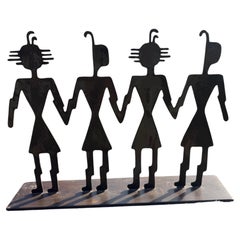
Large Whimsical Steel Figural Garden Sculpture by Artist Doug Weigel

Large Whimsical Steel Figural Garden Sculpture by Artist Doug Weigel

Located in Hopewell, NJ

Striking large steel garden sculpture by artist Doug Weigel inspired by the petroglyphs drawn on the rocks at Lake Powell. Signed on stand. Can be displayed outdoors or inside.

Category

21st Century and Contemporary American Modern Statues

Materials

Steel

Michel Anasse metal abstract brutalist sculpture.Les Bides

Michel Anasse metal abstract brutalist sculpture.Les Bides

By Michel Anasse

Located in Los Angeles, CA

Very nice and large metal sculpture by the well known artist Michel Anasse. This is one of the musician series, This is one looks like the bass p...

Category

Mid-20th Century French Modern Abstract Sculptures

Materials

Metal

Jeri Summers Folk Art Sculpture

Jeri Summers Folk Art Sculpture

Located in Saint Paul, MN

Primitive in nature, this figure by Ohio artist Jeri Summers is reminiscent of tribal sculptures that decorate Parisian interiors. The sculpture is comprised of painted wood with met...

Category

Mid-20th Century American Folk Art Sculptures and Carvings

Materials

Concrete, Metal

Funky Hand-Crafted Copper Sculpture, 20th Century Indoor/Outdoor Decor

Funky Hand-Crafted Copper Sculpture, 20th Century Indoor/Outdoor Decor

Located in Delray Beach, FL

Beautiful hand forged copper sculpture of a lovely girl , artistically hand painted with the original nice outside weathered patina . Will be great as indoor decoration , or outdoor , will not rust. There is no signature on the sculpture, although we Google photo...

Category

20th Century Wall-mounted Sculptures

Materials

Copper

Jeri Summers Folk Art Sculpture

Jeri Summers Folk Art Sculpture

Located in Saint Paul, MN

Primitive in nature, this figure by Ohio artist Jeri Summers is reminiscent of tribal sculptures that decorate Parisian interiors. The sculpture is comprised of painted wood with met...

Category

Mid-20th Century American Folk Art Sculptures and Carvings

Materials

Concrete, Metal