Want more images or videos?
Request additional images or videos from the seller
1 of 17

Umberto Del Negro
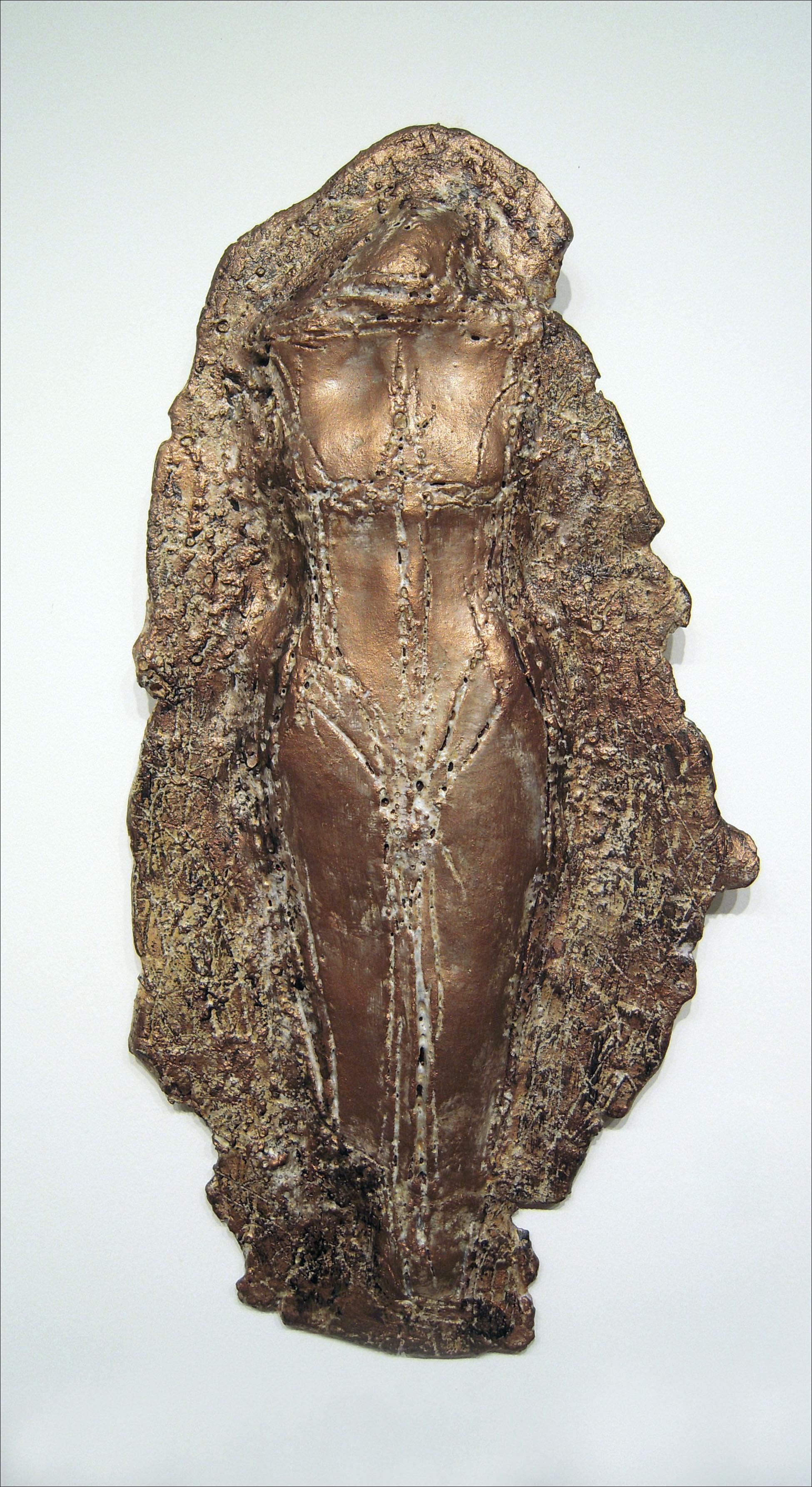
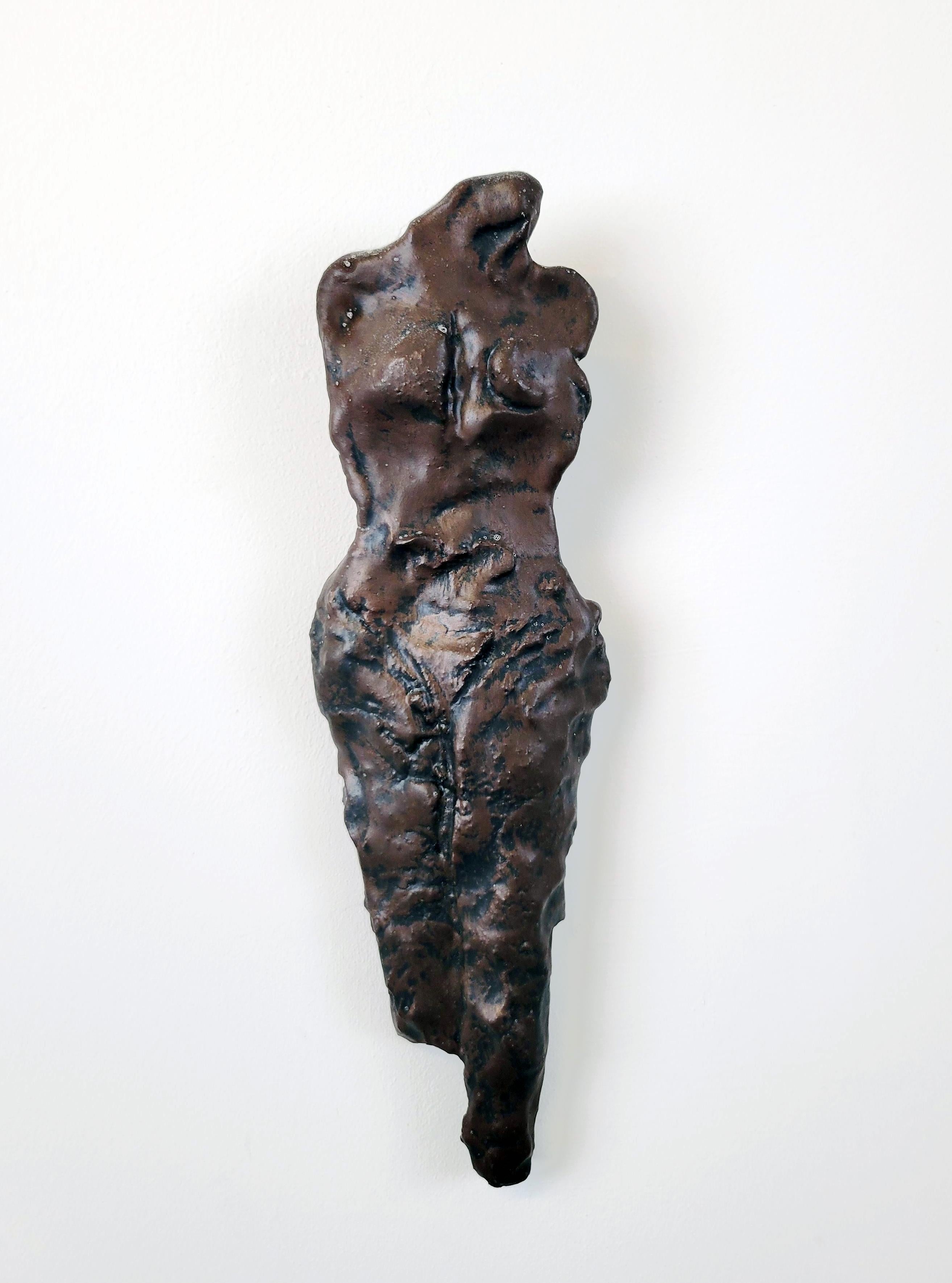
Umberto Del Negro "Prove (Evidence)" Pottery Plaque Series

$2,800
£2,093.69
€2,445.31
CA$3,934
A$3,984.37
CHF 2,288.82
MX$48,315.67
NOK 26,550.05
SEK 27,024.90
DKK 18,281.26

About the Item

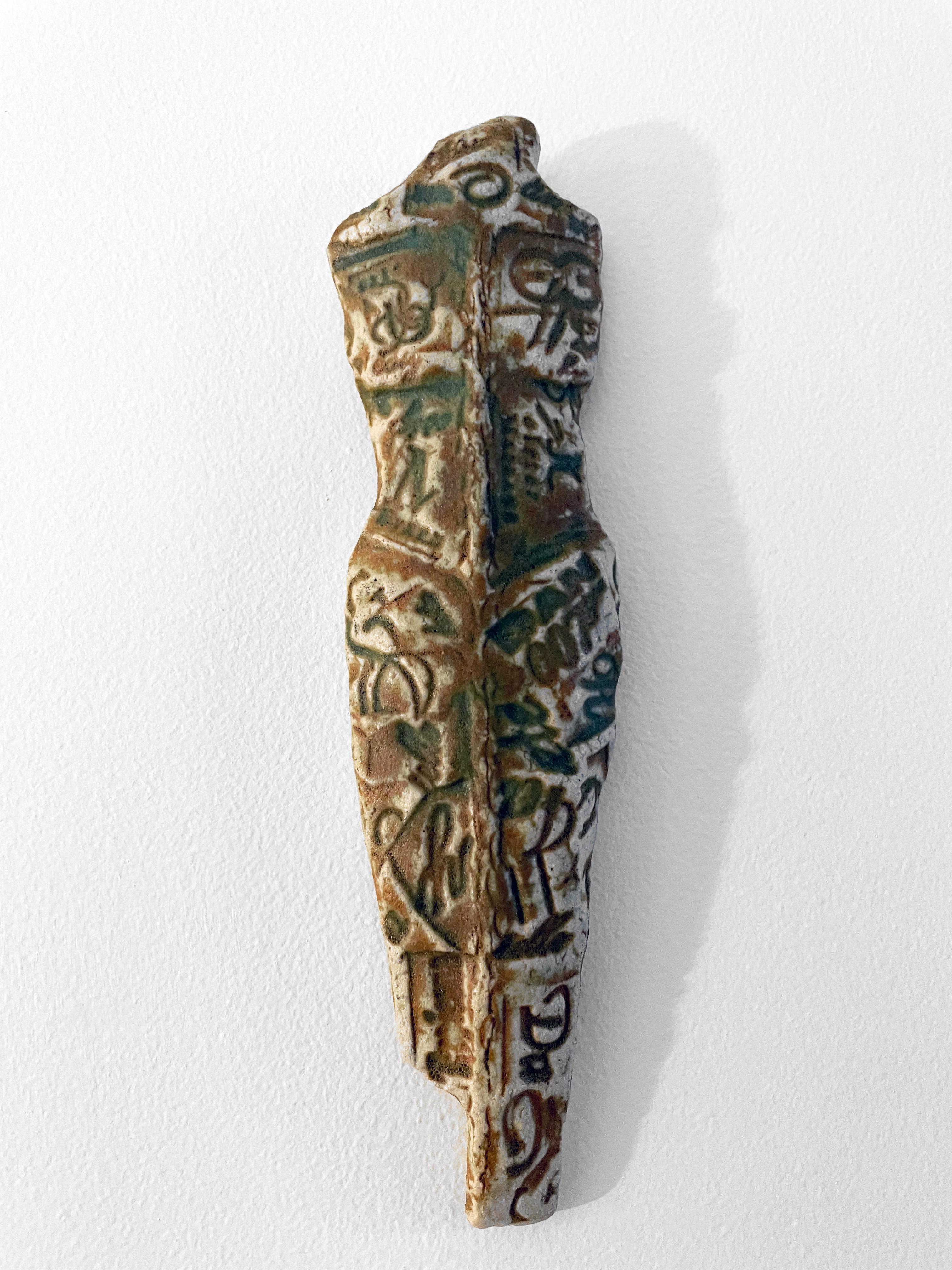
These four ceramic plaques on wood are an exquisite set piece from the Italian artist Umberto Del Negro. Its title "Prove" is Italian for "Evidence". One interpretation is that it refers to evidence of existence, as the four figures appear to be silhouettes of the same person, albeit in a different stage. Growing older, fading, and then becoming a shadow. Umberto Del Negro was a late 20th Century Italian artist. He was born in 1940. His artwork encompasses multiple mediums from mosaic, sculptures, and paintings. His work's subject matter spans an interest in the natural world and society's relationship to it, themes that he explores through his creative usage of each individual work's medium. The artist passed away in 2017. Photos by PD Rearick
  • Creator:
    Umberto Del Negro (1940 - 2017, Italian)
  • Dimensions:
    Height: 19 in (48.26 cm)Width: 7.75 in (19.69 cm)Depth: 2 in (5.08 cm)
  • Medium:
  • Period:
  • Condition:
  • Gallery Location:
    Detroit, MI
  • Reference Number:
    1stDibs: LU128618582152

More From This Seller

View All
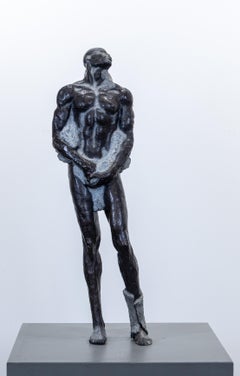
Statuette, Metal Sculpture, Psychological and Naturalistic

Statuette, Metal Sculpture, Psychological and Naturalistic

By Umberto Del Negro

Located in Detroit, MI

This small metal statuette exemplifies the Italian artist Umberto Del Negro's interest in playing with the themes of civilization and nature. From multiple angles this piece could ap...

Category

Late 20th Century Figurative Sculptures

Materials

Metal

"THE MANTEL SERIES" John Glick Stoneware Objets d'Art Intimate Indoor/Outdoor

"THE MANTEL SERIES" John Glick Stoneware Objets d'Art Intimate Indoor/Outdoor

By John Glick 1

Located in Detroit, MI

SALE ONE WEEK ONLY John Glick is well-known for his beautifully rendered functional pieces of art. His decorative pieces, especially his large pots, are breathtakingly powerful objects. Glick's creative genius, however, is most exquisitely shown in this unique grouping of objets d'art. The Wall Hanging has a lovely classical scroll shelf. The objets on the shelf include an apple and pear - both fruits frequently rendered by artists from the Dutch Masters to Cezanne because of their perfectly balanced shape and rich colors. In addition is a small Greek or Roman styled dish used as an oil lamp. The other three objets are mysterious twisted tube-like organic shapes. John Glick, at one of his richest, creative bests. The objets are of various sizes, movable and can be displayed as desired. The size given is the overall size of both pieces and the objets d'art. "The works in John Glick’s “Mantel Series” are still life tableaux comprised of ordinary, yet intriguing objects that imply a history of people interacting with objects and each other over time. Imagine a lettr or poem from a loved one, once read, tucked among other fabourite things for safekeeping. Or a salty treasure carried in a dampened pocket and later deposited on a cottage shelf to dry, crackle and change. In essence, the mantels hold suggestive collections in which most people can find a part of themselves a link to a personal memory and a connection to a lost moment in time. His body of work, The Mantel Series, was partially inspired by a memory of a salt box that hung near his grandmother’s kitchen wood stove. For Glick, the unassuming little box, with its pleasing enigmatic shape and wooden lid, conjured pleasant boyhood memories, nostalgia for home and hearth, and vivid awareness of history. Upon his wall-based mantels, the artist placed a well-honed repertoire of distinct objects, all deftly crafted of clay, that become characters in his unspoken drama, each form playing off the others in the ensemble.” Plum Tree Pottery...

Category

1990s American Modern Still-life Sculptures
Materials

Ceramic, Glaze

"Emerging First Man" Bronze Sculpture, Male Figurative, Ceramic Shell, Resin

"Emerging First Man" Bronze Sculpture, Male Figurative, Ceramic Shell, Resin

By Artis Lane

Located in Detroit, MI

All my life I have worked on three levels of consciousness: Portraits, Social Injustice & Metaphysics. In my work I strive to heal, uplift and inspire viewers and collectors to find ...

Category

1990s Contemporary Figurative Sculptures

Materials

Bronze

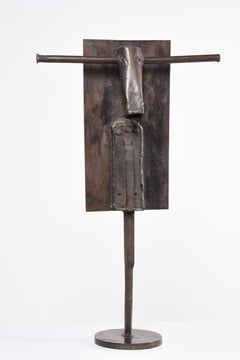
Eugene Caples "Bronze Sculpture II" Abstract Bronze Sculpture

Eugene Caples "Bronze Sculpture II" Abstract Bronze Sculpture

By Eugene Caples

Located in Detroit, MI

This small exquisite "Bronze Sculpture II" is in excellent condition and a perfect example of Eugene Caples craftsmanship. This is mainly abstract with some graphic or architectural elements and is so delightful that mythical creatures demand to be considered. It cries out to be touched and held, looked at and caressed. The beautiful patina on the surface gives voice to the many hands that have done these things. Eugene Caples is a designer and craftsman who worked in Kansas City in the 1960s and later through the early 21st century. He attended the Kansas City Art Institute, earning his Bachelors of Fine Arts in Industrial Design in 1959. In 1963 he was accepted to Cranbrook Academy of Art, Bloomfield Hills, Michigan. The Cranbrook Academy of Art was designed by architect and faculty member, Eliel Saarinen who collaborated with Charles and Ray Eames on chair and furniture design. Numerous creative artists are alumni of Cranbrook and include: Harry Bertoia, Florence Knoll, Jack Lenor Larsen, Donald...

Category

Late 20th Century American Modern Abstract Sculptures

Materials

Bronze

Morris Brose "Bronze Bull" Figurative Sculptural Abstract

Morris Brose "Bronze Bull" Figurative Sculptural Abstract

Located in Detroit, MI

"Bronze Bull" is an exquisite example of Morris Brose's abstract/figurative sculpture. No soft edges on this piece and no invitation to caress, the power, strength and beauty of the bronze are front and center and create awe. "Bronze Bull" is a free-standing piece signed on the base. Morris Brose, Polish/American was born in Wyszkow, Poland. He became a sculptor and instructor of sculpture at the Detroit Institute of Arts, Wayne State University and Cranbrook Academy of Art, Bloomfield Hills, Michigan. Cranbrook was designed by architect and faculty member, Eliel Saarinen who collaborated with Charles and Ray Eames on chair and furniture design. Numerous creative artists who are alumni of Cranbrook include: Harry Bertoia, Florence Knoll, Jack Lenor Larsen, Donald Lipski...

Category

Late 20th Century Modern Abstract Sculptures

Materials

Bronze

You May Also Like

American Contemporary Ceramic Sculpture - Linda Stein, Knight Embedded 534

American Contemporary Ceramic Sculpture - Linda Stein, Knight Embedded 534

By Linda Stein

Located in New York, NY

This sculpture from Linda Stein’s Knights of Protection series functions both as a defender in battle and a symbol of pacifism. Knight Embedded 534 was exhibited in 2006 at Longst...

Category

2010s Contemporary Figurative Sculptures

Materials

Ceramic

Ceramic Wall Tile, 2D Sculpture, Painted Stoneware, Cleat, Alessandro Gallo

Ceramic Wall Tile, 2D Sculpture, Painted Stoneware, Cleat, Alessandro Gallo

By Alessandro Gallo

Located in St. Louis, MO

Ceramic Wall Tile, 2D Sculpture, Painted Stoneware, Cleat, Alessandro Gallo “Animals carry strong associations that make them ideal in portraying, sometimes humorously, our basic di...

Category

2010s Contemporary Figurative Sculptures

Materials

Ceramic, Stoneware, Paint, Mixed Media

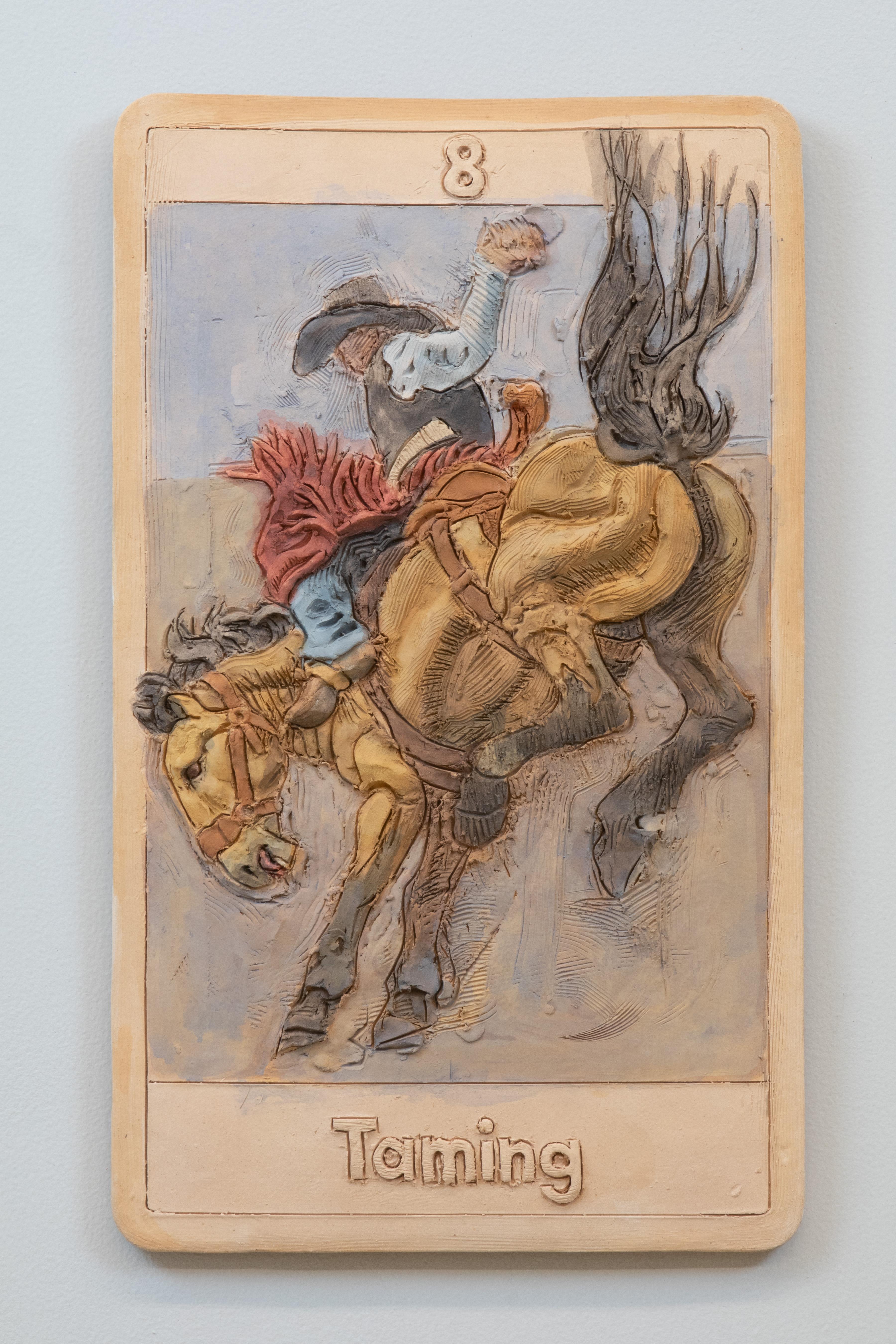
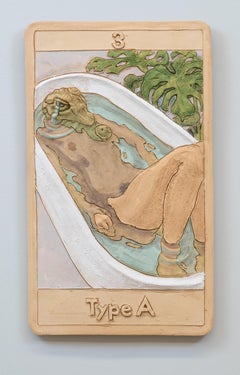
Ceramic, Wall Hanging Tile, French Cleat, Stoneware, 2D Sculpture, Taming, Tarot

Ceramic, Wall Hanging Tile, French Cleat, Stoneware, 2D Sculpture, Taming, Tarot

By Alessandro Gallo

Located in St. Louis, MO

Ceramic, Wall Hanging Tile, French Cleat, Stoneware, 2D Sculpture, Taming, Tarot “Animals carry strong associations that make them ideal in portraying, sometimes humorously, our bas...

Category

2010s Contemporary Figurative Sculptures

Materials

Ceramic, Stoneware, Paint, Mixed Media

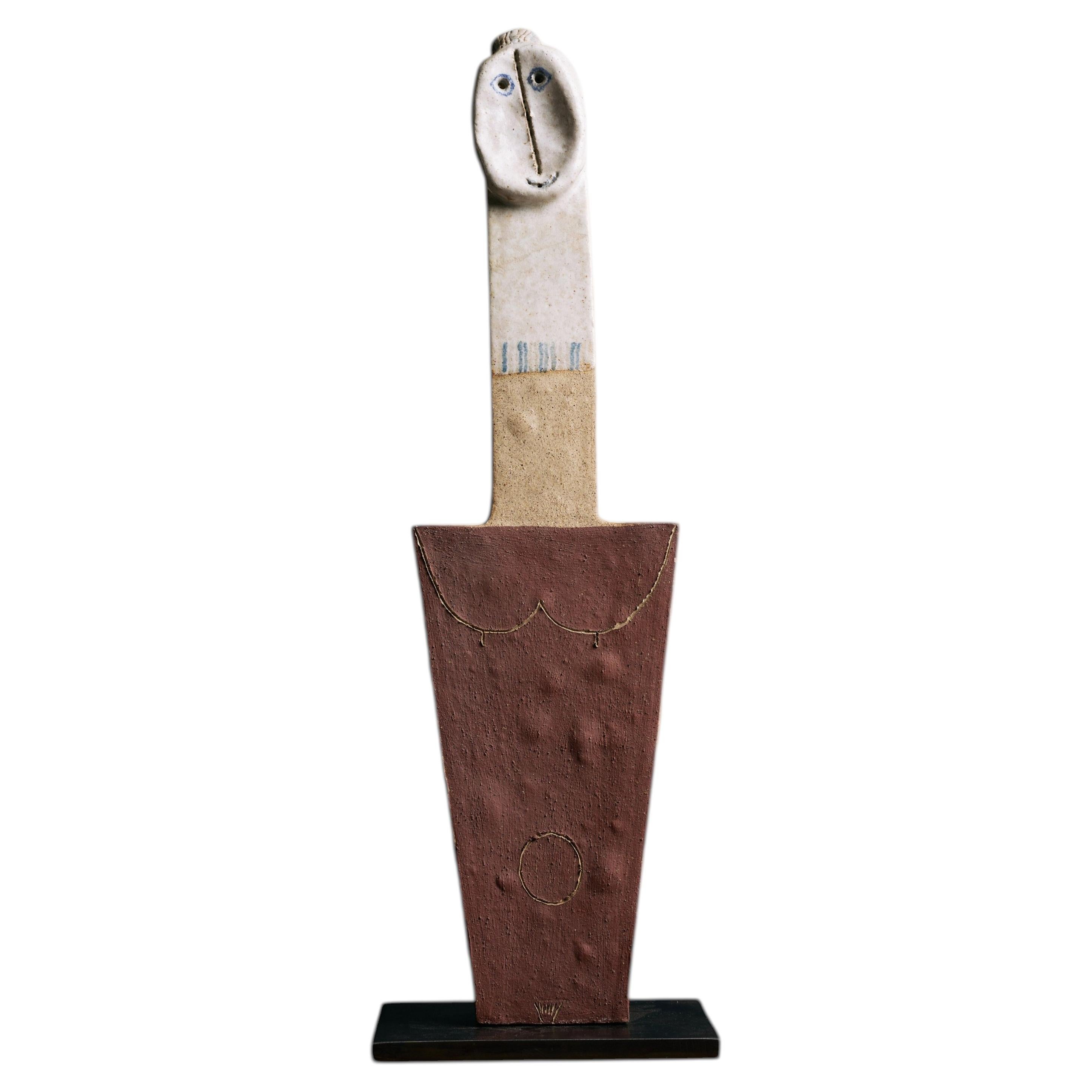
Ceramic Sculpture with Steel Base by Bruno Gambone, Italy, c. 1990

Ceramic Sculpture with Steel Base by Bruno Gambone, Italy, c. 1990

By Bruno Gambone

Located in New York City, NY

Figurative glazed ceramic sculpture with steel base by Bruno Gambone, Italy, c. 1990.

Category

1990s Italian Figurative Sculptures

Materials

Steel

Relief Sculpture in Terracotta, Modern Style, 1960s, Unframed

Relief Sculpture in Terracotta, Modern Style, 1960s, Unframed

By Sirio Pellegrini

Located in Roma, IT

Painted Terracotta sculture realized by Sirio Pellegrini in 1960s. Good condition. Sirio Pellegrini, born in Rome on March 1, 1922, of Abruzzo origins (Capestrano), spent his child...

Category

1960s Modern Figurative Sculptures

Materials

Terracotta

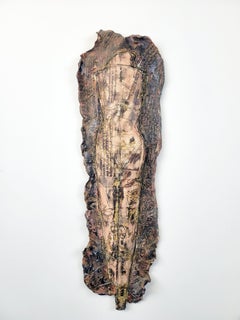
History of Pottery, Africa Ceramic Sculpture, Biomorphic Form, 1980s

History of Pottery, Africa Ceramic Sculpture, Biomorphic Form, 1980s

By Steven Kemenyffy

Located in Milwaukee, WI

41x25x10" Ceramic Steven Kemenyffy (born 1943) is an American ceramic artist living and working in Pennsylvania. He is most recognized for his contributions to the development of the American ceramic raku tradition. He has served as a Professor of Ceramic Art at Edinboro University of Pennsylvania (formerly Edinboro State College) since 1969. He Has retired from teaching, but continues to produce artwork at his home studio in McKean, Pennsylvania. Kemenyffy is often characterized in regard to his contributions to American experimental ceramics of the late 1960s and early 1970s. More specifically, Kemenyffy’s contributions to American raku techniques are often cited. Kemenyffy has stated that his interest in raku came out of practical considerations: “We [Steven and Susan] were doing a variety of workshops in a variety of different media. Raku was always an official way of making pieces in a short period of time…In raku it seems to compress all the firings into one.” Kemenyffy, himself, describes his early work as “Biomorphic forms alluding to old ceramic traditions such as tiles, vases, and containers.” These works were often in excess of six feet tall and many times included mixed media elements. In 1974, Kemenyffy wrote about the work he was producing; “For several years now, my work has dealt with certain formal considerations. Chief among these is using clay in such a way as to crystallize the moment and permanentize the impermanent. These have been among the primary concerns of all potters since the earliest times.” Today, Kemenyffy continues his pursuit of biomorphic imagery and themes. He writes, “Personally I am most challenged by the business of transforming porous organics into porcelain.” For much of Kemenyffy’s career, he has worked in tandem with his wife, Susan Hale Kemenyffy. In 1987 Susan stated about their collaborative works: “Steven is the [sculptor], I am the drawer. These works would not exist if it weren’t for the sculpture; if it weren’t for the clay. The clay entity comes first and my drawings come second.” James Paul Thompson further clarifies this relationship (as observed in 1987): “Steven Kemenyffy uses patterns as a point of departure for his work, while Susan Kemenyffy...

Category

1980s Tribal Figurative Sculptures

Materials

Ceramic