Want more images or videos?
Request additional images or videos from the seller
1 of 5

Unknown
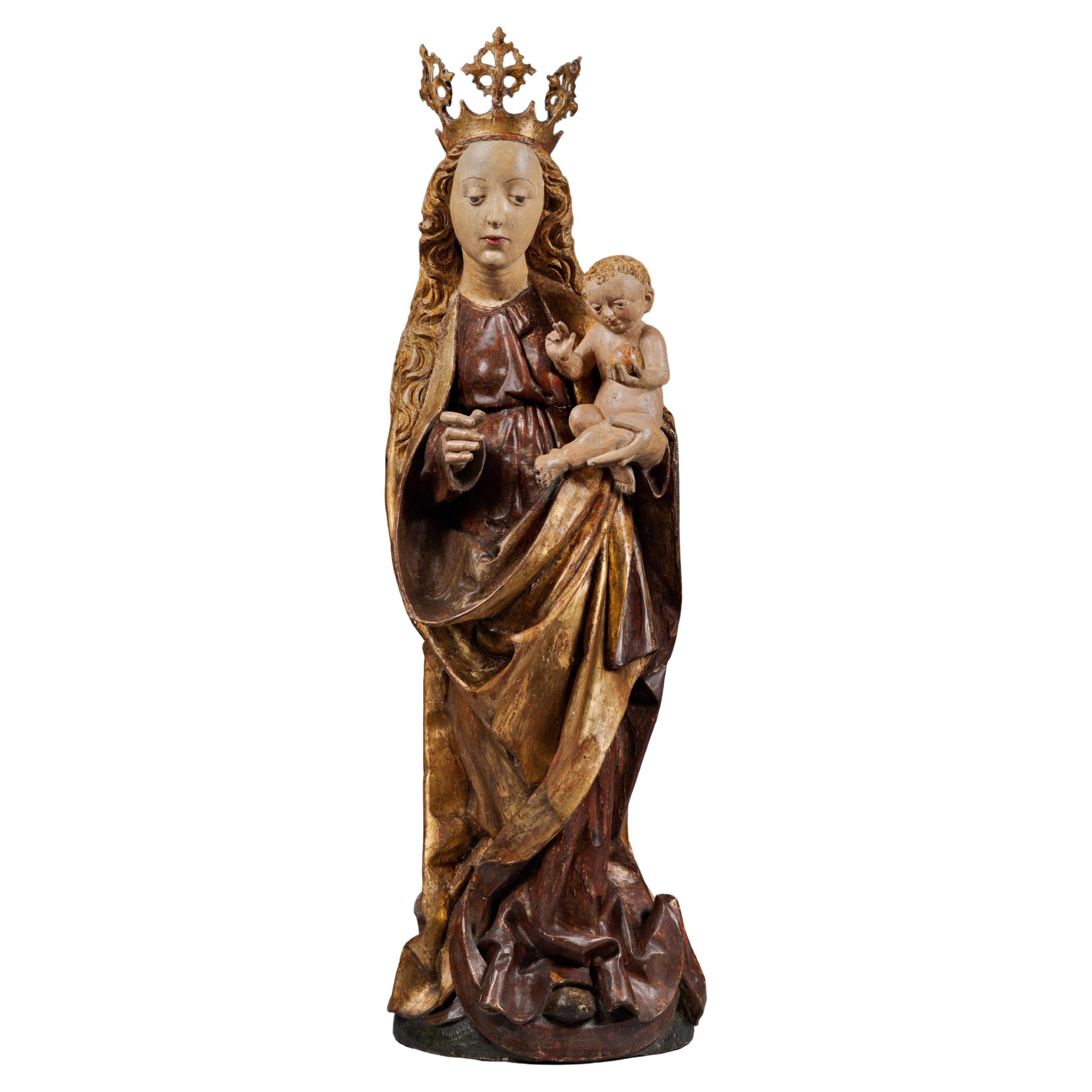
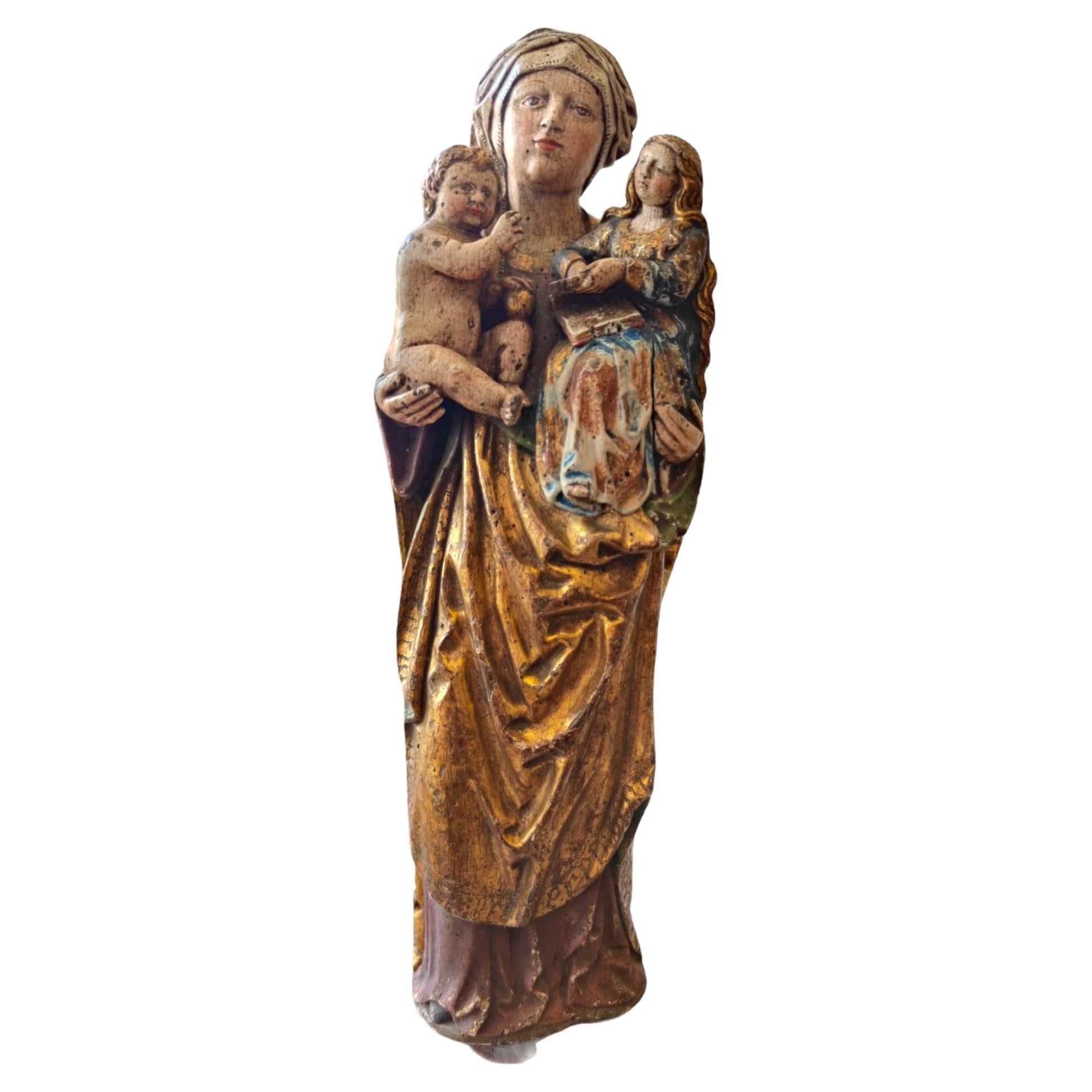
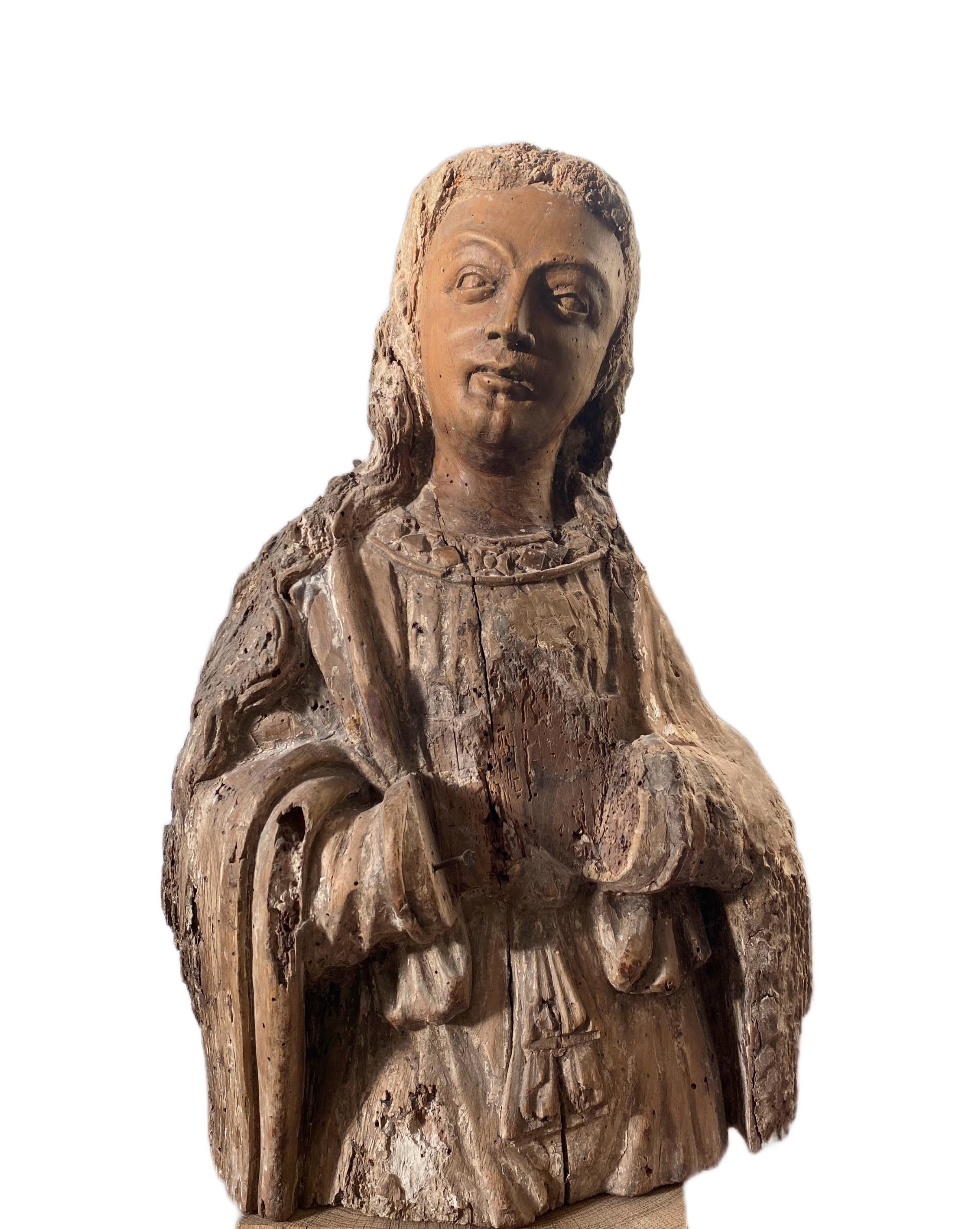
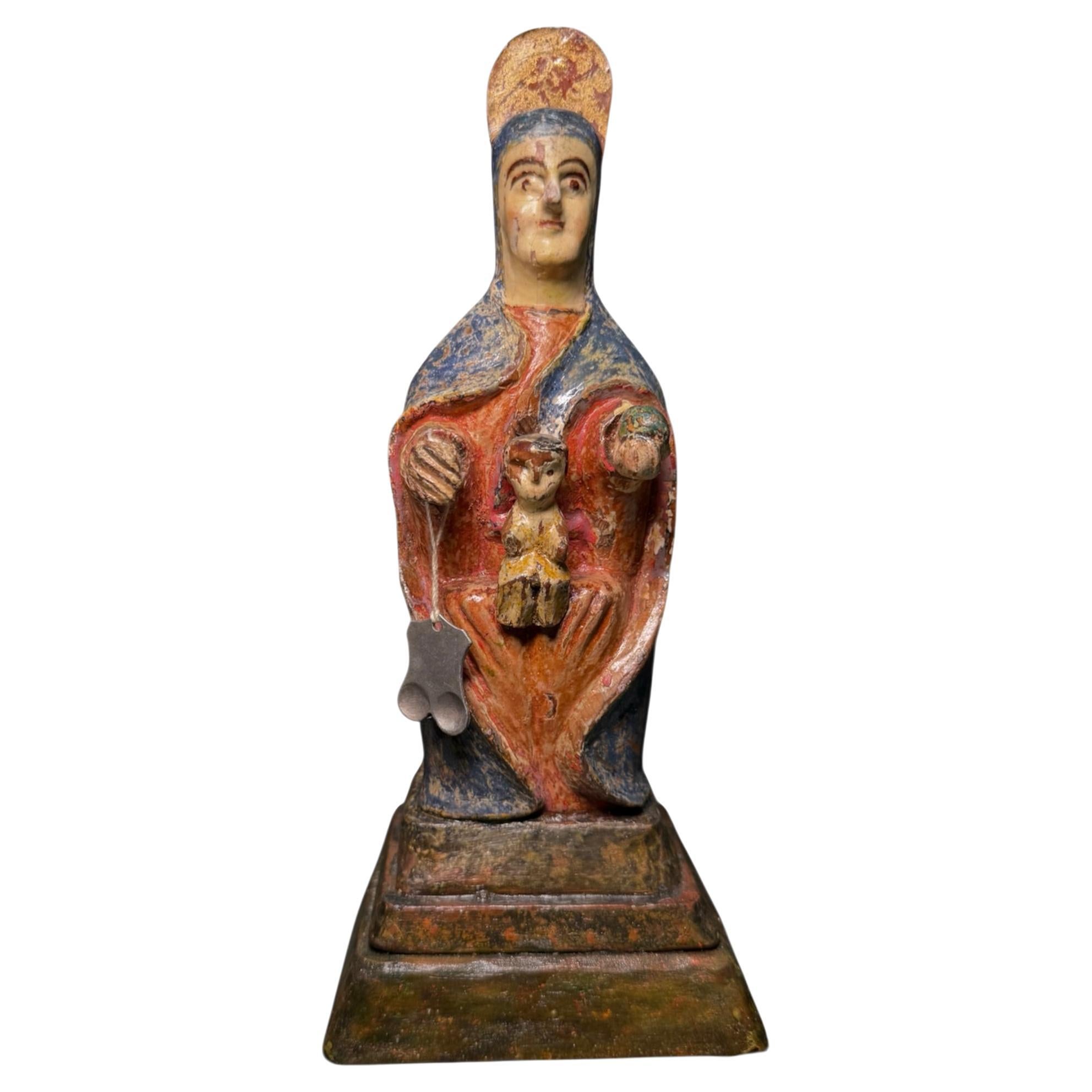
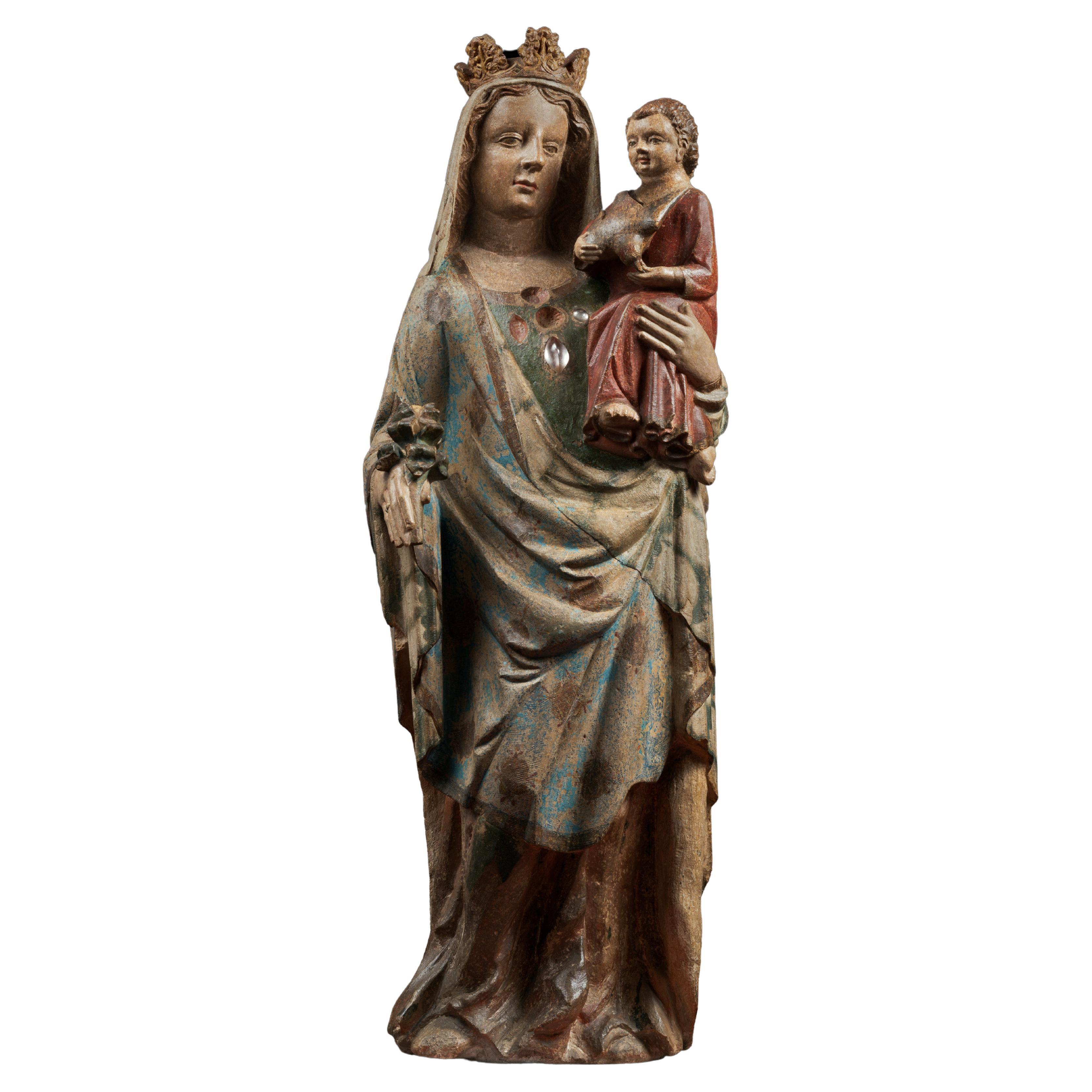
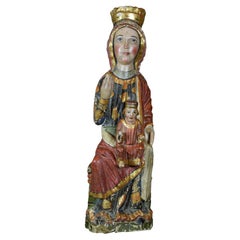
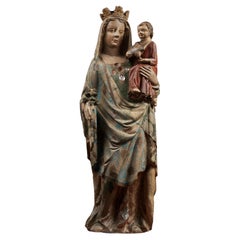
Polychrome Virgin of the Annunciation - Catalonia

1200

$16,335.38
£12,131.21
€14,770VAT Included
CA$22,928.92
A$23,394.67
CHF 13,214.02
MX$284,828.53
NOK 158,204.32
SEK 157,817.69
DKK 106,755.14

About the Item

Large catalan Virgin of the Annunciation in polychrome wood. Our Virgin is represented in the phase of the Conturbatio, Mary expresses her amazement and is represented as a young girl with soft and resigned features. The long dress with a notched collar typical of the end of the 13th century has preserved magnificent blue and red decorations, applied directly to wood or to starched canvas, which is still well preserved. End of the 13th century - Origin: Spain, Catalonia This sculpture presents an exceptional state of conservation and a very good quality of execution. Back hollowed out and closed by a period panel also painted.
  • Creation Year:
    1200
  • Dimensions:
    Height: 28.75 in (73 cm)Width: 7.88 in (20 cm)
  • Medium:
  • Movement & Style:
  • Period:
  • Condition:
  • Gallery Location:
    PARIS, FR
  • Reference Number:
    Seller: Ref1911stDibs: LU1858211134792

More From This Seller

View All
Vierge en majesté. Catalogne française - Maria Lactans

Vierge en majesté. Catalogne française - Maria Lactans

Located in PARIS, FR

Rare Vierge à l'Enfant en bois polychrome de tradition romane, région du Fenouillèdes, représentant une Virgo Lactans. Avant cette découverte, seules 3 vierges allaitantes médiévales...

Category

15th Century and Earlier Gothic Figurative Sculptures

Materials

Wood

Gothic Virgin and Child - Eastern France. Mid-14th century.

Gothic Virgin and Child - Eastern France. Mid-14th century.

Located in PARIS, FR

Gothic Virgin and Child - Eastern France. Mid-14th century. Carved in the round from walnut, this work relates to the output of workshops in eastern France in the mid-14th century. S...

Category

15th Century and Earlier Medieval Figurative Sculptures

Materials

Wood

Vierge en majesté mosane. Sedes Sapientiae.

Vierge en majesté mosane. Sedes Sapientiae.

Located in PARIS, FR

Grande Vierge à l'Enfant en chêne de la fin du 13ème siècle ou début du 14ème siècle. La plastique des visages et du Christ évoque le 13ème siècle (le visage de la Vierge évoque le visage de la Sedes Sapientiae...

Category

15th Century and Earlier Gothic Figurative Sculptures

Materials

Wood

Saint Anne with the Virgin and Child - Upper Rhine - Late 13th c

Saint Anne with the Virgin and Child - Upper Rhine - Late 13th c

Located in PARIS, FR

Important elm-wood sculpture carved in very high relief and hollowed at the back. Anne is seated in majesty, veil and wimple framing a composed face, holding at her left the blessing...

Category

15th Century and Earlier Medieval Figurative Sculptures

Materials

Wood

Enthroned Madonna and Child.

Enthroned Madonna and Child.

Located in PARIS, FR

Large Virgin and Child in carved wood, carved back. Sitting on a throne bench, Mary carries Christ seated on her left knee. The Virgin has a face with stylized features with semicircular eyebrow arches, almond-shaped eyes with protruding eyeballs. Marie is wearing a belted dress with a simple neckline and a coat with a flap that goes back to the front. Tiny traces of polychromy. Romanesque influences are still present. With her protruding eyes, she can also be compared to the statuary of Lake Constance. Our Virgin, rare for its size, nevertheless presents strong analogies with the Italian Sedes Sapientiae...

Category

15th Century and Earlier Medieval Figurative Sculptures

Materials

Wood

Large romanesque sculpture depicting Saint Lucy. Northern Spain.

Large romanesque sculpture depicting Saint Lucy. Northern Spain.

Located in PARIS, FR

Large romanesque statue of Saint Lucy of Syracuse is dated from the 12th century. The saint is represented veiled and diademed, she wears a long dress, with an important tie. Stone s...

Category

15th Century and Earlier Medieval Figurative Sculptures

Materials

Sandstone

You May Also Like

Polychrome Carved Wooden Virgin In Prayer, 16th Century, Italy

Polychrome Carved Wooden Virgin In Prayer, 16th Century, Italy

Located in MARSEILLE, FR

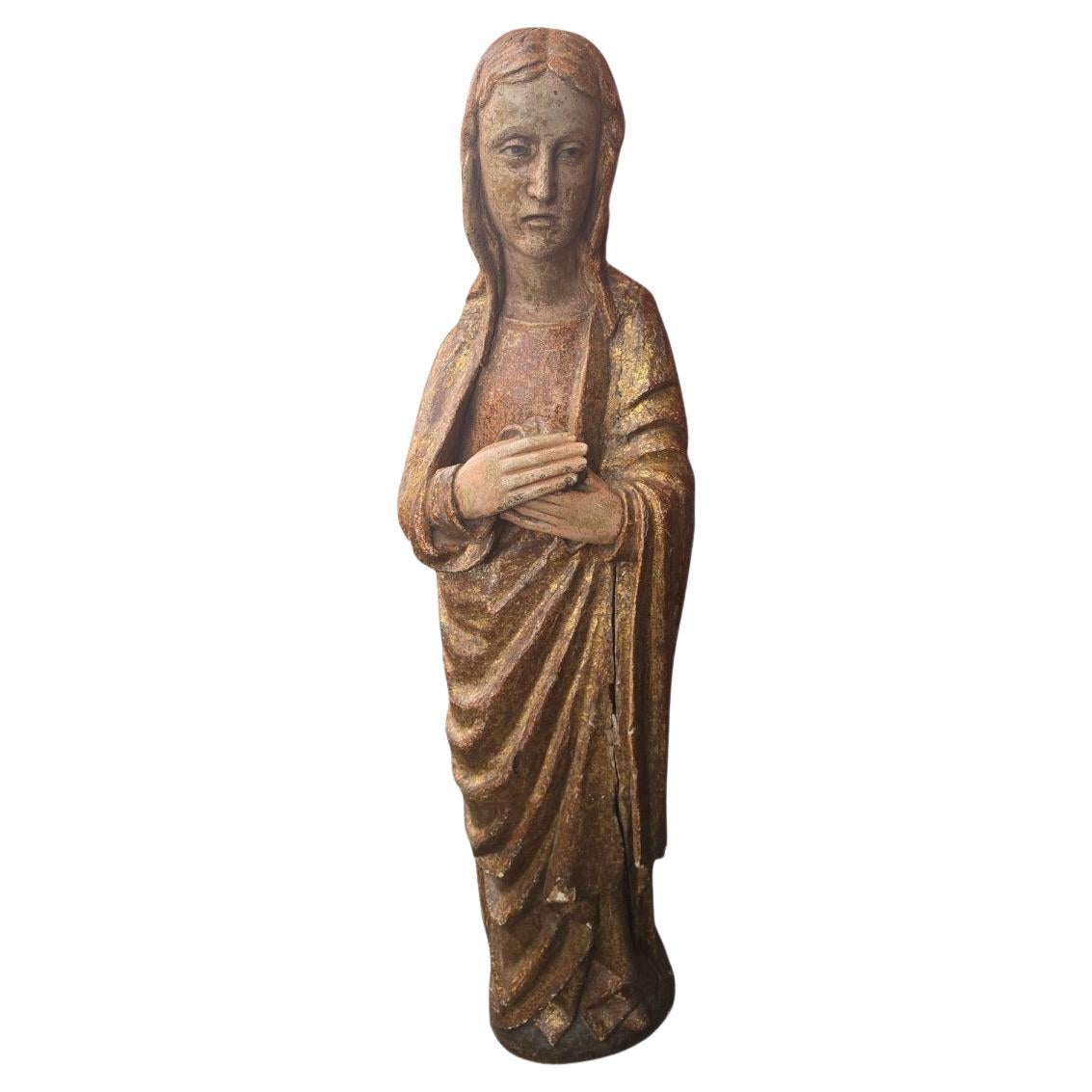
A remarkable carved and polychromed wooden sculpture depicting the Virgin Mary standing in prayer, her hands joined in a gesture of devotion and contemplation. Executed in Italy duri...

Category

Antique 16th Century Italian Renaissance Figurative Sculptures

Materials

Fruitwood

Saint Woman in polychrome carved wood

Saint Woman in polychrome carved wood

Located in Saint-Ouen, FR

SAINT WOMAN IN POLYCHROME CARVED WOOD   ORIGIN : ITALY PERIOD : late 13th century   Height : 103 cm Length : 28  cm Width : 16 cm  Remains of polychromy   ...

Category

Antique 15th Century and Earlier Italian Gothic Figurative Sculptures

Materials

Softwood

18th Century Italian Carved Wood Polychrome Virgin Mary Sculpture

18th Century Italian Carved Wood Polychrome Virgin Mary Sculpture

Located in Doha, QA

This is an outstanding Italian 18th century carved wood polychromed sculpture of Virgin Mary. The Sculpture is hand painted with some remains of a gold gilt in few places and originated until lately in a private Villa in Tuscany (Italy). The colors are typical red, blue and green are spectacular on this large figure. The Virgin's hands are joined together in a prayer, while standing on a pedestal on the both sides of which are devil's horns (bottom left side horn missing ) symbolising Holly Mary defeating the Evil, protected by the Holly Ghost and an Angel. A story tells the pose of the Virgin Mary sculpture...

Category

Antique 18th Century Italian Baroque Figurative Sculptures

Materials

Wood, Pine

Virgin with Child. Carved and polychrome wood. Spanish school, 13th century.

Virgin with Child. Carved and polychrome wood. Spanish school, 13th century.

Located in Madrid, ES

Virgin with Child. Carved and polychrome wood. Spanish school, 13th century. It has faults. Polychrome wood carving that shows the Virgin sitting on a throne, with her right hand r...

Category

Antique 15th Century and Earlier Spanish Gothic Religious Items

Materials

Other

Important 15th Century Polychrome Wood Virgin and Child

Important 15th Century Polychrome Wood Virgin and Child

Located in Saint-Ouen, FR

Important 15th century polychrome wood virgin and child Origin: Southern Germany Period: Late 15th Century, Ca. 1480-1490 Height : 125 cm Polychrome limewood Good condition Provenance : Private collection, Alsace, France. As soon as 1430, sculpture starts a major and deep stylistic evolution than will unfold over a century, until around 1530. We call it the International Gothic. This production is particularly interested in a quest for realism. This important Virgin and Child wears a long red dress with a round gilded neckline. A delicate golden belt...

Category

Antique 15th Century and Earlier Figurative Sculptures

Materials

Wood

Important 14th Century Polychrome Limestone Virgin from Lorraine

Important 14th Century Polychrome Limestone Virgin from Lorraine

Located in Saint-Ouen, FR

Provenance : - Kunsthaus Heinrich Hahn, Frankfurt am Main, sale 16, June 17, 1930, lot 16. - Sotheby's, Amsterdam, Feb. 26, 2006, lot 201. HISTORIC Located between Moselle valley and Meuse valley, framed by the Vosges Mountains on the south side and the duchy of Luxembourg on the north side, the duchy of Lorraine is the result of several partitions. It starts with the 9th century when the Carolingian empire is divided, with Lothar 1st inheriting Lotharingia. In 959 this territory was in turn divided in two; Lower and Upper Lotharingia, the latter being the forebear of the duchy of Lorraine. This duchy was under the rule of the Holy Roman Germanic Empire until 1736 when it was absorbed by the kingdom of France. All along its history the duchy of Lorraine has found itself in the midst of many conflicts. Alliances and feuds marking European history were always particularly sensible in Lorraine where instability was frequent. Because of its geographic position the duchy of Lorraine was also an artistic crossroad. Hence the duchy of Lorraine becomes from the 13th century onwards an important artistic centre where a particular type of Virgin and Child appears. According to professor J. A. Schmoll the characteristics of Lorraine sculpture burgeon around 1280-1300 in the Aube region. It presents “vigorous volumes, restrained movements, rare but solemn gestures and a strong interiorised and stern expression”. Those Virgins look similar with a wide forehead, a shield- or oval-shaped face, large neck, small lips and a cleft chin. This model is particularly in favour during the 13th century because of the revival for Marial worship and for the theme of the Virgin and Child. It bears witness to a new religious sensibility with a more intimate vision of religious practice. DESCRIPTION The important 14th century Virgin we present to you is one of the most beautiful examples of sculptural art from Eastern France, with her fascinating distant gaze. Her contrapposto posture is induced by the weight of the child she carries high on her left side. The child has a chubby face framed by blond hair with well defined curls and he wears a long red V-collared tunic from which emerge his feet. The fabric is animated by long folds. The position of the right foot turned to the back is a detail we can notice on several Virgins from Lorraine. He holds a bird that seems to be pecking his thumb. “The bird /held by the child in his hands/ has been read as a reference to an episode from Christ’s childhood when he has moulded sparrows with clay before giving them life. It appears in the apocryphal gospel of Pseudo-Matthew (ch. 27) and later in the Quran (III, 43, v. 110). However the iconography seems to be more influenced by the concept of Redemption or of Eucharist, the bird symbolising the soul of the Christian about to be redeemed or revitalised.” Mary wears a long dress with two rock crystal cabochons remaining from the original five. She is covered by a red cloak enriched with old-gold motifs draped as an apron falling in long pleats along her left hip. The relief treatment and the volume of the cloak developing a network of concentric pleats contrast with the the flat pleating of her dress. They nevertheless suggest the curve of her bent right leg. She wears a floret crown securing a short thin veil carved in very low relief. From it emerges her blond curled hair characteristic of the 13th century. The large face with almond-shaped eyes, straight nose, small lips and cleft chin casts its gaze afar in a fashion typical of 13th century Virgins. In her right hand she holds a lily flower. In a very refined manner the artist has carved a band on her right ring-finger. In the back, carefully sculpted, spreads the minutely detailed short veil. COMPARATIVE STUDIES This sculpture of great quality presents obvious similarities with Virgins from Lorraine, designated by William Forsythe...

Category

Antique 15th Century and Earlier French Gothic Figurative Sculptures
Materials

Limestone