Want more images or videos?
Request additional images or videos from the seller
1 of 9

Auguste Rodin
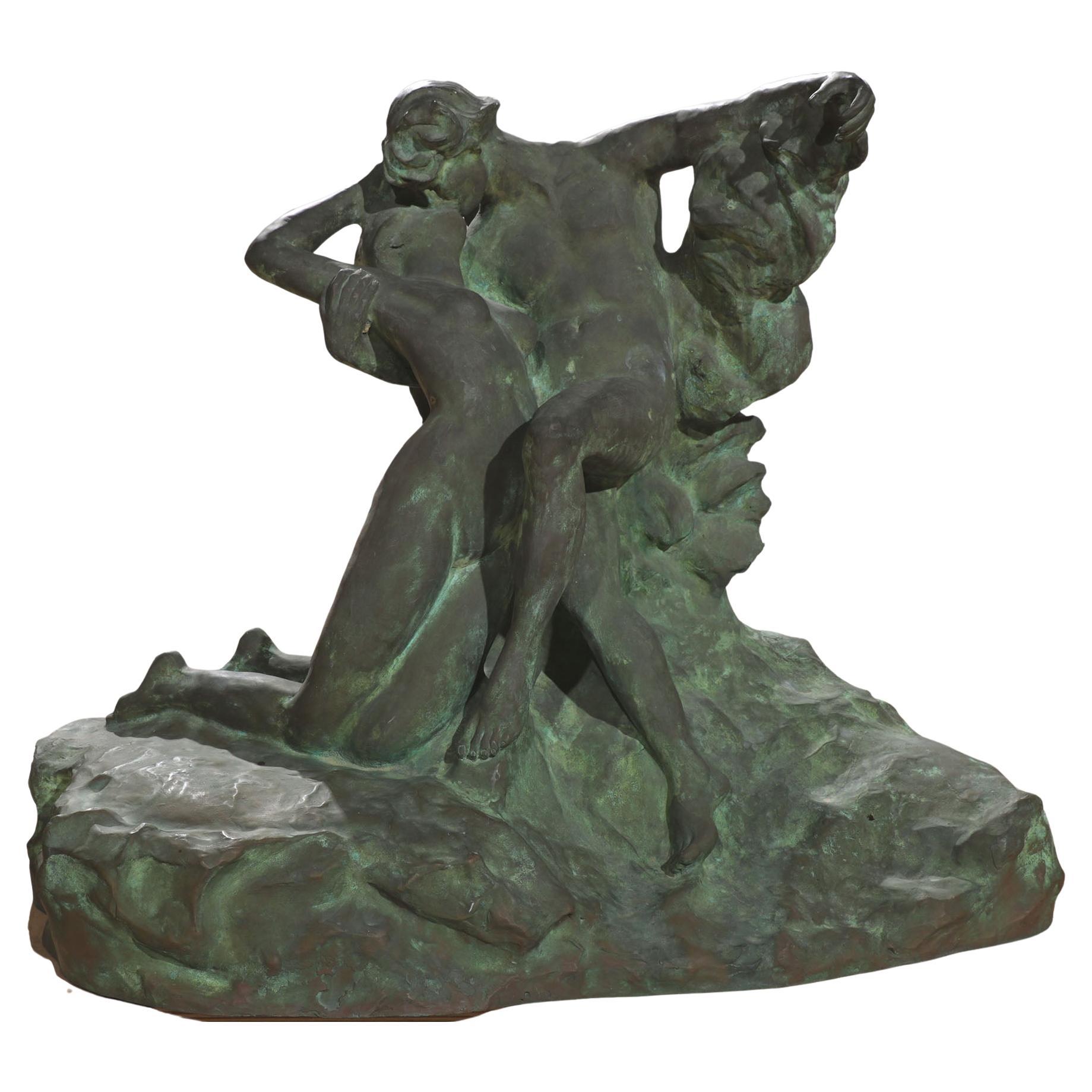
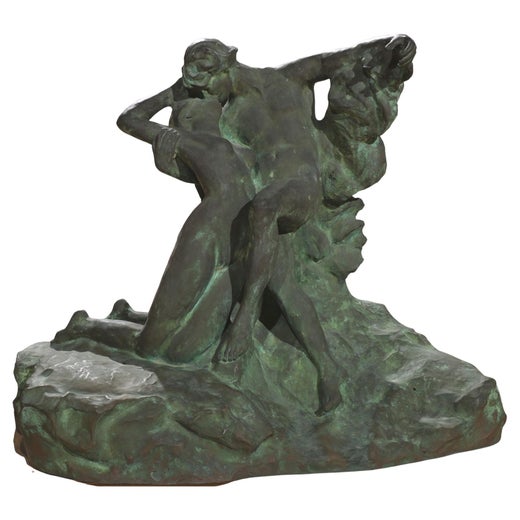
L'Éternel Printemps by Auguste Rodin

Circa 1905-10

$1,285,000
£973,751.80
€1,134,956.10
CA$1,836,820.22
A$1,859,825.63
CHF 1,058,049.47
MX$22,602,713.49
NOK 12,506,673.19
SEK 12,440,970.42
DKK 8,484,071.97

About the Item

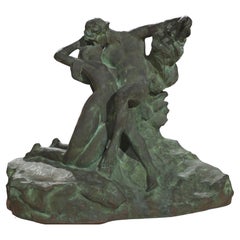
Auguste Rodin 1840-1917 French L'Éternel Printemps (The Eternal Spring) Bronze with brown patina Signed "Rodin" (on base), with Barbedienne foundry mark Perhaps one of the most well-known and celebrated sculptures of his oeuvre, Auguste Rodin's passionate bronze L'Éternel Printemps is the embodiment of this artist's rare genius. Conceived in 1884, the bronze is regarded as one of the masterpieces of his mature output, conveying a sensuality and aura of passionate love from every angle. This work was conceived at the height of Rodin's career in 1884, during an intense period of work on his pivotal Gates of Hell commission. It tells the age-old narrative of forbidden love, depicting the affair of Francesca da Rimini and Paolo Malatesta, who famously appear in Dante's Inferno for their transgression. Highlighting the lovers' bliss rather than their ultimate punishment, Rodin felt the bronze was too joyful and removed it from his Gates of Hell. Instead, he executed it as a stand-alone sculpture that would become one of his most acclaimed and beloved works. The Kiss, another masterpiece by the sculptor, shares a similar origin and subject, though L'Éternel Printemps is more dynamic in its pose. Rodin's technical mastery was unmatched in his day, and by the turn of the century, he was regarded as the best sculptor since Michelangelo. His composition is dynamic from every angle, utilizing negative space in the arch of the woman's back and her lover's outstretched arm to create movement and feeling. Like many of his major works, Rodin looked back to one of his previous models in order to develop his amorous lovers. The female figure is based on his sensuous Torso of Adèle (Musée Rodin, Paris), which appears in the upper left-hand corner of the tympanum of his Gates of Hell. L'Éternel Printemps is also believed to resemble Camille Claudel, a sculptor with whom Rodin began a passionate affair after she joined his studio in 1882. The autobiographical element of Rodin's own forbidden love perhaps accounts for the work's intimacy and intensity. After its successful showing at the Salon of 1897, Rodin awarded the casting of this bronze to the Barbedienne foundry in 1898. This sculpture is from the founder's second reduction, meaning it is the second largest of four versions they produced. It was also importantly cast during Rodin's lifetime and thus under his supervision, between 1905-1910. Other versions of this bronze can be found in museums worldwide, including the Musée Rodin (Paris), the Metropolitan Museum of Art (New York), the Museum of Fine Arts (Boston) and others. Auguste Rodin is counted among the greatest artists of the late 19th and early 20th centuries, along with names such as van Gogh, Monet and Renoir. In the history of sculpture, he occupies a place even more important than his painterly contemporaries, for he alone revived the art of sculpture, returning it to prominence among mainstream art. During the mid-1870s, after two decades of struggling as an artist, Rodin visited Italy and studied the works of Michelangelo, who inspired his first major work, The Bronze Age. Exhibited in Brussels in 1877, it was so well received that the State purchased the work in 1880, which led to the commission of Rodin's The Gates of Hell. His works, so naturalistic and expressive in detail, were far removed from conventional, decorative sculpture and ultimately transformed the history of art. Today, he is widely regarded as the father of modern sculpture. This important work is accompanied by a letter from the Comité Auguste Rodin confirming it will be included in the forthcoming Catalogue Critique de l’Oeuvre Sculpté d’Auguste Rodin by Jérôme Le Blay. Conceived in 1884; cast between 1905-1910 20 1/4" high x 26" wide x 13" deep Provenance: Private Collection, Argentina, acquired in the 1910s Private Collection, France M.S. Rau, New Orleans Private Collection, Texas M.S. Rau, New Orleans
  • Creator:
    Auguste Rodin (1840 - 1917, French)
  • Creation Year:
    Circa 1905-10
  • Dimensions:
    Height: 20.25 in (51.44 cm)Width: 26 in (66.04 cm)Depth: 13 in (33.02 cm)
  • Medium:
  • Movement & Style:
  • Period:
  • Condition:
  • Gallery Location:
    New Orleans, LA
  • Reference Number:
    Seller: 32-14281stDibs: LU18616751272

More From This Seller

View All
Tigre saissant un paon by Antoine-Louis Barye

Tigre saissant un paon by Antoine-Louis Barye

By Antoine-Louis Barye

Located in New Orleans, LA

Antoine-Louis Barye 1795-1875 French Tigre saissant un paon (Tiger seizing a peacock) Bronze Signed “BARYE” Modeled by famed French Romantic sculptor Antoine-Louis Barye, this r...

Category

19th Century Figurative Sculptures

Materials

Bronze

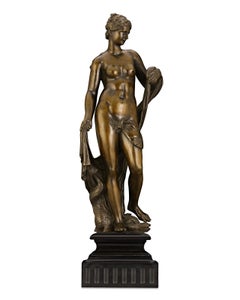
Bronze of Amphitrite after Michel Anguier

Bronze of Amphitrite after Michel Anguier

Located in New Orleans, LA

After Michel Anguier French 1612-1686 Amphitrite Bronze This remarkable bronze masterpiece was cast after a High Baroque masterwork by French sculptor Michel Anguier. After traini...

Category

17th Century Baroque Nude Sculptures

Materials

Bronze

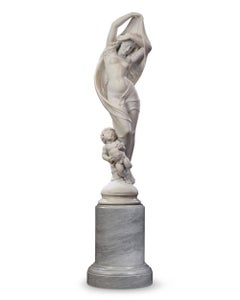
The Night

The Night

By James Pradier

Located in New Orleans, LA

After James Pradier 1792–1852 French The Night White marble on a grey marble socle Drifting in a dreamlike ascent, this exquisite allegorical sculpture, The Night, pays tribute t...

Category

20th Century Nude Sculptures

Materials

Marble

La Pêche by Duchoiselle

La Pêche by Duchoiselle

By Duchoiselle

Located in New Orleans, LA

Duchoiselle 1801-1900 French La Pêche (Allegory of Fishing) Bronze with a brown and parcel-gilt patina Signed “Duchoiselle” This remarkable bronze figure is distinguished by its ...

Category

Mid-19th Century Academic Nude Sculptures

Materials

Bronze

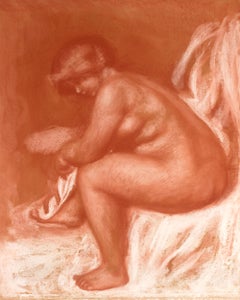
Après le bain (After the bath)

Après le bain (After the bath)

By Pierre Auguste Renoir

Located in New Orleans, LA

For Pierre-Auguste Renoir, Impressionism's pre-eminent figure painter, depicting the nude was an exercise in bringing the canvas to life. He once said, “I look at a nude, I see myriads of minuscule shades. I have to find those which will make the flesh on my canvas come to life and resonate.” This compelling portrait by Renoir entitled Après le bain presents the nude figure of a woman in a serene, private moment, absorbed in the task of drying herself after a bath. The artist’s mastery of light and shading is incredible, achieving a sense of vitality in this otherwise ordinary scene. Renoir is celebrated for his figural work, especially his Rubenesque female nudes, however, it was not until the artist was in his forties that he depicted the nude with any frequency. In 1881, Renoir traveled to Italy, where he studied the works of the Renaissance masters and the ancient art of Pompeii and Rome. Upon his return to France, the nude became his favored subject, and he used the motif to combine the spontaneity of Impressionism with the solid modeling of classical painting. Renoir’s medium here, sanguine, a reddish-brown chalk, was used extensively in the Renaissance by Leonardo (who employed it in his sketches for the Last Supper), Michelangelo and Raphael. Its warm hue lends itself well to depicting flesh, and the chalk drawing allows for a greater focus on line, form and texture in a departure from the aspects of color and light that so often preoccupied the Impressionists. Après le bain conveys the impression of arrested motion with perfect naturalness, deftly capturing the moment before the elegant lines of the sitter's form change position. The sitter is almost certainly Gabrielle Renard, the nanny to Renoir’s children and a frequent model for the artist. Gabrielle was the cousin of Renoir’s wife, Aline, and came to Montmartre to work for the family at the age of 16. She developed a strong bond with the family and became a favorite subject for Renoir, appearing in several of his most important works, including his 1911 Gabrielle with a Rose (Musée d'Orsay). When Renoir began to suffer from severe rheumatoid arthritis that would eventually leave him unable to walk and scarcely able to grasp a paintbrush, it was Gabrielle that would assist the artist by positioning the paintbrush between his crippled fingers. Born in Limoges, France in 1841, Renoir began his career as an apprentice to a painter of porcelain wares. He later moved to Paris at the age of 21, enrolling at the prestigious École des Beaux-Arts. It was here, while studying under Charles Gleyre, that Renoir attained a tremendous appreciation for the academic style of painting, a quality that would last throughout his career. This was also when he met Claude Monet and several other classmates, with whom he would later form the Impressionists. Working closely with Monet, Renoir began experimenting with the portrayal of light and its effect on his canvases. The youngest member of the Impressionist movement, an astute Renoir recognized how a subject was constantly changing due to the dynamic effects of light on color. Relying heavily upon his academic training that focused on composition, lines and descriptive details, Renoir distinguished himself among his contemporaries. His intuitive use of color and expansive brushstroke, along with acute attention to his subject, have placed him among the finest painters in history. This work is accompanied by a certificate of authenticity and will be included in the forthcoming catalogue raisonné of the work of Pierre-Auguste Renoir from the Wildenstein Plattner Institute. Circa 1898 Canvas: 43 1/2" high x 35 1/2" wide Frame: 57 3/4" high x 49 1/4" wide Provenance: Galerie Durand-Ruel, Paris (acquired from the artist on January 25, 1899) J. Pereire Collection, France (1966) Sam Salz, New York (before 1981) Claus Virch, Paris French Compagny, Inc., New York Larry Silverstein, New York (circa January 1987) Le Clos de Sierne Gallery, Geneva Galerie Heyram, Paris (October 1987) Francis Gross M.S. Rau, New Orleans Literature: B. Schneider, Renoir, Berlin, 1957, p. 95 (illustrated in color, p. 83) M. Gauthier, Renoir, Paris, 1958, p. 83 (illustrated in color; erroneously dated '1916' and titled 'Woman in her toilet') F. Fosca, Renoir, L'homme et son obra, Paris, 1961, p. 280 (illustrated, p. 95; erroneously dated 'about 1890' and titled 'After the Bath...

Category

19th Century Impressionist Nude Paintings

Materials

Canvas, Paper, Chalk

Nude Drinking from a Bowl by Victor Heinrich Seifert

Nude Drinking from a Bowl by Victor Heinrich Seifert

By Victor Heinrich Seifert

Located in New Orleans, LA

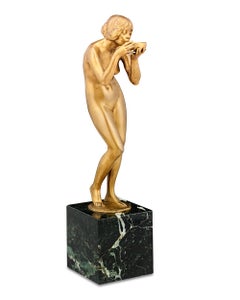
Victor Heinrich Seifert 1870–1953 German Nude Drinking from a Bowl Signed “V. Seifert” Gilt bronze on marble base Graceful yet commanding, Nude Drinking from a Bowl stands among ...

Category

Early 20th Century Art Nouveau Nude Sculptures

Materials

Marble, Bronze

You May Also Like

Auguste Rodin Replica L'eternal Printemps 'Eternal Springtime', 1884

Auguste Rodin Replica L'eternal Printemps 'Eternal Springtime', 1884

By Auguste Rodin

Located in Dallas, TX

This is a bronze statue Auguste Rodin Eternal Springtime reproduction. It is based on the couple, Paolo and Francesca, the passionate lovers from the fifth canto of Dante's Inferno. ...

Category

Antique Late 19th Century Romantic Figurative Sculptures

Materials

Bronze

Dynamic female nude sculpture by Auguste Rodin

Dynamic female nude sculpture by Auguste Rodin

By Auguste Rodin

Located in Allentown, PA

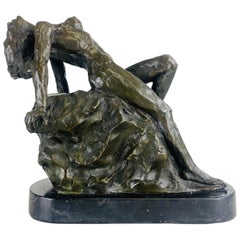
This is a dynamic female nude sculpture by Auguste Rodin. This suggestive sculpture is beautifully executed in the impressionist style. This museum restrike stands on a black marble ...

Category

Vintage 1970s Unknown Expressionist Figurative Sculptures

Materials

Bronze

Original Bronze Sculpture of Frère Et Soeur Brother & Sister by Auguste Rodin

Original Bronze Sculpture of Frère Et Soeur Brother & Sister by Auguste Rodin

By Auguste Rodin

Located in New York City, NY

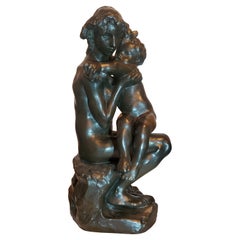
An important original bronze sculpture of Brother and Sister- Frère et Soeur , by A. Rodin (1840-1917) signed 'A. Rodin' on the right of the base, inscribed with the foundry mark 'Alexis Rudier...

Category

Early 20th Century French Romantic Figurative Sculptures

Materials

Bronze

After Auguste Rodin 'The Danaide', patinated bronze, later casting

After Auguste Rodin 'The Danaide', patinated bronze, later casting

By Auguste Rodin

Located in Den Haag, NL

After Auguste Rodin cast bronze , signed on a solid Oak base . signed ."poorly legible". One of the most tragic subjects in Rodin's oeuvre is the Danaïde. The Danaïdes were the...

Category

Early 2000s French Beaux Arts Figurative Sculptures

Materials

Bronze

Faunesse Debout (Standing Faunesse), after Auguste Rodin

Faunesse Debout (Standing Faunesse), after Auguste Rodin

By Auguste Rodin

Located in West Palm Beach, FL

Faunesse Debout (Standing Faunesse), after Auguste Rodin François Auguste René Rodin (1840–1917)  Faunesse Debout (Standing Faunesse), Simple Rock Version, the original received in...

Category

20th Century French Modern Figurative Sculptures

Materials

Marble, Bronze