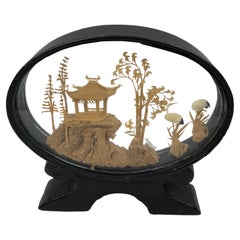
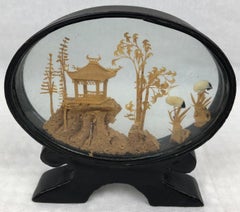
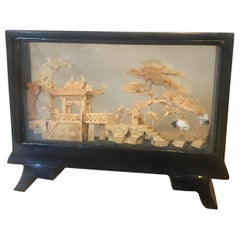
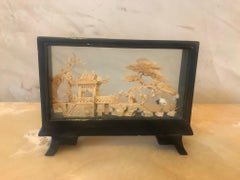
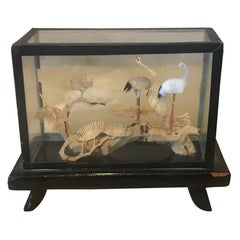
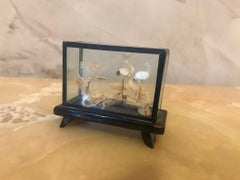
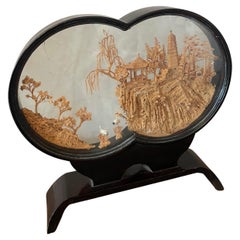
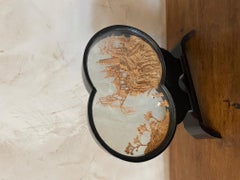
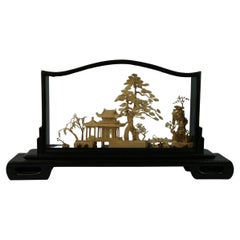
Cork furniture is back — and for good reason: Renewable, recyclable, lightweight, inexpensive and warm, it seems to have no downside.
The versatile material has cycled in and out of fashion in furniture and interior design since its mid-century heyday, when visionary creators from Edward Wormley to Frank Lloyd Wright used it in some of their most famous work.
Today, the wheel has turned once more in cork’s favor, as designers trend toward more eco-friendly options. In addition to its aforementioned attributes and the fact that it is waterproof and highly insulating, the cork oak trees (native to Portugal and Spain) from whose bark it is made are unharmed by the harvesting.
Cork, in short, is more than just a convenient bottle stopper. As the environmental impact becomes an increasingly important consideration, furniture designers are turning to the material in droves.
Shop a wide variety of cork tables, cork seating and other cork furnishings on 1stDibs.
Asian sculptors have worked in materials including wood, bronze and jade. Artists and artisans have used traditional techniques to depict deities, scenes from culture and more, and today, antique Asian sculptures and carvings are a popular choice for provocative and sophisticated home decor.
In China, the Qing dynasty, from the mid-17th century to the early 20th century, brought about significant changes in art while preserving traditional culture. Many emperors during this period were patrons of the arts, such as painting, calligraphy and decorative arts. This era saw the building of new Buddhist temples, which were decorated with statues. Some of these sculptures were adorned with colorful cloisonné decoration, in which tiny compartments, or cloisons, made by soldering copper filaments to a metal surface were filled with vibrantly hued enamel.
From the 17th to mid-19th century in Japan, kimonos were worn across classes and often fastened with a netsuke, a type of small carved toggle. Artists carved these from ivory, wood, shells and coral, creating animals, flowers and mythical creatures. During the Japanese Meiji period, spanning from 1868–1912, the country began trading internationally after centuries of isolation, allowing artists to sell their work overseas. Bronze sculpture flourished around this time for creating teapots, vases and incense burners.
Asian sculpture continued to evolve in the 20th century. During the Japanese Shōwa era, from 1926–89, art was influenced by international modernist movements like abstraction, Futurism and Surrealism. Contemporary Asian sculptures and carvings continue to combine global influences and a rich heritage of technique.
Decorating a space with Asian sculptures and carvings is a great way to add interest to any corner of your home. Explore by material, period or style on 1stDibs.