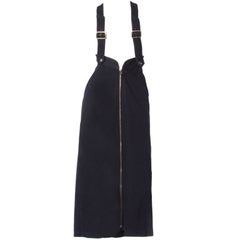
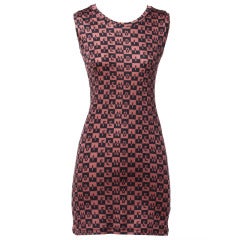
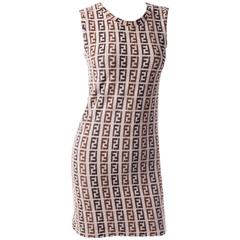
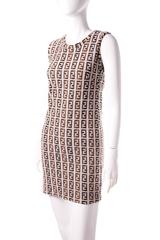
Like other major European luxury fashion houses, Fendi started small. Adele Casagrande was an Italian creative who loved fashion and sold leather and fur accessories from a tiny workshop she opened in Rome in 1918. However, after marrying Edoardo Fendi in 1925, her business model was altered dramatically. Together, the couple changed the boutique’s name to Fendi and moved into a bigger storefront, which quickly became the favorite shop of women all over Italy’s capital city for furs and leathers, such as handbags, coats and accessories.
As time moved on for Adele and Edoardo, the couple began to distribute more responsibility to their five daughters, who assumed management of the company during the 1950s. Fendi’s audience broadened and its profitability has soared over the years, owing to the brand’s fresh perspective on fashion world happenings and innovative sensibility.
The maison also has a distinctive relationship with old-world Italian craftsmanship. The Selleria bags were the work of master saddlers in Rome, and Fendi partnered with lace artisans in southern Italy as well as craftsmen in the east trained in the intrecciato (intertwined) technique (an idea that Adele introduced during the 1940s), which, in Fendi’s case, sees an interwoven leather fabric integrated in the creation of its handbags, countering leather’s traditional rigidity with a bag that is soft, versatile and fitted with an alluring slouchy curve.
It wasn’t until 1965, however, when a young German designer named Karl Lagerfeld took the creative helm that Fendi became a world-renowned fashion house. In fact, Lagerfeld, who produced four to five collections yearly for the brand, is credited with creating Fendi’s instantly recognizable double-F logo (which stands for “Fun Furs”) in “less than five seconds.” Until Lagerfeld started designing for the brand, fur was a material mostly associated with heavy coats that few people actually wore. Lagerfeld reimagined fur in creative ways, using it as an accent on purses, cuffs on dress sleeves and collars on wool coats.
Over the ensuing years, Fendi has broken into the home-goods market with Fendi Casa and has become synonymous with luxury fashion, producing such pieces as the iconic Baguette, which was rendered ever popular on the television series Sex and the City. In fact, an entire episode during the third season was dedicated to the “original It bag,” a slim accessory tapered in a manner that recalls its namesake, designed in 1997 by Adele and Edoardo’s granddaughter Silvia Venturini Fendi, who was named creative director of accessories three years earlier.
Perhaps just as well known as its vintage Baguette handbags and creative use of fur is the brand’s devotion to its Italian roots. In 2013, Fendi donated more than 2 million euros to restore Rome’s Trevi Fountain, and when it was reopened to visitors, Fendi hosted its Autumn/Winter 2017 show on top of the landmark.
Fendi was a family-controlled brand until 1999 and is now owned by LVMH. In late 2020, British fashion designer Kim Jones was named the house’s artistic director for womens wear.
Find a wide variety of vintage Fendi handbags and purses, clothing and other accessories on 1stDibs.
Luxurious and versatile, designer day dresses are as well suited to tea at an upscale hotel as they are to your next garden or rooftop party.
Today’s featherlight unisex day dresses — as well as the vibrant vintage day dresses of the 1950s and ’60s — look quite different from the heavy, fabric-rich de rigueur garments of the Victorian era. In the late 19th century, a woman of a certain standing might have multiple dresses to wear throughout the day: specifically, one or two for the daytime and one for the evening. For example, a long-sleeve silk dress with a prominently flared back and a round collar of gold beaded lace that hugs the neck would be suitable for stepping out during the day, while a velvet gown trimmed in silk embroidery but overall comparatively informal in appearance would be worn for afternoon tea at home. At night, a silk velvet evening dress could feature natural world motifs such as butterflies (a characteristic of Art Nouveau design) and have short sleeves adorned with lace and ruffles and a scooped neckline — the perfect attire for the theater.
During the 1920s, after all the chores were done, a woman would change from her housework clothing into a more fashionable day dress to run her errands or socialize. Some 1920s day dresses were brightly colored and featured bold patterns — a cotton dress with a dazzling floral print, perhaps, or, in the case of the more venturesome Art Deco apparel sold in high-end couture fashion boutiques of the era, semi-sheer silk garments embellished with three-dimensional beadwork or rich metallic gold lamé.
Today, a closet full of casual vintage day dresses is a must-have. Whether you opt for black, crimson or beige, day dresses bring an element of glamour to your next appointment, and in the summer, who doesn’t love a wonderfully simple, lightweight day dress cut in cotton and linen?
Because different fashion designers of every decade have offered their own take on the widely loved day dress, you’ll be able to find a variety of vintage and designer day dresses on 1stDibs. Search by creator to find enduring designs by the likes of Emilio Pucci, Pierre Cardin, Yves Saint Laurent and Christian Dior, or browse by period to uncover a scintillating collection of cotton and satin patterned dresses of the 1950s and ’60s.