(after) Fernand Léger Figurative Prints

French, 1881-1955
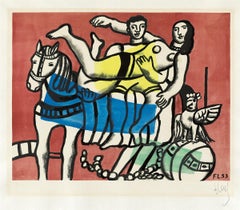
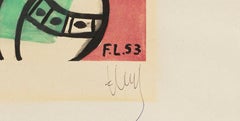
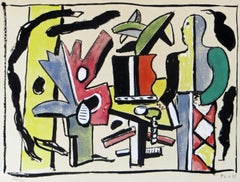
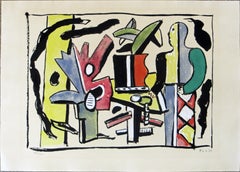
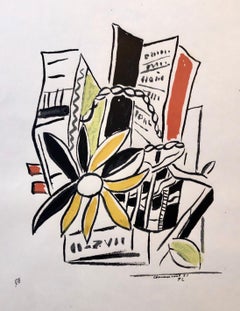
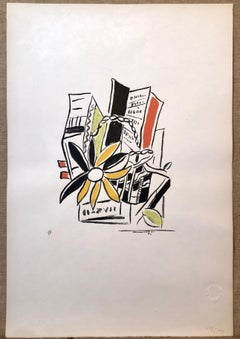
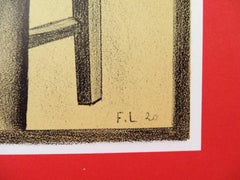
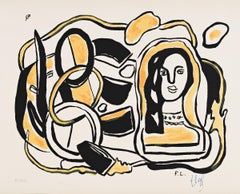
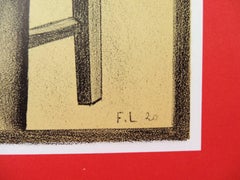
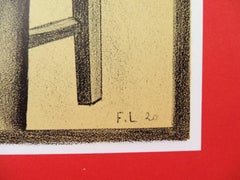
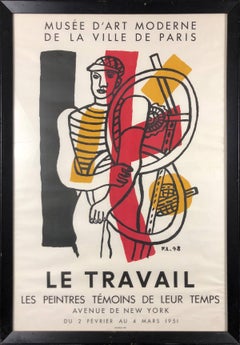
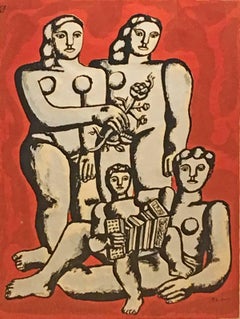
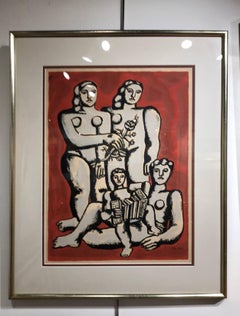
This print is part of my private collection. They were published in a numbered unsigned edition of 1000, and a signed edition of 200, printed by Serifraphie Fernand Leger, Paris and published by La Guilde International de la Gravure, Jean Bruller 1954/55. Initials in plate. They are catalogued in Lawrence Saphire's "Fernand Leger- Complete Graphic Work." They come from a portfolio sute of 10 serigraphs after original Fernand Leger gouaches. Fernand Leger 1881-1955, French was one of the major Cubist painters in France, later he also became a sculptor, art educator and filmmaker. In the early 1900's he was influenced by Cezanne and began creating in a more geometric style. He created his own style called Tubism with emphasis in cylindrical forms. He was considered one of France's three major Cubist painters among Picasso and Georges Brayer. Leger was influenced by the Italian "Futurism" style.
to
5
1
1
1
Overall Width
to
Overall Height
to
4
1
61
719
420
384
370
8
1
4
5
3
3
3
2
2
1
1
1
1
1
1
1
1
7
1
5
3
Artist: (after) Fernand Léger
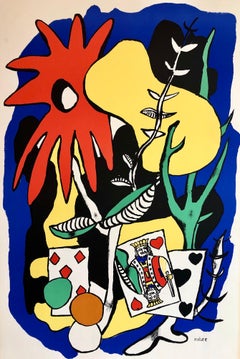
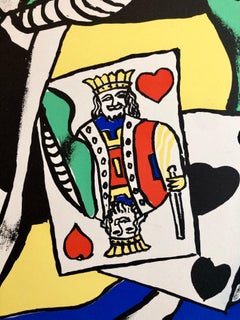
Fernand Leger School Prints Colorful Modernist King of Hearts Drawing Lithograph

Fernand Leger School Prints Colorful Modernist King of Hearts Drawing Lithograph

By (after) Fernand Léger

Located in Surfside, FL

Bright vibrant blue, orange, red, yellow, green lithograph in color. This is signed in the plate and dated. Leger's abstract drawing lithograph was drawn by the artist direct on to p...

Category

1940s Modern (after) Fernand Léger Figurative Prints

Materials

Lithograph

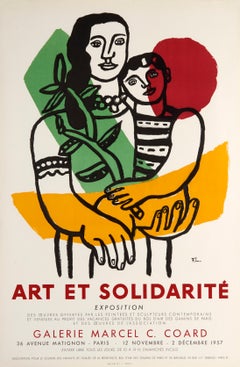
Art et Solidarité (art and solidarity) by Fernand Leger

Art et Solidarité (art and solidarity) by Fernand Leger

By (after) Fernand Léger

Located in New York, NY

This lithographic poster was printed in 1957 at the Atelier Mourlot in Paris to promote the recent works of contemporary painters and sculptors, sold for the benefit of free vacation...

Category

1950s Modern (after) Fernand Léger Figurative Prints

Materials

Lithograph

La Parade
La Parade

La Parade

By (after) Fernand Léger

Located in New York, NY

A superb impression of this offset lithograph with vibrant pochoir color. Signed and numbered in ink, from an edition of 185.

Category

1950s Modern (after) Fernand Léger Figurative Prints

Materials

Color, Offset

L'Artiste dans le Studio from Douze Contemporains

L'Artiste dans le Studio from Douze Contemporains

By (after) Fernand Léger

Located in San Francisco, CA

Artist: Fernand Leger (after) Title: L'Artiste dans le Studio from Douze Contemporains Year: 1959 Original: 1938 Medium: Lithograph with Pochoir on Wove paper, signed and dated in t...

Category

1950s Abstract (after) Fernand Léger Figurative Prints

Materials

Lithograph

Fernand Leger Colorful Modernist Drawing Limited Edition Serigraph Lithograph

Fernand Leger Colorful Modernist Drawing Limited Edition Serigraph Lithograph

By (after) Fernand Léger

Located in Surfside, FL

Serigraph, from ''Album of Ten Serigraphs'' (1954-55), by Fernand Leger (French 1881-1955), signed and dated in plate lower right, printed by Jean Bruller, distributed by Galerie Int...

Category

1950s Modern (after) Fernand Léger Figurative Prints

Materials

Lithograph

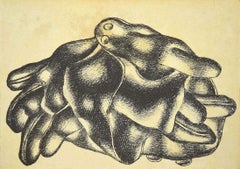
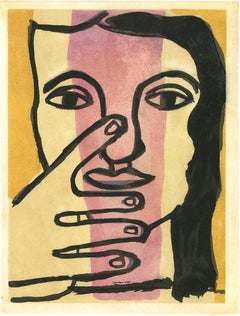
IMAGE - The Gloves - Original Lithograph after F. Léger - 20th Century

IMAGE - The Gloves - Original Lithograph after F. Léger - 20th Century

By (after) Fernand Léger

Located in Roma, IT

The gloves is an original lithograph on paper realized by Fernand Léger (1881-1955). Very good conditions except for some little foxings. Sheet dimension: 21.5 x 30.5 The artwork ...

Category

20th Century Cubist (after) Fernand Léger Figurative Prints

Materials

Lithograph

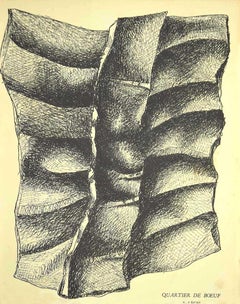
Composition - Original Lithograph after F. Léger - Mid-20th Century

Composition - Original Lithograph after F. Léger - Mid-20th Century

By (after) Fernand Léger

Located in Roma, IT

Quartier de Boef is an original lithograph on paper realized after Fernand Léger (1881-1955). Very good conditions except for some little foxings. Sheet dimension: 30 x 24 On both...

Category

20th Century Cubist (after) Fernand Léger Figurative Prints

Materials

Lithograph

Related Items
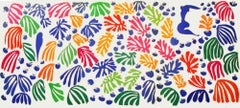
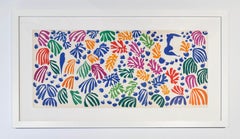
Henri Matisse Lithograph, Modern, 1958, La Perruch et la Sirene, The Last Works

Henri Matisse Lithograph, Modern, 1958, La Perruch et la Sirene, The Last Works

By (after) Henri Matisse

Located in Washington, DC

Artist: Henri Matisse (after) Title: La Perruch et la Sirene Portfolio: The Last Works of Henri Matisse Medium: Lithograph Date: 1958 Edition: 2000 Frame Siz...

Category

1950s Modern (after) Fernand Léger Figurative Prints

Materials

Lithograph

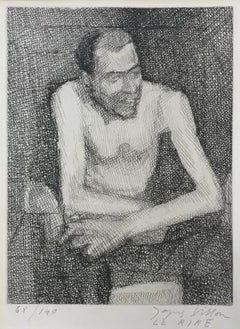
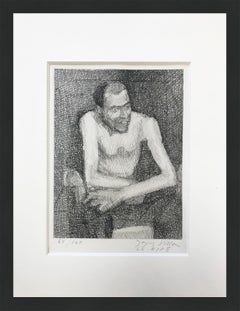
Le Rire Etching Print, Cubist Style, Hand Signed, Edition of 140, 1935

Le Rire Etching Print, Cubist Style, Hand Signed, Edition of 140, 1935

By Jacques Villon

Located in Aventura, FL

Hand signed, titled and numbered by the artist. Ginestet Pouillon 390. Sheet size 10.7 x 7 in. Image size 8 x 6 in. Framed. Edition of 140. Artwork is in excellent condition. Certi...

Category

1930s Cubist (after) Fernand Léger Figurative Prints

Materials

Paper, Etching

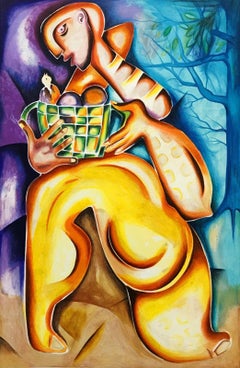
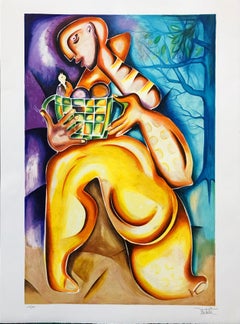
A New Tomorrow Lithograph Print, Cubist Style, Signed, 2008

A New Tomorrow Lithograph Print, Cubist Style, Signed, 2008

By Alexandra Nechita

Located in Aventura, FL

Lithograph on paper. Hand signed, dated and numbered by the artist. Artwork is in excellent condition. Certificate of authenticity included. Edition of 195. Image size: 27.5 x 18.5 i...

Category

21st Century and Contemporary Cubist (after) Fernand Léger Figurative Prints

Materials

Paper, Lithograph

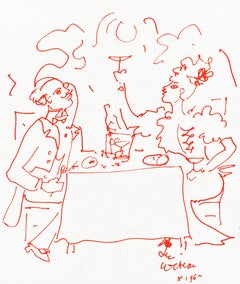
Jean Cocteau, Untitled, from Recipes for a Friend, 1964

Jean Cocteau, Untitled, from Recipes for a Friend, 1964

By Jean Cocteau

Located in Southampton, NY

This exquisite lithograph by Jean Cocteau (1889–1963), titled Sans titre (Untitled), originates from the 1964 album Recettes pour un ami, illustrations de Jean Cocteau (Recipes for a...

Category

1960s Modern (after) Fernand Léger Figurative Prints

Materials

Lithograph

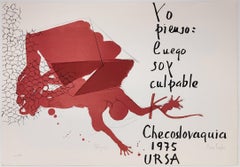
Untitled Lithograph from Poemas Para Mirar, Hand Signed, 1975, Edition of 125

Untitled Lithograph from Poemas Para Mirar, Hand Signed, 1975, Edition of 125

By Paul Rebeyrolle

Located in Aventura, FL

From Poemas Para Mirar portfolio. Hand signed and numbered by Rebeyrolle and author/poet Carlos Franqui . Printed by Maeght and Mourlot, Paris. Published by Editart D. Blanco, Ginebr...

Category

1970s Abstract (after) Fernand Léger Figurative Prints

Materials

Paper, Lithograph

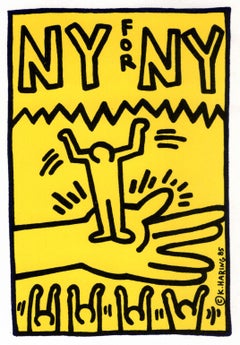
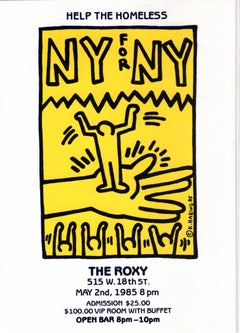
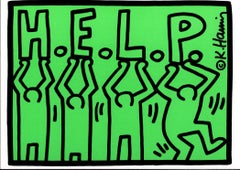
Keith Haring Help the Homeless 1985 (Keith Haring 1985 announcement)

Keith Haring Help the Homeless 1985 (Keith Haring 1985 announcement)

By Keith Haring

Located in NEW YORK, NY

Keith Haring 1985: Keith Haring off-set illustrated announcement card, NY, 1985: "NY for NY, Help The Homeless" at The Roxy, West 18th St., NYC. Off-set printed, 1985 (folds open in...

Category

1980s Pop Art (after) Fernand Léger Figurative Prints

Materials

Offset, Lithograph

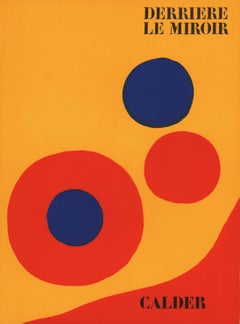
Alexander Calder Lithographic cover Derrière le miroir 1973

Alexander Calder Lithographic cover Derrière le miroir 1973

By Alexander Calder

Located in NEW YORK, NY

Alexander Calder Lithographic cover: Derrière le miroir 1973: Lithographic cover sheet; 15 x 11 inches. Very good overall vintage condition. Unsigned from an edition of unknown. Por...

Category

1970s Modern (after) Fernand Léger Figurative Prints

Materials

Lithograph

Théo Tobiasse "Les Siècles Coulent Entre Nos Rêves" Signed Color Lithograph

Théo Tobiasse "Les Siècles Coulent Entre Nos Rêves" Signed Color Lithograph

By Théo Tobiasse

Located in Miami, FL

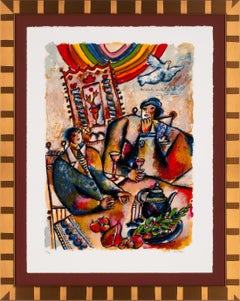
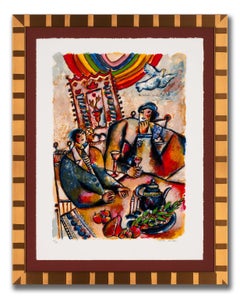
THÉO TOBIASSE (1927–2012) – “LES SIÈCLES COULENT ENTRE NOS RÊVES” Lithograph on Arches Paper ⚜ Hand Signed and Numbered ⚜ Gilt Wood Frame A LUMINOUS MEDITATION ON MEMORY, INTIMACY, AND THE PASSAGE OF TIME From the acclaimed suite Un Chant d’Exil et de Lumière (A Song of Exile and Light), this richly saturated lithograph is one image from a series of six distinct compositions published in 1997 by Klim Art Publisher, Toronto, and printed by master lithographer Pierre Chave at his celebrated atelier in Saint-Paul-de-Vence. The multi-color lithographic process, employing up to twenty-three separate color passes, produces the extraordinary depth and chromatic intensity visible across the entire composition. Two figures sit together at a table, each holding a glass of wine. A samovar and two lit candles anchor the still life at center, surrounded by scattered fruit and a bowl bearing an olive branch. A vibrant rainbow canopy arcs across the upper portion of the image, while a dove takes flight at upper right. Behind the couple hangs a decorative tablet adorned with flowering branches and scrolled columns. The title, inscribed in the artist’s hand within the composition, translates as “The centuries flow between our dreams,” a poetic distillation of the suite’s overarching contemplation of generational memory passing through shared moments of intimacy. What initially reads as a warm, intimate gathering reveals itself as a layered reflection on heritage, belonging, and the rituals that connect one generation to the next. The samovar recalls Tobiasse’s Eastern European childhood, while the olive branch and candles carry associations of renewal and hope. The dove and rainbow reinforce themes of peace and covenant that recur throughout Tobiasse’s oeuvre. Rendered on heavy Arches paper with deckled edges, the print retains a tactile, handmade quality that complements its emotional warmth. Presented in a crosshatch gilt wood frame the work suits interiors that embrace color and narrative, from a Mediterranean-inspired living space to a collector’s library or a gallery wall dedicated to the School of Paris tradition. WHY COLLECT THIS WORK? ✓ Suite Provenance – One of six distinct compositions from Tobiasse’s acclaimed Un Chant d’Exil et de Lumière series, published in 1997 ✓ Master Printed – Produced by Pierre Chave in Saint-Paul-de-Vence using up to twenty-three color passes ✓ Hand Signed and Numbered – Pencil signed lower right, numbered 87/199 ✓ Rich Symbolic Composition – Dove, rainbow, samovar, olive branch, and candle layered with personal and cultural meaning ✓ Gilt Wood Frame – Crosshatch gilt finish, ready to display ARTWORK DETAILS: ▸ Title: Les Siècles Coulent Entre Nos Rêves (The Centuries Flow Between Our Dreams) ▸ Suite: Un Chant d’Exil et de Lumière (A Song of Exile and Light) ▸ Artist: Théo Tobiasse (1927–2012) ▸ Medium: Lithograph on Arches Paper with Deckled Edges ▸ Year of Creation: 1997 ▸ Signature: Hand Signed Lower Right in Pencil ▸ Edition: 87/199 ▸ Publisher: Klim Art Publisher, Toronto, Canada ▸ Printer: Pierre Chave, Saint-Paul-de-Vence, France ▸ Provenance: Michael Hittleman Gallery, Los Angeles ▸ Country of Origin: France ▸ Dimensions: — ◼︎ Image Area: 30.5 x 22 inches — ◼︎ Paper Size: 36 x 27.25 inches — ◻︎ Frame Size: 44 x 35 x 0.875 inches ▸ Condition: Excellent, commensurate with age ▸ Framing: Crosshatch Gilt Wood Frame, ready to display THE ARTIST: Théo Tobiasse (born Tobias Eidesas, 1927, Jaffa, Israel; died 2012...

Category

1990s Modern (after) Fernand Léger Figurative Prints

Materials

Lithograph

Théo Tobiasse “The Voice of My Beloved, Behold” 1975 Signed Lithograph

Théo Tobiasse “The Voice of My Beloved, Behold” 1975 Signed Lithograph

By Théo Tobiasse

Located in Miami, FL

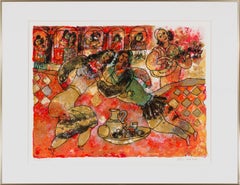
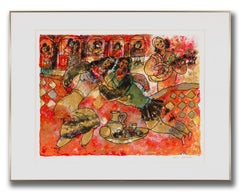
THÉO TOBIASSE (1927–2012) – “THE VOICE OF MY BELOVED, BEHOLD” Lithograph on Japon Paper ⚜ Hand Signed and Inscribed Épreuve d’artiste ⚜ Minimalist Metallic Frame A SUMPTUOUS VISION...

Category

1970s Modern (after) Fernand Léger Figurative Prints

Materials

Lithograph

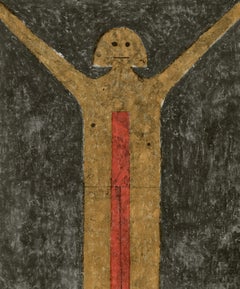
Rufino Tamayo, Man, from Ediciones Poligrafa, 1979

Rufino Tamayo, Man, from Ediciones Poligrafa, 1979

By Rufino Tamayo

Located in Southampton, NY

This exquisite lithograph by Rufino Tamayo (1899–1991), titled Hombre (Man), from the album Ediciones Poligrafa, Barcelona - Redfern Gallery, London, originates from the 1979 edition...

Category

1970s Modern (after) Fernand Léger Figurative Prints

Materials

Lithograph

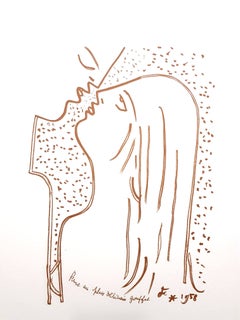
Jean Cocteau - The Kiss - Original Lithograph

Jean Cocteau - The Kiss - Original Lithograph

By Jean Cocteau

Located in Collonge Bellerive, Geneve, CH

Original Lithograph by Jean Cocteau Title: The Kiss Signed in the plate Dimensions: 32 x 25.5 cm Edition: 200 1959 Publisher: Bibliophiles Du Palais Unnumbered as issued

Category

1950s Modern (after) Fernand Léger Figurative Prints

Materials

Lithograph

Keith Haring Help the Homeless 1989 (Keith Haring 1989 announcement)

Keith Haring Help the Homeless 1989 (Keith Haring 1989 announcement)

By Keith Haring

Located in NEW YORK, NY

Keith Haring 1989: Keith Haring illustrated announcement card, NY, 1989. Published on the occasion of a 1989 fundraiser to help the homeless. Off-set printed, 1989. Measures: 5 x 7...

Category

1980s Pop Art (after) Fernand Léger Figurative Prints

Materials

Lithograph, Offset

Previously Available Items
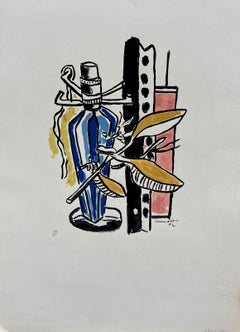
Composition a la bouteille bleue

Composition a la bouteille bleue

By (after) Fernand Léger

Located in Belgrade, MT

This print is part of my private collection. They were published in a numbered unsigned edition of 1000, and a signed edition of 200, printed by Serifraphie Fernand Leger, Paris and ...

Category

Mid-20th Century Cubist (after) Fernand Léger Figurative Prints

Materials

Lithograph

Tête de Femme avec Composition

Tête de Femme avec Composition

By (after) Fernand Léger

Located in New York, NY

A strongly colored, very good impression of this color screenprint. Signed in ink, lower right, and numbered 34/200 in pencil by Leger. Printed by Jean Bruller, Paris. Published by L...

Category

1950s Modern (after) Fernand Léger Figurative Prints

Materials

Color, Screen

Trois Soueurs sur fond Rouge

Trois Soueurs sur fond Rouge

By (after) Fernand Léger

Located in New York, NY

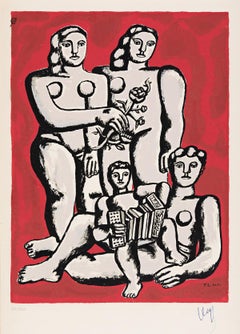
Vibrant color screenprint based on a design by French modernist artist Fernand Léger in a limited edition of 200. Signed by Léger in ink and numbered in pencil. Printed by Jean Bru...

Category

1950s Modern (after) Fernand Léger Figurative Prints

Materials

Screen

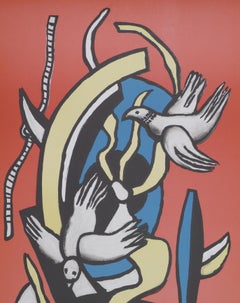
Les Oiseaux - Lithograph after F. Léger - 1978

Les Oiseaux - Lithograph after F. Léger - 1978

By (after) Fernand Léger

Located in Roma, IT

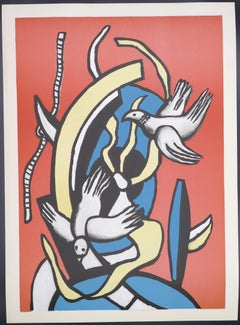
Les Oiseaux is an original print realized after Fernand Léger in 1978. Original Lithograph on Arches Paper. Mint conditions. Joseph Fernand Henri Léger ...

Category

1970s Cubist (after) Fernand Léger Figurative Prints

Materials

Lithograph

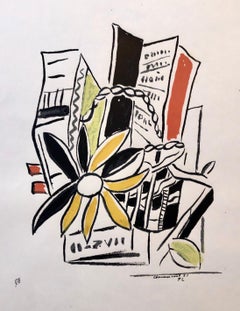
Fernand Leger Colorful Modernist Drawing Limited Edition Serigraph Lithograph

Fernand Leger Colorful Modernist Drawing Limited Edition Serigraph Lithograph

By (after) Fernand Léger

Located in Surfside, FL

Serigraph, from ''Album of Ten Serigraphs'' (1954-55), by Fernand Leger (French 1881-1955), signed and dated in plate lower right, printed by Jean Bruller, distributed by Galerie International de la Gravure, Paris (Sapphire E8), sheet: 22''H x 15''W, "Chevreuse Aout", Serigraph in colors on Arches paper, F. Leger embossed blindstamp, Numbered in pencil and bears the embossed stamp. Joseph Fernand Henri Léger (French 1881 – 1955) was a French painter, sculptor, and filmmaker. In his early works he created a personal form of cubism which he gradually modified into a more figurative, populist style. His boldly simplified treatment of modern subject matter has caused him to be regarded as a forerunner of pop art. Léger was born in Argentan, Orne, Lower Normandy, where his father raised cattle. Fernand Léger initially trained as an architect from 1897 to 1899, before moving in 1900 to Paris, where he supported himself as an architectural draftsman. After military service in Versailles, Yvelines, in 1902–1903, he enrolled at the School of Decorative Arts after his application to the École des Beaux-Arts was rejected. He nevertheless attended the Beaux-Arts as a non-enrolled student, spending what he described as "three empty and useless years" studying with Gérôme and others, while also studying at the Académie Julian. He began to work seriously as a painter only at the age of 25. At this point his work showed the influence of impressionism, as seen in Le Jardin de ma mère (My Mother's Garden) of 1905, one of the few paintings from this period that he did not later destroy. A new emphasis on drawing and geometry appeared in Léger's work after he saw the Cézanne retrospective at the Salon d'Automne in 1907. In 1909 he moved to Montparnasse and met Alexander Archipenko, Jacques Lipchitz, Marc Chagall, Joseph Csaky and Robert Delaunay. In 1910 he exhibited at the Salon d'Automne in the same room (salle VIII) as Jean Metzinger and Henri Le Fauconnier. In his major painting of this period, Nudes in the Forest, Léger displays a personal form of Cubism that his critics termed "Tubism" for its emphasis on cylindrical forms. In 1911 the hanging committee of the Salon des Indépendants placed together the painters identified as 'Cubists'. Metzinger, Albert Gleizes, Le Fauconnier, Delaunay and Léger were responsible for revealing Cubism to the general public for the first time as an organized group. The following year he again exhibited at the Salon d'Automne and Indépendants with the Cubists, and joined with several artists, including Le Fauconnier, Metzinger, Gleizes, Francis Picabia and the Duchamp brothers, Jacques Villon, Raymond Duchamp-Villon and Marcel Duchamp to form the Puteaux Group—also called the Section d'Or (The Golden Section). Léger's paintings, from then until 1914, became increasingly abstract. Their tubular, conical, and cubed forms are laconically rendered in rough patches of primary colors plus green, black and white, as seen in the series of paintings with the title Contrasting Forms. Léger made no use of the collage technique pioneered by Georges Braque and Pablo Picasso.As an enthusiast of the modern, Léger was greatly attracted to cinema, and for a time he considered giving up painting for filmmaking. In 1924, in collaboration with Dudley Murphy, George Antheil, and Man Ray, Léger produced and directed the iconic and Futurism-influenced film Ballet Mécanique (Mechanical Ballet). Neither abstract nor narrative, it is a series of images of a woman's lips and teeth, close-up shots of ordinary objects, and repeated images of human activities and machines in rhythmic movement. In collaboration with Amédée Ozenfant he established a free school where he taught from 1924, with Alexandra Exter and Marie Laurencin. He produced the first of his "mural paintings", influenced by Le Corbusier's theories. His varied projects included book illustrations, murals, stained-glass windows, mosaics, polychrome ceramic sculptures, and set and costume designs. He was active as a teacher for many years, first at the Académie Vassilieff in Paris, then in 1931 at the Sorbonne, and then developing his own Académie Fernand Léger, which was in Paris, then at the Yale School of Art and Architecture (1938–1939), Mills College Art Gallery in Oakland, California during 1940–1945, before he returned to France. Among his many pupils were Hananiah Harari, Asger Jorn, Michael Loew, Beverly Pepper, Marcel Mouly, Louise Bourgeois, Tsuguharu Foujita, Sam Francis, Serge Gainsbourg, Hans Hartung, Florence Henri, Asger Jorn, William Klein, Maryan, Jules Olitski, Erik Olson...

Category

1950s Modern (after) Fernand Léger Figurative Prints

Materials

Lithograph

Head of Woman - Lithograph afte F. Léger - 1949

Head of Woman - Lithograph afte F. Léger - 1949

By (after) Fernand Léger

Located in Roma, IT

Woman's head is a color lithograph realized after Fernand Léger (1881-1955). Original title: Tête de femme The artwork is a colored lithograph after the original aquarelle drawing ...

Category

1940s Cubist (after) Fernand Léger Figurative Prints

Materials

Lithograph

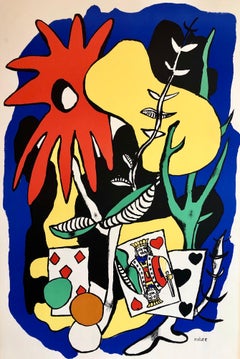
Fernand Leger School Prints Colorful Modernist King of Hearts Drawing Lithograph

Fernand Leger School Prints Colorful Modernist King of Hearts Drawing Lithograph

By (after) Fernand Léger

Located in Surfside, FL

Bright vibrant blue, orange, red, yellow, green lithograph in color. This is signed in the plate and dated. Leger's abstract drawing lithograph was drawn by the artist direct on to plastic plates newly developed by Cowell's of Ipswich, and proofed under his supervision. The original edition called for 3000. I do not know how many were actually printed. The sheer logistics of the operation, the costly effort of distribution to over 4000 schools, finally ended the great adventure of the School Prints scheme. The expensive endeavor peaked in 1949 with the magnificent European series, made possible by the plastic portable plates, which, in addition to Moore, featured Henri Matisse, Pablo Picasso, Fernand Leger, Raoul Dufy and Georges Braque. Joseph Fernand Henri Léger (French 1881 – 1955) was a French painter, sculptor, and filmmaker. In his early works he created a personal form of cubism which he gradually modified into a more figurative, populist style. His boldly simplified treatment of modern subject matter has caused him to be regarded as a forerunner of pop art. Léger was born in Argentan, Orne, Lower Normandy, where his father raised cattle. Fernand Léger initially trained as an architect from 1897 to 1899, before moving in 1900 to Paris, where he supported himself as an architectural draftsman. After military service in Versailles, Yvelines, in 1902–1903, he enrolled at the School of Decorative Arts after his application to the École des Beaux-Arts was rejected. He nevertheless attended the Beaux-Arts as a non-enrolled student, spending what he described as "three empty and useless years" studying with Gérôme and others, while also studying at the Académie Julian. He began to work seriously as a painter only at the age of 25. At this point his work showed the influence of impressionism, as seen in Le Jardin de ma mère (My Mother's Garden) of 1905, one of the few paintings from this period that he did not later destroy. A new emphasis on drawing and geometry appeared in Léger's work after he saw the Cézanne retrospective at the Salon d'Automne in 1907. In 1909 he moved to Montparnasse and met Alexander Archipenko, Jacques Lipchitz, Marc Chagall, Joseph Csaky and Robert Delaunay. In 1910 he exhibited at the Salon d'Automne in the same room (salle VIII) as Jean Metzinger and Henri Le Fauconnier. In his major painting of this period, Nudes in the Forest, Léger displays a personal form of Cubism that his critics termed "Tubism" for its emphasis on cylindrical forms. In 1911 the hanging committee of the Salon des Indépendants placed together the painters identified as 'Cubists'. Metzinger, Albert Gleizes, Le Fauconnier, Delaunay and Léger were responsible for revealing Cubism to the general public for the first time as an organized group. The following year he again exhibited at the Salon d'Automne and Indépendants with the Cubists, and joined with several artists, including Le Fauconnier, Metzinger, Gleizes, Francis Picabia and the Duchamp brothers, Jacques Villon, Raymond Duchamp-Villon and Marcel Duchamp to form the Puteaux Group—also called the Section d'Or (The Golden Section). Léger's paintings, from then until 1914, became increasingly abstract. Their tubular, conical, and cubed forms are laconically rendered in rough patches of primary colors plus green, black and white, as seen in the series of paintings with the title Contrasting Forms. Léger made no use of the collage technique pioneered by Georges Braque and Pablo Picasso.As an enthusiast of the modern, Léger was greatly attracted to cinema, and for a time he considered giving up painting for filmmaking. In 1924, in collaboration with Dudley Murphy, George Antheil, and Man Ray, Léger produced and directed the iconic and Futurism-influenced film Ballet Mécanique (Mechanical Ballet). Neither abstract nor narrative, it is a series of images of a woman's lips and teeth, close-up shots of ordinary objects, and repeated images of human activities and machines in rhythmic movement. In collaboration with Amédée Ozenfant he established a free school where he taught from 1924, with Alexandra Exter and Marie Laurencin. He produced the first of his "mural paintings", influenced by Le Corbusier's theories. His varied projects included book illustrations, murals, stained-glass windows, mosaics, polychrome ceramic sculptures, and set and costume designs. He was active as a teacher for many years, first at the Académie Vassilieff in Paris, then in 1931 at the Sorbonne, and then developing his own Académie Fernand Léger, which was in Paris, then at the Yale School of Art and Architecture (1938–1939), Mills College Art Gallery in Oakland, California during 1940–1945, before he returned to France. Among his many pupils were Hananiah Harari, Asger Jorn, Michael Loew, Beverly Pepper, Marcel Mouly, Louise Bourgeois, Tsuguharu Foujita, Sam Francis, Serge Gainsbourg, Hans Hartung, Florence Henri, Asger Jorn, William Klein, Maryan, Jules Olitski, Erik Olson...

Category

1940s Modern (after) Fernand Léger Figurative Prints
Materials

Lithograph

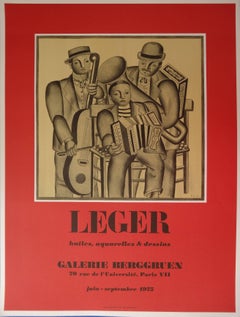
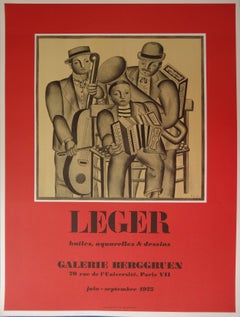
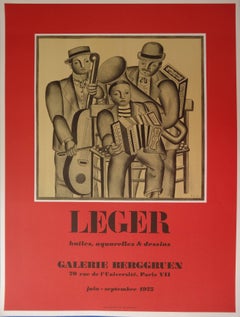
Music : The Orchestra - Lithograph poster - Berggruen / Mourlot 1975

Music : The Orchestra - Lithograph poster - Berggruen / Mourlot 1975

By (after) Fernand Léger

Located in Paris, IDF

Fernand LÉGER (1881 - 1955) Music : The Orchestra Lithograph after a watercolor (printed in Atelier Mourlot) Signature printed in the plate On paper 66 x 50 cm (c. 26 x 20 inch) I...

Category

1970s Modern (after) Fernand Léger Figurative Prints
Materials

Lithograph

Accordioniste's Family

Accordioniste's Family

By (after) Fernand Léger

Located in Missouri, MO

This is a period production from the Leger Estate. On Cream Wove Paper Stamped "Serigraphie Leger" Sheet Size: Approx 21 x 14 inches Framed Size: Approx. 24 x 21 inches One of the m...

Category

1950s Modern (after) Fernand Léger Figurative Prints
Materials

Lithograph

(after) Fernand Léger figurative prints for sale on 1stDibs.

Find a wide variety of authentic (after) Fernand Léger figurative prints available for sale on 1stDibs. You can also browse by medium to find art by (after) Fernand Léger in lithograph, offset print and more. Much of the original work by this artist or collective was created during the 20th century and is mostly associated with the modern style. Not every interior allows for large (after) Fernand Léger figurative prints, so small editions measuring 10 inches across are available. (after) Fernand Léger figurative prints prices can differ depending upon medium, time period and other attributes. On 1stDibs, the price for these items starts at $133 and tops out at $5,000, while the average work can sell for $1,100.
Questions About (after) Fernand Léger Figurative Prints
  • 1stDibs ExpertJanuary 10, 2025
    Fernand Léger was famous for his work as an artist. A painter as well as a filmmaker, illustrator, stage-set designer, ceramicist and printmaker, Léger was one of the most prolific artists of the first half of the 20th century. His early mature work as a Cubist was marked by the use of bold colors and contrasts and a visual vocabulary inspired by industrial technology. In his later career, Léger turned to idiomatic, almost naïve depictions of human figures, in a belief that his work should be accessible to ordinary people and relevant to their lives. Explore a diverse assortment of Fernand Léger art on 1stDibs.