(after) Gustav Klimt Prints and Multiples

Austrian, 1862-1918
Gustav Klimt was an Austrian symbolist painter and a prominent member of the Vienna Secession movement. Klimt's primary subject was the female body and his works are mostly erotic in nature.
to
1
21
Overall Width
to
Overall Height
to
18
3
1
22
1,319
1,037
941
901
22
3
18
1
11
10
1
14
13
12
5
4
4
3
3
2
1
1
1
1
1
1
1
1
1
1
1
18
2
1
1
19
3
Artist: (after) Gustav Klimt
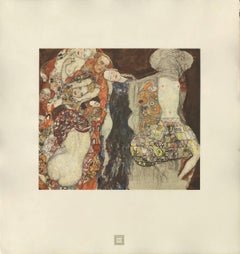
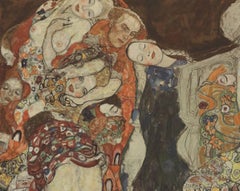
Max Eisler Eine Nachlese folio “The Bride” collotype print

Max Eisler Eine Nachlese folio “The Bride” collotype print

By (after) Gustav Klimt

Located in Palm Beach, FL

After Gustav Klimt, Max Eisler #30, Brautzug; multi-color collotype after unfinished 1917/18 painting in oil on canvas. Painted in the last months of Klimt’s life, The Bride was one...

Category

1930s Vienna Secession (after) Gustav Klimt Prints and Multiples

Materials

Paper

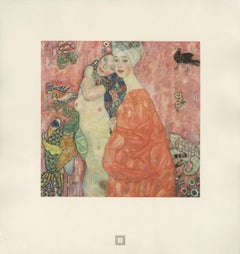
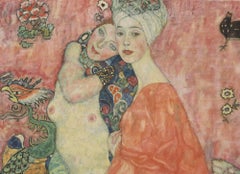
Max Eisler Eine Nachlese folio "Girlfriends II" collotype print

Max Eisler Eine Nachlese folio "Girlfriends II" collotype print

By (after) Gustav Klimt

Located in Palm Beach, FL

After Gustav Klimt, Max Eisler #1, Die Freundinnen II; multi-color collotype after 1916/17 painting in oil on canvas which was destroyed by fire in May 1945 at Immendorf Castle Lower Austria. Eisler’s choice to begin his 1931 portfolio of works by Klimt with Girlfriends II was both bold and prescient. Just 14 years later, the painting was tragically destroyed in a fire. With such a loss, this rare and exquisite image is all the more valuable by virtue of having been made in color. In works from his late period, Klimt continued his fascination with exploring female dynamics and their various forms of love. Girlfriends II is a fine example of how space, color and ornament play a noticeable role in the evolution of his symbolic language. Wide swaths of space in the background as well as the two female forms create the structure. Klimt’s strong brushstrokes show a painterly quality and a new move toward abstraction which feels very far away from his earlier work. Nor should Klimt’s economy of line be overlooked. His draughtsmanship is what infuses the female bodies with movement, emotion and a profundity of life. Both women confront the viewer’s gaze unselfconsciously, as if they are modern-day Viennese women stepping out of a Klimtesque ukiyo-e print. Characteristic of this late period, Klimt uses ornament...

Category

1930s Vienna Secession (after) Gustav Klimt Prints and Multiples

Materials

Paper

Sketch for a Frieze  - Original Collotype Print - 1919

Sketch for a Frieze - Original Collotype Print - 1919

By (after) Gustav Klimt

Located in Roma, IT

Sketch for a Frieze is a vintage, beautiful, and rare collotype from “Gustav Klimt: Fünfundzwanzig Handzeichnungen”, a limited-edition collection of 25 monochrome and two-color collotypes after drawings by Gustav Klimt. Published by Gilhofer and Ranschburg, Vienna, July 1919, just one year after Klimt...

Category

1910s Modern (after) Gustav Klimt Prints and Multiples

Materials

Black and White

Max Eisler Eine Nachlese folio "Portrait of Friederike Marie Beer" collotype

Max Eisler Eine Nachlese folio "Portrait of Friederike Marie Beer" collotype

By (after) Gustav Klimt

Located in Palm Beach, FL

After Gustav Klimt, Max Eisler Plate #24, Bildnis Friederike Maria Beer; multi-color collotype after the 1916 painting in oil on canvas. GUSTAV KLIMT EINE NACHLESE (GUSTAV KLIMT AN ...

Category

1930s Vienna Secession (after) Gustav Klimt Prints and Multiples

Materials

Paper

Max Eisler Eine Nachlese folio "Wally" (Girl in Profile) collotype

Max Eisler Eine Nachlese folio "Wally" (Girl in Profile) collotype

By (after) Gustav Klimt

Located in Palm Beach, FL

After Gustav Klimt, Max Eisler Plate #27, Madchen im Profile; grey-toned monochrome collotype after the 1916 painting in oil on canvas. Original destroyed by fire May 1945. GUSTAV K...

Category

1930s Vienna Secession (after) Gustav Klimt Prints and Multiples

Materials

Paper

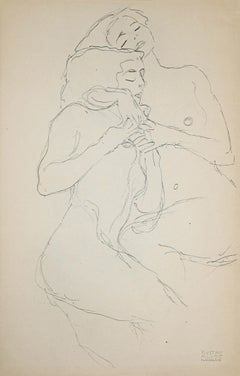
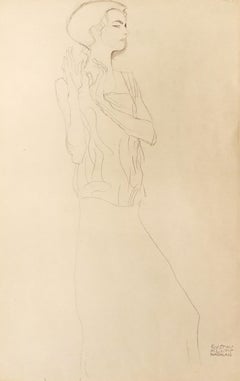
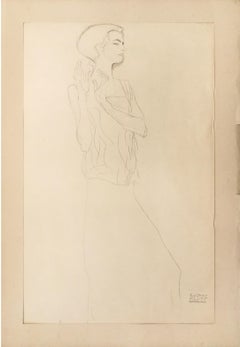
Sketched Portrait - 1910s - Original Collotype Print by Gustav Klimt

Sketched Portrait - 1910s - Original Collotype Print by Gustav Klimt

By (after) Gustav Klimt

Located in Roma, IT

Sketched Portrait is a vintage, beautiful, and rare collotype from “Gustav Klimt: Fünfundzwanzig Handzeichnungen”, a limited-edition collection of 25 monochrome and two-color collotypes after drawings by Gustav Klimt. Published by Gilhofer and Ranschburg, Vienna, July 1919, just one year after Klimt...

Category

1910s Modern (after) Gustav Klimt Prints and Multiples

Materials

Black and White

Max Eisler Eine Nachlese folio “The Embrace (Fulfillment)” collotype print

Max Eisler Eine Nachlese folio “The Embrace (Fulfillment)” collotype print

By (after) Gustav Klimt

Located in Palm Beach, FL

After Gustav Klimt, Max Eisler #17, Aus dem Stoclet-Fries: Die Umarmung; multi-color collotype after the cartoon for the 1910-1911 mosaic frieze on the east wall of the dining hall o...

Category

1930s Vienna Secession (after) Gustav Klimt Prints and Multiples

Materials

Paper

Max Eisler Eine Nachlese folio “Portrait of Baroness Bachofen-Echt” collotype

Max Eisler Eine Nachlese folio “Portrait of Baroness Bachofen-Echt” collotype

By (after) Gustav Klimt

Located in Palm Beach, FL

After Gustav Klimt, Max Eisler #22, Bildnis Baronin Bachofen-Echt; multi-color collotype after 1914-1916 painting in oil on canvas. GUSTAV KLIMT EINE NACHLESE (GUSTAV KLIMT AN AFTERMATH), a portfolio of 30 collotypes prints, 15 are multi-color and 15 are monochrome, on chine colle paper laid down on heavy cream-wove paper with deckled edges; Max Eisler, Editor-Publisher; Osterreichischer Staatsdruckerei (Austrian State Printing Office), Printer; in a limited edition of 500 numbered examples of which: 200 were printed in German, 150 were printed in French and 150 were printed in English; Vienna, 1931. 2018 marks the 100th anniversary of Gustav Klimt’s death. It is a fitting time to reflect upon the enduring legacy and deep impact of his art. Recognizing this need for posterity with uncanny foresight, the publication of Gustav Klimt: An Aftermath (Eine Nachlese) provides a rare collection of work after Klimt which has proven to be an indispensable tool for Klimt scholarship as well as a source for pure visual delight. Approximately 25 percent of the original works featured in the Aftermath portfolio have since been lost. Of those 30, six were destroyed by fire on 8 May 1945. On that fateful final day of WWII, the retreating Feldherrnhalle, a tank division of the German Army, set fire to the Schloss Immendorf which was a 16th century castle in Lower Austria used between 1942-1945 to store objects of art. All three of Klimt’s Faculty Paintings: Philosophy, Medicine and Jurisprudence (1900-1907), originally created for the University of Vienna, were on premises at that time. Also among the inventory of Klimt paintings in storage there was art which had been confiscated by the Nazis. One of the most significant confiscated collections was the Lederer collection which featured many works by Gustav Klimt such as Girlfriends II and Garden Path with Chickens...

Category

1930s Vienna Secession (after) Gustav Klimt Prints and Multiples

Materials

Archival Paper

Max Eisler Eine Nachlese folio “House in a Garden” collotype print

Max Eisler Eine Nachlese folio “House in a Garden” collotype print

By (after) Gustav Klimt

Located in Palm Beach, FL

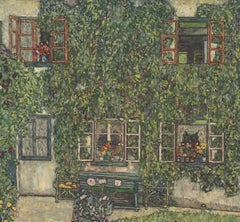
After Gustav Klimt, Max Eisler #9, Haus Im Garten; aka Forester’s House in Weissenbach II; multi-color collotype after 1914 painting in oil on canvas. GUSTAV KLIMT EINE NACHLESE (GU...

Category

1930s Vienna Secession (after) Gustav Klimt Prints and Multiples

Materials

Paper

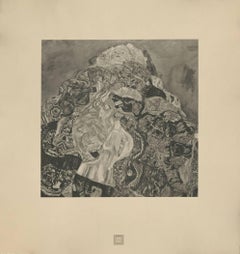
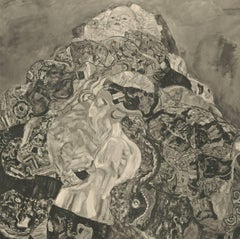
Max Eisler Eine Nachlese folio "Baby" collotype

Max Eisler Eine Nachlese folio "Baby" collotype

By (after) Gustav Klimt

Located in Palm Beach, FL

After Gustav Klimt, Max Eisler Plate #25, Baby; black & white collotype after the 1917 painting in oil on canvas. GUSTAV KLIMT EINE NACHLESE (GUSTAV KLIMT ...

Category

1930s Vienna Secession (after) Gustav Klimt Prints and Multiples

Materials

Paper

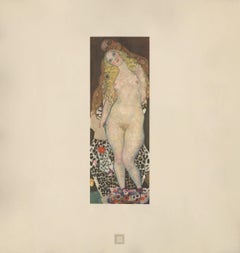
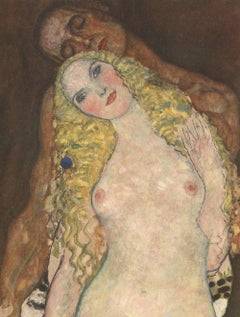
Max Eisler Eine Nachlese folio “Adam & Eve” collotype print

Max Eisler Eine Nachlese folio “Adam & Eve” collotype print

By (after) Gustav Klimt

Located in Palm Beach, FL

After Gustav Klimt, Max Eisler #20, Adam und Eva; multi-color collotype after unfinished 1917/18 painting in oil on canvas. GUSTAV KLIMT EINE NACHLESE (GUSTAV KLIMT AN AFTERMATH), a...

Category

1930s Vienna Secession (after) Gustav Klimt Prints and Multiples

Materials

Paper

Max Eisler Eine Nachlese folio "Houses in Unterach on Lake Attersee" collotype

Max Eisler Eine Nachlese folio "Houses in Unterach on Lake Attersee" collotype

By (after) Gustav Klimt

Located in Palm Beach, FL

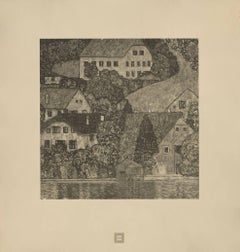
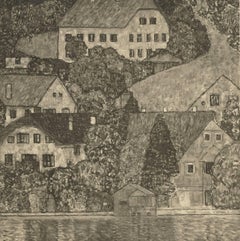
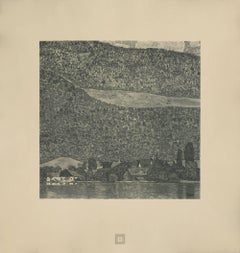
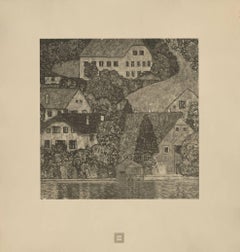
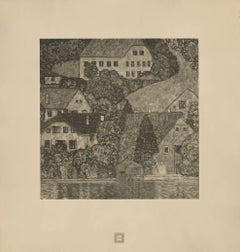
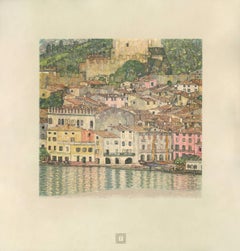
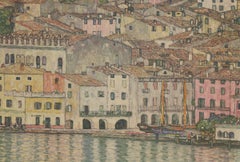
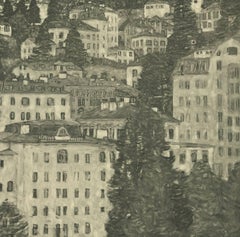
After Gustav Klimt, Max Eisler Plate #29, Am Attersee; brown-toned monochrome collotype after the 1915-16 painting in oil on canvas. GUSTAV KLIMT EINE NACHLESE (GUSTAV KLIMT AN AFTERMATH), a portfolio of 30 collotypes prints, 15 are multi-color and 15 are monochrome, on chine colle paper laid down on heavy cream-wove paper with deckled edges; Max Eisler, Editor-Publisher; Osterreichischer Staatsdruckerei (Austrian State Printing Office), Printer; in a limited edition of 500 numbered examples of which: 200 were printed in German, 150 were printed in French and 150 were printed in English; Vienna, 1931. 2018 marks the 100th anniversary of Gustav Klimt’s death. It is a fitting time to reflect upon the enduring legacy and deep impact of his art. Recognizing this need for posterity with uncanny foresight, the publication of Gustav Klimt: An Aftermath (Eine Nachlese) provides a rare collection of work after Klimt which has proven to be an indispensable tool for Klimt scholarship as well as a source for pure visual delight. Approximately 25 percent of the original works featured in the Aftermath portfolio have since been lost. Of those 30, six were destroyed by fire on 8 May 1945. On that fateful final day of WWII, the retreating Feldherrnhalle, a tank division of the German Army, set fire to the Schloss Immendorf which was a 16th century castle in Lower Austria used between 1942-1945 to store objects of art. All three of Klimt’s Faculty Paintings: Philosophy, Medicine and Jurisprudence (1900-1907), originally created for the University of Vienna, were on premises at that time. Also among the inventory of Klimt paintings in storage there was art which had been confiscated by the Nazis. One of the most significant confiscated collections was the Lederer collection which featured many works by Gustav Klimt such as Girlfriends II and Garden Path with Chickens. In many instances, Aftermath is our only link to these lost treasures. Max Eisler (1881-1937), the publisher of the 1931 Aftermath portfolio, was an art historian at Vienna University specializing in modern and contemporary arts and crafts whose 1920 book on Klimt was the first Klimt monograph. He saw An Aftermath as filling-in important gaps left by the earlier print portfolios which had only featured Klimt up to 1913 and which had glossed over major art projects such as the Tree of Life frieze for the Palais Stoclet. And whereas only 10 of the 50 prints from the earlier portfolios published by H.O. Miethke were made in intricate multi-color images, Eisler augmented the earlier format by featuring half of the 30 images in stunning multi-colored collotypes. Understanding the fragile nature of the collotype printing process also reinforces this project’s distinctive and exceptional characteristics. Fragile collotype plates can not be reused. As such, this necessitates the completion of a run on the first go and also dictates a limited production number. Printed by hand, the collotypes required deft handling by the printer, Osterreichische Staatsdruckerei. A complicated and lengthy process involving gelatin colloids mixed with dichromates, the creation of 16 color separation thin glass filters to achieve the light-sensitive internegative images which could faithfully capture all of the painting’s tonal gradations and colors, exposure to actinic light, and delicate chine collie papers which allowed for greater color saturation, the printer’s collaborative role in capturing and transmitting Klimt’s nuanced paint strokes is nothing short of remarkable. The Österreichische Staatsdruckerei (Austrian State Printing Office), was the successor to the KK Hof -und Staatsdruckerei which was founded by Emperor Franz I in 1804 and whose collotype printing innovations of Klimt’s art...

Category

1930s Vienna Secession (after) Gustav Klimt Prints and Multiples

Materials

Archival Paper

PORTRAIT OF ADELE BLOCH-BAUER plate

PORTRAIT OF ADELE BLOCH-BAUER plate

By (after) Gustav Klimt

Located in New York, NY

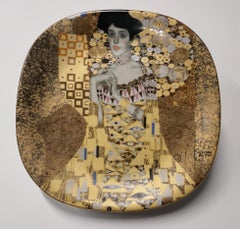
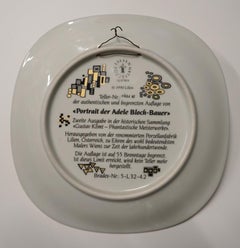
Artist Reproduction plate. Edition 1401A Reihe "Gustav Klimt – Phantastische Meisterwerke" mit einem diagonalen Durchmesser von 22 cm und einer Goldumrandung an. Es handelt sich dabei um die Ausgabe "...." aus dem Jahr 1990, Teller-Nr. ?, die als Reproduktion im Auftrag des Hauses Lilien Porzellan...

Category

1990s Art Deco (after) Gustav Klimt Prints and Multiples

Materials

Porcelain

Max Eisler Eine Nachlese folio "Portrait of Baroness Wittgenstein" collotype

Max Eisler Eine Nachlese folio "Portrait of Baroness Wittgenstein" collotype

By (after) Gustav Klimt

Located in Palm Beach, FL

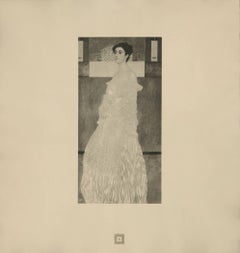
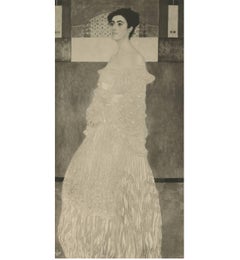
After Gustav Klimt, Max Eisler Plate #4, Bildnis Baronin Wittgenstein; dark grey monochrome collotype after the 1905 painting in oil on canvas. GUSTAV KLIMT EINE NACHLESE (GUSTAV KLIMT AN AFTERMATH), a portfolio of 30 collotypes prints, 15 are multi-color and 15 are monochrome, on chine colle paper laid down on heavy cream-wove paper with deckled edges; Max Eisler, Editor-Publisher; Osterreichischer Staatsdruckerei (Austrian State Printing Office), Printer; in a limited edition of 500 numbered examples of which: 200 were printed in German, 150 were printed in French and 150 were printed in English; Vienna, 1931. 2018 marks the 100th anniversary of Gustav Klimt’s death. It is a fitting time to reflect upon the enduring legacy and deep impact of his art. Recognizing this need for posterity with uncanny foresight, the publication of Gustav Klimt: An Aftermath (Eine Nachlese) provides a rare collection of work after Klimt which has proven to be an indispensable tool for Klimt scholarship as well as a source for pure visual delight. Approximately 25 percent of the original works featured in the Aftermath portfolio have since been lost. Of those 30, six were destroyed by fire on 8 May 1945. On that fateful final day of WWII, the retreating Feldherrnhalle, a tank division of the German Army, set fire to the Schloss Immendorf which was a 16th century castle in Lower Austria used between 1942-1945 to store objects of art. All three of Klimt’s Faculty Paintings: Philosophy, Medicine and Jurisprudence (1900-1907), originally created for the University of Vienna, were on premises at that time. Also among the inventory of Klimt paintings in storage there was art which had been confiscated by the Nazis. One of the most significant confiscated collections was the Lederer collection which featured many works by Gustav Klimt such as Girlfriends II and Garden Path with Chickens...

Category

1930s Vienna Secession (after) Gustav Klimt Prints and Multiples

Materials

Paper

Study of an Old Woman- Vintage Colotype Print After G. Klimt - 1919

Study of an Old Woman- Vintage Colotype Print After G. Klimt - 1919

By (after) Gustav Klimt

Located in Roma, IT

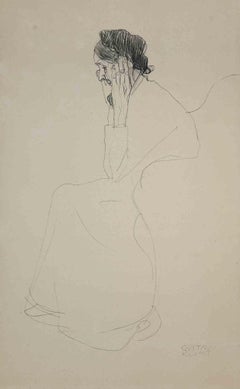
Study of an old woman - Plate 25 is the last collotype from “ Gustav Klimt : Fünfundzwanzig Handzeichnungen” , a limited-edition collection of 25 monochrome and two-color collotype...

Category

1910s Modern (after) Gustav Klimt Prints and Multiples

Materials

Black and White

Max Eisler Eine Nachlese folio "Gastein" collotype

Max Eisler Eine Nachlese folio "Gastein" collotype

By (after) Gustav Klimt

Located in Palm Beach, FL

After Gustav Klimt, Max Eisler Plate #21, Gastein; grey-green monochrome collotype after the 1917 painting in oil on canvas. Original destroyed by fire May 1945. GUSTAV KLIMT EINE NACHLESE (GUSTAV KLIMT AN AFTERMATH), a portfolio of 30 collotypes prints, 15 are multi-color and 15 are monochrome, on chine colle paper laid down on heavy cream-wove paper with deckled edges; Max Eisler, Editor-Publisher; Osterreichischer Staatsdruckerei (Austrian State Printing Office), Printer; in a limited edition of 500 numbered examples of which: 200 were printed in German, 150 were printed in French and 150 were printed in English; Vienna, 1931. 2018 marks the 100th anniversary of Gustav Klimt’s death. It is a fitting time to reflect upon the enduring legacy and deep impact of his art. Recognizing this need for posterity with uncanny foresight, the publication of Gustav Klimt: An Aftermath (Eine Nachlese) provides a rare collection of work after Klimt which has proven to be an indispensable tool for Klimt scholarship as well as a source for pure visual delight. Approximately 25 percent of the original works featured in the Aftermath portfolio have since been lost. Of those 30, six were destroyed by fire on 8 May 1945. On that fateful final day of WWII, the retreating Feldherrnhalle, a tank division of the German Army, set fire to the Schloss Immendorf which was a 16th century castle in Lower Austria used between 1942-1945 to store objects of art. All three of Klimt’s Faculty Paintings: Philosophy, Medicine and Jurisprudence (1900-1907), originally created for the University of Vienna, were on premises at that time. Also among the inventory of Klimt paintings in storage there was art which had been confiscated by the Nazis. One of the most significant confiscated collections was the Lederer collection which featured many works by Gustav Klimt such as Girlfriends II and Garden Path with Chickens. In many instances, Aftermath is our only link to these lost treasures. Max Eisler (1881-1937), the publisher of the 1931 Aftermath portfolio, was an art historian at Vienna University specializing in modern and contemporary arts and crafts whose 1920 book on Klimt was the first Klimt monograph. He saw An Aftermath as filling-in important gaps left by the earlier print portfolios which had only featured Klimt up to 1913 and which had glossed over major art projects such as the Tree of Life frieze for the Palais Stoclet. And whereas only 10 of the 50 prints from the earlier portfolios published by H.O. Miethke were made in intricate multi-color images, Eisler augmented the earlier format by featuring half of the 30 images in stunning multi-colored collotypes. Understanding the fragile nature of the collotype printing process also reinforces this project’s distinctive and exceptional characteristics. Fragile collotype plates can not be reused. As such, this necessitates the completion of a run on the first go and also dictates a limited production number. Printed by hand, the collotypes required deft handling by the printer, Osterreichische Staatsdruckerei. A complicated and lengthy process involving gelatin colloids mixed with dichromates, the creation of 16 color separation thin glass filters to achieve the light-sensitive internegative images which could faithfully capture all of the painting’s tonal gradations and colors, exposure to actinic light, and delicate chine collie papers which allowed for greater color saturation, the printer’s collaborative role in capturing and transmitting Klimt’s nuanced paint strokes is nothing short of remarkable. The Österreichische Staatsdruckerei (Austrian State Printing Office), was the successor to the KK Hof -und Staatsdruckerei which was founded by Emperor Franz I in 1804 and whose collotype printing innovations of Klimt’s art...

Category

1930s Vienna Secession (after) Gustav Klimt Prints and Multiples

Materials

Paper

Max Eisler Eine Nachlese folio "Portrait of Serena Lederer" collotype

Max Eisler Eine Nachlese folio "Portrait of Serena Lederer" collotype

By (after) Gustav Klimt

Located in Palm Beach, FL

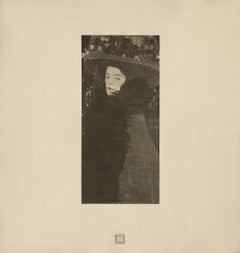
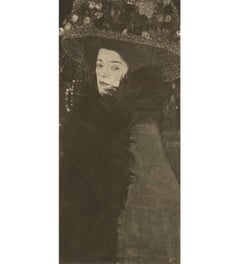
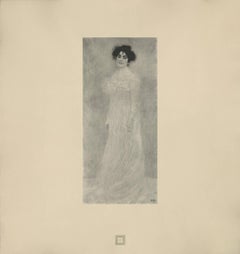
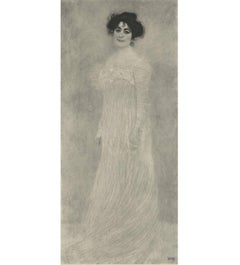
After Gustav Klimt, Max Eisler Plate #6, Bildnis Frau Serena Lederer; grey monochrome collotype after the 1905 painting in oil on canvas. GUSTAV KLIMT EINE NACHLESE (GUSTAV KLIMT AN...

Category

1930s Vienna Secession (after) Gustav Klimt Prints and Multiples

Materials

Paper

Max Eisler Eine Nachlese folio "Litzlberg on Lake Attersee" collotype

Max Eisler Eine Nachlese folio "Litzlberg on Lake Attersee" collotype

By (after) Gustav Klimt

Located in Palm Beach, FL

After Gustav Klimt, Max Eisler Plate #8, Litzlberg on Lake Attersee; blue monochrome collotype after the 1915 painting in oil on canvas. GUSTAV KLIMT EINE NACHLESE (GUSTAV KLIMT AN ...

Category

1930s Vienna Secession (after) Gustav Klimt Prints and Multiples

Materials

Paper

Related Items
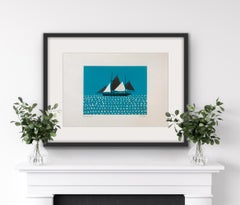
Excelsior by Simon Tozer, Limited edition, Sailing, Landscape, Figurative art

Excelsior by Simon Tozer, Limited edition, Sailing, Landscape, Figurative art

By Simon Tozer

Located in Deddington, GB

Excelsior by Simon Tozer [2021] limited_edition and hand signed by the artist Screenprint on Paper Edition number of 30 Image size: H:23 cm x W:30 cm ...

Category

21st Century and Contemporary Expressionist (after) Gustav Klimt Prints and Multiples

Materials

Paper, Screen

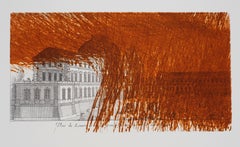
Paris : Tribute to Louvre Museum with Orange Scratch - Original etching

Paris : Tribute to Louvre Museum with Orange Scratch - Original etching

By Arnulf Rainer

Located in Paris, IDF

Arnulf Rainer (1929) Paris : Tribute to Louvre Museum with Orange Scratch Original etching On vellum 40 x 50 cm (c. 16 x 20 in) Authenticated with the blind stamp of the editor Cha...

Category

21st Century and Contemporary Expressionist (after) Gustav Klimt Prints and Multiples

Materials

Etching

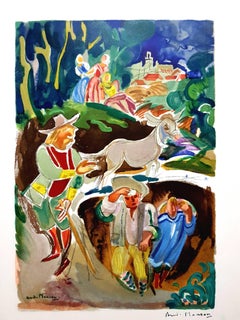
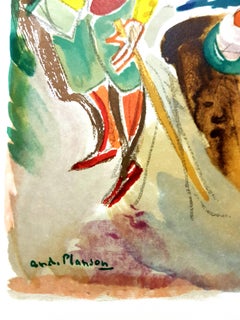
André Planson - French Province - Handsigned Original Lithograph

André Planson - French Province - Handsigned Original Lithograph

By Andre Planson

Located in Collonge Bellerive, Geneve, CH

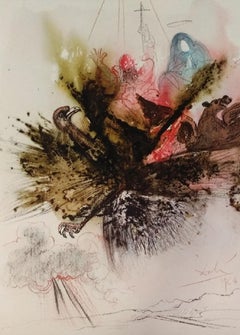
André Planson - French Province Original Lithograph Handsigned Dimensions: 38 x 28 cm Leonor Fini is considered one of the most important women artists of the mid-twentieth century, along with Leonora Carrington, Frida Kahlo, Meret Oppenheim, Remedios Varo, and Dorothea Tanning – most of whom Fini knew well. Her career, which spanned some six decades, included painting, graphic design, book illustration, product design (the renowned torso-shaped perfume bottle for Schiaparelli’s Shocking), and set and costume design for theatre, ballet, opera, and film. In this compellingly readable, exhaustively researched account, author Peter Webb brings Fini’s provocative art and unconventional personal life, as well as the vibrant avant-garde world in which she revolved, vividly in life. Born in Buenos Aires in 1907 (August 30 – January 18, 1996, Paris) to Italian and Argentine parents, Leonor grew up in Trieste, Italy, raised by her strong-willed, independent mother, Malvina. She was a virtually self-taught artist, learing anatomy directly from studying cadavers in the local morgue and absorbing composition and technique from the Old Masters through books and visits to museums. Fini’s fledging attempts at painting in Trieste let her to Milan, where she participated in her first group exhibition in 1929, and then to Paris in 1931. Her vivacious personality and flamboyant attire instantly garnered her a spotlight in the Parisian art world and she soon developed close relationships with the leading surrealist writers and painters, including Paul Eluard, Salvador Dali, Man Ray, and Max Ernst, who became her lover for a time. The only surrealist she could not abide because of his misogyny was André Breton. Although she repeatedly exhibited with them, she never considered herself a surrealist. The American dealer Julien Levy, very much impressed by Fini’s painting and smitten by her eccentric charms, invited her to New York in 1936, where she took part in a joint gallery exhibition with Max Ernst and met many American surrealists, including Joseph Cornell and Pavel Tchelitchew. Her work was included in MoMA’s pivotal Fantastic Art, Dada and Surrealism exhibition, along with De Chirico, Dali, Ernst, and Yves Tanguy. In 1939 in Paris she curated an exhibition of surrealist furniture...

Category

1970s Modern (after) Gustav Klimt Prints and Multiples
Materials

Lithograph

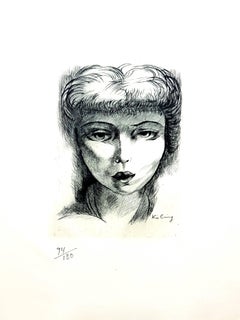
Moise Kisling - Woman - Etching

Moise KislingMoise Kisling - Woman - Etching, 1940s

$1,516

H 14.97 in W 11.03 in D 0.04 in

Moise Kisling - Woman - Etching

Located in Collonge Bellerive, Geneve, CH

Moise Kisling - Woman Etching Edition of 130 Dimensions: 38 x 28 cm Moïse Kisling, born Mojżesz Kisling (January 22, 1891 – April 29, 1953), was a Polish-born French painter.[1] He...

Category

1970s Modern (after) Gustav Klimt Prints and Multiples
Bridgetown Barbados, Oil Monotype by Romare Bearden

Bridgetown Barbados, Oil Monotype by Romare Bearden

By Romare Bearden

Located in Long Island City, NY

A unique oil print by Romare Bearden circa 1980. A bright city scene illustrated in a modern expressionist style. Artist: Romare Bearden, American (1911 - 1988) Title: Bridgetown, ...

Category

1980s Expressionist (after) Gustav Klimt Prints and Multiples
Materials

Monoprint, Oil

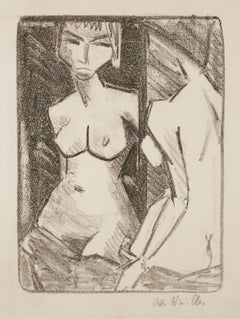
Nude Girl in Front of a Mirror / - The Reflection of Art -

Nude Girl in Front of a Mirror / - The Reflection of Art -

By Otto Mueller

Located in Berlin, DE

Otto Mueller (1874 Liebau - 1930 Obernigk), Nude Girl Before the Mirror, 1924. Lithograph on lightly hammered handmade paper, 38.9 cm x 28.9 cm (image), 57 cm x 44 cm (sheet size), s...

Category

1920s Expressionist (after) Gustav Klimt Prints and Multiples
Materials

Paper

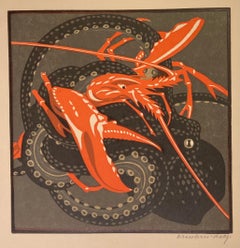
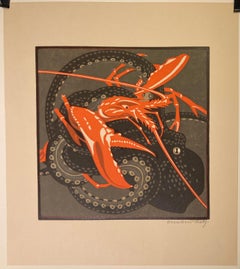
LOBSTER and  OCTOPUS (KAMPF - BATTLE)

LOBSTER and OCTOPUS (KAMPF - BATTLE)

By Norbertine Bresslern-Roth

Located in Santa Monica, CA

NORBERTINE VON BRESSLERN-ROTH (1891 1978) KAMPF (BATTLE - LOBSTER and OCTOPUS) c. 1928 Color linoleum cut Signed in pencil. Image 8 5/8 x 8 11/16” In excellent condition and full ...

Category

1920s Vienna Secession (after) Gustav Klimt Prints and Multiples
Materials

Linocut

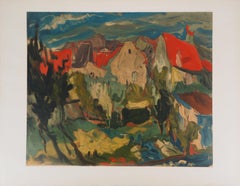
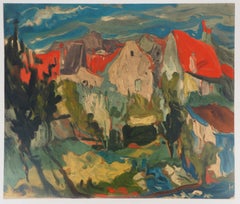
French Riviera : View of Cagnes - Lithograph, Mourlot

French Riviera : View of Cagnes - Lithograph, Mourlot

By Chaïm Soutine

Located in Paris, IDF

Chaim SOUTINE (1893-1943) French Riviera : View of Cagnes Stone lithograph after a painting (Mourlot workshop) Unsigned On Arches vellum 50 x 65 cm (c. 20 x 26 inch) Excellent cond...

Category

1970s Expressionist (after) Gustav Klimt Prints and Multiples
Materials

Lithograph

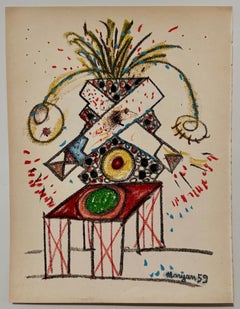
Polish French Figurative Abstract Art Brut Expressionist Lithograph Maryan

Polish French Figurative Abstract Art Brut Expressionist Lithograph Maryan

By Pinchas Maryan

Located in Surfside, FL

Pinchas Burstein, known as Maryan Lithograph (after the drawing). 1960 Dimensions: 12 3/8 x 9 3/8 inches (315 x 240mm). There is printed text on the back, as issued. Signed in the...

Category

1960s Expressionist (after) Gustav Klimt Prints and Multiples
Materials

Paper, Lithograph

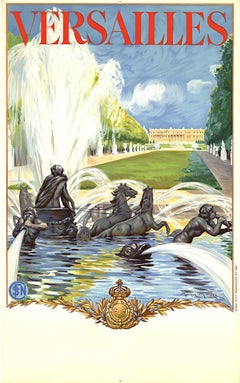
Versailles (France) original lithograph vintage SNCF travel poster

Versailles (France) original lithograph vintage SNCF travel poster

By Maurice Milliere

Located in Spokane, WA

Original Versailles, France vintage lithograph French travel poster. Printed by the French National Railroad, SNCF in the 1938's. Printer: Goossens. A poster fit for a king sin...

Category

1930s Expressionist (after) Gustav Klimt Prints and Multiples
Materials

Lithograph

GARDEN IN SNOW
GARDEN IN SNOW

Edvard Munch GARDEN IN SNOW, 1913

$40,000

H 13.5 in W 16.827 in

GARDEN IN SNOW

By Edvard Munch

Located in Santa Monica, CA

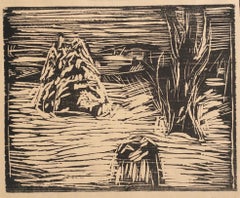
EDVARD MUNCH (1863 – 1944) GARDEN IN SNOW, II 1913 (WO 467: Sch. 418) Woodcut, 13 ½” x 16 7/8” signed in pencil. Generally very good condition. Irregular sheet of simili-japan ...

Category

1910s Expressionist (after) Gustav Klimt Prints and Multiples
Materials

Woodcut

Previously Available Items
Max Eisler Eine Nachlese folio "Studies for the Frieze at Palais" 4 collotypes

Max Eisler Eine Nachlese folio "Studies for the Frieze at Palais" 4 collotypes

By (after) Gustav Klimt

Located in Palm Beach, FL

After Gustav Klimt, Max Eisler Plates #13-16, black & white collotypes after the 1911 cartoon originally in crayon, graphite pencil, gouache and metal powders. #13 Der Lebensbaum (An...

Category

1930s Vienna Secession (after) Gustav Klimt Prints and Multiples
Materials

Archival Paper

Max Eisler Eine Nachlese folio "Charlotte Pulitzer" collotype

Max Eisler Eine Nachlese folio "Charlotte Pulitzer" collotype

By (after) Gustav Klimt

Located in Palm Beach, FL

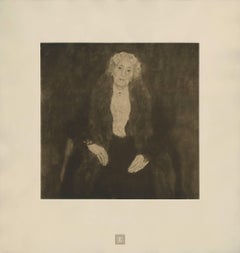
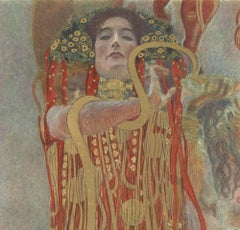
After Gustav Klimt, Max Eisler Plate #19, Bildnis einer alten Dame; sepia-toned monochrome collotype after the 1917 painting in oil on canvas. GUSTAV KLIMT EINE NACHLESE (GUSTAV KLIMT AN AFTERMATH), a portfolio of 30 collotypes prints, 15 are multi-color and 15 are monochrome, on chine colle paper laid down on heavy cream-wove paper with deckled edges; Max Eisler, Editor-Publisher; Osterreichischer Staatsdruckerei (Austrian State Printing Office), Printer; in a limited edition of 500 numbered examples of which: 200 were printed in German, 150 were printed in French and 150 were printed in English; Vienna, 1931. 2018 marks the 100th anniversary of Gustav Klimt’s death. It is a fitting time to reflect upon the enduring legacy and deep impact of his art. Recognizing this need for posterity with uncanny foresight, the publication of Gustav Klimt: An Aftermath (Eine Nachlese) provides a rare collection of work after Klimt which has proven to be an indispensable tool for Klimt scholarship as well as a source for pure visual delight. Approximately 25 percent of the original works featured in the Aftermath portfolio have since been lost. Of those 30, six were destroyed by fire on 8 May 1945. On that fateful final day of WWII, the retreating Feldherrnhalle, a tank division of the German Army, set fire to the Schloss Immendorf which was a 16th century castle in Lower Austria used between 1942-1945 to store objects of art. All three of Klimt’s Faculty Paintings: Philosophy, Medicine and Jurisprudence (1900-1907), originally created for the University of Vienna, were on premises at that time. Also among the inventory of Klimt paintings in storage there was art which had been confiscated by the Nazis. One of the most significant confiscated collections was the Lederer collection which featured many works by Gustav Klimt such as Girlfriends II and Garden Path with Chickens. In many instances, Aftermath is our only link to these lost treasures. Max Eisler (1881-1937), the publisher of the 1931 Aftermath portfolio, was an art historian at Vienna University specializing in modern and contemporary arts and crafts whose 1920 book on Klimt was the first Klimt monograph. He saw An Aftermath as filling-in important gaps left by the earlier print portfolios which had only featured Klimt up to 1913 and which had glossed over major art projects such as the Tree of Life frieze for the Palais Stoclet. And whereas only 10 of the 50 prints from the earlier portfolios published by H.O. Miethke were made in intricate multi-color images, Eisler augmented the earlier format by featuring half of the 30 images in stunning multi-colored collotypes. Understanding the fragile nature of the collotype printing process also reinforces this project’s distinctive and exceptional characteristics. Fragile collotype plates can not be reused. As such, this necessitates the completion of a run on the first go and also dictates a limited production number. Printed by hand, the collotypes required deft handling by the printer, Osterreichische Staatsdruckerei. A complicated and lengthy process involving gelatin colloids mixed with dichromates, the creation of 16 color separation thin glass filters to achieve the light-sensitive internegative images which could faithfully capture all of the painting’s tonal gradations and colors, exposure to actinic light, and delicate chine collie papers which allowed for greater color saturation, the printer’s collaborative role in capturing and transmitting Klimt’s nuanced paint strokes is nothing short of remarkable. The Österreichische Staatsdruckerei (Austrian State Printing Office), was the successor to the KK Hof -und Staatsdruckerei which was founded by Emperor Franz I in 1804 and whose collotype printing innovations of Klimt’s art...

Category

1930s Vienna Secession (after) Gustav Klimt Prints and Multiples
Materials

Archival Paper

Max Eisler Eine Nachlese folio “Church on Lake Wolfgang” collotype print

Max Eisler Eine Nachlese folio “Church on Lake Wolfgang” collotype print

By (after) Gustav Klimt

Located in Palm Beach, FL

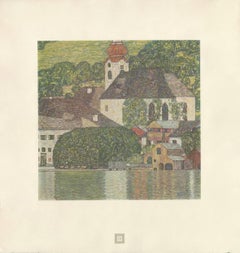
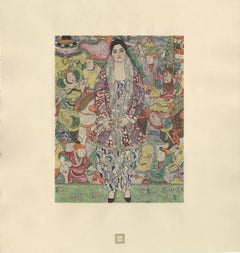
After Gustav Klimt, Max Eisler #28, Kirche am Wolfgangsee; multi-color collotype after 1915/16 painting in oil on canvas. GUSTAV KLIMT EINE NACHLESE (GUSTAV KLIMT AN AFTERMATH), a portfolio of 30 collotypes prints, 15 are multi-color and 15 are monochrome, on chine colle paper laid down on heavy cream-wove paper with deckled edges; Max Eisler, Editor-Publisher; Osterreichischer Staatsdruckerei (Austrian State Printing Office), Printer; in a limited edition of 500 numbered examples of which: 200 were printed in German, 150 were printed in French and 150 were printed in English; Vienna, 1931. 2018 marks the 100th anniversary of Gustav Klimt’s death. It is a fitting time to reflect upon the enduring legacy and deep impact of his art. Recognizing this need for posterity with uncanny foresight, the publication of Gustav Klimt: An Aftermath (Eine Nachlese) provides a rare collection of work after Klimt which has proven to be an indispensable tool for Klimt scholarship as well as a source for pure visual delight. Approximately 25 percent of the original works featured in the Aftermath portfolio have since been lost. Of those 30, six were destroyed by fire on 8 May 1945. On that fateful final day of WWII, the retreating Feldherrnhalle, a tank division of the German Army, set fire to the Schloss Immendorf which was a 16th century castle in Lower Austria used between 1942-1945 to store objects of art. All three of Klimt’s Faculty Paintings: Philosophy, Medicine and Jurisprudence (1900-1907), originally created for the University of Vienna, were on premises at that time. Also among the inventory of Klimt paintings in storage there was art which had been confiscated by the Nazis. One of the most significant confiscated collections was the Lederer collection which featured many works by Gustav Klimt such as Girlfriends II and Garden Path with Chickens. In many instances, Aftermath is our only link to these lost treasures. Max Eisler (1881-1937), the publisher of the 1931 Aftermath portfolio, was an art historian at Vienna University specializing in modern and contemporary arts and crafts whose 1920 book on Klimt was the first Klimt monograph. He saw An Aftermath as filling-in important gaps left by the earlier print portfolios which had only featured Klimt up to 1913 and which had glossed over major art projects such as the Tree of Life frieze for the Palais Stoclet. And whereas only 10 of the 50 prints from the earlier portfolios published by H.O. Miethke were made in intricate multi-color images, Eisler augmented the earlier format by featuring half of the 30 images in stunning multi-colored collotypes. Understanding the fragile nature of the collotype printing process also reinforces this project’s distinctive and exceptional characteristics. Fragile collotype plates can not be reused. As such, this necessitates the completion of a run on the first go and also dictates a limited production number. Printed by hand, the collotypes required deft handling by the printer, Osterreichische Staatsdruckerei. A complicated and lengthy process involving gelatin colloids mixed with dichromates, the creation of 16 color separation thin glass filters to achieve the light-sensitive internegative images which could faithfully capture all of the painting’s tonal gradations and colors, exposure to actinic light, and delicate chine collie papers which allowed for greater color saturation, the printer’s collaborative role in capturing and transmitting Klimt’s nuanced paint strokes is nothing short of remarkable. The Österreichische Staatsdruckerei (Austrian State Printing Office), was the successor to the KK Hof -und Staatsdruckerei which was founded by Emperor Franz I...

Category

1930s Vienna Secession (after) Gustav Klimt Prints and Multiples
Materials

Paper

Max Eisler Eine Nachlese folio "Houses in Unterach on Lake Attersee" collotype

Max Eisler Eine Nachlese folio "Houses in Unterach on Lake Attersee" collotype

By (after) Gustav Klimt

Located in Palm Beach, FL

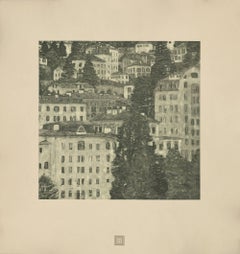
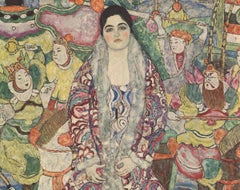
After Gustav Klimt, Max Eisler Plate #29, Am Attersee; brown-toned monochrome collotype after the 1915-16 painting in oil on canvas. GUSTAV KLIMT EINE NACHLESE (GUSTAV KLIMT AN AFTERMATH), a portfolio of 30 collotypes prints, 15 are multi-color and 15 are monochrome, on chine colle paper laid down on heavy cream-wove paper with deckled edges; Max Eisler, Editor-Publisher; Osterreichischer Staatsdruckerei (Austrian State Printing Office), Printer; in a limited edition of 500 numbered examples of which: 200 were printed in German, 150 were printed in French and 150 were printed in English; Vienna, 1931. 2018 marks the 100th anniversary of Gustav Klimt’s death. It is a fitting time to reflect upon the enduring legacy and deep impact of his art. Recognizing this need for posterity with uncanny foresight, the publication of Gustav Klimt: An Aftermath (Eine Nachlese) provides a rare collection of work after Klimt which has proven to be an indispensable tool for Klimt scholarship as well as a source for pure visual delight. Approximately 25 percent of the original works featured in the Aftermath portfolio have since been lost. Of those 30, six were destroyed by fire on 8 May 1945. On that fateful final day of WWII, the retreating Feldherrnhalle, a tank division of the German Army, set fire to the Schloss Immendorf which was a 16th century castle in Lower Austria used between 1942-1945 to store objects of art. All three of Klimt’s Faculty Paintings: Philosophy, Medicine and Jurisprudence (1900-1907), originally created for the University of Vienna, were on premises at that time. Also among the inventory of Klimt paintings in storage there was art which had been confiscated by the Nazis. One of the most significant confiscated collections was the Lederer collection which featured many works by Gustav Klimt such as Girlfriends II and Garden Path with Chickens. In many instances, Aftermath is our only link to these lost treasures. Max Eisler (1881-1937), the publisher of the 1931 Aftermath portfolio, was an art historian at Vienna University specializing in modern and contemporary arts and crafts whose 1920 book on Klimt was the first Klimt monograph. He saw An Aftermath as filling-in important gaps left by the earlier print portfolios which had only featured Klimt up to 1913 and which had glossed over major art projects such as the Tree of Life frieze for the Palais Stoclet. And whereas only 10 of the 50 prints from the earlier portfolios published by H.O. Miethke were made in intricate multi-color images, Eisler augmented the earlier format by featuring half of the 30 images in stunning multi-colored collotypes. Understanding the fragile nature of the collotype printing process also reinforces this project’s distinctive and exceptional characteristics. Fragile collotype plates can not be reused. As such, this necessitates the completion of a run on the first go and also dictates a limited production number. Printed by hand, the collotypes required deft handling by the printer, Osterreichische Staatsdruckerei. A complicated and lengthy process involving gelatin colloids mixed with dichromates, the creation of 16 color separation thin glass filters to achieve the light-sensitive internegative images which could faithfully capture all of the painting’s tonal gradations and colors, exposure to actinic light, and delicate chine collie papers which allowed for greater color saturation, the printer’s collaborative role in capturing and transmitting Klimt’s nuanced paint strokes is nothing short of remarkable. The Österreichische Staatsdruckerei (Austrian State Printing Office), was the successor to the KK Hof -und Staatsdruckerei which was founded by Emperor Franz I...

Category

1930s Vienna Secession (after) Gustav Klimt Prints and Multiples
Materials

Archival Paper

Max Eisler Eine Nachlese folio “Sunflowers” collotype print

Max Eisler Eine Nachlese folio “Sunflowers” collotype print

By (after) Gustav Klimt

Located in Palm Beach, FL

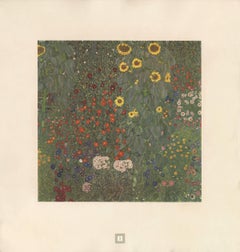
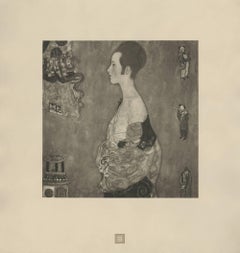
After Gustav Klimt, Max Eisler #3, Sonnenblumen; multi-color collotype after 1908 painting in oil on canvas. GUSTAV KLIMT EINE NACHLESE (GUSTAV KLIMT AN AFTERMATH), a portfolio of 30 collotypes prints, 15 are multi-color and 15 are monochrome, on chine colle paper laid down on heavy cream-wove paper with deckled edges; Max Eisler, Editor-Publisher; Osterreichischer Staatsdruckerei (Austrian State Printing Office), Printer; in a limited edition of 500 numbered examples of which: 200 were printed in German, 150 were printed in French and 150 were printed in English; Vienna, 1931. 2018 marks the 100th anniversary of Gustav Klimt’s death. It is a fitting time to reflect upon the enduring legacy and deep impact of his art. Recognizing this need for posterity with uncanny foresight, the publication of Gustav Klimt: An Aftermath (Eine Nachlese) provides a rare collection of work after Klimt which has proven to be an indispensable tool for Klimt scholarship as well as a source for pure visual delight. Approximately 25 percent of the original works featured in the Aftermath portfolio have since been lost. Of those 30, six were destroyed by fire on 8 May 1945. On that fateful final day of WWII, the retreating Feldherrnhalle, a tank division of the German Army, set fire to the Schloss Immendorf which was a 16th century castle in Lower Austria used between 1942-1945 to store objects of art. All three of Klimt’s Faculty Paintings: Philosophy, Medicine and Jurisprudence (1900-1907), originally created for the University of Vienna, were on premises at that time. Also among the inventory of Klimt paintings in storage there was art which had been confiscated by the Nazis. One of the most significant confiscated collections was the Lederer collection which featured many works by Gustav Klimt such as Girlfriends II and Garden Path with Chickens...

Category

1930s Vienna Secession (after) Gustav Klimt Prints and Multiples
Materials

Paper

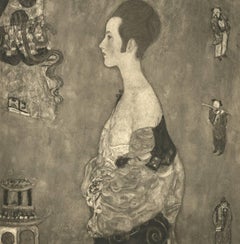
Max Eisler Eine Nachlese folio "Houses in Unterach on Lake Attersee" collotype

Max Eisler Eine Nachlese folio "Houses in Unterach on Lake Attersee" collotype

By (after) Gustav Klimt

Located in Palm Beach, FL

After Gustav Klimt, Max Eisler Plate #29, Am Attersee; brown-toned monochrome collotype after the 1915-16 painting in oil on canvas. GUSTAV KLIMT EINE NACHLESE (GUSTAV KLIMT AN AFTERMATH), a portfolio of 30 collotypes prints, 15 are multi-color and 15 are monochrome, on chine colle paper laid down on heavy cream-wove paper with deckled edges; Max Eisler, Editor-Publisher; Osterreichischer Staatsdruckerei (Austrian State Printing Office), Printer; in a limited edition of 500 numbered examples of which: 200 were printed in German, 150 were printed in French and 150 were printed in English; Vienna, 1931. 2018 marks the 100th anniversary of Gustav Klimt’s death. It is a fitting time to reflect upon the enduring legacy and deep impact of his art. Recognizing this need for posterity with uncanny foresight, the publication of Gustav Klimt: An Aftermath (Eine Nachlese) provides a rare collection of work after Klimt which has proven to be an indispensable tool for Klimt scholarship as well as a source for pure visual delight. Approximately 25 percent of the original works featured in the Aftermath portfolio have since been lost. Of those 30, six were destroyed by fire on 8 May 1945. On that fateful final day of WWII, the retreating Feldherrnhalle, a tank division of the German Army, set fire to the Schloss Immendorf which was a 16th century castle in Lower Austria used between 1942-1945 to store objects of art. All three of Klimt’s Faculty Paintings: Philosophy, Medicine and Jurisprudence (1900-1907), originally created for the University of Vienna, were on premises at that time. Also among the inventory of Klimt paintings in storage there was art which had been confiscated by the Nazis. One of the most significant confiscated collections was the Lederer collection which featured many works by Gustav Klimt such as Girlfriends II and Garden Path with Chickens...

Category

1930s Vienna Secession (after) Gustav Klimt Prints and Multiples
Materials

Archival Paper

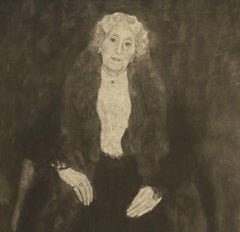
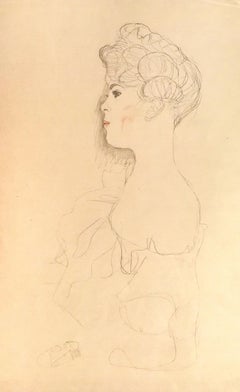
Max Eisler Eine Nachlese folio "Charlotte Pulitzer" collotype

Max Eisler Eine Nachlese folio "Charlotte Pulitzer" collotype

By (after) Gustav Klimt

Located in Palm Beach, FL

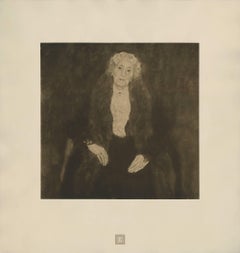
After Gustav Klimt, Max Eisler Plate #19, Bildnis einer alten Dame; sepia-toned monochrome collotype after the 1917 painting in oil on canvas. GUSTAV KLIMT EINE NACHLESE (GUSTAV KLIMT AN AFTERMATH), a portfolio of 30 collotypes prints, 15 are multi-color and 15 are monochrome, on chine colle paper laid down on heavy cream-wove paper with deckled edges; Max Eisler, Editor-Publisher; Osterreichischer Staatsdruckerei (Austrian State Printing Office), Printer; in a limited edition of 500 numbered examples of which: 200 were printed in German, 150 were printed in French and 150 were printed in English; Vienna, 1931. 2018 marks the 100th anniversary of Gustav Klimt’s death. It is a fitting time to reflect upon the enduring legacy and deep impact of his art. Recognizing this need for posterity with uncanny foresight, the publication of Gustav Klimt: An Aftermath (Eine Nachlese) provides a rare collection of work after Klimt which has proven to be an indispensable tool for Klimt scholarship as well as a source for pure visual delight. Approximately 25 percent of the original works featured in the Aftermath portfolio have since been lost. Of those 30, six were destroyed by fire on 8 May 1945. On that fateful final day of WWII, the retreating Feldherrnhalle, a tank division of the German Army, set fire to the Schloss Immendorf which was a 16th century castle in Lower Austria used between 1942-1945 to store objects of art. All three of Klimt’s Faculty Paintings: Philosophy, Medicine and Jurisprudence (1900-1907), originally created for the University of Vienna, were on premises at that time. Also among the inventory of Klimt paintings in storage there was art which had been confiscated by the Nazis. One of the most significant confiscated collections was the Lederer collection which featured many works by Gustav Klimt such as Girlfriends II and Garden Path with Chickens...

Category

1930s Vienna Secession (after) Gustav Klimt Prints and Multiples
Materials

Archival Paper

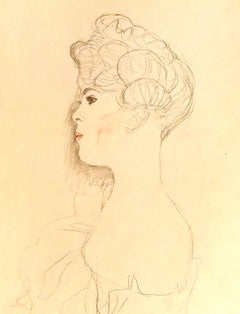
Max Eisler Eine Nachlese folio "Italian Garden Landscape" collotype

Max Eisler Eine Nachlese folio "Italian Garden Landscape" collotype

By (after) Gustav Klimt

Located in Palm Beach, FL

After Gustav Klimt, Max Eisler Plate #23, Italienische Landschaft; blue-grey monochrome collotype after the 1913 painting in oil on canvas. GUSTAV KLIMT EINE NACHLESE (GUSTAV KLIMT AN AFTERMATH), a portfolio of 30 collotypes prints, 15 are multi-color and 15 are monochrome, on chine colle paper laid down on heavy cream-wove paper with deckled edges; Max Eisler, Editor-Publisher; Osterreichischer Staatsdruckerei (Austrian State Printing Office), Printer; in a limited edition of 500 numbered examples of which: 200 were printed in German, 150 were printed in French and 150 were printed in English; Vienna, 1931. 2018 marks the 100th anniversary of Gustav Klimt’s death. It is a fitting time to reflect upon the enduring legacy and deep impact of his art. Recognizing this need for posterity with uncanny foresight, the publication of Gustav Klimt: An Aftermath (Eine Nachlese) provides a rare collection of work after Klimt which has proven to be an indispensable tool for Klimt scholarship as well as a source for pure visual delight. Approximately 25 percent of the original works featured in the Aftermath portfolio have since been lost. Of those 30, six were destroyed by fire on 8 May 1945. On that fateful final day of WWII, the retreating Feldherrnhalle, a tank division of the German Army, set fire to the Schloss Immendorf which was a 16th century castle in Lower Austria used between 1942-1945 to store objects of art. All three of Klimt’s Faculty Paintings: Philosophy, Medicine and Jurisprudence (1900-1907), originally created for the University of Vienna, were on premises at that time. Also among the inventory of Klimt paintings in storage there was art which had been confiscated by the Nazis. One of the most significant confiscated collections was the Lederer collection which featured many works by Gustav Klimt such as Girlfriends II and Garden Path with Chickens...

Category

1930s Vienna Secession (after) Gustav Klimt Prints and Multiples
Materials

Paper

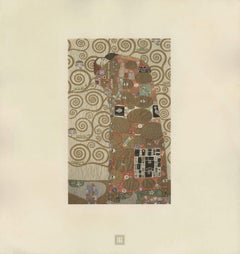
Max Eisler Eine Nachlese folio "Studies for the Frieze at Palais" 4 collotypes

Max Eisler Eine Nachlese folio "Studies for the Frieze at Palais" 4 collotypes

By (after) Gustav Klimt

Located in Palm Beach, FL

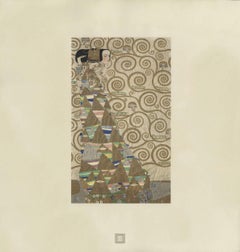
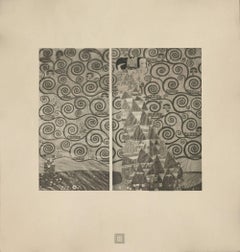
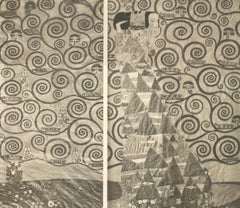
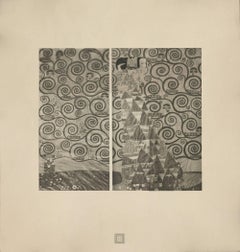
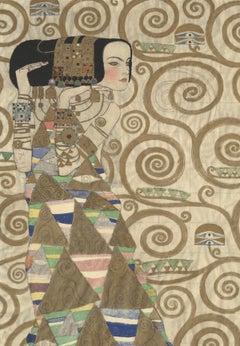
After Gustav Klimt, Max Eisler Plates #13-16, black & white collotypes after the 1911 cartoon originally in crayon, graphite pencil, gouache and metal powders. #13 Der Lebensbaum (Anfang), aka The Tree of Life (Beginning) #14 Der Lebensbaum (Fortsetzung), aka Tree of Life (Continuation) #15 Der Lebensbaum (Fortsetzung), aka Tree of Life (Continuation) #16 Der Lebensbaum und das Mittelfeld, aka Tree of Life (The Center) GUSTAV KLIMT EINE NACHLESE (GUSTAV KLIMT AN AFTERMATH), a portfolio of 30 collotypes prints, 15 are multi-color and 15 are monochrome, on chine colle paper laid down on heavy cream-wove paper with deckled edges; Max Eisler, Editor-Publisher; Osterreichischer Staatsdruckerei (Austrian State Printing Office), Printer; in a limited edition of 500 numbered examples of which: 200 were printed in German, 150 were printed in French and 150 were printed in English; Vienna, 1931. 2018 marks the 100th anniversary of Gustav Klimt’s death. It is a fitting time to reflect upon the enduring legacy and deep impact of his art. Recognizing this need for posterity with uncanny foresight, the publication of Gustav Klimt: An Aftermath (Eine Nachlese) provides a rare collection of work after Klimt which has proven to be an indispensable tool for Klimt scholarship as well as a source for pure visual delight. Approximately 25 percent of the original works featured in the Aftermath portfolio have since been lost. Of those 30, six were destroyed by fire on 8 May 1945. On that fateful final day of WWII, the retreating Feldherrnhalle, a tank division of the German Army, set fire to the Schloss Immendorf which was a 16th century castle in Lower Austria used between 1942-1945 to store objects of art. All three of Klimt’s Faculty Paintings: Philosophy, Medicine and Jurisprudence (1900-1907), originally created for the University of Vienna, were on premises at that time. Also among the inventory of Klimt paintings in storage there was art which had been confiscated by the Nazis. One of the most significant confiscated collections was the Lederer collection which featured many works by Gustav Klimt such as Girlfriends II and Garden Path with Chickens...

Category

1930s Vienna Secession (after) Gustav Klimt Prints and Multiples
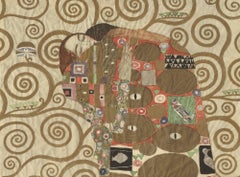
Materials

Archival Paper

Max Eisler Eine Nachlese folio "Section of Jurisprudence" collotype

Max Eisler Eine Nachlese folio "Section of Jurisprudence" collotype

By (after) Gustav Klimt

Located in Palm Beach, FL

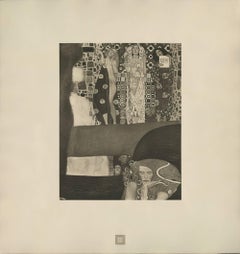
After Gustav Klimt, Max Eisler Plate #11, Aus den Bilde “Die Jurisprudenz”; brown-toned monochrome collotype after the 1900-07 painting in oil on canvas. The original was destroyed by fire in May 1945. GUSTAV KLIMT EINE NACHLESE (GUSTAV KLIMT AN AFTERMATH), a portfolio of 30 collotypes prints, 15 are multi-color and 15 are monochrome, on chine colle paper laid down on heavy cream-wove paper with deckled edges; Max Eisler, Editor-Publisher; Osterreichischer Staatsdruckerei (Austrian State Printing Office), Printer; in a limited edition of 500 numbered examples of which: 200 were printed in German, 150 were printed in French and 150 were printed in English; Vienna, 1931. 2018 marks the 100th anniversary of Gustav Klimt’s death. It is a fitting time to reflect upon the enduring legacy and deep impact of his art. Recognizing this need for posterity with uncanny foresight, the publication of Gustav Klimt: An Aftermath (Eine Nachlese) provides a rare collection of work after Klimt which has proven to be an indispensable tool for Klimt scholarship as well as a source for pure visual delight. Approximately 25 percent of the original works featured in the Aftermath portfolio have since been lost. Of those 30, six were destroyed by fire on 8 May 1945. On that fateful final day of WWII, the retreating Feldherrnhalle, a tank division of the German Army, set fire to the Schloss Immendorf which was a 16th century castle in Lower Austria used between 1942-1945 to store objects of art. All three of Klimt’s Faculty Paintings: Philosophy, Medicine and Jurisprudence (1900-1907), originally created for the University of Vienna, were on premises at that time. Also among the inventory of Klimt paintings in storage there was art which had been confiscated by the Nazis. One of the most significant confiscated collections was the Lederer collection which featured many works by Gustav Klimt such as Girlfriends II and Garden Path with Chickens...

Category

1930s Vienna Secession (after) Gustav Klimt Prints and Multiples
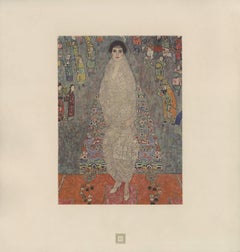
Materials

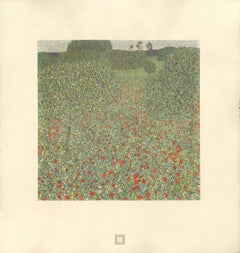
Paper

Max Eisler Eine Nachlese folio "Poppy Field (Poppies in Bloom)" collotype

Max Eisler Eine Nachlese folio "Poppy Field (Poppies in Bloom)" collotype

By (after) Gustav Klimt

Located in Palm Beach, FL

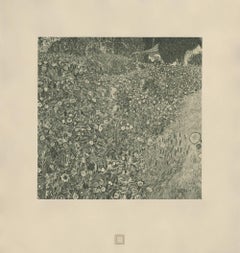
After Gustav Klimt, Max Eisler #5, Mohnwiese; multi-color collotype after 1907 painting in oil on canvas. GUSTAV KLIMT EINE NACHLESE (GUSTAV KLIMT AN AFTERMATH), a portfolio of 30 collotypes prints, 15 are multi-color and 15 are monochrome, on chine colle paper laid down on heavy cream-wove paper with deckled edges; Max Eisler, Editor-Publisher; Osterreichischer Staatsdruckerei (Austrian State Printing Office), Printer; in a limited edition of 500 numbered examples of which: 200 were printed in German, 150 were printed in French and 150 were printed in English; Vienna, 1931. 2018 marks the 100th anniversary of Gustav Klimt’s death. It is a fitting time to reflect upon the enduring legacy and deep impact of his art. Recognizing this need for posterity with uncanny foresight, the publication of Gustav Klimt: An Aftermath (Eine Nachlese) provides a rare collection of work after Klimt which has proven to be an indispensable tool for Klimt scholarship as well as a source for pure visual delight. Approximately 25 percent of the original works featured in the Aftermath portfolio have since been lost. Of those 30, six were destroyed by fire on 8 May 1945. On that fateful final day of WWII, the retreating Feldherrnhalle, a tank division of the German Army, set fire to the Schloss Immendorf which was a 16th century castle in Lower Austria used between 1942-1945 to store objects of art. All three of Klimt’s Faculty Paintings: Philosophy, Medicine and Jurisprudence (1900-1907), originally created for the University of Vienna, were on premises at that time. Also among the inventory of Klimt paintings in storage there was art which had been confiscated by the Nazis. One of the most significant confiscated collections was the Lederer collection which featured many works by Gustav Klimt such as Girlfriends II and Garden Path with Chickens...

Category

1930s Vienna Secession (after) Gustav Klimt Prints and Multiples
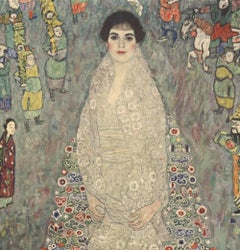
Materials

Archival Paper

Bundle with Klimt, Barletta, Dalì

Bundle with Klimt, Barletta, Dalì

By (after) Gustav Klimt

Located in Roma, IT

The bundle includes: Barletta: 1stDibs: LU65037475192 Dali: 1stDibs: LU65036638712 Klimt: LU65037505342

Category

1910s Modern (after) Gustav Klimt Prints and Multiples
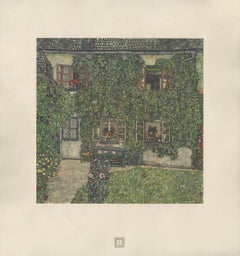
Materials

Black and White

(after) Gustav Klimt prints and multiples for sale on 1stDibs.

Find a wide variety of authentic (after) Gustav Klimt prints and multiples available for sale on 1stDibs. If you’re browsing the collection of prints and multiples to introduce a pop of color in a neutral corner of your living room or bedroom, you can find work that includes elements of orange and other colors. You can also browse by medium to find art by (after) Gustav Klimt in paper, lithograph, archival paper and more. Much of the original work by this artist or collective was created during the 20th century and is mostly associated with the Expressionist style. Not every interior allows for large (after) Gustav Klimt prints and multiples, so small editions measuring 8 inches across are available. (after) Gustav Klimt prints and multiples prices can differ depending upon medium, time period and other attributes. On 1stDibs, the price for these items starts at $250 and tops out at $18,500, while the average work can sell for $2,000.
Questions About (after) Gustav Klimt Prints and Multiples
  • 1stDibs ExpertAugust 8, 2024
    Gustav Klimt was inspired by a few things. The Austrian painter drew inspiration from traditional Japanese artwork and from pieces produced by other western artists, such as Fernand Khnopff and Vincent van Gogh. In addition, he found decorative Byzantine mosaics to be inspiring. In fact, you can see their influence in many of his works, including The Kiss and The Tree of Life, Stoclet Frieze. Find an assortment of Gustav Klimt art on 1stDibs.
  • 1stDibs ExpertApril 5, 2022
    Gustav Klimt was an Austrian painter and sculptor whose primary focus was on female subjects. An symbolist painter and a prominent member of the Vienna Art Nouveau movement, Klimt was well-known for his erotic and highly ornate style, although he also painted landscapes and figurative works. Find a collection of authentic Gustav Klimt artwork from trusted art dealers on 1stDibs.
  • 1stDibs ExpertMarch 13, 2024
    Gustav Klimt's most famous piece is arguably The Kiss. Painted in 1908, the work shows an embracing man and woman draped in gold finery. The piece is oil on canvas and is now in the Österreichische Galerie Belvedere museum in Vienna, Austria. Explore a collection of Gustav Klimt art on 1stDibs.
  • 1stDibs ExpertAugust 26, 2024
    Yes, Gustav Klimt used real gold in some of his paintings. Specifically, Klimt applied gold leaf to his works. One of the early examples of this technique is found in Judith and the Head of Holofernes, which he painted in 1901. Find an assortment of Gustav Klimt art on 1stDibs.
  • 1stDibs ExpertAugust 8, 2024
    How much a Klimt painting is worth depends on its condition, history, rarity and other factors. In 2023, The Lady with a Fan sold for $108.4 million, setting a new record for the artist. An Austrian painter, Klimt played a key role in the Vienna Secession movement. He is best known for his paintings depicting the female body, drawing inspiration from traditional Japanese art and Byzantine mosaics. A certified appraiser or knowledgeable dealer can provide an estimated value for Gustav Klimt paintings. Find a collection of Gustav Klimt art on 1stDibs.
  • 1stDibs ExpertAugust 15, 2024
    No, Gustave Doré's art is not copyrighted. The French graphic artist and illustrator died in 1883. Since his date of death was more than 70 years ago and no heir renewed the copyright, all of his works are now in the public domain. On 1stDibs, find a selection of Gustave Doré art.
  • 1stDibs ExpertApril 5, 2022
    Gustav Becker started as a clock repair worker prior to opening his own small clock shop in 1847. From 1850–80, Gustav Becker created clocks and clock cases. You’ll find a selection of authentic Gustav Becker antique clocks from reputable sellers on 1stDibs.