By Carlo di Carli
Located in Milano, IT
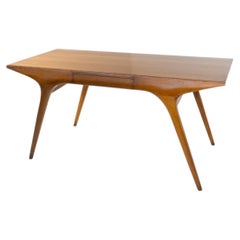
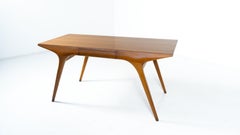
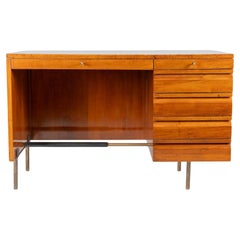
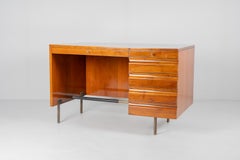
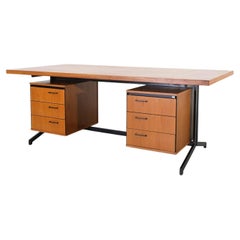
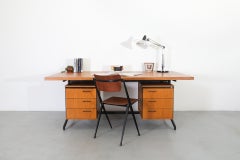
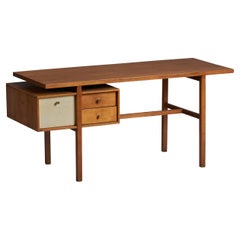
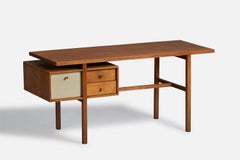
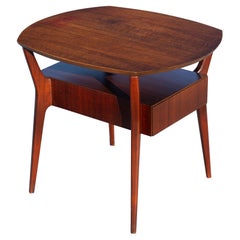
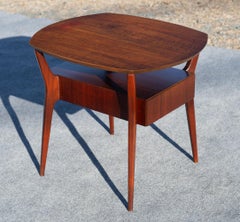
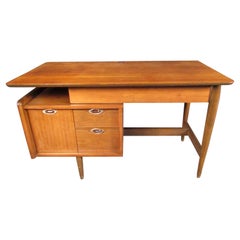
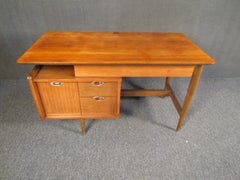
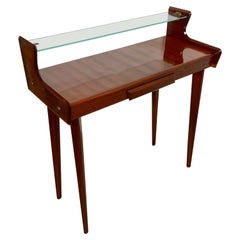
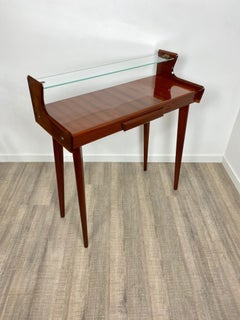
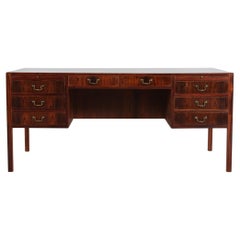
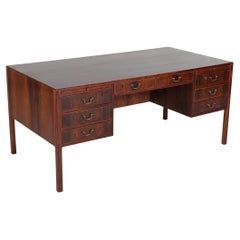
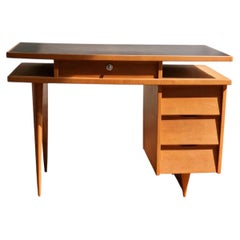
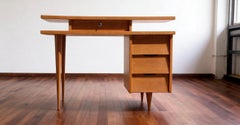
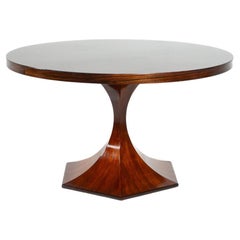
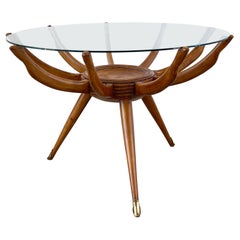
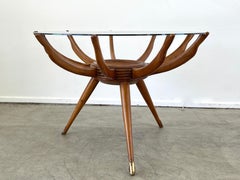
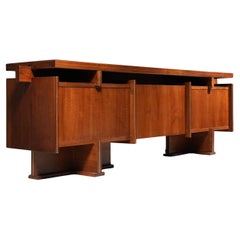
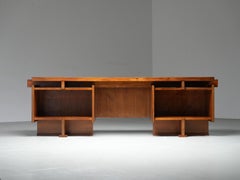
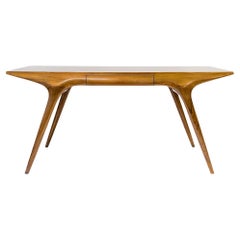
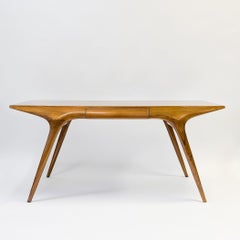
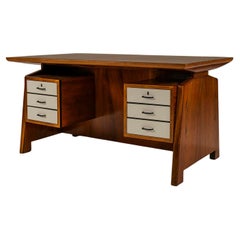
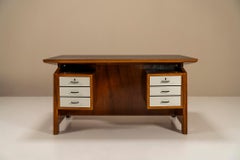
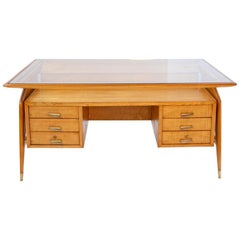
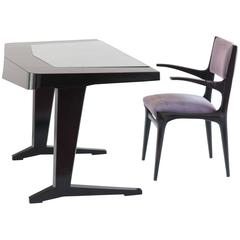
Important and rare desk by Carlo de Carli of the 1950s. With this desk Carlo de Carli poses the problem of overcoming a strictly rationalist approach and tries to give new life to his furniture with new forms, provoked vital suggestions such as movement, speed. The realizations of De Carli in fact are very angular, sharp and dynamic, given also by a geometric balance. In fact the desk is a constant geometric game between balance and dynamism. The desk is made of an elegant solid wood, well worked and with superlative geometric games. We find a thick glass as a work surface. Just below the tabletop we notice two visible drop-down shelves for storing objects or books. Focal point, in addition to its elegant lines, we find its brass details, where trapezoidal shaped handles and brass tips as feet. The handles are placed in two small chests of drawers with drawers on the sides of the desk. We enclose publication.
An object definitely for a few, from the great aesthetic taste, where only collectors can admire its beauty in total.
Carlo de Carli
Carlo de Carli (Milan, November 7, 1910 - Milan, March 3, 1999) was an Italian architect, designer, essayist and academic, one of the protagonists of modern architecture, Industrial Design, and their teaching. In his projects of interior architecture spaces are articulated and related as a unitary whole capable of receiving and telling. This 'sense' of space characterizes the Franzi leather goods store (1946), the Roditi and Galli apartments (1949-1950) and the installations in the Ambrosiana Library (1952) in Milan. In 1958 the entrance hall to the Hall of the Council of Europe at the Expo in Brussels is an extraordinary space for meeting and telling the story of the IDEA of Freedom through the ages. In 1965, at the exhibition "La casa abitata" at Palazzo Strozzi, Florence, he sets up a living space on two levels with furniture unified by the use of a single wooden planking.Elements of furniture
At the same time, he designed numerous pieces of furniture that went into production with Cassina (the chair mod. 683 won the first Compasso d'Oro in 1954), Tecno (the Poltroncina Balestra is Grand Prize of the XI Triennale, 1957), Sormani, Longhi, Cinova and various other artisan and Industrial companies.
Carlo de Carli's figure as an architect identifies with the ancient figure...
Category
1950s Italian Mid-Century Modern Vintage Carlo di Carli Desks and Writing Tables