By Edward (John Edward) Borein
Located in Denver, CO
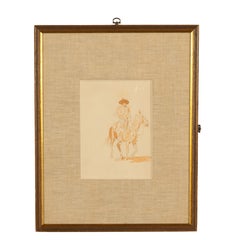
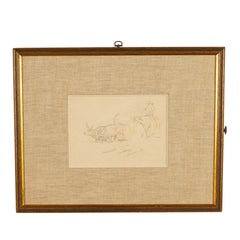
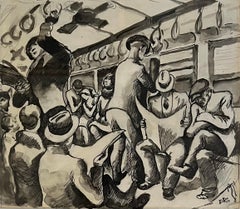
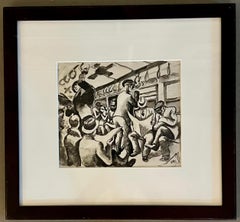
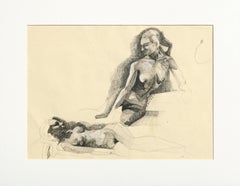
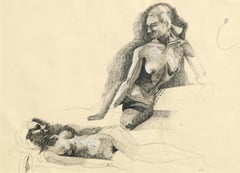
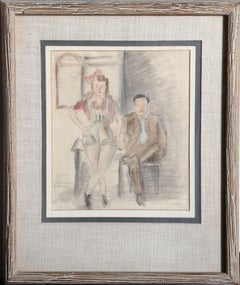
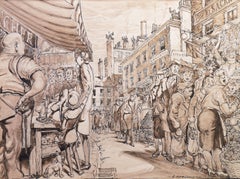
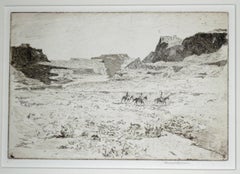
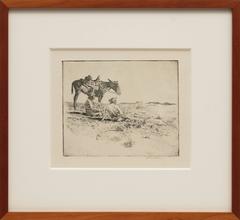
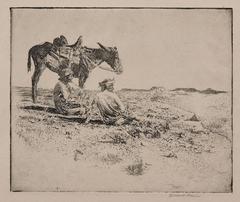
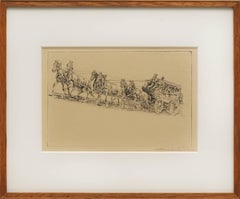
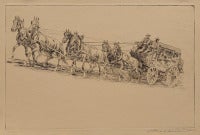
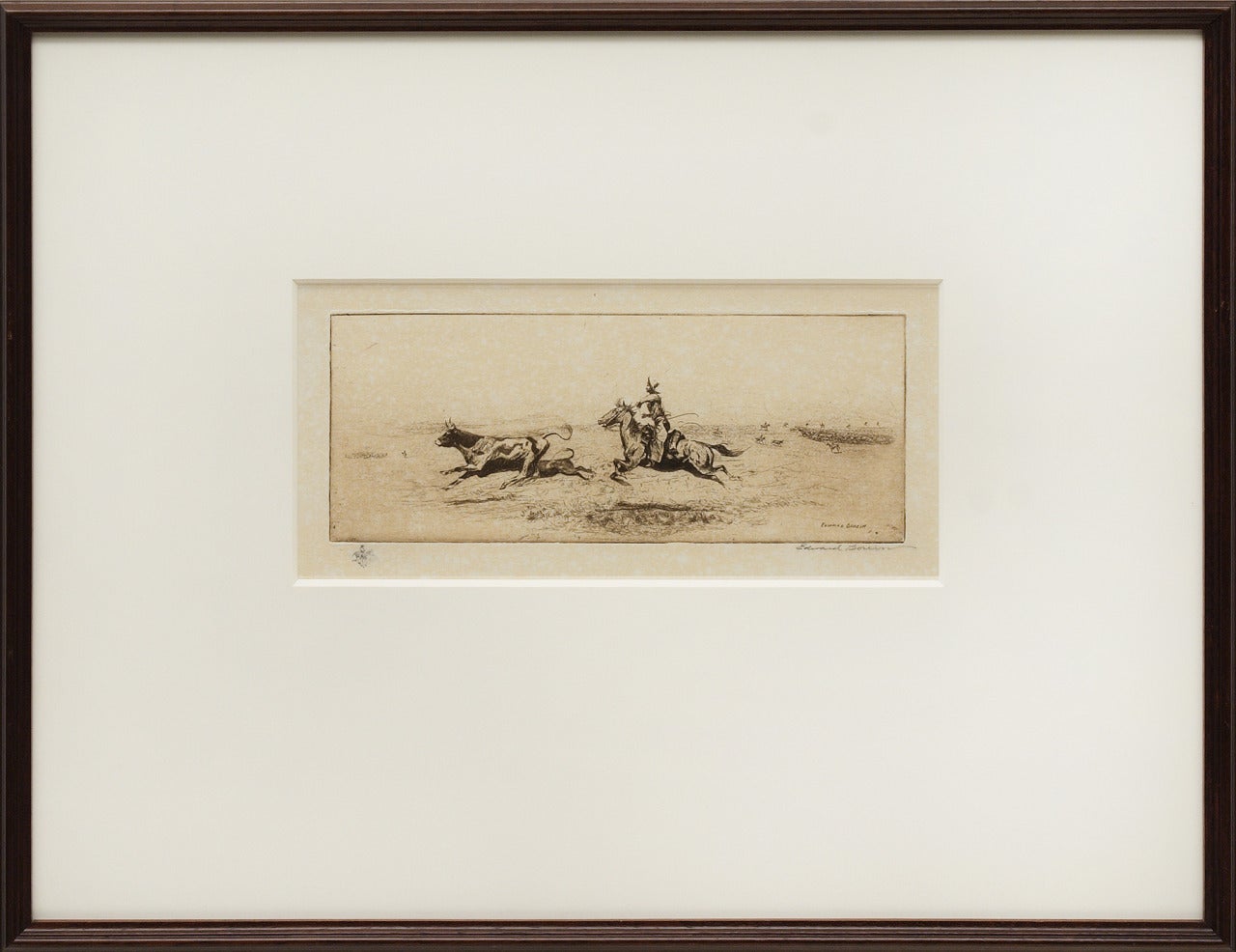
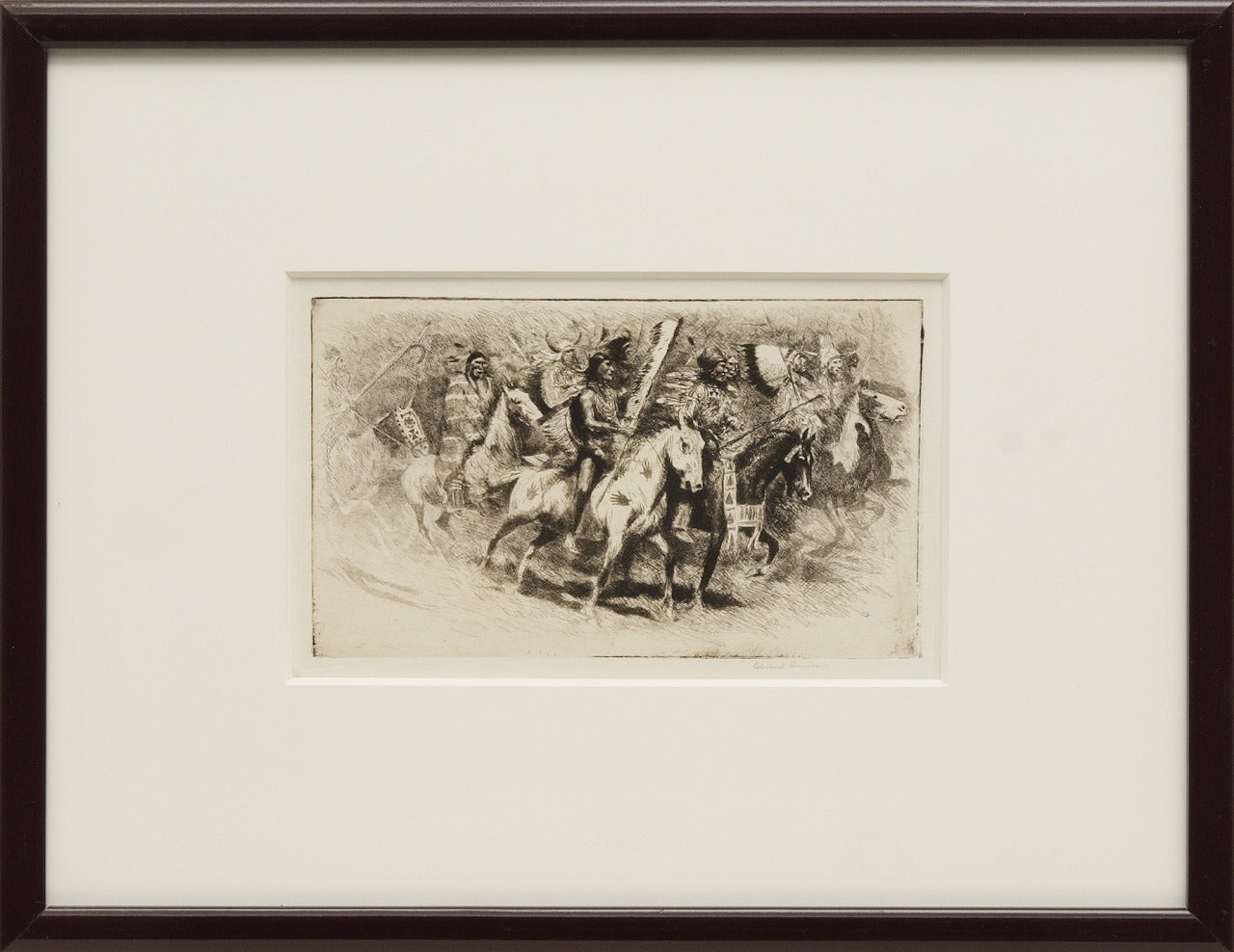
Etching and drypoint on paper. "Hopi Shepherder c 28 2nd State" noted at bottom left of sheet. Framed dimensions are 13 x 14.25 x 0.75 inches. Image measures 5.75 x 6.75 inches.
Illustrated:
"The Etchings of Edward Borein" by John Galvin, John Howell Books, 1971, plate 187
About the artist:
A native of San Leandro, California, Edward Borein is set apart from other Western artists because he never sought to romanticize his paintings. Instead, he used his art to accurately represent the details of the American West, most importantly its people, landscape, and traditions. He sought authenticity, often portraying traditional Indians and old-time cowboys. He did not attempt to stage the subject matter of his paintings, but rather, painted entirely from memory and personal observation.
Borein was born on October 12, 1872. His father was the deputy sheriff of San Leandro in Alameda County. As a young boy, he was fascinated with the colorful Vaqueros as they drove the cattle. At age twelve he learned to rope and drive cattle. This time of development also afforded him the completion of his first oil painting.
At age eighteen, Borein bought a horse and bedroll and left home to seek work in the South. He settled in San Jose where he learned the proper methods for handling and herding cattle. After a year, he returned home to Oakland. Once home, he showed his mother the many sketches he produced while living in the South. Convinced he had serious talent, his mother enrolled him in the art school of the San Francisco Art Association. He gladly took the opportunity, but was soon disenchanted by the stifling environment of the classroom and remained there for only one month. In San Francisco, he met Maynard Dixon and later traveled with him touring the Sierras, Carson City, parts of Oregon, Idaho and Mexico. Through his journeys to Mexico, he gained a deep appreciation for the primitive lifestyle of the people. He spoke some Spanish and chose to work as a Vaquero. He used all his sketches and paintings as a tool to document the sensibility of the Mexican people, their tradition and the vivid landscape. Often, Borein used India ink to go over the pencil lines of his sketches. During this time of exploration, he expanded his artistic talents through experimentation with watercolors and sculpture.
By 1904 Borein had settled in Oakland where he rented a studio and worked as an illustrator for many successful magazines: Harper's, Collier's, Sunset, Century and Western World. His reputation increased greatly, and he gained national recognition as one of the most popular artists in the West along with Charles Russell, James Swinnerton, Maynard Dixon, Will James, Olaf Seltzer...
Category
1920s Edward (John Edward) Borein Art