Frank Horvat Photography

French, Italian, 1928-2020

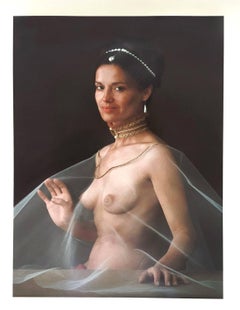
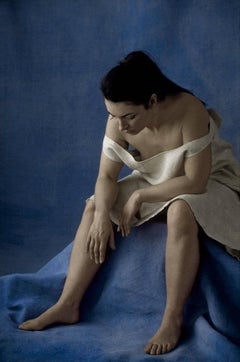
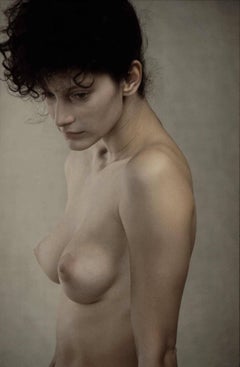
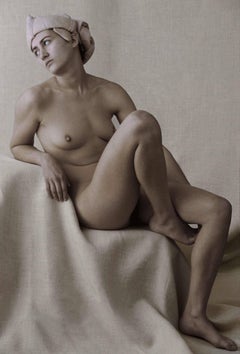
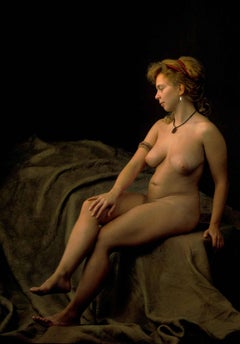
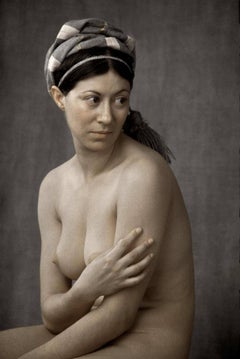
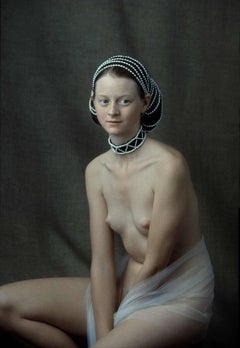
The medium of photography owes a great deal to pioneer Frank Horvat.  Never one to shy away from new techniques and technology, the internationally renowned photographer enjoyed a career spanning seven decades. His nude and portrait photographs — in color and black and white — were often shot off-site rather than in the studio and are credited with paving the way for modern French fashion photography.

Horvat was born in 1928 in Abbazia, Italy. When he was a teenager, he swapped his postage stamp collection for a 35 mm Retinamat camera, hoping to impress girls, which didn't work. However, Horvat did start teaching himself about photo composition. In 1947, he moved to Milan to study art at the Accademia di Brera.

In the early 1950s, Horvat traveled to Pakistan, India, London, New York and Paris, working as a photojournalist and fashion photographer. By the late 1950s he had made a name for himself for using his dynamic journalistic sense to breathe new life into fashion photography. The early 1960s marked the heights of his career, working for magazines like Harper's Bazaar, Elle, Glamour, Vogue, Revue and Jardin des Modes.

After a whirlwind in the spotlight, the 1970s saw Horvat winding down his fashion photography. Many magazines he once worked for closed their doors, so he pivoted to publishing photography books. His first personal project was called Portraits of Trees.

Always a maverick, Horvat was at the forefront of digital photography in the late 1980s. While there was resistance to the digital shift from other photographers, Horvat embraced the ease and convenience of the format. He was later a big proponent of Photoshop, as well.

Horvat continued releasing photography books throughout the rest of his life. In 2011, he received an award for his photographic career from the Centro di Ricerca e Archiviazione della Fotografia in Italy.

Horvat passed away in 2020, leaving behind a prolific photographic legacy. His work is held in the collections of the Museum of Modern Art, the Victoria and Albert Museum, the Bibliothèque Nationale de France and Kunstbibliothek Berlin, to name a few.

On 1stDibs, find a lively collection of Frank Horvat photography.

to
1
Overall Width
to
Overall Height
to
1
1
1
1
1
1
1
1
1
1
1
11,233
2,851
2,494
1,438
1
Artist: Frank Horvat
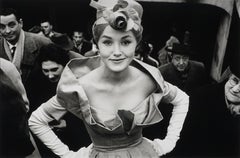
For Jours De France, Paris - Monique Dutto, 1958 (printed 1995)

For Jours De France, Paris - Monique Dutto, 1958 (printed 1995)

By Frank Horvat

Located in Santa Monica, CA

Signed, titled, dated and numbered in pencil on verso Gelatin Silver Print Image: 11-1/2" x 17-1/2", Paper: 16" x 20", Mat: 20" x 24" Edition 3 of 30

Category

1950s Frank Horvat Photography

Materials

Silver Gelatin

Related Items
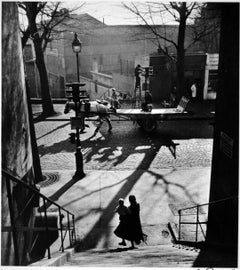
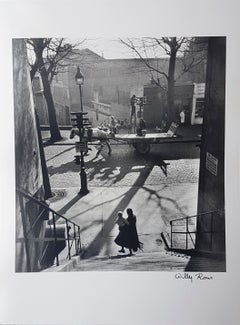
Avenue Simon Bolivar - Willy Ronis, 20th Century, French Humanist Photography

Avenue Simon Bolivar - Willy Ronis, 20th Century, French Humanist Photography

By Willy Ronis

Located in Paris, FR

One of the famous members of the Humanist photography in France. Signed lower right by the artist. Stamp of the artist's studio on the back.

Category

1950s Contemporary Frank Horvat Photography

Materials

Photographic Paper, Silver Gelatin

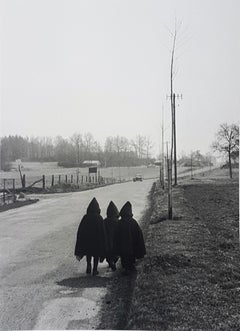
Lorraine - Willy Ronis, 20th Century, French Humanist Photography

Lorraine - Willy Ronis, 20th Century, French Humanist Photography

By Willy Ronis

Located in Paris, FR

One of the famous members of the Humanist photography in France. Signed lower right. Stamp of the artist's studio on the back.

Category

1950s Contemporary Frank Horvat Photography

Materials

Photographic Paper, Silver Gelatin

RTGA, Latvia,

RTGA, Latvia,

By Pentti Sammallahti

Located in Sante Fe, NM

This print is currently featured in our exhibition, Warm Regards, and will be available to ship after the show closes June 24th, 2017. Pentti Sammallahti is a benchmark figure in co...

Category

1990s Contemporary Frank Horvat Photography

Materials

Silver Gelatin

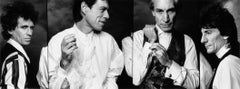
The Rolling Stones (Limited Edition of 25) - Celebrity Photography

The Rolling Stones (Limited Edition of 25) - Celebrity Photography

By John Stoddart 1

Located in New York, NY

The Rolling Stones, a 1989 black and white stitched photograph shot for their "Steel Wheels " world tour, starring Keith Richards, Mick Jagger, Bill Wyman and Ronnie Wood. This Photo...

Category

1980s Other Art Style Frank Horvat Photography

Materials

Silver Gelatin

Sikinos, Greece

Sikinos, Greece

By Pentti Sammallahti

Located in Sante Fe, NM

This print is currently featured in our exhibition, Warm Regards, and will be available to ship after the show closes June 24th, 2017. Pentti Sammallahti is a benchmark figure in co...

Category

2010s Contemporary Frank Horvat Photography

Materials

Silver Gelatin

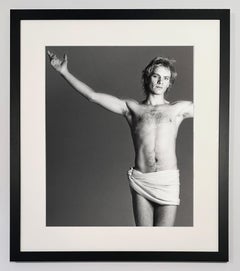
Francesco Scavullo Celebrity Photography Print, 1984, Framed, Sting

Francesco Scavullo Celebrity Photography Print, 1984, Framed, Sting

By Francesco Scavullo

Located in Washington, DC

Artist: Francesco Scavullo (after) Title: Sting, 1984 Portfolio: A Photographic Retrospective, Volume I: Song Medium: Gelatin Silver Print Year: 2004 Edition: AP 7/50 (aside from the...

Category

Early 2000s Photorealist Frank Horvat Photography

Materials

Silver Gelatin

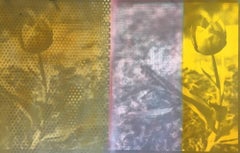
Dormant

Molly McCallDormant

$3,000

H 11 in W 18 in

Dormant

By Molly McCall

Located in Sante Fe, NM

In Home Movies McCall employs the cinematic qualities of found vintage photographs to construct narratives exploring the passage of time, transition, transformation, and loss. Each s...

Category

2010s Contemporary Frank Horvat Photography

Materials

Varnish, Oil, Silver Gelatin

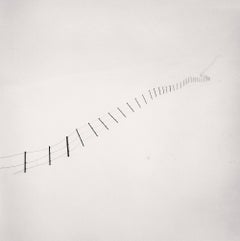
Hillside Fence, Study 4, Teshikaga, Hokkaido, Japan. 2002

Hillside Fence, Study 4, Teshikaga, Hokkaido, Japan. 2002

By Michael Kenna

Located in Sante Fe, NM

Michael Kenna is master of contemporary photography. Known for clean compositions, long exposures and minimalist aesthetics, Kenna’s signature style remains highly influential amon...

Category

21st Century and Contemporary Contemporary Frank Horvat Photography

Materials

Silver Gelatin

Hanko, Finland

Hanko, Finland

By Pentti Sammallahti

Located in Sante Fe, NM

This print is currently featured in our exhibition, Warm Regards, and will be available to ship after the show closes June 24th, 2017. Pentti Sammallahti is a benchmark figure in co...

Category

2010s Contemporary Frank Horvat Photography

Materials

Silver Gelatin

Near Twilight

Near Twilight

By Ken Rosenthal

Located in Sante Fe, NM

That was the River, This is the Sea Portfolio Introduction: The past several years of my life have been colored by change, both positive and adverse: a new partner; a new child; lo...

Category

21st Century and Contemporary Contemporary Frank Horvat Photography

Materials

Silver Gelatin

Untitled

Pentti SammallahtiUntitled, 2008

$1,300

H 6.5 in W 7.5 in

Untitled

By Pentti Sammallahti

Located in Sante Fe, NM

This print is currently featured in our exhibition, Warm Regards, and will be available to ship after the show closes June 24th, 2017. Pentti Sammallahti is a benchmark figure in co...

Category

Early 2000s Contemporary Frank Horvat Photography

Materials

Silver Gelatin

Previously Available Items
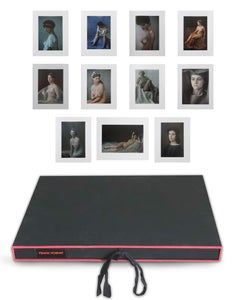
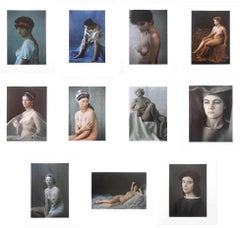
Frank Horvat Portfolio, 1980-1986, 11 Dye Transfer Prints, 1997

Frank Horvat Portfolio, 1980-1986, 11 Dye Transfer Prints, 1997

By Frank Horvat

Located in Miami Beach, FL

Frank Horvat Portfolio, 1980-1986 11 Dye Transfer Prints (The overall wall size composition of the entire portfolio is 70in x 80in) Individual image size:...

Category

1990s Modern Frank Horvat Photography

Materials

C Print, Dye Transfer, Archival Pigment

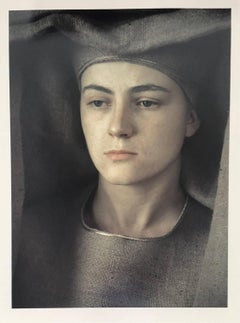
Veronique P., Dye Transfer Print, 1980

Veronique P., Dye Transfer Print, 1980

By Frank Horvat

Located in Miami Beach, FL

Veronique P., 1980 by Frank Horvat Dye Transfer Print Unframed Image size: 14 in. H x 9.38 in. W Sheet size: 22.63 in. H x 19.5 in. W Signed, titled and dated in pencil on verso. Frank Horvat (28 April 1928 – 21 October 2020) was an Italian photographer who lived and worked in France. He is best known for his fashion photography, published between the mid 1950s and the late 1980s. Horvat’s photographic opus includes photojournalism, portraiture, landscape, nature, and sculpture. He was the recipient of the Fondazione del Centenario Award in 2010 for his contributions to European culture. He has collaborated with fellow photographers such as Don McCullin, Robert Doisneau, Sarah Moon, Helmut Newton, and Marc Riboud. In the 1990s, he was one of the first major photographers to experiment with technology including photoshop. Horvat was born in Abbazia, Italy (now Opatija, Croatia), on 28 April 1928, into a Jewish family from Central Europe. His father, Karl, was a Hungarian general physician, and his mother, Adele, was a psychiatrist from Vienna. At the age of 11, in 1939, his family moved to Lugano in Switzerland, fleeing fascism in Italy. He went on to study fine art at Brera Academy in Milan. Horvat lived in several countries including Switzerland, Italy, Pakistan, India, England, and America) before settling in France in 1955. Horvat started his career in the mid 1950s as a photojournalist in Paris, working to capture the ‘sleaze and squalor’ of the city, before going on to fashion photography. He acknowledged having been strongly influenced by French humanist photographer Henri Cartier-Bresson. After meeting him in 1950, he followed his advice and replaced his Rollei with a Leica camera and embarked on a two-year journey through Asia as a free-lance photojournalist. His photographs from this trip were published by Life, Réalités, Match, Picture Post, Die Woche, and Revue. His photograph of an Indian bride under a veil, her face reflected in a mirror on her lap, was selected by Edward Steichen for The Family of Man exhibit at the Museum of Modern Art which toured the world to be seen by 9 million visitors. In 1955, Horvat moved from London to Paris and found that the mood of its streets and its inhabitants had little in common with the somewhat romantic vision of the so-called humanist photographers. In 1957, Horvat shot fashion photographs for Jardin des Modes using a 35-mm camera and available light, which formerly had rarely been used for fashion. This innovation was welcomed by ready-to-wear designers, because it presented their creations in the context of everyday life. In the following years, Horvat was commissioned to do similar work for Elle in Paris, Vogue in London, and Harper’s Bazaar in New York. Between 1962 and 1963, Horvat turned to photojournalism and took a trip around the world for the German magazine Revue. Then he experimented with cinema and video. In 1976, he decided to “become his own client” by producing three personal projects: Portraits of Trees (1976–82), Very Similar (1982-86) and New York Up and Down (1982–87), which he called his “triptych”. In this period, Horvat went on towards color photography including his series New York Up and Down, where he extensively shot portraits of passengers on New York’s subway systems and coffee shops. This was also period when his eyesight started to fail from an eye disease. It was then that he began a new project, a series of interviews with fellow photographers, such as Edouard Boubat, Robert Doisneau, Mario Giacomelli, Josef Koudelka, Don McCullin, Sarah Moon, Helmut Newton, Marc Riboud, Jeanloup Sieff and Joel-Peter Witkin. They were published in France under the title Entre Vues. In the 1990s, Horvat became interested in computer technology and produced Yao the Cat (1993), Bestiary (1994), and Ovid’s Metamorphoses (1995). He transgressed the Cartier-Bressonian rule of the “decisive moment” by combining parts of images shot at different times and in different places. Several years later, he produced A Trip to Carrara. This was also the period that he was one of the first photographers to experiment with Photoshop. Women played a central thematic role in his fashion journalistic works, with a focus on realism. Speaking about women in his photography and his emphasis on natural looks, he said, “I was interested in women. I wanted to show what I liked about them. They would spend two hours in the makeup chair...

Category

20th Century Modern Frank Horvat Photography

Materials

Dye Transfer, Archival Pigment, Color
Rebecca, Dye Transfer Print, Framed, 1980

Rebecca, Dye Transfer Print, Framed, 1980

By Frank Horvat

Located in Miami Beach, FL

Rebecca, 1980 by Frank Horvat Dye Transfer Print Image size: 14 in. H x 9.38 in. W Sheet size: 22.63 in. H x 19.5 in. W Frame size: 31 in. H x 26 in. W x 1 in. D Signed, titled and dated in pencil on verso. ___________________________________ Frank Horvat (28 April 1928 – 21 October 2020) was an Italian photographer who lived and worked in France. He is best known for his fashion photography, published between the mid 1950s and the late 1980s. Horvat’s photographic opus includes photojournalism, portraiture, landscape, nature, and sculpture. He was the recipient of the Fondazione del Centenario Award in 2010 for his contributions to European culture. He has collaborated with fellow photographers such as Don McCullin, Robert Doisneau, Sarah Moon, Helmut Newton, and Marc Riboud. In the 1990s, he was one of the first major photographers to experiment with technology including photoshop. Horvat was born in Abbazia, Italy (now Opatija, Croatia), on 28 April 1928, into a Jewish family from Central Europe. His father, Karl, was a Hungarian general physician, and his mother, Adele, was a psychiatrist from Vienna. At the age of 11, in 1939, his family moved to Lugano in Switzerland, fleeing fascism in Italy. He went on to study fine art at Brera Academy in Milan. Horvat lived in several countries including Switzerland, Italy, Pakistan, India, England, and America) before settling in France in 1955. Horvat started his career in the mid 1950s as a photojournalist in Paris, working to capture the ‘sleaze and squalor’ of the city, before going on to fashion photography. He acknowledged having been strongly influenced by French humanist photographer Henri Cartier-Bresson. After meeting him in 1950, he followed his advice and replaced his Rollei with a Leica camera and embarked on a two-year journey through Asia as a free-lance photojournalist. His photographs from this trip were published by Life, Réalités, Match, Picture Post, Die Woche, and Revue. His photograph of an Indian bride under a veil, her face reflected in a mirror on her lap, was selected by Edward Steichen for The Family of Man exhibit at the Museum of Modern Art which toured the world to be seen by 9 million visitors. In 1955, Horvat moved from London to Paris and found that the mood of its streets and its inhabitants had little in common with the somewhat romantic vision of the so-called humanist photographers. In 1957, Horvat shot fashion photographs for Jardin des Modes using a 35-mm camera and available light, which formerly had rarely been used for fashion. This innovation was welcomed by ready-to-wear designers, because it presented their creations in the context of everyday life. In the following years, Horvat was commissioned to do similar work for Elle in Paris, Vogue in London, and Harper’s Bazaar in New York. Between 1962 and 1963, Horvat turned to photojournalism and took a trip around the world for the German magazine Revue. Then he experimented with cinema and video. In 1976, he decided to “become his own client” by producing three personal projects: Portraits of Trees (1976–82), Very Similar (1982-86) and New York Up and Down (1982–87), which he called his “triptych”. In this period, Horvat went on towards color photography including his series New York Up and Down, where he extensively shot portraits of passengers on New York’s subway systems and coffee shops. This was also period when his eyesight started to fail from an eye disease. It was then that he began a new project, a series of interviews with fellow photographers, such as Edouard Boubat, Robert Doisneau, Mario Giacomelli, Josef Koudelka, Don McCullin, Sarah Moon, Helmut Newton, Marc Riboud, Jeanloup Sieff and Joel-Peter Witkin. They were published in France under the title Entre Vues. In the 1990s, Horvat became interested in computer technology and produced Yao the Cat (1993), Bestiary (1994), and Ovid’s Metamorphoses (1995). He transgressed the Cartier-Bressonian rule of the “decisive moment” by combining parts of images shot at different times and in different places. Several years later, he produced A Trip to Carrara. This was also the period that he was one of the first photographers to experiment with Photoshop. Women played a central thematic role in his fashion journalistic works, with a focus on realism. Speaking about women in his photography and his emphasis on natural looks, he said, “I was interested in women. I wanted to show what I liked about them. They would spend two hours in the makeup chair...

Category

20th Century Modern Frank Horvat Photography

Materials

Dye Transfer, Archival Pigment, Color
Michele, Dye Transfer Print, Framed, 1983

Michele, Dye Transfer Print, Framed, 1983

By Frank Horvat

Located in Miami Beach, FL

Michele, 1983 by Frank Horvat Dye Transfer Print Image size: 14 in. H x 9.38 in. W Sheet size: 22.63 in. H x 19.5 in. W Frame size: 31 in. H x 26 in. W Signed, titled and dated in pencil on verso. Framed ____________________________________ Frank Horvat (28 April 1928 – 21 October 2020) was an Italian photographer who lived and worked in France. He is best known for his fashion photography, published between the mid 1950s and the late 1980s. Horvat’s photographic opus includes photojournalism, portraiture, landscape, nature, and sculpture. He was the recipient of the Fondazione del Centenario Award in 2010 for his contributions to European culture. He has collaborated with fellow photographers such as Don McCullin, Robert Doisneau, Sarah Moon, Helmut Newton, and Marc Riboud. In the 1990s, he was one of the first major photographers to experiment with technology including photoshop. Horvat was born in Abbazia, Italy (now Opatija, Croatia), on 28 April 1928, into a Jewish family from Central Europe. His father, Karl, was a Hungarian general physician, and his mother, Adele, was a psychiatrist from Vienna. At the age of 11, in 1939, his family moved to Lugano in Switzerland, fleeing fascism in Italy. He went on to study fine art at Brera Academy in Milan. Horvat lived in several countries including Switzerland, Italy, Pakistan, India, England, and America) before settling in France in 1955. Horvat started his career in the mid 1950s as a photojournalist in Paris, working to capture the ‘sleaze and squalor’ of the city, before going on to fashion photography. He acknowledged having been strongly influenced by French humanist photographer Henri Cartier-Bresson. After meeting him in 1950, he followed his advice and replaced his Rollei with a Leica camera and embarked on a two-year journey through Asia as a free-lance photojournalist. His photographs from this trip were published by Life, Réalités, Match, Picture Post, Die Woche, and Revue. His photograph of an Indian bride under a veil, her face reflected in a mirror on her lap, was selected by Edward Steichen for The Family of Man exhibit at the Museum of Modern Art which toured the world to be seen by 9 million visitors. In 1955, Horvat moved from London to Paris and found that the mood of its streets and its inhabitants had little in common with the somewhat romantic vision of the so-called humanist photographers. In 1957, Horvat shot fashion photographs for Jardin des Modes using a 35-mm camera and available light, which formerly had rarely been used for fashion. This innovation was welcomed by ready-to-wear designers, because it presented their creations in the context of everyday life. In the following years, Horvat was commissioned to do similar work for Elle in Paris, Vogue in London, and Harper’s Bazaar in New York. Between 1962 and 1963, Horvat turned to photojournalism and took a trip around the world for the German magazine Revue. Then he experimented with cinema and video. In 1976, he decided to “become his own client” by producing three personal projects: Portraits of Trees (1976–82), Very Similar (1982-86) and New York Up and Down (1982–87), which he called his “triptych”. In this period, Horvat went on towards color photography including his series New York Up and Down, where he extensively shot portraits of passengers on New York’s subway systems and coffee shops. This was also period when his eyesight started to fail from an eye disease. It was then that he began a new project, a series of interviews with fellow photographers, such as Edouard Boubat, Robert Doisneau, Mario Giacomelli, Josef Koudelka, Don McCullin, Sarah Moon, Helmut Newton, Marc Riboud, Jeanloup Sieff and Joel-Peter Witkin. They were published in France under the title Entre Vues. In the 1990s, Horvat became interested in computer technology and produced Yao the Cat (1993), Bestiary (1994), and Ovid’s Metamorphoses (1995). He transgressed the Cartier-Bressonian rule of the “decisive moment” by combining parts of images shot at different times and in different places. Several years later, he produced A Trip to Carrara. This was also the period that he was one of the first photographers to experiment with Photoshop. Women played a central thematic role in his fashion journalistic works, with a focus on realism. Speaking about women in his photography and his emphasis on natural looks, he said, “I was interested in women. I wanted to show what I liked about them. They would spend two hours in the makeup chair...

Category

20th Century Modern Frank Horvat Photography

Materials

Dye Transfer, Archival Pigment, Color
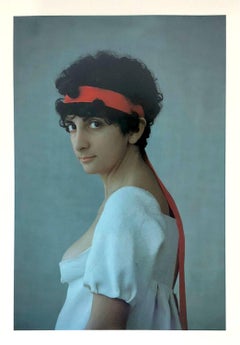
Anne,  Portrait. Fashion Color Photograph. Signed, titled and dated  on verso

Anne, Portrait. Fashion Color Photograph. Signed, titled and dated on verso

By Frank Horvat

Located in Miami Beach, FL

Anne, 1983 by Frank Horvat Dye Transfer Print Unframed Image size: 14 in. H x 9.38 in. W Sheet size: 22.63 in. H x 19.5 in. W Signed, titled and dated in pencil on verso. Frank Horvat (28 April 1928 – 21 October 2020) was an Italian photographer who lived and worked in France. He is best known for his fashion photography, published between the mid 1950s and the late 1980s. Horvat’s photographic opus includes photojournalism, portraiture, landscape, nature, and sculpture. He was the recipient of the Fondazione del Centenario Award in 2010 for his contributions to European culture. He has collaborated with fellow photographers such as Don McCullin, Robert Doisneau, Sarah Moon, Helmut Newton, and Marc Riboud. In the 1990s, he was one of the first major photographers to experiment with technology including photoshop. Horvat was born in Abbazia, Italy (now Opatija, Croatia), on 28 April 1928, into a Jewish family from Central Europe. His father, Karl, was a Hungarian general physician, and his mother, Adele, was a psychiatrist from Vienna. At the age of 11, in 1939, his family moved to Lugano in Switzerland, fleeing fascism in Italy. He went on to study fine art at Brera Academy in Milan. Horvat lived in several countries including Switzerland, Italy, Pakistan, India, England, and America) before settling in France in 1955. Horvat started his career in the mid 1950s as a photojournalist in Paris, working to capture the ‘sleaze and squalor’ of the city, before going on to fashion photography. He acknowledged having been strongly influenced by French humanist photographer Henri Cartier-Bresson. After meeting him in 1950, he followed his advice and replaced his Rollei with a Leica camera and embarked on a two-year journey through Asia as a free-lance photojournalist. His photographs from this trip were published by Life, Réalités, Match, Picture Post, Die Woche, and Revue. His photograph of an Indian bride under a veil, her face reflected in a mirror on her lap, was selected by Edward Steichen for The Family of Man exhibit at the Museum of Modern Art which toured the world to be seen by 9 million visitors. In 1955, Horvat moved from London to Paris and found that the mood of its streets and its inhabitants had little in common with the somewhat romantic vision of the so-called humanist photographers. In 1957, Horvat shot fashion photographs for Jardin des Modes using a 35-mm camera and available light, which formerly had rarely been used for fashion. This innovation was welcomed by ready-to-wear designers, because it presented their creations in the context of everyday life. In the following years, Horvat was commissioned to do similar work for Elle in Paris, Vogue in London, and Harper’s Bazaar in New York. Between 1962 and 1963, Horvat turned to photojournalism and took a trip around the world for the German magazine Revue. Then he experimented with cinema and video. In 1976, he decided to “become his own client” by producing three personal projects: Portraits of Trees (1976–82), Very Similar (1982-86) and New York Up and Down (1982–87), which he called his “triptych”. In this period, Horvat went on towards color photography including his series New York Up and Down, where he extensively shot portraits of passengers on New York’s subway systems and coffee shops. This was also period when his eyesight started to fail from an eye disease. It was then that he began a new project, a series of interviews with fellow photographers, such as Edouard Boubat, Robert Doisneau, Mario Giacomelli, Josef Koudelka, Don McCullin, Sarah Moon, Helmut Newton, Marc Riboud, Jeanloup Sieff and Joel-Peter Witkin. They were published in France under the title Entre Vues. In the 1990s, Horvat became interested in computer technology and produced Yao the Cat (1993), Bestiary (1994), and Ovid’s Metamorphoses (1995). He transgressed the Cartier-Bressonian rule of the “decisive moment” by combining parts of images shot at different times and in different places. Several years later, he produced A Trip to Carrara. This was also the period that he was one of the first photographers to experiment with Photoshop. Women played a central thematic role in his fashion journalistic works, with a focus on realism. Speaking about women in his photography and his emphasis on natural looks, he said, “I was interested in women. I wanted to show what I liked about them. They would spend two hours in the makeup chair...

Category

20th Century Modern Frank Horvat Photography

Materials

Dye Transfer, Archival Pigment, Color
Claude, Dye Transfer Print, 1984

Claude, Dye Transfer Print, 1984

By Frank Horvat

Located in Miami Beach, FL

Claude, 1984 by Frank Horvat Dye Transfer Print Unframed Image size: 14 in. H x 9.38 in. W Sheet size: 22.63 in. H x 19.5 in. W Signed, titled and dated i...

Category

20th Century Modern Frank Horvat Photography

Materials

Dye Transfer, Color, Archival Pigment

Alessandra, Dye Transfer Print, 1986

Alessandra, Dye Transfer Print, 1986

By Frank Horvat

Located in Miami Beach, FL

Alexandra, 1986 by Frank Horvat Dye Transfer Print Unframed Image size: 14 in. H x 9.38 in. W Sheet size: 22.63 in. H x 19.5 in. W Signed, titled and dated in pencil on verso Frank Horvat (28 April 1928 – 21 October 2020) was an Italian photographer who lived and worked in France. He is best known for his fashion photography, published between the mid 1950s and the late 1980s. Horvat’s photographic opus includes photojournalism, portraiture, landscape, nature, and sculpture. He was the recipient of the Fondazione del Centenario Award in 2010 for his contributions to European culture. He has collaborated with fellow photographers such as Don McCullin, Robert Doisneau, Sarah Moon, Helmut Newton, and Marc Riboud. In the 1990s, he was one of the first major photographers to experiment with technology including photoshop. Horvat was born in Abbazia, Italy (now Opatija, Croatia), on 28 April 1928, into a Jewish family from Central Europe. His father, Karl, was a Hungarian general physician, and his mother, Adele, was a psychiatrist from Vienna. At the age of 11, in 1939, his family moved to Lugano in Switzerland, fleeing fascism in Italy. He went on to study fine art at Brera Academy in Milan. Horvat lived in several countries including Switzerland, Italy, Pakistan, India, England, and America) before settling in France in 1955. Horvat started his career in the mid 1950s as a photojournalist in Paris, working to capture the ‘sleaze and squalor’ of the city, before going on to fashion photography. He acknowledged having been strongly influenced by French humanist photographer Henri Cartier-Bresson. After meeting him in 1950, he followed his advice and replaced his Rollei with a Leica camera and embarked on a two-year journey through Asia as a free-lance photojournalist. His photographs from this trip were published by Life, Réalités, Match, Picture Post, Die Woche, and Revue. His photograph of an Indian bride under a veil, her face reflected in a mirror on her lap, was selected by Edward Steichen for The Family of Man exhibit at the Museum of Modern Art which toured the world to be seen by 9 million visitors. In 1955, Horvat moved from London to Paris and found that the mood of its streets and its inhabitants had little in common with the somewhat romantic vision of the so-called humanist photographers. In 1957, Horvat shot fashion photographs for Jardin des Modes using a 35-mm camera and available light, which formerly had rarely been used for fashion. This innovation was welcomed by ready-to-wear designers, because it presented their creations in the context of everyday life. In the following years, Horvat was commissioned to do similar work for Elle in Paris, Vogue in London, and Harper’s Bazaar in New York. Between 1962 and 1963, Horvat turned to photojournalism and took a trip around the world for the German magazine Revue. Then he experimented with cinema and video. In 1976, he decided to “become his own client” by producing three personal projects: Portraits of Trees (1976–82), Very Similar (1982-86) and New York Up and Down (1982–87), which he called his “triptych”. In this period, Horvat went on towards color photography including his series New York Up and Down, where he extensively shot portraits of passengers on New York’s subway systems and coffee shops. This was also period when his eyesight started to fail from an eye disease. It was then that he began a new project, a series of interviews with fellow photographers, such as Edouard Boubat, Robert Doisneau, Mario Giacomelli, Josef Koudelka, Don McCullin, Sarah Moon, Helmut Newton, Marc Riboud, Jeanloup Sieff and Joel-Peter Witkin. They were published in France under the title Entre Vues. In the 1990s, Horvat became interested in computer technology and produced Yao the Cat (1993), Bestiary (1994), and Ovid’s Metamorphoses (1995). He transgressed the Cartier-Bressonian rule of the “decisive moment” by combining parts of images shot at different times and in different places. Several years later, he produced A Trip to Carrara. This was also the period that he was one of the first photographers to experiment with Photoshop. Women played a central thematic role in his fashion journalistic works, with a focus on realism. Speaking about women in his photography and his emphasis on natural looks, he said, “I was interested in women. I wanted to show what I liked about them. They would spend two hours in the makeup chair...

Category

20th Century Modern Frank Horvat Photography

Materials

Dye Transfer, Archival Pigment, Color
Aurelia, Dye Transfer Print, Framed, 1984

Aurelia, Dye Transfer Print, Framed, 1984

By Frank Horvat

Located in Miami Beach, FL

Aurelia, 1984 by Frank Horvat Dye Transfer Print Image size: 14 in. H x 9.38 in. W Sheet size: 22.63 in. H x 19.5 in. W Frame size: 31 in. H x 26 in. W Signed, titled and dated in pencil on verso ____________________________________ Frank Horvat (28 April 1928 – 21 October 2020) was an Italian photographer who lived and worked in France. He is best known for his fashion photography, published between the mid 1950s and the late 1980s. Horvat’s photographic opus includes photojournalism, portraiture, landscape, nature, and sculpture. He was the recipient of the Fondazione del Centenario Award in 2010 for his contributions to European culture. He has collaborated with fellow photographers such as Don McCullin, Robert Doisneau, Sarah Moon, Helmut Newton, and Marc Riboud. In the 1990s, he was one of the first major photographers to experiment with technology including photoshop. Horvat was born in Abbazia, Italy (now Opatija, Croatia), on 28 April 1928, into a Jewish family from Central Europe. His father, Karl, was a Hungarian general physician, and his mother, Adele, was a psychiatrist from Vienna. At the age of 11, in 1939, his family moved to Lugano in Switzerland, fleeing fascism in Italy. He went on to study fine art at Brera Academy in Milan. Horvat lived in several countries including Switzerland, Italy, Pakistan, India, England, and America) before settling in France in 1955. Horvat started his career in the mid 1950s as a photojournalist in Paris, working to capture the ‘sleaze and squalor’ of the city, before going on to fashion photography. He acknowledged having been strongly influenced by French humanist photographer Henri Cartier-Bresson. After meeting him in 1950, he followed his advice and replaced his Rollei with a Leica camera and embarked on a two-year journey through Asia as a free-lance photojournalist. His photographs from this trip were published by Life, Réalités, Match, Picture Post, Die Woche, and Revue. His photograph of an Indian bride under a veil, her face reflected in a mirror on her lap, was selected by Edward Steichen for The Family of Man exhibit at the Museum of Modern Art which toured the world to be seen by 9 million visitors. In 1955, Horvat moved from London to Paris and found that the mood of its streets and its inhabitants had little in common with the somewhat romantic vision of the so-called humanist photographers. In 1957, Horvat shot fashion photographs for Jardin des Modes using a 35-mm camera and available light, which formerly had rarely been used for fashion. This innovation was welcomed by ready-to-wear designers, because it presented their creations in the context of everyday life. In the following years, Horvat was commissioned to do similar work for Elle in Paris, Vogue in London, and Harper’s Bazaar in New York. Between 1962 and 1963, Horvat turned to photojournalism and took a trip around the world for the German magazine Revue. Then he experimented with cinema and video. In 1976, he decided to “become his own client” by producing three personal projects: Portraits of Trees (1976–82), Very Similar (1982-86) and New York Up and Down (1982–87), which he called his “triptych”. In this period, Horvat went on towards color photography including his series New York Up and Down, where he extensively shot portraits of passengers on New York’s subway systems and coffee shops. This was also period when his eyesight started to fail from an eye disease. It was then that he began a new project, a series of interviews with fellow photographers, such as Edouard Boubat, Robert Doisneau, Mario Giacomelli, Josef Koudelka, Don McCullin, Sarah Moon, Helmut Newton, Marc Riboud, Jeanloup Sieff and Joel-Peter Witkin. They were published in France under the title Entre Vues. In the 1990s, Horvat became interested in computer technology and produced Yao the Cat (1993), Bestiary (1994), and Ovid’s Metamorphoses (1995). He transgressed the Cartier-Bressonian rule of the “decisive moment” by combining parts of images shot at different times and in different places. Several years later, he produced A Trip to Carrara. This was also the period that he was one of the first photographers to experiment with Photoshop. Women played a central thematic role in his fashion journalistic works, with a focus on realism. Speaking about women in his photography and his emphasis on natural looks, he said, “I was interested in women. I wanted to show what I liked about them. They would spend two hours in the makeup chair...

Category

20th Century Modern Frank Horvat Photography

Materials

Dye Transfer, Archival Pigment, Color
Marie-Paule, Dye Transfer Print, 1984

Marie-Paule, Dye Transfer Print, 1984

By Frank Horvat

Located in Miami Beach, FL

Marie-Paule, 1984 by Frank Horvat Dye Transfer Print Unframed Image size: 14 in. H x 9.38 in. W Sheet size: 22.63 in. H x 19.5 in. W Signed, titled and dated in pencil on verso. Frank Horvat (28 April 1928 – 21 October 2020) was an Italian photographer who lived and worked in France. He is best known for his fashion photography, published between the mid 1950s and the late 1980s. Horvat’s photographic opus includes photojournalism, portraiture, landscape, nature, and sculpture. He was the recipient of the Fondazione del Centenario Award in 2010 for his contributions to European culture. He has collaborated with fellow photographers such as Don McCullin, Robert Doisneau, Sarah Moon, Helmut Newton, and Marc Riboud. In the 1990s, he was one of the first major photographers to experiment with technology including photoshop. Horvat was born in Abbazia, Italy (now Opatija, Croatia), on 28 April 1928, into a Jewish family from Central Europe. His father, Karl, was a Hungarian general physician, and his mother, Adele, was a psychiatrist from Vienna. At the age of 11, in 1939, his family moved to Lugano in Switzerland, fleeing fascism in Italy. He went on to study fine art at Brera Academy in Milan. Horvat lived in several countries including Switzerland, Italy, Pakistan, India, England, and America) before settling in France in 1955. Horvat started his career in the mid 1950s as a photojournalist in Paris, working to capture the ‘sleaze and squalor’ of the city, before going on to fashion photography. He acknowledged having been strongly influenced by French humanist photographer Henri Cartier-Bresson. After meeting him in 1950, he followed his advice and replaced his Rollei with a Leica camera and embarked on a two-year journey through Asia as a free-lance photojournalist. His photographs from this trip were published by Life, Réalités, Match, Picture Post, Die Woche, and Revue. His photograph of an Indian bride under a veil, her face reflected in a mirror on her lap, was selected by Edward Steichen for The Family of Man exhibit at the Museum of Modern Art which toured the world to be seen by 9 million visitors. In 1955, Horvat moved from London to Paris and found that the mood of its streets and its inhabitants had little in common with the somewhat romantic vision of the so-called humanist photographers. In 1957, Horvat shot fashion photographs for Jardin des Modes using a 35-mm camera and available light, which formerly had rarely been used for fashion. This innovation was welcomed by ready-to-wear designers, because it presented their creations in the context of everyday life. In the following years, Horvat was commissioned to do similar work for Elle in Paris, Vogue in London, and Harper’s Bazaar in New York. Between 1962 and 1963, Horvat turned to photojournalism and took a trip around the world for the German magazine Revue. Then he experimented with cinema and video. In 1976, he decided to “become his own client” by producing three personal projects: Portraits of Trees (1976–82), Very Similar (1982-86) and New York Up and Down (1982–87), which he called his “triptych”. In this period, Horvat went on towards color photography including his series New York Up and Down, where he extensively shot portraits of passengers on New York’s subway systems and coffee shops. This was also period when his eyesight started to fail from an eye disease. It was then that he began a new project, a series of interviews with fellow photographers, such as Edouard Boubat, Robert Doisneau, Mario Giacomelli, Josef Koudelka, Don McCullin, Sarah Moon, Helmut Newton, Marc Riboud, Jeanloup Sieff and Joel-Peter Witkin. They were published in France under the title Entre Vues. In the 1990s, Horvat became interested in computer technology and produced Yao the Cat (1993), Bestiary (1994), and Ovid’s Metamorphoses (1995). He transgressed the Cartier-Bressonian rule of the “decisive moment” by combining parts of images shot at different times and in different places. Several years later, he produced A Trip to Carrara. This was also the period that he was one of the first photographers to experiment with Photoshop. Women played a central thematic role in his fashion journalistic works, with a focus on realism. Speaking about women in his photography and his emphasis on natural looks, he said, “I was interested in women. I wanted to show what I liked about them. They would spend two hours in the makeup chair...

Category

20th Century Modern Frank Horvat Photography

Materials

Dye Transfer, Archival Pigment, Color
Alexandra, Dye Transfer Print, 1982

Alexandra, Dye Transfer Print, 1982

By Frank Horvat

Located in Miami Beach, FL

Alexandra, 1982 by Frank Horvat Dye Transfer Print Image size: 9.38 in. H x 14 in. W Sheet size: 19.5 in. H x 22.63 in. W Signed, titled, and dated in pencil on verso. Unframed Frank Horvat (28 April 1928 – 21 October 2020) was an Italian photographer who lived and worked in France. He is best known for his fashion photography, published between the mid 1950s and the late 1980s. Horvat’s photographic opus includes photojournalism, portraiture, landscape, nature, and sculpture. He was the recipient of the Fondazione del Centenario Award in 2010 for his contributions to European culture. He has collaborated with fellow photographers such as Don McCullin, Robert Doisneau, Sarah Moon, Helmut Newton, and Marc Riboud. In the 1990s, he was one of the first major photographers to experiment with technology including photoshop. Horvat was born in Abbazia, Italy (now Opatija, Croatia), on 28 April 1928, into a Jewish family from Central Europe. His father, Karl, was a Hungarian general physician, and his mother, Adele, was a psychiatrist from Vienna. At the age of 11, in 1939, his family moved to Lugano in Switzerland, fleeing fascism in Italy. He went on to study fine art at Brera Academy in Milan. Horvat lived in several countries including Switzerland, Italy, Pakistan, India, England, and America) before settling in France in 1955. Horvat started his career in the mid-1950s as a photojournalist in Paris, working to capture the ‘sleaze and squalor’ of the city, before going on to fashion photography. He acknowledged having been strongly influenced by French humanist photographer Henri Cartier-Bresson. After meeting him in 1950, he followed his advice and replaced his Rollei with a Leica camera and embarked on a two-year journey through Asia as a free-lance photojournalist. His photographs from this trip were published by Life, Réalités, Match, Picture Post, Die Woche, and Revue. His photograph of an Indian bride under a veil, her face reflected in a mirror on her lap, was selected by Edward Steichen for The Family of Man exhibit at the Museum of Modern Art which toured the world to be seen by 9 million visitors. In 1955, Horvat moved from London to Paris and found that the mood of its streets and its inhabitants had little in common with the somewhat romantic vision of the so-called humanist photographers. In 1957, Horvat shot fashion photographs for Jardin des Modes using a 35-mm camera and available light, which formerly had rarely been used for fashion. This innovation was welcomed by ready-to-wear designers, because it presented their creations in the context of everyday life. In the following years, Horvat was commissioned to do similar work for Elle in Paris, Vogue in London, and Harper’s Bazaar in New York. Between 1962 and 1963, Horvat turned to photojournalism and took a trip around the world for the German magazine Revue. Then he experimented with cinema and video. In 1976, he decided to “become his own client” by producing three personal projects: Portraits of Trees (1976–82), Very Similar (1982-86) and New York Up and Down (1982–87), which he called his “triptych”. In this period, Horvat went on towards color photography including his series New York Up and Down, where he extensively shot portraits of passengers on New York’s subway systems and coffee shops. This was also period when his eyesight started to fail from an eye disease. It was then that he began a new project, a series of interviews with fellow photographers, such as Edouard Boubat, Robert Doisneau, Mario Giacomelli, Josef Koudelka, Don McCullin, Sarah Moon, Helmut Newton, Marc Riboud, Jeanloup Sieff and Joel-Peter Witkin. They were published in France under the title Entre Vues. In the 1990s, Horvat became interested in computer technology and produced Yao the Cat (1993), Bestiary (1994), and Ovid’s Metamorphoses (1995). He transgressed the Cartier-Bressonian rule of the “decisive moment” by combining parts of images shot at different times and in different places. Several years later, he produced A Trip to Carrara. This was also the period that he was one of the first photographers to experiment with Photoshop. Women played a central thematic role in his fashion journalistic works, with a focus on realism. Speaking about women in his photography and his emphasis on natural looks, he said, “I was interested in women. I wanted to show what I liked about them. They would spend two hours in the makeup chair...

Category

20th Century Modern Frank Horvat Photography

Materials

Dye Transfer, Archival Pigment, Color
Sophie, Dye Transfer Print, Framed, 1981

Sophie, Dye Transfer Print, Framed, 1981

By Frank Horvat

Located in Miami Beach, FL

Sophie, 1981 by Frank Horvat Dye Transfer Print Image size: 14 in. H x 9.38 in. W Sheet size: 22.63 in. H x 19.5 in. W Frame size: 31 in. H x 26 in. W Signed, titled and dated in pencil on verso Framed _____________________________________ Frank Horvat (28 April 1928 – 21 October 2020) was an Italian photographer who lived and worked in France. He is best known for his fashion photography, published between the mid 1950s and the late 1980s. Horvat’s photographic opus includes photojournalism, portraiture, landscape, nature, and sculpture. He was the recipient of the Fondazione del Centenario Award in 2010 for his contributions to European culture. He has collaborated with fellow photographers such as Don McCullin, Robert Doisneau, Sarah Moon, Helmut Newton, and Marc Riboud. In the 1990s, he was one of the first major photographers to experiment with technology including photoshop. Horvat was born in Abbazia, Italy (now Opatija, Croatia), on 28 April 1928, into a Jewish family from Central Europe. His father, Karl, was a Hungarian general physician, and his mother, Adele, was a psychiatrist from Vienna. At the age of 11, in 1939, his family moved to Lugano in Switzerland, fleeing fascism in Italy. He went on to study fine art at Brera Academy in Milan. Horvat lived in several countries including Switzerland, Italy, Pakistan, India, England, and America) before settling in France in 1955. Horvat started his career in the mid 1950s as a photojournalist in Paris, working to capture the ‘sleaze and squalor’ of the city, before going on to fashion photography. He acknowledged having been strongly influenced by French humanist photographer Henri Cartier-Bresson. After meeting him in 1950, he followed his advice and replaced his Rollei with a Leica camera and embarked on a two-year journey through Asia as a free-lance photojournalist. His photographs from this trip were published by Life, Réalités, Match, Picture Post, Die Woche, and Revue. His photograph of an Indian bride under a veil, her face reflected in a mirror on her lap, was selected by Edward Steichen for The Family of Man exhibit at the Museum of Modern Art which toured the world to be seen by 9 million visitors. In 1955, Horvat moved from London to Paris and found that the mood of its streets and its inhabitants had little in common with the somewhat romantic vision of the so-called humanist photographers. In 1957, Horvat shot fashion photographs for Jardin des Modes using a 35-mm camera and available light, which formerly had rarely been used for fashion. This innovation was welcomed by ready-to-wear designers, because it presented their creations in the context of everyday life. In the following years, Horvat was commissioned to do similar work for Elle in Paris, Vogue in London, and Harper’s Bazaar in New York. Between 1962 and 1963, Horvat turned to photojournalism and took a trip around the world for the German magazine Revue. Then he experimented with cinema and video. In 1976, he decided to “become his own client” by producing three personal projects: Portraits of Trees (1976–82), Very Similar (1982-86) and New York Up and Down (1982–87), which he called his “triptych”. In this period, Horvat went on towards color photography including his series New York Up and Down, where he extensively shot portraits of passengers on New York’s subway systems and coffee shops. This was also period when his eyesight started to fail from an eye disease. It was then that he began a new project, a series of interviews with fellow photographers, such as Edouard Boubat, Robert Doisneau, Mario Giacomelli, Josef Koudelka, Don McCullin, Sarah Moon, Helmut Newton, Marc Riboud, Jeanloup Sieff and Joel-Peter Witkin. They were published in France under the title Entre Vues. In the 1990s, Horvat became interested in computer technology and produced Yao the Cat (1993), Bestiary (1994), and Ovid’s Metamorphoses (1995). He transgressed the Cartier-Bressonian rule of the “decisive moment” by combining parts of images shot at different times and in different places. Several years later, he produced A Trip to Carrara. This was also the period that he was one of the first photographers to experiment with Photoshop. Women played a central thematic role in his fashion journalistic works, with a focus on realism. Speaking about women in his photography and his emphasis on natural looks, he said, “I was interested in women. I wanted to show what I liked about them. They would spend two hours in the makeup chair...

Category

20th Century Modern Frank Horvat Photography

Materials

Dye Transfer, Archival Pigment, Color
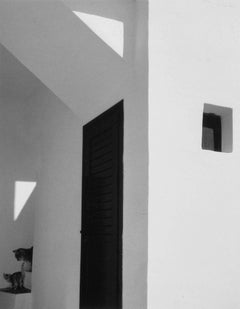
Kristin, Framed Dye Transfer Print, 1980

Kristin, Framed Dye Transfer Print, 1980

By Frank Horvat

Located in Miami Beach, FL

Kristin, 1980 by Frank Horvat Dye Transfer Print Framed 36" x 21" Image size: 14 in. H x 9.38 in. W Sheet size: 22.63 in. H x 19.5 in. W Frame size: 31 in. H x 26 in. W D 1 Signed, t...

Category

20th Century Modern Frank Horvat Photography

Materials

Dye Transfer, Archival Pigment, Color
Frank Horvat 1928 French photography for sale on 1stDibs.

Find a wide variety of authentic Frank Horvat 1928 French photography available for sale on 1stDibs.