Jovan Obican Art

to
18
18
13
10
2
2
1
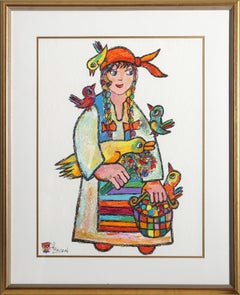
Woman with Birds, Folk Art Acrylic Painting on paper by Jovan Obican

Woman with Birds, Folk Art Acrylic Painting on paper by Jovan Obican

By Jovan Obican

Located in Long Island City, NY

Jovan Obican, French/Yugoslavian (1918 - 1986) - Woman with Birds, Medium: Acrylic on paper, signed lower left, Size: 27 x 21 in. (68.58 x 53.34 cm), Frame Size: 36.5 x 30.5 inches

Category

Mid-20th Century Folk Art Jovan Obican Art

Materials

Acrylic

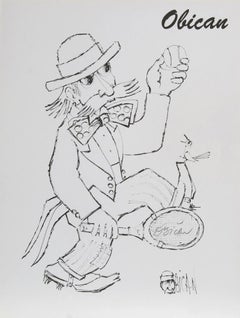
Tennis Player, Folk Art Poster by Jovan Obican

Tennis Player, Folk Art Poster by Jovan Obican

By Jovan Obican

Located in Long Island City, NY

Jovan Obican, French/Yugoslavian (1918 - 1986) - Tennis Player, Year: circa 1995, Medium: Poster, signed, Size: 22 in. x 17 in. (55.88 cm x 43.18 cm)

Category

1990s Folk Art Jovan Obican Art

Materials

Offset

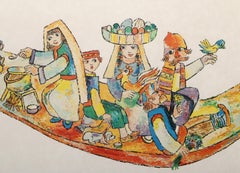
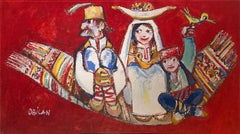
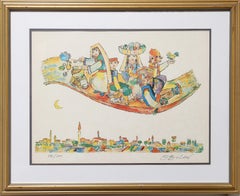
Magic Carpet, Folk Art Lithograph by Jovan Obican

Magic Carpet, Folk Art Lithograph by Jovan Obican

By Jovan Obican

Located in Long Island City, NY

Jovan Obican, French/Yugoslavian (1918 - 1986) - Magic Carpet, Year: circa 1980, Medium: Lithograph, signed and numbered in pencil, Edition: 281/300, Size: 18 x 24 in. (45.72 x 6...

Category

1980s Folk Art Jovan Obican Art

Materials

Lithograph

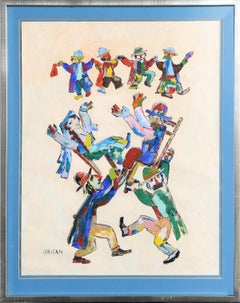
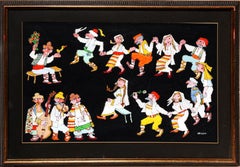
Wedding Dance, Signed Acrylic on Paper by Jovan Obican

Wedding Dance, Signed Acrylic on Paper by Jovan Obican

By Jovan Obican

Located in Long Island City, NY

Wedding Dance Jovan Obican French/Yugoslavian (1918–1986) Date: circa 1970 Acrylic on Paper, signed l.l. Size: 24.5 x 19 in. (62.23 x 48.26 cm) Frame Size: 29 x 23 inches

Category

1970s Folk Art Jovan Obican Art

Materials

Acrylic

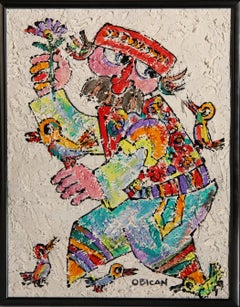
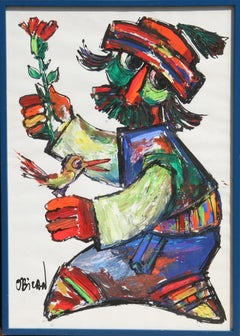
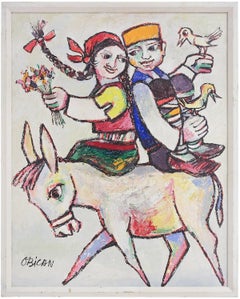
Man with Flower and Bird, Signed Oil on Board by Jovan Obican

Man with Flower and Bird, Signed Oil on Board by Jovan Obican

By Jovan Obican

Located in Long Island City, NY

Man with Flower and Bird Jovan Obican French/Yugoslavian (1918–1986) Date: circa 1980 Oil on board Size: 28 x 22 in. (71.12 x 55.88 cm) Frame Size: 30 x 24 inches

Category

1980s Folk Art Jovan Obican Art

Materials

Oil

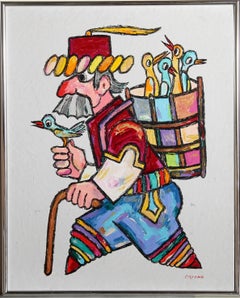
Traveler with Birds, Signed Oil on Board by Jovan Obican

Traveler with Birds, Signed Oil on Board by Jovan Obican

By Jovan Obican

Located in Long Island City, NY

Traveler with Birds Jovan Obican French/Yugoslavian (1918–1986) Date: circa 1980 Oil on board, signed Size: 29.5 x 23.5 in. (74.93 x 59.69 cm) Frame Size: 31 x 25 inches

Category

1980s Folk Art Jovan Obican Art

Materials

Oil

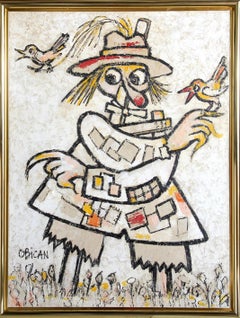
Scarecrow, 1983 Signed Oil Painting by Jovan Obican

Scarecrow, 1983 Signed Oil Painting by Jovan Obican

By Jovan Obican

Located in Long Island City, NY

Scarecrow Jovan Obican French/Yugoslavian (1918–1986) Date: 1983 Oil on Canvas, signed l.l. Size: 40 x 30 in. (101.6 x 76.2 cm) Frame Size: 43 x 32.5 inches

Category

1980s Folk Art Jovan Obican Art

Materials

Oil

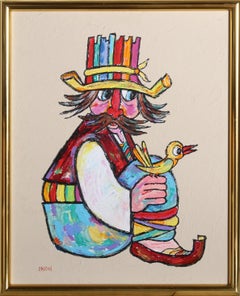
Man with Yellow Bird, Signed Oil on Board by Jovan Obican

Man with Yellow Bird, Signed Oil on Board by Jovan Obican

By Jovan Obican

Located in Long Island City, NY

Man with Yellow Bird Jovan Obican French/Yugoslavian (1918–1986) Oil on Board, signed l.l. Size: 29.5 x 23.5 in. (74.93 x 59.69 cm) Frame Size: 32 x 25.5 inches

Category

1980s Folk Art Jovan Obican Art

Materials

Oil

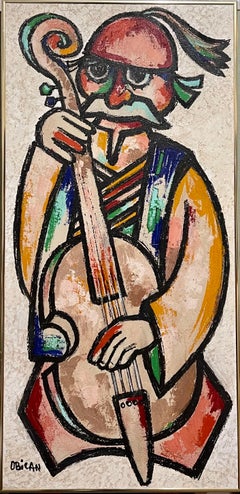
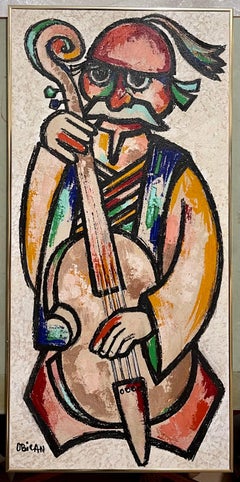
Large Naive European Folk Art Oil Painting Jovan Obican Klezmer Jazz Musician

Large Naive European Folk Art Oil Painting Jovan Obican Klezmer Jazz Musician

By Jovan Obican

Located in Surfside, FL

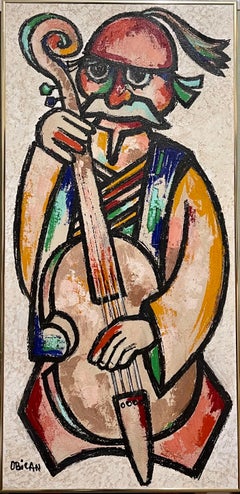
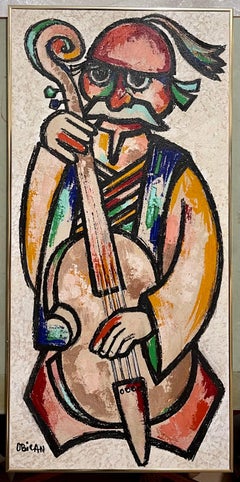
Genre: Other Subject: People Medium: Oil Surface: Canvas Dimensions: 35" x 16.5 Dimensions w/Frame: 35.5" x 17.25 This depicts a Jazz or Klezmer musician. This one is a bass player. The last photo shows it in a group of three that I have available. This listing is for the one painting. The artist Jovan Obican iconic style is child-like yet masterfully adult; a style that tells a story with sociological overtones. His funny little people are always colorful, full of spirit, living with music and birds to bring them happiness. JOVAN OBICAN Cannes, France, b. 1918, d. 1986 Jovan Obican (1918-1986) artist, painter, sculpture and mosaic ceramic artisan was born in Cannes, France, to his Yugoslavian parents. From childhood on, Jovan practically devoted himself to art, scratching designs into the dirt when paper was unavailable. He trained with many recognized teachers and with many styles. He finished his training, imbued with the spirit of his native country, the people, their legends, and their philosophy. It has been said that his work has a "timeless quality" and a naive, folk art, outsider art brut quality, child-like primitive style. Obican is identified with his style the world over, a style that is simple yet sophisticated; child-like yet masterfully adult; a style that tells a story with psychological, philosophical or sociological overtones. His funny little people are always colorful, full of spirit, living with music and birds to bring them happiness. Best known for his depictions of folklore and traditional costumes rendered in a playful, childlike style and for his happy Jewish wedding scenes. He often used bright colors and black outlines in his renderings of figures and animals, giving his work an illustration-like quality. Thematically, the artist’s work is similar to Marc Chagall and Jean Dubuffet for its dreamlike images and so-called naïve style of painting. Over the course of his career, the artist maintained a studio in Boca Raton, Florida and Dubrovnik, Croatia—part of former Yugoslavia— where he developed an interest in Eastern Europe’s Jewish culture. Many of his mature works depict Jewish traditions and ceremonies, including traditional Jewish weddings, the dancing of the Hora, and traditional music. There is a display of his works in his former Dubrovnik studio. His style is a unique conglomerate of tradition, history, legends, heroes, old customs and folklore. It is a self-standing style, recognizable, cheerful, whimsical and a happy creation. Naïve art is any form of visual art that is created by a person who lacks the formal education and training that a professional artist undergoes (in anatomy, art history, technique, perspective, ways of seeing). Unlike folk art, naïve art does not necessarily evince a distinct cultural context or tradition. Naïve art is recognized, and often imitated, for its childlike simplicity and frankness. Paintings of this kind typically have a flat rendering style with a rudimentary expression of perspective. One particularly influential painter of "naïve art" was Henri Rousseau (1844–1910), a French Post-Impressionist who was discovered by Pablo Picasso. Naïve art is often seen as outsider art that is by someone without formal (or little) training or degree. While this was true before the twentieth century, there are now academies for naïve art. Naïve art is now a fully recognized art genre, represented in art galleries worldwide. Museums devoted to naïve art now exist in Kecskemét, Hungary; Riga, Latvia; Jaen, Spain; Rio de Janeiro, Brasil; Vicq France and Paris. "Primitive art" is another term often applied to art by those without formal training, but is historically more often applied to work from certain cultures that have been judged socially or technologically "primitive" by Western academia, such as Native American, sub saharan African or Pacific Island art (see Tribal art). This is distinguished from the self-conscious, "primitive" inspired movement primitivism. Another term related to (but not completely synonymous with) naïve art is folk art. There also exist the terms "naïvism" and "primitivism" which are usually applied to professional painters working in the style of naïve art (like Paul Gauguin, Mikhail Larionov, Paul Klee). At all events, naive art can be regarded as having occupied an "official" position in the annals of twentieth-century art since - at the very latest - the publication of the Der Blaue Reiter, an almanac in 1912. Wassily Kandinsky and Franz Marc, who brought out the almanac, presented 6 reproductions of paintings by le Douanier' Rousseau (Henri Rousseau), comparing them with other pictorial examples. However, most experts agree that the year that naive art was "discovered" was 1885, when the painter Paul Signac became aware of the talents of Henri Rousseau and set about organizing exhibitions of his work in a number of prestigious galleries. The Earth Group (Grupa Zemlja) were Croatian artists, architects and intellectuals active in Zagreb from 1929 to 1935. The group included the painters Krsto Hegedušić, Edo Kovačević, Omer Mujadžić, Kamilo Ružička, Ivan Tabaković, and Oton Postružnik, the sculptors Antun Augustinčić, Frano Kršinić, and the architect Drago Ibler. A term applied to Yugoslav (Croatian) naive painters working in or around the village of Hlebine, near the Hungarian border, from about 1930. Some of the best known naive artists are Dragan Gaži, Ivan Generalić, Josip Generalić, Krsto Hegedušić, Mijo Kovačić, Ivan Lacković-Croata, Franjo Mraz, Ivan Večenaj and Mirko Virius. Camille Bombois (1883–1970) Ferdinand Cheval, known as 'le facteur Cheval' (1836–1924) Henry Darger (1892–1973) L. S. Lowry (1887–1976) Grandma Moses, Anna Mary Robertson...

Category

20th Century Folk Art Jovan Obican Art

Materials

Canvas, Oil

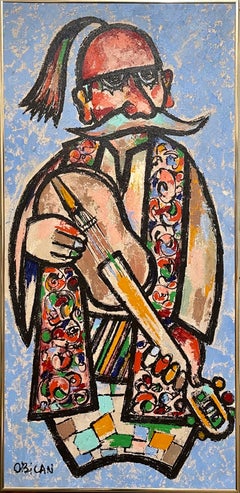
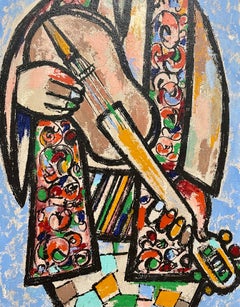
Large Naive European Folk Art Oil Painting Jovan Obican Klezmer Jazz Musician

Large Naive European Folk Art Oil Painting Jovan Obican Klezmer Jazz Musician

By Jovan Obican

Located in Surfside, FL

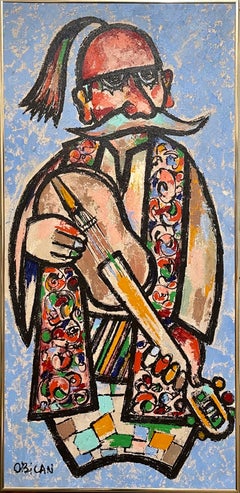
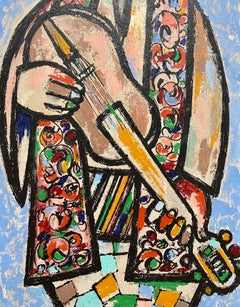
Genre: Other Subject: People Medium: Oil Surface: Canvas Dimensions: 35" x 16.5 Dimensions w/Frame: 35.5" x 17.25 This depicts a Jazz or Klezmer musician. This one is a banjo or guitar player. The last photo shows it in a group of three that I have available. This listing is for the one painting. The artist Jovan Obican iconic style is child-like yet masterfully adult; a style that tells a story with sociological overtones. His funny little people are always colorful, full of spirit, living with music and birds to bring them happiness. JOVAN OBICAN Cannes, France, b. 1918, d. 1986 Jovan Obican (1918-1986) artist, painter, sculpture and mosaic ceramic artisan was born in Cannes, France, to his Yugoslavian parents. From childhood on, Jovan practically devoted himself to art, scratching designs into the dirt when paper was unavailable. He trained with many recognized teachers and with many styles. He finished his training, imbued with the spirit of his native country, the people, their legends, and their philosophy. It has been said that his work has a "timeless quality" and a naive, folk art, outsider art brut quality, child-like primitive style. Obican is identified with his style the world over, a style that is simple yet sophisticated; child-like yet masterfully adult; a style that tells a story with psychological, philosophical or sociological overtones. His funny little people are always colorful, full of spirit, living with music and birds to bring them happiness. Best known for his depictions of folklore and traditional costumes rendered in a playful, childlike style and for his happy Jewish wedding scenes. He often used bright colors and black outlines in his renderings of figures and animals, giving his work an illustration-like quality. Thematically, the artist’s work is similar to Marc Chagall and Jean Dubuffet for its dreamlike images and so-called naïve style of painting. Over the course of his career, the artist maintained a studio in Boca Raton, Florida and Dubrovnik, Croatia—part of former Yugoslavia— where he developed an interest in Eastern Europe’s Jewish culture. Many of his mature works depict Jewish traditions and ceremonies, including traditional Jewish weddings, the dancing of the Hora, and traditional music. There is a display of his works in his former Dubrovnik studio. His style is a unique conglomerate of tradition, history, legends, heroes, old customs and folklore. It is a self-standing style, recognizable, cheerful, whimsical and a happy creation. Naïve art is any form of visual art that is created by a person who lacks the formal education and training that a professional artist undergoes (in anatomy, art history, technique, perspective, ways of seeing). Unlike folk art, naïve art does not necessarily evince a distinct cultural context or tradition. Naïve art is recognized, and often imitated, for its childlike simplicity and frankness. Paintings of this kind typically have a flat rendering style with a rudimentary expression of perspective. One particularly influential painter of "naïve art" was Henri Rousseau (1844–1910), a French Post-Impressionist who was discovered by Pablo Picasso. Naïve art is often seen as outsider art that is by someone without formal (or little) training or degree. While this was true before the twentieth century, there are now academies for naïve art. Naïve art is now a fully recognized art genre, represented in art galleries worldwide. Museums devoted to naïve art now exist in Kecskemét, Hungary; Riga, Latvia; Jaen, Spain; Rio de Janeiro, Brasil; Vicq France and Paris. "Primitive art" is another term often applied to art by those without formal training, but is historically more often applied to work from certain cultures that have been judged socially or technologically "primitive" by Western academia, such as Native American, sub saharan African or Pacific Island art (see Tribal art). This is distinguished from the self-conscious, "primitive" inspired movement primitivism. Another term related to (but not completely synonymous with) naïve art is folk art. There also exist the terms "naïvism" and "primitivism" which are usually applied to professional painters working in the style of naïve art (like Paul Gauguin, Mikhail Larionov, Paul Klee). At all events, naive art can be regarded as having occupied an "official" position in the annals of twentieth-century art since - at the very latest - the publication of the Der Blaue Reiter, an almanac in 1912. Wassily Kandinsky and Franz Marc, who brought out the almanac, presented 6 reproductions of paintings by le Douanier' Rousseau (Henri Rousseau), comparing them with other pictorial examples. However, most experts agree that the year that naive art was "discovered" was 1885, when the painter Paul Signac became aware of the talents of Henri Rousseau and set about organizing exhibitions of his work in a number of prestigious galleries. The Earth Group (Grupa Zemlja) were Croatian artists, architects and intellectuals active in Zagreb from 1929 to 1935. The group included the painters Krsto Hegedušić, Edo Kovačević, Omer Mujadžić, Kamilo Ružička, Ivan Tabaković, and Oton Postružnik, the sculptors Antun Augustinčić, Frano Kršinić, and the architect Drago Ibler. A term applied to Yugoslav (Croatian) naive painters working in or around the village of Hlebine, near the Hungarian border, from about 1930. Some of the best known naive artists are Dragan Gaži, Ivan Generalić, Josip Generalić, Krsto Hegedušić, Mijo Kovačić, Ivan Lacković-Croata, Franjo Mraz, Ivan Večenaj and Mirko Virius. Camille Bombois (1883–1970) Ferdinand Cheval, known as 'le facteur Cheval' (1836–1924) Henry Darger (1892–1973) L. S. Lowry (1887–1976) Grandma Moses, Anna Mary Robertson...

Category

20th Century Folk Art Jovan Obican Art

Materials

Canvas, Oil

Wedding Dance I, Signed Acrylic on Paper by Jovan Obican

Wedding Dance I, Signed Acrylic on Paper by Jovan Obican

By Jovan Obican

Located in Long Island City, NY

Wedding Dance I Jovan Obican French/Yugoslavian (1918–1986) Date: circa 1975 Acrylic on Paper, signed l.r. Size: 17 in. x 26 in. (43.18 cm x 66.04 cm) Frame Size: 23 x 32 inches

Category

1970s Folk Art Jovan Obican Art

Materials

Acrylic

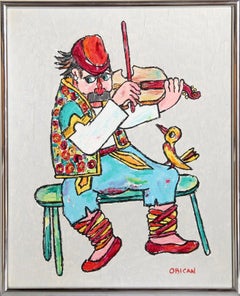
Fiddler, Signed Folk Art Oil on Board by Jovan Obican

Fiddler, Signed Folk Art Oil on Board by Jovan Obican

By Jovan Obican

Located in Long Island City, NY

Fiddler Jovan Obican French/Yugoslavian (1918–1986) Date: circa 1980 Oil on board Size: 16 x 20 in. (40.64 x 50.8 cm) Frame Size: 21 x 17 inches

Category

1980s Folk Art Jovan Obican Art

Materials

Oil

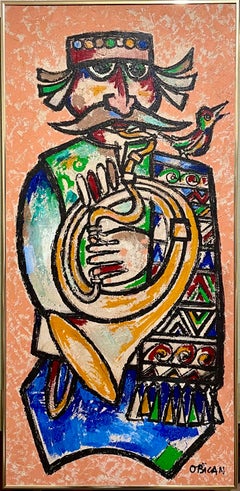
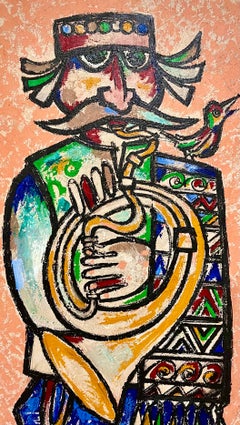
Large Naive European Folk Art Oil Painting Jovan Obican Klezmer Jazz Musician

Large Naive European Folk Art Oil Painting Jovan Obican Klezmer Jazz Musician

By Jovan Obican

Located in Surfside, FL

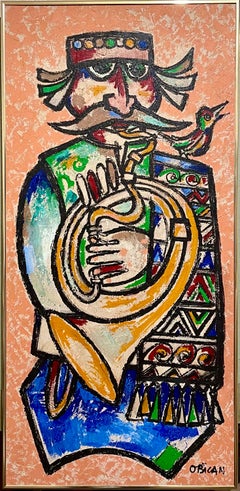
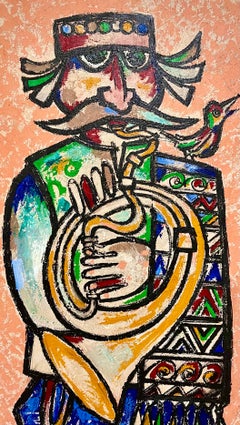
Genre: Other Subject: People Medium: Oil Surface: Canvas Dimensions: 35" x 16.5 Dimensions w/Frame: 35.5" x 17.25 This depicts a Jazz or Klezmer musician. This one is a saxophone or trumpet horn player. The last photo shows it in a group of three that I have available. This listing is for the one painting. The artist Jovan Obican iconic style is child-like yet masterfully adult; a style that tells a story with sociological overtones. His funny little people are always colorful, full of spirit, living with music and birds to bring them happiness. JOVAN OBICAN Cannes, France, b. 1918, d. 1986 Jovan Obican (1918-1986) artist, painter, sculpture and mosaic ceramic artisan was born in Cannes, France, to his Yugoslavian parents. From childhood on, Jovan practically devoted himself to art, scratching designs into the dirt when paper was unavailable. He trained with many recognized teachers and with many styles. He finished his training, imbued with the spirit of his native country, the people, their legends, and their philosophy. It has been said that his work has a "timeless quality" and a naive, folk art, outsider art brut quality, child-like primitive style. Obican is identified with his style the world over, a style that is simple yet sophisticated; child-like yet masterfully adult; a style that tells a story with psychological, philosophical or sociological overtones. His funny little people are always colorful, full of spirit, living with music and birds to bring them happiness. Best known for his depictions of folklore and traditional costumes rendered in a playful, childlike style and for his happy Jewish wedding scenes. He often used bright colors and black outlines in his renderings of figures and animals, giving his work an illustration-like quality. Thematically, the artist’s work is similar to Marc Chagall and Jean Dubuffet for its dreamlike images and so-called naïve style of painting. Over the course of his career, the artist maintained a studio in Boca Raton, Florida and Dubrovnik, Croatia—part of former Yugoslavia— where he developed an interest in Eastern Europe’s Jewish culture. Many of his mature works depict Jewish traditions and ceremonies, including traditional Jewish weddings, the dancing of the Hora, and traditional music. There is a display of his works in his former Dubrovnik studio. His style is a unique conglomerate of tradition, history, legends, heroes, old customs and folklore. It is a self-standing style, recognizable, cheerful, whimsical and a happy creation. Naïve art is any form of visual art that is created by a person who lacks the formal education and training that a professional artist undergoes (in anatomy, art history, technique, perspective, ways of seeing). Unlike folk art, naïve art does not necessarily evince a distinct cultural context or tradition. Naïve art is recognized, and often imitated, for its childlike simplicity and frankness. Paintings of this kind typically have a flat rendering style with a rudimentary expression of perspective. One particularly influential painter of "naïve art" was Henri Rousseau (1844–1910), a French Post-Impressionist who was discovered by Pablo Picasso. Naïve art is often seen as outsider art that is by someone without formal (or little) training or degree. While this was true before the twentieth century, there are now academies for naïve art. Naïve art is now a fully recognized art genre, represented in art galleries worldwide. Museums devoted to naïve art now exist in Kecskemét, Hungary; Riga, Latvia; Jaen, Spain; Rio de Janeiro, Brasil; Vicq France and Paris. "Primitive art" is another term often applied to art by those without formal training, but is historically more often applied to work from certain cultures that have been judged socially or technologically "primitive" by Western academia, such as Native American, sub saharan African or Pacific Island art (see Tribal art). This is distinguished from the self-conscious, "primitive" inspired movement primitivism. Another term related to (but not completely synonymous with) naïve art is folk art. There also exist the terms "naïvism" and "primitivism" which are usually applied to professional painters working in the style of naïve art (like Paul Gauguin, Mikhail Larionov, Paul Klee). At all events, naive art can be regarded as having occupied an "official" position in the annals of twentieth-century art since - at the very latest - the publication of the Der Blaue Reiter, an almanac in 1912. Wassily Kandinsky and Franz Marc, who brought out the almanac, presented 6 reproductions of paintings by le Douanier' Rousseau (Henri Rousseau), comparing them with other pictorial examples. However, most experts agree that the year that naive art was "discovered" was 1885, when the painter Paul Signac became aware of the talents of Henri Rousseau and set about organizing exhibitions of his work in a number of prestigious galleries. The Earth Group (Grupa Zemlja) were Croatian artists, architects and intellectuals active in Zagreb from 1929 to 1935. The group included the painters Krsto Hegedušić, Edo Kovačević, Omer Mujadžić, Kamilo Ružička, Ivan Tabaković, and Oton Postružnik, the sculptors Antun Augustinčić, Frano Kršinić, and the architect Drago Ibler. A term applied to Yugoslav (Croatian) naive painters working in or around the village of Hlebine, near the Hungarian border, from about 1930. Some of the best known naive artists are Dragan Gaži, Ivan Generalić, Josip Generalić, Krsto Hegedušić, Mijo Kovačić, Ivan Lacković-Croata, Franjo Mraz, Ivan Večenaj and Mirko Virius. Camille Bombois (1883–1970) Ferdinand Cheval, known as 'le facteur Cheval' (1836–1924) Henry Darger (1892–1973) L. S. Lowry (1887–1976) Grandma Moses, Anna Mary Robertson...

Category

20th Century Folk Art Jovan Obican Art

Materials

Canvas, Oil

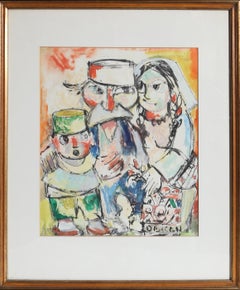
Family, Signed Watercolor and Ink on Paper Folk Art by Jovan Obican

Family, Signed Watercolor and Ink on Paper Folk Art by Jovan Obican

By Jovan Obican

Located in Long Island City, NY

Family Jovan Obican French/Yugoslavian (1918–1986) Date: circa 1980 Watercolor and Ink on Paper, signed l.r. Size: 16 x 13 in. (40.64 x 33.02 cm) Frame Size: 24.5 x 20.5 inches

Category

1980s Folk Art Jovan Obican Art

Materials

Ink, Watercolor

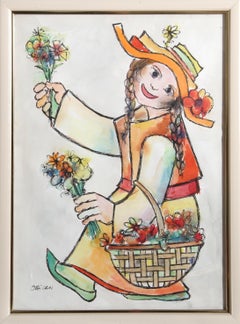
Woman with Flowers, Watercolor Folk Art by Jovan Obican

Woman with Flowers, Watercolor Folk Art by Jovan Obican

By Jovan Obican

Located in Long Island City, NY

Woman with Flowers Jovan Obican French/Yugoslavian (1918–1986) Date: circa 1980 Watercolor on Paper Size: 27.5 x 19 in. (69.85 x 48.26 cm) Frame Size: 30.5 x 22.5 inches

Category

1980s Folk Art Jovan Obican Art

Materials

Watercolor

Related Items
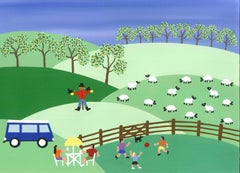
Picnic in the countryside, Painting, Acrylic on Paper

Picnic in the countryside, Painting, Acrylic on Paper

By Gordon Barker

Located in Yardley, PA

A relaxing image of a summers day with family. :: Painting :: Folk Art :: This piece comes with an official certificate of authenticity signed by the artist :: Ready to Hang: No :: S...

Category

2010s Folk Art Jovan Obican Art

Materials

Acrylic

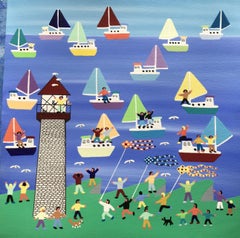
Regatta day, Painting, Acrylic on Paper

Regatta day, Painting, Acrylic on Paper

By Gordon Barker

Located in Yardley, PA

All the wonderful sailing boats out at sea in the fabulous summertime regatta :: Painting :: Folk Art :: This piece comes with an official certificate of authenticity signed by the ...

Category

21st Century and Contemporary Folk Art Jovan Obican Art

Materials

Acrylic

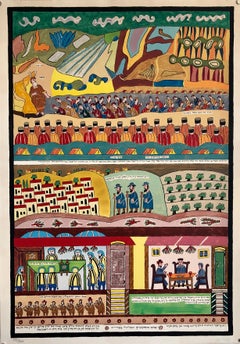
Israeli Folk Art Hebrew Naive Judaica Lithograph Jewish Holiday Shavuot

Israeli Folk Art Hebrew Naive Judaica Lithograph Jewish Holiday Shavuot

By Shalom Moskovitz

Located in Surfside, FL

Vintage pencil signed and numbered limited edition lithograph on deckle edged Arches paper. Shalom of Sefad (Shulem der Zeigermacher in Yiddish Shalom Moskowitz) Shalom of Tzfat lived for over seventeen years in his native town of Safed in the hills of the Galilee. There he worked as a watchmaker, stonemason and silversmith, during the 50's. Since then this self-taught artist has achieved an international reputation. Shalom is a naive painter, but not a rustic one, he expresses a very elaborate way of thinking in his own way. While belonging to Hasidism, Shalom of Safed uses his artistic talents positively. 'I don't paint', he explains, 'to tell the story of the Bible in color and lines. His works have been exhibited in prominent museums and galleries in Europe and the United States, and are included in the collections of the Museums of Modern Art in Paris and New York, the Israel Museum in Jerusalem, the Stedelijk Museum in Amsterdam, the Modern Museum in Stockholm and the Jewish Museum in New York He has exhibited alongside all of the Israeli great artists. Israel has had a Vibrant Folk Art, Naive art scene for a long time now artists like Yisrael Paldi, Nahum Guttman, Reuven Rubin and even Yefim Ladizhinsky had naive periods. The most well know if the strict naive artists are Shalom of Safed, Irene Awret...

Category

20th Century Folk Art Jovan Obican Art

Materials

Lithograph

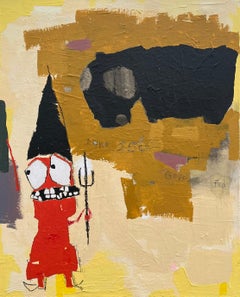
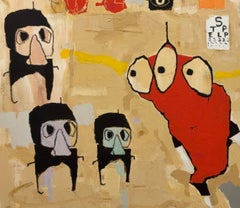
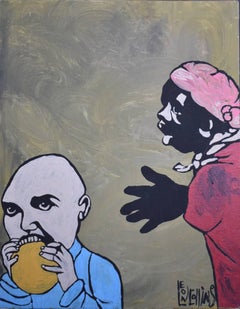
Outsider Art, Acrylic Painting: 'Grass Fed'

Outsider Art, Acrylic Painting: 'Grass Fed'

By Scott Harbison

Located in New York, NY

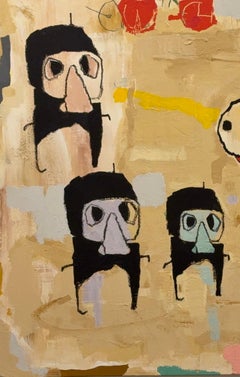
Scott likes to think of his work as what it might look like if an overly observant 5 year old kid from New Jersey left hieroglyphics for alien life forms to discover. A mixture of ...

Category

2010s Outsider Art Jovan Obican Art

Materials

Canvas, Oil Crayon, Acrylic

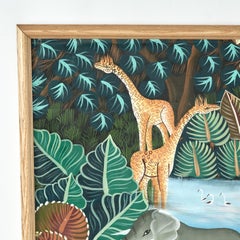
Vintage Haitian Painting of Animals in a Jungle by Jean Claude

Vintage Haitian Painting of Animals in a Jungle by Jean Claude

Located in Palm Beach, FL

Enchanting mid century Haitian acrylic painting on canvas of African animals and ducks in a pond in a jungle setting executed in a distinctive naive style, signed Jean Claude in the ...

Category

Mid-20th Century Folk Art Jovan Obican Art

Materials

Acrylic

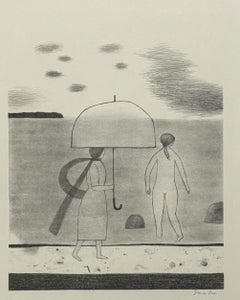
Modernist FOLK ART Original Pencil Lithograph "GRAY DAY AT THE BEACH"

Modernist FOLK ART Original Pencil Lithograph "GRAY DAY AT THE BEACH"

By Doris Lee

Located in New York, NY

Doris Lee Lithograph 1964 Edition Size: 250 Image Size: 12 x 9.5 inches Sheet Size: 16.75 x 13 inches Reference: AAA 1532 Signed lower left Condition: Good Provenance: ASA Doris Emrick Lee...

Category

1960s Folk Art Jovan Obican Art

Materials

Lithograph, Archival Pigment

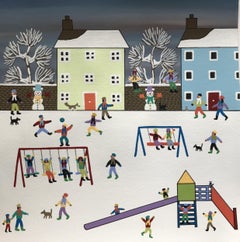
Snowy park, Painting, Acrylic on Paper

Snowy park, Painting, Acrylic on Paper

By Gordon Barker

Located in Yardley, PA

Out in the park in the snow walking the dog good to see all the children having fun playing in the snow :: Painting :: Folk Art :: This piece comes with an official certificate of a...

Category

21st Century and Contemporary Folk Art Jovan Obican Art

Materials

Acrylic

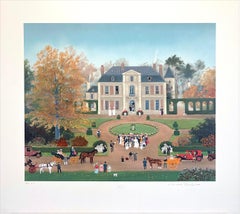
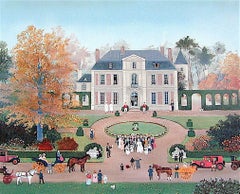
MARIAGE À LA CAMPAGNE Signed Lithograph, 1996, French Country Wedding Scene

MARIAGE À LA CAMPAGNE Signed Lithograph, 1996, French Country Wedding Scene

By Michel Delacroix

Located in Union City, NJ

Mariage a la Campagne is an original, hand drawn, limited edition lithograph(not a photo reproduction or digital print) by the French artist Michel Delacroix, printed using tradition...

Category

1990s Folk Art Jovan Obican Art

Materials

Lithograph

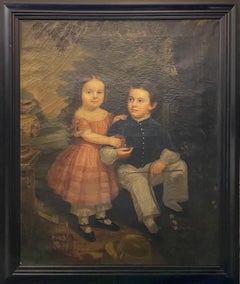
Portrait of Two Children

Portrait of Two Children

Located in Milford, NH

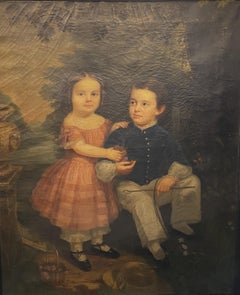
A wonderful early 19th century large oil on canvas naive portrait of two children, a boy and a girl, attributed to American artist Arthur Armstrong (1798-1851). Armstrong was born in...

Category

19th Century Folk Art Jovan Obican Art

Materials

Canvas, Oil

Acrylic Paint, Oil Stick on Canvas: "Floaters"

Acrylic Paint, Oil Stick on Canvas: "Floaters"

By Scott Harbison

Located in New York, NY

In 2018, I became a painter. An artist.  I am a product of the '70s and I spent my life in the fine state of New Jersey—the most wonderful state of them all.  As a result of stuff th...

Category

2010s Outsider Art Jovan Obican Art

Materials

Canvas, Oil Crayon, Acrylic

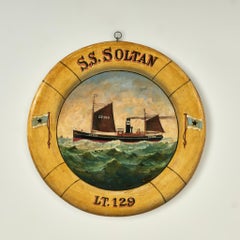
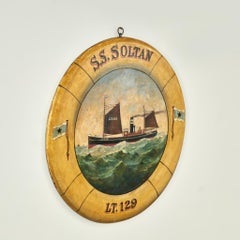
English Painting of the S. S. Soltan Steamship Signed G. Macey

English Painting of the S. S. Soltan Steamship Signed G. Macey

Located in Palm Beach, FL

Transporting round English oil painting on wood of a steamship the S. S. Soltan LT. 129 in a choppy sea, presented in a painted frame in the form of a life preserver. Signed G. Macey...

Category

20th Century Folk Art Jovan Obican Art

Materials

Wood, Oil

Previously Available Items
Large Naive European Folk Art Oil Painting Jovan Obican Klezmer Jazz Musician

Large Naive European Folk Art Oil Painting Jovan Obican Klezmer Jazz Musician

By Jovan Obican

Located in Surfside, FL

Genre: Other Subject: People Medium: Oil Surface: Canvas Dimensions: 35" x 16.5 Dimensions w/Frame: 35.5" x 17.25 This depicts a Jazz or Klezmer musician. This one is a bass player. The last photo shows it in a group of three that I have available. This listing is for the one painting. The artist Jovan Obican iconic style is child-like yet masterfully adult; a style that tells a story with sociological overtones. His funny little people are always colorful, full of spirit, living with music and birds to bring them happiness. JOVAN OBICAN Cannes, France, b. 1918, d. 1986 Jovan Obican (1918-1986) artist, painter, sculpture and mosaic ceramic artisan was born in Cannes, France, to his Yugoslavian parents. From childhood on, Jovan practically devoted himself to art, scratching designs into the dirt when paper was unavailable. He trained with many recognized teachers and with many styles. He finished his training, imbued with the spirit of his native country, the people, their legends, and their philosophy. It has been said that his work has a "timeless quality" and a naive, folk art, outsider art brut quality, child-like primitive style. Obican is identified with his style the world over, a style that is simple yet sophisticated; child-like yet masterfully adult; a style that tells a story with psychological, philosophical or sociological overtones. His funny little people are always colorful, full of spirit, living with music and birds to bring them happiness. Best known for his depictions of folklore and traditional costumes rendered in a playful, childlike style and for his happy Jewish wedding scenes. He often used bright colors and black outlines in his renderings of figures and animals, giving his work an illustration-like quality. Thematically, the artist’s work is similar to Marc Chagall and Jean Dubuffet for its dreamlike images and so-called naïve style of painting. Over the course of his career, the artist maintained a studio in Boca Raton, Florida and Dubrovnik, Croatia—part of former Yugoslavia— where he developed an interest in Eastern Europe’s Jewish culture. Many of his mature works depict Jewish traditions and ceremonies, including traditional Jewish weddings, the dancing of the Hora, and traditional music. There is a display of his works in his former Dubrovnik studio. His style is a unique conglomerate of tradition, history, legends, heroes, old customs and folklore. It is a self-standing style, recognizable, cheerful, whimsical and a happy creation. Naïve art is any form of visual art that is created by a person who lacks the formal education and training that a professional artist undergoes (in anatomy, art history, technique, perspective, ways of seeing). Unlike folk art, naïve art does not necessarily evince a distinct cultural context or tradition. Naïve art is recognized, and often imitated, for its childlike simplicity and frankness. Paintings of this kind typically have a flat rendering style with a rudimentary expression of perspective. One particularly influential painter of "naïve art" was Henri Rousseau (1844–1910), a French Post-Impressionist who was discovered by Pablo Picasso. Naïve art is often seen as outsider art that is by someone without formal (or little) training or degree. While this was true before the twentieth century, there are now academies for naïve art. Naïve art is now a fully recognized art genre, represented in art galleries worldwide. Museums devoted to naïve art now exist in Kecskemét, Hungary; Riga, Latvia; Jaen, Spain; Rio de Janeiro, Brasil; Vicq France and Paris. "Primitive art" is another term often applied to art by those without formal training, but is historically more often applied to work from certain cultures that have been judged socially or technologically "primitive" by Western academia, such as Native American, sub saharan African or Pacific Island art (see Tribal art). This is distinguished from the self-conscious, "primitive" inspired movement primitivism. Another term related to (but not completely synonymous with) naïve art is folk art. There also exist the terms "naïvism" and "primitivism" which are usually applied to professional painters working in the style of naïve art (like Paul Gauguin, Mikhail Larionov, Paul Klee). At all events, naive art can be regarded as having occupied an "official" position in the annals of twentieth-century art since - at the very latest - the publication of the Der Blaue Reiter, an almanac in 1912. Wassily Kandinsky and Franz Marc, who brought out the almanac, presented 6 reproductions of paintings by le Douanier' Rousseau (Henri Rousseau), comparing them with other pictorial examples. However, most experts agree that the year that naive art was "discovered" was 1885, when the painter Paul Signac became aware of the talents of Henri Rousseau and set about organizing exhibitions of his work in a number of prestigious galleries. The Earth Group (Grupa Zemlja) were Croatian artists, architects and intellectuals active in Zagreb from 1929 to 1935. The group included the painters Krsto Hegedušić, Edo Kovačević, Omer Mujadžić, Kamilo Ružička, Ivan Tabaković, and Oton Postružnik, the sculptors Antun Augustinčić, Frano Kršinić, and the architect Drago Ibler. A term applied to Yugoslav (Croatian) naive painters working in or around the village of Hlebine, near the Hungarian border, from about 1930. Some of the best known naive artists are Dragan Gaži, Ivan Generalić, Josip Generalić, Krsto Hegedušić, Mijo Kovačić, Ivan Lacković-Croata, Franjo Mraz, Ivan Večenaj and Mirko Virius. Camille Bombois (1883–1970) Ferdinand Cheval, known as 'le facteur Cheval' (1836–1924) Henry Darger (1892–1973) L. S. Lowry (1887–1976) Grandma Moses, Anna Mary Robertson (1860–1961) Nikifor (1895–1968) Poland, Horace Pippin (1888–1946) Jon Serl (1894-1993) United States Alfred Wallis (1855–1942) Scottie Wilson (1890–1972) Gesner Abelard (b. 1922) Jan Balet (1913–2009) Michel Delacroix (b. 1933) France Howard Finster (1916–2001) Ivan Rabuzin (1921–2008) Spontaneous Art Museum in Brussels Art en Marge Museum in Brussels MADmusée in Liege International Museum of Naive Art of Brazil...

Category

20th Century Folk Art Jovan Obican Art
Materials

Canvas, Oil

Large Naive European Folk Art Oil Painting Jovan Obican Klezmer Jazz Musician

Large Naive European Folk Art Oil Painting Jovan Obican Klezmer Jazz Musician

By Jovan Obican

Located in Surfside, FL

Genre: Other Subject: People Medium: Oil Surface: Canvas Dimensions: 35" x 16.5 Dimensions w/Frame: 35.5" x 17.25 This depicts a Jazz or Klezmer musician. This one is a banjo or guitar player. The last photo shows it in a group of three that I have available. This listing is for the one painting. The artist Jovan Obican iconic style is child-like yet masterfully adult; a style that tells a story with sociological overtones. His funny little people are always colorful, full of spirit, living with music and birds to bring them happiness. JOVAN OBICAN Cannes, France, b. 1918, d. 1986 Jovan Obican (1918-1986) artist, painter, sculpture and mosaic ceramic artisan was born in Cannes, France, to his Yugoslavian parents. From childhood on, Jovan practically devoted himself to art, scratching designs into the dirt when paper was unavailable. He trained with many recognized teachers and with many styles. He finished his training, imbued with the spirit of his native country, the people, their legends, and their philosophy. It has been said that his work has a "timeless quality" and a naive, folk art, outsider art brut quality, child-like primitive style. Obican is identified with his style the world over, a style that is simple yet sophisticated; child-like yet masterfully adult; a style that tells a story with psychological, philosophical or sociological overtones. His funny little people are always colorful, full of spirit, living with music and birds to bring them happiness. Best known for his depictions of folklore and traditional costumes rendered in a playful, childlike style and for his happy Jewish wedding scenes. He often used bright colors and black outlines in his renderings of figures and animals, giving his work an illustration-like quality. Thematically, the artist’s work is similar to Marc Chagall and Jean Dubuffet for its dreamlike images and so-called naïve style of painting. Over the course of his career, the artist maintained a studio in Boca Raton, Florida and Dubrovnik, Croatia—part of former Yugoslavia— where he developed an interest in Eastern Europe’s Jewish culture. Many of his mature works depict Jewish traditions and ceremonies, including traditional Jewish weddings, the dancing of the Hora, and traditional music. There is a display of his works in his former Dubrovnik studio. His style is a unique conglomerate of tradition, history, legends, heroes, old customs and folklore. It is a self-standing style, recognizable, cheerful, whimsical and a happy creation. Naïve art is any form of visual art that is created by a person who lacks the formal education and training that a professional artist undergoes (in anatomy, art history, technique, perspective, ways of seeing). Unlike folk art, naïve art does not necessarily evince a distinct cultural context or tradition. Naïve art is recognized, and often imitated, for its childlike simplicity and frankness. Paintings of this kind typically have a flat rendering style with a rudimentary expression of perspective. One particularly influential painter of "naïve art" was Henri Rousseau (1844–1910), a French Post-Impressionist who was discovered by Pablo Picasso. Naïve art is often seen as outsider art that is by someone without formal (or little) training or degree. While this was true before the twentieth century, there are now academies for naïve art. Naïve art is now a fully recognized art genre, represented in art galleries worldwide. Museums devoted to naïve art now exist in Kecskemét, Hungary; Riga, Latvia; Jaen, Spain; Rio de Janeiro, Brasil; Vicq France and Paris. "Primitive art" is another term often applied to art by those without formal training, but is historically more often applied to work from certain cultures that have been judged socially or technologically "primitive" by Western academia, such as Native American, sub saharan African or Pacific Island art (see Tribal art). This is distinguished from the self-conscious, "primitive" inspired movement primitivism. Another term related to (but not completely synonymous with) naïve art is folk art. There also exist the terms "naïvism" and "primitivism" which are usually applied to professional painters working in the style of naïve art (like Paul Gauguin, Mikhail Larionov, Paul Klee). At all events, naive art can be regarded as having occupied an "official" position in the annals of twentieth-century art since - at the very latest - the publication of the Der Blaue Reiter, an almanac in 1912. Wassily Kandinsky and Franz Marc, who brought out the almanac, presented 6 reproductions of paintings by le Douanier' Rousseau (Henri Rousseau), comparing them with other pictorial examples. However, most experts agree that the year that naive art was "discovered" was 1885, when the painter Paul Signac became aware of the talents of Henri Rousseau and set about organizing exhibitions of his work in a number of prestigious galleries. The Earth Group (Grupa Zemlja) were Croatian artists, architects and intellectuals active in Zagreb from 1929 to 1935. The group included the painters Krsto Hegedušić, Edo Kovačević, Omer Mujadžić, Kamilo Ružička, Ivan Tabaković, and Oton Postružnik, the sculptors Antun Augustinčić, Frano Kršinić, and the architect Drago Ibler. A term applied to Yugoslav (Croatian) naive painters working in or around the village of Hlebine, near the Hungarian border, from about 1930. Some of the best known naive artists are Dragan Gaži, Ivan Generalić, Josip Generalić, Krsto Hegedušić, Mijo Kovačić, Ivan Lacković-Croata, Franjo Mraz, Ivan Večenaj and Mirko Virius. Camille Bombois (1883–1970) Ferdinand Cheval, known as 'le facteur Cheval' (1836–1924) Henry Darger (1892–1973) L. S. Lowry (1887–1976) Grandma Moses, Anna Mary Robertson (1860–1961) Nikifor (1895–1968) Poland, Horace Pippin (1888–1946) Jon Serl (1894-1993) United States Alfred Wallis (1855–1942) Scottie Wilson (1890–1972) Gesner Abelard (b. 1922) Jan Balet (1913–2009) Michel Delacroix (b. 1933) France Howard Finster (1916–2001) Ivan Rabuzin (1921–2008) Spontaneous Art Museum in Brussels Art en Marge Museum in Brussels MADmusée in Liege International Museum of Naive Art of Brazil...

Category

20th Century Folk Art Jovan Obican Art
Materials

Canvas, Oil

Large Naive European Folk Art Oil Painting Jovan Obican Klezmer Jazz Musician

Large Naive European Folk Art Oil Painting Jovan Obican Klezmer Jazz Musician

By Jovan Obican

Located in Surfside, FL

Genre: Other Subject: People Medium: Oil Surface: Canvas Dimensions: 35" x 16.5 Dimensions w/Frame: 35.5" x 17.25 This depicts a Jazz or Klezmer musician. This one is a saxophone or trumpet horn player. The last photo shows it in a group of three that I have available. This listing is for the one painting. The artist Jovan Obican iconic style is child-like yet masterfully adult; a style that tells a story with sociological overtones. His funny little people are always colorful, full of spirit, living with music and birds to bring them happiness. JOVAN OBICAN Cannes, France, b. 1918, d. 1986 Jovan Obican (1918-1986) artist, painter, sculpture and mosaic ceramic artisan was born in Cannes, France, to his Yugoslavian parents. From childhood on, Jovan practically devoted himself to art, scratching designs into the dirt when paper was unavailable. He trained with many recognized teachers and with many styles. He finished his training, imbued with the spirit of his native country, the people, their legends, and their philosophy. It has been said that his work has a "timeless quality" and a naive, folk art, outsider art brut quality, child-like primitive style. Obican is identified with his style the world over, a style that is simple yet sophisticated; child-like yet masterfully adult; a style that tells a story with psychological, philosophical or sociological overtones. His funny little people are always colorful, full of spirit, living with music and birds to bring them happiness. Best known for his depictions of folklore and traditional costumes rendered in a playful, childlike style and for his happy Jewish wedding scenes. He often used bright colors and black outlines in his renderings of figures and animals, giving his work an illustration-like quality. Thematically, the artist’s work is similar to Marc Chagall and Jean Dubuffet for its dreamlike images and so-called naïve style of painting. Over the course of his career, the artist maintained a studio in Boca Raton, Florida and Dubrovnik, Croatia—part of former Yugoslavia— where he developed an interest in Eastern Europe’s Jewish culture. Many of his mature works depict Jewish traditions and ceremonies, including traditional Jewish weddings, the dancing of the Hora, and traditional music. There is a display of his works in his former Dubrovnik studio. His style is a unique conglomerate of tradition, history, legends, heroes, old customs and folklore. It is a self-standing style, recognizable, cheerful, whimsical and a happy creation. Naïve art is any form of visual art that is created by a person who lacks the formal education and training that a professional artist undergoes (in anatomy, art history, technique, perspective, ways of seeing). Unlike folk art, naïve art does not necessarily evince a distinct cultural context or tradition. Naïve art is recognized, and often imitated, for its childlike simplicity and frankness. Paintings of this kind typically have a flat rendering style with a rudimentary expression of perspective. One particularly influential painter of "naïve art" was Henri Rousseau (1844–1910), a French Post-Impressionist who was discovered by Pablo Picasso. Naïve art is often seen as outsider art that is by someone without formal (or little) training or degree. While this was true before the twentieth century, there are now academies for naïve art. Naïve art is now a fully recognized art genre, represented in art galleries worldwide. Museums devoted to naïve art now exist in Kecskemét, Hungary; Riga, Latvia; Jaen, Spain; Rio de Janeiro, Brasil; Vicq France and Paris. "Primitive art" is another term often applied to art by those without formal training, but is historically more often applied to work from certain cultures that have been judged socially or technologically "primitive" by Western academia, such as Native American, sub saharan African or Pacific Island art (see Tribal art). This is distinguished from the self-conscious, "primitive" inspired movement primitivism. Another term related to (but not completely synonymous with) naïve art is folk art. There also exist the terms "naïvism" and "primitivism" which are usually applied to professional painters working in the style of naïve art (like Paul Gauguin, Mikhail Larionov, Paul Klee). At all events, naive art can be regarded as having occupied an "official" position in the annals of twentieth-century art since - at the very latest - the publication of the Der Blaue Reiter, an almanac in 1912. Wassily Kandinsky and Franz Marc, who brought out the almanac, presented 6 reproductions of paintings by le Douanier' Rousseau (Henri Rousseau), comparing them with other pictorial examples. However, most experts agree that the year that naive art was "discovered" was 1885, when the painter Paul Signac became aware of the talents of Henri Rousseau and set about organizing exhibitions of his work in a number of prestigious galleries. The Earth Group (Grupa Zemlja) were Croatian artists, architects and intellectuals active in Zagreb from 1929 to 1935. The group included the painters Krsto Hegedušić, Edo Kovačević, Omer Mujadžić, Kamilo Ružička, Ivan Tabaković, and Oton Postružnik, the sculptors Antun Augustinčić, Frano Kršinić, and the architect Drago Ibler. A term applied to Yugoslav (Croatian) naive painters working in or around the village of Hlebine, near the Hungarian border, from about 1930. Some of the best known naive artists are Dragan Gaži, Ivan Generalić, Josip Generalić, Krsto Hegedušić, Mijo Kovačić, Ivan Lacković-Croata, Franjo Mraz, Ivan Večenaj and Mirko Virius. Camille Bombois (1883–1970) Ferdinand Cheval, known as 'le facteur Cheval' (1836–1924) Henry Darger (1892–1973) L. S. Lowry (1887–1976) Grandma Moses, Anna Mary Robertson (1860–1961) Nikifor (1895–1968) Poland, Horace Pippin (1888–1946) Jon Serl (1894-1993) United States Alfred Wallis (1855–1942) Scottie Wilson (1890–1972) Gesner Abelard (b. 1922) Jan Balet (1913–2009) Michel Delacroix (b. 1933) France Howard Finster (1916–2001) Ivan Rabuzin (1921–2008) Spontaneous Art Museum in Brussels Art en Marge Museum in Brussels MADmusée in Liege International Museum of Naive Art of Brazil...

Category

20th Century Folk Art Jovan Obican Art
Materials

Canvas, Oil

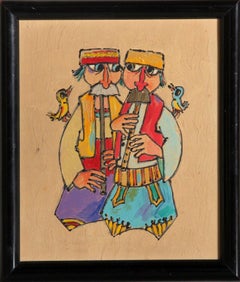
Two Figures
Two Figures

Jovan ObicanTwo Figures

Sold

H 24 in W 18 in D 0.1 in

Two Figures

By Jovan Obican

Located in San Francisco, CA

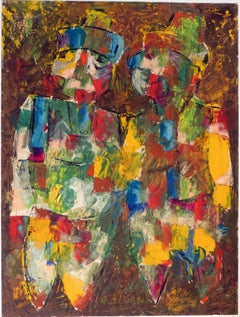
This painting is by Jovan Obican (1918-1986). It depicts two figures, both wearing hats, standing next to each other. Jovan Obican was born in Cannes, France, of Yugoslavian parents....

Category

Mid-20th Century Abstract Jovan Obican Art

Materials

Mixed Media

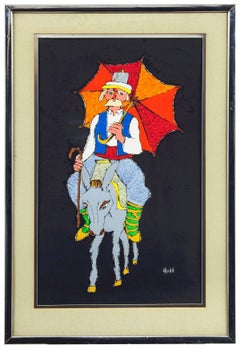
Bright Umbrella Donkey Ride, Acrylic on Paper

Bright Umbrella Donkey Ride, Acrylic on Paper

By Jovan Obican

Located in Surfside, FL

Jovan Obican, French/Yugoslavian (1918 - 1986) Jovan Obican was born in Cannes, France, of Yugoslavian parents. From childhood on, Jovan practically devoted himself to art, scratchi...

Category

Mid-20th Century Modern Jovan Obican Art

Materials

Paper, Acrylic

Colorful European Folk Art Painting Jovan Obican

Colorful European Folk Art Painting Jovan Obican

By Jovan Obican

Located in Surfside, FL

Genre: Other Subject: People Medium: Oil Surface: Canvas Dimensions: 30" x 24" x 3/4" Dimensions w/Frame: 31 1/2" x 25 1/2" The artist Jovan Obican iconic style is child-like yet ma...

Category

20th Century Folk Art Jovan Obican Art
Materials

Canvas, Oil

Jovan Obican art for sale on 1stDibs.
Find a wide variety of authentic Jovan Obican art available for sale on 1stDibs. You can also browse by medium to find art by Jovan Obican in oil paint, paint, canvas and more. Not every interior allows for large Jovan Obican art, so small editions measuring 18 inches across are available. Customers who are interested in this artist might also find the work of Jaimendes, Wilson Bigaud, and Branko Bahunek. Jovan Obican art prices can differ depending upon medium, time period and other attributes. On 1stDibs, the price for these items starts at $1,800 and tops out at $2,300, while the average work can sell for $1,800.
Artists Similar to Jovan Obican