Olaf Wieghorst Art

to
1
6
4
1
1
1
1
6

Use search to find more

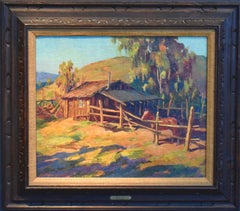
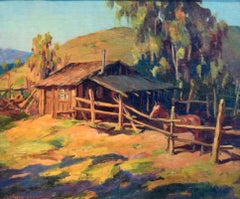
"Home Corral"  Very early Wieghorst California Western Painting awesome colors

"Home Corral" Very early Wieghorst California Western Painting awesome colors

By Olaf Wieghorst

Located in San Antonio, TX

Olaf Wieghorst (1899 - 1988) California, New York, New Mexico, Arizona, Texas Artist Image Size: 20 x 24 Frame Size: 29.5 x 33 Medium: oil 1946 "Home Corral" California Olaf Wieghorst Without a doubt one of if not the most colorful Wieghorst paintings ever done. Signed lower left. Titled on verso. Dated on verso. In very nice condition. Has been professionally cleaned. Has very fine craquelure in the tree branches and a small spot below the horse that is really only visible if you are extremely close to the painting or with magnification. One of his finest paintings. Also please view my other Wieghorst from the same estate. I have included close up photos as well as photos taken in natural light, spot light and fluorescent lighting. Olaf Wieghorst (1899 - 1988) California, New York, New Mexico, Arizona, Texas Artist Image Size: 20 x 24 Frame Size: 29.5 x 33 Medium: oil "Home Corral" Dated 1946 Biography Olaf Wieghorst (1899 - 1988) Born in Viborg, Denmark, Olaf Wieghorst was a child acrobatic performer from the age of nine when he began appearances at Tivoli Theater in Copenhagen and later toured Europe. He also learned horseback riding working on a stock farm, and horses became a major focus of his admiration and later his painting. In 1918, he arrived in the United States, having worked as a cabin boy on a steamer. He served in the 5th U.S. Cavalry on the Mexican border in the days of Pancho Villa. He later recalled a favorite horse from that period and said that riding through El Paso in 1921, the horse fell on his ankle and broke it. The outfit was heading to Douglas, Arizona, and not wanting to be left behind with his injury, he stayed on the horse which carried him all the way through the New Mexico desert on one of the hottest days of the year. The horse died during the night, having expended all his energy on saving Wieghorst. He later wrote that when the Cavalry discarded the use of horses, "they took the soul out of that great branch of the service" ("Widening Horizons"). He wandered extensively through the West sometimes on horseback, finding work in Arizona and New Mexico as a cowboy. Then he went to New York and served as a mounted policeman until 1944, spending most of his time on a horse named Rhombo patrolling the Central Park bridle paths and saving many people injury from runaway horses. He began painting in his spare time, and he was successful enough that his work was represented by the Grand Central Art Galleries of the Biltmore Hotel. In 1944, he settled in El Cajon, California. His paintings include cowboys, horses, and Indians in landscape, but there is little if any collectible art of his done during his early days in the West. His primary output came after his return to California when he began painting cowboys and horses extensively. He did numerous horse portraits, spending time on ranches studying their unique personalities. He painted celebrity horses including Roy Rogers' Trigger, Gene Autry's Champion and Tom Morgan's stallion. He was a large, powerful, handsome, and very personable man. Source: Kathleen Wade Olaf Carl Wieghorst (1899-1988) He arrived in the U.S. in 1918, joining the U.S. Cavalry, & patrolled the Mexico border in New Mexico & Arizona . When he mustered out of the army, he drifted, ending up as a wrangler on the Cunningham Ranch near Alma, New Mexico. By the mid-twenties, Wieghorst was in New York City, working as a mounted policeman - his relationships with the many horses that were a part of his life became the common denominator of his paintings. Living in California by the end of WWII, he began a career that spiraled to success, in part due to his engaging personality. His paintings have appeared in numerous solo & retrospective exhibitions including the National Cowboy & Western Heritage Museum, Oklahoma City (1974), The Tucson Museum of Art, Arizona (1981), & the San Diego Historical Society, California (2002). His work was the subject of the 1970 biography, "Olaf Wieghorst" by William Reed...

Category

1940s Impressionist Olaf Wieghorst Art

Materials

Oil

Apaches
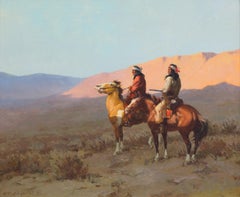
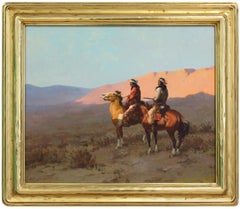
Apaches

Apaches

By Olaf Wieghorst

Located in Palm Desert, CA

"Apaches" is an oil on canvas painting by Olaf Wieghorst. The painting is signed on the lower left, "O-Wieghorst". The framed piece measures 25 1/2 x 29 3/4 x 2 in. “When the time comes for me to put away my palette and unsaddle my pony for the last time, I hope that my canvases will in some small measure add to the historical recording of an era, the cowboy, and the great American West.” ~ Olaf Wieghorst Wieghorst worked with the mounted patrol of the 7th Cavalry Regiment of the United States Cavalry (1920-1922) with occasional interludes as a wrangler on ranches in the western states. Wherever he went, he sketched and painted the Western culture he loved, often selling his work as calendar and magazine illustrations. His work appeared in Zane Grey...

Category

Early 20th Century American Realist Olaf Wieghorst Art

Materials

Canvas, Oil

Resting The Horses
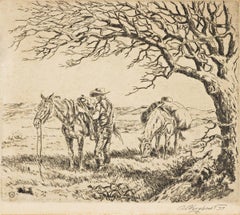
Resting The Horses

Resting The Horses

By Olaf Wieghorst

Located in New York, NY

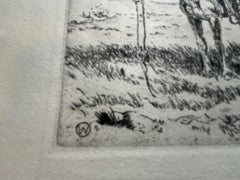
Etching, 1937. Signed by the artist and dated in pencil lower right margin. A scarce etching by this important American western artist.

Category

1930s American Realist Olaf Wieghorst Art

Materials

Etching

Olaf Wieghorst, Untitled Drawing, Mid 20th century

Olaf Wieghorst, Untitled Drawing, Mid 20th century

By Olaf Wieghorst

Located in Fairfield, CT

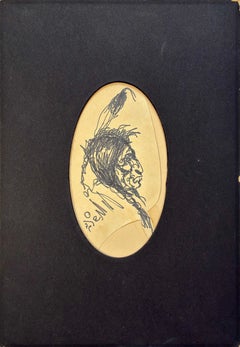
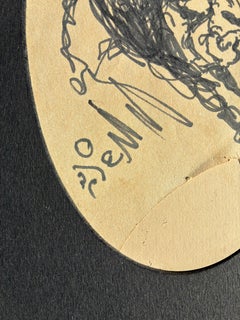
Artist: Olaf Carl Wieghorst (1899–1988) Title: Untitled Drawing Year: Mid 20th century Medium: Ink on velin paper Size: 13.00 x 9.00 inches overall (33.02 x 22.86 cm overall) Condition: Well preserved, consistent with age and medium Inscription: Hand signed by the artist below the image OLAF CARL WIEGHORST (1899–1988) was a Danish-born American painter, draughtsman, illustrator, printmaker, and sculptor whose extraordinary depictions of cowboys, horses, Native Americans, cattle drives, frontier settlements, and the sweeping landscapes of the American West established him as one of the most celebrated and collectible Western artists of the twentieth century. Renowned for his exceptional understanding of equine anatomy, authentic portrayals of ranch life, and remarkable ability to capture the atmosphere, movement, and emotional character of the frontier, Wieghorst developed a distinctive artistic language that combined the traditions of American Western realism with the technical discipline of European painting and the firsthand experience of a working cowboy, cavalryman, and mounted police officer. Born in Viborg, Denmark, on April 30, 1899, Wieghorst grew up fascinated by horses, circuses, adventure stories, and the romantic mythology of the American frontier, developing an ambition to experience the American West long before he immigrated to the United States. His father, an artist and photographic retoucher, encouraged his early drawing, while his youthful experiences as an acrobat, horseman, and performer helped establish the physical understanding of movement and animal behavior that would later distinguish his mature paintings. As a young boy, Wieghorst became captivated by the imagery of the American cowboy, particularly the Western illustrations of Frederic Remington, whose dramatic compositions and authentic representations of horses and frontier life provided an important artistic model. In 1918, at the age of nineteen, Wieghorst arrived in New York aboard a steamship and began the extraordinary personal journey that would transform his childhood fascination with the American West into the foundation of a distinguished artistic career. He subsequently enlisted in the United States Cavalry, serving with the Fifth Cavalry along the Mexican border, where his responsibilities included caring for horses and where he gained firsthand experience of military horsemanship, frontier landscapes, and the demanding physical conditions of the American Southwest. Following his military service, he worked as a ranch hand in Arizona, developing an intimate familiarity with cattle, horses, saddles, ranch equipment, and the daily routines of Western life. These experiences gave Wieghorst an unusual degree of authenticity among artists depicting the American frontier, allowing him to approach his subjects not simply as romantic historical imagery but as familiar elements of a world he had personally inhabited. Returning to New York during the 1920s, Wieghorst joined the New York City Police Department and served in its mounted division, continuing his lifelong association with horses while developing his artistic practice during his free time. His work as a mounted police officer reinforced his understanding of equine movement, anatomy, temperament, and the relationship between horse and rider, subjects that would become central to his artistic identity. Largely self-taught as a painter, Wieghorst developed his technique through sustained observation, drawing, experimentation, and the study of earlier Western artists, demonstrating that firsthand experience and disciplined artistic practice could provide an alternative foundation to conventional academic training. His artistic development unfolded during the broader modernist revolution shaped by Pablo Picasso, Alexander Calder, Alberto Giacometti, Salvador Dali, Joan Miro, Wassily Kandinsky, Marcel Duchamp, and Man Ray, whose innovations in Cubism, Surrealism, abstraction, sculpture, photography, and conceptual experimentation transformed the international artistic landscape of the twentieth century. Although Wieghorst pursued a fundamentally representational approach that differed substantially from the avant-garde practices of these artists, their achievements provide important historical context for understanding the diversity of artistic expression during his lifetime. Picasso’s restructuring of pictorial form, Calder’s investigations into movement and spatial balance, Giacometti’s engagement with the physical presence of living subjects, Dali’s technical illusionism, Miro’s imaginative compositions, Kandinsky’s expressive investigations into color, and the experimental approaches of Duchamp and Man Ray demonstrate the extraordinary range of modern artistic inquiry, while Wieghorst remained committed to the enduring traditions of narrative realism, landscape painting, and direct observation. His most significant artistic influences were the great painters and illustrators of the American West, particularly Frederic Remington and Charles Marion Russell, whose depictions of cowboys, cavalrymen, Native Americans, horses, and frontier landscapes established the visual foundations of Western American art. Wieghorst also belongs to the broader artistic tradition associated with artists such as Edward Borein, Maynard Dixon, Frank Tenney Johnson, and W. Herbert Dunton...

Category

Mid-20th Century American Realist Olaf Wieghorst Art

Materials

Paper, Ink

Season's Greetings 1960 (Brave on Horseback)

Season's Greetings 1960 (Brave on Horseback)

By Olaf Wieghorst

Located in Missouri, MO

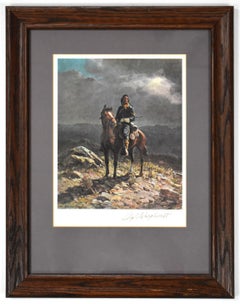
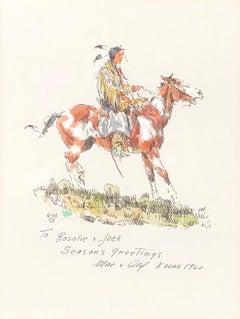
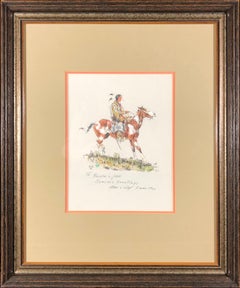
Olaf Wieghorst (American, 1899-1988) "Season's Greetings" (Brave on Horseback) 1960 Watercolor/Gouache on Paper Initialed and Monogramed and Dated Dedicated: "To Rosalie & Jack, Season's Greetings, Mae & Olaf Xmas 1960" Site Size: 12 x 9 inches Framed Size: approx. 22.5 x 18.5 inches Born in Viborg, Denmark, Olaf Wieghorst was a child acrobatic performer from the age of nine when he began appearances at Tivoli Theater in Copenhagen and later toured Europe. He also learned horseback riding working on a stock farm, and horses became a major focus of his admiration and later his painting. In 1918, he arrived in the United States, having worked as a cabin boy on a steamer. He served in the 5th U.S. Cavalry on the Mexican border in the days of Pancho Villa...

Category

1960s American Realist Olaf Wieghorst Art

Materials

Paper, Watercolor, Gouache

Related Items
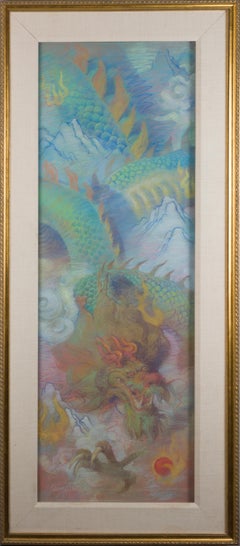
"Dragon, " Original Pastel Drawing

"Dragon, " Original Pastel Drawing

By Quang Ho

Located in Denver, CO

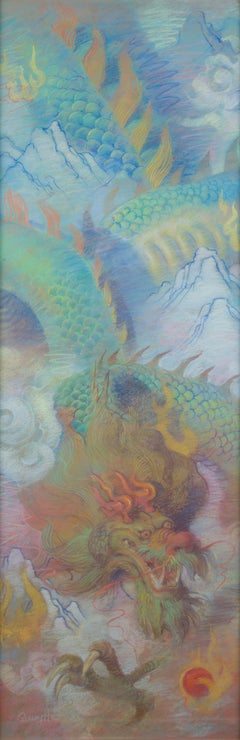
"Dragon," by Quang Ho, is a secondary market work with one previous owner. It is signed and dated (1988) on the lower left. The painting comes with it's original frame (measures 50 x...

Category

20th Century American Realist Olaf Wieghorst Art

Materials

Paper, Pastel

Impressionist Oil Painting of Barn and Sheep, Late 19th Century

Impressionist Oil Painting of Barn and Sheep, Late 19th Century

Located in PARIS, FR

Conditions: In excellent overall conditions, with no repaint under UV light, original canvas and frame. Signed Lower left "Ls Reinhardt". Dimensions with the frame are approximately...

Category

Late 19th Century Impressionist Olaf Wieghorst Art

Materials

Oil

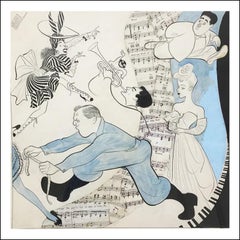
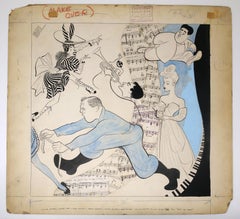
Al Hirschfeld "Beat the Band" New York Times Broadway Theatre Illustration 1940s

Al Hirschfeld "Beat the Band" New York Times Broadway Theatre Illustration 1940s

By Albert Al Hirschfeld

Located in New York, NY

Al Hirschfeld (1903-2003) "Beat the Band" 22 x 26 1/2 inches ink on board published in The New York Times, October 11, 1942 The unframed work comes directly from the Al Hirschfeld F...

Category

1940s American Realist Olaf Wieghorst Art

Materials

Ink, Board

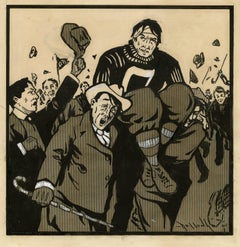
Football Hero, American Ashcan, George Bellows, 1905

Football Hero, American Ashcan, George Bellows, 1905

By George Wesley Bellows

Located in Fairlawn, OH

Football Hero (John Sigrist) (recto) "Fresh." (verso) Pen, ink, crayon with pencil and collage, 1905 A double sided drawing Note: Sigrist was a former captain and considered one of ...

Category

Early 1900s American Realist Olaf Wieghorst Art

Materials

Ink

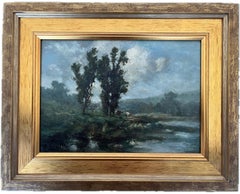
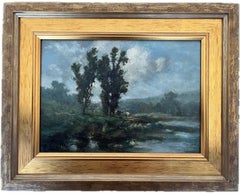
George Boyle Impressionist oil painting, Barbizon School of cows grazing

George Boyle Impressionist oil painting, Barbizon School of cows grazing

Located in Harkstead, GB

A superb example of a Barbizon inspired landscape painted by the "Catford Corot" from the late 19th Century. This very striking image shows the artist at the absolute peak of his abi...

Category

Late 19th Century Impressionist Olaf Wieghorst Art

Materials

Oil, Wood Panel

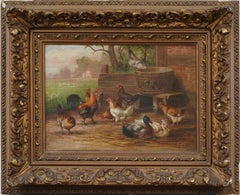
Antique American Bucolic Landscape Chickens Grazing Framed Oil Painting

Antique American Bucolic Landscape Chickens Grazing Framed Oil Painting

By August Laux

Located in Buffalo, NY

Antique American barnyard chicken grazing oil painting by August Laux (1853 - 1921). Oil on canvas. Signed. Framed. Measuring: 18 by 22 inches overall, and 10 by 14 painting alone. E...

Category

1870s Impressionist Olaf Wieghorst Art

Materials

Oil, Canvas

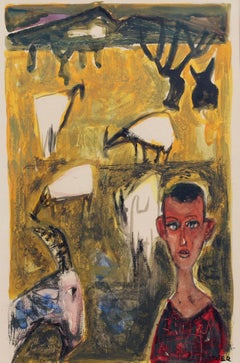
Landscape with Man and Goats, Gouache on Paper, Modern, Circa 1960s

Landscape with Man and Goats, Gouache on Paper, Modern, Circa 1960s

Located in London, GB

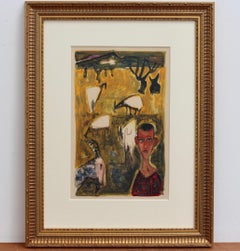
'Landscape with Man and Goats', gouache on paper, by Raymond Guerrier (circa 1960s). After the artist moved from Paris to the South of France, he started painting landscapes illumina...

Category

1960s Modern Olaf Wieghorst Art

Materials

Paper, Gouache

Antique American Panoramic Cloudscape Cows Grazing Bucolic Landscape Painting

Antique American Panoramic Cloudscape Cows Grazing Bucolic Landscape Painting

Located in Buffalo, NY

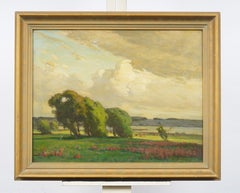
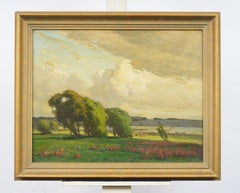
Antique impressionist landscape oil painting. Oil on canvas. Framed. Signed. In excellent original condition. Handsomely framed in a giltwood molding. Excellent condition, ready...

Category

1910s Impressionist Olaf Wieghorst Art

Materials

Oil, Canvas

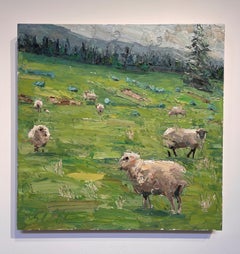
"Sheepish" Oil Painting

"Sheepish" Oil Painting

By Clyde Steadman

Located in Denver, CO

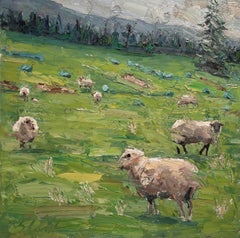
Clyde Steadman's "Sheepish" is an original, handmade oil painting that depicts an impasto painting of a sheep gathered on a green hillside.

Category

2010s American Impressionist Olaf Wieghorst Art

Materials

Oil, Panel

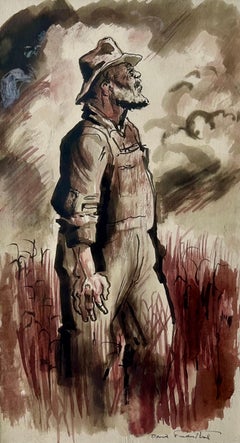
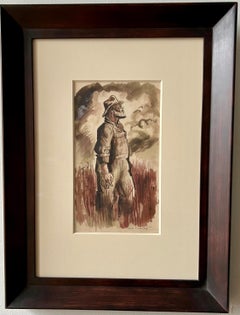
TOBACCO ROAD Mid 20th Century Realism 1940 Drawing from the Novel WPA Literary 3

TOBACCO ROAD Mid 20th Century Realism 1940 Drawing from the Novel WPA Literary 3

By David Fredenthal

Located in New York, NY

TOBACCO ROAD Mid 20th Century Realism 1940 Drawing from the Novel WPA Literary 3 10 1/2 x 6 (sight), Signed David Fredenthal lower right. Framed by Lowy. Offered here is one of several original drawings by WPA artist David Fredenthal that were first published in the 1940 illustrated edition of the novel TOBACCO ROAD by Erskine Caldwell. Background on the Drawing Erskine Caldwell remarked, on seeing the work of David Fredenthal, 26-year-old painter: "That boy could draw my Tobacco Road people." A casual comment, it was enormously productive. The young painter was just finishing a two-year Guggenhcim Fellowship, preceded by a year's study in Paris, two one-man shows at New York's Downtown Gallery, and a fellowship at the Cranbrook Academy near Detroit. He was out in Colorado Springs when he heard what Caldwell had said about him. Fredenthal hadn't read Tobacco Road. He had not even seen the play - now breaking all records in its seventh year on Broadway. But he swapped a portrait for a second-hand Ford and headed East. In New York he learned that Dnell, Sloan & Pearce were bringing out a deluxe edition of Tobacco Road. But he had no entrée to the publishers, and Caldwell, to his disappointment, was out of town. So he drove on to Georgia to have a look at the Tobacco Road people. He found Dr. I. C. Caldwell, the author's father, in Wrens, Ga., going on his ministerial rounds among people like the Lesters. Fredenthal got a room from a couple who ran a 1-pump filling station...

Category

1930s American Realist Olaf Wieghorst Art

Materials

Paper, Ink, Watercolor

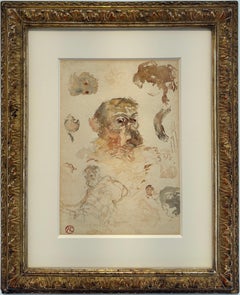
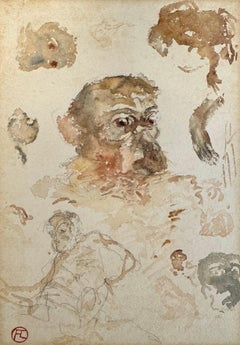
"Singes (Monkeys)" 1881 by Henri de Toulouse-Lautrec Watercolor & Graphite Study

"Singes (Monkeys)" 1881 by Henri de Toulouse-Lautrec Watercolor & Graphite Study

By Henri de Toulouse-Lautrec

Located in Yardley, PA

About this work: Before he became the celebrated chronicler of Montmartre’s nightlife, Lautrec was surrounded by a different kind of spectacle. At his family’s estates, the young art...

Category

1880s Naturalistic Olaf Wieghorst Art

Materials

Paper, Watercolor, Graphite

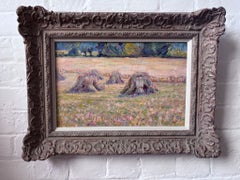
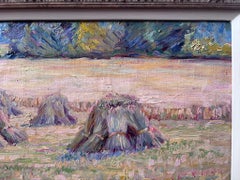
Wynford Dewhurst, Impressionist study of Hay stacks, Normandy, France

Wynford Dewhurst, Impressionist study of Hay stacks, Normandy, France

By Wynford Dewhurst

Located in Harkstead, GB

One of the very best examples by the artist, with fabulous brushwork and a wonderful palette employed to capture the subtle play of light. The artist was a very keen admirer of Claud...

Category

Late 19th Century Impressionist Olaf Wieghorst Art

Materials

Canvas, Oil

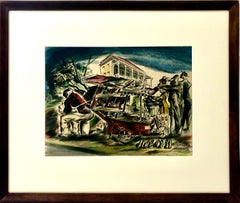
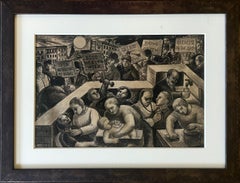
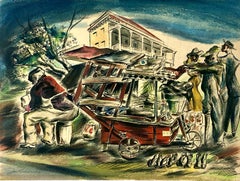
American Social Realist Watercolor Set in the Coastal South

American Social Realist Watercolor Set in the Coastal South

By Joe Richards

Located in San Francisco, CA

This expressive watercolor depicts a mid-20th-century American Social Realist street scene set in the American South, most likely a coastal port city like Charleston or New Orleans. ...

Category

Mid-20th Century American Realist Olaf Wieghorst Art

Materials

Paper, Ink, Watercolor, Gouache

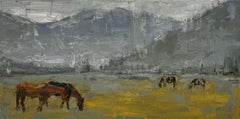
"Cold on the Plain" Oil Painting

"Cold on the Plain" Oil Painting

By Clyde Steadman

Located in Denver, CO

Clyde Steadman's "Cold on the Plain" is an original, handmade oil painting that depicts an impasto painting of horses grazing in a pastoral setting with m...

Category

2010s American Impressionist Olaf Wieghorst Art

Materials

Oil, Panel

Previously Available Items
Campfire and Buffalo Skull

Campfire and Buffalo Skull

By Olaf Wieghorst

Located in Missouri, MO

Olaf Carl Wieghorst "Campfire and Buffalo Skull" Bronze approx. 3.5 x 6 x 6 inches Signed Born in Viborg, Denmark, Olaf Wieghorst was a child acrobatic ...

Category

Late 19th Century American Realist Olaf Wieghorst Art

Materials

Bronze

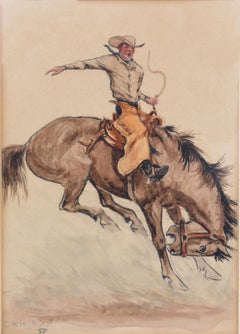
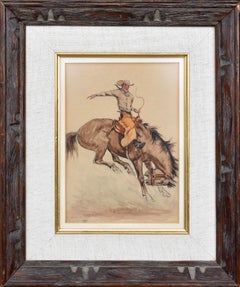
"Bronco Buster"  SADDLE BRONC RODEO COWBOY WESTERN HORSE RODEO PAINTING

"Bronco Buster" SADDLE BRONC RODEO COWBOY WESTERN HORSE RODEO PAINTING

By Olaf Wieghorst

Located in San Antonio, TX

Olaf Wieghorst (1899 - 1988) California, New York, New Mexico, Arizona, Texas Artist Image Size: 10 x 8 Frame Size: 17 x 14 Medium: Watercolor "Bucking Bronco" Dated 1946 Biography Olaf Wieghorst (1899 - 1988) Born in Viborg, Denmark, Olaf Wieghorst was a child acrobatic performer from the age of nine when he began appearances at Tivoli Theater in Copenhagen and later toured Europe. He also learned horseback riding working on a stock farm, and horses became a major focus of his admiration and later his painting. In 1918, he arrived in the United States, having worked as a cabin boy on a steamer. He served in the 5th U.S. Cavalry on the Mexican border in the days of Pancho Villa. He later recalled a favorite horse from that period and said that riding through El Paso in 1921, the horse fell on his ankle and broke it. The outfit was heading to Douglas, Arizona, and not wanting to be left behind with his injury, he stayed on the horse which carried him all the way through the New Mexico desert on one of the hottest days of the year. The horse died during the night, having expended all his energy on saving Wieghorst. He later wrote that when the Cavalry discarded the use of horses, "they took the soul out of that great branch of the service" ("Widening Horizons"). He wandered extensively through the West sometimes on horseback, finding work in Arizona and New Mexico as a cowboy. Then he went to New York and served as a mounted policeman until 1944, spending most of his time on a horse named Rhombo patrolling the Central Park bridle paths and saving many people injury from runaway horses. He began painting in his spare time, and he was successful enough that his work was represented by the Grand Central Art Galleries of the Biltmore Hotel. In 1944, he settled in El Cajon, California. His paintings include cowboys, horses, and Indians in landscape, but there is little if any collectible art of his done during his early days in the West. His primary output came after his return to California when he began painting cowboys and horses extensively. He did numerous horse portraits, spending time on ranches studying their unique personalities. He painted celebrity horses including Roy Rogers' Trigger, Gene Autry's Champion and Tom Morgan's stallion. He was a large, powerful, handsome, and very personable man. Source: Kathleen Wade Olaf Carl Wieghorst (1899-1988) He arrived in the U.S. in 1918, joining the U.S. Cavalry, & patrolled the Mexico border in New Mexico & Arizona . When he mustered out of the army, he drifted, ending up as a wrangler on the Cunningham Ranch near Alma, New Mexico. By the mid-twenties, Wieghorst was in New York City, working as a mounted policeman - his relationships with the many horses that were a part of his life became the common denominator of his paintings. Living in California by the end of WWII, he began a career that spiraled to success, in part due to his engaging personality. His paintings have appeared in numerous solo & retrospective exhibitions including the National Cowboy & Western Heritage Museum, Oklahoma City (1974), The Tucson Museum of Art, Arizona (1981), & the San Diego Historical Society, California (2002). His work was the subject of the 1970 biography, "Olaf Wieghorst" by William Reed. Olaf Carl Wieghorst was born to a display artist and a photo retoucher in Viborg, Jutland, Denmark in 1899. His education was in the Copenhagen public schools and, at a young age, he developed an acrobatic act at the Tivoli Theater in Copenhagen where he was breathlessly billed as "Little Olaf- The Miniature Acrobat." By the age of fourteen Olaf Wieghorst, who would eventually grow to be over 6'4", was too big to be logically referred to as miniature, and started working on a stock farm, where he first learned to ride horses and began to teach himself to paint. The passion that Olaf Wieghorst developed for horses would be a source of lifelong inspiration. Transfixed by the stories and images of the American west, Olaf Wieghorst joined the crew of a Dutch shipping vessel and promptly jumped ship in New York City, despite the fact that he had $1.25 to his name and knew not a word of English. Olaf Wieghorst joined the US Cavalry and was stationed at the Mexican border as a horseshoer, a job that allowed him contact with his primary preoccupation. He also learned rodeo and trick riding techniques from the men around him and further developed his painting style. Olaf Wieghorst left the service and worked as a ranch hand in Arizona at the Quarter 2C Ranch, whose brand he adopted as his insignia. Olaf Wieghorst returned to New York City in 1923 and joined the police force, graduating in 1925. He was assigned to the Police Show Team of the Mounted Division, and continued to paint. The first professional representation Olaf Wieghorst had was in 1940 when an agent he had found sold vast quantities of his work to publishers as calendar art and western illustration. The change in his lifestyle after he began to find artistic success was dramatic. By 1942 his commissioned paintings went for $500 and, two years later, Olaf Wieghorst had retired from the Police Department and was living in El Cajon, CA. Olaf Wieghorst would produce the majority of his life's work in California and would be best known during his lifetime as a painter of horse portraits, including such equine celebrities as Roy Rogers' Trigger and Gene Autry's Champion. ghWieghorst's work is in many prestigious western collections, including those of Barry Goldwater, The Eisenhower Library and the Whitney Gallery in Cody, Wyoming. Olaf Wieghorst Born: Viborg, Jutland, Denmark 1899 Important traditional Western painter specializing in horses, painter of horse portraits, illustrator, sculptor. Wieghorst is the son of a display artist and photo retoucher who became an engraver. Educated in Copenhagen public schools, Wieghorst was "Little Olaf—the Miniature Acrobat" from age nine until 14. Interested in horses, the American "Wild West," and painting while apprenticed in a store an on a farm, he began painting in 1916. Working as a sailor in 1918, he jumped ship in New York City where he enlisted in the United States Cavalry for duty on the Mexican border. During his last three years of military service as a horseshoer, he learned rodeoing and trick riding. He was mustered out in Arizona, finding work as a ranch hand on the Quarter Circle 2C Ranch who brand is now Wieghorst's insignia. In 1923 he returned to New York City, graduation from the Police Academy in 1925. Assigned to the Police Show Team of the Mounted Division, Wieghorst began to paint in his spare time. In 1940, he found an agent for his paintings, which immediately sold as calendar art and as Western illustrations. By 1942 he was receiving commission for horse portraits and bronzes, with fees up to $500. In 1944, Wieghorst retired from the Police Department, settling in El Cajon, California in 1945. By 1955 he had a waiting list of buyers. "I try to paint the little natural things, the way a horse turns his tail to the wind on cold nights, the way he flattens his ears in the rain, seasonal changes in the coat of a horse, and the psychology of his behavior. Horses have been my life." Weighorst's biography was published in 1969. Resource: SAMUELS' Encyclopedia of ARTISTS of THE AMERICAN WEST, Peggy and Harold Samuels, 1985, Castle Publishing Acclaimed by critics as the outstanding contemporary Western artist, Olaf Wieghorst earned these accolades during a lifetime of observing, handling and painting horses and the West. Olaf was born to Karl and Anna Wieghorst on April 30, 1899, in the village of Viborg, Jutland, Denmark. He was only 19 years old when he came to New York on December 31, 1918 aboard an old Danish steamer. He had only $1.25 in his pocket and spoke no English. For better or for worse, Olaf had come to America to stay. Olaf joined the United States Calvary and requested duty on the Mexican border. This was his dream come true; he was going West! After the military, Olaf drifted and worked as a cowboy. "I have been observing horses for so many years that I guess I've begun to think like one. That's what I mean when I say that the horse has been my greatest teacher. Horses have been my companions under nearly all possible conditions." Here was a man deeply in love with the West and its people and its way of life. Here was a man possessed with the talent to create on canvas this love. His paintings are in the great private collections of Western art including those of Clint Murchison, Leonard Firestone, Barry Goldwater, Earl Adams, Sam Campbell, Jack Goodman, Read Mullan, C.R. Smith, Bruce Gelker, Fred Utter as well as The Eisenhower Library, Abilene, Kansas, and the Whitney Gallery, Cody, Wyoming. Olaf Wieghorst was born in Denmark in 1899, where he first learned the horsemanship that would be a major theme throughout his life. At the age of 19, Wieghorst immigrated to the U.S., where he joined the 5th Cavalry, patrolling the U.S.-Mexican border. Following his service, he floated around the Southwest, working at times as a cowboy. Eventually settling in New York, Wieghorst was painting in his spare time when his western paintings caught the attention of the Grand Central Galleries, who would exhibit his works. In 1944 Wieghorst moved to southern California, where the majority of his works were produced. His works remained very much in demand throughout his life, and he was often commissioned to paint horse portraits...

Category

1940s Impressionist Olaf Wieghorst Art
Materials

Watercolor

Olaf Wieghorst art for sale on 1stDibs.
Find a wide variety of authentic Olaf Wieghorst art available for sale on 1stDibs. You can also browse by medium to find art by Olaf Wieghorst in paint, oil paint, archival pigment print and more. Much of the original work by this artist or collective was created during the 20th century and is mostly associated with the Impressionist style. Not every interior allows for large Olaf Wieghorst art, so small editions measuring 9 inches across are available. Customers who are interested in this artist might also find the work of Max Ferguson, Cecil Crosley Bell, and Frank Henry Mason. Olaf Wieghorst art prices can differ depending upon medium, time period and other attributes. On 1stDibs, the price for these items starts at $420 and tops out at $87,500, while the average work can sell for $22,000.
Artists Similar to Olaf Wieghorst