CHIKANOBU, Yoshu Art

to
2
4
1
4
4
3
1
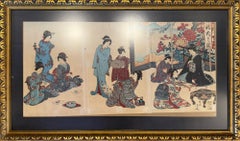
(Untitled), from the series Pictures of ladies' etiquette

(Untitled), from the series Pictures of ladies' etiquette

By Yoshu Chikanobu

Located in Middletown, NY

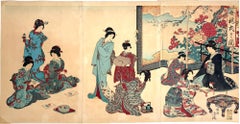
Tokyo: c1893. Wooblock tryptich printed in colors on hand laid mulberry paper, 14 3/4 x 29 inches (375 x 737 mm), the full sheet. Meiji period. In very good condition with extensive...

Category

Late 19th Century CHIKANOBU, Yoshu Art

Materials

Handmade Paper, Woodcut

A Set of Six Bust Portraits of Beauties - Jidai Kagami (Mirror of the Ages).

A Set of Six Bust Portraits of Beauties - Jidai Kagami (Mirror of the Ages).

By Yoshu Chikanobu

Located in London, London

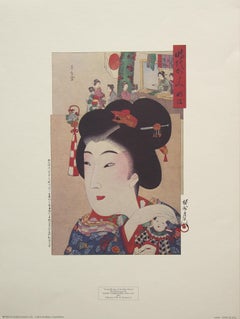
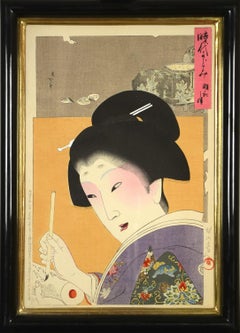
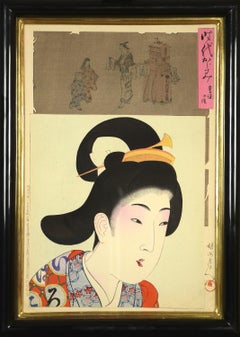
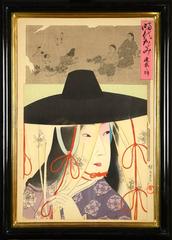
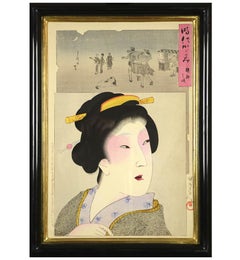
CHIKANOBU, Yoshu (1838–1912) A Set of Six Bust Portraits of Beauties - Jidai Kagami (Mirror of the Ages). 1896-1898 A Set of Six oban tate-e woodblock prints of okubi-e (bust portraits) of beauties, titled Jidai kagami (Mirror of the Ages), documenting the fashions of former times (from the Keicho to the Meiji era) in chronological order, each sheet with a beautiful woman in sumptuous costume depicted at the lower section and a rectangular panel at the top which makes a reference to the era, some sheets with lacquer and embossed details, published by Matsuki Heikichi, variously dated Meiji 29, 30 and 31 (1896-8), all signed Yoshu Chikanobu. Each sheet approx. 36 x 23.7 cm (14 1/8 x 9 3/8 in). oyohara Chikanobu (1838–1912), better known to his contemporaries as Yōshū Chikanobu, was one of the most successful woodblock print artists of Japan's Meiji period. He lived at a time when Japan saw the reinstatement of the emperor as ruler and underwent rapid westernization. He worked both with traditional subjects, such as actors, courtesans, scenes of famous sites, beautiful women, and with topical subjects, such as the Satsuma Rebellion (1877) and the Sino-Japanese War (1894-1895). Chikanobu used the flat planes and decorative patterning of the ukiyo-e tradition to striking effect, adding brilliant colors, especially reds, purples, and blues to his compositions. More precisely, Ukiyo-e, or ukiyo-ye (in Japanese: "pictures of the floating world"), is a genre of woodblock prints and paintings that flourished in Japan from the 17th through 19th centuries. It was aimed at the prosperous merchant class in the urbanizing Edo period (1603–1867). Amongst the popular themes were depictions of beautiful women, as is the case here with these okubi-e prints (i.e. bust portraits); kabuki actors and sumo wrestlers; scenes from history and folk tales; travel scenes and landscapes; flora and fauna; and erotica. One of Chikanobu’s best series, A Mirror of the Ages shows women by fashion and hair style throughout history. Despite a sense of longing for the past, these prints are unmistakably modern and of their time. Each print depicts a beauty from a certain period in the lower part and customs at that time, in grisaille, in the upper part - a way to tell viewers about the latest fashion and historical backgroud at that time. The quality of printing is outstanding, especially in Chikanobu’s use of white for the rendering of the powdered faces. Indeed, Chikanobu was known as a master of bijinga (images of beautiful women), and for illustrating changes in women's fashion, including both traditional and Western clothing...

Category

1890s Other Art Style CHIKANOBU, Yoshu Art

Materials

Wood

Japanese Beauty Admiring Kirifuri Waterfall

Japanese Beauty Admiring Kirifuri Waterfall

By Yoshu Chikanobu

Located in Burbank, CA

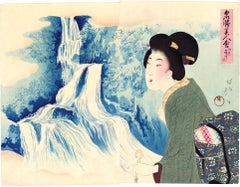
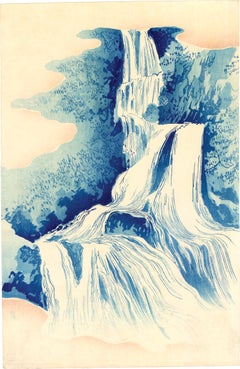
A beauty turns to admire the Kirifuri Waterfall in Nikko Province. She holds the handle of an umbrella and wears fashionable clothing that is beautifully printed. This series pairs f...

Category

1890s Edo CHIKANOBU, Yoshu Art

Materials

Handmade Paper, Mulberry Paper, Woodcut

Beauties on the Beach with view of Mount Fuji

Beauties on the Beach with view of Mount Fuji

By Yoshu Chikanobu

Located in Burbank, CA

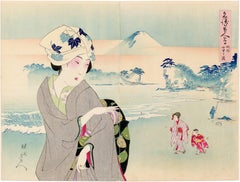
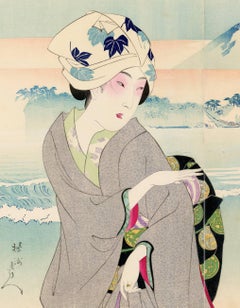
Shichirigahama, Sagami Province. A beauty in the foreground waves to her young companions, who run towards her on the beach. The beauty at left wears a western-style golden ring. We ...

Category

1890s Edo CHIKANOBU, Yoshu Art

Materials

Handmade Paper, Mulberry Paper, Woodcut

Related Items
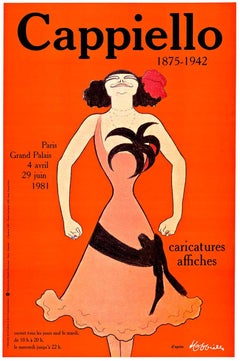
Original Cappiello Caricatures Affiches Paris Grand Palais exhibition poster

Original Cappiello Caricatures Affiches Paris Grand Palais exhibition poster

By Leonetto Cappiello

Located in Spokane, WA

Original Vintage 1981 Cappiello Exhibition Poster held at the Paris Grand Palais. Celebrating the Iconic Artwork of Leonetto Cappiello. Linen backed in very good condition without an...

Category

1980s Art Deco CHIKANOBU, Yoshu Art

Materials

Lithograph

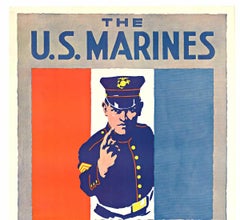
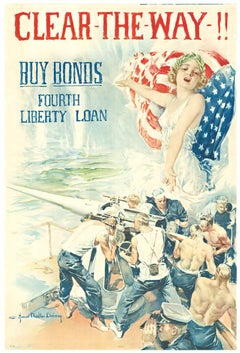
Original 'The U. S. Marines Want You' vintage military recruiting poster

Original 'The U. S. Marines Want You' vintage military recruiting poster

Located in Spokane, WA

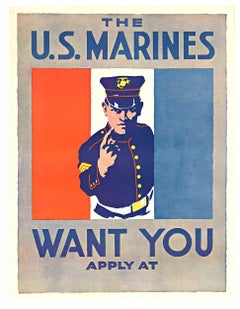
Original vintage poster: The U.S. Marines Want You. This military vintage poster is archival linen-backed and in fine condition, ready to frame. There is no date, artist, or printer'...

Category

1910s American Realist CHIKANOBU, Yoshu Art

Materials

Lithograph

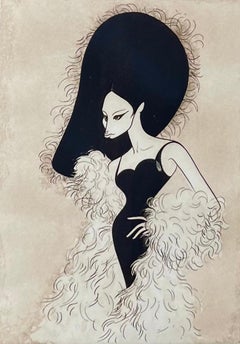
Barbra Stresiand "Belle of 14th Street" 1973 CBS TV Special 20th Century Litho

Barbra Stresiand "Belle of 14th Street" 1973 CBS TV Special 20th Century Litho

By Albert Al Hirschfeld

Located in New York, NY

Barbra Stresiand "Belle of 14th Street" 1973 CBS TV Special 20th Century Litho Signed and numbered 10/150 in pencil, lower margin. Etching, 13.5” x 9.75”. Framed 21.25” x 17.25”. Pulled in 1975. Belle of 14th Street After two successful television shows on CBS, Barbra's manager, Marty Erlichman told the press, “We don't intend to go to the well once too often. The next special will have other performers. However, Barbra will never become just another hostess for just another musical variety show. Whatever we decide to do in the future shows, she will dominate in a unique fashion.” Barbra’s third television special for CBS and her sponsor, Monsanto, was titled The Belle of 14th Street . In February 1966, shortly after finishing up Color Me Barbra , Streisand and husband Elliott Gould took a second honeymoon in Paris. The trip was financed by her television corporate sponsor, Chemstrand. Barbra told the press, “I’m here to purchase the wardrobe for my next TV special. Cost is no object because my sponsor is picking up the tab.” At that point the theme of her third TV show would be fashion, and Paris offered many couture choices. Barbra was seen at a Dior fashion show wearing not the designer’s clothes, but a jaguar suit and hat she had designed herself. In all, it is said Barbra chose nine Dior outfits at a cost of $150,000. However, Barbra Streisand's third television special for CBS was postponed. In March 1966, Barbra flew to London to appear at the Prince of Wales Theatre in Funny Girl . Shortly after beginning her run in London, Barbra announced her pregnancy. Not only did that cause her concert tour to be abbreviated, but Barbra’s television special was postponed as well. Barbra told the BBC in July 1966: “I also can’t do my third television show, which I was supposed to do here [London].” Returning to the States, Barbra performed four concert dates, and then retired to enjoy the rest of her pregnancy and give birth to her son, Jason, in December 1966. CBS and Chemstrand wanted a new special by the end of 1967, therefore production on the show picked up momentum in March 1967. (Barbra was due in Hollywood in May to begin shooting the Funny Girl film.) The format and theme of the television show had changed, too. Instead of centering on fashion, Barbra’s next special would be situated in a 1900’s Vaudeville theater. “We were all determined that the show not be just a variety format,” director Joe Layton said. “We wanted something different. So we hit upon the idea of restaging a vaudeville performance. All the acts, songs, skits and specialties had to be derivative of the period between 1895-1912.” Barbra’s creative collaborators did meticulous research on Vaudeville — “We even called George Burns in Hollywood and Jack Pearl,” said Barbra’s manager, Marty Erlichman. Entitled The Belle of 14th Street , the new special would allow Barbra to play several different characters but not have to shoulder the burden of carrying another one-woman show—this time Streisand would be accompanied by guest stars: Broadway actor Jason Robards; Vaudeville veteran John Bubbles; and Lee Allen...

Category

1970s Performance CHIKANOBU, Yoshu Art
Materials

Lithograph

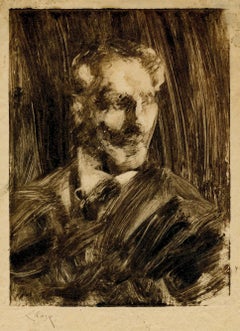
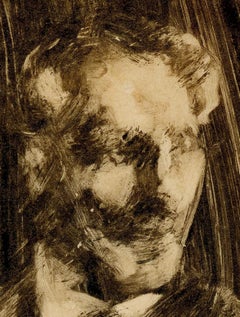
Portrait of a Man Facing Left, Impressionist Monoprint, Circa 1890

Portrait of a Man Facing Left, Impressionist Monoprint, Circa 1890

By William Merritt Chase

Located in Fairlawn, OH

Portrait of a Man Facing Left Monotype printed in brown ink, c. 1880-1914 Signed in ink lower left: Chase (see photo) Provenance: Helen Chase Storm (the artist's daughter) Jackson Chase Storm (her son) Chapellier Galleries (as agent) James Bergquist, Boston References And Exhibitions: Exhibited at the Museum of Fine Arts, Boston and the Clark Art Institute, Williamstown, MA. (See MFA paperwork in photos) Reference: Ronald G. Pisano, Completed by D. Frederick Baker and Carolyn K. Lane, William Merritt Chase: Still Lifes, Interiors, Figures, Copies of Old Masters, and Drawings, Catalogue Raisonne, Vol. IV (New Haven and London: Yale University Press, 2010), Vol. 1, M. 8. (See photos of entry) William Merritt Chase (1840-2016) Born in Nineveh, Indiana Died New York, New York In 1883 Chase was involved in the organization of an exhibition to help raise funds for a pedestal for the Statute of Liberty. The exhibition featured loans of three works by Manet and urban scenes by the Italian Impressionist Giuseppe de Nittis. Both artists influenced Chase's Impressionistic style that gave rise to a series of New York park scenes. It is also thought that he was influenced by John Singer Sargent's In the Luxembourg Gardens (1879) which was exhibited in New York at this time. Indeed, Chase had met Sargent in Europe in 1881, the two men becoming lifelong friends with Sargent painting Chase's portrait in 1902. On another European trip in 1885, Chase met James McNeill Whistler in London. While Whistler had a reputation for being difficult, the two artists got along famously and agreed to paint one another's portrait. Eventually, however, Whistler's moods began to grate with Chase who wrote home stating "I really begin to feel that I never will get away from here". For his part, Whistler criticized Chase's finished portrait and, according to Hirshler, "complained about Chase for the rest of his life". While no record exists of Whistler's portrait of Chase; Chase's portrait of Whistler remains a well-known piece in his oeuvre. In 1887 Chase married Alice Gerson, the daughter of the manager of a lithography company. Though some fifteen years his junior (Chase was 37), he had known Alice for some time through her family's devotion to the arts. The pair, who would enjoy a happy marriage with Alice in full support of her husband's career, settled initially in Brooklyn...

Category

1890s Impressionist CHIKANOBU, Yoshu Art

Materials

Monoprint

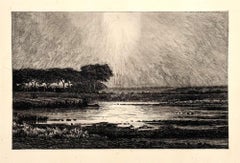
Lever de lune
Lever de lune

Lever de lune

By Charles François Daubigny

Located in Middletown, NY

Paris: Chardon, 1861. Etching with engraving on Chine collé mounted to a wove paper matrix with a false platemark and a deckle edge, 4 1/2 x 6 1/2 inches (115 x 165 mm); matrix 12 1...

Category

Mid-19th Century French School CHIKANOBU, Yoshu Art

Materials

Handmade Paper, Etching, Engraving

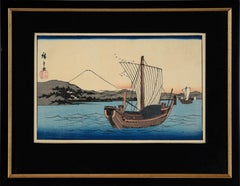
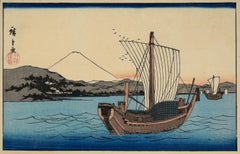
Kiyomi Barrier & Seiken Temple Near Okitsu- Japanese Woodcut Print on Rice Paper

Kiyomi Barrier & Seiken Temple Near Okitsu- Japanese Woodcut Print on Rice Paper

By Utagawa Hiroshige

Located in Soquel, CA

Kiyomi Barrier & Seiken Temple Near Okitsu - Japanese Woodcut Print on Rice Paper Woodblock print of boats in a harbor by Utagawa Hiroshige (Japanese, 1797-1858). Originally publish...

Category

1850s Impressionist CHIKANOBU, Yoshu Art

Materials

Rice Paper, Woodcut

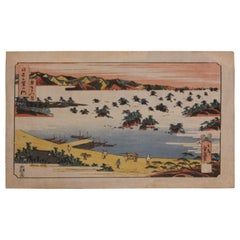
Edo Landscape Japanese Woodblock Print

Edo Landscape Japanese Woodblock Print

By Utagawa Hiroshige (Ando Hiroshige)

Located in Houston, TX

Edo Meisho woodblock print of a famous Japanese coastal dock. This woodblock is most likely apart of the series "One Hundred Famous Views of Edo." The woodblock print is printed on r...

Category

1850s Edo CHIKANOBU, Yoshu Art

Materials

Woodcut

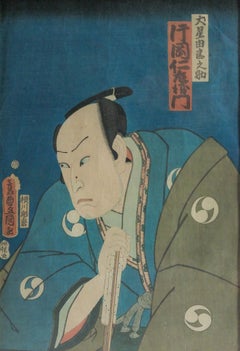
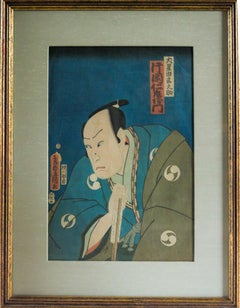
"Actor Kataoka Nazaemon as Oboshi Yaranosuke Leader of the 47 Ronin" Portrait

"Actor Kataoka Nazaemon as Oboshi Yaranosuke Leader of the 47 Ronin" Portrait

By Utagawa Kunisada (Toyokuni III)

Located in Austin, TX

Artist: Utagawa Kunisada "Toyokuni the Third" (Japanese 1786 - 1864) Page Size: 14 x 9.5 in. Frame Size: 21 x 16.25 Translation of Calligraphic Japanese Text: 大星由良之助 Ōboshi Yuranosu...

Category

Mid-19th Century CHIKANOBU, Yoshu Art

Materials

Paper, Woodcut

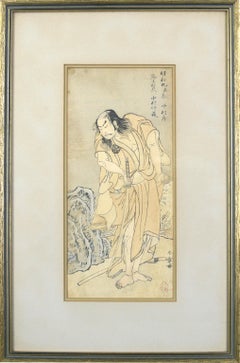
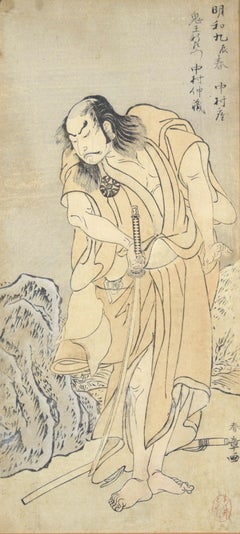
Actor as Samurai - 18th Century Japanese Woodblock Print

Actor as Samurai - 18th Century Japanese Woodblock Print

By Katsukawa Shunshō

Located in Soquel, CA

Actor as Samurai - 18th Century Japanese Woodblock Print Woodblock print depicting an actor, possibly Nakamura Denkuro II, as a samurai. The actor stands with his sword unsheathed a...

Category

Late 18th Century Edo CHIKANOBU, Yoshu Art

Materials

Woodcut, Rice Paper

Previously Available Items
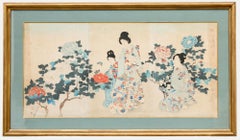
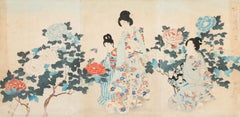
Yoshu Chikanobu (1838-1912) - Japanese Woodblock, Amongst the Flowers Triptych

Yoshu Chikanobu (1838-1912) - Japanese Woodblock, Amongst the Flowers Triptych

By Yoshu Chikanobu

Located in Corsham, GB

A delightful triptych by the Japanese ukiyo-e artist Yoshu Chikanobu (1838-1912). The three sections combine to make a single image of women in richly decorated kimonos surrounded by...

Category

19th Century CHIKANOBU, Yoshu Art

Materials

Woodcut

A Group of Six Bust Portraits of Beauties - Jidai Kagami (Mirror of the Ages).

A Group of Six Bust Portraits of Beauties - Jidai Kagami (Mirror of the Ages).

By Yoshu Chikanobu

Located in London, London

CHIKANOBU, Yoshu (1838–1912). A Group of Six Bust Portraits of Beauties - Jidai Kagami (Mirror of the Ages). 1896-1898 A Group of Six oban tate-e woodblock prints of okubi-e (bust portraits) of beauties, titled Jidai kagami (Mirror of the Ages), documenting the fashions of former times (from the Keicho to the Meiji era) in chronological order, each sheet with a beautiful woman in sumptuous costume depicted at the lower section and a rectangular panel at the top which makes a reference to the era, some sheets with lacquer and embossed details, published by Matsuki Heikichi, variously dated Meiji 29, 30 and 31 (1896-8), all signed Yoshu Chikanobu. Each sheet approx. 36 x 23.7 cm (14 1/8 x 9 3/8 in). Toyohara Chikanobu (1838–1912), better known to his contemporaries as Yōshū Chikanobu, was one of the most successful woodblock print artists of Japan's Meiji period. He lived at a time when Japan saw the reinstatement of the emperor as ruler and underwent rapid westernization. He worked both with traditional subjects, such as actors, courtesans, scenes of famous sites, beautiful women, and with topical subjects, such as the Satsuma Rebellion (1877) and the Sino-Japanese War (1894-1895). Chikanobu used the flat planes and decorative patterning of the ukiyo-e tradition to striking effect, adding brilliant colors, especially reds, purples, and blues to his compositions. More precisely, Ukiyo-e, or ukiyo-ye (in Japanese: "pictures of the floating world"), is a genre of woodblock prints and paintings that flourished in Japan from the 17th through 19th centuries. It was aimed at the prosperous merchant class in the urbanizing Edo period (1603–1867). Amongst the popular themes were depictions of beautiful women, as is the case here with these okubi-e prints (i.e. bust portraits); kabuki actors and sumo wrestlers; scenes from history and folk tales; travel scenes and landscapes; flora and fauna; and erotica. One of Chikanobu’s best series, A Mirror of the Ages shows women by fashion and hair style throughout history. Despite a sense of longing for the past, these prints are unmistakably modern and of their time. Each print depicts a beauty from a certain period in the lower part and customs at that time, in grisaille, in the upper part - a way to tell viewers about the latest fashion and historical backgroud at that time. The quality of printing is outstanding, especially in Chikanobu’s use of white for the rendering of the powdered faces. Indeed, Chikanobu was known as a master of bijinga (images of beautiful women), and for illustrating changes in women's fashion, including both traditional and Western clothing...

Category

1890s Other Art Style CHIKANOBU, Yoshu Art
Materials

Wood

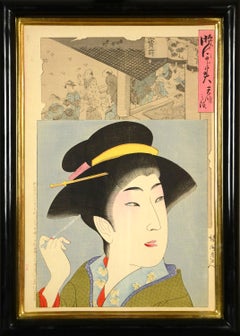
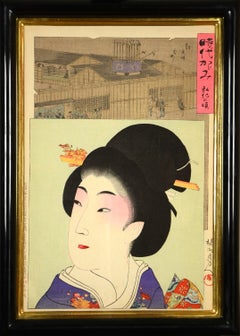
Yoshu Chikanobu, Four Bust Portraits of Beauties, woodblock prints, signed, 1896

Yoshu Chikanobu, Four Bust Portraits of Beauties, woodblock prints, signed, 1896

By Yoshu Chikanobu

Located in London, GB

A Set of four oban tate-e woodblock prints of okubi-e (bust portraits) of beauties, titled Jidai kagami (Mirror of the Ages), documenting the fashions of former times (from the Keicho to the Meiji era) in chronological order, each sheet with a beautiful woman in sumptuous costume depicted at the lower section and a rectangular panel at the top which makes a reference to the era, some sheets with lacquer and embossed details, published by Matsuki Heikichi, variously dated Meiji 29, 30 and 31 (1896-8), all signed Yoshu Chikanobu. Each sheet approx. 36 x 23.7 cm (14 1/8 x 9 3/8 in), framed and glazed. Toyohara Chikanobu (1838–1912), better known to his contemporaries as Yōshū Chikanobu, was one of the most successful woodblock print artists of Japan's Meiji period. He lived at a time when Japan saw the reinstatement of the emperor as ruler and underwent rapid westernization. He worked both with traditional subjects, such as actors, courtesans, scenes of famous sites, beautiful women, and with topical subjects, such as the Satsuma Rebellion (1877) and the Sino-Japanese War (1894-1895). Chikanobu used the flat planes and decorative patterning of the ukiyo-e tradition to striking effect, adding brilliant colours, especially reds, purples, and blues to his compositions. More precisely, Ukiyo-e, or ukiyo-ye (in Japanese: "pictures of the floating world"), is a genre of woodblock prints and paintings that flourished in Japan from the 17th through 19th centuries. It was aimed at the prosperous merchant class in the urbanizing Edo period (1603–1867). Amongst the popular themes were depictions of beautiful women, as is the case here with these okubi-e prints (i.e. bust portraits); kabuki actors and sumo wrestlers; scenes from history and folk tales; travel scenes and landscapes; flora and fauna; and erotica. One of Chikanobu’s best series, A Mirror of the Ages shows women by fashion and hair style throughout history. Despite a sense of longing for the past, these prints are unmistakably modern and of their time. Each print depicts a beauty from a certain period in the lower part and customs at that time, in grisaille, in the upper part - a way to tell viewers about the latest fashion and historical backgroud at that time. The quality of printing is outstanding, especially in Chikanobu’s use of white for the rendering of the powdered faces. Indeed, Chikanobu was known as a master of bijinga (images of beautiful women), and for illustrating changes in women's fashion, including both traditional and Western clothing...

Category

1890s CHIKANOBU, Yoshu Art
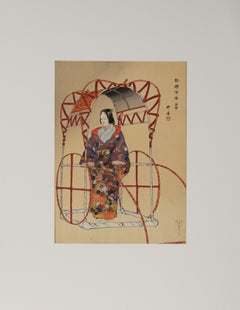
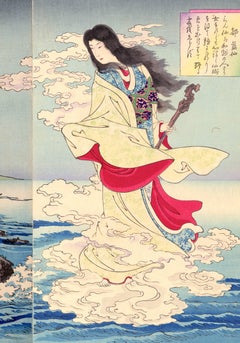
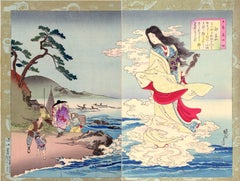
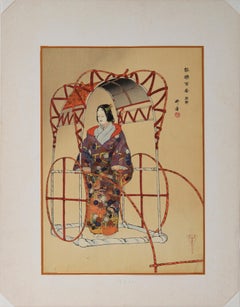
Immortal Goddess on Beach

Immortal Goddess on Beach

By Yoshu Chikanobu

Located in Burbank, CA

Original Japanese woodblock print diptych of an immortal Goddess wreathed in clouds looking protectively down on a beach. In excellent, mint condition (note that the colors on the tw...

Category

1890s Other Art Style CHIKANOBU, Yoshu Art
Materials

Mulberry Paper, Color

Chikanobu, Yoshu art for sale on 1stDibs.
Find a wide variety of authentic CHIKANOBU, Yoshu art available for sale on 1stDibs. You can also browse by medium to find art by CHIKANOBU, Yoshu in handmade paper, mulberry paper, paper and more. Not every interior allows for large CHIKANOBU, Yoshu art, so small editions measuring 12 inches across are available. Customers who are interested in this artist might also find the work of Utagawa Yoshitora, Kunichika Toyohara, and Toyohara Kunichika. CHIKANOBU, Yoshu art prices can differ depending upon medium, time period and other attributes. On 1stDibs, the price for these items starts at $150 and tops out at $6,813, while the average work can sell for $963.
Artists Similar to CHIKANOBU, Yoshu

Tsukioka Yoshitoshi
Utagawa Hiroshige (Ando Hiroshige)
Toyohara Kunichika