Want more images or videos?
Request additional images or videos from the seller
1 of 19

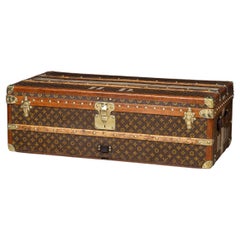
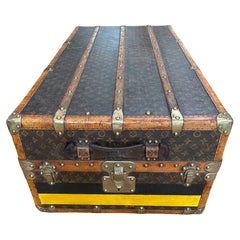
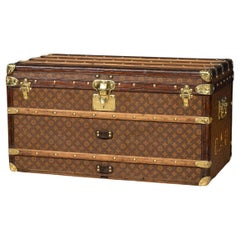
Louis Vuitton Monogram Cabine Trunk Malle C.1930

$16,466.57
£12,000
€14,289.63
CA$23,083.91
A$23,439.82
CHF 13,380.71
MX$283,230.32
NOK 157,178.21
SEK 156,749.37
DKK 106,826.39

About the Item

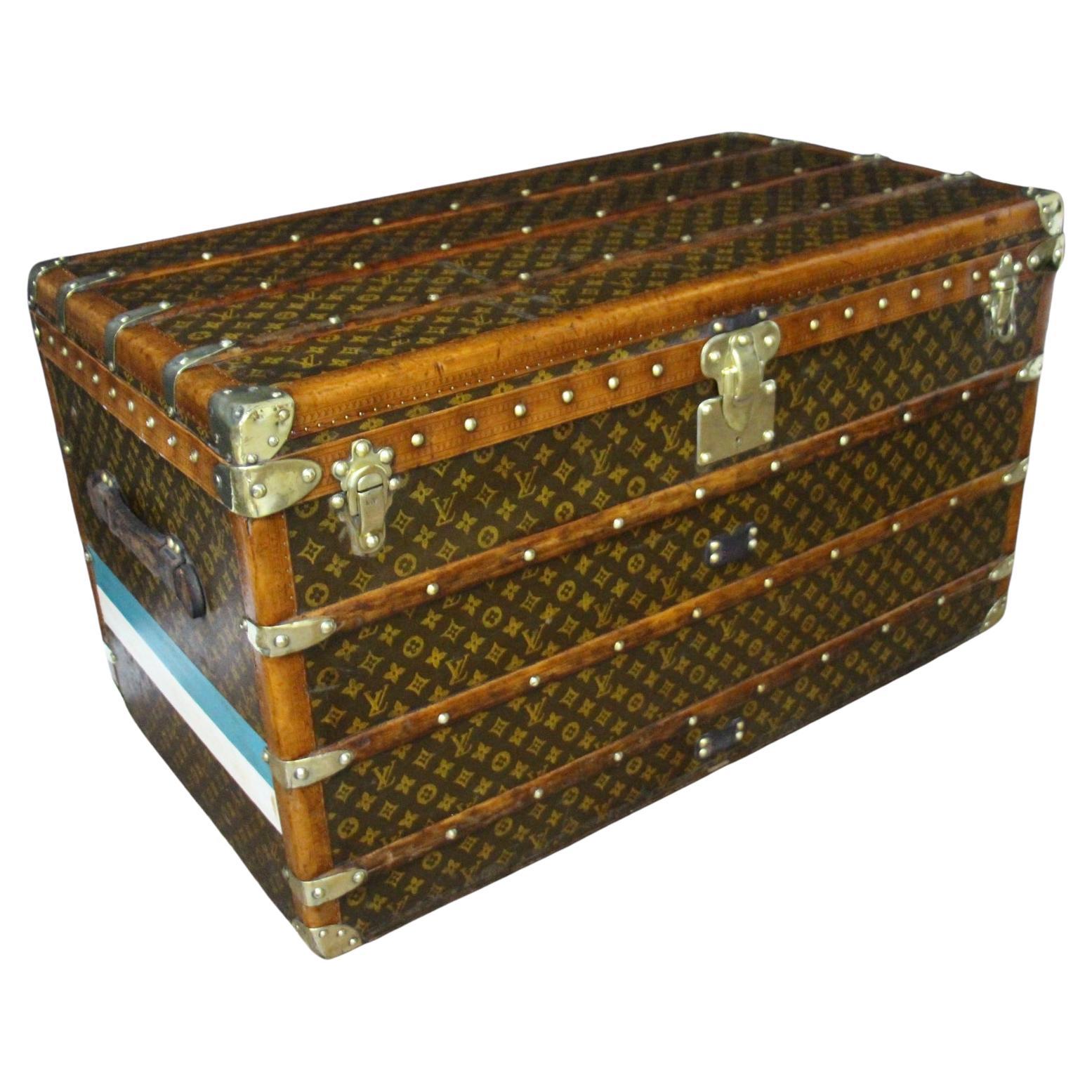
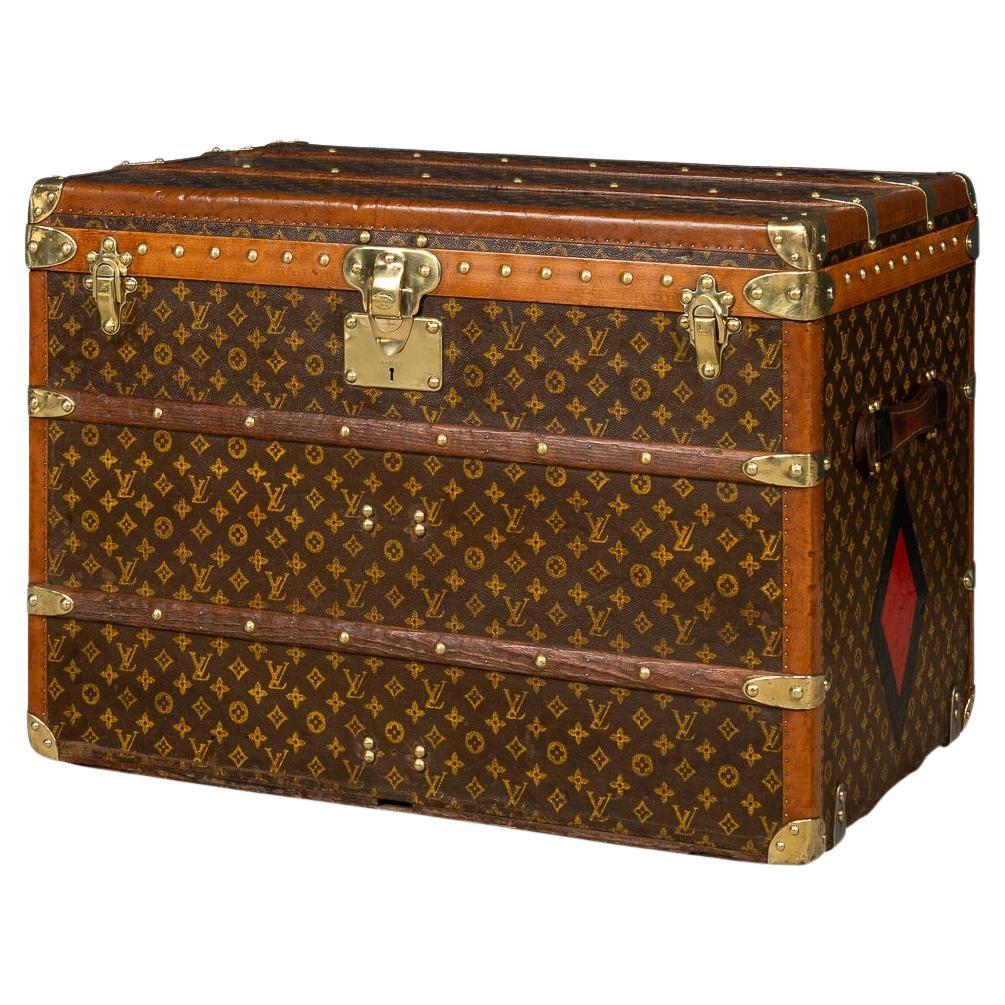
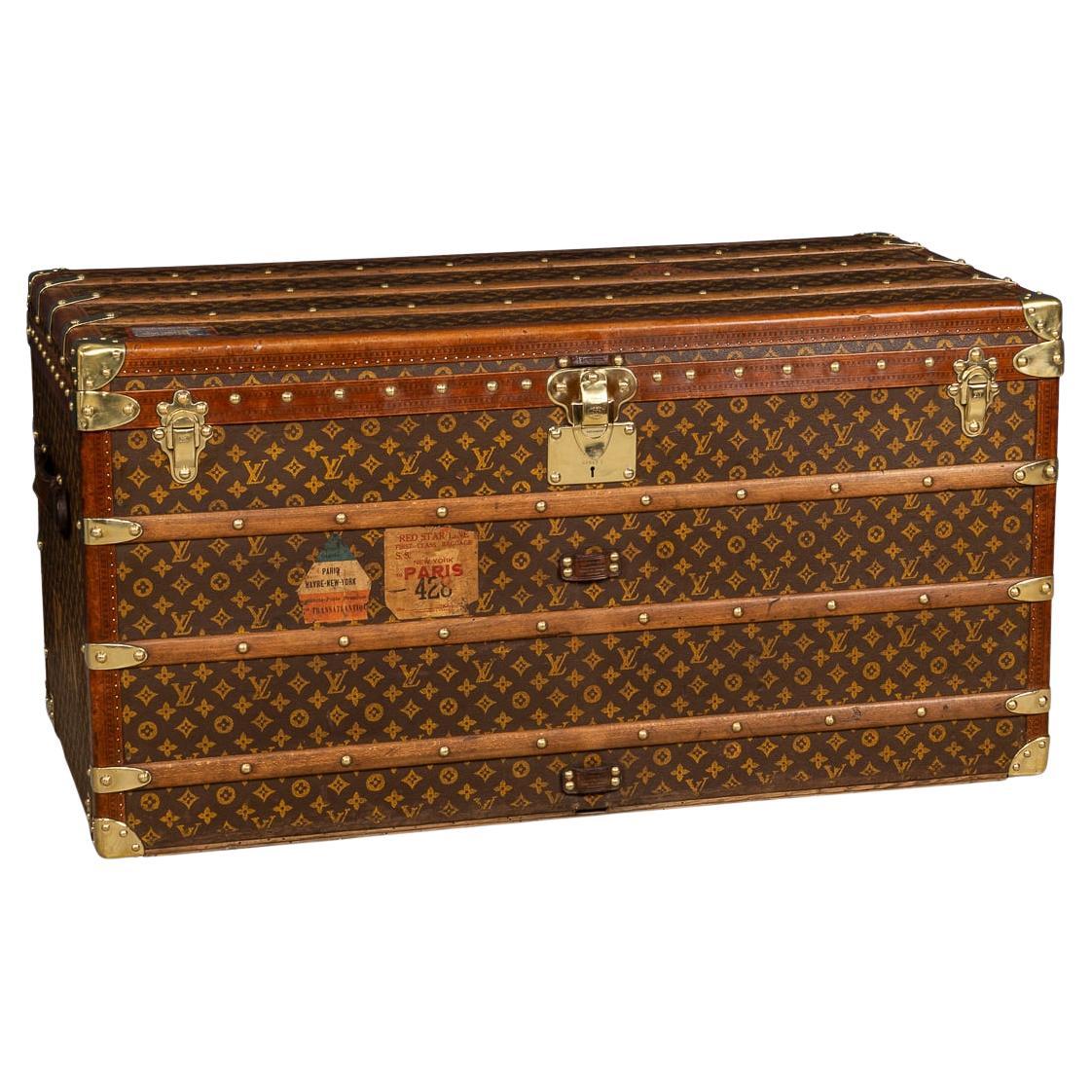
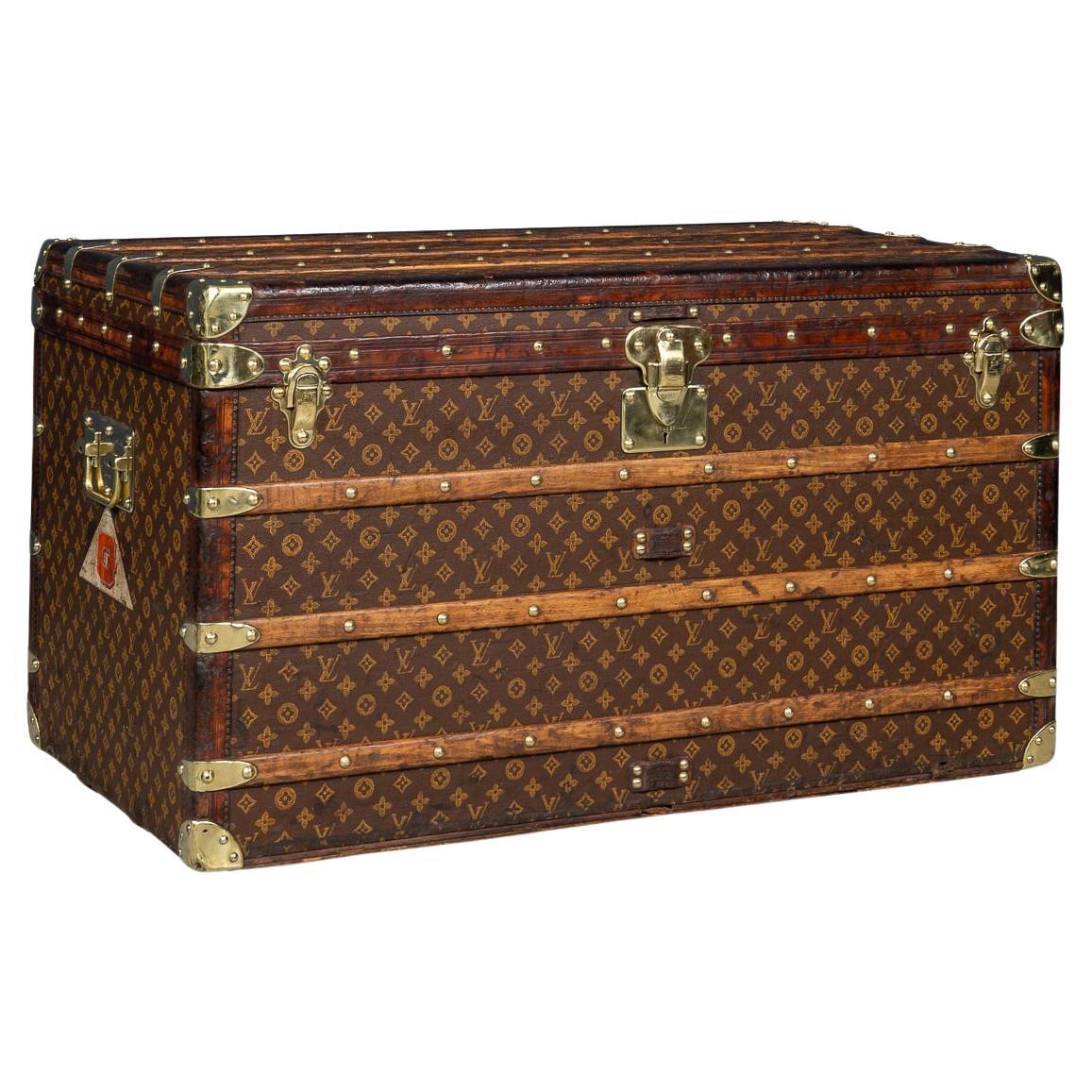
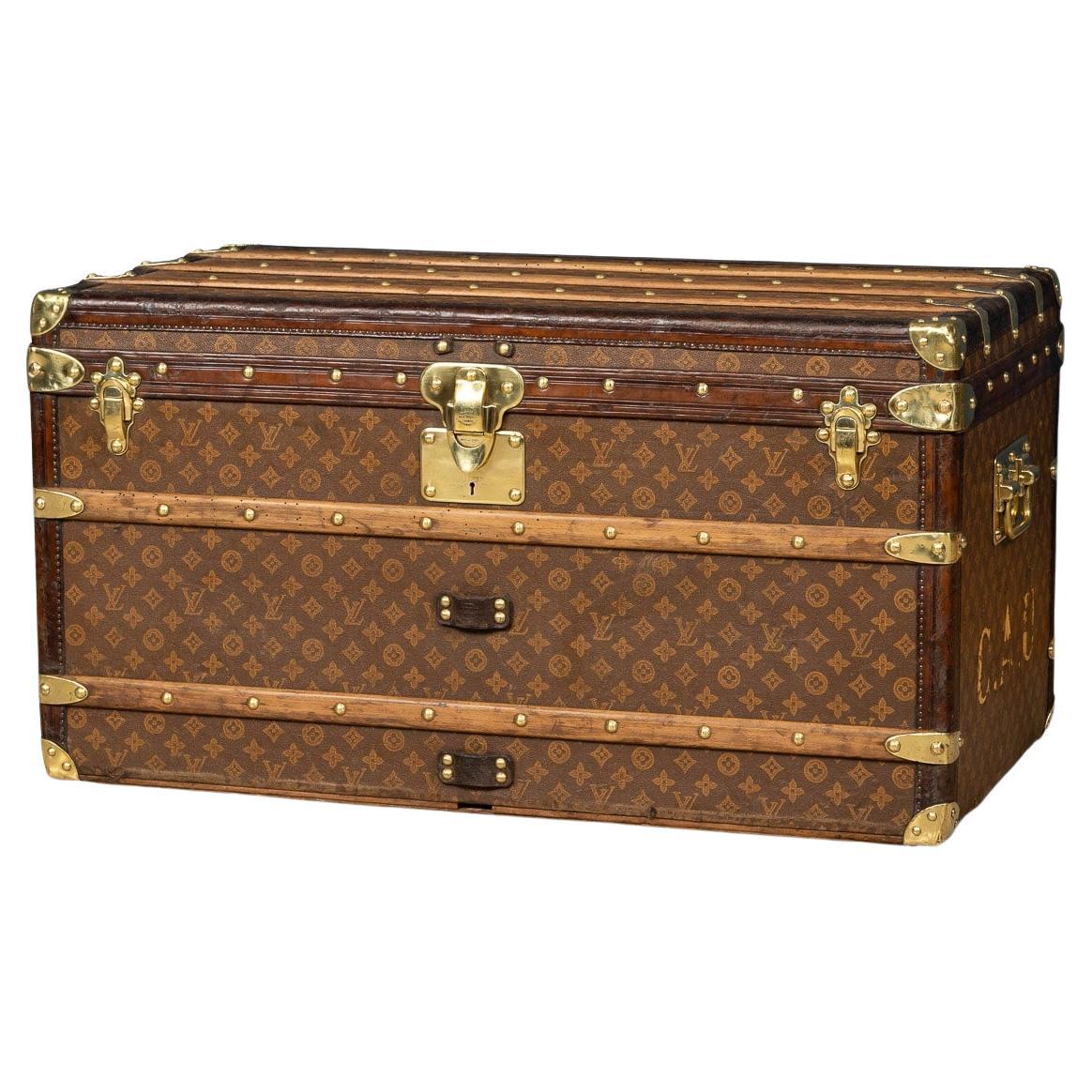
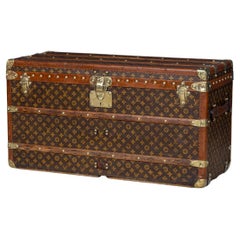
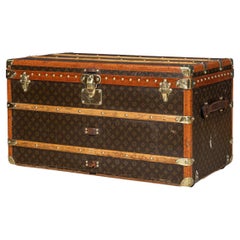
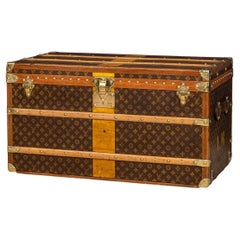
A Louis Vuitton Monogram canvas trunk, dating from the early 20th century, retaining its original fittings and presenting as a remarkably complete example of one of the House’s most enduring designs. Executed in the celebrated Monogram canvas with lozine trim, brass lock and protective mounts, the trunk exemplifies the exceptional craftsmanship and innovation that established Louis Vuitton as the pre-eminent maker of luxury luggage. Conceived during the golden age of travel, trunks of this type accompanied an international clientele for whom elegance and practicality were inseparable. Their flat-top construction, pioneered by Louis Vuitton in the late 19th century, represented a significant advancement in luggage design, allowing trunks to be stacked efficiently during rail and ocean voyages while maintaining the refined aesthetic for which the Maison became renowned. Adding considerably to its individuality, the trunk retains its original period travel markings, including a boldly painted red St Andrew’s Cross motif across the lid and a black letter ‘T’ within a white roundel to one end. Together with the remnants of historic luggage labels, including one for Belfast, these evocative details bear witness to the trunk’s extensive travels and provide an engaging glimpse into its working life during the great age of steamship and railway travel. Today, the Louis Vuitton trunk occupies a place beyond its original purpose, equally prized as an object of design and as a functional furnishing. Its sculptural form, rich patina and authentic travel markings lend themselves effortlessly to both traditional and contemporary interiors, where it serves as a distinguished coffee table, occasional table or decorative centrepiece. Possessing both historical significance and enduring visual appeal, it remains one of the most recognisable and desirable icons of early 20th-century design. Dimensions: L: 110cm W: 55cm H: 34 cm
  • Designer:
  • Brand:
  • Dimensions:
    Height: 13.39 in (34 cm)Width: 21.66 in (55 cm)Length: 43.31 in (110 cm)
  • Period:
  • Condition:
    Wear consistent with age and use.
  • Seller Location:
    Daventry, GB
  • Reference Number:
    1stDibs: LU4343230079922

More From This Seller

View All
Louis Vuitton Pigskin Bottle box C1900

Louis Vuitton Pigskin Bottle box C1900

By Louis Vuitton

Located in Daventry, GB

A rare Louis Vuitton vintage pigskin covered bottle box, housing three crystal bottles complete with their original screw on stoppers. Each stopper features silver plated brass mount...

Category

Early 1900s French Trunks and Luggage

Louis Vuitton Wardrobe trunk C.1920

Louis Vuitton Wardrobe trunk C.1920

By Louis Vuitton

Located in Daventry, GB

This circa 1910 Louis Vuitton Wardrobe Trunk represents the pinnacle of luxury travel during the latter end of the Belle Époque. Complete with its original fitted interior, 15 hanger...

Category

1920s Trunks and Luggage

You May Also Like

20th Century Louis Vuitton Trunk, France c.1930

20th Century Louis Vuitton Trunk, France c.1930

By Louis Vuitton

Located in Royal Tunbridge Wells, Kent

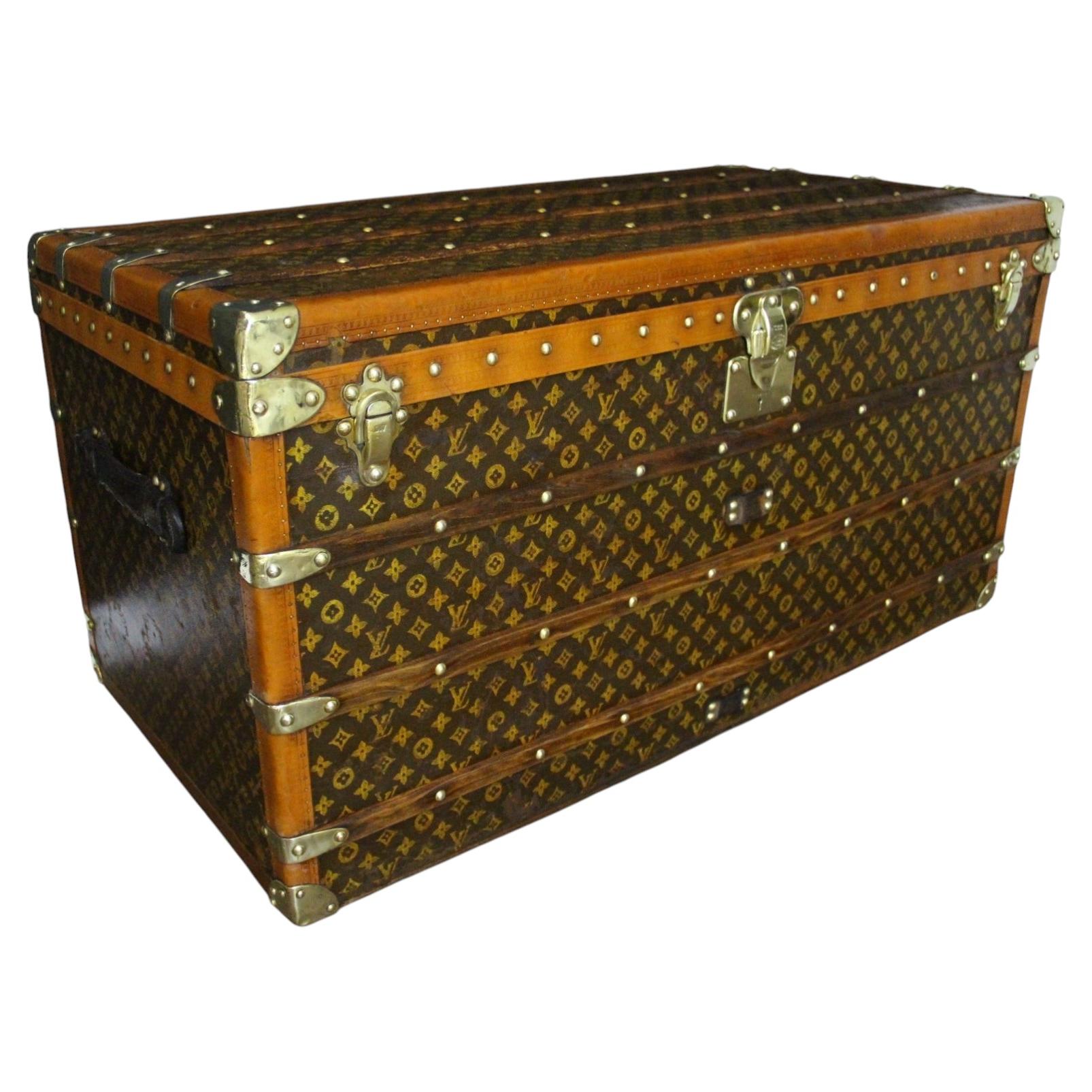
An exquisite and complete Louis Vuitton trunk from the early part of the 20th century. An absolutely essential item for elite travellers of its time the trunk is adorned in the iconic LV monogrammed canvas, accented by lozine trim and brass fittings. This trunk stood as the epitome of luxury over 100 years ago, boasting an unparalleled level of sophistication and elegance, it remains a timeless masterpiece that transcends eras. The captivating allure of the Louis Vuitton trunk transforms it into more than a mere luggage accessory; it becomes a focal point for any room. With its impressive dimensions, it is perfectly suited as a striking coffee table, side table, or even as a standalone centrepiece, seamlessly integrating into any interior, whether modern or traditional. An extraordinary piece that not only pays homage to the past but also serves as a statement of unparalleled luxury in the present. A brief history about Louis Vuitton trunks: Louis Vuitton was born in 1821 to a farmer and milliner and came from a long-established working-class family in eastern France. Vuitton grew up understanding the effects of perseverance and a strong work ethic from watching his family. At the age of 16, he made the decision to walk 292 miles from his hometown to Paris to try and make a new life for himself. When he arrived the city was in the midst of industrialization with current modes of transportation evolving quickly allowing for longer journeys. With this came the need for sturdy travel pieces. Vuitton was taken as an apprentice for a successful box maker and packer named Monsieur Marechal. He learned to craft durable containers and how to pack them properly – a well-respected profession at the time.In 1854, years after he had mastered his craft and became well respected for it, Vuitton ventured out on his own to open a shop on Rue Neuve des Capucines. It was here that he began to establish himself as a luggage maker. Then, in 1858, Vuitton designed the first Louis Vuitton steamer trunk. At the time trunks had rounded tops to allow for water to run off but this did not allow for convenient stowage. Vuitton introduced a flat, yet waterproof, trunk that was easily stackable. The first of his trunks were outfitted with a grey canvas referred to as Trianon – it wouldn’t be until several decades later that the signature monogram would be introduced. With a burgeoning business, Vuitton moved his family and workplace to Asniere, where he employed twenty workers to craft his trunks. By 1900 he would have 100 employees, and in 1914 the company would more than double in size. After years of success, Vuitton began to experiment with the design of his luggage by introducing a new striped canvas pattern (1876) and later the still well-known Damier print (1888). The hand-painted patterns were developed to prevent counterfeits. Even in the late 1800s, Louis Vuitton was enough of a status symbol to warrant counterfeiting. In 1886, his son George invented and patented an ingenious locking system that made it impossible to pick the lock of their trunks. This lock is still used today. 1892 would prove to be a time of mourning for the family as Louis Vuitton passed...

Category

20th Century French Other Trunks and Luggage

Materials

Brass

20th Century Louis Vuitton Shoe Trunk, France c.1930

20th Century Louis Vuitton Shoe Trunk, France c.1930

By Louis Vuitton

Located in Royal Tunbridge Wells, Kent

A magnificent and exceptionally rare Louis Vuitton shoe trunk, adorned with stencilled monogram canvas, lozine trim and brass fittings. Elevating its uniqueness is the remarkably unc...

Category

20th Century French Other Trunks and Luggage

Materials

Brass

20th Century Louis Vuitton Trunk In Monogram Canvas, France c.1930

20th Century Louis Vuitton Trunk In Monogram Canvas, France c.1930

By Louis Vuitton

Located in Royal Tunbridge Wells, Kent

An exquisite and complete Louis Vuitton trunk from the early part of the 20th century. An absolutely essential item for elite travellers of its time the trunk is adorned in the iconic LV monogrammed canvas, accented by lozine trim and brass fittings. This trunk stood as the epitome of luxury over 100 years ago, boasting an unparalleled level of sophistication and elegance, it remains a timeless masterpiece that transcends eras. The captivating allure of the Louis Vuitton trunk transforms it into more than a mere luggage accessory; it becomes a focal point for any room. With its impressive dimensions, it is perfectly suited as a striking coffee table, side table, or even as a standalone centrepiece, seamlessly integrating into any interior, whether modern or traditional. An extraordinary piece that not only pays homage to the past but also serves as a statement of unparalleled luxury in the present. A brief history about Louis Vuitton trunks: Louis Vuitton was born in 1821 to a farmer and milliner and came from a long-established working-class family in eastern France. Vuitton grew up understanding the effects of perseverance and a strong work ethic from watching his family. At the age of 16, he made the decision to walk 292 miles from his hometown to Paris to try and make a new life for himself. When he arrived the city was in the midst of industrialization with current modes of transportation evolving quickly allowing for longer journeys. With this came the need for sturdy travel pieces. Vuitton was taken as an apprentice for a successful box maker and packer named Monsieur Marechal. He learned to craft durable containers and how to pack them properly – a well-respected profession at the time.In 1854, years after he had mastered his craft and became well respected for it, Vuitton ventured out on his own to open a shop on Rue Neuve des Capucines. It was here that he began to establish himself as a luggage maker. Then, in 1858, Vuitton designed the first Louis Vuitton steamer trunk. At the time trunks had rounded tops to allow for water to run off but this did not allow for convenient stowage. Vuitton introduced a flat, yet waterproof, trunk that was easily stackable. The first of his trunks were outfitted with a grey canvas referred to as Trianon – it wouldn’t be until several decades later that the signature monogram would be introduced. With a burgeoning business, Vuitton moved his family and workplace to Asniere, where he employed twenty workers to craft his trunks. By 1900 he would have 100 employees, and in 1914 the company would more than double in size. After years of success, Vuitton began to experiment with the design of his luggage by introducing a new striped canvas pattern (1876) and later the still well-known Damier print (1888). The hand-painted patterns were developed to prevent counterfeits. Even in the late 1800s, Louis Vuitton was enough of a status symbol to warrant counterfeiting. In 1886, his son George invented and patented an ingenious locking system that made it impossible to pick the lock of their trunks. This lock is still used today. 1892 would prove to be a time of mourning for the family as Louis Vuitton passed...

Category

20th Century French Other Trunks and Luggage

Materials

Brass

20th Century Louis Vuitton Courier Trunk In Monogram Canvas, France c.1930

20th Century Louis Vuitton Courier Trunk In Monogram Canvas, France c.1930

By Louis Vuitton

Located in Royal Tunbridge Wells, Kent

Around the turn of the 19th and 20th century Louis Vuitton had established himself as a market leader in trunk making and needed to set his now famous brand apart from the imitators ...

Category

20th Century French Other Trunks and Luggage

Materials

Brass

Louis Vuitton Trunk 1913

Louis Vuitton Trunk 1913

By Louis Vuitton

Located in palm beach, FL

Exceptional Louis Vuitton wardrobe trunk features stenciled monogram canvas; brown loziné LV stamped solid brass locks and studs. Customized yellow and black stripes give a lot of ch...

Category

Early 20th Century French Trunks and Luggage

Materials

Bronze

20th Century Louis Vuitton Trunk In Monogram Canvas, France, c.1900

20th Century Louis Vuitton Trunk In Monogram Canvas, France, c.1900

By Louis Vuitton

Located in Royal Tunbridge Wells, Kent

Gorgeous and most importantly complete, this early 20th century Louis Vuitton trunk was the must have item of any elite traveller. Covered in the world famous LV monogrammed canvas, ...

Category

20th Century French Trunks and Luggage

Materials

Brass