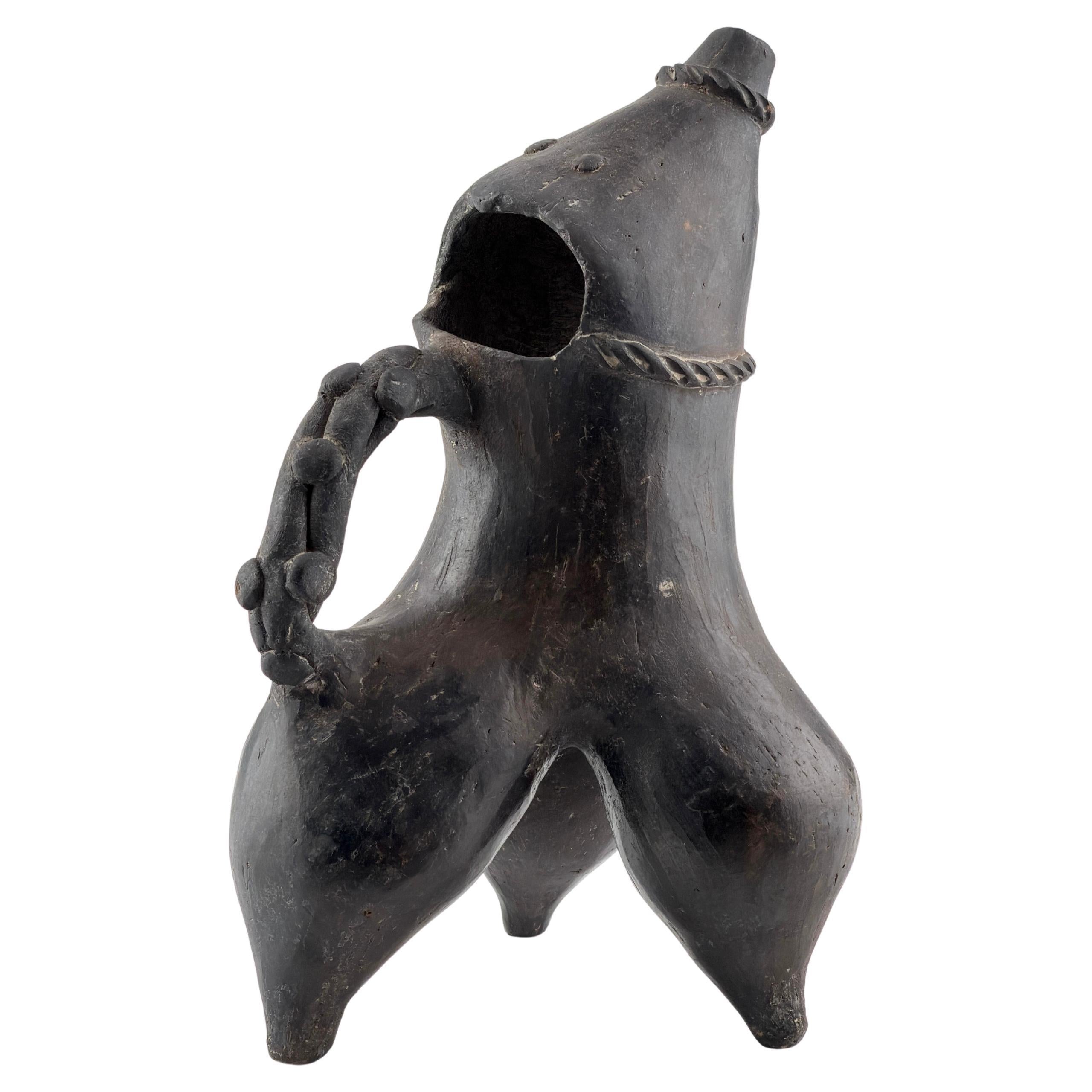
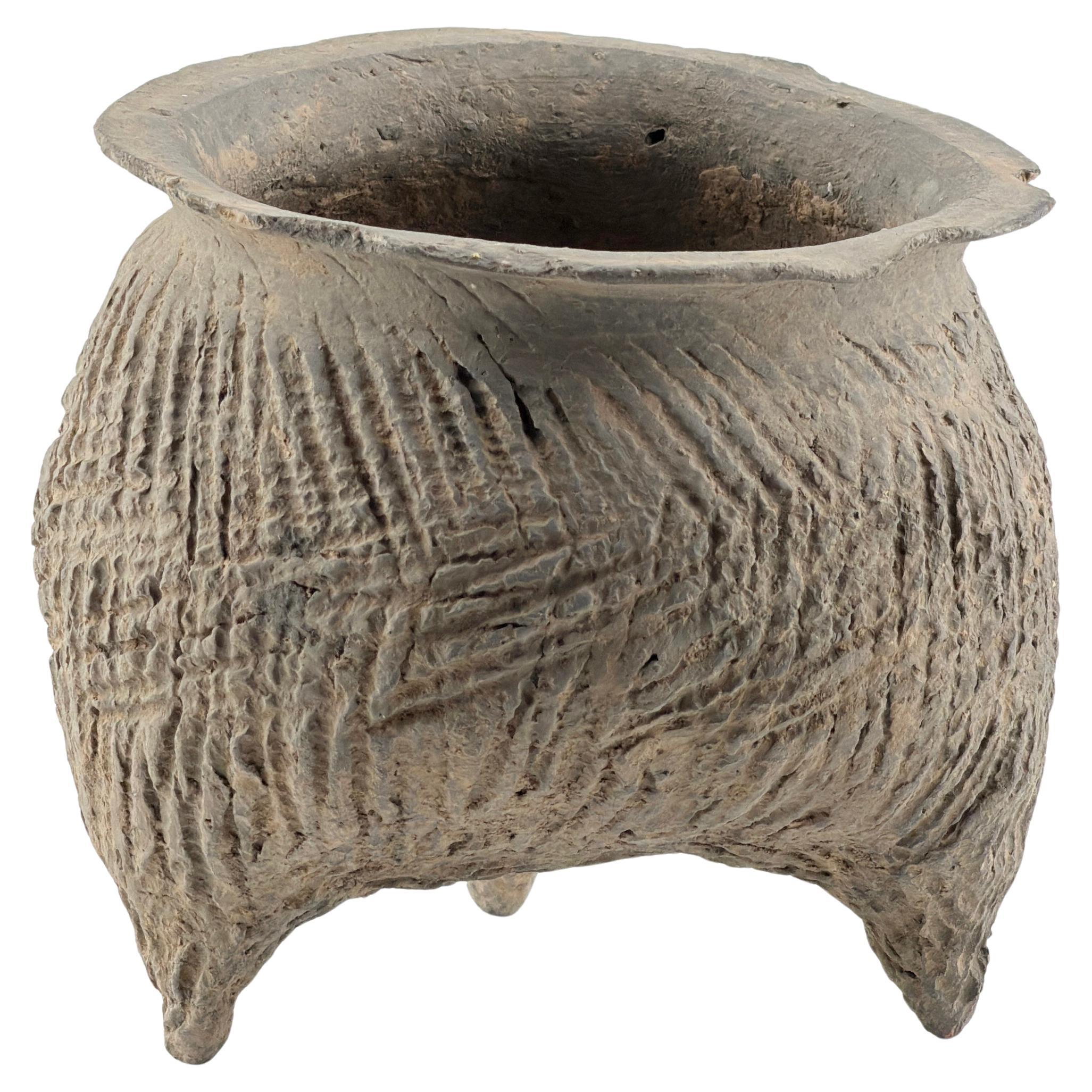
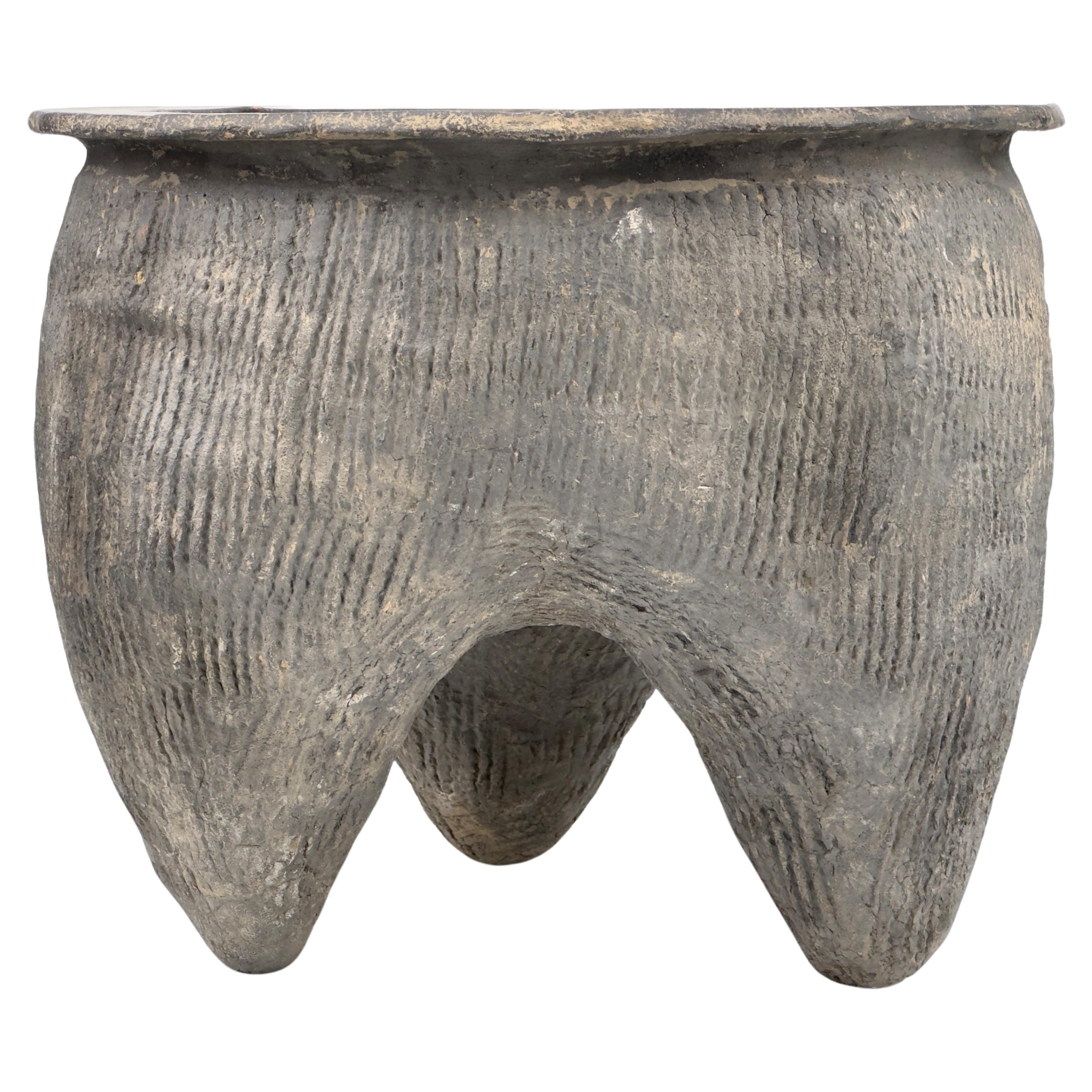
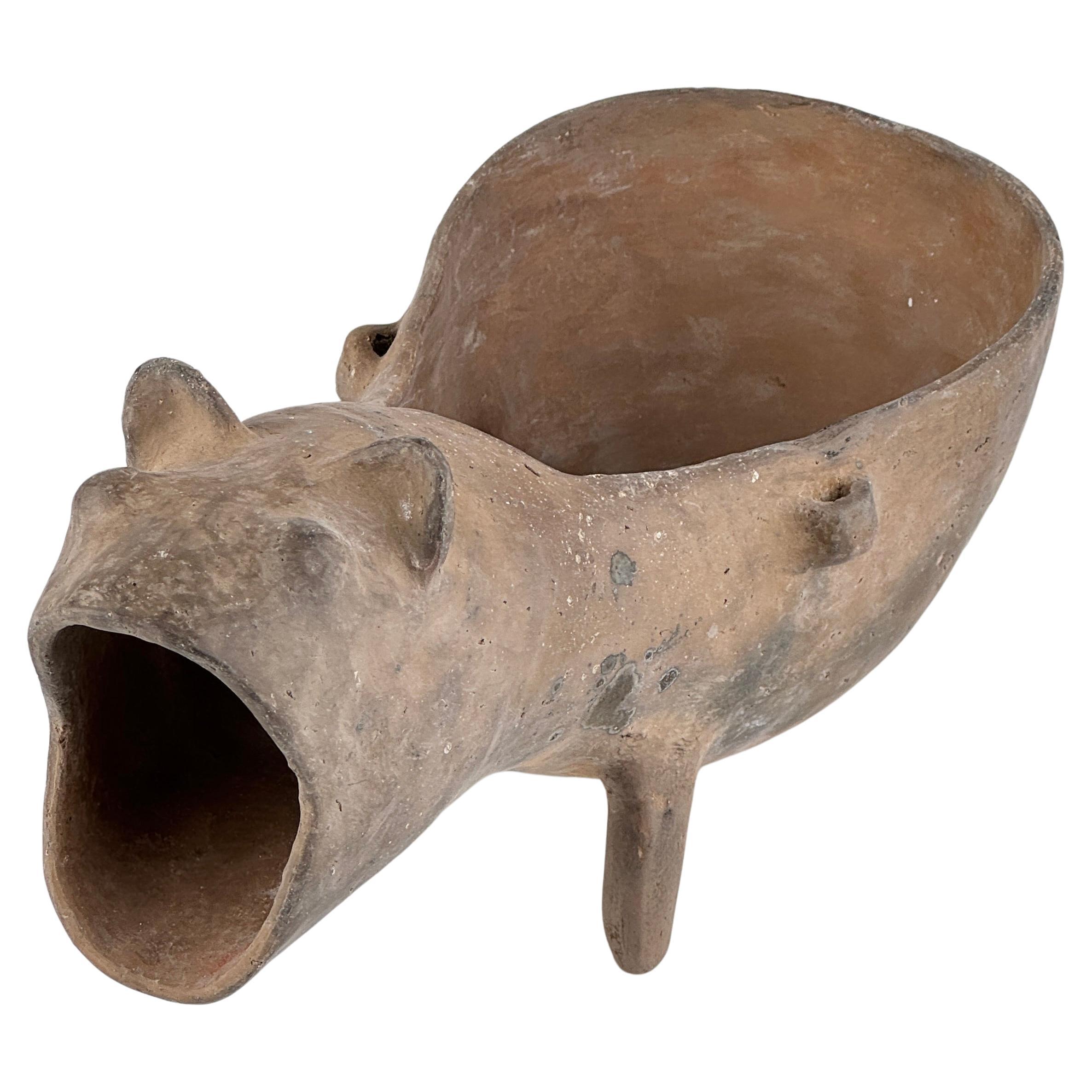
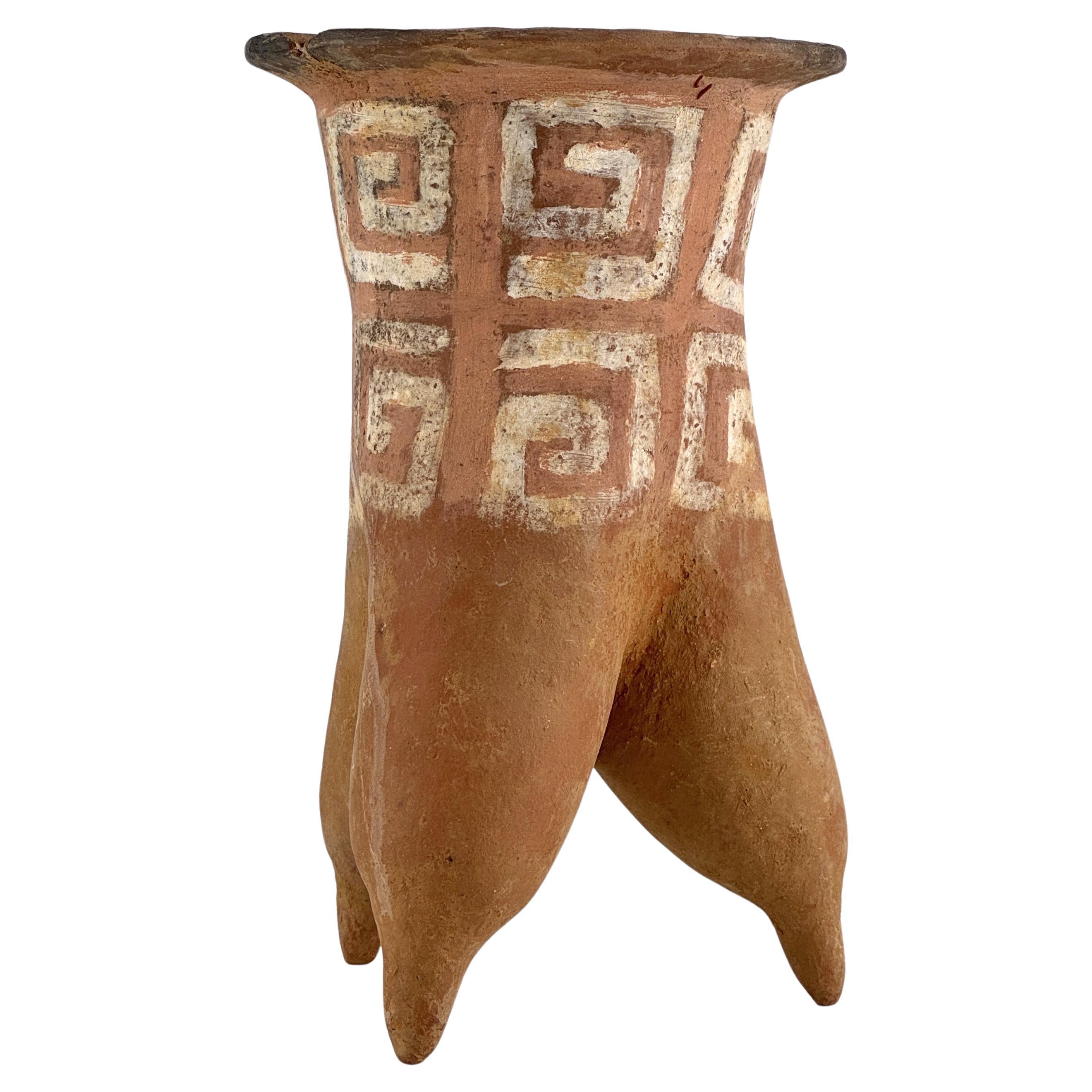
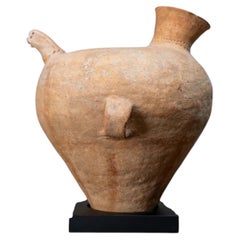
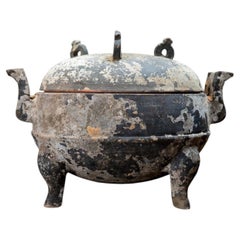
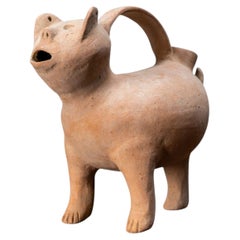
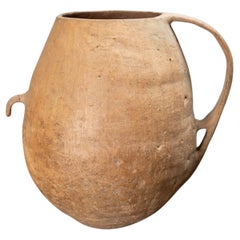
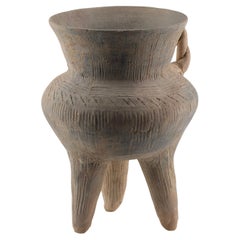
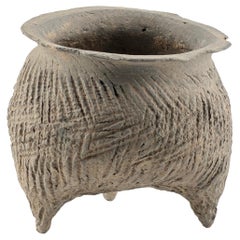
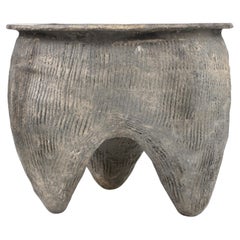
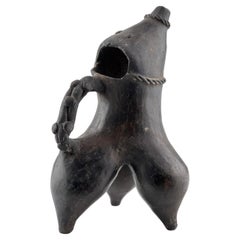
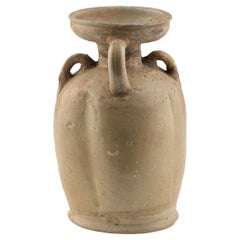
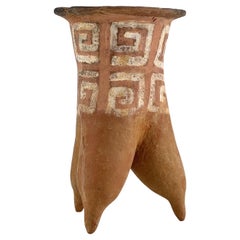
Dawenkou–Longshan Culture, Shandong Province, China, c. 3000–2000 BCE
Terracotta tripod vessel known as a Gui (鬶), representing one of the earliest ritual ceramic forms developed in Neolithic China. Characterized by its elevated tripod structure and sculptural silhouette, vessels of this type were associated with ceremonial practice, ancestral offerings, and elite burial traditions rather than daily domestic use. This ewer has a large spout, bubous legs and a pie crust band around the center. Originating within the Dawenkou and Longshan cultural periods, the form reflects the emergence of social hierarchy and increasingly sophisticated ritual systems in prehistoric China. The unglazed "white ware" earthen surface preserves the tactile qualities of hand-built pottery, emphasizing both technical refinement and spiritual significance.
Provenance: The John D. Nichols collection of ancient Chinese tomb pottery.
About The Collection
The John D. Nichols Collection includes over two hundred pieces of terra cotta pottery and bronzes spanning the period between 2000 BCE and 1000 CE, mostly from archeological sites in Northern China. The pieces are very diverse, including vessels, human figures, animals, architectural models, and ritual objects. All were buried for the afterlife, their locations forgotten over thousands of years. As China developed in the 1990’s and early 2000’s, large new buildings were erected in the oldest inhabited areas, requiring deep excavations. Many of these construction sites yielded ancient artifacts. Frenzied global interest followed, with excavated pieces first heading to Hong Kong and eventually to collectors in Paris, New York and Chicago. Legal restrictions followed and by 2009, importation to the US was all but banned by treaty. Ancient Chinese pottery is now rarely seen outside of museums.
The Collector
John Nichols was a renaissance man. He was born in Shanghai, where his father, John Sr., was Director of the International Red Cross for China, India and Burma during World War II. Later, John returned to the US and studied at Harvard and Harvard Business School before starting his corporate career. That included time at ITT, Aerojet General and extensive work for Ford Motor Company, where he was Program Manager for building the NASA manned Spacecraft Center in Houston. After this, he was CEO of the Illinois Tool Works, retiring after 16 years and leading the firm to exceptional growth. He was subsequently admitted to the Chicago National Business Hall of Fame. In 2002, he became CEO of Marmon Group, which managed some of the Pritzker family’s global business holdings. Under John’s leadership, the firm was sold to Berkshire Hathaway in 2007.
John was also a philanthropic leader, elected to the Board of Overseers of Harvard University in 1994 and serving until 2000. He was Chair of the Board of Trustees of The Art Institute of Chicago in the late 1990’s, supporting the groundwork for opening the Modern Wing in 2009. He and his wife Alexandra donated the architecturally acclaimed Nichols Bridgeway, which connects the museum to Millenium Park, as well as the Board of Trustees Suite. John was Chair of the North Lawndale Charter School, and trustee of UCAN, also in North Lawndale, which has helped youth and families for 150 years.
John began to collect Chinese tomb pottery in the 1980’s on his business trips abroad. His collecting began first in Hong Kong, Beijing and Shanghai, and then through European and American dealers, including The Golden Triangle. His collection is unusually diverse, with notable concentrations in the Neolithic and Han periods. The pieces were chosen from the widest possible selection pool, and many are quite unusual and important examples of their kind.
*****PIECE WILL BE AVAILABLE FOR SHIPPING AFTER JULY 30TH, 2026 UNTIL THE EXHIBITION IS OVER.