Want more images or videos?
Request additional images or videos from the seller
1 of 16

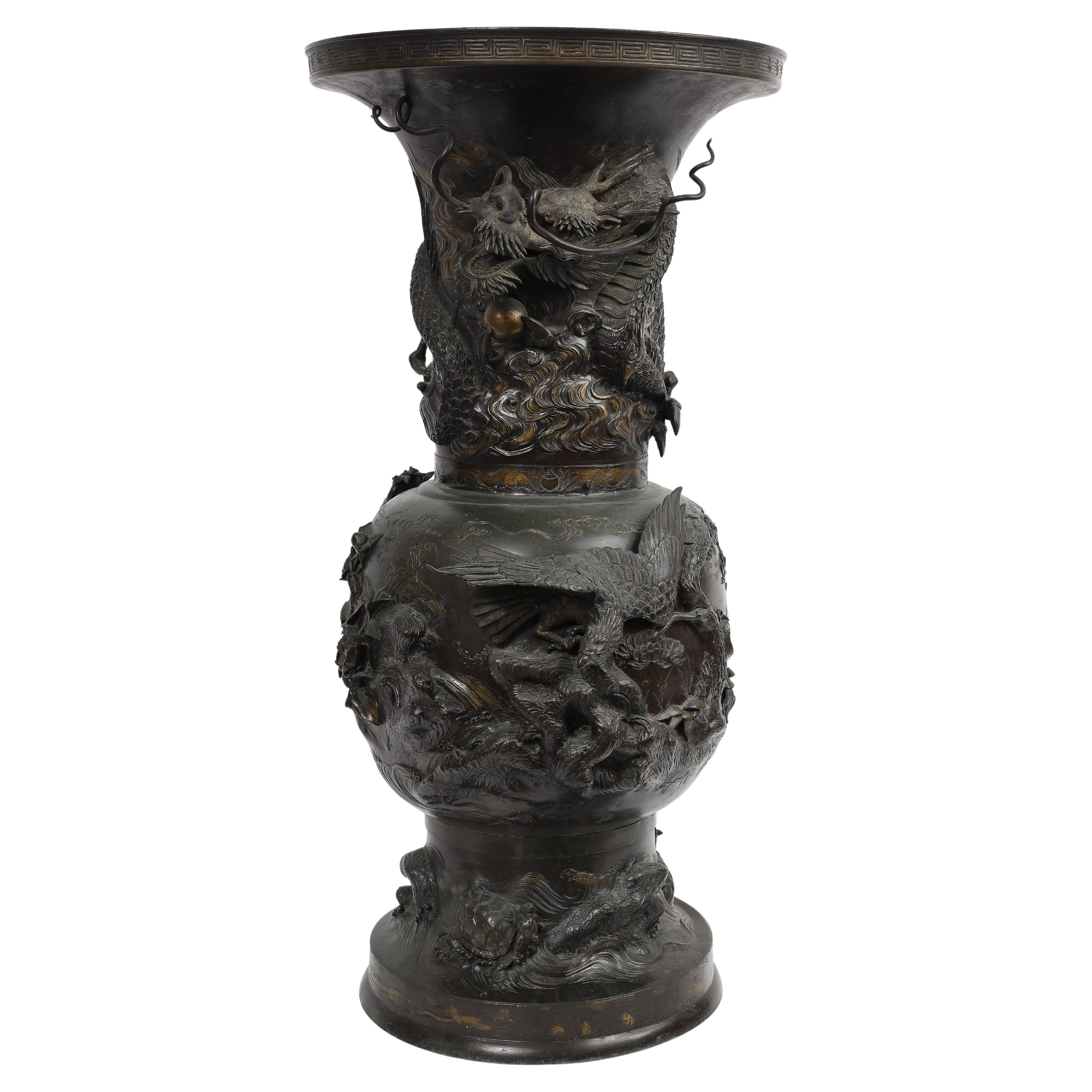
Japanese Silver Inlay Samuraï and Dragon Vase, Japan, 19th Century

$13,032.02
£9,641.21
€11,000VAT Included
CA$18,036.97
A$18,100.04
CHF 10,556.16
MX$220,074.41
NOK 121,300.78
SEK 124,751.66
DKK 83,875.42

About the Item

Beautiful and rare Japanese vase from the 19th century. Superb silver inlay work showcasing a Samuraï fighting off a serpentine dragon with an additional dragon on top of the lid. Additional detailed decorations of chrysanthemums and lily motifs. This vase was part of the collection of Marechal Niel, close confident of Napoleon the 3rd. Some signs of use on the surface. Lid and handles are removable. Possible ancient alterations that were made in the 19th/early 20th century. Dimensions in cm ( H x D ) : 42 x 32.5 Adolphe Niel (4 October 1802 – 13 August 1869) was a French Army general and statesman. He was born at Muret, Haute-Garonne and entered the École Polytechnique in 1821. Niel entered the engineer school at Metz, became lieutenant in the Engineers Corps in 1827, and captain in 1833. He fought in the French conquest of Algeria, participating in the storming of Constantine. There Niel led the engineer detachment with one of the storming parties, and his conduct gained for him the rank of chef de bataillon in 1837. Niel was promoted to lieutenant colonel in 1840 and to colonel in 1846. His next war service was as chief of staff to General Vaillant during the 1849 siege of Rome, after which he was made general of brigade and director of engineer services at headquarters. In 1851, Niel became a member of the Committee of Fortifications. He became a member of the council of state in 1852 and in 1853 was promoted to general of division. In the first part of the Crimean War, Niel was employed in the expedition to the Baltic Sea and directed engineering operations against Bomarsund. Early in 1855 Niel was sent to the Crimea, where he succeeded General Michel Bizot as chief of engineers. For some years Niel had been the most trusted military adviser of Napoleon III, and he was now empowered to advise the generals on the spot in accordance with the wishes of the sovereign and the home government. Niel managed to carry out this delicate and difficult task with as much success as could be expected, and he directed siege operations at the Battle of Malakoff. His reward was the grand cross of the Légion d'honneur. From 1855 to 1859 Niel was employed at headquarters and also served in the French Senate. In the war against the Austrians, Niel commanded the IV Corps and took part in the Battle of Magenta and the Battle of Solferino. Niel was made a marshal of France on the field at Solferino. After he served for some years in a home command, Niel became minister of war and held the position from 1867 to 1869. In this capacity he drafted and began to carry out a far-reaching scheme of army reform, based on universal service and the automatic creation of large reserves which needed only time to mature. Under his system, those men who had purchased exemption from conscription into the army would nonetheless be called up into a new service, the Garde Mobile. He also was able to rearm the whole of the army with the chassepot rifle, but not the Garde Mobile. He did not live to complete the development of his system. Niel died in Paris during an operation for a bladder stone, and a year later the Franco-Prussian War destroyed the old imperial army upon which the new formations were to have been grafted. (Wikipedia)
  • Dimensions:
    Height: 16.54 in (42 cm)Diameter: 12.8 in (32.5 cm)
  • Materials and Techniques:
  • Place of Origin:
  • Period:
  • Date of Manufacture:
    19th Century
  • Condition:
    Additions or alterations made to the original: While two experts have seen this vase and have not mentioned any alterations, in my opinion, it seems like the handles were added in the 19th century and some modifications may have occurred though they are definitely ancient. Wear consistent with age and use. Minor fading.
  • Seller Location:
    PARIS, FR
  • Reference Number:
    1stDibs: LU8131233073972

More From This Seller

View All
Incense Burner, Japan, 19th Century

Incense Burner, Japan, 19th Century

Located in PARIS, FR

Beautiful incense burner in the shape of a straw basket with a praying mantis sitting on top. Bronze, Japan 19th century. Good condition, oxidation, one leg missing from the prayi...

Category

Antique Mid-19th Century Japanese Meiji Urns

Materials

Bronze

Attributed, Val St-Lambert, Empire Style Vase, 19th Century

Attributed, Val St-Lambert, Empire Style Vase, 19th Century

By Val Saint Lambert

Located in PARIS, FR

Superb and large empire style vase attributed to the Val Saint Lambert manufacture, 19th century Belgium. Openwork of gilt bronze in arches and wreat...

Category

Antique Mid-19th Century Belgian Empire Vases

Materials

Crystal, Bronze

Han Dynasty, Green-Glazed Hu Vase Taotie Mask Handles, China (202 BCE – 220 AD)

Han Dynasty, Green-Glazed Hu Vase Taotie Mask Handles, China (202 BCE – 220 AD)

Located in PARIS, FR

An impressive Chinese pottery Hu vase, Han Dynasty (206 BC – 220 AD). The pear-shaped body rises from a rounded base to a waisted neck with an everted, galleried rim, and is banded b...

Category

Antique 15th Century and Earlier Chinese Han Vases

Materials

Ceramic

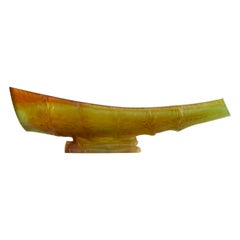
Emilio Robba for Daum, Bamboo Vase, France 2000s

Emilio Robba for Daum, Bamboo Vase, France 2000s

By Emilio Robba, Daum

Located in PARIS, FR

Beautiful bamboo vase by Emilio Robba for the Daum Maison, France 2000s. Signed by the artist and manufacture. In very good condition, in its original box, the box has some wear. Dimensions in cm ( H x L x l ) : 6.8 x 21 x 6 Secure shipping The collaboration between Emilio Robba and the prestigious glassworks Daum is an exquisite fusion of two distinct artistic worlds, uniting the delicacy of nature captured by Robba and Daum's legendary expertise in crafting exceptional glass pieces. Emilio Robba, renowned for his talent in capturing natural beauty through his floral creations, brings his refined aesthetic and artistic sensitivity to this unique collaboration. His ability to transform nature into timeless works of art finds new expression in the medium of glass. On the other hand, the glassworks Daum, with decades of experience and unmatched craftsmanship, breathes life into Emilio Robba's floral visions with unparalleled precision and mastery. Each piece created in collaboration reveals a perfect harmony between the delicacy of botanical forms and the crystalline transparency of glass. Together, Emilio Robba and Daum transcend the boundaries of traditional floral art...

Category

21st Century and Contemporary French Art Nouveau Vases
Materials

Glass

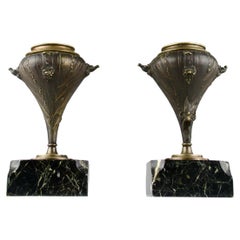
Leblanc Barbedienne, Candle Holders, Late 1800s France

Leblanc Barbedienne, Candle Holders, Late 1800s France

By F. Barbedienne Foundry

Located in PARIS, FR

Superb art deco candleholders by LeBlanc Barbedienne. Beautiful and intricate decorations of pigeons and swallows. In bronze and Portor black and white veined marble. France, Late 18...

Category

Antique Late 19th Century French Romantic Candlesticks

Materials

Marble, Bronze

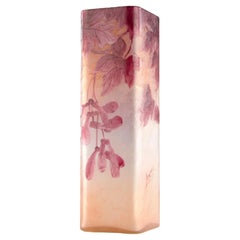
Legras, Square Etched Glass Maple Leaf and Samara Vase, French Art Nouveau 1900s

Legras, Square Etched Glass Maple Leaf and Samara Vase, French Art Nouveau 1900s

By François-Théodore Legras

Located in PARIS, FR

Beautiful pink and white acid etched vase with decorations of maple leaf and samara seeds by the French 1900s Art Nouveau Manufacture Legras. Signed in the vase. Very good condition...

Category

Antique Early 1900s French Art Nouveau Vases
Materials

Glass

You May Also Like

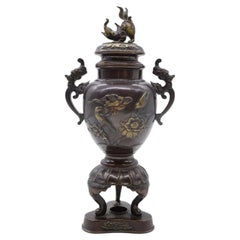
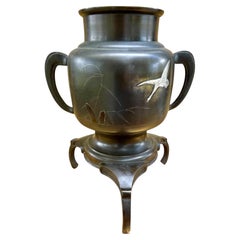
Japanese Bronze Koro with Dragon Handles and Gilt Decoration, Meiji Period

Japanese Bronze Koro with Dragon Handles and Gilt Decoration, Meiji Period

Located in Nottingham, GB

This elegant late 19th-century Japanese bronze incense burner (koro) is a finely cast decorative vessel, richly ornamented with gilt-highlighted reliefs of flowering plants and birds...

Category

Antique Late 19th Century Metalwork

Materials

Bronze

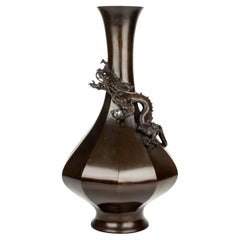
A Japanese bronze vase with Ryū dragon in relief, signed Maruki Sei

A Japanese bronze vase with Ryū dragon in relief, signed Maruki Sei

Located in Milano, IT

A Japanese bronze vase featuring a Ryū dragon in relief, depicted as it grasps the sacred Buddhist jewel (tama). Signed Maruki Sei in relief under the base, with a second engraved ...

Category

Antique Late 19th Century Japanese Metalwork

Materials

Bronze

Monumental Meiji Period Japanese Bronze Vase with Dragon & Phoenix, Pat & Gold

Monumental Meiji Period Japanese Bronze Vase with Dragon & Phoenix, Pat & Gold

Located in New York, NY

Monumental Japanese Meiji Period Bronze Vase with High Relief Dragon, Phoenix, Shishi and Turtles, two toned deep chocolate brown patina with gold highlights This palace size Japan...

Category

Antique Late 19th Century Meiji Vases

Materials

Bronze

Antique Japanese Bronze Usubata Vase – Meiji Period, Crane and Bamboo Inlay.

Antique Japanese Bronze Usubata Vase – Meiji Period, Crane and Bamboo Inlay.

Located in Vero Beach, FL

Antique Japanese Bronze Usubata Vase – Meiji Period, Crane and Bamboo Inlay. An exceptional piece of late 19th to early 20th-century Japanese craftsmanship, this antique Meiji-perio...

Category

Antique Late 19th Century Metalwork

Materials

Bronze

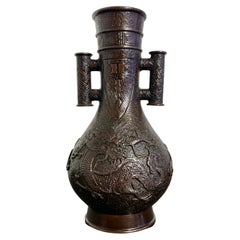
Chinese Bronze Dragon Vase with Arrow Handles, Qing Dynasty, 18th Century, China

Chinese Bronze Dragon Vase with Arrow Handles, Qing Dynasty, 18th Century, China

Located in Austin, TX

A well cast and powerful Chinese dragon bronze altar vase with arrow handles, Qing Dynasty, 18th century or earlier, China. The altar vase of bottle form, set on a high, splayed r...

Category

Antique 18th Century Chinese Qing Metalwork

Materials

Bronze

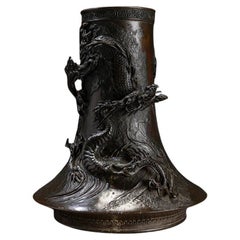
A dark-patinated bronze vase with a relief Ryu dragon

A dark-patinated bronze vase with a relief Ryu dragon

Located in Milano, IT

A monumental bronze vase with a dark brown patina, depicting a Ryu dragon in high relief. The vase has a cylindrical shape with a flared base reminiscent of Mount Fuji's profile. ...

Category

Antique Mid-19th Century Japanese Metalwork

Materials

Bronze