Want more images or videos?
Request additional images or videos from the seller
1 of 21

Antique Ceramics from the Giustiniani Family Collection by Angelo

$5,600
$7,00020% Off
£4,225.79
£5,282.2420% Off
€4,917.78
€6,147.2320% Off
CA$7,905.69
CA$9,882.1220% Off
A$7,933.33
A$9,916.6720% Off
CHF 4,626.82
CHF 5,783.5220% Off
MX$96,459.69
MX$120,574.6120% Off
NOK 53,166.72
NOK 66,458.4120% Off
SEK 54,679.26
SEK 68,349.0820% Off
DKK 36,763
DKK 45,953.7520% Off

About the Item

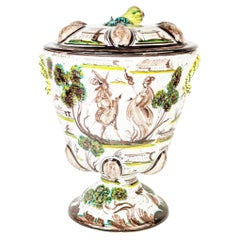
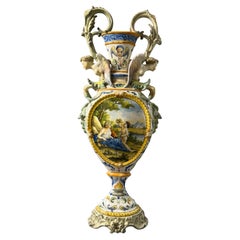
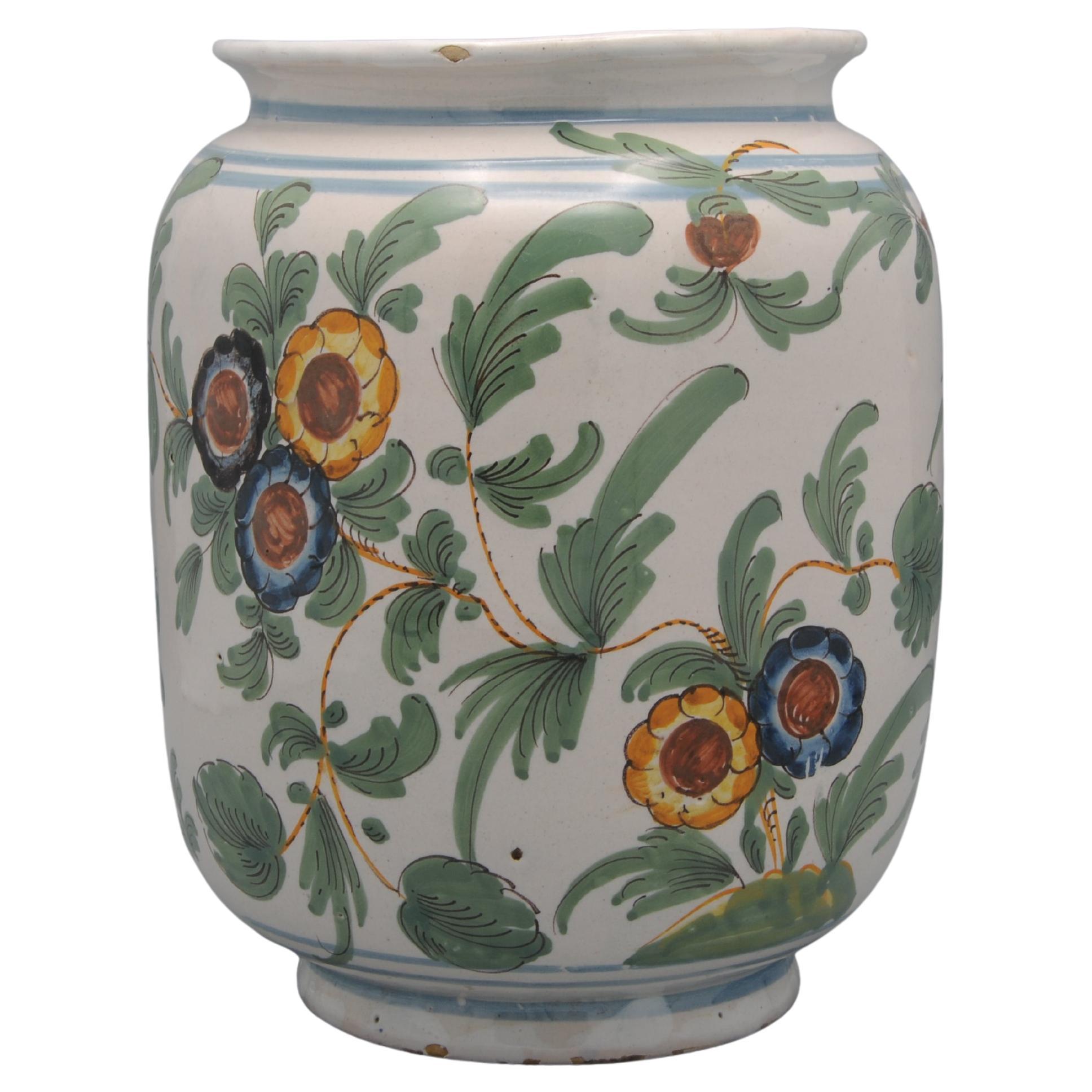
The Giustiniani family was one of the most important in ceramic production in Naples, particularly from the 17th to the 19th century. The Giustiniani manufactory is famous for its "riggiole" (decorative tiles), which included archeological themes and historical reproductions, such as the famous "Alexander Mosaic." After being a successful manufactory, Giustiniani was acquired by the Stingo family in the 19th century, who continued to expand the company and keep the ceramic tradition alive. The Giustiniani family also extended its activities to Cerreto Sannita, another important ceramics production center in Campania. Several family members, such as Antonio Giustiniani, worked to create pieces that are now considered valuable works of art. This vase is from Angelo Giustiniani, he was the son of Nicola Giustiniani, one of the key figures in this family of ceramists. He is the youngest of Nicola's seven children. Angelo later became a ceramic painter, and he was given the nickname "Angelo di Napoli" to distinguish him from another Angelo, who was the son of Paolo Giustiniani. The nickname helps to clarify the difference between the two individuals within the larger Giustiniani family, which had multiple generations involved in the ceramic arts. Angelo's contributions are significant within the context of the family's legacy in the world of Neapolitan ceramics, continuing the tradition of artistry that his father Nicola had established. The letters SPQR seen on the vase stand for "Senatus Populusque Romanus," which translates to "The Senate and the People of Rome." This phrase was a symbol of the Roman Republic and later the Roman Empire, representing the collective authority of the Senate (the governing body) and the Roman citizens (the people). It emphasized the unity and shared governance of Rome between the political elite (the Senate) and the general population. The acronym was used in various official documents, inscriptions, and monuments, and it remains a symbol of Rome and its historical significance. A rare opportunity to acquire exquisite pieces from the renowned Giustiniani family, celebrated for their craftsmanship in Neapolitan ceramics. These hand-painted masterpieces trace the legacy of Antonio, Nicola, and their descendants, including Angelo di Napoli, a distinguished ceramic artist in his own right. Whether you're a collector or an art enthusiast, these exceptional pieces embody centuries of tradition and artistry. Don't miss out on owning a piece of history. Vase signed "Angelo Giustiniani Napoli 1881".
  • Dimensions:
    Height: 27.56 in (70 cm)Diameter: 39.38 in (100 cm)
  • Materials and Techniques:
    Ceramic,Maiolica,Painted
  • Place of Origin:
  • Period:
  • Date of Manufacture:
    1881
  • Condition:
    Repaired: The inside had a split and it was enhanced in general. Wear consistent with age and use. Minor fading.
  • Seller Location:
    CABA, AR
  • Reference Number:
    1stDibs: LU5634242137242

More From This Seller

View All
Qing Dynasty Style Porcelain Celadon Enameled Vase, 19th Century

Qing Dynasty Style Porcelain Celadon Enameled Vase, 19th Century

Located in CABA, AR

This exquisite Chinese porcelain vase combines the subtle sophistication of the traditional celadon glaze with the decorative opulence of the famille rose palette. The soft jade-gree...

Category

Antique Mid-19th Century Chinese Porcelain

Materials

Porcelain
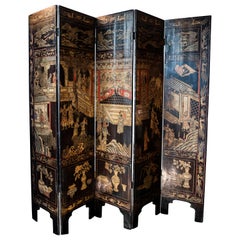
Exceptional 18th Century Venetian Lacquered Chinoiserie Bureau Cabinet

Exceptional 18th Century Venetian Lacquered Chinoiserie Bureau Cabinet

Located in CABA, AR

An exceptional Venetian lacquered bureau cabinet from the second half of the eighteenth century, richly decorated with hand-painted chinoiserie scenes on a shimmering gilt ground. T...

Category

Antique Mid-18th Century Italian Rococo Furniture

Materials

Wood, Giltwood, Lacquer

Satsuma Pedestals, Porcelain, Japan, Mid-20th Century

Satsuma Pedestals, Porcelain, Japan, Mid-20th Century

By Satsuma

Located in CABA, AR

Enter the world of Japanese craftsmanship and elegance with this exquisite pair of Satsuma columns or pedestals. Satsuma ware, originating from the Sat...

Category

Mid-20th Century Japanese More Asian Art, Objects and Furniture

Materials

Porcelain

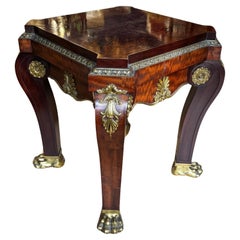
French Empire Bronze and Mahogany Marble Top Table

French Empire Bronze and Mahogany Marble Top Table

Located in CABA, AR

This exquisite French Empire table, masterfully crafted from the finest mahogany and adorned with ornate bronze detailing, is a quintessential representation of the opulence and prec...

Category

Antique 19th Century French Furniture

Materials

Marble, Bronze

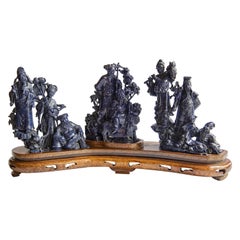
Chinese Lapislazuli Carving of "The Eight Daoist Inmortals", Mid 20th Century

Chinese Lapislazuli Carving of "The Eight Daoist Inmortals", Mid 20th Century

Located in CABA, AR

Immerse yourself in the mystical world of Chinese mythology with this captivating mid-20th-century Lapis Lazuli carving depicting "The Eight Daoist Immortals." Each figure, intricate...

Category

Mid-20th Century Chinese More Asian Art, Objects and Furniture

Materials

Lapis Lazuli

You May Also Like

Large Italian Levantino style potiche from La Fenice, Albisola, Italy

Large Italian Levantino style potiche from La Fenice, Albisola, Italy

Located in Varese, Lombardia

A large ceramic saucer (42 cm high), hand-decorated in the celebrated Levantino style, one of the most characteristic historical decorations in the tradition of Albisola and Savona. ...

Category

Mid-20th Century Italian Rococo Ceramics

Materials

Ceramic

Majolica ceramic amphora - second half of the 19th century

Majolica ceramic amphora - second half of the 19th century

Located in Parma, Emilia-Romagna

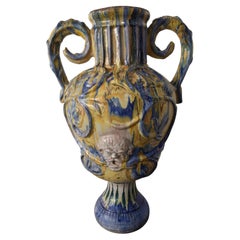
Neapolitan-made bi-layered majolica ceramic amphora from the second half of the 1800s. It presents a classical style with mythological decorations on one side and, grotesques on the ...

Category

Antique 19th Century Italian Vases

Materials

Maiolica

Caltagirone ceramic amphora, mid-19th century

Caltagirone ceramic amphora, mid-19th century

Located in Catania, IT

Caltagirone ceramic amphora with satyr mask, mid-19th century.

Category

Antique Mid-19th Century Baroque Vases

Materials

Ceramic

Moriage Nippon Vase, Japanese Porcelain

Moriage Nippon Vase, Japanese Porcelain

Located in Hamilton, Ontario

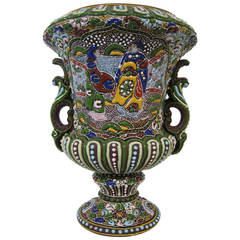
Beautiful Japanese Moriage vase, late 19th century-early 20th century. Free shipping within the United States and Canada.

Category

Early 20th Century Japanese Vases

Materials

Porcelain

Large 19th Century Chinese Porcelain and French Figural Ormolu Centerpiece

Large 19th Century Chinese Porcelain and French Figural Ormolu Centerpiece

Located in Los Angeles, CA

A very fine and large 19th century Chinese porcelain and French figural ormolu-mounted Chinoiserie style centerpiece. The circular ovoid bowl, maybe 18th century Jiaqing period (unve...

Category

Antique 19th Century French Chinoiserie Planters, Cachepots and Jardinières

Materials

Ormolu

Very Large 19th Century Italian Maiolica Hand Painted Vase

Very Large 19th Century Italian Maiolica Hand Painted Vase

By Cantagalli

Located in London, GB

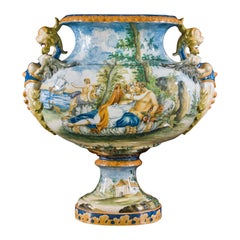
A very large 19th century twin handled maiolica vase in the form of a wine krater. The exquisite hand painted decoration includes two central cartouches, one depicting Bacchus and Ar...

Category

Antique Late 19th Century Italian Renaissance Vases

Materials

Pottery