Want more images or videos?
Request additional images or videos from the seller
1 of 7

Japanese Sumida-Gawa sculpture of a man distributing peaches to its monkeys

On Hold
$1,421.68
On Hold
£1,051.77
On Hold
€1,200VAT Included
On Hold
CA$1,967.67
On Hold
A$1,974.55
On Hold
CHF 1,151.58
On Hold
MX$24,008.12
On Hold
NOK 13,232.81
On Hold
SEK 13,609.27
On Hold
DKK 9,150.05

About the Item

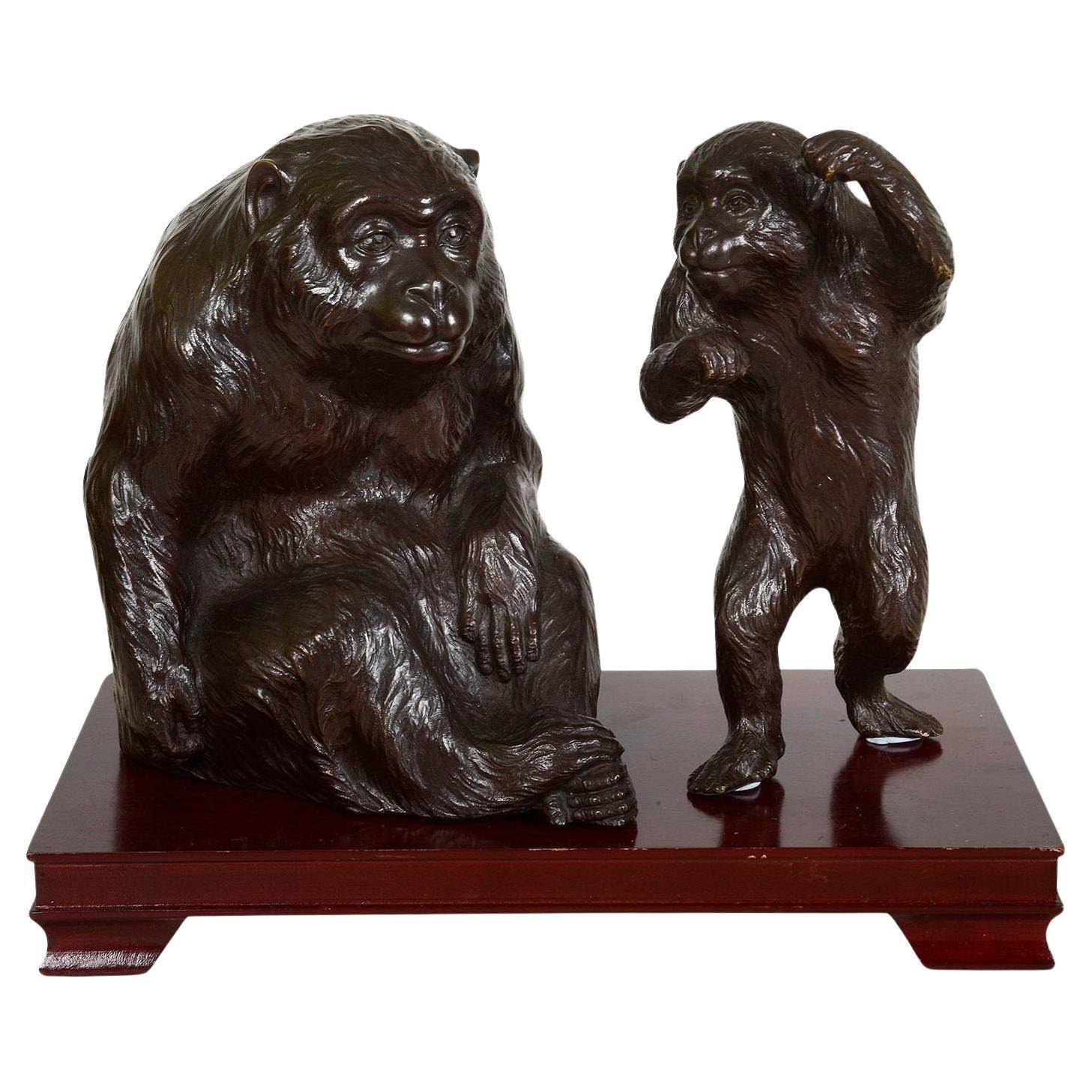
Polychrome sculpture in Sumida-gawa stoneware, also called Sumida-yaki, representing an old man surrounded by five monkeys in front of a basket containing two nuts. Glazed clothes and basket. The figure of the monkey with longevity peaches is a popular image in China, however this subject was also widely used by the Japanese. According to the legend the monkey Sun, king of monkeys, upset that he was not invited to the banquet of the Queen Mother, entered the garden of the goddess Xiwangmu in the mountains of Kun Lun and ate all the heavenly peaches she grew there. He became immortal. Seal underneath of Kinoshita (木下). Sumida-yaki ceramics takes its name from the Sumida River (Sumida gawa), near which it was created by Inoue Ryosai I (1828-1899) in 1875. He and the wealthy merchant Shimada Sobei built a kiln in the Hashiba district of Asakusa, in present-day Tokyo. The production of the Inoue family spans three generations: Inoue Ryosai I (1828-?), Inoue Ryosai II (around 1860-?) and Inoue Ryosai III (1880-1971). Alongside them, two other ceramists are also famous: Ishiguro Koko and Hara Yashiyama. The ceramics are characterized by stoneware of rather heavy aspect, a very shiny glaze and most of the time, applied decorations in relief. It is decorated using the taka-uki-bori ("high relief carving") technique which consists of gluing shapes onto the porcelain. The glaze is then poured over the top, which gives the ceramics great vitality and freedom. It was mainly exported to the West from the end of the 19th century to the 1920s from the port of Yokohama; and was mainly distributed in the United States through the A. A. Vantine's & Co. store, located on 5th Avenue in New-York and specialized in oriental and Far Eastern objects. Made by Kitanoshita Japan – Meiji era (1868-1912) or Taisho era (1912-1926), early 20th Height: 3.74 in. (9.5 cm) – width: 4.45 in. (11.3 cm) – depth: 4.13 in. (10.5 cm)
  • Dimensions:
    Height: 3.75 in (9.5 cm)Width: 4.45 in (11.3 cm)Depth: 4.14 in (10.5 cm)
  • Style:
    Meiji (Of the Period)
  • Materials and Techniques:
  • Place of Origin:
  • Period:
  • Date of Manufacture:
    1868-1912
  • Condition:
    Wear consistent with age and use.
  • Seller Location:
    PARIS, FR
  • Reference Number:
    Seller: 2022-10851stDibs: LU8311242789732

More From This Seller

View All
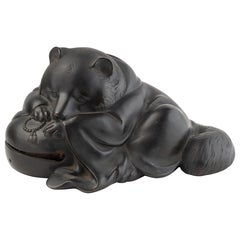
Japanese bronze sculpture depicting a tanuki in shingon buddhist monk clothes

Japanese bronze sculpture depicting a tanuki in shingon buddhist monk clothes

Located in PARIS, FR

Japanese bronze of a tanuki. The tanuki is depicted here dressed as a Buddhist priest, wrapped in a cloak, holding a rosary in its right paw and lying on a bell. The tanuki (raccoon ...

Category

Antique Late 19th Century Japanese Meiji Sculptures and Carvings

Materials

Bronze

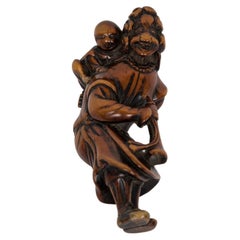
Boxwood netsuke representing a ducthman with child and a trumpet

Boxwood netsuke representing a ducthman with child and a trumpet

Located in PARIS, FR

Wooden netsuke of a standing Dutchman figure with his mouth open, leaning forward. He is wearing a long curly wig, a ruff and a long coat tied at the waist. In his right hand, the ma...

Category

Antique Late 18th Century Japanese Japonisme Sculptures and Carvings

Materials

Boxwood

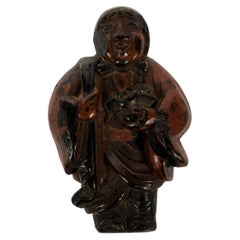
Lacquered Netsuke in the form of an old Lady carrying an Oni in her back

Lacquered Netsuke in the form of an old Lady carrying an Oni in her back

Located in PARIS, FR

Boxwood netsuke depicting a standing man carrying a pouch behind his back in which an oni is hidden. Onis are an integral part of the pantheon of yokai, the spirits and monsters of J...

Category

Antique Early 19th Century Japanese Meiji Sculptures and Carvings

Materials

Boxwood, Lacquer

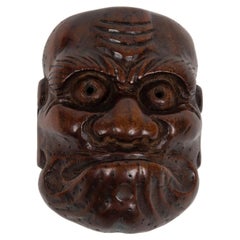
Netsuke in the form of a No mask representing the character of Obeshimi

Netsuke in the form of a No mask representing the character of Obeshimi

Located in PARIS, FR

Wooden netsuke depicting the Obeshimi mask in Noh theater. Obeshimi is a demon characterized by thick eyebrows, eyes that seem to protrude from the face and a closed mouth. Signed ...

Category

Antique Late 19th Century Japanese Meiji Sculptures and Carvings

Materials

Boxwood

Japanese Professional sneezer Boxwood Netsuke

Japanese Professional sneezer Boxwood Netsuke

Located in PARIS, FR

Boxwood netsuke of a seated professional sneezer depicted as an old man with his right hand raised, holding an stick to tickle himself. His head is slightly raised, his eyes practica...

Category

Antique Late 18th Century Japanese Edo Sculptures and Carvings

Materials

Boxwood

You May Also Like

Japanese Signed Glazed Edo/Meiji Ceramic Pottery Monkey with Custom Wood Stand

Japanese Signed Glazed Edo/Meiji Ceramic Pottery Monkey with Custom Wood Stand

Located in Studio City, CA

A truly fantastic and rather unique piece. The collectors we have shown have gone gaga over this piece. Beautifully crafted and glazed with amazing detail to facial features. ...

Category

Antique 19th Century Japanese Meiji Ceramics

Materials

Ceramic

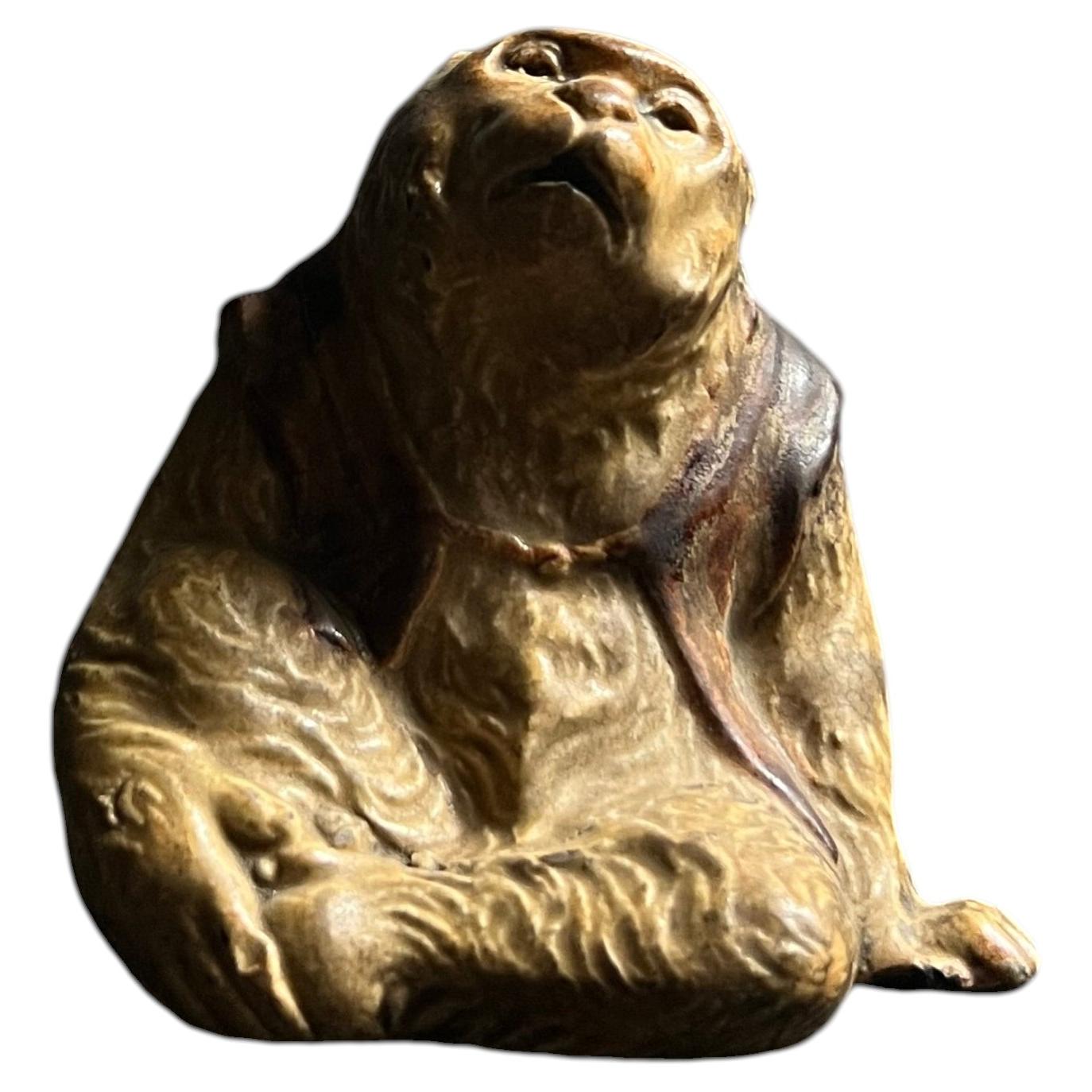
Japanese Antique Monky Pottery Sculpture:1880s~1920s Figurine Wabisabi Folk Art

Japanese Antique Monky Pottery Sculpture:1880s~1920s Figurine Wabisabi Folk Art

Located in 足利市, JP

This captivating, hand-formed (Tebineri) Japanese ceramic sculpture depicting a seated monkey dressed in garments dates from the late Meiji to the Taisho period (late 19th to early 2...

Category

Antique Late 19th Century Japanese Meiji Sculptures and Carvings

Materials

Pottery

A Japanese netsuke depicting a monkey with a turtle

A Japanese netsuke depicting a monkey with a turtle

Located in Milano, IT

Boxwood netsuke depicting a seated monkey stopping a turtle with its right paw. Period: Edo 19th century Dimensions: 4 x 3.2 x 3.8 cm. Condition: Excellent condition.

Category

Antique 19th Century Japanese Japonisme Antiquities

Materials

Boxwood

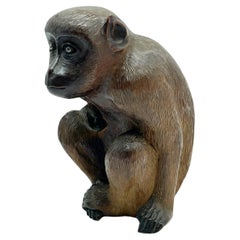
The Watchful Monkey: Early 20th Century Japanese Wood Carving of a Monkey

The Watchful Monkey: Early 20th Century Japanese Wood Carving of a Monkey

Located in New York, NY

Early 20th Century Japanese Carved Wood Figure of a Monkey: A finely carved Japanese wood netsuke depicting a seated monkey holding a peach, often attributed to the Edo (1615–1868)...

Category

Early 20th Century Animal Sculptures

Materials

Wood

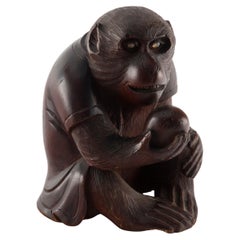
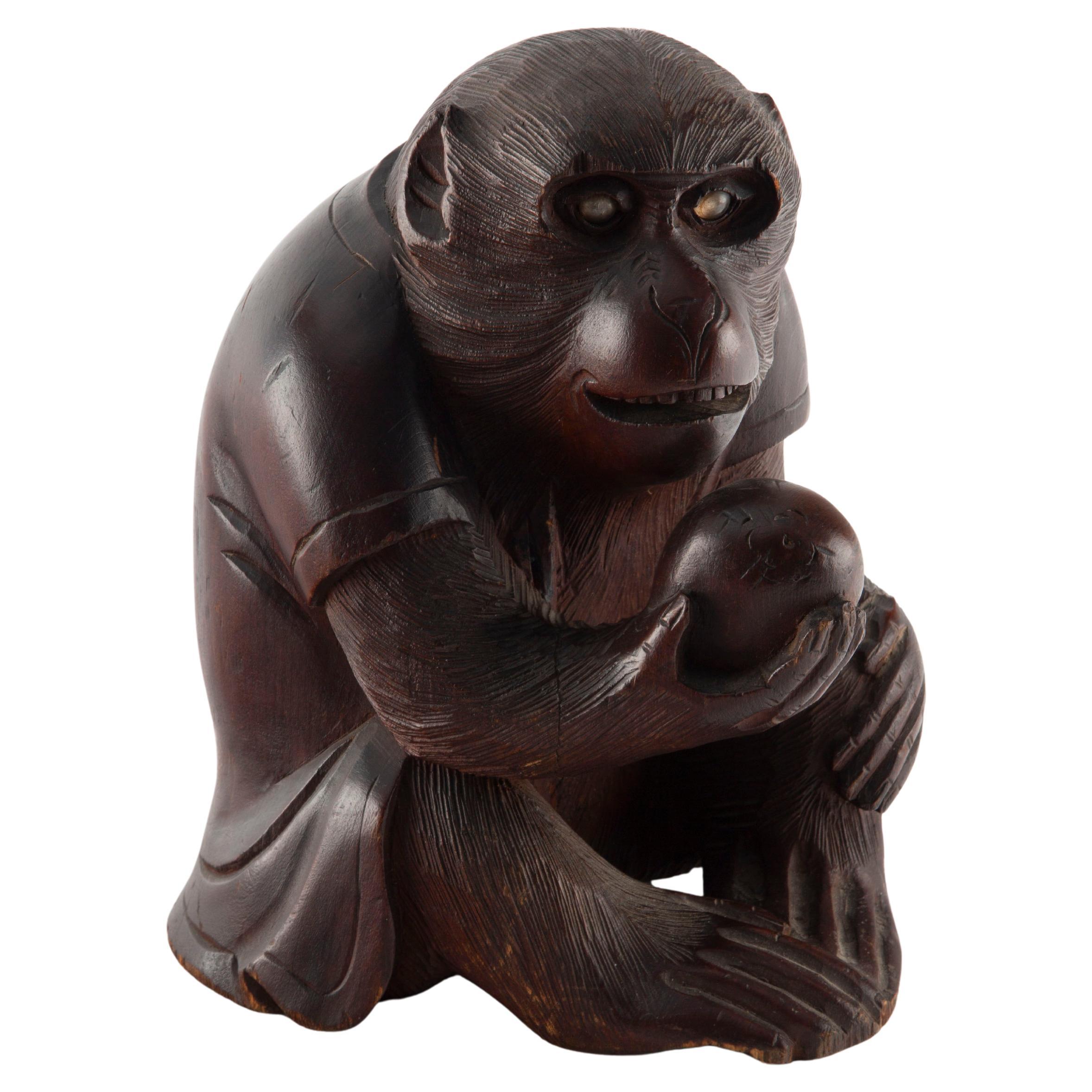
19th Century 'Meiji Period' Japanese Carved Wood Seated Monkey Sculpture

19th Century 'Meiji Period' Japanese Carved Wood Seated Monkey Sculpture

Located in North Miami, FL

19th Century (Meiji Period) Japanese hand-carved wood seated monkey. The eyes are inlaid and made of glass. The fur and details are very realistic. The piece is signed on the bottom ...

Category

Antique 19th Century Japanese Meiji Animal Sculptures

Materials

Glass, Wood

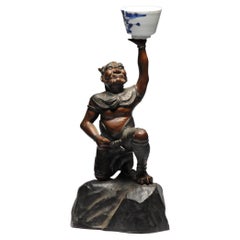
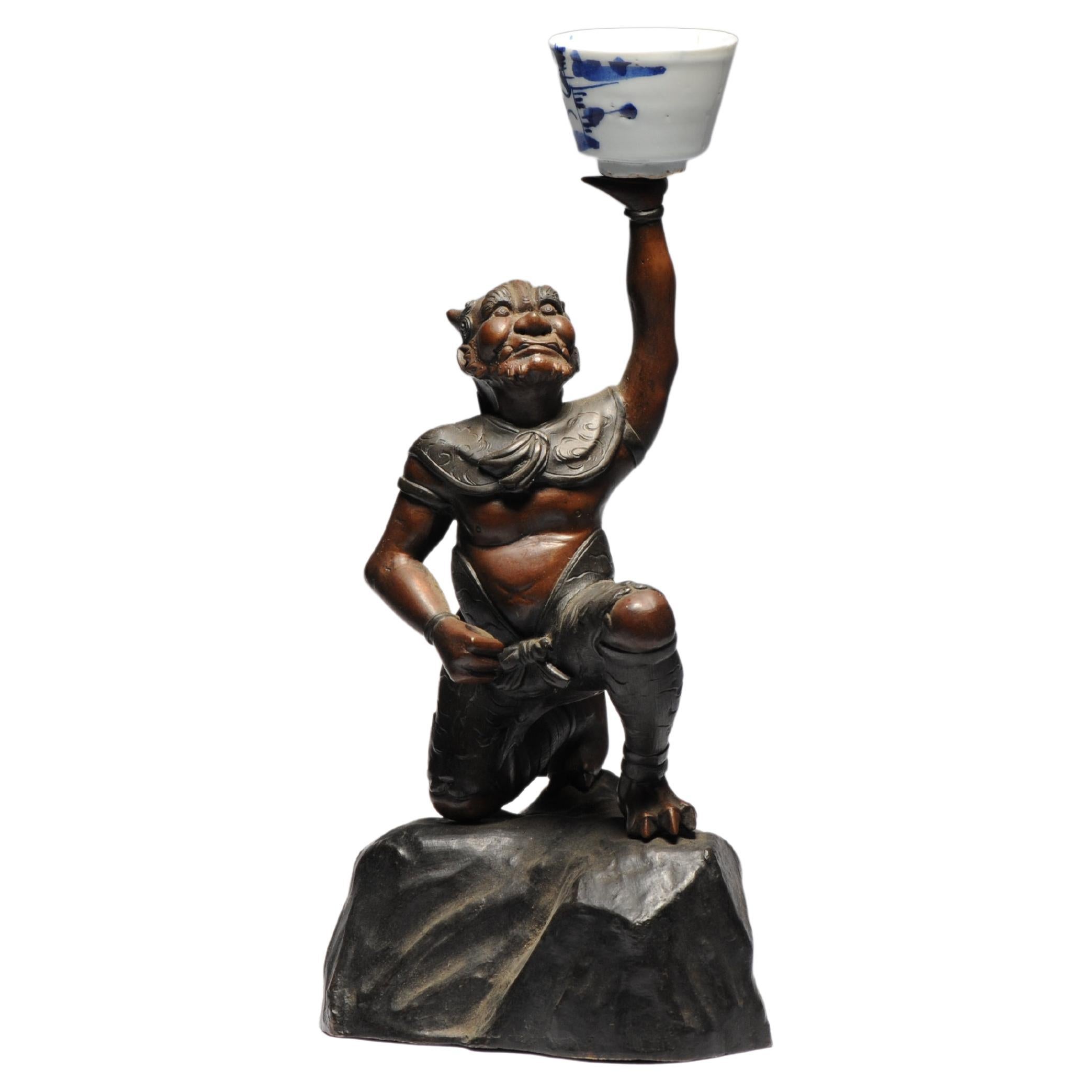
Antique Okimono Bronze Japanese Statue Man Carrying Something Japan

Antique Okimono Bronze Japanese Statue Man Carrying Something Japan

Located in Amsterdam, Noord Holland

Description Nicely made artifact of high quality. Basket is missing and we replaced it with a porcelain cup. Condition Overall Condition No real damages, just some ware. Size ...

Category

Antique 19th Century Japanese Meiji Ceramics

Materials

Bronze