Want more images or videos?
Request additional images or videos from the seller
1 of 9

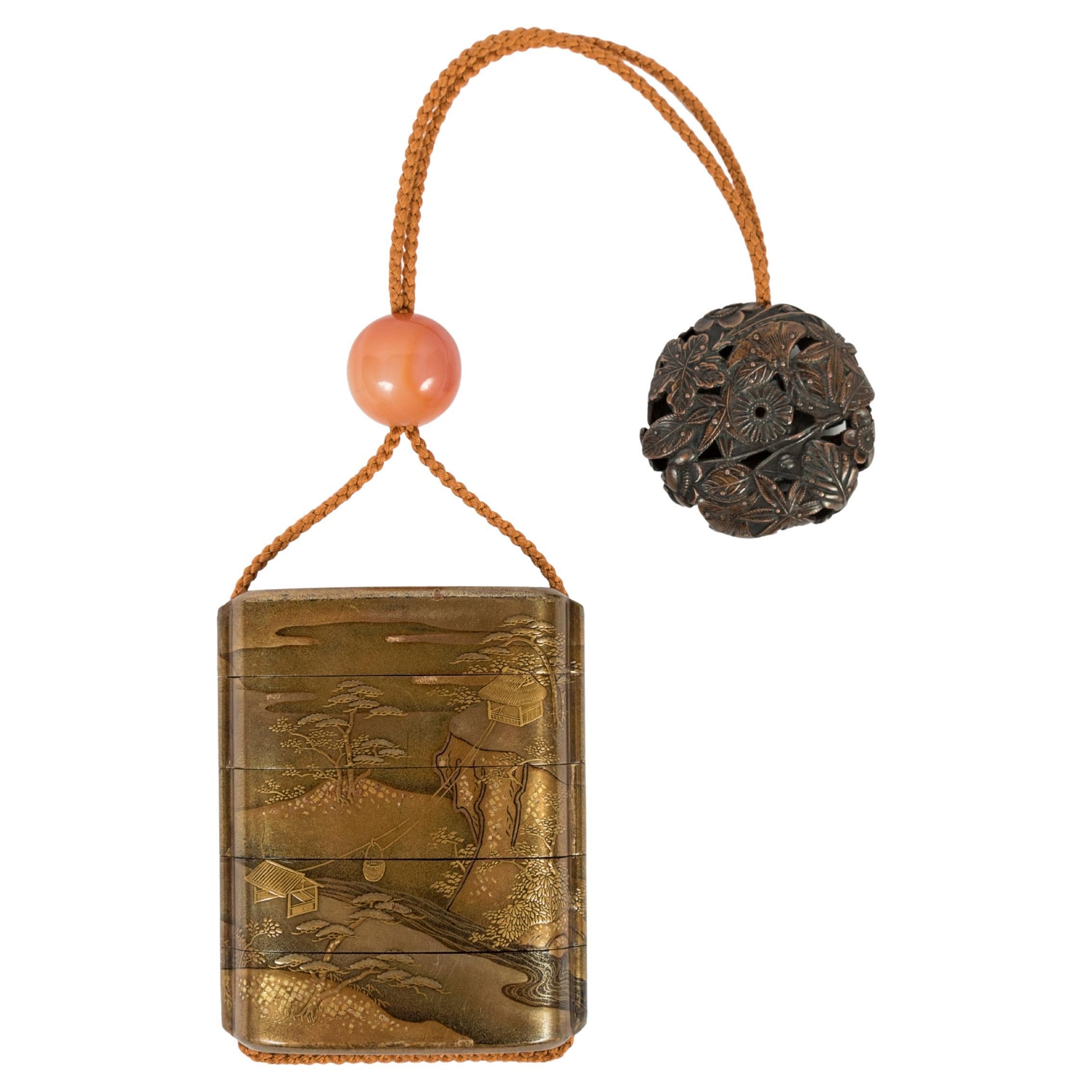
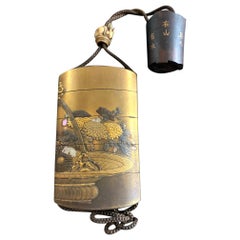
Japanese Sagemono Inro box with a maki-e decor of a Samuari in a lake landscape

$8,276.40
£6,110.80
€7,000VAT Included
CA$11,496.35
A$11,547.39
CHF 6,695.50
MX$140,890.19
NOK 77,486.11
SEK 79,504.78
DKK 53,374.46

About the Item

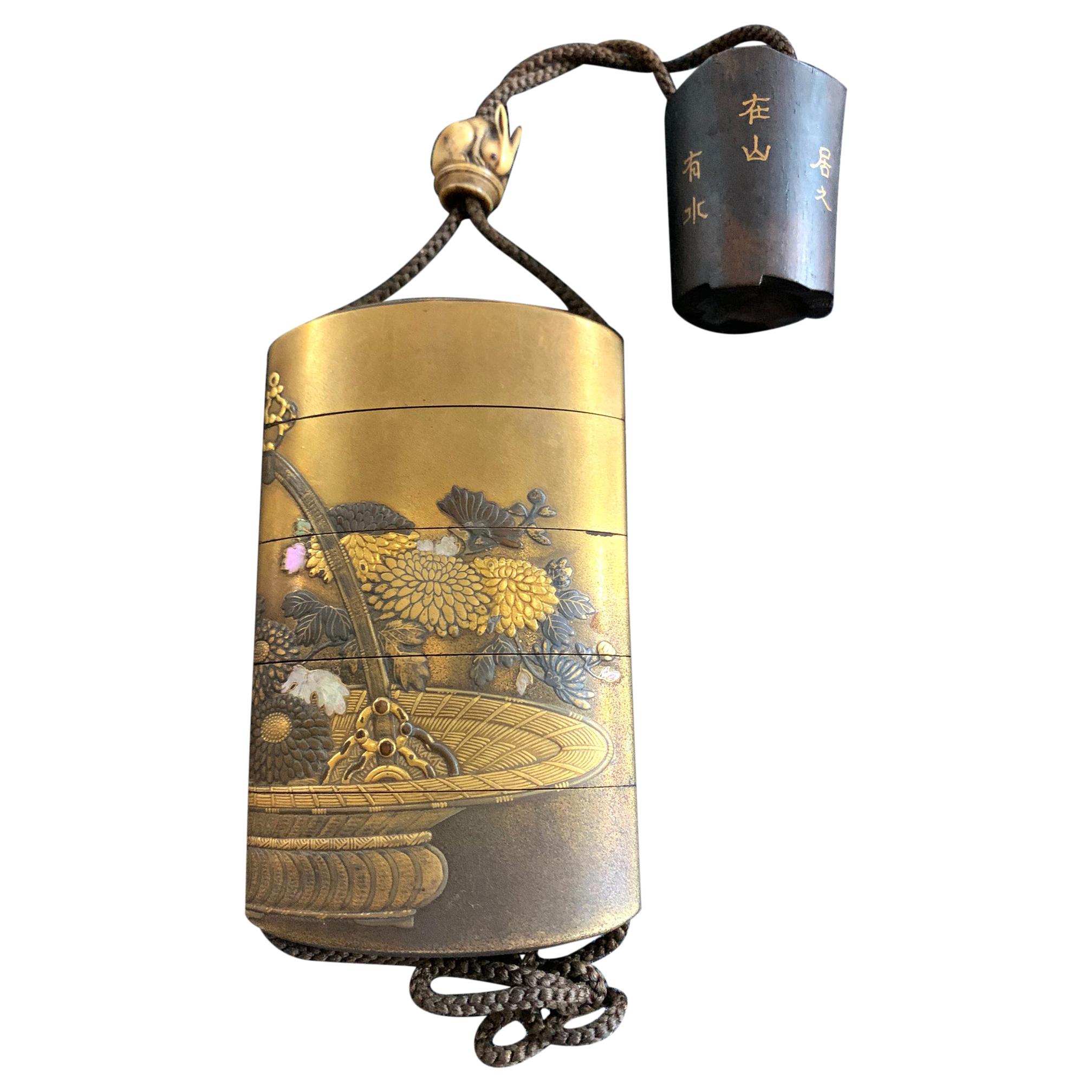
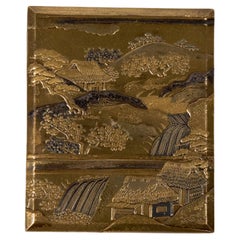
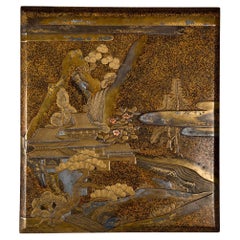
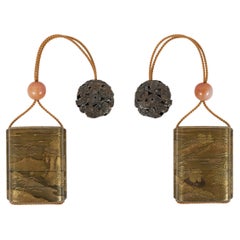
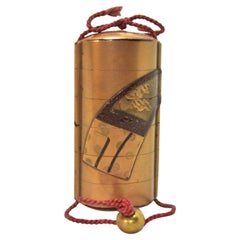
Inrô in gilded lacquer according to the takamaki-e, hiramaki-e and kirigane techniques, with five squares of a mountain lake landscape. On the first side, there is a man on horseback, who is drinking from the stream. A samurai accompanies him, his sword in hand. Next to the pine tree are the things they would have left behind. On the other side, a woman is at work. There are two thatched houses, surrounded by pine trees. Above the waterfall in the background, there is a temple. Interior in hirameji lacquer. On the top of the inro are three birds in flight in takamaki-e. Small boxes formed of interlocking compartments, inrō (印籠) are traditional Japanese clothing items. Since the kimono had no pockets, everyday objects were carried in small boxes (sagemono) hanging from the belt. To prevent them from slipping, a netsuke, a small wooden or ivory figurine, was used to hold the cord of inrō or other types of sagemono passed around the belt (obi). Inrō are often adorned with harmonious decorations and scenes inspired by flora and fauna. Japanese artists play with materials and shapes with a precision and meticulousness comparable to goldsmithing. Japan - Edo Era (1603-1868) Inrô : height 3.5 in. (8.8 cm) - width 2 in. (5 cm) - depth 1.3 in. (3.2 cm)
  • Dimensions:
    Height: 3.47 in (8.8 cm)Width: 1.97 in (5 cm)Depth: 1.26 in (3.2 cm)
  • Style:
    Edo (Of the Period)
  • Materials and Techniques:
    Gold,Lacquer,Lacquered
  • Place of Origin:
  • Period:
  • Date of Manufacture:
    1603-1868
  • Condition:
    Wear consistent with age and use.
  • Seller Location:
    PARIS, FR
  • Reference Number:
    Seller: 2022-10151stDibs: LU8311242788382

More From This Seller

View All
Japanese inro of the edo period adorned with a landscape houses near a lake

Japanese inro of the edo period adorned with a landscape houses near a lake

Located in PARIS, FR

Inrō with four gold lacquer compartments, decorated with a lake landscape. Accompanied by a bronze ryusa manju. Small boxes formed of compartments that fit one on top of the other, i...

Category

Antique Late 18th Century Japanese Edo Lacquer

Materials

Gold

Japan lake landscape kobako box lacquer - Edo

Japan lake landscape kobako box lacquer - Edo

Located in PARIS, FR

Rectangular kobako box in takamaki-e and kirigane gold lacquer circled with pewter depicting a lake landscape. Inside and back of the box in nashi-ji lacquer. Japan – Edo period (16...

Category

Antique 18th Century Japanese Lacquer

Materials

Gold

Suzuribako or writing box made of nashiji lacquer and adorned with a landscape

Suzuribako or writing box made of nashiji lacquer and adorned with a landscape

Located in PARIS, FR

Suzuribako, or writing box, of rectangular shape, decorated with an imposing architecture realized in hira maki-e lacquer, probably a palatial structure, situated beside a waterfall...

Category

Antique Late 18th Century Japanese Edo Lacquer

Materials

Gold Leaf

Gold Lacquer Inro Decorated with a Lake Landscape

Gold Lacquer Inro Decorated with a Lake Landscape

Located in PARIS, FR

Inro with four gold lacquer boxes, decorated with a lake landscape. Accompanied by a bronze ryusa manju. Small boxes formed of compartments that fit one on top of the other, inro (? ?) are traditional Japanese clothing...

Category

Antique Mid-19th Century Lacquer

Materials

Lacquer

Japanese Tebako in Nashiji lacquer adorned with golden Persimon flowers

Japanese Tebako in Nashiji lacquer adorned with golden Persimon flowers

Located in PARIS, FR

Tebako box with two compartments in golden and nashi-ji lacquer, decorated with golden, red, and kirigane lacquer, golden persimmon tree leaves, among rocks. The compartments are of ...

Category

Antique Early 19th Century Japanese Meiji Lacquer

Materials

Gold

You May Also Like

19th Century Japanese Inro with 5 Lacquered Wood Compartments

19th Century Japanese Inro with 5 Lacquered Wood Compartments

Located in Marseille, FR

19th Century Japanese inro with 5 lacquered wooden compartments, 93 x 50 x 30 mm in size. Weight 59.2 g. Additional information: Material: Lacquered ...

Category

Antique 19th Century Japanese Snuff Boxes and Tobacco Boxes

Materials

Wood

Japan 1800 Edo Period Six Drawer Inro In Lacquered Gilt Wood With Utensils

Japan 1800 Edo Period Six Drawer Inro In Lacquered Gilt Wood With Utensils

Located in Miami, FL

Japanese Inro from the Edo Period (1603-1867). Beautiful Inro, created in Japan during the Edo period (Shogunate), circa 1800. It was carefully crafted in carved precious wood with ...

Category

Antique Early 1800s Japanese Edo Lacquer

Materials

Coral

Early Edo Nashiji Maki-e Tiered Writing & Incense Box

Early Edo Nashiji Maki-e Tiered Writing & Incense Box

Located in Taichung, TW

The Design & Impact: This museum quality, tiered writing box (kasane suzuribako) represents a breathtaking convergence of traditional calligraphy (shodo) and the highly formalize...

Category

Antique 17th Century Japanese Lacquer

Materials

Wood, Urushi lacquer

Japanese Stacking Incense Box, Ju-Kobako, Meiji Period, Mid 19th century, Japan

Japanese Stacking Incense Box, Ju-Kobako, Meiji Period, Mid 19th century, Japan

Located in Austin, TX

An exquisite small Japanese maki-e lacquer stacking box for incense and accessories, ju-kobako, late Edo or early Meiji Period, mid 19th century, Japan. Crafted in maki-e lacquer an...

Category

Antique Mid-19th Century Japanese Meiji Lacquer

Materials

Silver

Large Japanese Lacquer Document Box, Ryoshibako, Edo/Meiji period, Japan

Large Japanese Lacquer Document Box, Ryoshibako, Edo/Meiji period, Japan

Located in Austin, TX

A large and magnificently decorated Japanese lacquer document box, ryoshibako, signed Umeboshi/Baikyo, late Edo or early Meiji Period, mid 19th century, Japan. The large document box, ryoshibako, of tall, rectangular shape with rounded corners, and fitted with an inrobuta (flush-fitting) cover with beveled edges. The exterior of this exquisite box is decorated all over with fifteen different raised reserves shaped as uchiwa (paddle) fans against a lush and intricate krikane ground imitating shagreen. The uchiwa shaped reserves all of takamaki-e, and exquisitely painted with designs of animals, flowers, and landscapes in silver, gold, maki-e, hiramaki-e, and takamaki-e, with kirikane, nashiji, and polychrome embellishments, upon gold lacquer fudame grounds. The interior of the lid is nothing short of spectacular, featuring a large design of a magnificent and beautifully detailed rooster and hen with chicks gathered around a lazy stream. Large stalks of chrysanthemum bloom behind them. All against an ethereal nashiji ground. The cover of the box features five reserves: 1. Three minogame (turtles with long tails), symbolizing longevity 2. "Narihira Crossing the Sumida" from The Tales of Ise...

Category

Antique 1860s Japanese Meiji Lacquer

Materials

Softwood, Lacquer

Antique Japanese Inro by Shigehide Edo Period

Antique Japanese Inro by Shigehide Edo Period

Located in Atlanta, GA

This exquisite four-case lacquered inro was dated to the latter part of 18th century to early 19th century (Edo period) and made by Shigehide. The opposite sides of the inro together features a lavish flower arrangement in a bamboo basket (ikebana). The detailed craftmanship was a true pleasure to behold. Mostly Takamaki-e (high relief) were used to texturize the delicate petals of the chrysanthemums, on which different shades of gold were used to create contrast. Raden (mother of pearl) shells were also used to highlight some leaves, rendering the piece an interesting balance of color and material. The interior was completed in a mottled gold finish. It was signed Shigehide on the bottom with a Kao. There is a small carved rabbit ojime bead...

Category

Antique Late 18th Century Japanese Japonisme Lacquer

Materials

Wood, Lacquer