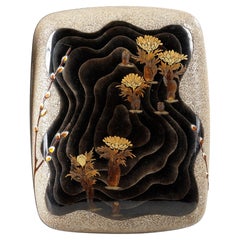
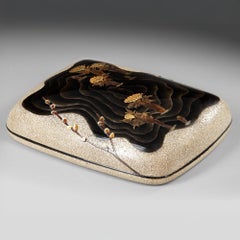
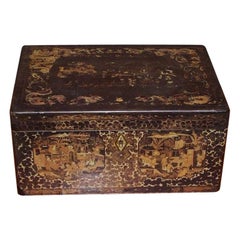
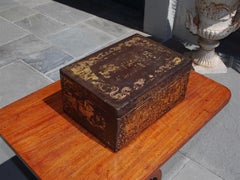
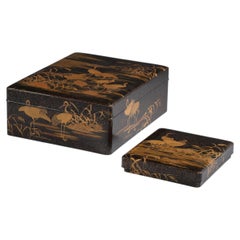
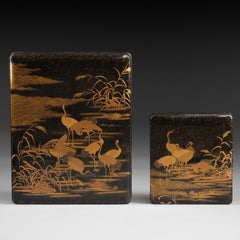
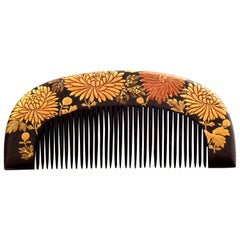
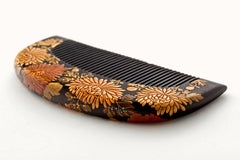
Japanese Inro from the Edo Period (1603-1867).
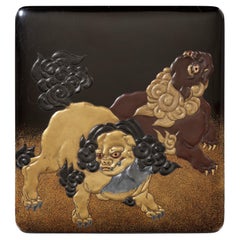
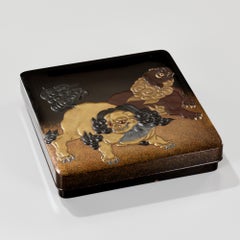
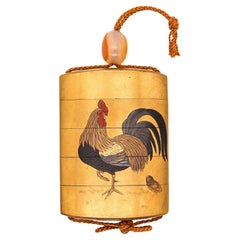
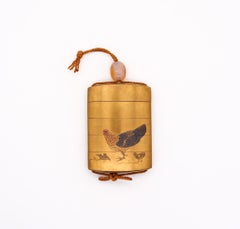
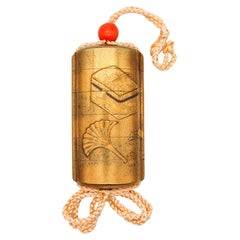
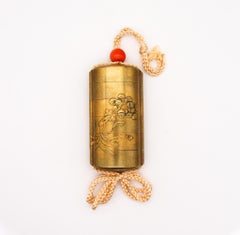
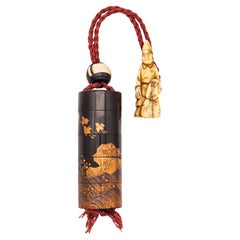
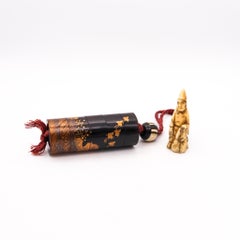
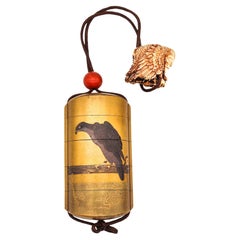
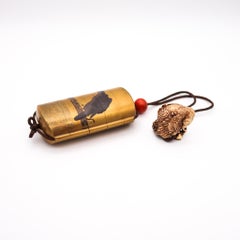
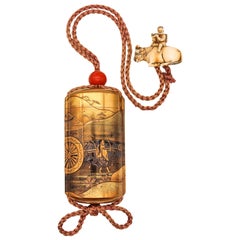
Beautiful Inro, created in Japan during the Edo period (Shogunate), circa 1830. It was carefully crafted in carved precious wood with applications of lacquer and decorated with orientalism patterns. All dan trays are attached together with a himo cord. The detailed craftsmanship was a true pleasure to behold.
Period: Edo 1606-1867, Shogunate.
Approximate Date: 1830
Motif: An elaborated three-dimensional royal carriage with a silvered bull and a richly dressed court companion. All surrounded by a road and sinuous mountainous landscape with trees and plants.
Drawers: Six.
Shape: Oval
Technique: Carved wood, Lacquer, hiramaki-e, takamaki-e, Gilding, Silvered.
Ojime: 15mm, round sphere carved from natural translucent carnelian
Netsuke: Patinated carved seated child playing a shakuhachi (flute) in a resting bull, signed.
Weight: 67.60 Grams.
Measurements: Inro is 92 mm by 27 mm by 38 mm (3.60 x 1.06 x 1.50 Inches).
The Edo Period
The Edo period or Tokugawa period is the period between 1603 and 1867 in the history of Japan, when Japan was under the rule of the Tokugawa shogunate and the country's 300 regional daimyo. Emerging from the chaos of the Sengoku period, the Edo period was characterized by economic growth, strict social order, isolationist foreign policies, a stable population, perpetual peace, and popular enjoyment of arts and culture. The period derives its name from Edo (now Tokyo), where on March 24, 1603, the shogunate was officially established by Tokugawa Ieyasu. The period came to an end with the Meiji Restoration and the Boshin War, which restored imperial rule to Japan. The Tokugawa (or Edo) period brought 250 years of stability to Japan. The political system evolved into what historians call bakuhan, a combination of the terms bakufu and han (domains) to describe the government and society of the period.[3] In the bakuhan, the shōgun had national authority and the daimyo had regional authority. This represented a new unity in the feudal structure, which featured an increasingly large bureaucracy to administer the mixture of centralized and decentralized authorities. The Tokugawa became more powerful during their first century of rule: land redistribution gave them nearly seven million koku, control of the most important cities, and a land assessment system reaping great revenue
Inro
Is a traditional Japanese case for holding small objects, suspended from the obi (sash) worn around the waist when wearing a kimono. They are often highly decorated with various materials such as lacquer and various techniques such as maki-e, and are more decorative than other Japanese lacquerware. Because traditional Japanese dress...
Category
1830s Japanese Edo Antique Giltwood Lacquer