Want more images or videos?
Request additional images or videos from the seller
1 of 6

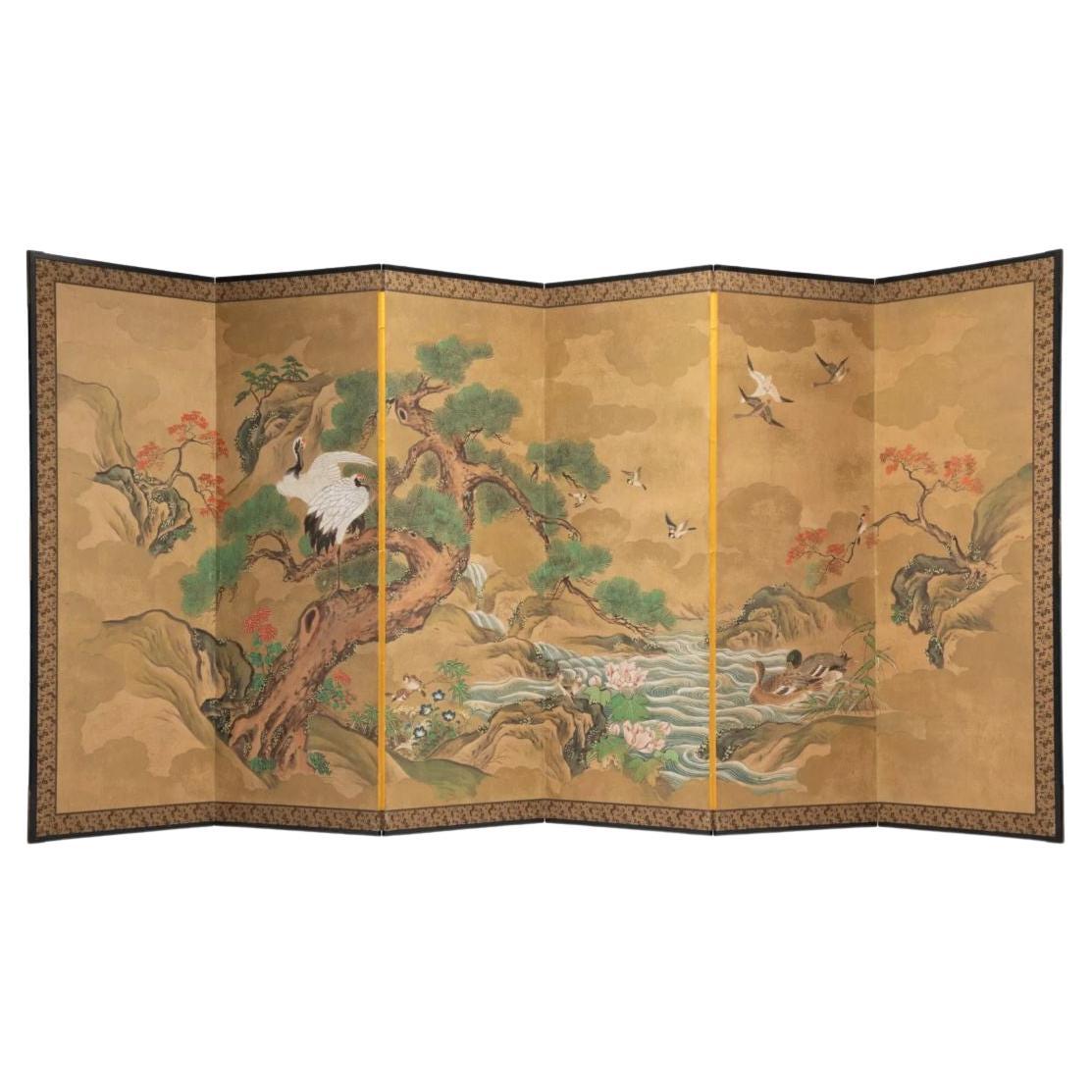
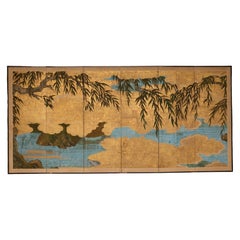
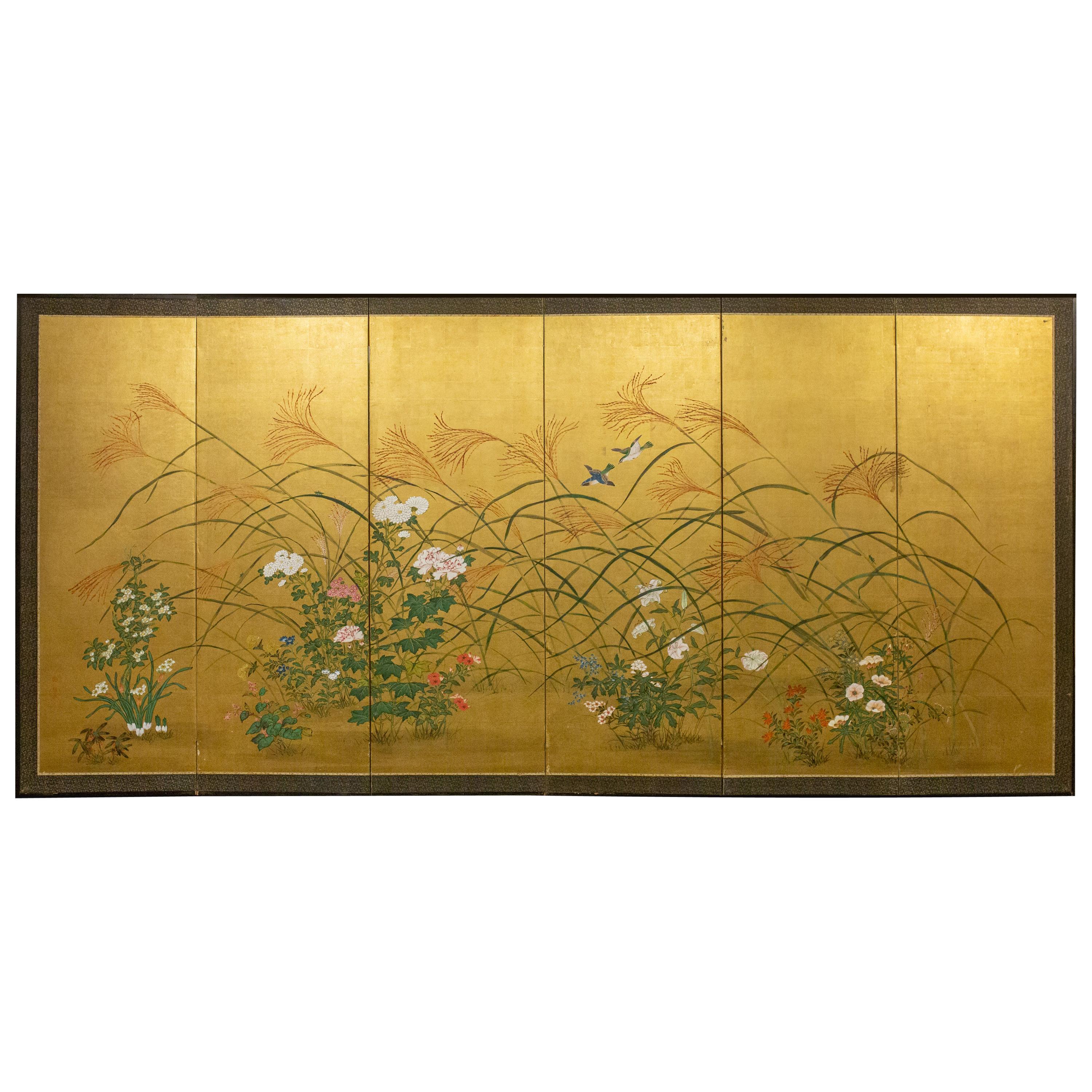
Antique Japanese Six-Panel Screen by Kano Chikanobu "Shushin"

$25,000
£18,865.13
€21,956.27
CA$35,293.28
A$38,963.75GST Included
CHF 20,655.43
MX$430,623.60
NOK 237,351.45
SEK 244,103.85
DKK 164,120.55

About the Item

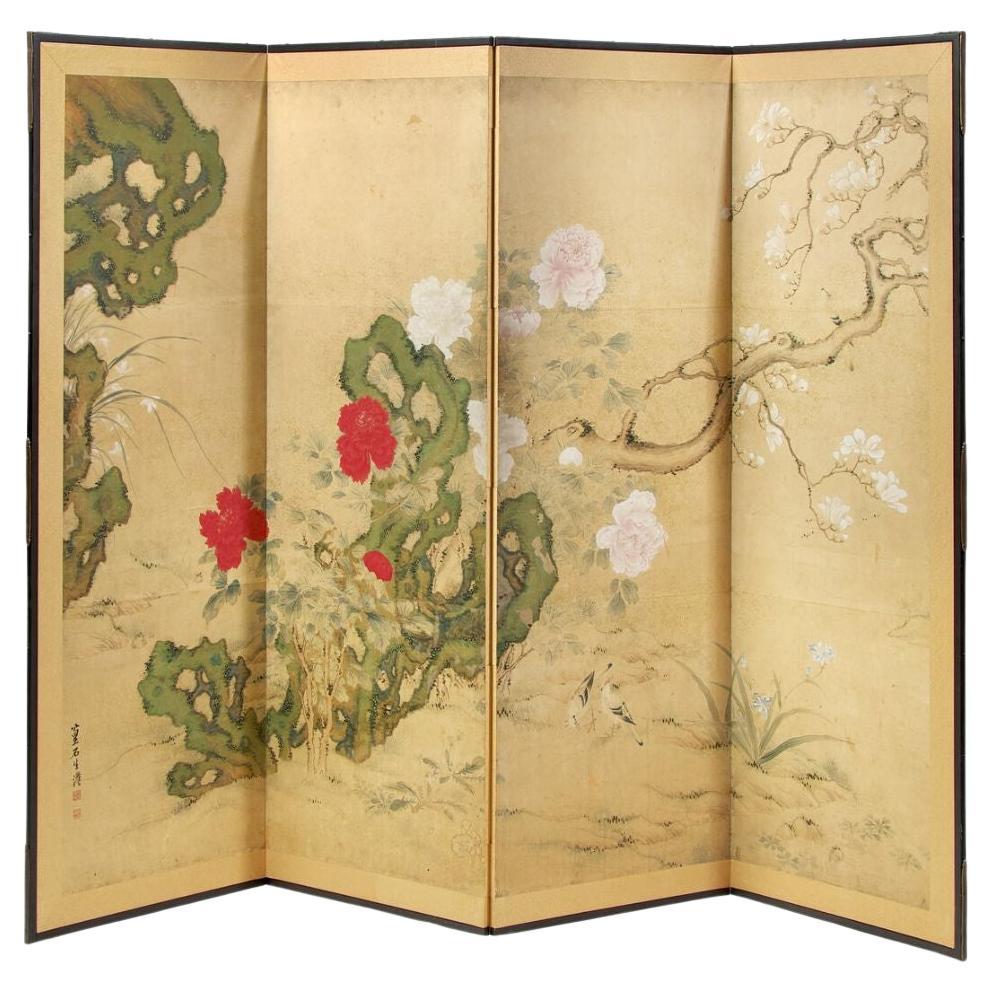
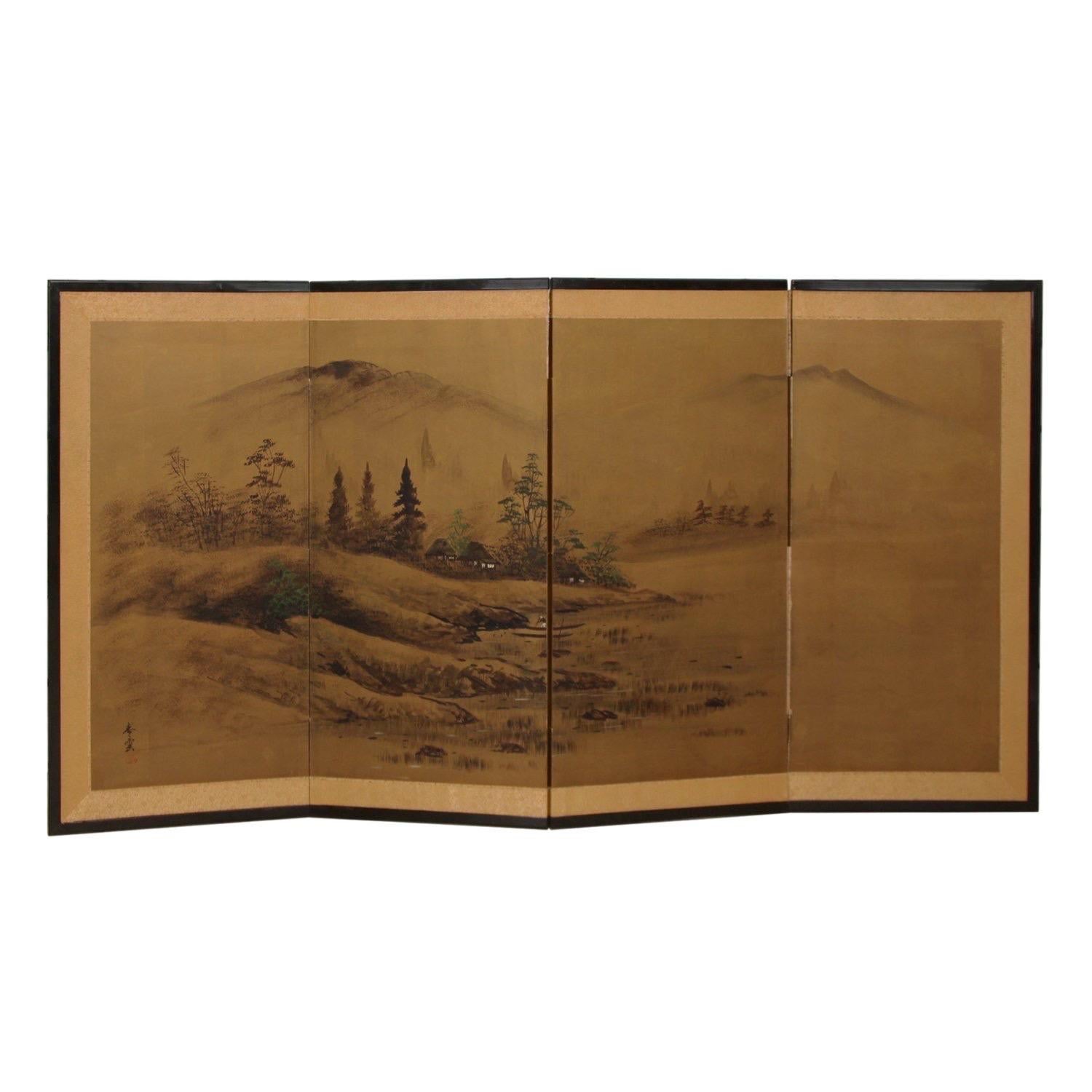
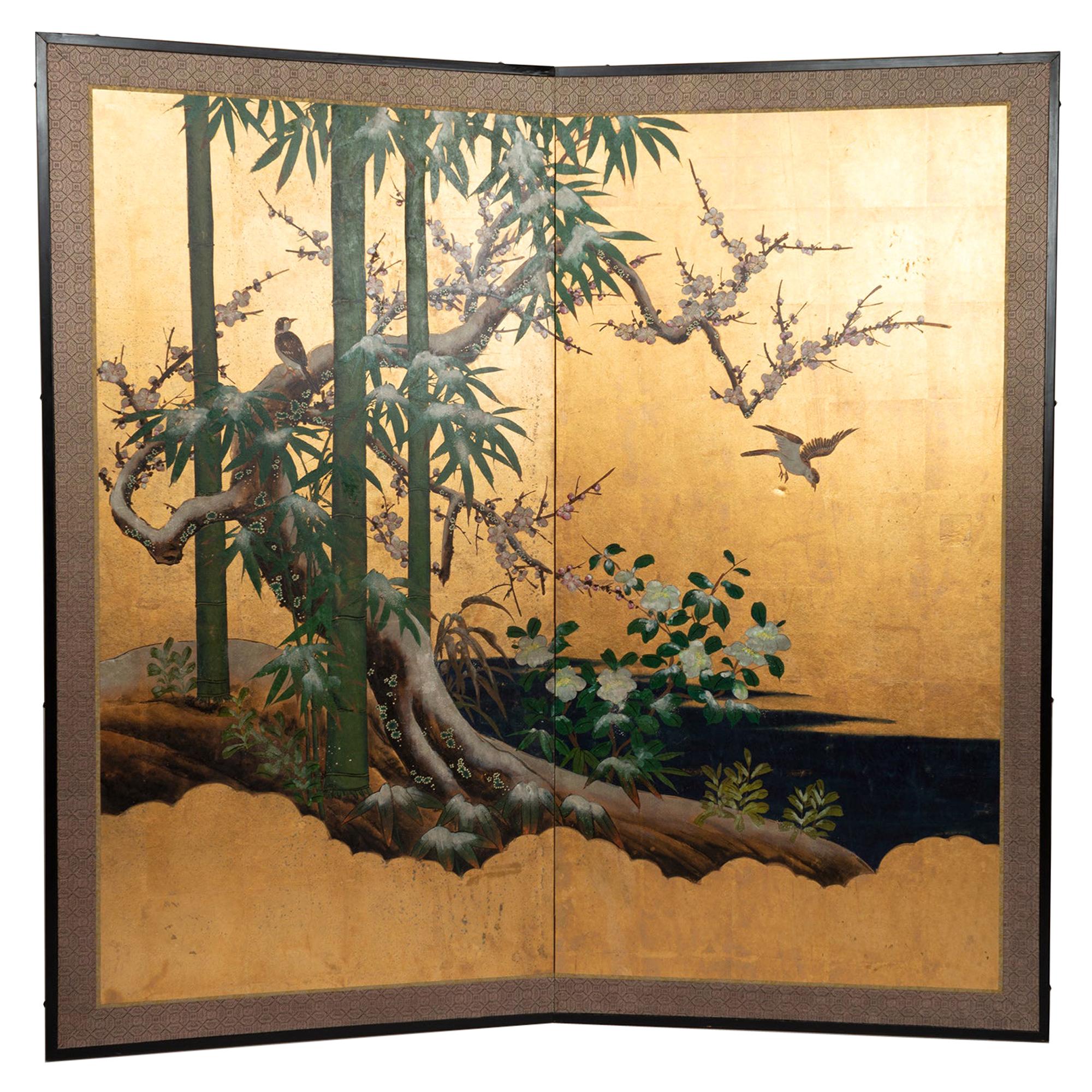
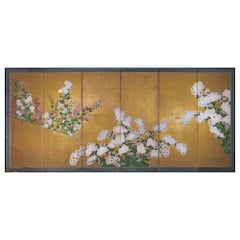
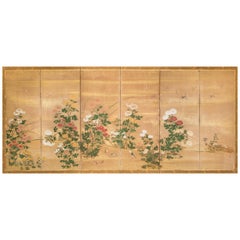
Late 17th century Kano school peony landscape screens. Both screens signed: Hogan Josen Fujiwara Chikanobu Hitsu - Kano Chikanobu (Shushin) (1660 - 1728). Materials: Ink and pigment on gold leaf and paper with lacquered wood outer frame. Dimensions: H 150 cm x W 370 cm. Kano Chikanobu (Shushin) was born in Musashi Province. Eldest son of Kano Tsunenobu. In 1678, he entered the service of the shogunate. In 1681, he worked with his father at Edo Castle. In 1713, he succeeded his father as third-generation head of the Kobikicho branch of the Kano school. Later he received the honorary title of hogen and in the same year painted a screen to be given to a Korean emissary. He has works in the Metropolitan Museum New York, The Museum of Fine Arts Boston (several pieces) and Tokyo National Museum.
  • Dimensions:
    Height: 59.06 in (150 cm)Width: 145.67 in (370 cm)Depth: 1.58 in (4 cm)
  • Style:
    Edo (Of the Period)
  • Materials and Techniques:
    Gold Leaf,Paper,Wood,Lacquered
  • Place of Origin:
  • Period:
  • Date of Manufacture:
    Unknown
  • Condition:
    Repaired: This screen was remounted in Japan by a screen specialist in the early 20thC. Wear consistent with age and use.
  • Seller Location:
    Prahran, AU
  • Reference Number:
    Seller: JS11-B1stDibs: LU125622214132

More From This Seller

View All
Antique Japanese Kano School Painting by Yosenin Korenobu

Antique Japanese Kano School Painting by Yosenin Korenobu

Located in Prahran, Victoria

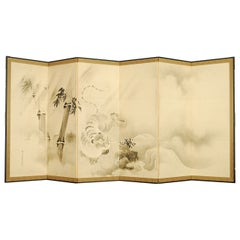
Six-panel Kano School tiger screen by Yosenin Korenobu (1753-1808). Sumi-e ink on paper, late 18th century. Dimensions: H 169cm x W 382cm.

Category

Antique Late 18th Century Japanese Edo Paintings and Screens

Materials

Paper, Wood

Vintage Japanese Two-Panel Screen, Taisho Period, Early 20th Century

Vintage Japanese Two-Panel Screen, Taisho Period, Early 20th Century

Located in Prahran, Victoria

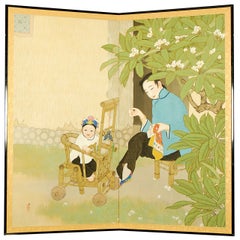
Japanese two-panel screen, study of an Okinawan mother and child, Taisho period early 20th century, dating from the 1920's. Signed by Matsumura Baiso, (1884-1935). Baiso was a studen...

Category

Early 20th Century Japanese Taisho Paintings and Screens

Materials

Wood, Paper

Pair of Antique Japanese Paintings of Karashishi, Edo Period, 18th Century

Pair of Antique Japanese Paintings of Karashishi, Edo Period, 18th Century

Located in Prahran, Victoria

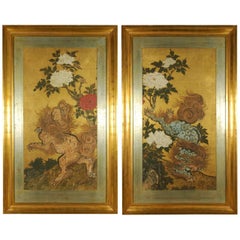
A rare pair of antique Japanese Karashishi paintings in a landscape of rocks and peony flowers on gold leaf ground in fine handmade frames, Edo period, early 18th century. The Karash...

Category

Antique Early 18th Century Japanese Edo Paintings and Screens

Materials

Gold Leaf

Japanese Bijin-ga Painting of Woman in Period Kimono, Taisho Period, circa 1920

Japanese Bijin-ga Painting of Woman in Period Kimono, Taisho Period, circa 1920

Located in Prahran, Victoria

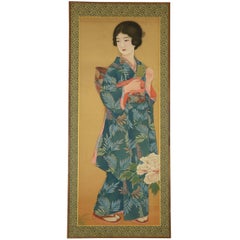
Rare Japanese Taisho period Bijin-ga style painting of a beautiful woman in period kimono holding a fan, circa 1920. Bijin-ga is a Japanese term used to describe paintings or pict...

Category

Vintage 1920s Japanese Taisho Paintings and Screens

Materials

Silk

Japanese Two-Panel Shunga Screen, Ink and Gold on Paper, Antique Art

Japanese Two-Panel Shunga Screen, Ink and Gold on Paper, Antique Art

Located in Prahran, Victoria

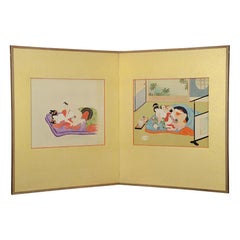
A very finely painted two panel 'shunga' screen with scenes of naked erotic lovers in union. The scene on the left panel simply depicts the lovers in ...

Category

Mid-20th Century Japanese Showa Paintings and Screens

Materials

Wood, Paper

You May Also Like

Antique 19th Century Japanese Four Panel Screen Byobu, Maruyama-Shijo School

Antique 19th Century Japanese Four Panel Screen Byobu, Maruyama-Shijo School

Located in London, GB

Antique 19th Century Japanese Four Panel folding Byobu Late Edo Period C.1800 Maruyama-Shijo School A high quality commissioned example, painted in ink and mineral pigments on paper...

Category

Antique 19th Century Japanese Edo Paintings and Screens

Materials

Silk, Paper

Japanese Six-Panel Screen, a Garden for All Seasons

Japanese Six-Panel Screen, a Garden for All Seasons

Located in Hudson, NY

An imaginary garden with flowers from all seasons including spring lilies, summer hibiscuses, autumn chrysanthemums, and winter berries. Wild autumn grasses move in a soft breeze wit...

Category

Antique 1890s Japanese Meiji Paintings and Screens

Materials

Gold Leaf

Japanese Six Panel Screen by Garden’s Edge

Japanese Six Panel Screen by Garden’s Edge

Located in Hudson, NY

Edo period (18th century) painting of a flowing array of various types of chrysanthemums painted on beautifully faceted heavy gold leaf and behind afinely painted fence. Petals of th...

Category

Antique 18th Century Japanese Paintings and Screens

Materials

Gold

Japanese Six-Panel Screen, Chrysanthemums

Japanese Six-Panel Screen, Chrysanthemums

Located in Hudson, NY

Japanese six-panel screen: Chrysanthemums, Edo period (circa 1800) painting of a variety of chrysanthemums in a garden landscape, with sparrows. Mineral p...

Category

Antique Early 1800s Japanese Edo Paintings and Screens

Materials

Gold Leaf

Japanese Six Panel Screen with Hotei, Edo Period, Early 19th Century

Japanese Six Panel Screen with Hotei, Edo Period, Early 19th Century

Located in Austin, TX

A delightful Japanese six panel painted paper screen featuring the beloved figure Hotei, Edo Period, early 19th century. Hotei, called Budai in China, and known as the Laughing Buddha or Fat Buddha in the West, is considered to be an emanation of Maitreya, the Buddha of the Future. In Japan, he also holds a special place as one of the Seven Lucky Gods, being the god of fortune, and protector of children. He is always portrayed as a mirthful and corpulent man, dressed in loose robes that show off his round belly. He carries a sack with him, said to be filled with treasure. As the protector of children, he is often portrayed with them playing on or around him, as he is here. The children portrayed in this screen are dressed in Chinese style clothing...

Category

Antique Early 19th Century Japanese Edo Paintings and Screens
Materials

Silk, Paper