Want more images or videos?
Request additional images or videos from the seller
1 of 15

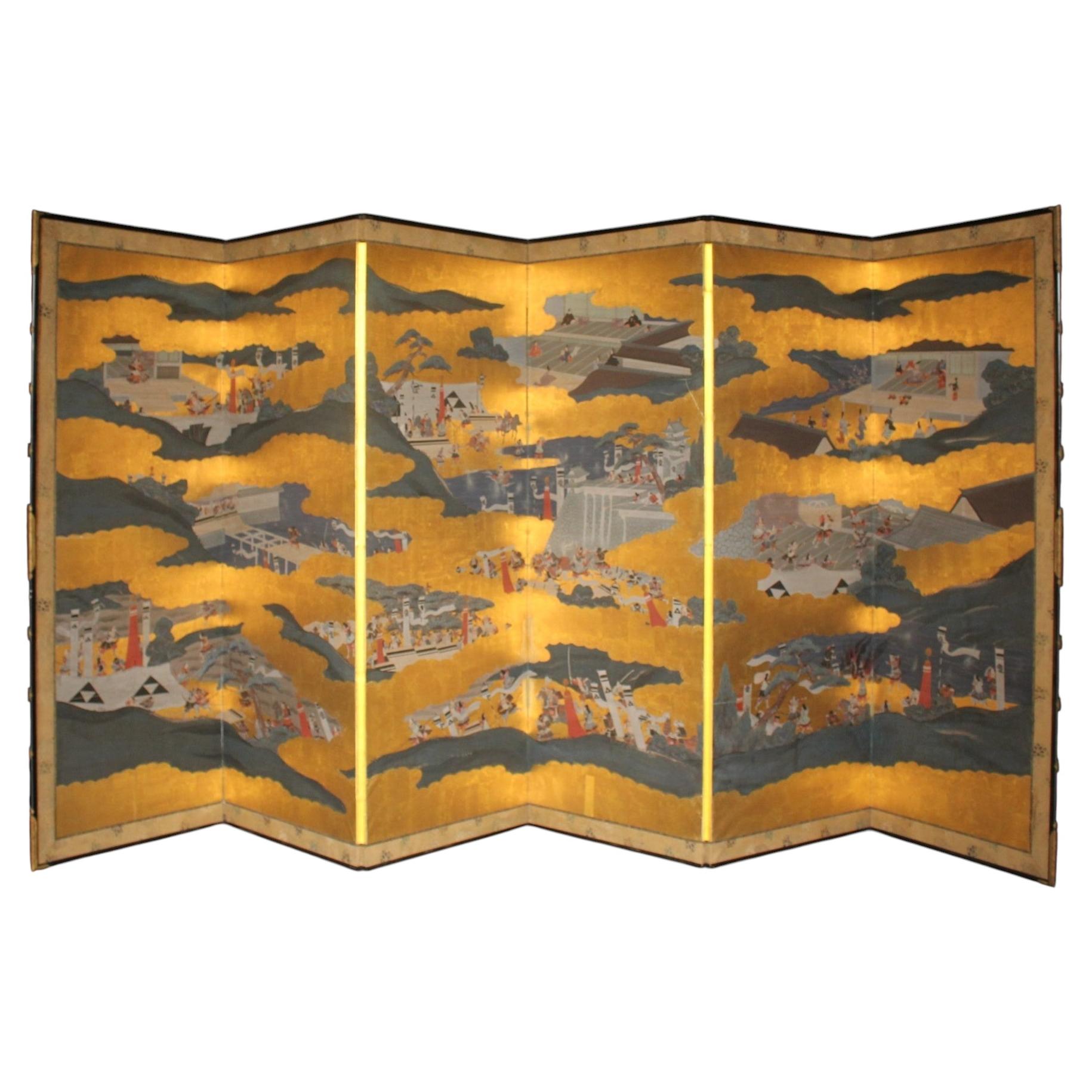
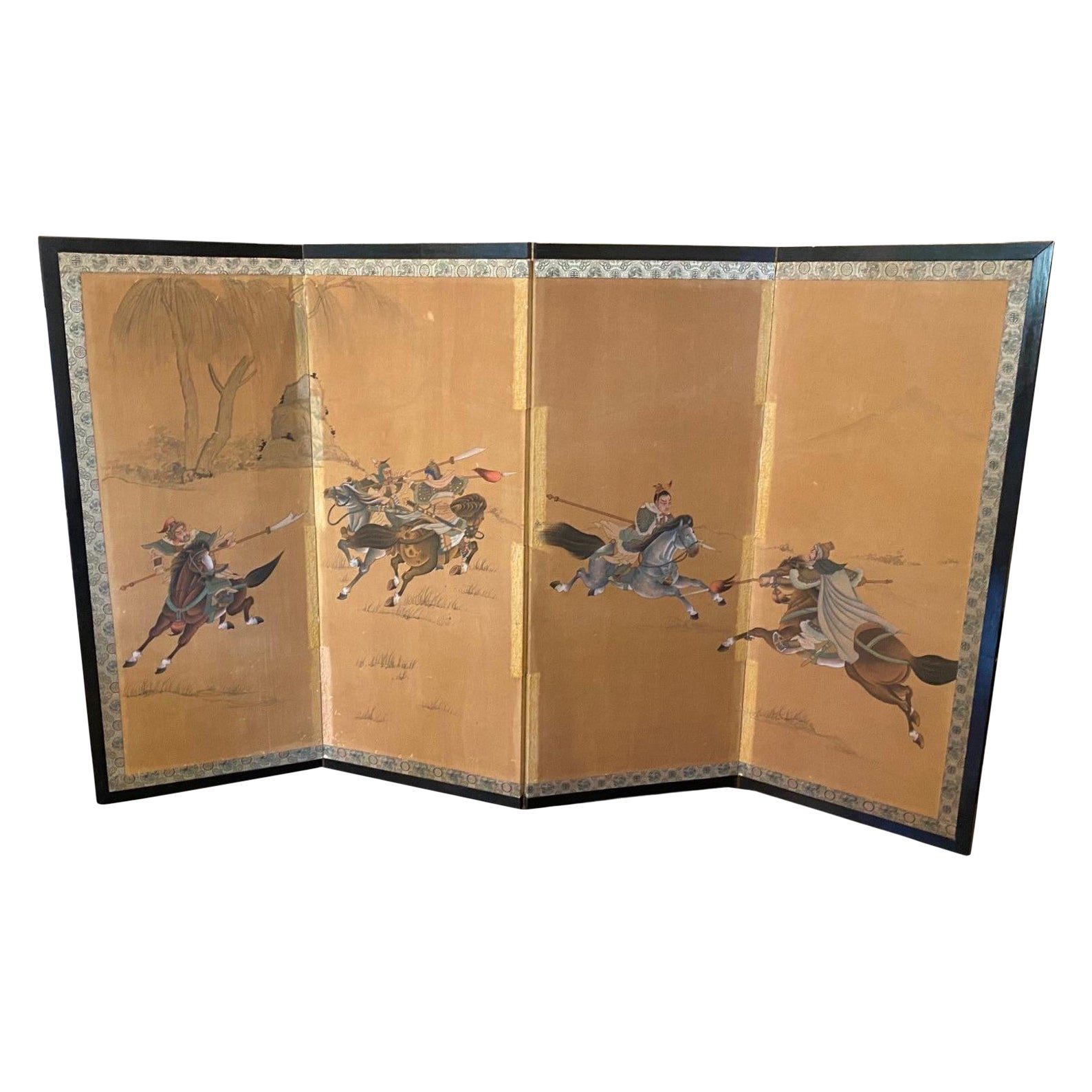
Japanese Edo Four-Panel Gold Leaf Samurai Battle Screen, circa 11900

$39,500
£29,544.70
€34,540.25
CA$55,839.12
A$56,097.62
CHF 32,357.62
MX$682,679.92
NOK 375,878.83
SEK 381,288.44
DKK 258,208.54

About the Item

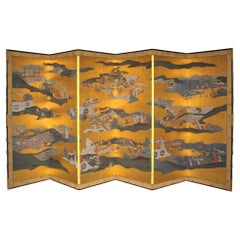
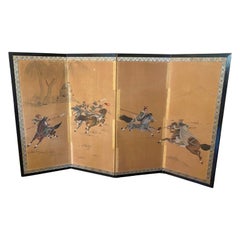
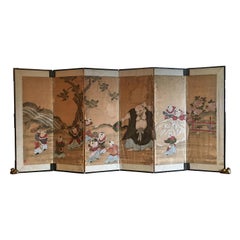
Japanese Edo Period Four-Panel Byōbu Screen Depicting a Daimyō Samurai Procession An impressive and unusually large Japanese four-panel folding screen (byōbu) dating to the Edo period (1603–1868), circa 1850 masterfully painted in mineral pigments and ink over a brilliant gold-leaf ground. Rich in historical symbolism and dramatic visual impact, the screen depicts a procession of mounted samurai led by an important daimyō, or feudal lord, traveling through an idealized mountainous landscape beneath shimmering clouds of gold. Monumental in scale and exceptionally decorative, the work exemplifies the grandeur and refinement of Edo-period screen painting. The composition unfolds across a luminous field of hand-applied gold leaf, where stylized clouds drift through the scene, dividing architectural, landscape, and military elements into an elegant narrative. At the upper left, an elaborate palace or fortified residence emerges from the clouds, suggesting the seat of a powerful clan. Below, mounted warriors dressed in magnificent armor ride through mountainous terrain, their richly decorated horses and brilliantly colored garments providing striking contrast against the radiant gold background. The central figure, likely representing the daimyō, is portrayed wearing elaborate ceremonial armor and an imposing court helmet, emphasizing his authority and noble rank. He is surrounded by loyal retainers, each meticulously rendered with individual armor, weapons, banners, and distinctive horse trappings. The artist demonstrates remarkable attention to detail, carefully depicting bows, quivers, swords, helmets, and layered armor while preserving the rhythmic elegance characteristic of classical Japanese painting. The landscape itself is rendered in the stylized manner favored during the Edo period. Bold blue-green mountains rise dramatically from swirling gold clouds, while architectural elements appear almost as glimpses through mist, creating an ethereal atmosphere that balances military strength with poetic beauty. The extensive use of gold leaf not only enhanced the luxurious appearance of the screen when illuminated by candlelight but also symbolized prestige, prosperity, and the elevated status of its original owner. Screens of this scale and refinement were commissioned for the residences of powerful samurai families and daimyō, serving both as architectural furnishings and as statements of political authority and cultural sophistication. The subject matter strongly suggests that this screen may have commemorated an important regional military event, formal procession, or celebrated the history and prestige of a particular feudal clan. Such works combined historical narrative with decorative magnificence, transforming the interiors of castles and elite residences into displays of power and artistic excellence. Measuring an impressive 100 inches in length, the screen possesses exceptional decorative presence while remaining an important example of Edo-period courtly painting. The harmonious composition, luminous gold-leaf surface, and beautifully preserved palette make it equally suitable for a museum-quality collection or an important interior. The screen remains in fine antique condition, exhibiting expected wear, minor abrasions, and age-related surface characteristics consistent with over two centuries of careful preservation. These subtle signs of age enhance its authenticity while preserving its striking visual impact. An outstanding example of Japanese Edo-period screen painting, this rare four-panel byōbu combines historical significance, masterful craftsmanship, and commanding decorative beauty, making it an exceptional acquisition for collectors of Japanese art, samurai history, and important Asian antiques. Dimensions Length: 100 in. (254 cm) Height: 66 in. (167.6 cm) Depth: 1 in.(2.5 cm) Materials: Gold leaf painted on rice paper and colored pigment on the samurai figures. Condition Fine antique condition with expected age-related wear, minor surface abrasions, and light craquelure consistent with its age. The gold leaf and painted decoration remain vibrant and highly decorative.
  • Dimensions:
    Height: 66 in (167.64 cm)Width: 100 in (254 cm)Depth: 1 in (2.54 cm)
  • Style:
    Japonisme (Of the Period)
  • Materials and Techniques:
  • Place of Origin:
  • Period:
  • Date of Manufacture:
    circa 1860
  • Condition:
    Wear consistent with age and use. We make our best effort to provide a fair and descriptive condition report. Please examine photos attentively, as they are part of the description. Send us a message to request more details or discuss price.
  • Seller Location:
    New York, NY
  • Reference Number:
    1stDibs: LU2819350980042

More From This Seller

View All
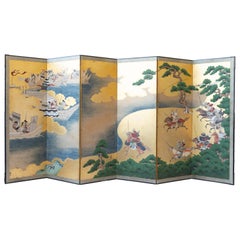
Japanese Edo Six-Panel Screen with Poetry & Court Figures, circa 1800

Japanese Edo Six-Panel Screen with Poetry & Court Figures, circa 1800

Located in New York, NY

Japanese Six-Panel Screen with Classical Poetry and Court Figures, Edo Period, circa 1800 (The painted court figures are earlier than the screen and date to approximately 1800.) An ...

Category

Antique Early 1800s Japonisme Paintings and Screens

Materials

Wood, Paper

Japanese Taisho/Showa Period Six - Panel Screen with Galloping Horses, Ca. 1920

Japanese Taisho/Showa Period Six - Panel Screen with Galloping Horses, Ca. 1920

Located in New York, NY

Japanese Taisho/Showa Period Six - Panel Screen with Galloping Horses, Ca. 1920 ABOUT Taisho/Showa Period (1912 – 1926) DIMENSIONS Width: 70 inches Height: 35 inches

Category

Vintage 1920s Japanese Japonisme Paintings and Screens

Materials

Wood

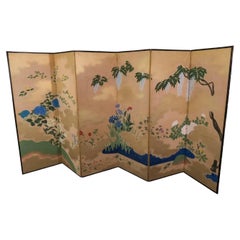
Japanese Meiji Period Six-Panel Screen with Blue Lake and Flowers, Ca. 1900

Japanese Meiji Period Six-Panel Screen with Blue Lake and Flowers, Ca. 1900

Located in New York, NY

Japanese Meiji Period Six-Panel Screen with Blue Lake and Flowers, Ca. 1900 Meiji Period (1868-1912) DIMENSIONS Length: 145 inches Height: 69.5 inches

Category

Antique Early 1900s Japanese Japonisme Paintings and Screens

Materials

Wood

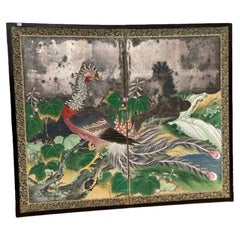
Japanese Two-Panel Phoenix Screen, Edo Period, Ca. 1850

Japanese Two-Panel Phoenix Screen, Edo Period, Ca. 1850

Located in New York, NY

Japanese Two-Panel Phoenix Screen, Edo Period, Ca. 1850 Japanese Edo Period (1603-1868) DIMENSIONS Height: 24 inches Width: 28 inches

Category

Antique 1850s Japanese Japonisme Paintings and Screens

Materials

Wood

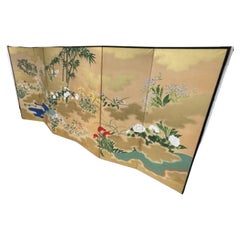
Japanese Meiji Period 6-Panel Screen w/ Blue Lacquered Flowers, Ca. 1900

Japanese Meiji Period 6-Panel Screen w/ Blue Lacquered Flowers, Ca. 1900

Located in New York, NY

Japanese Meiji Period 6-Panel Screen w/ Blue Lacquered Flowers, Ca. 1900 Meiji Period (1868-1912) DIMENSIONS 145” long x 69.5” high

Category

Antique Early 1900s Japanese Japonisme Paintings and Screens

Materials

Wood

You May Also Like

18th Century Six Panel japanese Screen with Samurai on Horses

18th Century Six Panel japanese Screen with Samurai on Horses

Located in New York, NY

A spectacular six-panel Japanese screen dating to the 18th century. The screen depicts samurai warriors from the Tairo and Minamoto clans, who fought for control of Japan in the 12t...

Category

Antique Late 18th Century Japanese Paintings and Screens

Materials

Gold Leaf

Japanese Edo Six Panel Screen Yoshitsune and Benkei

Japanese Edo Six Panel Screen Yoshitsune and Benkei

Located in Rio Vista, CA

Spectacular 19th century Japanese late Edo period six-panel byobu screen depicting Yoshitsune and Benkei, two heroes of Japanese folklore. Crafted in ink and natural color pigments on mulberry paper with thick gold leaf borders on each panel. The character Yoshitsune is seated under a blossoming cherry tree in full armor holding a fan. The warrior priest or monk Benkei is depicted kneeling on a leopard skin...

Category

Antique 19th Century Japanese Edo Paintings and Screens

Materials

Brass, Gold Leaf

B130 Japanese Old Antiques, An Old Japanese Battle Scene Folding Screen, Byobu

B130 Japanese Old Antiques, An Old Japanese Battle Scene Folding Screen, Byobu

Located in Niiza, JP

Material: Paper, wooden cedar frame, copper One piece: W620×H1720mm×D18mm, Unfolded size: W3760mm Folded size: W640×H1720×D110mm, 15kg Estimate packing size: (sandwiched with 5-10mm ...

Category

Antique Late 19th Century Japanese Paintings and Screens

Materials

Copper

Japanese Six Panel Screen Battle of Uji Bridge

Japanese Six Panel Screen Battle of Uji Bridge

Located in Hudson, NY

The first battle at Uji was in 1180 and was the beginning of the Heike Wars. This screen depicts a famous scene from the Heike Wars. Two Heike generals, Sasaki Takatsuna and Kajiwa...

Category

Antique Early 19th Century Japanese Edo Paintings and Screens

Materials

Gold Leaf

Japanese Chinese Asian Four Panel Folding Byobu Screen Samurai Warriors Battle

Japanese Chinese Asian Four Panel Folding Byobu Screen Samurai Warriors Battle

Located in Studio City, CA

A wonderful four-panel Japanese (or Chinese) Byobu folding screen featuring a battlefield landscape with warring samurai warriors engaged in a fierce fight. The rich colors and hand-painted detail (notice the armor and facial expressions) really makes this quite an attractive work. Original decorative period brass hardware adds another wonderful touch. Likely from the early to mid Showa period (1926-1989). A beautiful, engaging work. Would be a great addition to any Japanese or Asian art...

Category

Mid-20th Century Japanese Showa Paintings and Screens

Materials

Wood, Paint, Paper

Japanese Six Panel Screen with Hotei, Edo Period, Early 19th Century

Japanese Six Panel Screen with Hotei, Edo Period, Early 19th Century

Located in Austin, TX

A delightful Japanese six panel painted paper screen featuring the beloved figure Hotei, Edo Period, early 19th century. Hotei, called Budai in China, and known as the Laughing Buddha or Fat Buddha in the West, is considered to be an emanation of Maitreya, the Buddha of the Future. In Japan, he also holds a special place as one of the Seven Lucky Gods, being the god of fortune, and protector of children. He is always portrayed as a mirthful and corpulent man, dressed in loose robes that show off his round belly. He carries a sack with him, said to be filled with treasure. As the protector of children, he is often portrayed with them playing on or around him, as he is here. The children portrayed in this screen are dressed in Chinese style clothing...

Category

Antique Early 19th Century Japanese Edo Paintings and Screens

Materials

Silk, Paper