Clay Scholar's Objects

to
1
2
2
2
1
1
1
1
4,289
170
165
87
86
1
1
2
2
2
Material: Clay
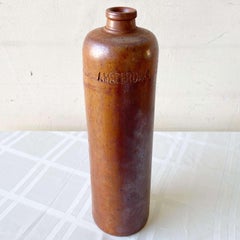
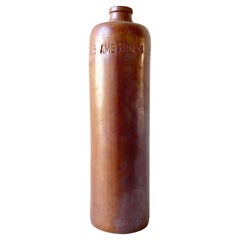
Vintage Erven Lucas Amsterdam 1 Liter Clay Bottle

Vintage Erven Lucas Amsterdam 1 Liter Clay Bottle

Located in Delray Beach, FL

Exceptional clay bottle from Amsterdam by Erven Lucas. Features a browned clay tone with its capacity, maker and place of origin carved into the sides. 1 liter

Category

1960s Dutch Vintage Clay Scholar's Objects

Materials

Clay

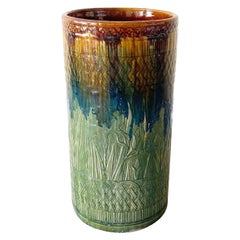
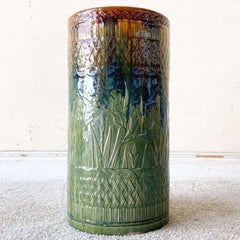
Boho Chic Green & Orange Floral Glazed Clay Floor Vase

Boho Chic Green & Orange Floral Glazed Clay Floor Vase

Located in Delray Beach, FL

Amazing vintage boho chic glazed clay floor vase. Features a etched exterior with a green orange and blue finish.

Category

1990s Clay Scholar's Objects

Materials

Clay

Related Items
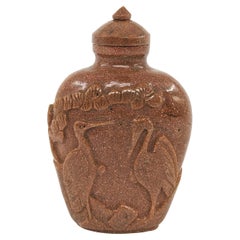
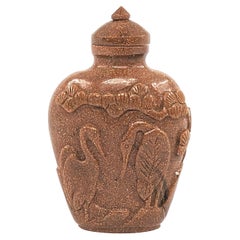
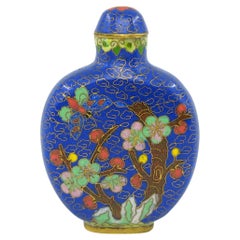
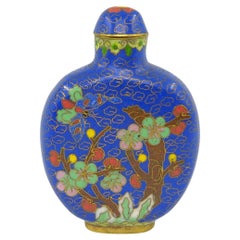
Antique Chinese Goldstone Carved Cranes Ibis Snuff Bottle Early 20c ROC

Antique Chinese Goldstone Carved Cranes Ibis Snuff Bottle Early 20c ROC

Located in Richmond, CA

Discover this rare and exquisite shimmering goldstone snuff bottle from the Republic of China period (1910-1940), a representation of the era's refined craftsmanship. Made from the distinctive goldstone, the bottle captivates with its natural sparkle, resembling a night sky strewn with stars. Each side features a pair of gracefully carved cranes...

Category

Early 20th Century Chinese Qing Clay Scholar's Objects

Materials

Glass

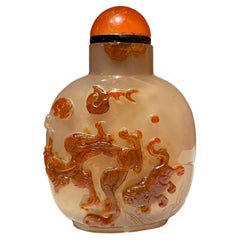
Antique Chinese Cameo Agate Snuff Bottle

Antique Chinese Cameo Agate Snuff Bottle

$3,000

H 3 in W 2.13 in D 1.5 in

Antique Chinese Cameo Agate Snuff Bottle

Located in Point Richmond, CA

Antique Chinese Cameo Agate Snuff Bottle, 19th century. The stone of a cloudy translucent color and caramel skin on the front side carved in high relief creating a cameo effect of a ...

Category

19th Century Chinese Qing Antique Clay Scholar's Objects

Materials

Agate

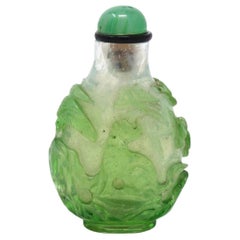
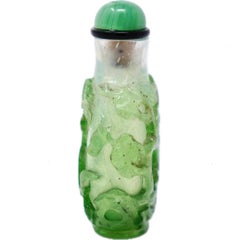
Antique Chinese Green-on-Green Overlay Glass Snuff Bottle

Antique Chinese Green-on-Green Overlay Glass Snuff Bottle

Located in Point Richmond, CA

A Green-on-Green Overlay Glass Snuff Bottle, Qing Dynasty. A clear bubbly glass bottle of flattened teardrop form with a cylindrical neck, and a neatly carved oval foot rim. The tr...

Category

Late 18th Century Chinese Qing Antique Clay Scholar's Objects

Materials

Glass

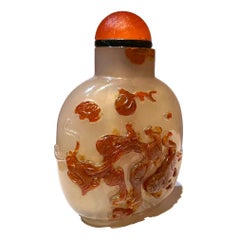
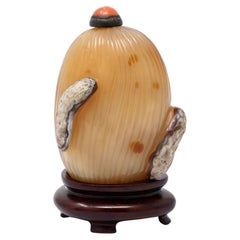
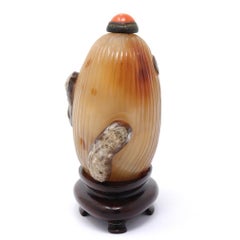
Antique Chinese Chalcedony “Peanut and Jujube” Snuff Bottle

Antique Chinese Chalcedony “Peanut and Jujube” Snuff Bottle

Located in Point Richmond, CA

Antique Chinese Chalcedony “Peanut and Jujube” Snuff Bottle, Qing Dynasty. The large pear shaped striated stone carving of a caramel colored jujube fruit (Chinese date) and two beige...

Category

19th Century Chinese Qing Antique Clay Scholar's Objects

Materials

Agate

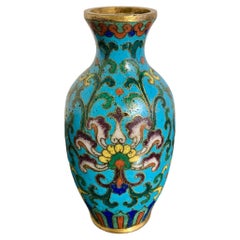
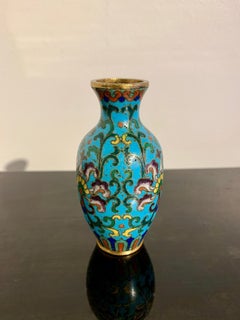
Chinese Cloisonne Incense Tool Vase, Qing Dynasty, 18th/19th Century, China

Chinese Cloisonne Incense Tool Vase, Qing Dynasty, 18th/19th Century, China

Located in Austin, TX

A small and elegant Chinese cloisonné vase for incense tools, Qing Dynasty, 18th/19th century, China. Made for the scholar's studio, this small refined vase, was used to hold incense tools, including a small pair of tongs or chopsticks and spoon. The tools no longer present. Of miniature baluster vase form, the vase beautify proportioned and decorated in the cloisonné enamel technique, with gilt wires forming the cloisons, or partitions. Within the cloisons, colorful enamels have been expertly laid. The small incense tool vase...

Category

Early 1800s Chinese Qing Antique Clay Scholar's Objects

Materials

Copper, Enamel

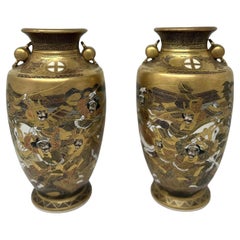
Antique Pair Japanese Satsuma Hand Painted Vase Urns Meiji Period 1868-1912

Antique Pair Japanese Satsuma Hand Painted Vase Urns Meiji Period 1868-1912

Located in Dublin, Ireland

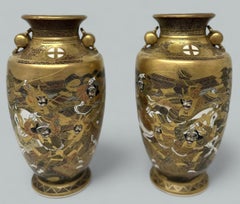
Stunning Pair of early Meiji period Satsuma heavy gauge earthenware Rouleau Japanese Vases of Museum quality and generous proportions. These beautiful Satsuma-ware vases were made du...

Category

19th Century Japanese Anglo-Japanese Antique Clay Scholar's Objects

Materials

Ceramic, Porcelain

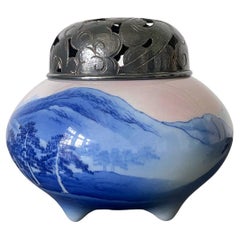
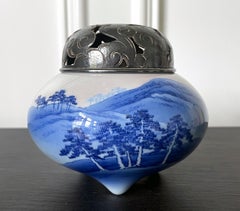
Japanese Glazed Ceramic and Silver Koro Incense Burner Makuzu Kozan

Japanese Glazed Ceramic and Silver Koro Incense Burner Makuzu Kozan

By Makuzu Kozan

Located in Atlanta, GA

A tri-pod ceramic incense burner (koro) by Japanese Imperial potter Makuzu Kozan (1842-1916) circa late Meiji to the start of Taisho period (1890-1910s). A fine example of the artist's work belonging to the late part of his underglaze paint phase (started around 1887 until his death), the surface of the koro was painted in beautiful shades of blue to depict a continuous landscape not unlike a traditional ink and watercolor hand scroll. The rise and fall mountains recede and fade into the horizon and are dotted with groves of pines. The sky is painted with a beautiful subtle shade of pink, suggesting a time of sunrise or sunset. The koro is fitted with an ensuite reticulated sterling silver hoya (incense cover), pierced with swirling cloud and marked with "pure silver' in Kanji. The base is signed in underglaze blue "Makuzu Kozan Sei" within a double ring. The piece is beautifully potted in form and the decoration was done with expertise using the novel technique developed by Kozan called Fuki-e (the blow painting), in order to achieve the striking landscape known as "Mountain and Water" with sense of dimensions and gradient, the poetic effects normally conveyed only by sumi ink staining on paper. The piece comes with an unsigned tomobako (wood storage box) of a recent age. Also known as Miyagawa Kozan (1842–1916), Makuzu Kozan was one of the most established and collected ceramist from Meiji Period. Born as Miyagawa Toranosuke, Kozan established his pottery studio in Yokohama around 1870s and later became one of the appointed artists to the Japanese Imperial household. His work was exhibited in many international fairs that the Meiji government participated at the turn of the century and won many grand prizes. Being one of the most creative ceramists, Kozan started experimenting with new chemical colors from the West in the format of his porcelain glaze around 1880s. New colors allowed him to create underglaze designs that appeared bright, smooth and glossy. He even invented his own receipt of cobalt blue to achieve a much brighter yet softer shade, as evident on this vase. To create landscape that is realistic and dimensional, more common in the western paintings, he was inspired by the native Japanese ink painting technique developed around 1900 by Yokoyama...

Category

Early 1900s Japanese Japonisme Antique Clay Scholar's Objects

Materials

Silver

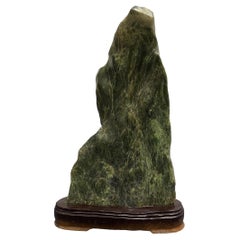
Early 20th Century Antique Chinese Green Serpentine Scholar Rock Diety Stone

Early 20th Century Antique Chinese Green Serpentine Scholar Rock Diety Stone

Located in Atlanta, GA

Chinese, probably late 19th to early 20th century. Super heavy piece, great quality and carving to this antique scholar rock!.

Category

Early 20th Century Chinese Chinese Export Clay Scholar's Objects

Materials

Serpentine

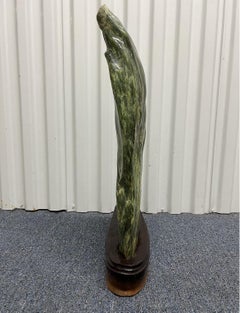
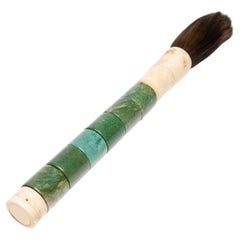
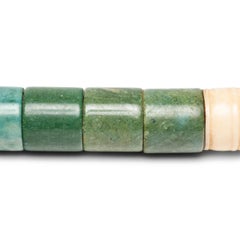
Chinese Green Stone Calligraphy Brush

Chinese Green Stone Calligraphy Brush

Located in Chicago, IL

Along with paper, ink and inkstone, the brush is one of the Four Treasures of the scholar’s studio. Arguably the most important tool, the brush served as a direct link to the artist’...

Category

20th Century Chinese Chinese Export Clay Scholar's Objects

Materials

Stone

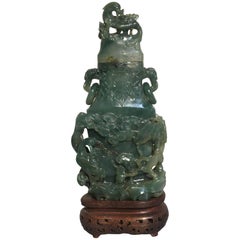
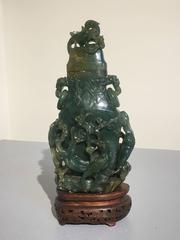
Chinese Carved Jadeite Vase and Cover, Qing Dynasty, Ex. C.T. Loo

Chinese Carved Jadeite Vase and Cover, Qing Dynasty, Ex. C.T. Loo

Located in Austin, TX

A stunning carved and pierced Chinese jade vase, Qing Dynasty, 19th century. The vase is carved with a design of birds, flowers and trees, each rife ...

Category

Mid-19th Century Chinese Qing Antique Clay Scholar's Objects

Materials

Jade, Silver

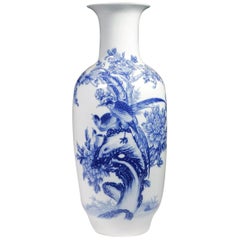
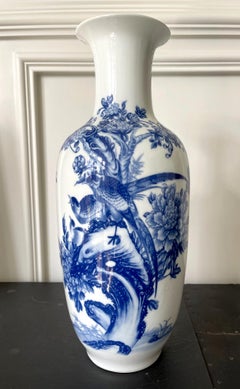
Chinese Blue and White Porcelain Vase from Modern Official Kiln

Chinese Blue and White Porcelain Vase from Modern Official Kiln

Located in Atlanta, GA

Dubbed as production of the "Chinese Modern Official Kiln", a small group of porcelains of the highest standard were produced in Jingdezhen from 1962-1967, The production was aimed as a revival of the Chinese porcelain after the foundation of the Republic in 1949 in order to serve the purpose of decorating the meeting halls for the newly renewed diplomatic relations around the globe. The best available materials and artists, including the painters and potters, were employed to achieve a high quality that rivaled the pieces produced during the pinnacle years in the porcelain production in the previous Qing dynasty. Due to the breakout of the Cultural Revolution, most of the pieces failed to be used as intended. Most if not all signatures, such as found on this vase, were added later as a hallmark to distinguish them. "Zhong Nai Hai Huai Ren Tang Treasures Porcelain Research Bureau year of 1962". Zhong Nai Hai is the residential and working compound for Chinese political elites in Beijing and Huai Ren Hall being an important meeting hall. The pieces from "Modern Official Kiln" ubiquitously showcase perfectly balanced forms with precision in symmetry. The use of very high quality Gaolin clay resulted in a semi translucent body, often quite thinly potted. The superbly underglaze paint were sandwiched between a pre-applied glaze and then an overglaze, and the elaborate designs were drawn by master painters. Often, there is a hidden red Chinese National Emblem on the interior wall. These features were all well reflected in this piece. The decoration of the blue paint on the vase is of a classic regal composition and the cobalt blue is of a vivid radiating color. Blooming peonies, an old laurel tree with blossom and scholar rocks provide the background and anchor for a pair of pheasants. One raises its head to crow while the other one looks down. These motifs are commonly found in classic Chinese scroll paintings, a genre called "Flower and Bird Painting". On the back of the vase, there are Chairman Mao's head portrait watermarked in the glaze as well as a cursive poem with a collection number as shown. For a pair of blue and white vase of the same production, see sale by Singapore International Auction PTE ltd on July 21st, 2019 lot 2014. For a pair of blue and white urns...

Category

1960s Chinese Modern Vintage Clay Scholar's Objects
Materials

Porcelain

Previously Available Items
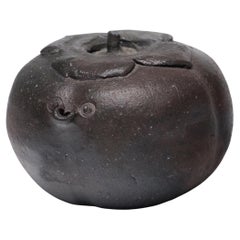
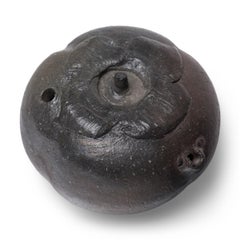
Japanese Black Clay Persimmon Water Dropper

Japanese Black Clay Persimmon Water Dropper

Sold

H 2 in W 2.75 in D 2.5 in

Japanese Black Clay Persimmon Water Dropper

Located in Chicago, IL

This petite ceramic sculpture is a Japanese water dropper (suiteki) in the form of a persimmon (kaki), an autumn fruit that symbolizes joy. Wat...

Category

20th Century Japanese Minimalist Clay Scholar's Objects

Materials

Clay

Set of Two Opium Bowls

Set of Two Opium Bowls

Sold

H 2.25 in Dm 2.25 in

Set of Two Opium Bowls

Located in Chicago, IL

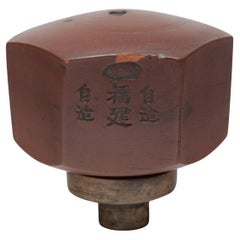
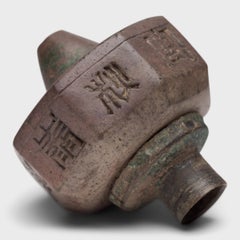
Unusual set of two clay opium pipe bowls for China c. 1850 One 19th century opium pipe bowl is sculpted of dark clay to an eight-sided form with a tapered mouthpiece and fitted with ...

Category

Late 19th Century Chinese Ming Antique Clay Scholar's Objects
Materials

Clay