Want more images or videos?
Request additional images or videos from the seller
1 of 16

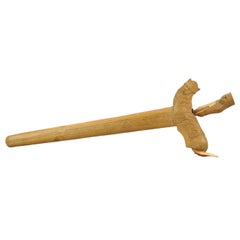
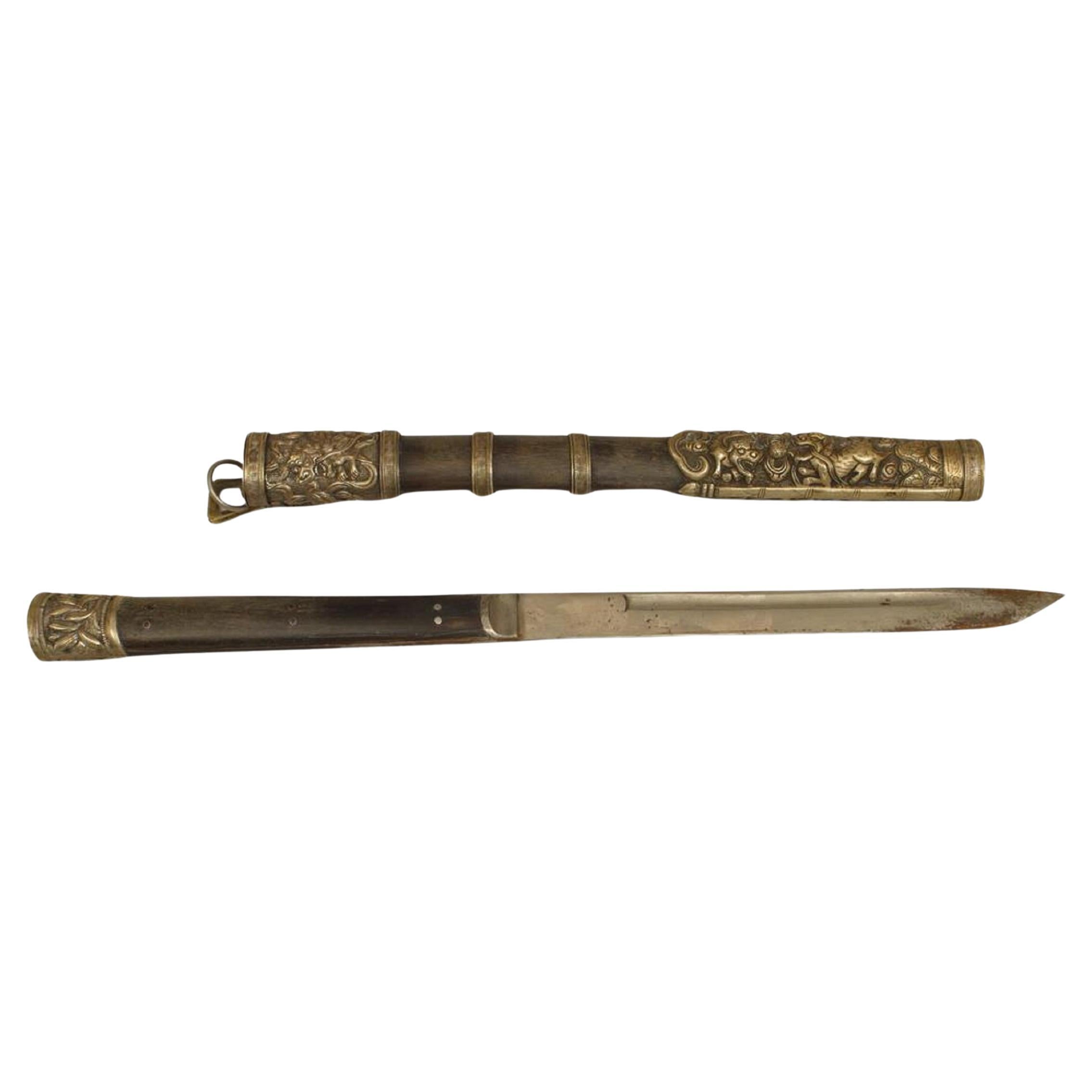
Wooden Sword of Old Japanese Buddha / 1800-1900 / Wall-Mounted Object

$800
£603.68
€702.60
CA$1,129.38
A$1,133.49
CHF 660.97
MX$13,779.96
NOK 7,595.25
SEK 7,811.32
DKK 5,251.86

About the Item

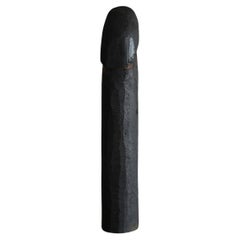
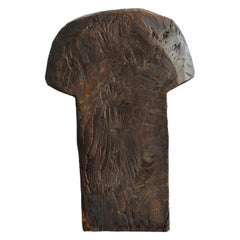
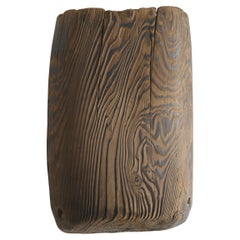
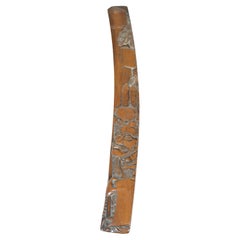
This is an introduction to a slightly unusual item. This is a wooden sword possessed by the Buddha statue. Only the sword remained. Gods such as Fudo Myo, who reign as Buddhist guardians, have such swords. In addition, Buddha statues in the bodhisattva position may also have swords. I think it's such a Buddha sword. Since the sword is long, it is thought that it was a fairly large Buddha statue. It's a simple model, so I think it's from the late Edo period to the early Meiji period. But it's very cool. Mount it on the wall or decorate it as a talisman. I think it suits a modern space. Also, I want many people to know the goodness of antiques, so the price is set reasonably. Why don't you show off to your friends around you? Weight: 215g Material:Cedar Please check the photo carefully as there are cracks in the tree.
  • Dimensions:
    Height: 26.58 in (67.5 cm)Width: 3.55 in (9 cm)Depth: 2.96 in (7.5 cm)
  • Style:
    Edo (Of the Period)
  • Materials and Techniques:
    Cedar,Woodwork
  • Place of Origin:
  • Period:
  • Date of Manufacture:
    1800-1900
  • Condition:
  • Seller Location:
    Sammu-shi, JP
  • Reference Number:
    1stDibs: LU5487228564522

More From This Seller

View All
Antique Japanese wooden ornamental railing top "Giboshi" / 19th century

Antique Japanese wooden ornamental railing top "Giboshi" / 19th century

Located in Sammu-shi, Chiba

This is a wooden **giboshi**, originally attached to the balustrade (koran) of a bridge or architectural structure. A *giboshi* is the ornamental “finial” placed on top of balustrade posts. While metal examples are widely known, there are also rare cases such as this one that were crafted from wood. They were used on bridges, temple and shrine architecture, and gates, serving to create a sense of boundary and dignity within a space. The design is said to originate from the image of the *hoju* (sacred wish-fulfilling jewel) seen in Buddhist architecture and ornamentation. A giboshi is not merely decorative; it has been regarded as a symbolic element that protects and spiritually defines a place. Based on its form and texture, this piece is estimated to date from the late Edo period to the Meiji period. Judging from the material quality, it is likely made from a dense hardwood, possibly zelkova (keyaki). Having been exposed to wind and rain for many years, the surface has developed a deeply weathered and dried expression. The parched wood grain, raised fibers, and naturally formed cracks all speak to the accumulation of time, giving the piece a sculptural presence. The rounded cap flowing into the strong vertical lines of the body creates a beautiful proportion—folk in spirit, yet somewhat primitive in character. This weathered texture should not be seen as deterioration, but rather as a beauty completed through the passage of time. Its quiet presence evokes wabi-sabi—an expression that cannot be reproduced through modern processing, but only formed by authentic aging. The size strikes an exquisite balance—neither too large nor too small. While easy to place, it creates a strong visual anchor within a space. Simply placing it alone on a shelf or sideboard gives it the presence of a sculptural object. In an entryway or alcove, it becomes a quiet symbolic accent. Positioned against a white or concrete wall, the contrast of materials becomes striking; paired with reclaimed wood furniture...

Category

Antique Late 19th Century Japanese Edo Sculptures and Carvings

Materials

Wood

Japanese antique wooden large penis / folk belief / 1868-1920

Japanese antique wooden large penis / folk belief / 1868-1920

Located in Sammu-shi, Chiba

This item is a giant wooden penis that was used in old Japanese houses from the late 19th century to the early 20th century (Meiji to Taisho eras). This i...

Category

Antique Late 19th Century Japanese Meiji Sculptures and Carvings

Materials

Cedar

Japanese Antique Wooden Object/Craftsman's Workbench/Penis-Shaped Figurine

Japanese Antique Wooden Object/Craftsman's Workbench/Penis-Shaped Figurine

Located in Sammu-shi, Chiba

Introduce interesting items. This was once used as a workbench in Japan. It's shaped like a penis, but one side of the tip has a mark that looks like it was hit and is slightly scr...

Category

Antique Late 19th Century Japanese Meiji Abstract Sculptures

Materials

Wood

Japanese antique wooden work board/wall hanging object/1868-1920/low table

Japanese antique wooden work board/wall hanging object/1868-1920/low table

Located in Sammu-shi, Chiba

This wooden work board is said to have been made in northern Kanto during the Meiji to Taisho periods (circa 1868–1920). Originally used in Japanese homes for kneading mochi and maki...

Category

Antique 19th Century Japanese Meiji Antiquities

Materials

Cedar

Antique Work Board Used by Japanese Craftsmen/1868-1920/Wabi-Sabi Wall Painting

Antique Work Board Used by Japanese Craftsmen/1868-1920/Wabi-Sabi Wall Painting

Located in Sammu-shi, Chiba

If you want something special, we recommend purchasing items selected by Brood. We sell carefully selected old Japanese items. I've seen tens of thousands of items so far. Based o...

Category

Antique Late 19th Century Japanese Meiji Paintings

Materials

Cedar

Japanese antique wooden wabi-sabi object / 1968-1920 / farming tools

Japanese antique wooden wabi-sabi object / 1968-1920 / farming tools

Located in Sammu-shi, Chiba

This is an old tabune, thought to have been made in Japan from the Meiji period to around the Taisho period (approximately the 1890s to the 1920s). It is likely one of the everyday t...

Category

Antique Late 19th Century Japanese Meiji Decorative Art

Materials

Cedar

You May Also Like

Japanese Wooden Dagger, Late 19th C

Japanese Wooden Dagger, Late 19th C

Located in Östermalm, Stockholms län

A Japanese high quality wooden dagger. The carving is made of the highest quality as often Japanese items are. There is a signature and a poem engraved on side. Comes from an old Swedish collection...

Category

Antique Late 19th Century Japanese Edo Sculptures and Carvings

Materials

Boxwood

Japanese Spear, Edo Period, bears signature

Japanese Spear, Edo Period, bears signature

Located in Östermalm, Stockholms län

A Japanese long spear. Partly lacquered wood with a forged spearhead which is signed. High quality as most of Japanese items. Provenance: early 20th century Swedish collection.

Category

Antique 19th Century Japanese Metalwork

Materials

Iron

Indonesian Single-Edged Sword with Carved Wooden Hilt, 19th Century

Indonesian Single-Edged Sword with Carved Wooden Hilt, 19th Century

Located in NICE, FR

An impressive ethnographic sword from Nias Island, Indonesia, featuring a broad single-edged metal blade with a characteristic forward-curving profile and a naturally aged, mottled p...

Category

Antique Late 19th Century Indonesian Tribal Arms, Armor and Weapons

Materials

Metal, Brass

Japanese Antique Exhibition Stand / Sword Case / 1800-1868s / Wabi-sabi

Japanese Antique Exhibition Stand / Sword Case / 1800-1868s / Wabi-sabi

Located in Shizukuishi-cho, Iwate-gun, Iwate Prefecture

This is an old drawer for storing Japanese swords originally called "Katanatansu". It is thought to be from around the Edo period. Cedar is used for the material, and a large numbe...

Category

Antique Mid-19th Century Japanese Edo Antiquities

Materials

Wood, Paper, Cedar

Antique Weapon Keris Ukurian Ceremonial Sword Dagger Southeast Asia

Antique Weapon Keris Ukurian Ceremonial Sword Dagger Southeast Asia

Located in Amsterdam, Noord Holland

Weapon Keris Ukurian Ceremonial Sword Dagger. Nice keris Additional information: Material: Bronze & Metal, Wood / Bamboo Region of Origin: India/Indonesia Period: 19th century, 20th...

Category

20th Century Indian Arms, Armor and Weapons

Materials

Bronze