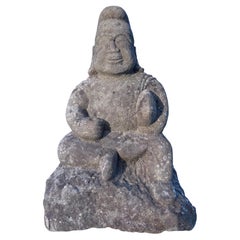
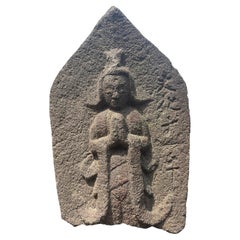
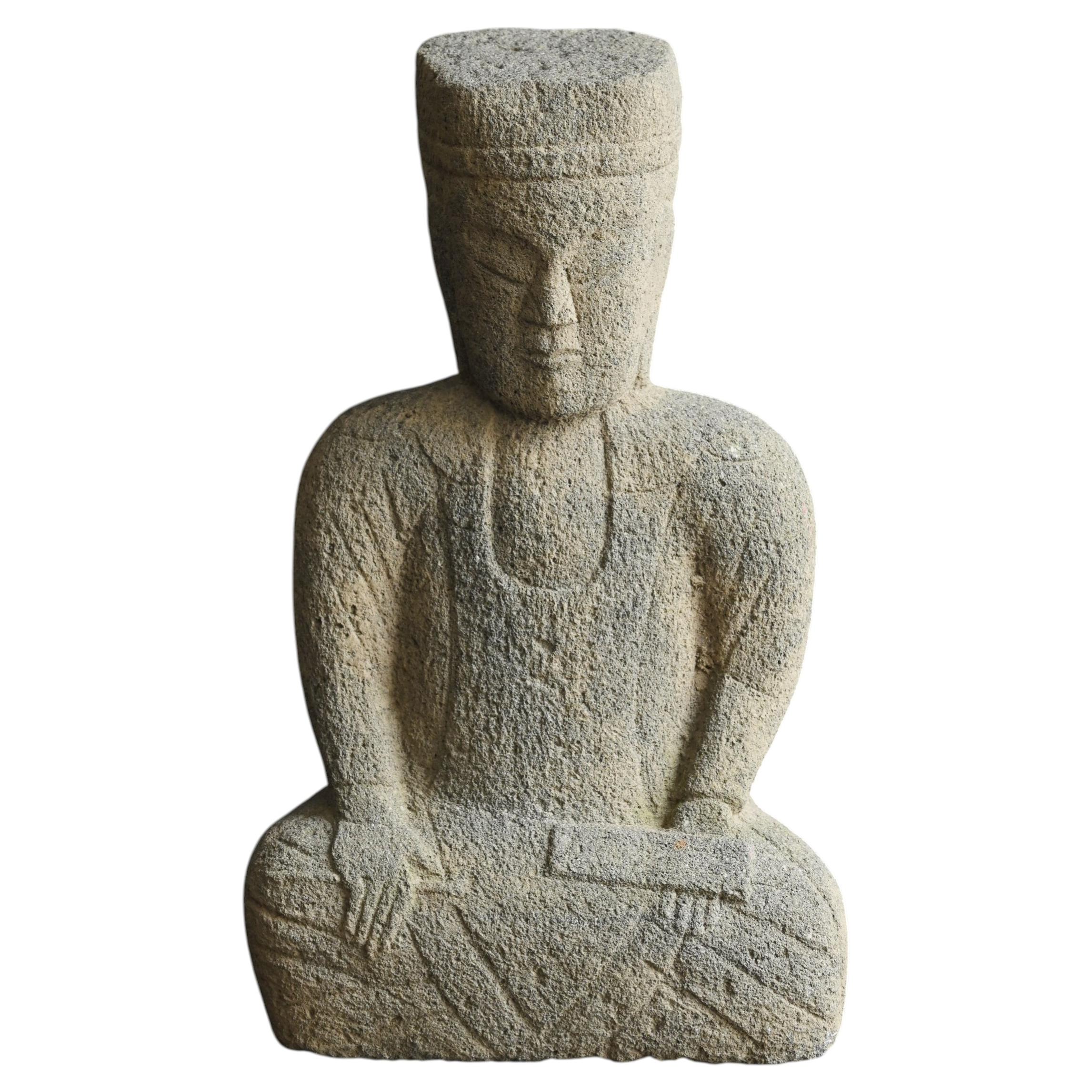
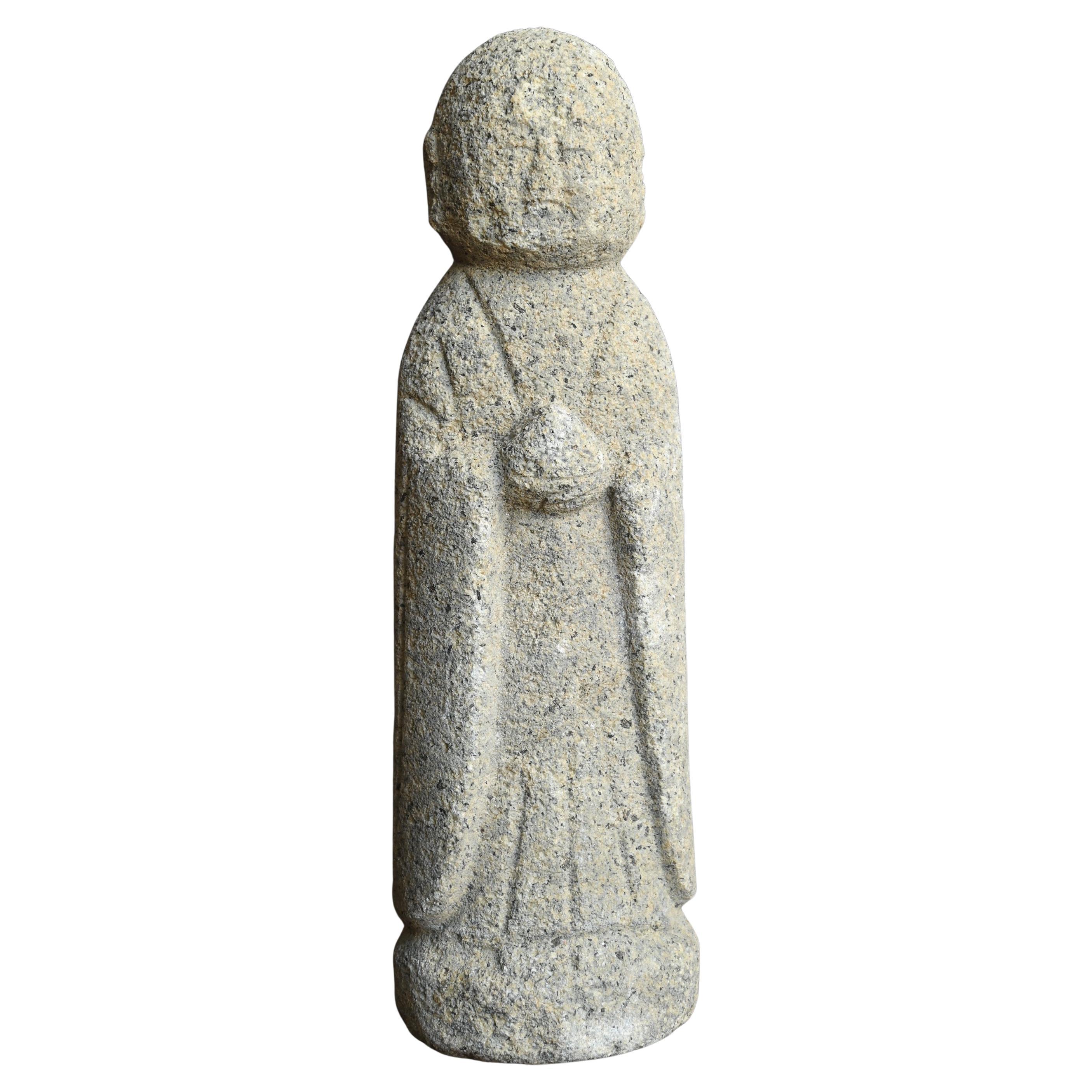
This is a stone guardian deity statue created in Japan during the mid to late Edo period (18th–19th century). It is carved from a single piece of natural stone. With a height of 38.5 cm and a weight of approximately 12.95 kg, it is suitable for tabletop display while possessing a solid sense of mass and presence.
From its form, it appears to belong not to the serene lineage of Nyorai (Buddha) or Bosatsu (Bodhisattva) figures, but rather to a tradition related to Shōmen Kongō or divine guardian generals (Shinshō). The head, which resembles a cap, may be interpreted as a simplified representation of hair standing on end, symbolizing anger or spiritual power. The figure stands with both hands joined before the chest, a rope-like belt tied at the waist, and a cloth draped around the lower body—elements that evoke the martial qualities seen in Fudō Myōō or Kongōrikishi. However, the expression remains distinctly rustic, prioritizing the direct manifestation of faith over refined realism. It is believed to have served as a protective deity enshrined at village boundaries, mountain passes, or entrances to rural settlements.
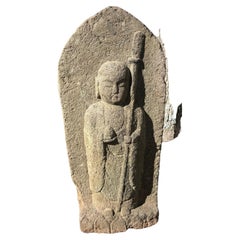
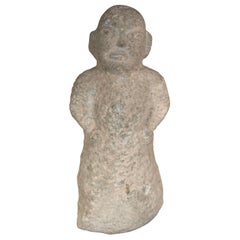
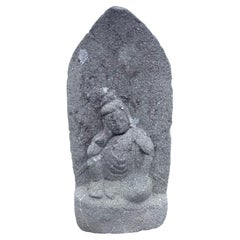
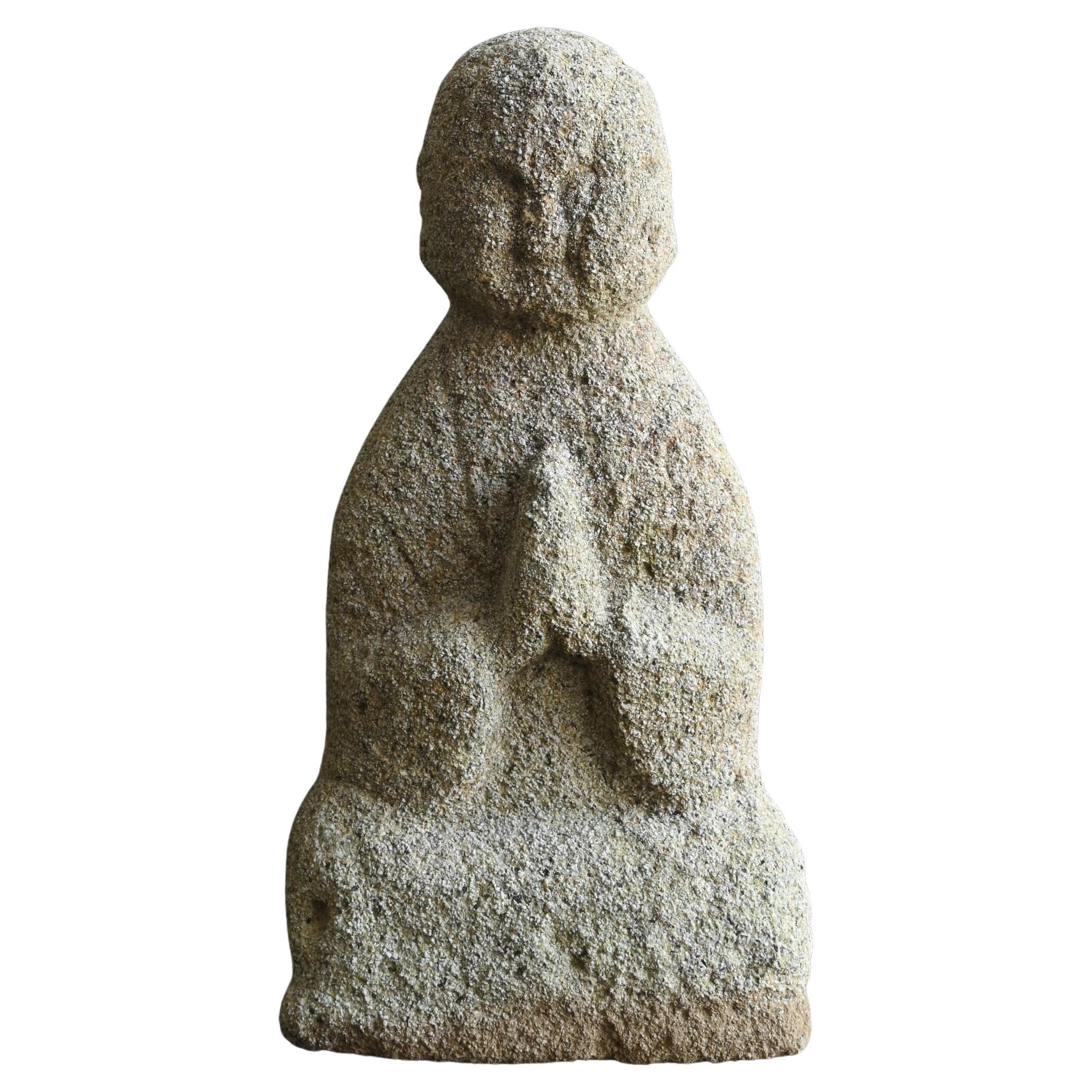
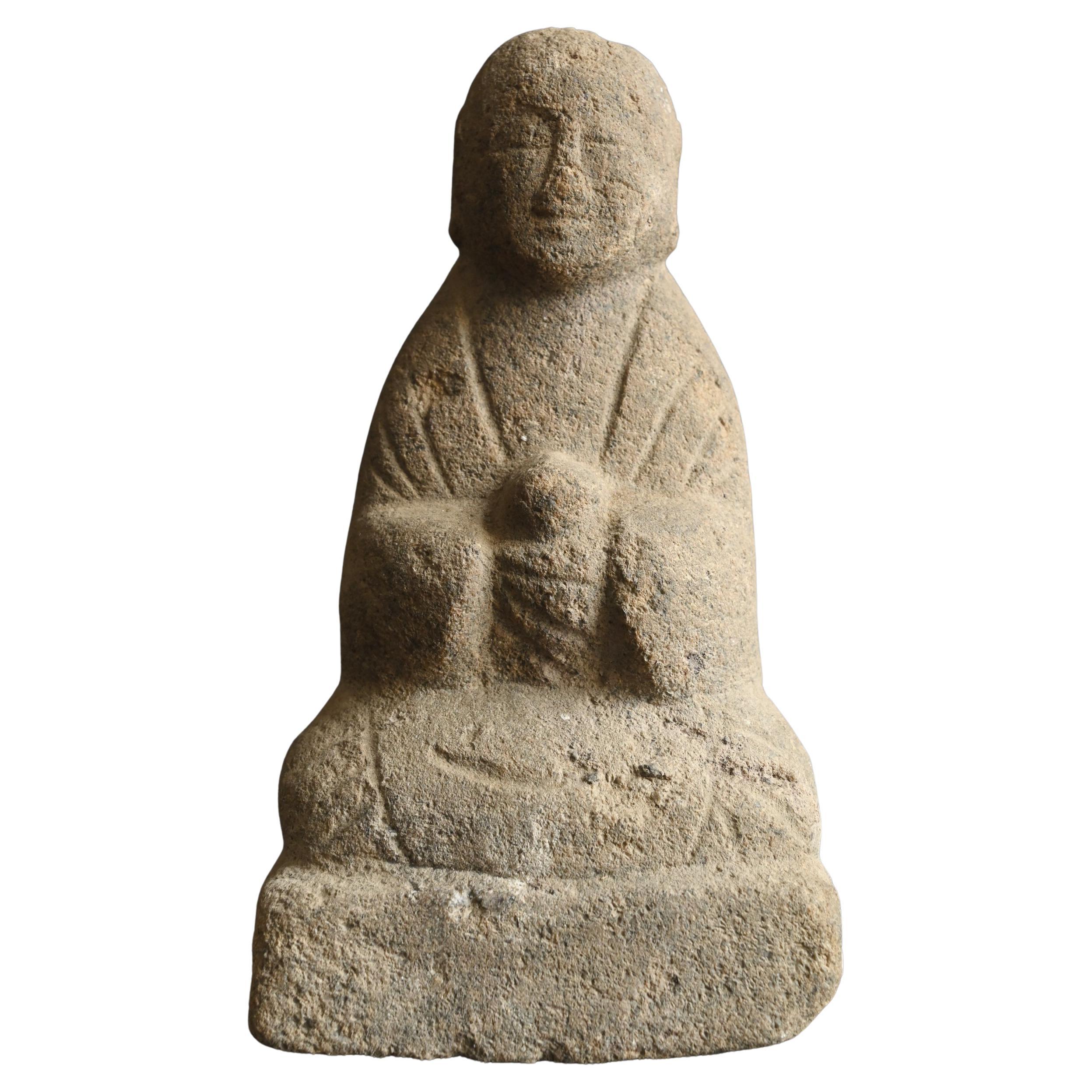
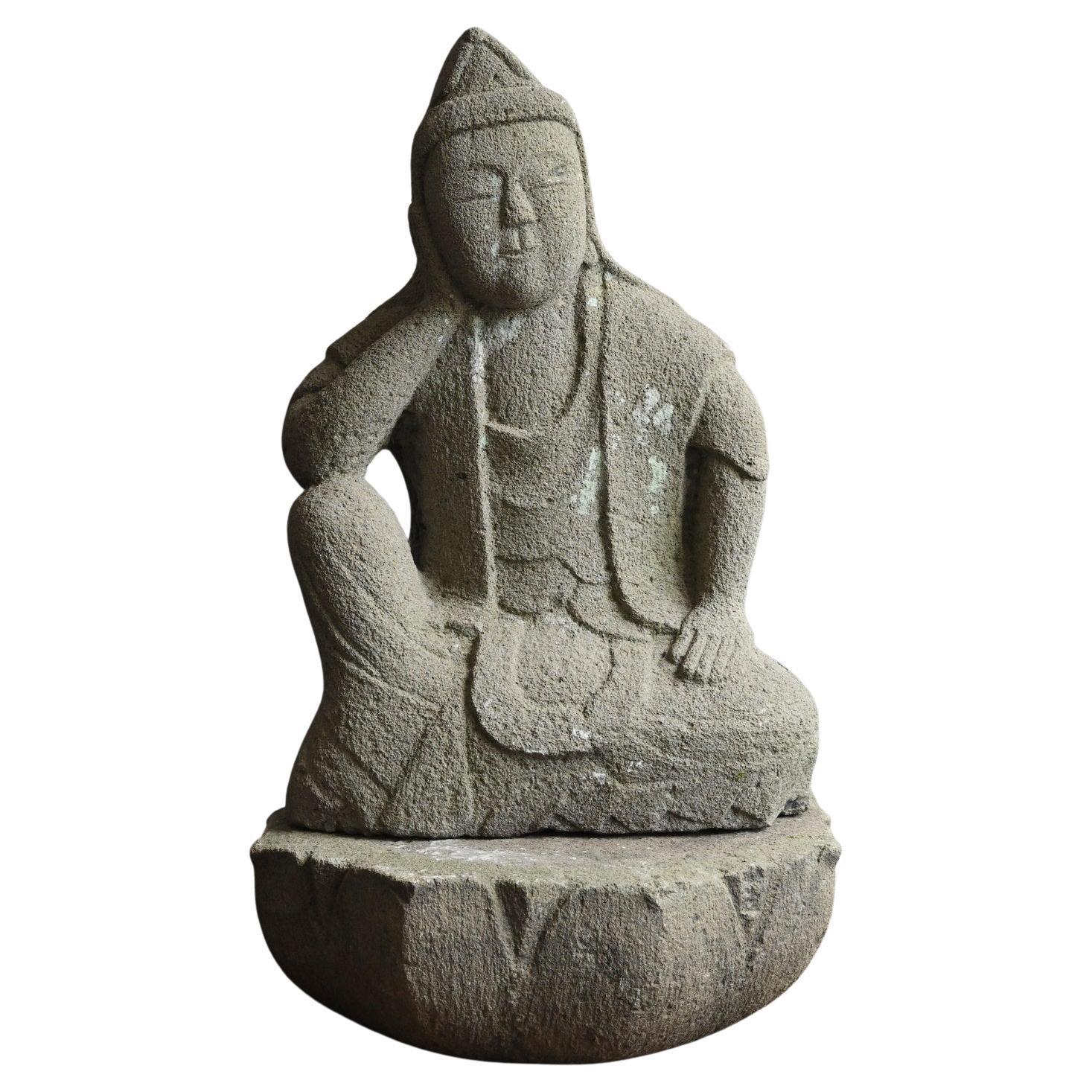
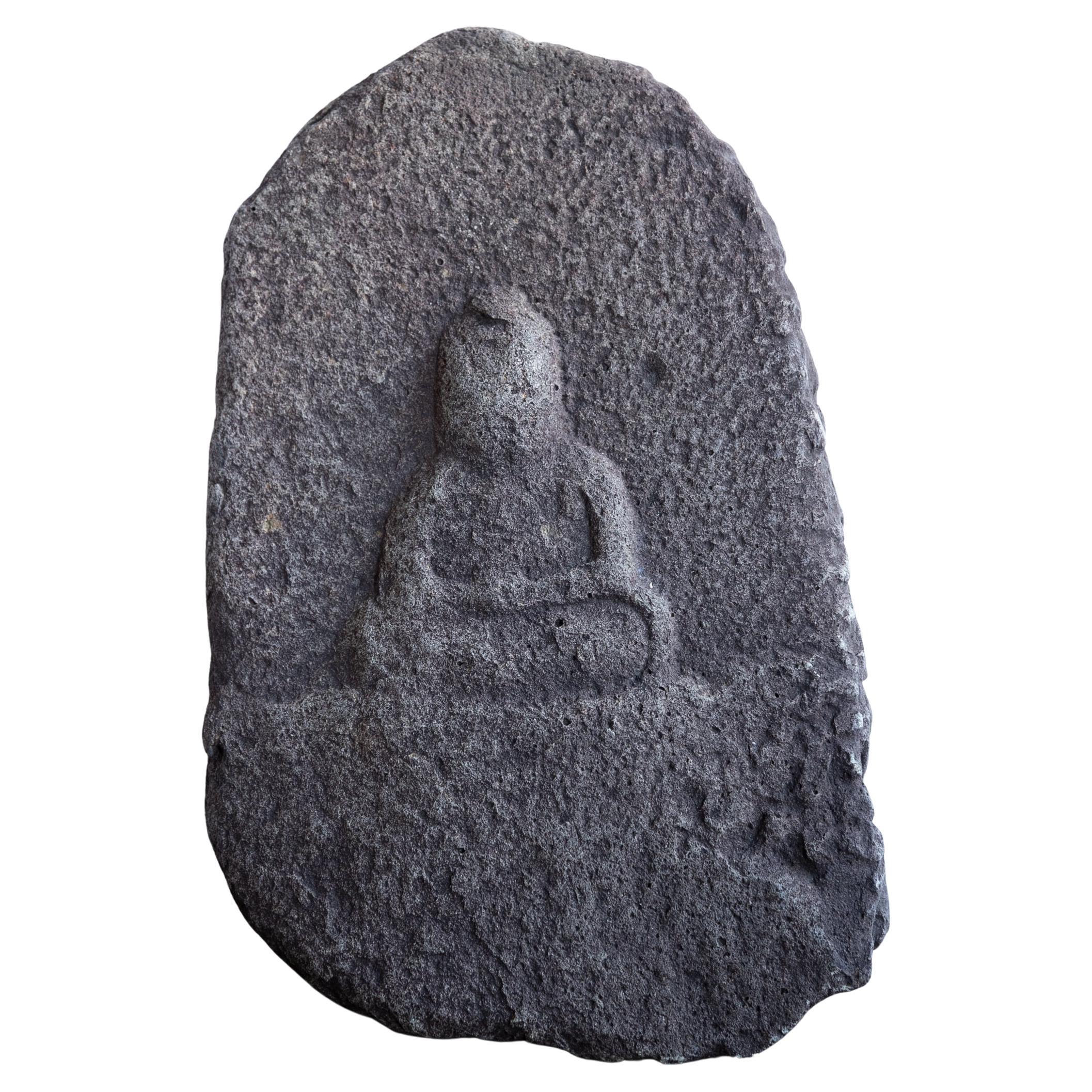
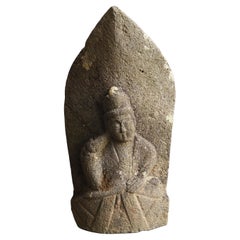
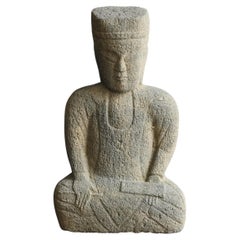
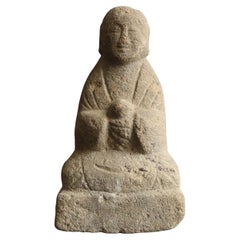
We have posted reference images of similar products, so please take a look at them as well.
The facial features are powerful: eyes that gaze straight ahead, a linear nose bridge, and a restrained mouth expression leave a strong impression. The carving of details is rough, and the natural texture of the stone, along with traces of weathering, remains fully visible. This raw quality is precisely the charm of a Buddhist image that lived within local faith traditions, distinct from the refinement of urban temple sculpture. Having been exposed to wind and rain over many years, the stone surface bears patches of moss and pale weathering marks, giving it a landscape-like presence that feels integrated with nature itself.
Among Japanese stone Buddhist figures, standing guardian-type statues such as this are relatively rare and are not frequently encountered on the market. Unlike well-balanced temple carvings, this is a one-of-a-kind piece directly shaped by the prayers of ordinary people.
In terms of condition, several cracks are visible from the head down toward the neck area (see the red-circled area in the images). However, the structure is not unstable, and there is no indication that the cracks are actively progressing. It can be displayed and appreciated in its current state without issue. The substantial weight ensures stable self-standing.
Placed before a white wall or atop a solid wood platform, it introduces a primitive tension and spiritual presence into a space. Whether in a traditional Japanese setting or a modern interior, a single placement of this piece will quietly anchor and elevate the atmosphere. It is a unique stone Buddha that carries the breath of folk belief into the present day.
Size: W20 cm × D15.2 cm × H38.5 cm
Weight: 12.95 kg
Item No.: SC153
[Our Social Role]
--------------------------------------------------------------------------------------------------------
We are a specialized team dealing in antiques and vintage items, comprised of stores based on three distinct brands. While focusing on Japanese items, we also offer a carefully curated selection of attractive goods from around the world—each evoking the culture and history of its country of origin.
Unlike the traditional Japanese antique furniture and art that have been appreciated overseas until now, we shine a light on the tools and furniture that were used for many years in ordinary Japanese homes and farmhouses. These objects have gained a unique charm over time, their beauty deepened by the history accumulated through daily life. In today’s world, however, many of these precious items are discarded during home demolitions. We are committed to reassessing their value and passing them on to future generations.
Drawing from our extensive experience—having seen tens of thousands of items through direct purchases, markets, and auction houses—we carefully select and present only the most captivating pieces. This is something made possible only through the years of knowledge and expertise we have cultivated.
Rather than focusing on the widely known facets of Japanese art and culture, we highlight the subtle beauty born from the everyday life of common people. It is this rediscovered beauty, steeped in history, that we strive to share with the world.
![Japanese Edo period stone Buddha statue / [guardian deity] / circa 18th century](https://a.1stdibscdn.com/japanese-edo-period-stone-buddha-statue-guardian-deity-circa-18th-century-for-sale/f_54872/f_493007921773974952942/f_49300792_1773974953967_bg_processed.jpg?width=240)
![Japanese antique stone god/[Daikokuten]/Stone Buddhas from the Edo period](https://a.1stdibscdn.com/japanese-antique-stone-god-daikokuten-stone-buddhas-from-the-edo-period-for-sale/f_54872/f_406808721721288384637/f_40680872_1721288385010_bg_processed.jpg?width=240)