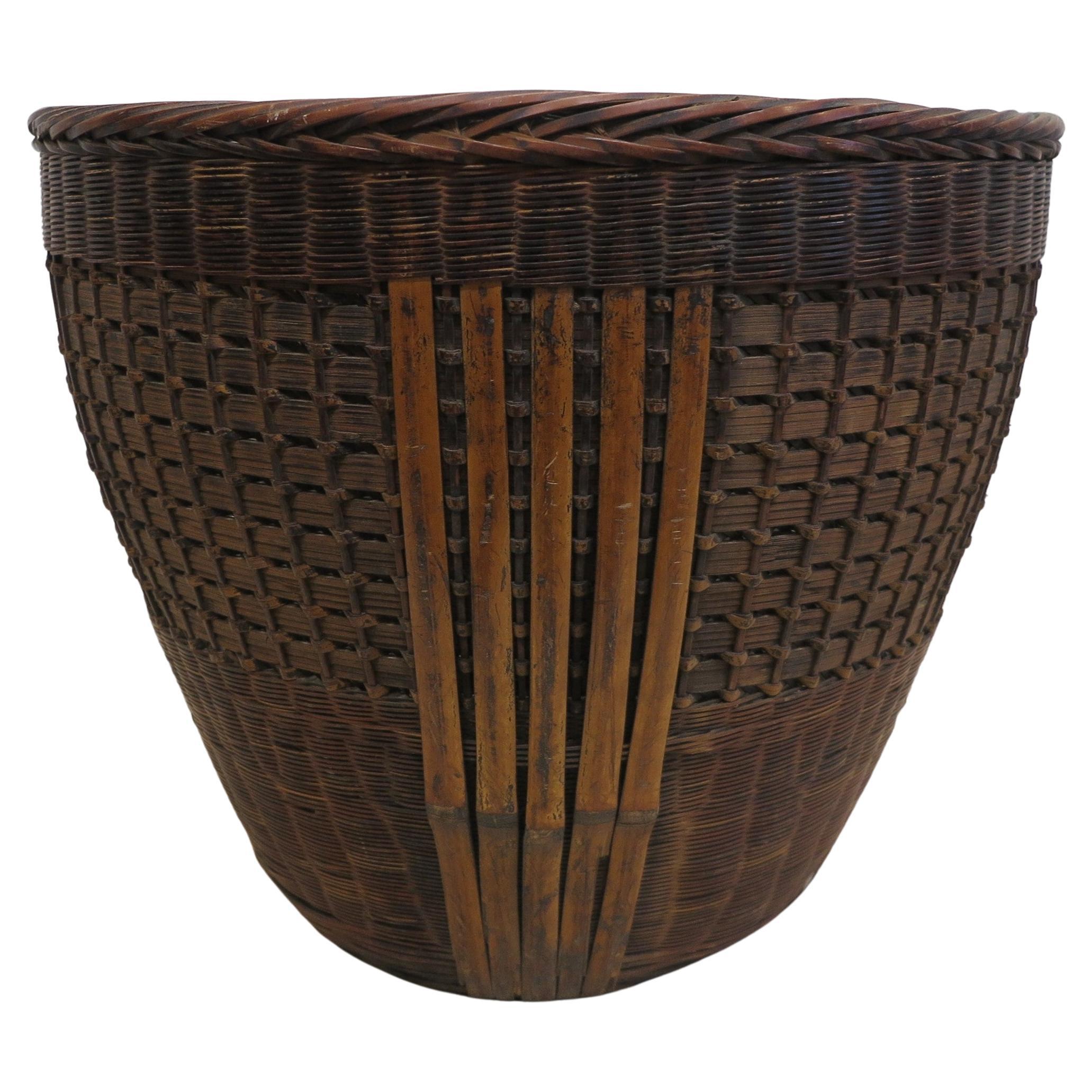
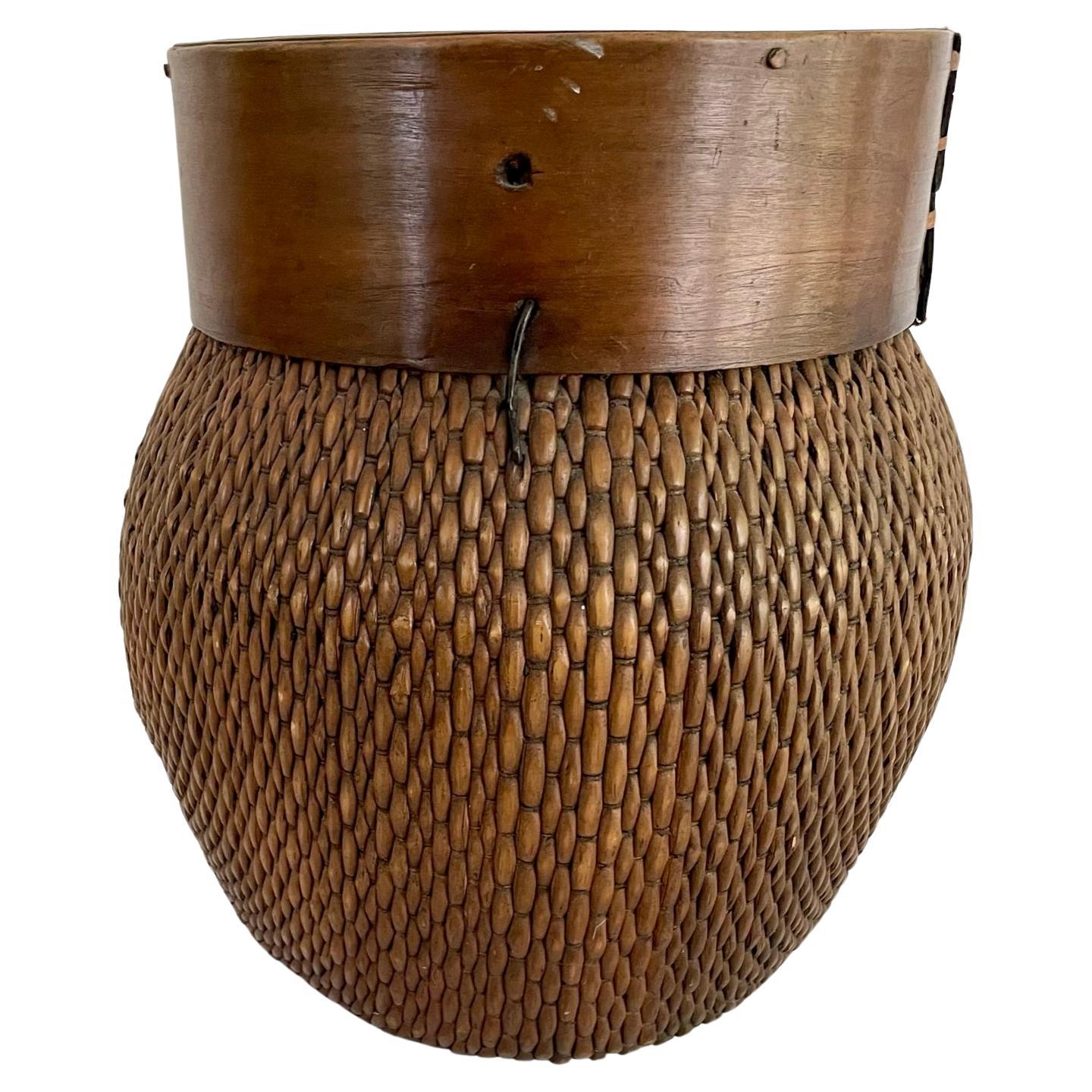
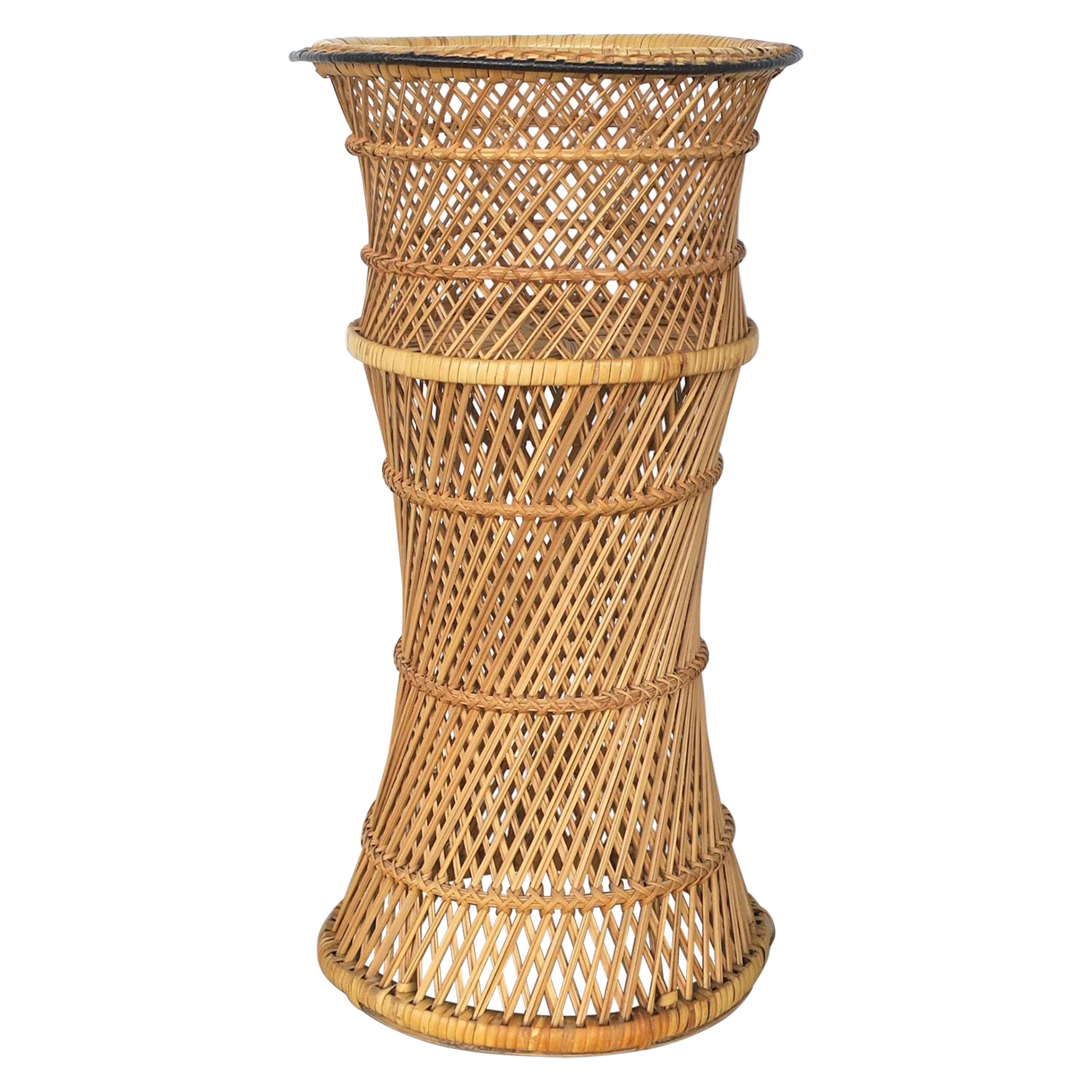
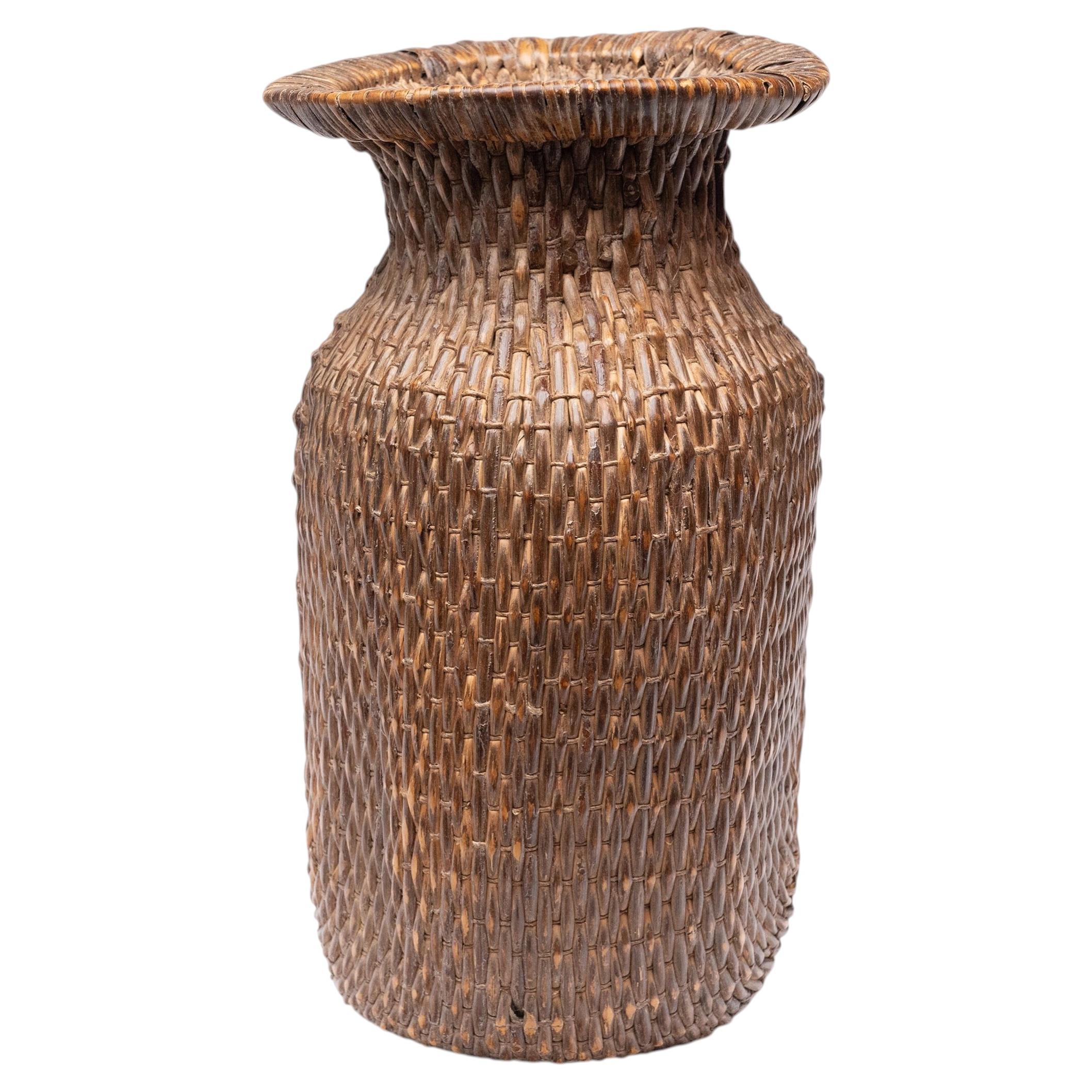
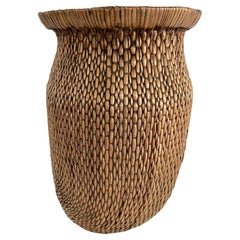
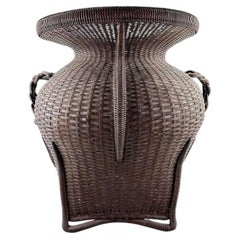
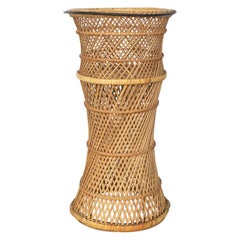
This Japanese woven bamboo flower basket (Hanakago) of large size and impressive presence was constructed in a classic Chinese form derived from the shape of porcelain vase known as "HaiTangZun" (Begonia Vase). Known as karamono (objects in Chinese style), It features a baluster body, a concave neck opening to an everted wide rim, handles on the sides, and a slightly flaring foot. This particular form became popular during the reign of Qing emperor Yongzheng (1723–1735 AD).
Although the basket was inspired by the Chinese form, its construction was entirely Japanese with a particular touch on the handles, two lateral ridge enforcements and a creative addition of the foot support. Impressive in size, the basket was made during late Meiji period (end of 19th-early 20th century) as an ikebana container...
Category
Antique Late 19th Century Japanese Meiji Decorative Baskets