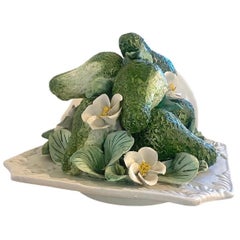
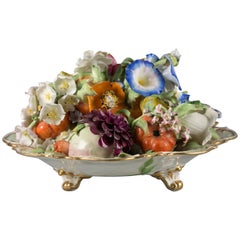
Trompe l'Oeil Avocado Bowl
Located in Charleston, SC
Wonderfully handcrafted greens with delicate white flowers where avocados sit piled on top of one another.
Mid-20th Century Italian Bohemian Decorative Dishes and Vide-Poche
Ceramic, Paint
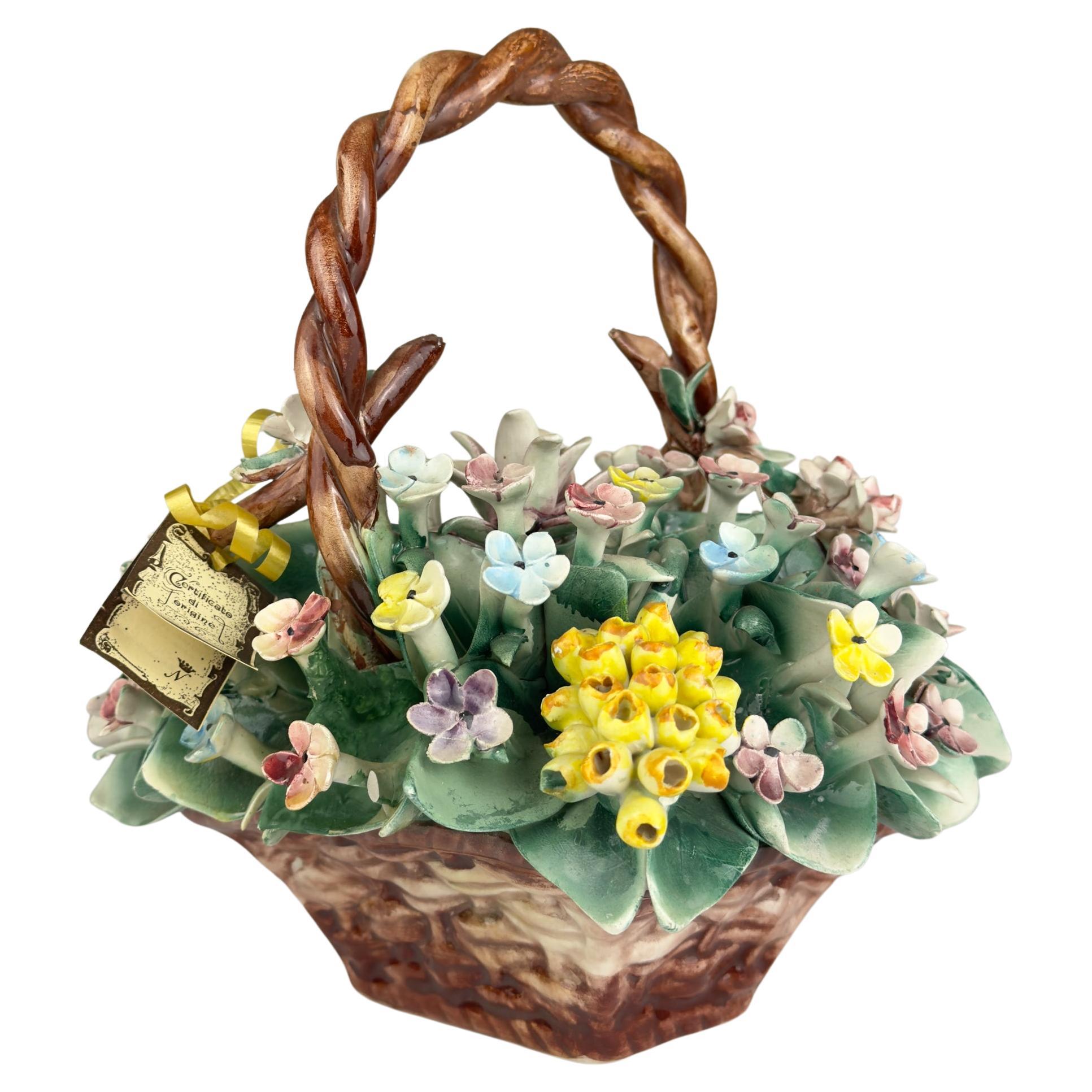
If success is measured by lasting name recognition, Capodimonte porcelain would seem to be in the same league as such makers as Meissen, Sèvres and Wedgwood. Early examples of Capodimonte lamps — as well as the Italian manufacturer’s celebrated porcelain vases, figurines and sculptures — can be hard to come by, but the best later pieces possess the same over-the-top charm.
The Real Fabbrica (“royal factory”) di Capodimonte hasn’t actually produced porcelain since the early 19th century, when Charles’s son Ferdinand sold it. Although secondary manufacturers have built upon the aesthetic and kept the name alive, some connoisseurs of the royal product feel these pieces should be labeled “in the style of” Capodimonte.
The timeline of royal Capodimonte porcelain is decidedly brief. From beginning to end, its manufacture lasted approximately 75 years. King Charles VII of Naples, who founded the manufactory in 1743, began experimenting with porcelain around 1738, the year he married Maria Amalia of Saxony. No coincidence there. His new bride was the granddaughter of Augustus the Strong, Elector of Saxony and founder of Meissen, the first European hard-paste porcelain manufactory. Her dowry included 17 Meissen table services.
Struck by porcelain fever, Charles built a dedicated facility on top of a hill (capo di monte) overlooking Naples. He financed expeditions to search for the right clay. He hired chemists and artisans to experiment. His earliest successes were small white snuffboxes and vases, although efforts soon progressed to full sets of tableware, decorative objects and stylized figurines of peasants and theatrical personalities.
In 1759, Charles succeeded to the throne of Spain. He moved the manufactory with him — including 40 workers and 4 tons of clay — and continued operations in Madrid. Twelve years later, his son Ferdinand IV, who inherited the throne of Naples, built a new factory there that became known for distinctly rococo designs.
The Napoleonic wars interrupted production, and around 1807, oversight of the royal factories was transferred to a franchisee named Giovanni Poulard-Prad.
Beginning in the mid-18th century, porcelain made by Charles’s factory was stamped with a fleur-de-lis, usually in underglaze blue. Pieces from Ferdinand’s were stamped with a Neapolitan N topped by a crown. When secondary manufacturers began production, they retained this mark, in multiple variations. The value of these later 19th- and 20th-century pieces is determined by the quality, not the Capodimonte porcelain marks.
Find antique and vintage Capodimonte porcelain for sale on 1stDibs.
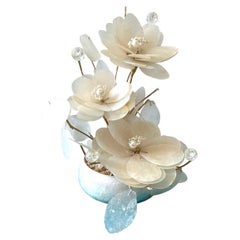
1970’s Capiz Shell Flower Display
Located in Charleston, SC
I really do love these capiz faux flower arrangements. You usually find these hand crafted displays in a shell being used as the vase. But thi...
Shell

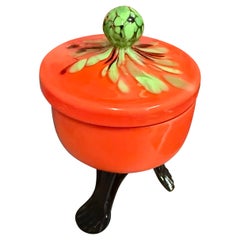
Antique 1920s Art Deco Moser Style Bohemian Art Glass Lidded Jar
By Moser Glassworks
Located in Charleston, SC
Probably made by Moser. The amazing work on this piece are the hand blown legs that support the bowl. The splatter effect is the green and black paints inside the clear glass and h...
Art Glass, Paint

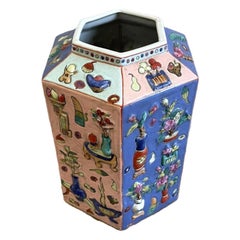
Early 20th Century Chinese Famille Rose Vase
Located in Charleston, SC
Antique 11.5" Chinese Famille Rose Precious Objects Hexagonal Relief Vase This antique Chinese vase is a beautiful piece of art that will add elegance to any room. With a hexagonal...
Porcelain
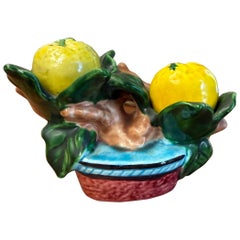
1950's Ceramic Lemon Salt & Pepper Shakers
Located in Charleston, SC
This is a charming little 1950's Majolica lemon salt and pepper shaker. This is a little whimsical little tree design that holds the lemons on top. This was made in Japan and has gre...
Majolica
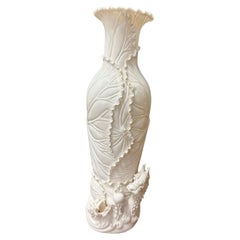
Vintage Chinese Porcelain Blanc De Chine Dragon Vase
Located in Charleston, SC
Chinese Porcelain Dragon Vase with storage case. It features lotus leaves and dragons. They are in excellent condition and marked. Box measures: 6.25” tall x 18.75” long x 6.75” deep
Porcelain

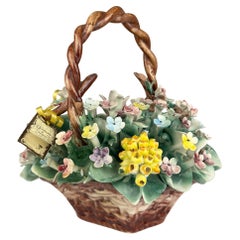
Vintage Capodimonte Ceramic Flower Basket, Italy 1960s
By Capodimonte
Located in Miklavž Pri Taboru, SI
Vintage ceramic basket with flowers by Capodimonte made in Italy in the 1960s. In very good vintage condition with signs of age and use. Please...
Ceramic

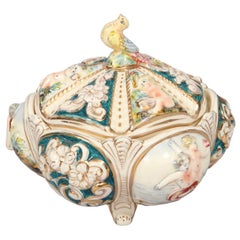
Italian Capodimonte Style Ceramic Lidded Bowl
By Capodimonte
Located in Bradenton, FL
An Italian Capodimonte style ceramic lidded bowl. Decorated with six faces in a bombé shape. Playful embossed cherubs alternate with embossed flowers...
Ceramic

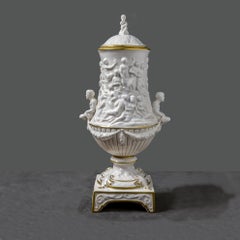
Period Italian Capodimonte Signed Ceramic Vase
By Capodimonte
Located in Roma, IT
A beautiful and elegant Medici-type vase in white glazed ceramic in perfect condition. It presents a prestigious decoration in pure gold leaf on the edges. This is an important work ...
Ceramic
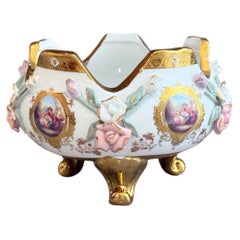
Vintage Capodimonte Style Porcelain Bowl / Decorative Footed Centerpiece, Napoli
Located in Wembley, GB
Vintage Capodimonte Style Porcelain Bowl / Decorative Footed Centerpiece, Napoli, Italy An exquisite vintage Italian porcelain centerpiece crafted in the luxurious Capodimonte style...
Multi-gemstone
19th Century French Majolica Flower Centerpiece Tazza Compote by Delphin Massier
Located in Litchfield, CT
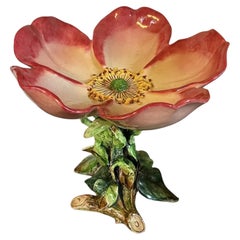
Antique 19th century French majolica flower centerpiece tazza compote by Delphin Massier. Large bright pink open flower sits atop a faux bois stand covered with green leaves. Excepti...
Majolica