Video Loading
Want more images or videos?
Request additional images or videos from the seller
1 of 14

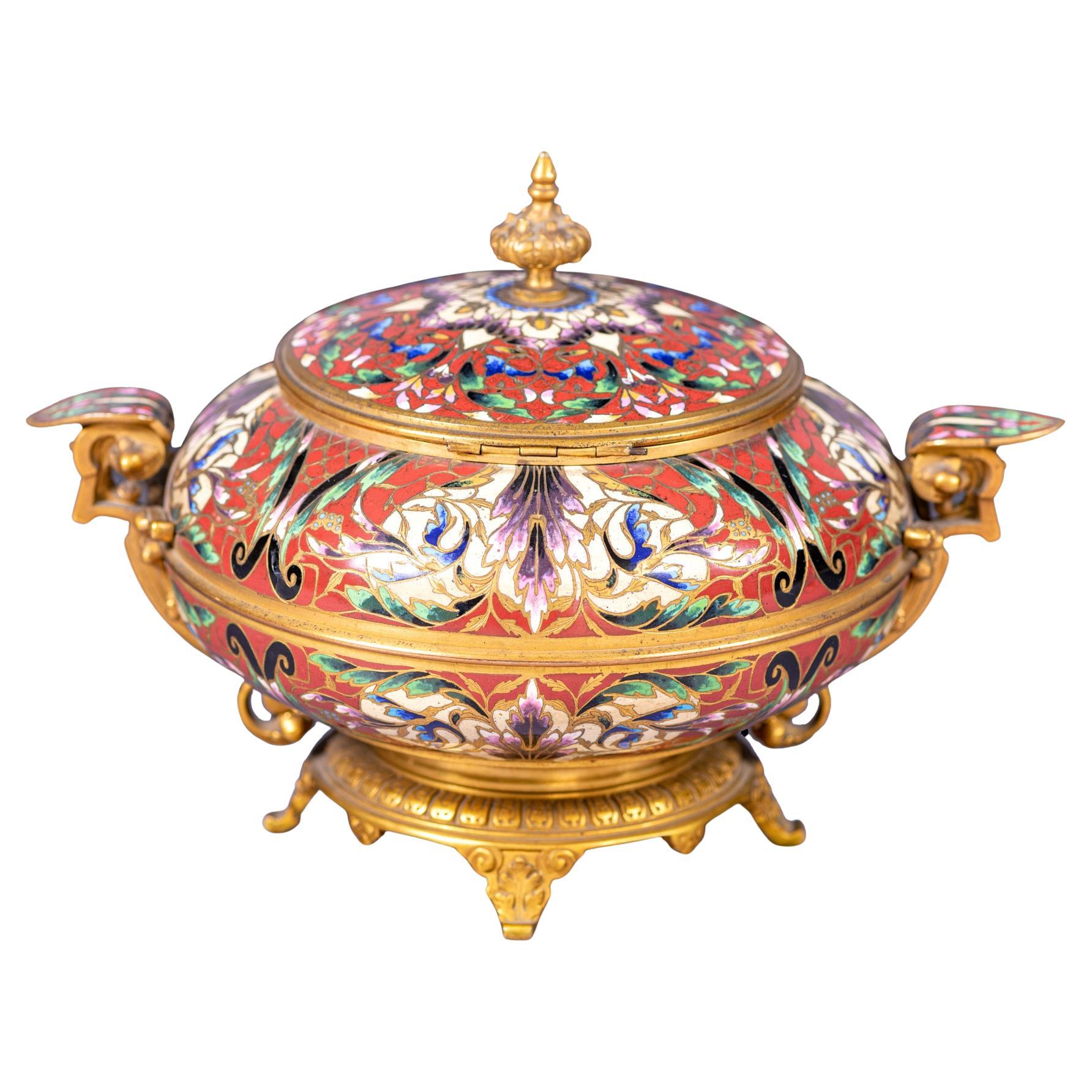
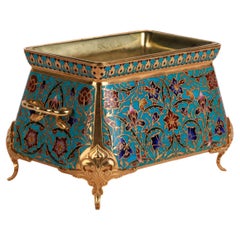
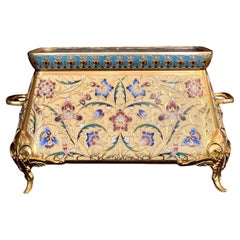
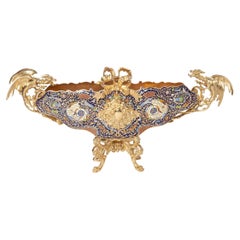
Ferdinand Barbedienne, a French Ormolu and Champleve Enamel Jardiniere, C. 1870

$15,700
£11,875.33
€13,866.04
CA$22,359.26
A$22,686.10
CHF 12,959.73
MX$274,672.13
NOK 152,252.16
SEK 152,050.54
DKK 103,654.30

About the Item

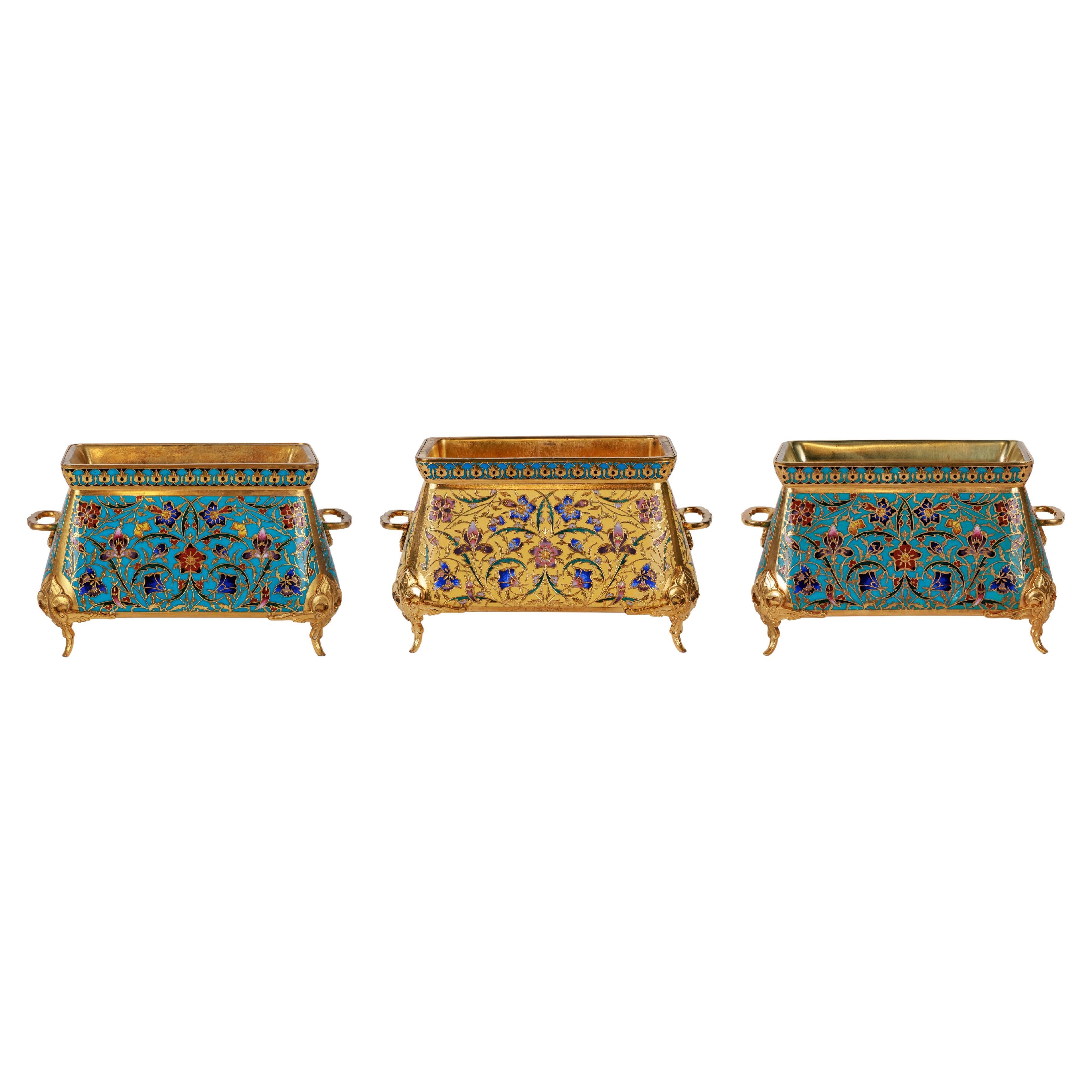
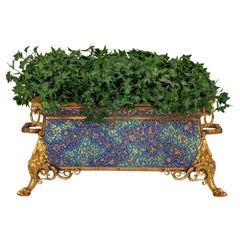
Ferdinand Barbedienne, A French Ormolu and Champleve Enamel Jardiniere, C. 1870, The Design Attributed to Louis Constant Sevin. An exceptional quality yellow-ground champlevé enamel and gilt-bronze ormolu jardinière decorated all over with foliate scrolls and enamel flowers. Signed F. Barbedienne. Champlevé enamelling is similar to cloisonné in that the enamel is applied to discrete cells separated by metal. However, in champlevé, cells or troughs are cast into or cut away from the metal base, leaving a raised metal line between the cells which forms the outline of a design. The cells are then filled with molten or powdered glass and fired. The design for the jardinière with its distinctive Néo-Byzantine enamel work is attributed to the sculptor and designer Louis-Constant Sévin (1821-1888), who created many of Barbedienne’s most important pieces from 1855 until 1888. At the age of thirteen the gifted Sévin entered an apprenticeship with the sculptor Marneuf and by 1839 was an accomplished sculptor and designer of jewellery. During the Revolution of 1848 he moved to London taking up the position of foreman for the goldsmith’s firm of Jean-Valentin Morel in London. Many of the items he designed for Morel where presented at the Great Exhibition of 1851 in London. Returning to France in 1851 he moved to Limoges to design porcelain for the factory of Jouhanneaud & Dubois, before finally taking up the position of sculptor - decorator with Barbedienne in Paris in 1855, a position he was to hold until the end of his life in 1888. He was to achieve great recognition for his work throughout his long career, including a medal for excellence at the London Exhibition of 1862 and a Gold medal at the Exposition Universelle in Paris in 1878. Excellent condition, ready to place. No damages noted. Measures: 5" high x 8" wide x 5" deep.
  • Creator:
  • Attributed to:
    Louis-Constant Sevin (Maker)
  • Dimensions:
    Height: 5 in (12.7 cm)Width: 8 in (20.32 cm)Depth: 5 in (12.7 cm)
  • Style:
    Napoleon III (Of the Period)
  • Materials and Techniques:
  • Place of Origin:
  • Period:
  • Date of Manufacture:
    circa 1870
  • Condition:
    Wear consistent with age and use.
  • Seller Location:
    Long Island City, NY, NY
  • Reference Number:
    1stDibs: LU1798229099272

More From This Seller

View All
Ferdinand Barbedienne, A French Ormolu and Champleve Enamel Jardiniere, C. 1870

Ferdinand Barbedienne, A French Ormolu and Champleve Enamel Jardiniere, C. 1870

By Louis-Constant Sevin, Ferdinand Barbedienne

Located in Long Island City, NY, NY

Ferdinand Barbedienne, A French Ormolu and Champleve Enamel Jardiniere, C. 1870, The Design Attributed to Louis Constant Sevin. An exceptional qualit...

Category

Antique 19th Century French Napoleon III Planters, Cachepots and Jardini...

Materials

Ormolu, Enamel, Bronze

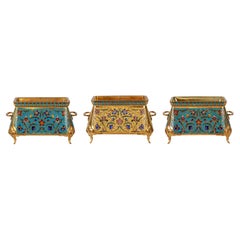
F. Barbedienne, A Suite of Three French Ormolu and Champleve Enamel Jardinieres

F. Barbedienne, A Suite of Three French Ormolu and Champleve Enamel Jardinieres

By Ferdinand Barbedienne

Located in Long Island City, NY, NY

Ferdinand Barbedienne, An Exquisite Suite of Three French Ormolu and Champleve Enamel Jardinieres / Garniture C. 1870, The Design Attributed to Louis Constant Sevin. Comprising of t...

Category

Antique 19th Century French Napoleon III Planters, Cachepots and Jardini...

Materials

Bronze, Enamel, Ormolu

Exquisite Neo-Grec Ormolu & Champleve Enamel Jardiniere by Barbedienne & Sévin

Exquisite Neo-Grec Ormolu & Champleve Enamel Jardiniere by Barbedienne & Sévin

By Louis-Constant Sevin, Ferdinand Barbedienne

Located in Long Island City, NY, NY

A French Neo-Grec Ormolu and Champlevé Enamel Jardinière by Ferdinand Barbedienne and Louis-Constant Sévin, circa 1870 An outstanding ormolu-mounted and champlevé enamel jardinière,...

Category

Antique 19th Century French Napoleon III Planters, Cachepots and Jardini...

Materials

Enamel, Ormolu

Extremely Rare Pair of Ferdinand Barbedienne Ormolu and Champlevé Enamel Vases

Extremely Rare Pair of Ferdinand Barbedienne Ormolu and Champlevé Enamel Vases

By Ferdinand Barbedienne, Louis-Constant Sevin

Located in Long Island City, NY, NY

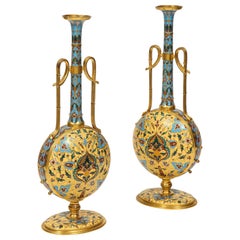
An extremely rare, museum quality pair of Ferdinand Barbedienne ormolu and champlevé enamel vases, circa 1870, certainly designed by Louis Constant Sevin...

Category

Antique 19th Century French Napoleon III Vases

Materials

Enamel, Ormolu

Important, Rare French Ormolu Sevres Style Porcelain Jewelry Box on Bronze Table

Important, Rare French Ormolu Sevres Style Porcelain Jewelry Box on Bronze Table

Located in Long Island City, NY, NY

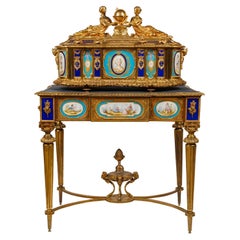
A rare and important French ormolu/bronze and Sevres style turquoise porcelain jewelry box casket on matching French ormolu/bronze table with Sevres style porcelain plaques. Of palatial / monumental size! "The Marie Antoinette Jewelry...

Category

Antique Late 19th Century French Napoleon III Jewelry Boxes

Materials

Bronze, Enamel, Ormolu

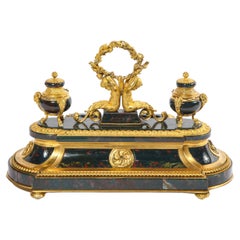
An Exquisite and Rare French Louis XVI Style Ormolu-Mounted Bloodstone Inkwell

An Exquisite and Rare French Louis XVI Style Ormolu-Mounted Bloodstone Inkwell

Located in Long Island City, NY, NY

An Exquisite and Rare French Louis XVI Style Ormolu-Mounted Bloodstone Inkwell, circa 1875. A truly exceptional and jewel like quality inkwell encrier, made with the finest ormolu, mounted on bloodstone. A true collectors and one of a kind piece. Revival of the ancient régime in the late 19th century was paramount to the French furniture and bronze casting firms of the Belle Epoque. Imitation in the highest regard and replication of those tastes and styles was prevalent throughout the Paris Faubourg, where the most talented bronziers and ébénistes established their workshops. The present inkwell encrier recalls the late 18th century's obsession with hardstones - a taste expounded above all by the duc d'Aumont and, subsequently Marie-Antoinette. Such hardstone-mounted pieces, reminiscent of Renaissance schatzkammer objects, enjoyed a revived popularity at the end of the 18th century through the impetus of both the marchands-mercier and, more importantly, the hôtel des Menus-Plaisirs, where the duc d'Aumont himself established a workshop in 1770 specializing in the cutting and polishing of precious hardstones. This exceptional inkwell encrier, sumptuously-mounted with finely chased gilt-bronzes, incorporates a highly-prized material such as bloodstone. Sometimes called the Sunstone, the meaning of Bloodstone comes entangled in fascinating history. The Ancient Greeks held the Bloodstone as a gem with glorious powers. They referred to it as Heliotrope, which directly translates to Sunstone. It was believed to have heavenly healing powers gifted by the gods and most certainly when it came to healing all things related to the blood. Even as we move forward into the Middle Ages, the Bloodstone takes another mystical story under its wing. It was believed to be formed from Christ's blood. It was said that during the Crucifixion, a few red spots of his blood dripped...

Category

Antique 19th Century French Napoleon III Inkwells

Materials

Ormolu, Bronze

You May Also Like

F. Barbedienne French Ormolu and Champlevé Enamel Jardinière

F. Barbedienne French Ormolu and Champlevé Enamel Jardinière

Located in New York, NY

A high quality and richly detailed French 19th century ormolu and champlevé enamel jardinière, signed by the renowned bronzier F. Barbedienne and attributed to the celebrated designe...

Category

Antique 19th Century French Louis XVI Planters, Cachepots and Jardinières

Materials

Enamel, Ormolu

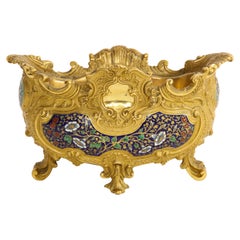
A 19th C. French Ormolu Champlevé Enamel Footed Centerpiece, Att. Barbedienne

A 19th C. French Ormolu Champlevé Enamel Footed Centerpiece, Att. Barbedienne

By Ferdinand Barbedienne

Located in New York, NY

An Incredible 19th Century French Ormolu Champlevé Enamel Footed Centerpiece, Att. Barbedienne. This captivating piece stands as a testament to the impeccable craftsmanship of its e...

Category

Antique 19th Century French Louis XVI Decorative Bowls

Materials

Ormolu

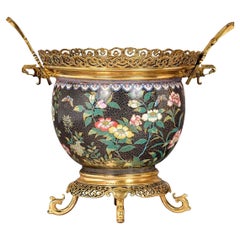
Japonisme Ormolu and Cloisonne Enamel Jardiniere by Ferdinand Barbedienne

Japonisme Ormolu and Cloisonne Enamel Jardiniere by Ferdinand Barbedienne

By Ferdinand Barbedienne, F. Barbedienne Foundry

Located in New York, NY

A dual-handled jardinière with black cloisonne ornamented with flowers, butterflies and foliage. Origin: France, Paris  Date: Last quarter of the 19th Century   Stamped F. BARBEDI...

Category

Antique Late 19th Century French Japonisme Planters, Cachepots and Jardi...

Materials

Bronze, Enamel

Ormolu and Cloisonné Enamel Jardinière Attributed to F. Barbedienne

Ormolu and Cloisonné Enamel Jardinière Attributed to F. Barbedienne

By F. Barbedienne Foundry

Located in London, GB

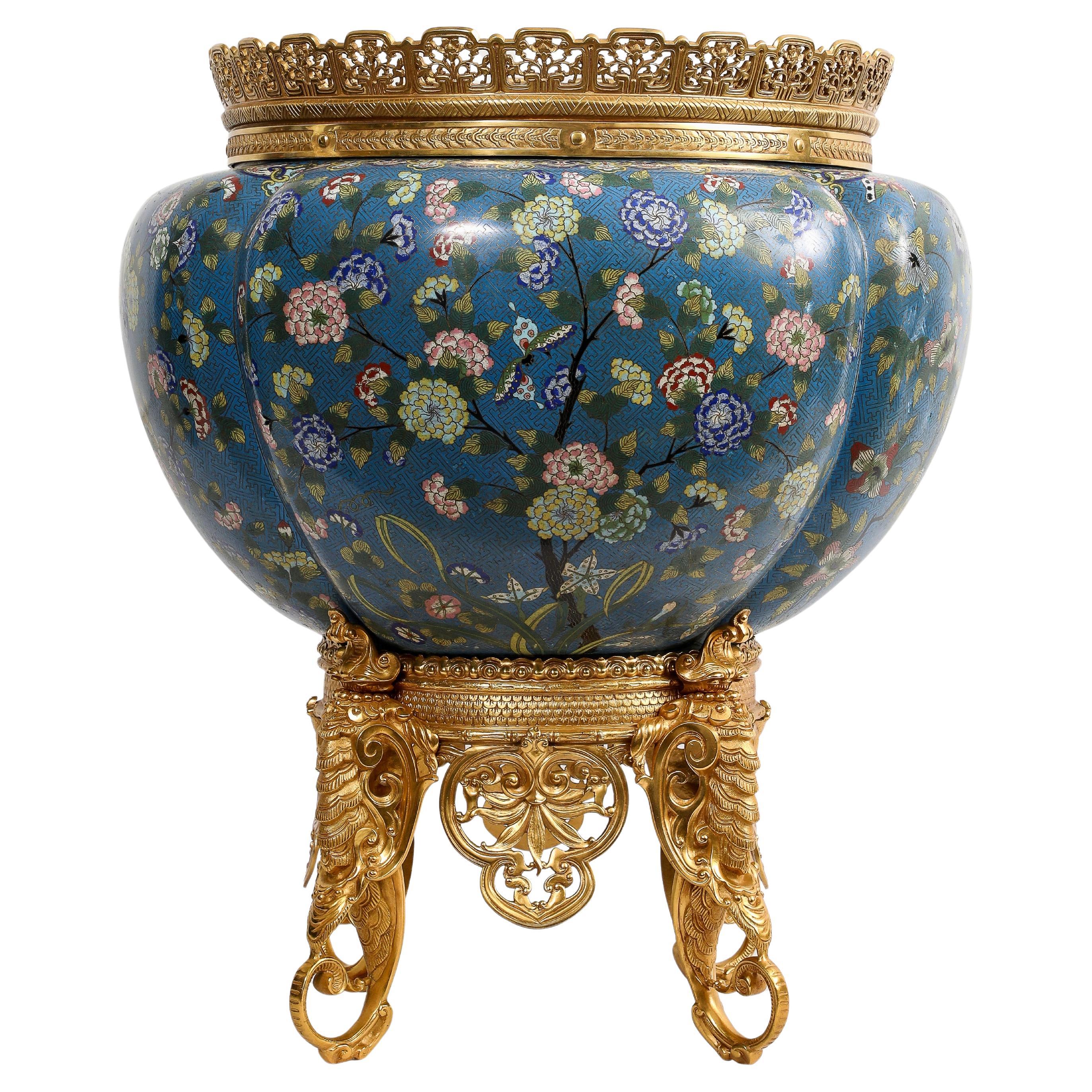
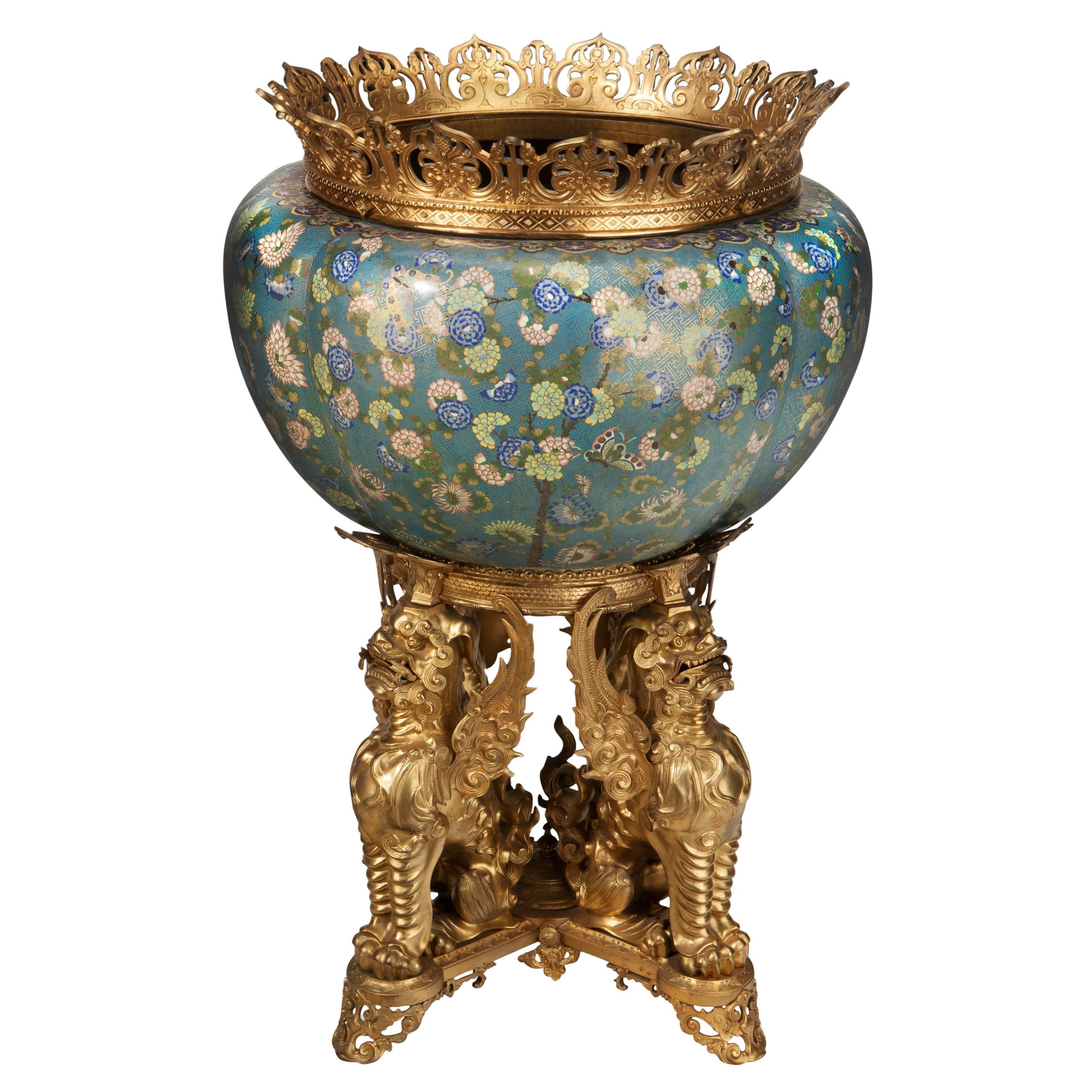
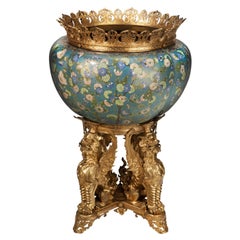
The large central circular form cloisonne enamel jardinière decorated with vari colored plum flowers and butterflies on a blue ground, with a pierced ormolu rim featuring a pineapple motif resting on a finely cast ormolu base with four legs in the form of winged Foo lions. The ormolu French, the enamel Chinese. This impressive jardinie`re is very much in the manner of objects in enamel produced by Ferdinand Barbedienne in Paris in the last quarter of the 19th century which proved universally popular. Often these pieces were designed by Edouard Lievre (d. 1886) in the Oriental taste. Ferdinand Barbedienne was a famous French metal worker and manufacturer. He presided over one of the most renowned and prolific foundries of Belle Époque Paris. His atelier created sculptures, clocks and bronze mounts of the highest quality, and his works were shown at numerous international exhibitions of the period, where he was rewarded with many medals. Among them the Grande Me´daille d'Honneur, in Paris in 1855 is particularly noteworthy. In 1838 he associated with the engineer Achille Collas (1795-1859) who had just invented a process to reproduce statues at a smaller scale. Together they founded in 1839 the company "Collas et Barbedienne" to reproduce casts of both contemporary artists and Greek and Roman antiquities. While working with Collas, Barbedienne actively pursued contracts with many sculptors of Paris contracting with David D'Angers, Jean-Baptiste Clesinger, and even producing some casts for Antoine Louis Barye as well as others. From 1860 to the years 1890, Barbedienne, eager to research new processes, experimented new techniques in champleve´ and cloisonne´-enamels, to compete with Japanese importations, very fashionable then. When Collas died in 1859, the business was left to Barbedienne as sole owner. The company who had over 300 employees was prosperous as well in the field of reproductions as in its department specialized in the casting of monumental bronzes. In 1865, he was appointed President of the Reunion of Bronze Makers until 1885. After the 1870 war...

Category

Antique Late 19th Century French Chinoiserie Planters, Cachepots and Jar...

Materials

Enamel, Ormolu

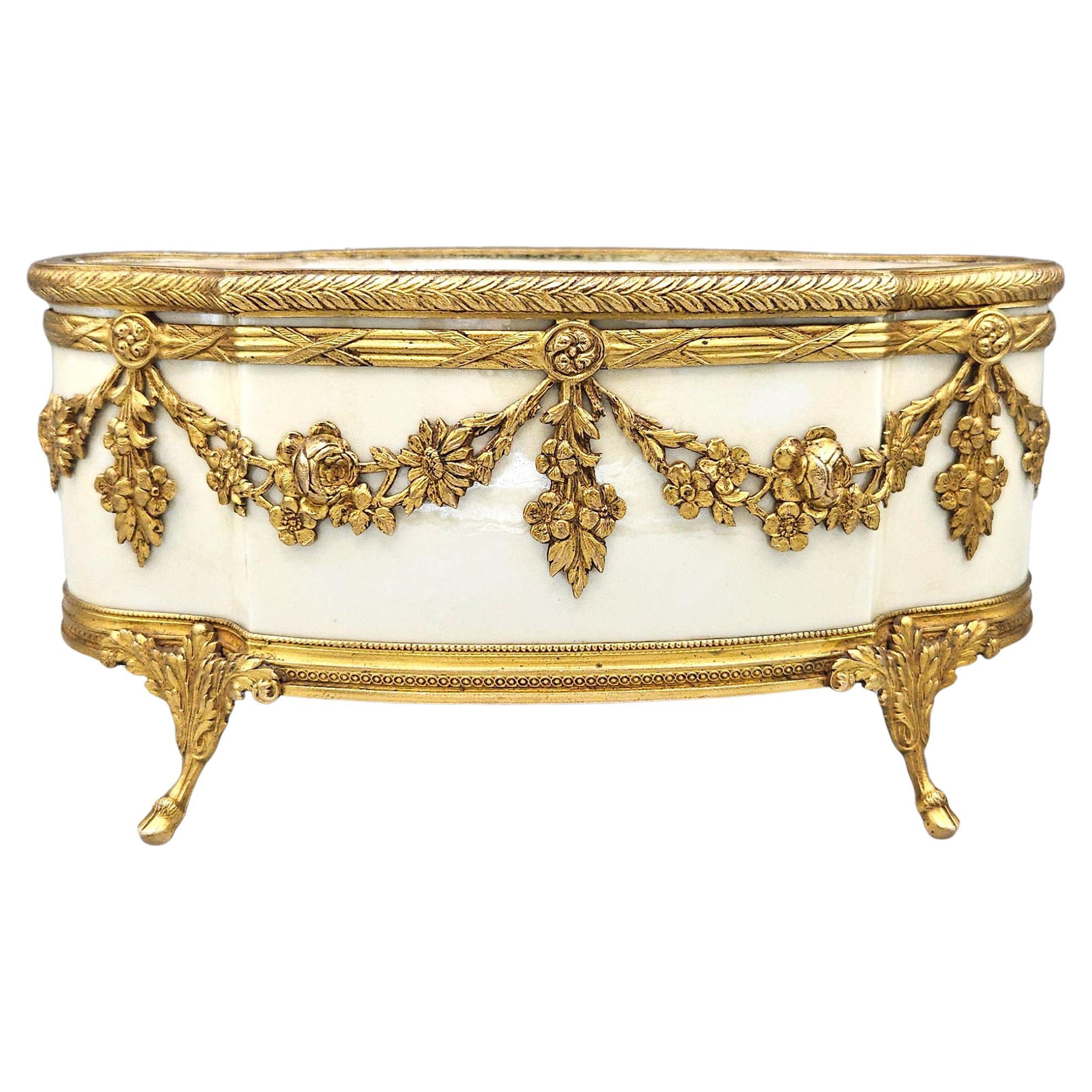
Enamel and gilt bronze jardiniere. France, late 19th century.

Enamel and gilt bronze jardiniere. France, late 19th century.

Located in Buenos Aires, Buenos Aires

Enamel and gilt bronze jardiniere. France, late 19th century.

Category

Antique Late 19th Century French Neoclassical Planters, Cachepots and Ja...

Materials

Bronze, Enamel