1 of 6

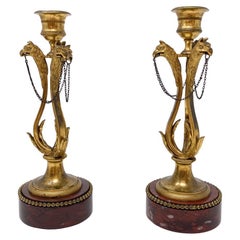
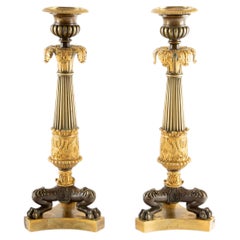
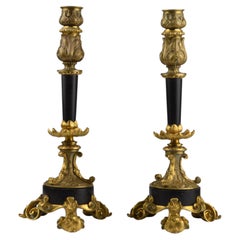
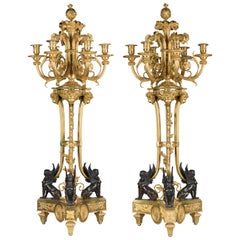
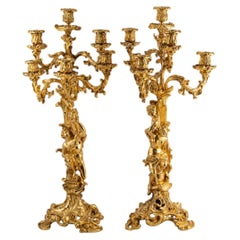
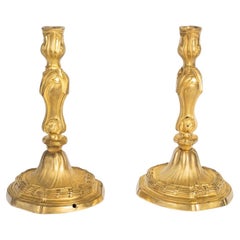
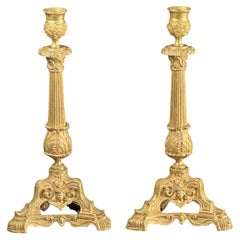
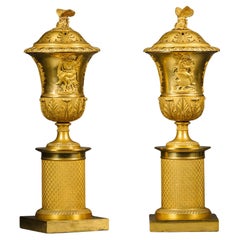
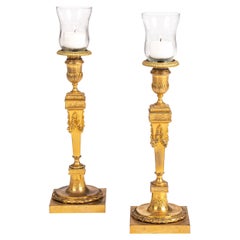
Pair of candlesticks in gilt bronze, 19th century

$2,427.79List Priceper set

You May Also Like

Pair of Candlesticks, Louis XVI, Gilded Bronze and Griotte Marble

Pair of Candlesticks, Louis XVI, Gilded Bronze and Griotte Marble

Located in Brussels, BE

Pair of Candlesticks, Louis XVI, Gilded Bronze and Griotte Marble

Category

Antique 15th Century and Earlier Candlesticks

Materials

Griotte Marble, Bronze

Guardians of the Flame: Pair of Early 19th C Gilt Bronze French Candlesticks

Guardians of the Flame: Pair of Early 19th C Gilt Bronze French Candlesticks

Located in New York, NY

Elegant pair of French Empire-style candlesticks executed in finely chased gilt and patinated bronze. Each features a tapering fluted shaft rising from a richly ornamented standard d...

Category

Antique 19th Century French Empire Candlesticks

Materials

Bronze

Pair of 19th Century French Gilt Bronze & Marble Candlesticks

Pair of 19th Century French Gilt Bronze & Marble Candlesticks

Located in Marinha Grande, PT

Elegant pair of late 19th century French candlesticks crafted in finely chased gilt bronze and black marble. These refined pieces showcase a classic Louis XVI-inspired design, featur...

Category

Antique Late 19th Century French Baroque Chandeliers and Pendants

Materials

Marble, Brass, Bronze

Pair of candlesticks. Bronze (blued and gilt). France, circa 1800.

Pair of candlesticks. Bronze (blued and gilt). France, circa 1800.

Located in Madrid, ES

Pair of candlesticks. Bronze (blued and gilt). France, circa 1800. A pair of six-light bronze candelabras, a type often called "tripod" due to their shape. A base with three projections, placed on inverted truncated pyramidal architectural elements and with reliefs and medallions on the exterior faces, serves as the base for three seated sphinxes made of burnished bronze with gilded tails. From their backs, three upward-facing rods emerge, each ending in children's heads with butterfly wings. These sphinxes are decorated with raised candelabras secured by an openwork band (note the spiraling bouquet inside). From the heads, a circular shape with projections emerges, on which the actual shaft of the candelabra rests, topped with a pomegranate on a floral arrangement. The arms of the candelabras, ending in lighters, feature delicate scrolls and rooster heads. Note the varying textures of the material and the great amount of detail present in the architectural, vegetal, and figurative elements. The design of these vase shaped candlesticks was enormously successful, and numerous variants with slight modifications were subsequently created, including sphinxes and goat heads. On April 16, 1787, François Rémond (c. 1747–1812) supplied Daguerre with eight “girandoles en trepied” (as they were often known in literature), identified by some experts as the eight candlesticks of this model purchased from Daguerre by George, Prince of Wales, later King George IV, for Carlton House. The largest, ten-light model with a vase and rooster heads, was created around 1786. A pair of this model is recorded in the 1836 Inventory of the Legendre de Lucay collection, and another pair is known to have been commissioned for Marie Antoinette's Salon des Nobles at Versailles. Compare this example with the griffin chandelier...

Category

Antique 19th Century European Other Candelabras

Materials

Bronze

Pair of candlesticks. Gilt bronze. 19th century, following French models.

Pair of candlesticks. Gilt bronze. 19th century, following French models.

Located in Madrid, ES

Pair of candlesticks. Gilt bronze. 19th century, following French models. It is missing. Pair of gilt bronze candelabra with bases featuring architectural and vegetal elements clea...

Category

Antique 19th Century Neoclassical Revival Candelabras

Materials

Bronze

Pair of Gilded Bronze Candlesticks in the Louis XVI Style, 19th Century.

Pair of Gilded Bronze Candlesticks in the Louis XVI Style, 19th Century.

Located in Saint-Ouen, FR

Pair of gilded bronze candlesticks in the Louis XVI style, 19th century, Napoleon III period. Pair of gilded bronze candlesticks, 19th century, Napoleon III period, Louis XVI style....

Category

Antique 19th Century French Louis XVI Candlesticks

Materials

Bronze

Pair of French Louis XV Revival Gilt Bronze Candlesticks, Late 19th Century, 11"

Pair of French Louis XV Revival Gilt Bronze Candlesticks, Late 19th Century, 11"

Located in SANT ADRIÀ DE BESÒS, ES

A finely cast pair of French gilt bronze candlesticks executed in the exuberant Louis XV Revival taste during the late nineteenth century. The design combines richly ornamented Rococ...

Category

Antique 19th Century French Candlesticks

Materials

Bronze

A Pair of Charles X Gilt-Bronze Reversible Cassolettes / Candlesticks

A Pair of Charles X Gilt-Bronze Reversible Cassolettes / Candlesticks

Located in Brighton, West Sussex

A Pair of Charles X Gilt-Bronze Reversible Cassolettes / Candlesticks Each with pierced dome lid surmounted by a butterfly finial. The lids reversible, the undersides fitted with c...

Category

Antique 19th Century French Charles X Candlesticks

Materials

Bronze

Pair of Louis Seize Fire Gilded Candlesticks France 1800 by F. Barbedienne

Pair of Louis Seize Fire Gilded Candlesticks France 1800 by F. Barbedienne

Located in Salzburg, AT

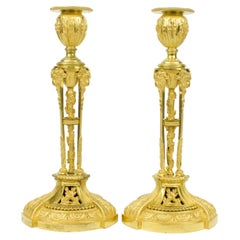
Pair of strict classicistical fire gilded candlesticks France 1840, signed Barbedienne. Strict classicist design with square base, flowers and leaf ornaments in different finish. Decorated and smooth elements in alternation create otically balanced object. The widest part of the stem is 4.0cm Ferdinand Barbedienne (* August 6, 1810 in Saint-Martin-de-Fresnay, Calvados department, France; † March 21, 1892 in Paris) was a French sculptor, bronze ware manufacturer, and gallery owner. One of the most important and popular Éditeurs d'art, or publishers of art articles, he had most of the French sculptors of his time under contract. Life and work Ferdinand Barbedienne was the son of a farmer. At the age of 13, he learned the Craft of saddlery. In 1822 he moved to Paris, where he first worked as a clerk in a wallpaper shop. He received start-up capital from his employer to open his own store, which he set up on Rue Notre-Dame-de-Lorette in 1834. He pursued the idea of exhibiting bronze statues in addition to his core business and mass producing them in small format. In 1838, he joined forces with the mechanic Achille Collas, who had developed the machine á reduction (réducteur for short); a device based on the principles of the pantograph that could reproduce three-dimensional objects in any size - reduced or enlarged. On November 29, 1838, both signed the founding contract for the company Société Ferdinand Barbedienne et Achille Collas, which aimed to commercially exploit the mechanized production of sculptural works for an initial 20 years. Barbedienne took care of the commercial management of the company, while Collas contributed the patent on his invention and seven existing machines, and with his profound knowledge of machinery was responsible for the production processes. Together they decided on the subject matter of the objects, the selling prices, and all other financial matters. In 1841, they produced casts of the Apollo of Belvedere, the Spinario, and 21 pieces with the motif of a bas-relief of the Parthenon. These were followed by versions of the Laocoon group, the Venus of Arles, and the Borghese Fencer, among others. Special interest was initially shown in works from antiquity, for which casts from the Atelier de Moulage in the Louvre served as models. The company continued to produce works by representatives of the Renaissance such as Michelangelo, Donatello, Giovanni Bologna or by French sculptors such as Jean Goujon, Jean-François Flamand, Pierre Puget, François Girardon, Antoine Coysevox...

Category

Antique Late 18th Century French Louis XVI Candlesticks
Materials

Bronze