Want more images or videos?
Request additional images or videos from the seller
1 of 11

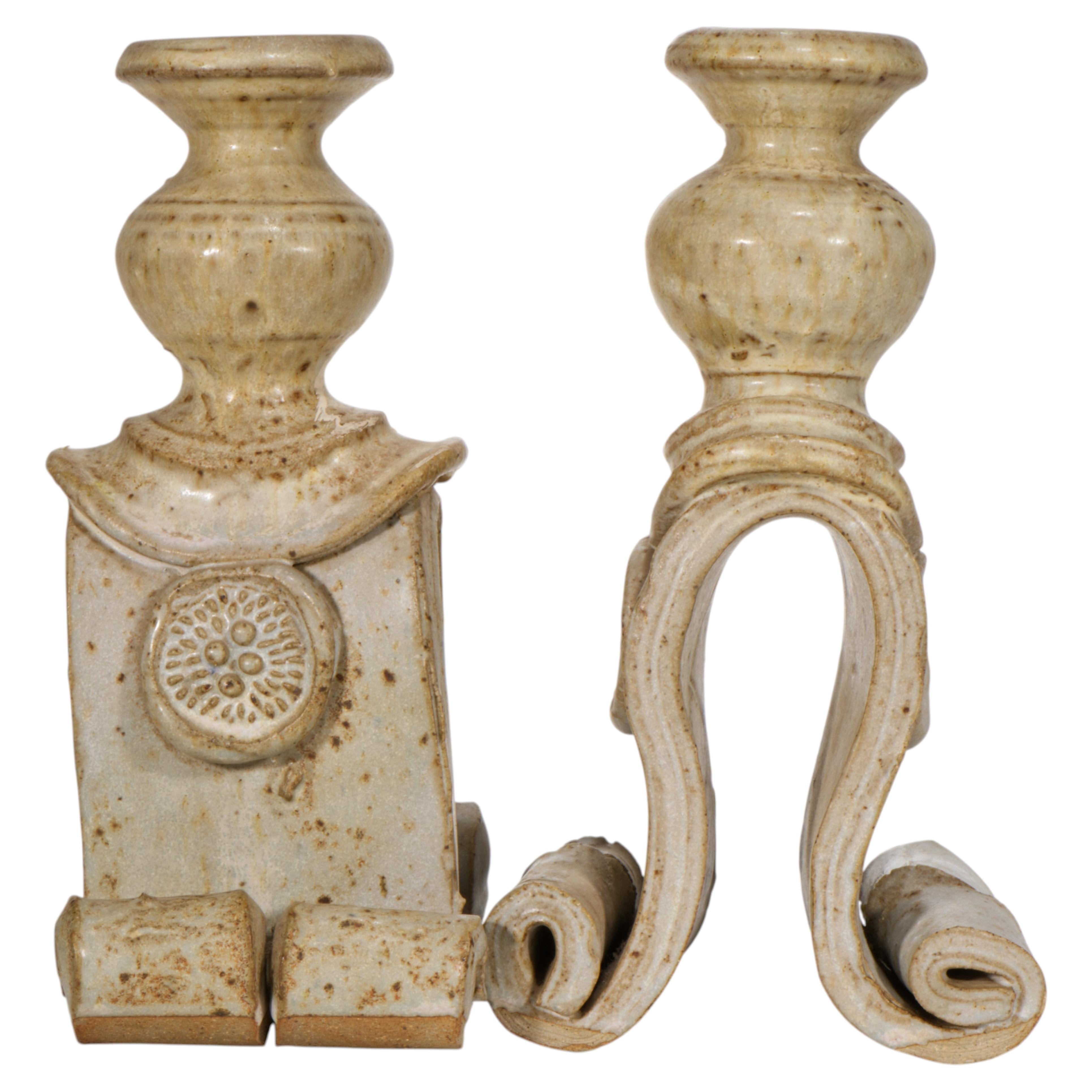
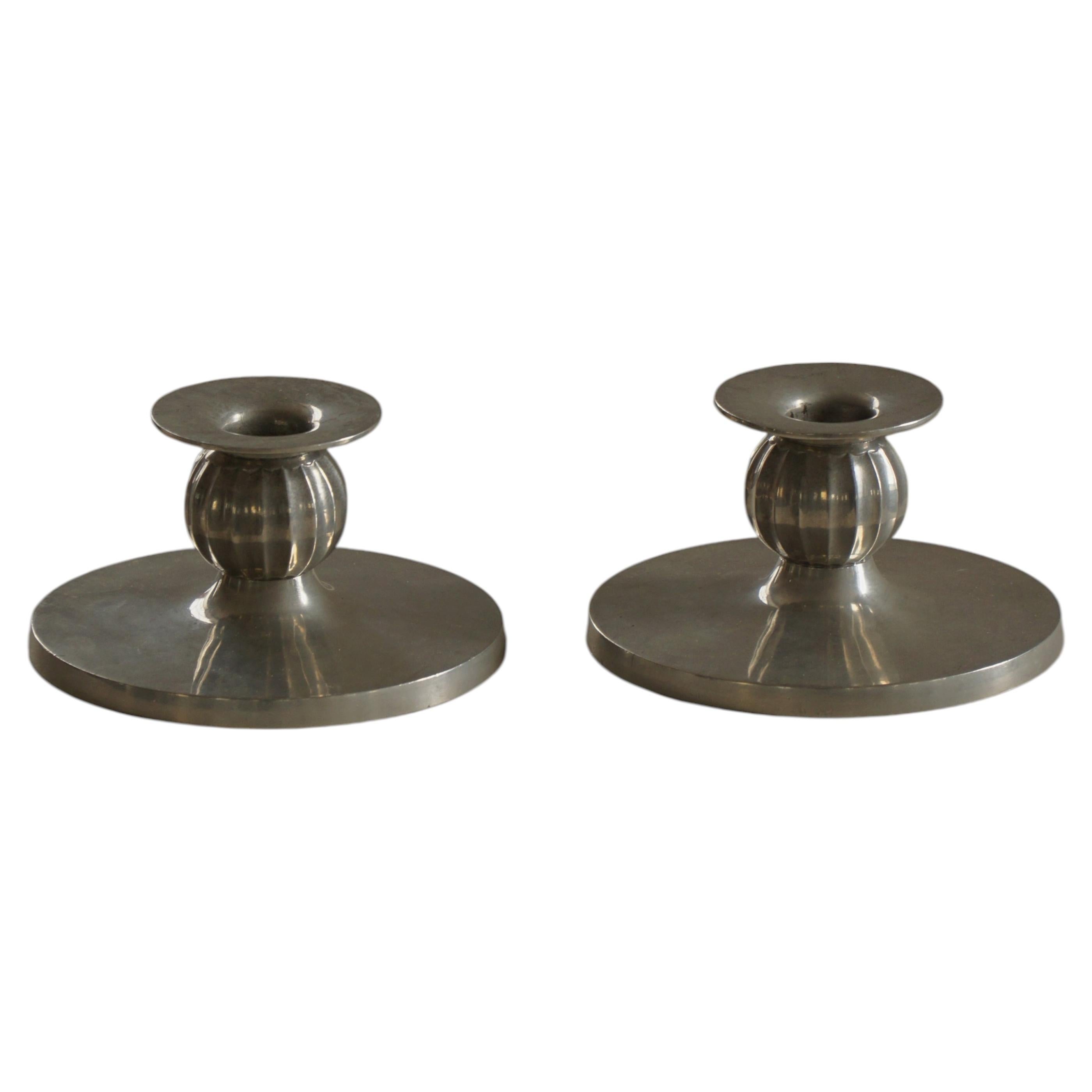
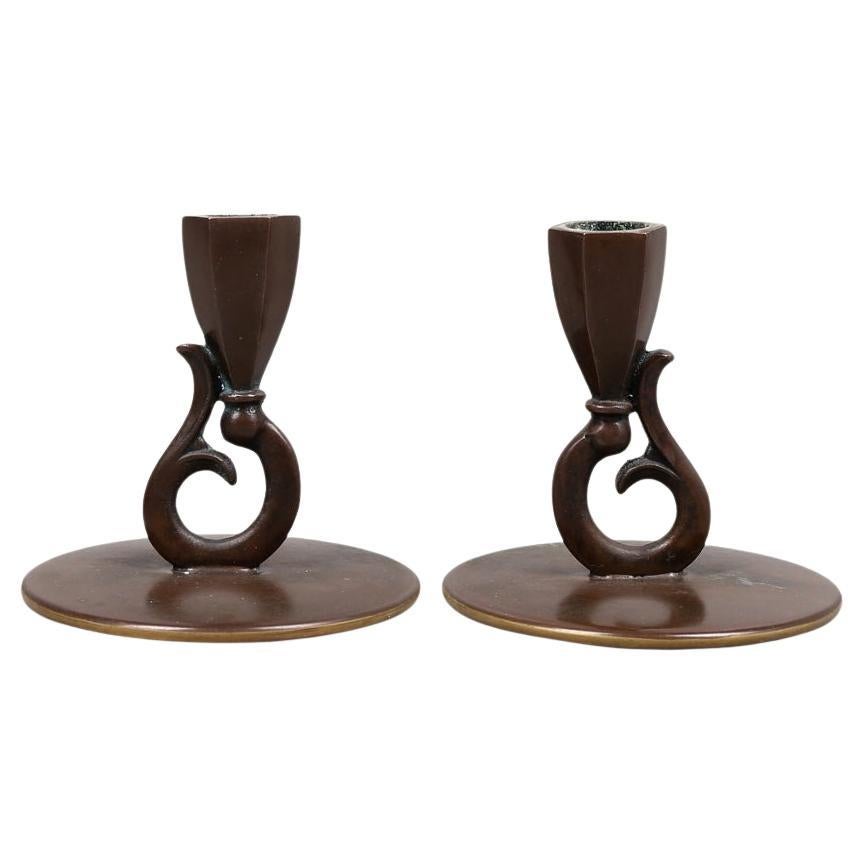
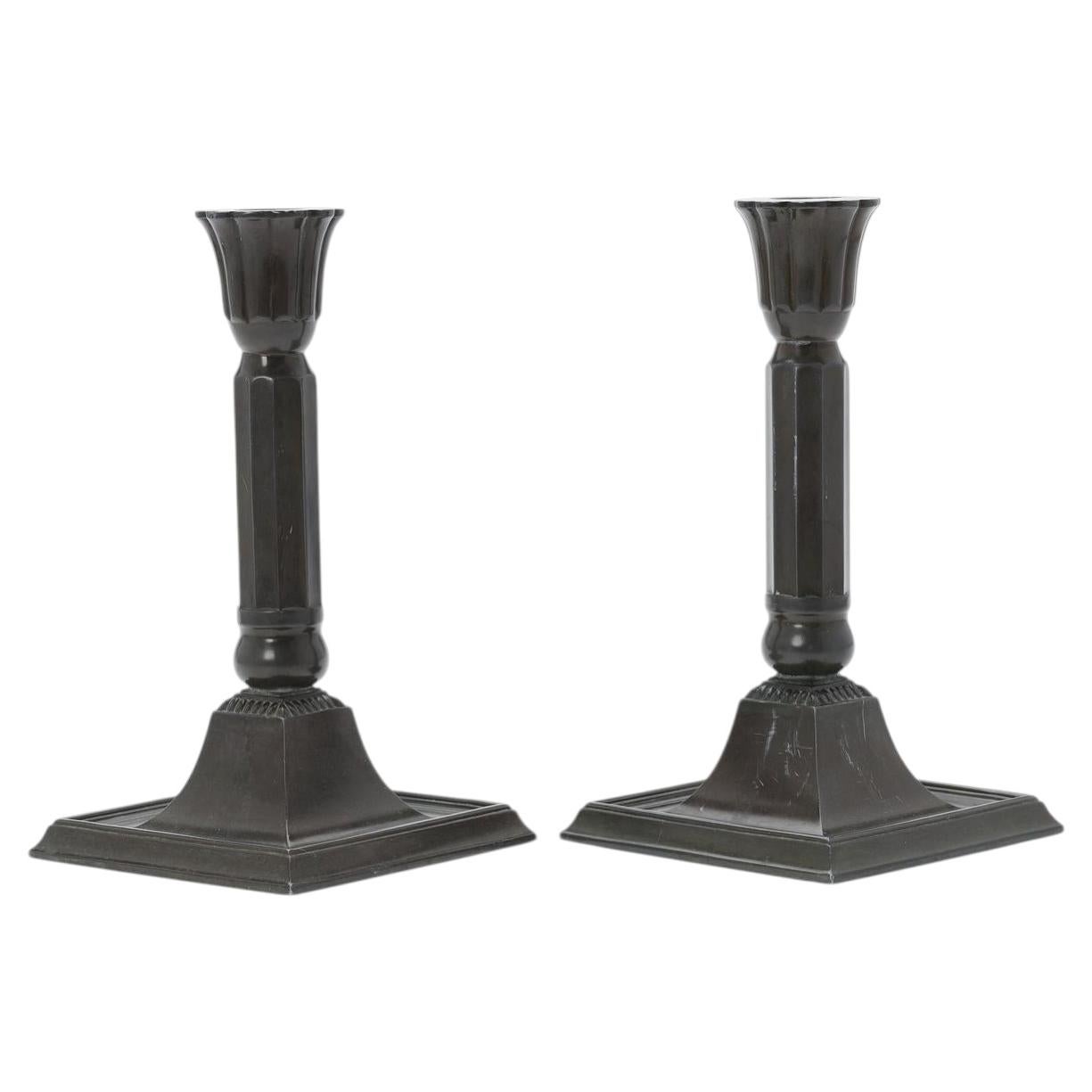
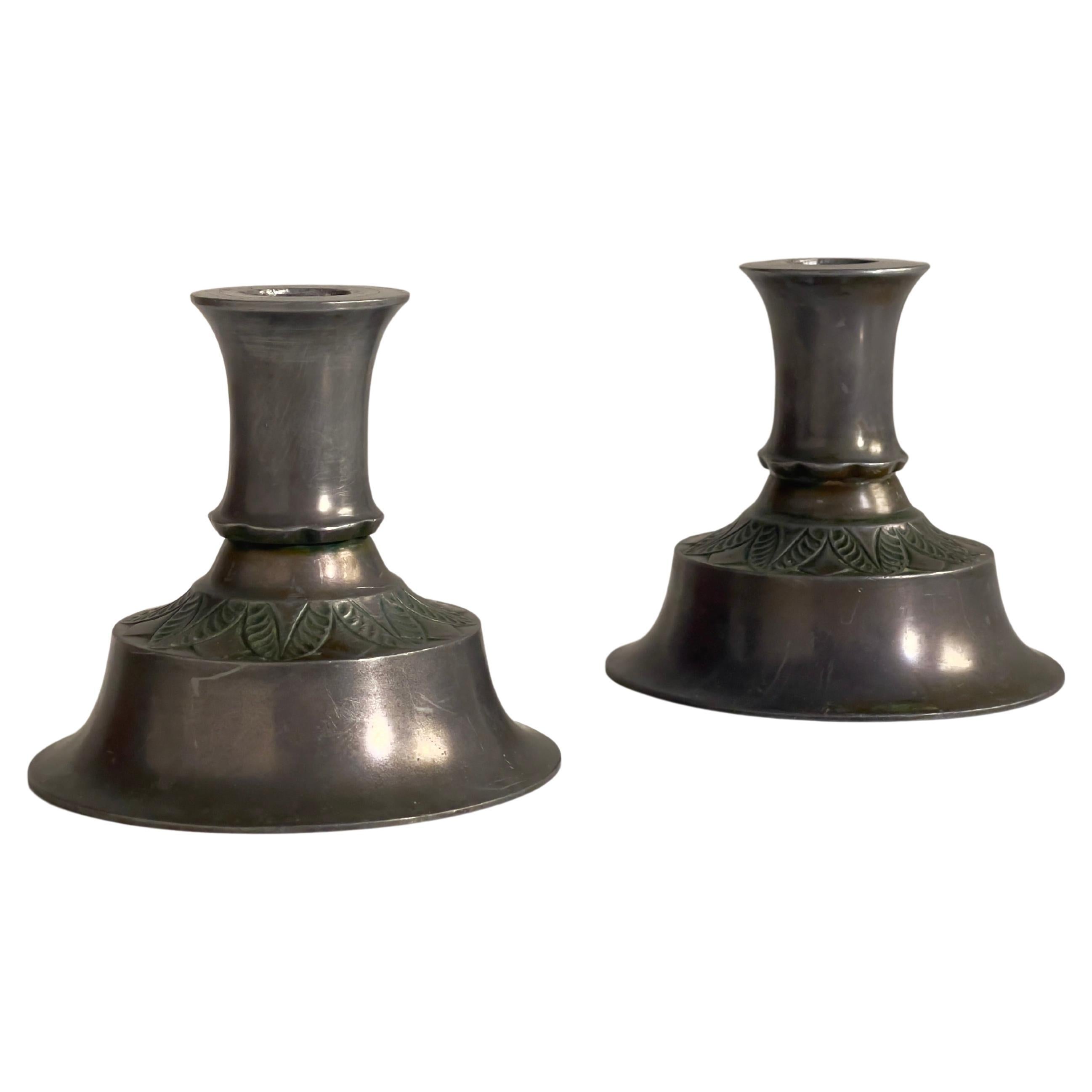
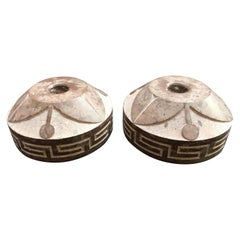
A Pair of Art Deco Ceramic Candle Holders by Roockwood Pottery, ca. 1920

$2,800
£2,116.31
€2,475.44
CA$3,975.77
A$4,044.73
CHF 2,324.16
MX$48,638.23
NOK 27,134.18
SEK 27,296.62
DKK 18,505.17

About the Item

MARKINGS Each candle holder is fully marked on the bottom, including date XX (ca. 1920) and model number (2304). ROOCKWOOD POTTERY Roockwood is the synonym of the American Art Pottery. Founded on Thanksgiving Day in 1880 by Maria Longworth Storer, Rookwood made history – the first large manufacturing enterprise founded and owned by a woman in the United States and launching the art pottery movement in America. Within a decade, Rookwood pottery gained international acclaim, rivaling European and Asian firms that had been in existence for hundreds or thousands of years. Maria Longworth Nicholas, was the daughter of a wealthy art collector, she was inspired by Japanese pottery. When she discussed her desire to create fine pottery with her father, he provided the means and environment that allowed her to pursue her creative passions. And although it may have started as a hobby, the talented Maria quickly managed to establish Rookwood pottery as a quality producer of fine ceramic art potter. She setup the Rookwood company, hired artists like Japanese artist Kataro Shirayamadani who came to work for the company in 1887, and talented art students and encouraged them to use their creativity to experiment and create unique pottery pieces. Almost every piece designed by these artists sold for hundreds of dollars, and today they are regarded as highly collectible. A Rookwood piece by Japanese artist Kataro Shirayamadani sold for $198,000 in 1991. He was a Rookwood artist from 1887 until 1948. The Rookwood airbrush, called the mouth atomizer, was developed by Rookwood to apply glazes in an innovative way. The technique helped the company develop its own individual look. The atomizer helped add the beautiful layers of color Rookwood is known for, and the technique is still used at the Rookwood pottery today. More well-known pottery manufacturers and recognized artists doubted this female led company would have what it takes to succeed, but much to their surprise Rookwood turned out to be one of the best. By combining extraordinary attention to detail and innovative design Maria Longworth Nicholas made Rookwood the standard for ceramic pottery manufacturers to aim for. Today antique and vintage Rookwood Pottery can easily command high prices and individual piece can rank alongside the best pottery Europe can produce. Rookwood has tradition, design innovation and a long history of 130 years behind it. This relatively long history, in American terms, and being an original American art work can add substantial value to antique Rookwood pottery pieces. But the company hasn't always had a smooth ride. In the 1920s the company prospered and sales peaked as Rookwood joined Tiffany as one of the most sought after products to grace well-heeled households. By 1941, demand had slumped and the Rookwood company filed for bankruptcy, only just managing to stay in business when it was bought out. In 1982, Arthur Townley an avid Rookwood collector bought the company to save it and its assets being shipped overseas. Rookwood was mothballed as Townley waited for a buyer who could re-build the brand. In 2004, Arthur Townley was persuaded to sell to a group of investors who shared his passion for Rookwood Pottery. They quickly pulled together a team of artists and designers to establish the Rookwood brand as one of the best in the World. In 2011, Martin and Marilyn Wade took control of Rookwood Pottery. Reinvigorating the brand and returning it to its tradition of excellence and top quality innovative design.
  • Creator:
  • Dimensions:
    Height: 11.25 in (28.58 cm)Width: 3.75 in (9.53 cm)Depth: 4.75 in (12.07 cm)
  • Style:
    Art Deco (Of the Period)
  • Materials and Techniques:
    Ceramic,Glazed
  • Place of Origin:
  • Period:
  • Date of Manufacture:
    circa 1920
  • Condition:
    Wear consistent with age and use. We make our best effort to provide a fair and descriptive condition report. Please examine photos attentively, as they are an integral part of the description. Send us a message to request more details or discuss price.
  • Seller Location:
    New York, NY
  • Reference Number:
    1stDibs: LU2819331888202

More From This Seller

View All
Thomas Roy Markusen, Pair of Modernist Copper Candleholders, Ca. 1970

Thomas Roy Markusen, Pair of Modernist Copper Candleholders, Ca. 1970

By Thomas Roy Markusen

Located in New York, NY

Modernism Thomas Roy Markusen A Pair of Candleholders Copper USA, Circa 1970s DIMENSIONS Height: 32.5 in (82.55 cm) Diameter: 9 in (22.86 cm) ABOUT A striking and sculptural pair...

Category

Vintage 1970s Modern Candlesticks

Materials

Copper

Thomas Roy Markusen, American Modernist Pair of Candleholders, 1970s

Thomas Roy Markusen, American Modernist Pair of Candleholders, 1970s

By Thomas Roy Markusen

Located in New York, NY

American ModernisM Thomas Roy Markusen Pair of Candleholders Metal, red patina Circa 1970s DIMENSIONS Height: 16 in (40.64 cm) Diameter: 6 in (15.24 cm) ABOUT A striking pair of Am...

Category

Vintage 1970s Modern Vases

Materials

Metal

Thomas Forester & Sons, Pair of Arts & Crafts Glazed Terracotta Vases, Ca. 1900

Thomas Forester & Sons, Pair of Arts & Crafts Glazed Terracotta Vases, Ca. 1900

By Frederick Hurten Rhead

Located in New York, NY

Thomas Forester & Sons, a pair of English Arts & Crafts Glazed terracotta vases with Peacocks, circa 1900. Dimensions: Height: 14-1/2 inches Diameter (top): 4-1/8 inches D...

Category

Antique Early 1900s English Arts and Crafts Vases

Materials

Terracotta

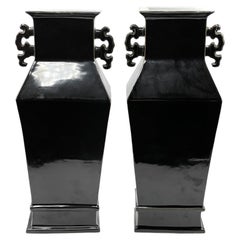
Chinese Mid-Century Pair of Black Glazed Ceramic Vases, Circa 1950

Chinese Mid-Century Pair of Black Glazed Ceramic Vases, Circa 1950

Located in New York, NY

Chinese Mid-Century Pair of Black Glazed Ceramic Vases, Circa 1950 A striking pair of Chinese Mid-Century Modern ceramic vases dating to circa 1950, distinguished by their dramatic ...

Category

Vintage 1950s Chinese Mid-Century Modern Ceramics

Materials

Ceramic

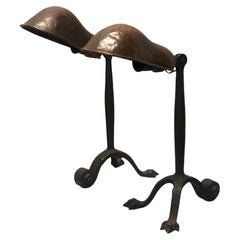
American Arts & Crafts Pair of Patinated Bronze Table Lamps, circa 1910

American Arts & Crafts Pair of Patinated Bronze Table Lamps, circa 1910

Located in New York, NY

American Arts & Crafts A Pair of Table Lamps Patinated Bronze Circa 1910 DIMENSIONS Height: 15 inches Width: 6 inches Depth: 12 ...

Category

Vintage 1910s American Arts and Crafts Table Lamps

Materials

Bronze

Alfonso Canciani, Viennese Secession Orientalist Bronze Vase, c. 1910

Alfonso Canciani, Viennese Secession Orientalist Bronze Vase, c. 1910

By Alfonso Canciani

Located in New York, NY

Alfonso Canciani (Italian-Austrian, 1863-1955) was a famous Italian-Austrian sculptor of the period of accession to the Viennese Secession. Son of a stonemason, after a realist period he managed to establish himself as a leading sculptor of the Viennese Secession. In fact, he worked in Vienna, where he had enrolled in 1886 at the Academy of Fine Arts, then at the Higher School of Sculpture and finally at the Special School, where he obtained the Rome prize for the sketch for Dante's Monument. He developed a notable business obtaining important prizes and numerous commissions. First among the sculptors of the Viennese capital, he was invited to join the Association of the Viennese Secession, of which Klimt was magna pars, after the exhibition of Dante's group in 1900 at the Secession exhibition, and obtained the most important Austrian artistic prize, the Kunstlerlpreis. This same work, presented in 1910 in Berlin, at the Great Art Exhibition, also received an important recognition here. He obtained the Rome prize in 1896, exhibited successfully in Munich and in 1899 at the III International Art Exhibition in Venice. In that period he made some statues of saints for the cathedral of Santo Stefano in Vienna, the monument to Wagner, the bust of Nietzsche for the University, the scepter and the gold chain of the University Rector, figures of Italian poets ( Petrarch, Boccaccio, Tasso, Ariosto). He submitted a sketch for the official monument to Empress Elizabeth, which was then built in Austrisn Gföhl and Pula. At the time of his accession to the Secession, he dedicated himself to decorating the facade of the Artaria house in Vienna in collaboration with the architect Max Fabiani. He later abandoned the symbolist decorativism of the Jugendstil for a more concentrated and vigorous style, approaching the Belgian sculptor Constantin Meunier for the theme of work, and preferring to exhibit at the Künstlerhaus. In Vienna, he was generous with advice and help with the Italians and in particular with his fellow citizens (such as the Brazzanese Luigi Visintin, then a university student). After the First World War, he returned to Italy and lived in Friuli, penalized by the fact that the Habsburg Empire had by now disappeared. Instead of large-scale public monuments, he then devoted himself to engraving medals (e.g. for Benedict XV and for the Italian mission in Vienna in 1919) and to designing funeral monuments (examples in Mali Lošinj and Trieste) and portrait busts (of Generals Carlo Caneva and Antonio Baldissera in Udine, sculptures of the War Memorial of Corno di Rosazzo). After all, he had already executed the Bab grave monument in the Döblinger cemetery in Vienna in 1909. He taught in Trieste from 1920 until 1935, at the local school of industrial art, where he had Marcello Mascherini...

Category

Vintage 1910s Austrian Jugendstil Vases
Materials

Bronze

You May Also Like

A Pair of Art Deco candle sticks by Just Andersen, model D54, Denmark, 1930s

A Pair of Art Deco candle sticks by Just Andersen, model D54, Denmark, 1930s

By Just Andersen

Located in Balen, BE

Pair of Art Deco Candlesticks by Just Andersen, Model D54 – Denmark, 1930s This refined pair of Art Deco candlesticks, model D54, was designed by renowned Danish designer Just Ander...

Category

Vintage 1930s Danish Art Deco Candlesticks

Materials

Metal

Pair of danish art deco metal candlesticks by sculptor Just Andersen. 1920s

Pair of danish art deco metal candlesticks by sculptor Just Andersen. 1920s

By Just Andersen

Located in København K, 84

These rare and elegantly shaped 1920s Art Deco candlesticks are the work of renowned Danish sculptor and metalworker Just Andersen. Known for his innovative use of materials, Anderse...

Category

Vintage 1920s Danish Art Deco Candlesticks

Materials

Pewter

Pair of danish art deco metal candlesticks by sculptor Just Andersen. 1920s

Pair of danish art deco metal candlesticks by sculptor Just Andersen. 1920s

By Just Andersen

Located in København K, 84

These rare and elegantly shaped 1920s Art Deco candlesticks are the work of renowned Danish sculptor and metalworker Just Andersen. Known for his innovative use of materials, Anderse...

Category

Vintage 1920s Danish Art Deco Candlesticks

Materials

Pewter

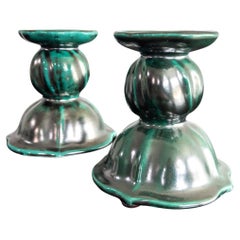
Pair of Art Deco Candlesticks by Upsala Ekeby, Sweden, 1930s

Pair of Art Deco Candlesticks by Upsala Ekeby, Sweden, 1930s

By Upsala Ekeby

Located in Staffanstorp, SE

A rare and striking pair of ceramic candlesticks by renowned Swedish manufacturer Upsala Ekeby. Dating from the 1930s, these sculptural pieces embody the elegance of the Art Deco era...

Category

Vintage 1930s Swedish Art Deco Candlesticks

Materials

Ceramic

Pair of Art Deco Porcelain Candlesticks

Pair of Art Deco Porcelain Candlesticks

Located in New York, NY

A pair of Art Deco circa 192o'a French luster-glazed porcelain candlesticks. Measurements: Height of body: 6.5" Diameter of base: 4".

Category

Vintage 1920s French Candlesticks

Materials

Porcelain