Odysseus and Theseus French Empire Mantel Clock
André Antoine Ravrio
Circa 1800
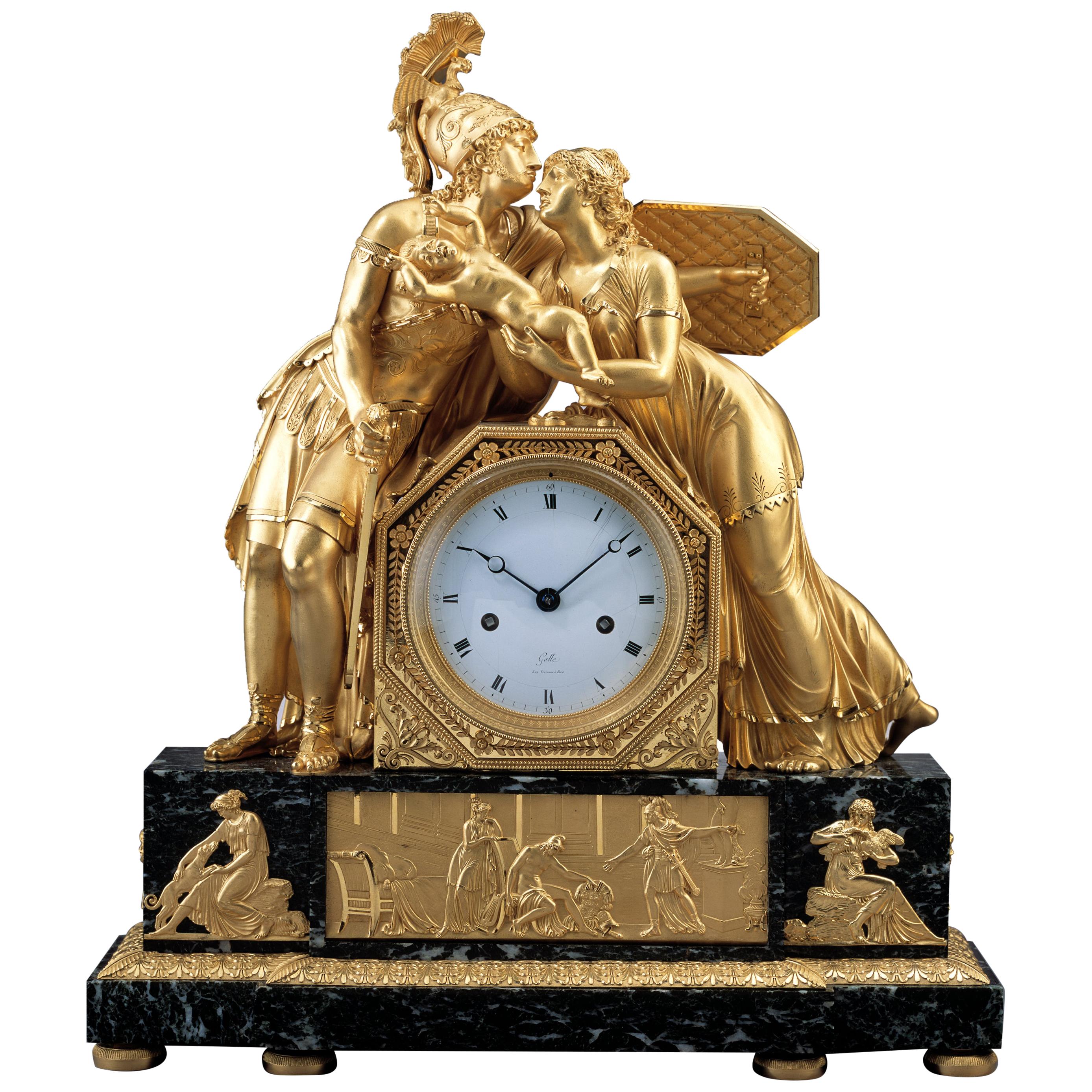
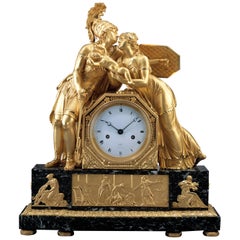
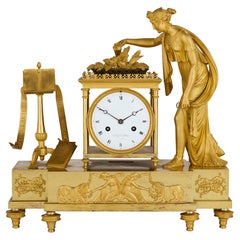
This monumental Empire mantel clock by André Antoine Ravrio, whose case is crafted entirely of gilded bronze, is quite exceptional. It is one of only four known examples. Of the other three, one is held in a private collection, another resides in the Mobilier National in Paris, and the third belongs to the museum collection of the Prince de la Moskowa.
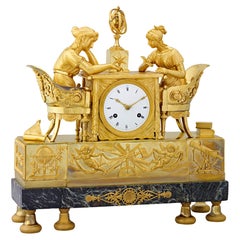
Commissioned during Napoleon's reign, the case was crafted by the emperor's personal bronzier, André Antoine Ravrio, and the mechanism by the Emperor’s clockmaker, Bazile-Charles Le Roy. The clock seamlessly marries the grandeur of Napoleon's modern empire with the timeless glory of Ancient Greece. The case itself is a work of art, as Ravrio masterfully presents ancient Greece’s most iconic heroes. On the left, the revered poet Homer is depicted in the act of composing his epic, The Odyssey, while his protagonist, Odysseus, stands triumphant to the right, reunited with his devoted wife, Penelope. Odysseus, freshly returned from his long journey filled with trials and dangers, holds his sword in hand, symbolizing his heroic victory and the fall of Troy.
The couple’s touching reunion takes place atop a pedestal adorned with a bronze frieze portraying Theseus’ legendary battle with the Minotaur. In this famous myth, Theseus bravely enters the labyrinth of King Minos to slay the Minotaur, a fearsome creature that demands human sacrifices, ultimately liberating Athens from its cruel tribute. Together, these stories capture the timeless themes of heroism, loyalty and the enduring legacy of ancient Greece.
Every element of this clock is a work of art, the result of a collaboration between the finest bronzier and clockmaker of the period. The enameled clock dial, signed "Le Roy br. de Madame/A Paris," features Roman numeral hour markers and minute graduations. Bazile-Charles Le Roy, founder of the prestigious Le Roy company in 1785 at the Palais Royal, relocated to Rue de la Egalité after 1789, later becoming the official clockmaker to Napoleon's mother.
André Antoine Ravrio (1759–1814), renowned for his lamps, girandoles, clocks and bronze mounts, was awarded a Silver Medal at the 1806 Exposition de l'Industrie in Paris. By 1810, he had been appointed bronzier to Napoleon, working at several imperial residences, including Saint-Cloud, Compiègne and the Tuileries. At the height of his career, Ravrio's workshop employed as many as 100 artisans, producing designs coveted for their ingenious integration of form and exceptional quality, and this clock is the very finest example known on the market.
25" high x 23 1/8" wide x 9" deep
Provenance:
Mrs. E.P. Corbin, from 1949 in New York
Private collection, Bath, England
M.S. Rau, New Orleans