Want more images or videos?
Request additional images or videos from the seller
1 of 16

Fine Scottish Two-Day Marine Chronometer Signed and Numbered D. McGregor

$8,445
£6,153.05
€7,319.63
CA$11,883.23
A$11,980.59
CHF 6,821.89
MX$145,629.08
NOK 80,529.17
SEK 80,297.99
DKK 54,713.34

About the Item

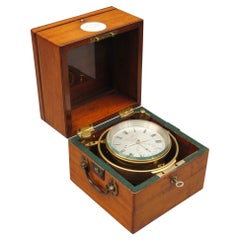
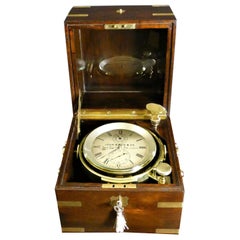
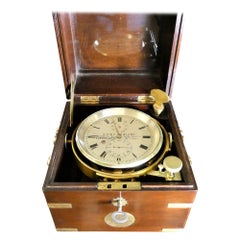
A Fine Scottish Two-Day Marine Chronometer Signed and Numbered D. McGregor Glasgow No 2241, c. 1870 A classic beautifully produced 19th century Scottish chronometer in a three-tier mahogany case, made c. 1870. The typically constructed case consists of a lower and a glazed upper part, as well as a top lid. The lower part has two counter-sunk handles to the sides, while the front has a lock and key with an inlaid brass escutcheon. In the front of the upper part there is a brass button to lock the top lid. The movement is situated in a gimballed brass bowl, which can be secured for transport purposes by a turnable handle in the bottom right corner of the case. The 4" silvered dial is protected by a flat bevelled glass set in a brass bezel, screwed to the bowl. In addition, there is an original protective case, in which the chronometer can be placed to protect it from external hazards. The maker has signed and numbered the chronometer on the silvered dial in the following manner: D. McGregor & CO LTD LIVERPOOL Glasgow Greenock No 2241 The time is indicated by a fine pair of gilt brass hands on the silvered dial with a Roman chaptering, five-minute and minute divisions. The seconds are indicated by a blued-steel hand on a separate chapter ring below the middle with Arabic ten-second, five-second and second divisions. Below the XII is up-and-down dial 0 - 56 (hours), indicating the state of winding. The two-day duration movement is constructed between two circular engine-turned plates and is driven by a spring in a spring barrel via a chain fusee. It has a so-called Earnshaw spring detent escapement with a compensated balance and helical spring. The chronometer is wound by a special key with a ratchet to prevent winding the clock in the wrong direction. The key can be stored in a hole in the top right corner of the case. The winding hole is covered by a sprung shutter. Dimensions: 18x18x18cm The maker: Duncan McGregor started his business in Greenock in 1836, opened premises in Glasgow in 1844 and traded as D. McGregor & Co. from 1856 onwards. Branches were opened in Liverpool in 1879 and London in 1886. They advertised themselves as manufacturers of nautical, mathematical and optical instruments, chronometers and watches. They often made use of famous chronometer makers such as Kulberg and Mercer. Literature: Tony Mercer, Chronometer Makers of the World, p. 195 Jonathan Betts, Marine Chronometers at Greenwich, Oxford, 2017
  • Creator:
    D. McGregor & Co. 1 (Clockmaker)
  • Dimensions:
    Height: 7.09 in (18 cm)Width: 7.09 in (18 cm)Depth: 7.09 in (18 cm)
  • Style:
    Victorian (Of the Period)
  • Materials and Techniques:
    Brass,Mahogany,Rosewood,Metalwork,Woodwork
  • Place of Origin:
  • Period:
  • Date of Manufacture:
    1850
  • Condition:
    Wear consistent with age and use. Fantastic condition throughout, in perfect order.
  • Seller Location:
    Oxfordshire, GB
  • Reference Number:
    1stDibs: LU4936233969192

More From This Seller

View All
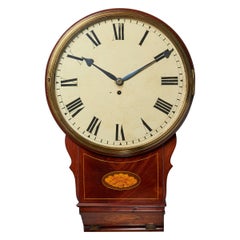
Fine English Drop Dial Wall Clock, Circa 1840

Fine English Drop Dial Wall Clock, Circa 1840

Located in Oxfordshire, United Kingdom

A lovely and attractive English trunk dial clock made c. 1840. The mahogany veneered case is of an original design with slightly shaped sides to the trunk and a Sheraton-like she...

Category

Antique 19th Century English George IV Wall Clocks

Materials

Mahogany

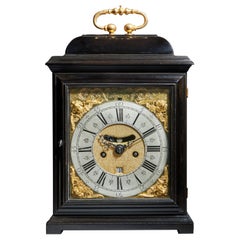
A rare 17th century English eight-day spring-driven table clock by J Gerrard

A rare 17th century English eight-day spring-driven table clock by J Gerrard

Located in Oxfordshire, United Kingdom

A Rare Late 17th Century English Eight-Day Spring-Driven Table Clock, Circa 1700. England Signed J. Gerrard. This exceptional late 17th-century English eight-day table clock is a s...

Category

Antique 17th Century English William and Mary Table Clocks and Desk Clocks

Materials

Brass

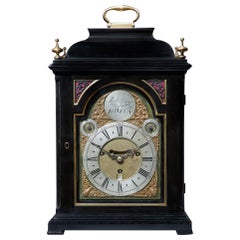
18th Century George III Figured Mahogany Three Pad Stricking Bracket Clock

18th Century George III Figured Mahogany Three Pad Stricking Bracket Clock

Located in Oxfordshire, United Kingdom

18th century George III figured mahogany three pad bracket clock by John Wright Dorking, Circa 1780. England A most attractive English bracket clock, made around 1780, signed on ...

Category

Antique 18th Century English George III Table Clocks and Desk Clocks

Materials

Brass

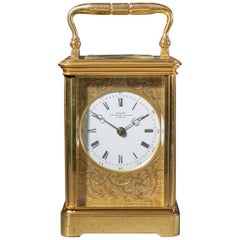
Engraved Eight-Day Striking and Repeating Carriage Clock by Perregaux Au Locle

Engraved Eight-Day Striking and Repeating Carriage Clock by Perregaux Au Locle

Located in Oxfordshire, United Kingdom

A superb high quality eight-day striking and repeating carriage clock, signed on the enamel dial PERREGAUX AU LOCLE, circa 1870. The superb engraved gilt gorge brass case has facetted glass panels to all sides so that the movement is almost entirely visible. The top has a large rectangular window which allows full view of the original silvered platform escapement. At the back, there is a glazed door giving access to the winding and setting arbors, the functions of which are explained indications in French. The clock is surmounted by a typically shaped carrying handle. The rectangular enamel dial has a Roman chapter ring with an outer minute track with five-minute markers. The time is indicated by a fine pair of blued-steel fleur-de-lys hands. Below is a smaller subsidiary Arabic ring...

Category

Antique 19th Century French Neoclassical Carriage Clocks and Travel Clocks

Materials

Brass

You May Also Like

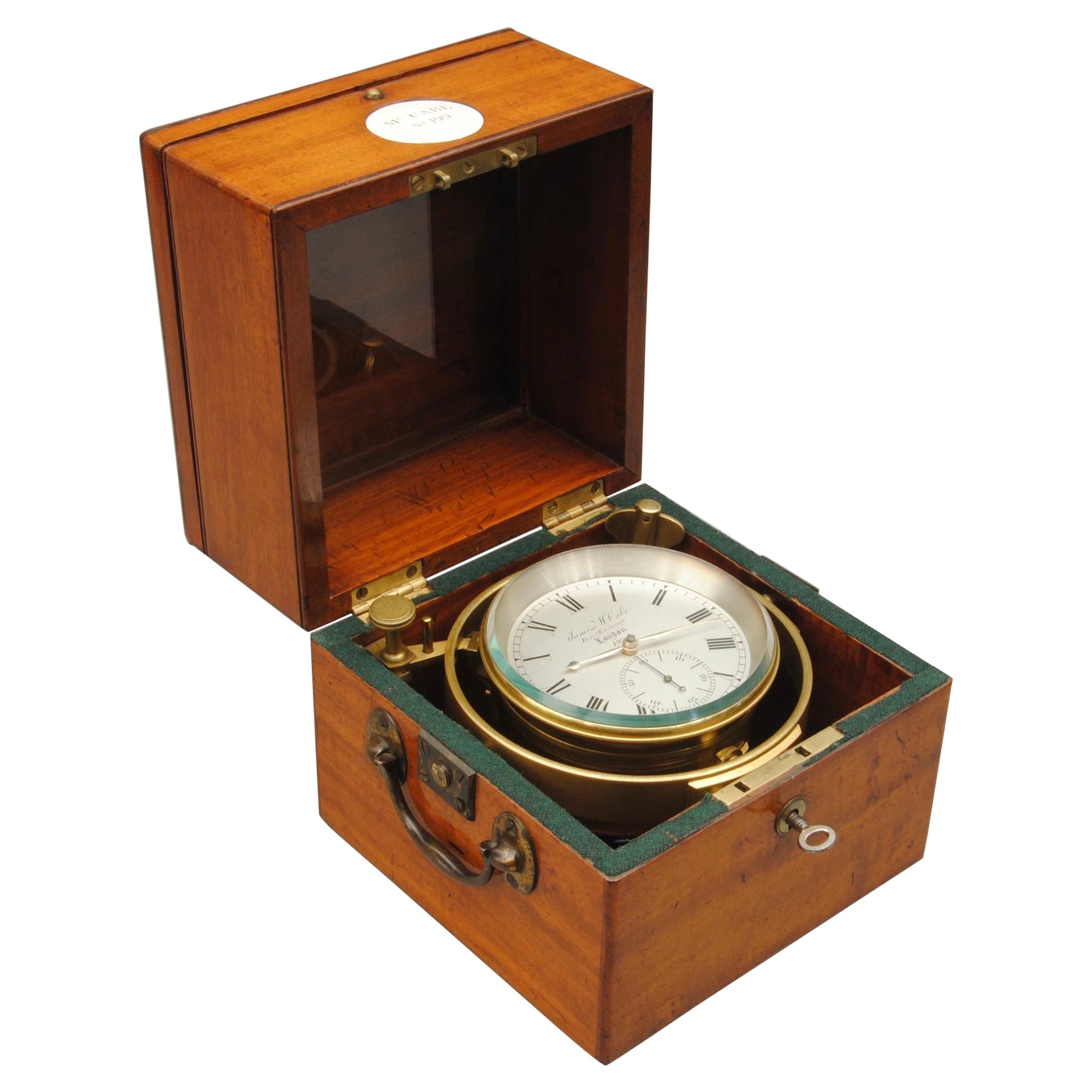
Early 19th Century 2 Day Marine Chronometer by James McCabe, No. 199

Early 19th Century 2 Day Marine Chronometer by James McCabe, No. 199

By James McCabe

Located in Lincolnshire, GB

Number 199, a two day marine chronometer by James McCabe, London, beautifully signed and numbered on the dial and movement, and the number on the bottom of the bowl. In a three part ...

Category

Antique Early 19th Century English Scientific Instruments

Materials

Brass

Two Day Marine Chronometer, John Bliss, New York

Two Day Marine Chronometer, John Bliss, New York

By John Bliss & Co.

Located in Norwich, GB

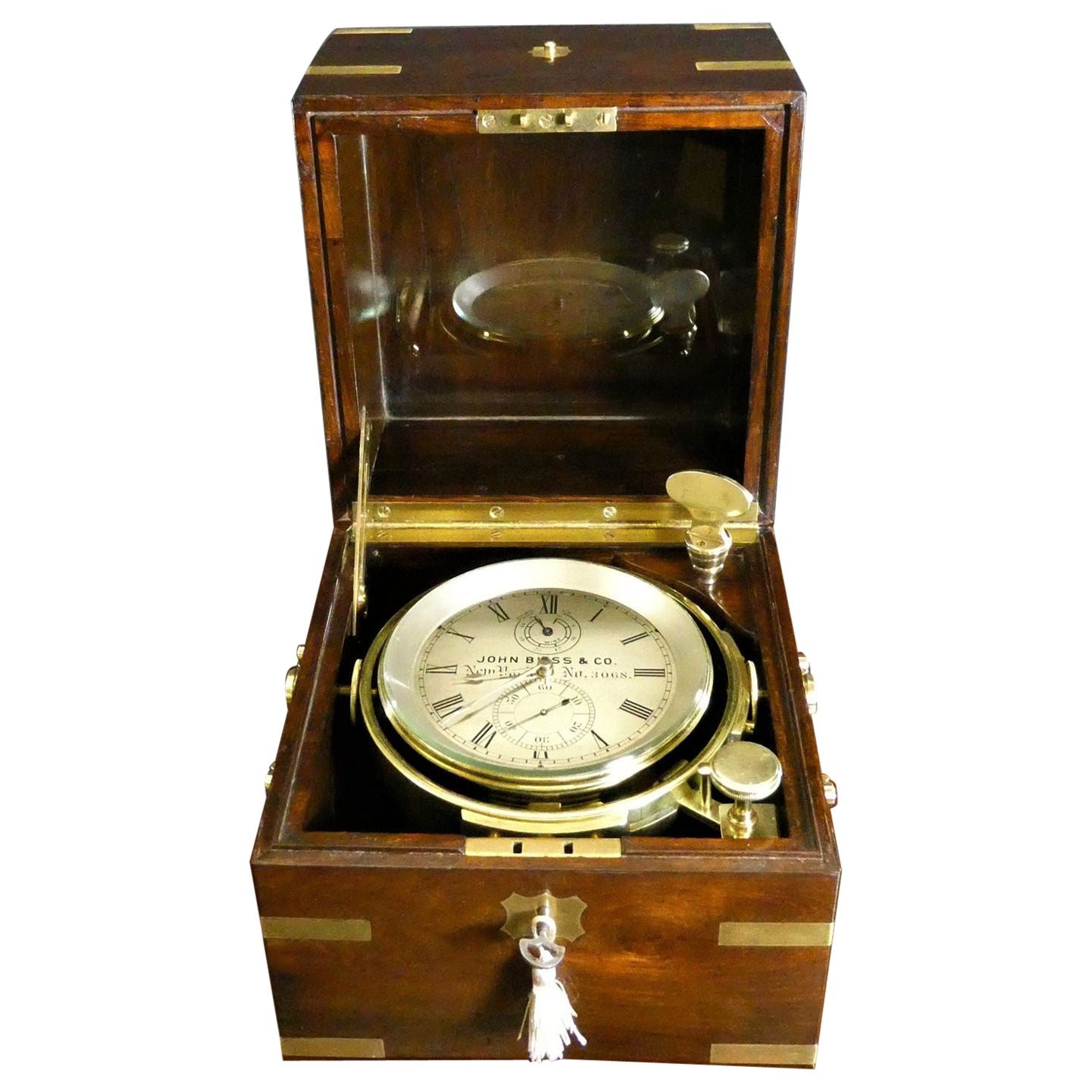
A Fine Two Day Marine Chronometer By John Bliss and Co, New York. No.3068 Two day marine chromometer by John Bliss and Co housed in a beautiful three tier brass bound box with brass carrying handles to the sides, brass push button knob opening to a third tier. The box has a wonderful rich patina and retains it’s original solid brass Tipsy key. The movement is housed within a gimballed brass surround which is stamped H.M.I and marked with the ordnance arrow The high quality 56 hour chain fusee movement has full brass plates joined by four ringed pillars, an Earnshaw-type spring detent escapement with maintaining power, split bi-metallic balance and cylindrical shaped temperature compensation weights, polished steel helical balance and faceted endstone. The silvered dial signed ‘John Bliss & Co, New York No 3068 with subsidiary dial below XII for ‘state of wind’ and subsidiary seconds dial above the VI, original ‘blued’ steel hands. C.1890 John Bliss & Co worked at 128 Front Street, New York between 1880 and 1929 and then 84 Pearl Street, New York from 1934 to 1939. Front Street runs from the Brooklyn Bridge to Hudson Ave. and Navy Street, close to the Docks area. On the death of John Bliss, his sons John and George carried on the business. Their chronometers were placed 3rd, 6th and 8th at the Washington Observatory Trials in 1886. They became suppliers to the US Navy and also made meteorological instruments and devised an original way of making mainsprings. Many of their movements were supplied by makers in England, particularly Victor Kullberg.

Category

Antique 1890s English Nautical Objects
Materials

Brass

Cronometro nautico di bordo firmato Elgin National Watch Co. Father Time, 1918

Cronometro nautico di bordo firmato Elgin National Watch Co. Father Time, 1918

Located in Milan, IT

Cronometro nautico di bordo firmato Elgin National Watch Co. Father Time, con carica manuale di 40 ore, databile tra il 1918-1920, si tratta di un orologio di altissima precisione u...

Category

Vintage 1910s Nautical Objects

Materials

Wood

Auguste Berthoud. A Rare Antique Experimental Marine Chronometer C1840

Auguste Berthoud. A Rare Antique Experimental Marine Chronometer C1840

Located in Mayfair, London, London

Auguste Berthoud. A Unique and Rare French Experimental Marine Chronometer C1840 Dial: The Original Silvered regulator Dial, similar to that used by Louis Berthoud...

Category

Antique 19th Century French Pocket Watches

Materials

Brass