Want more images or videos?
Request additional images or videos from the seller
1 of 7

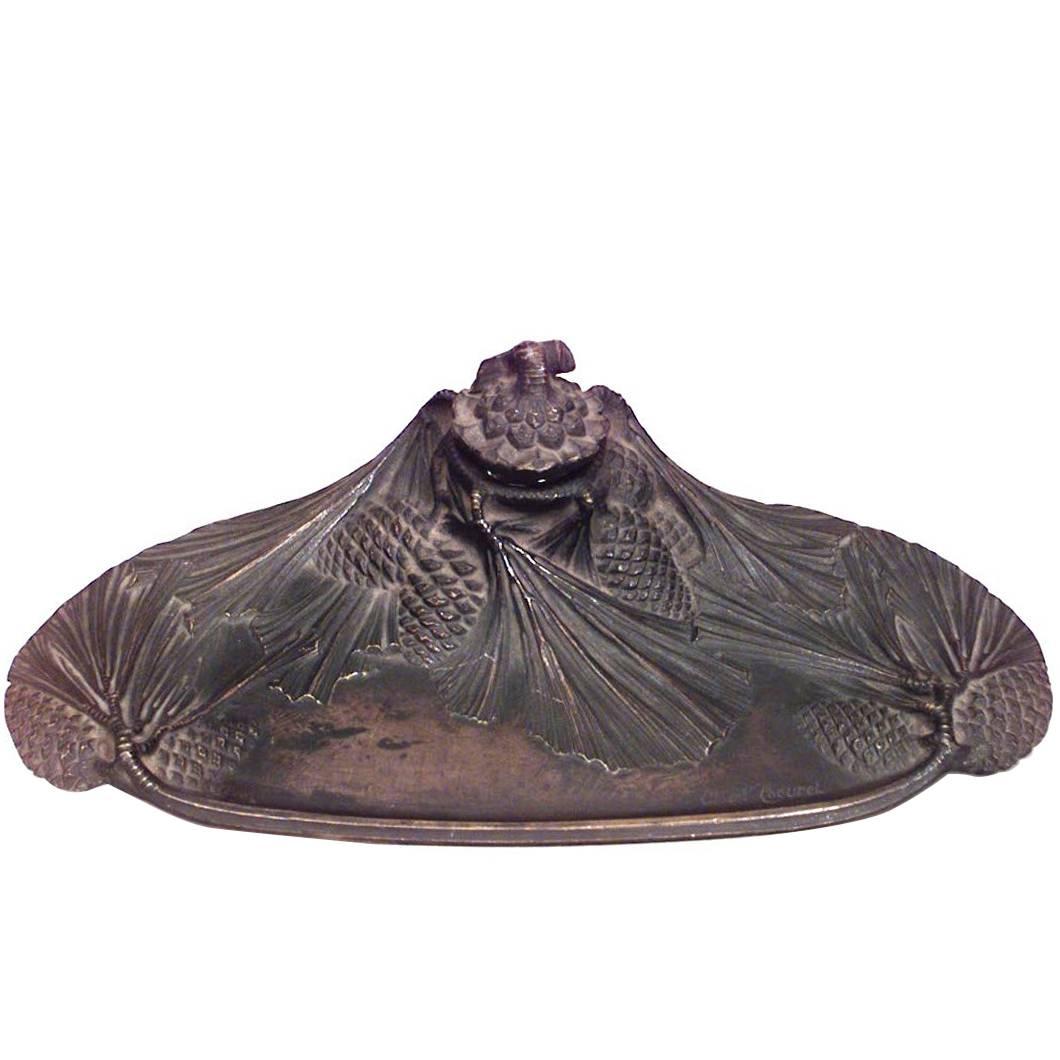
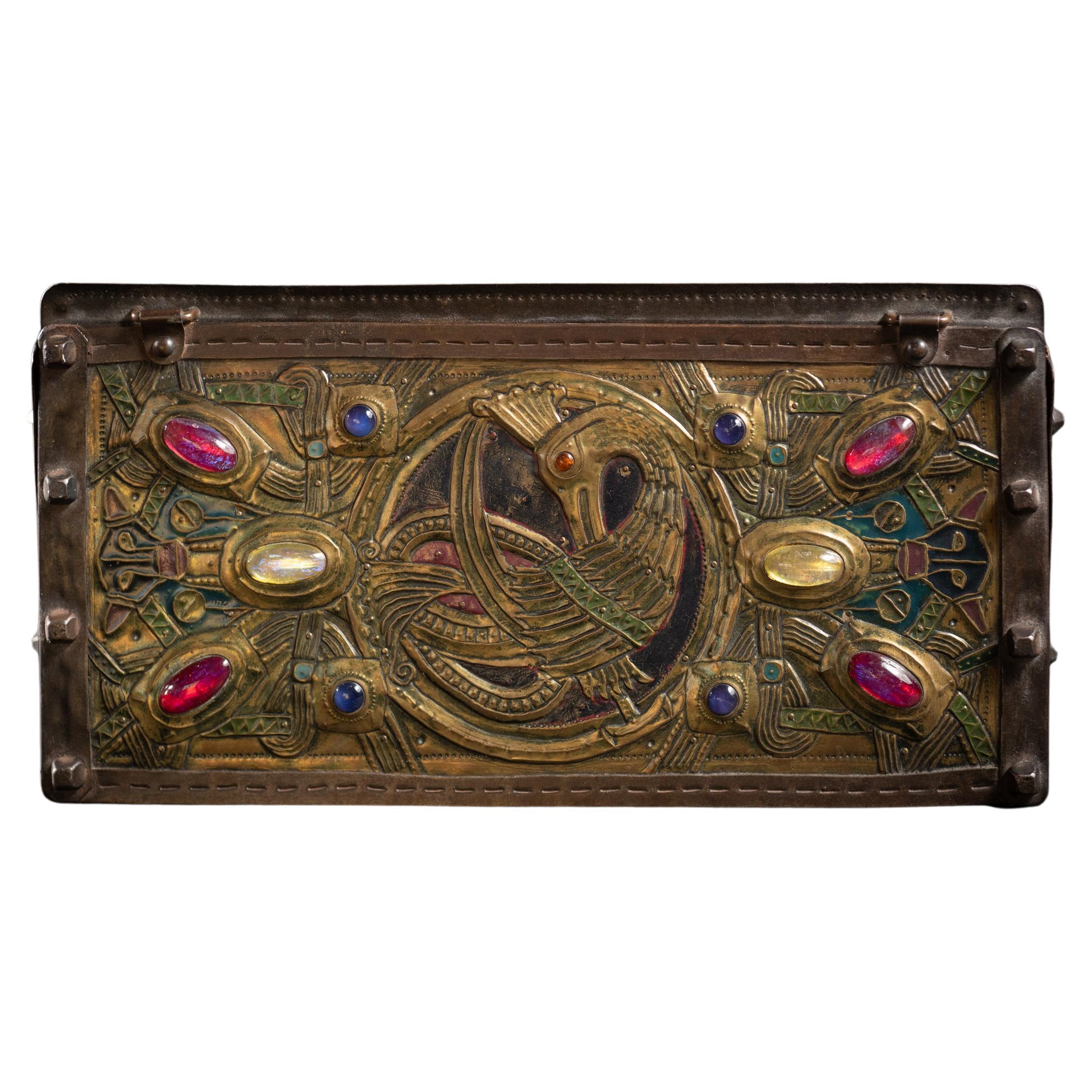
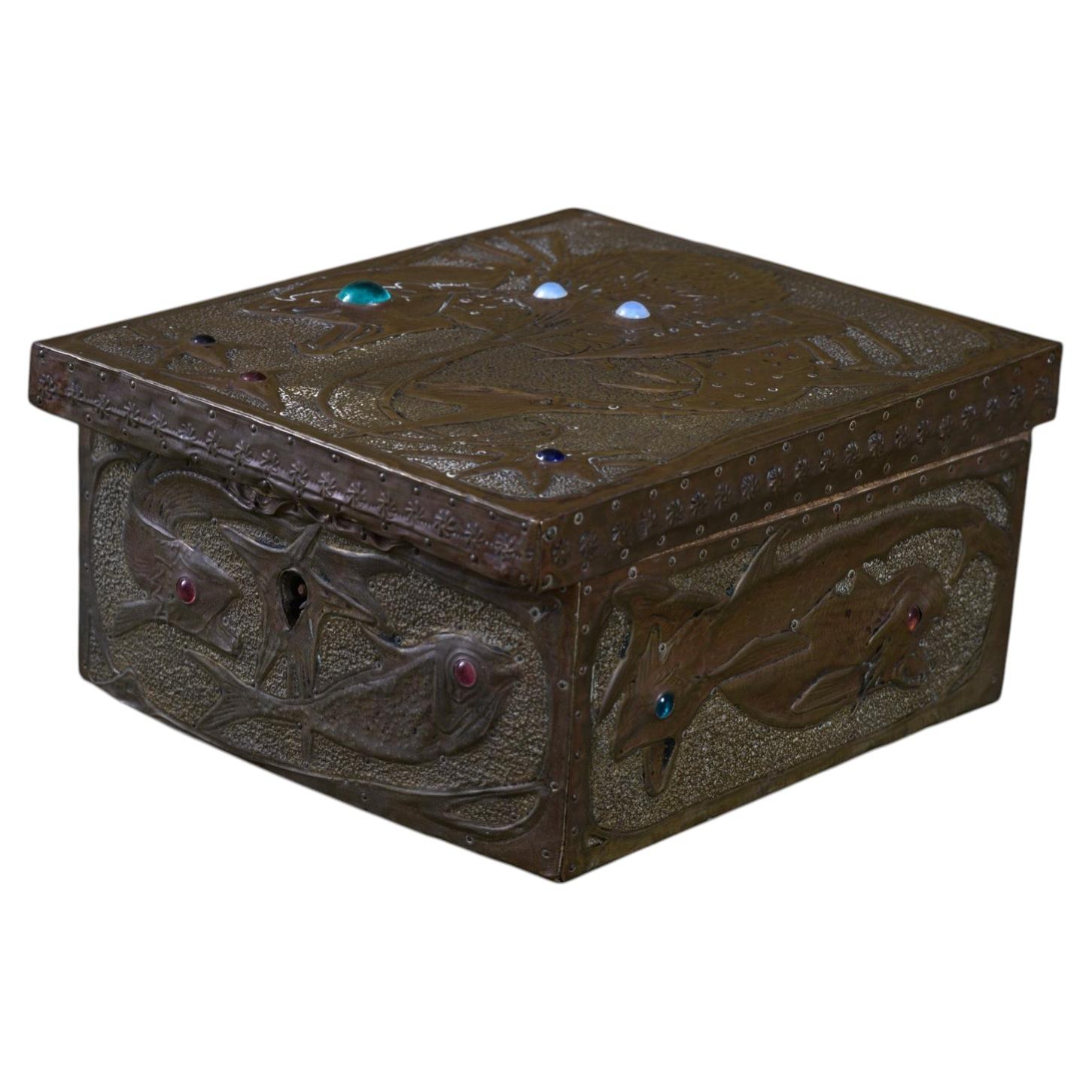
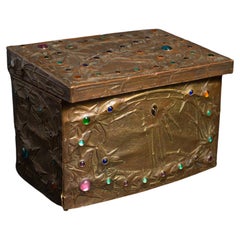
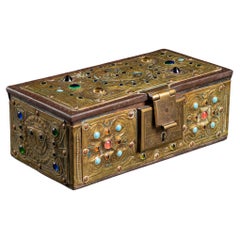
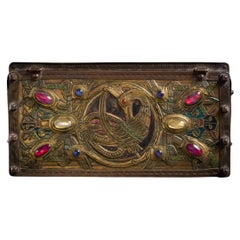
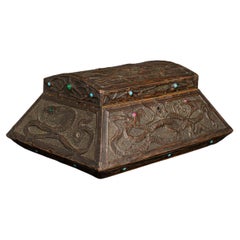
Art Nouveau Repoussé Mystic Inkwell by Alfred Daguet

$9,000
£6,798.66
€7,927.53
CA$12,774.59
A$12,856.15
CHF 7,461.65
MX$156,120.36
NOK 85,710.52
SEK 88,469.73
DKK 59,260.57

About the Item

Alfred Louis Achille DAGUET (1875 - 1942) was a metalsmith active in Paris during the first part of the 20th century. His metalwork created prior to the outbreak of World War I, noteworthy for its versatility and virtuosity, is the most sought-after among collectors today. Daguet mined many sources for inspiration be they Egyptian, Celtic, Japanese, Byzantine, Medieval or contemporary. He received formal training under the painters, Gerome and Clairin, both academicians associated with the Ecole des Beaux-Arts who had traveled to Egypt and explored themes of orientalism in their work. Daguet’s studio in Paris was located at 22 rue de Provence, just above Siegfried Bing’s influential L’Art Nouveau boutique. It is this association with Bing that is most significant to Daguet’s metier and what firmly places his work in art historical context. As a promoter and purveyor of Japanese objects, Bing capitalized on the craze for japonisme by expanding his commercial galleries from 1895-1904 to include artist workshops capable of making everything conceivable to create harmonious interior spaces. Daguet’s finely-worked repousse copper sheets clad many decorative letter and desk boxes sold at Bing’s shop in the early-1900s. These boxes which Daguet often further embellished with colored glass unquestionably reflect the tenets of the Art Nouveau aesthetic. In addition to boasting famous clientele such as Sarah Bernhardt who followed him to his studio on rue du Faubourg Saint-Jaques following Bing’s death in 1905 and the closure of his store, l’Art Nouveau, Daguet’s work achieved critical success with inclusion in group expositions at the Musee Galliera, Paris, 1905, 1926; Salons of the Societe des Artistes Francais: 1900, 1903, 1904, 1905, 1909, 1910; and the Societe Nationale des Beaux-Arts, 1901.
  • Creator:
    Alfred Daguet (Artist)
  • Dimensions:
    Height: 3.75 in (9.53 cm)Width: 7.65 in (19.44 cm)Depth: 13.3 in (33.79 cm)
  • Style:
    Art Nouveau (Of the Period)
  • Materials and Techniques:
  • Place of Origin:
  • Period:
    1900-1909
  • Date of Manufacture:
    1902
  • Condition:
    Wear consistent with age and use. Signed with the mark: "A.L.F. Daguet Les Cuivres S. Bing,".
  • Seller Location:
    Palm Beach, FL
  • Reference Number:
    1stDibs: LU7300234549832

More From This Seller

View All
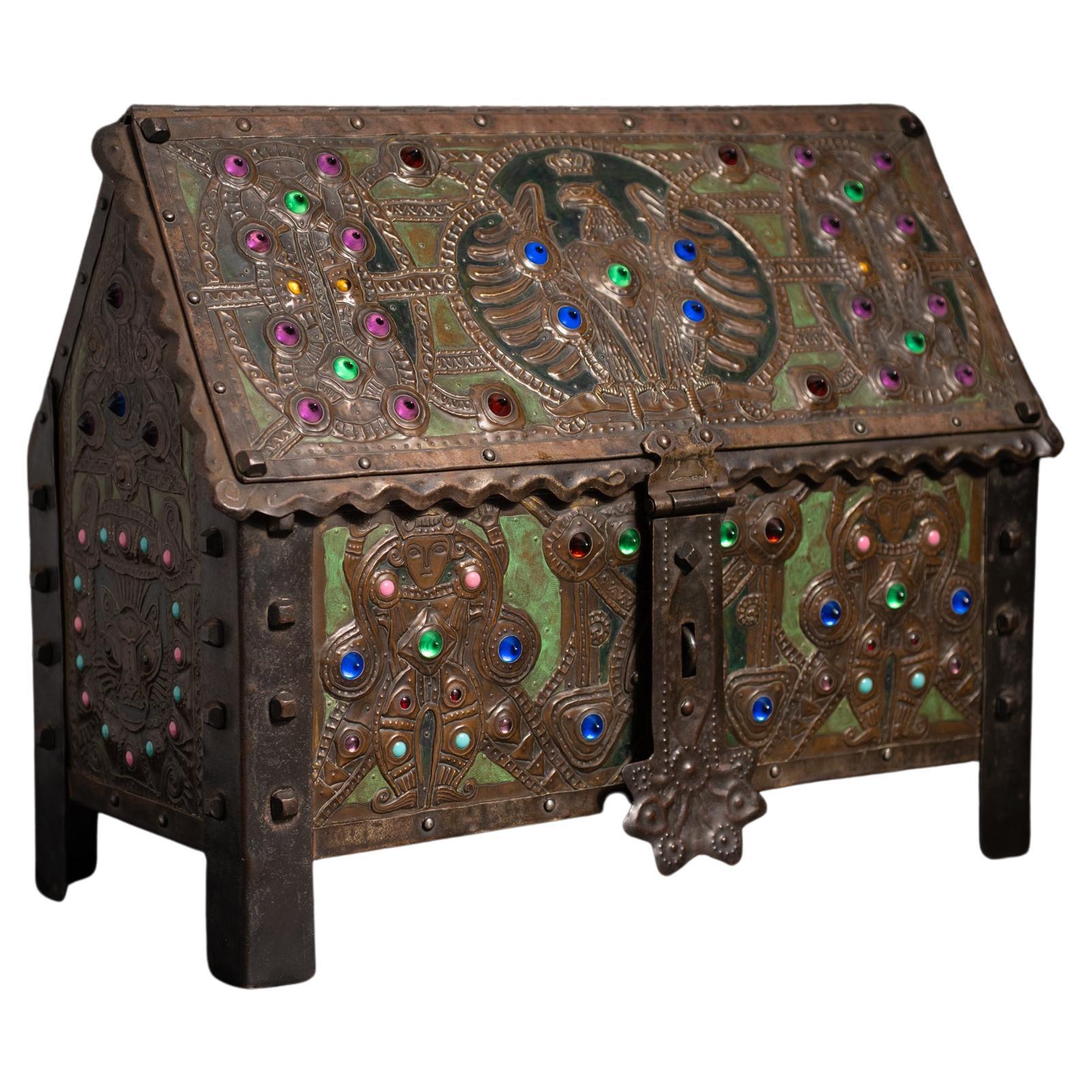
Art Nouveau Repoussé Regal Reliquary by Alfred Daguet

Art Nouveau Repoussé Regal Reliquary by Alfred Daguet

By Alfred Daguet

Located in Palm Beach, FL

Alfred Louis Achille DAGUET (1875 - 1942) was a metalsmith active in Paris during the first part of the 20th century. His metalwork created prior to the outbreak of World War I, note...

Category

Antique Early 1900s French Art Nouveau Decorative Boxes

Materials

Copper, Enamel, Steel

Art Nouveau Canine Repoussé Box by Alfred Daguet

Art Nouveau Canine Repoussé Box by Alfred Daguet

By Alfred Daguet

Located in Palm Beach, FL

Alfred Louis Achille DAGUET (1875 - 1942) was a metalsmith active in Paris during the first part of the 20th century. His metalwork created prior to the outbreak of World War I, note...

Category

Antique Early 1900s French Art Nouveau Decorative Boxes

Materials

Brass, Steel

Art Nouveau Cosmic Repoussé Box by Alfred Daguet

Art Nouveau Cosmic Repoussé Box by Alfred Daguet

By Alfred Daguet

Located in Palm Beach, FL

Alfred Louis Achille DAGUET (1875 - 1942) was a metalsmith active in Paris during the first part of the 20th century. His metalwork created prior to the outbreak of World War I, note...

Category

Antique Early 1900s French Art Nouveau Decorative Boxes

Materials

Copper

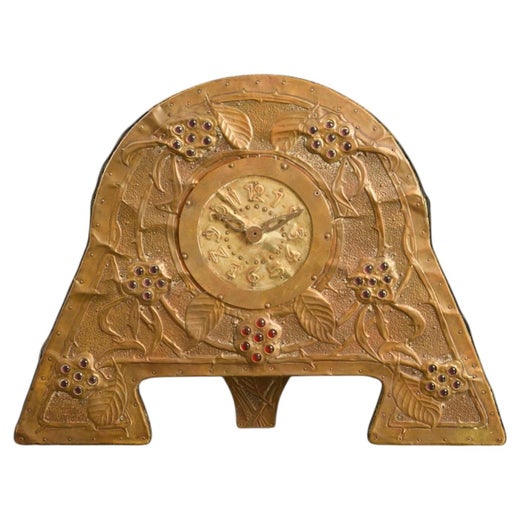
Art Nouveau Celtic Creature Repoussé Box by Alfred Daguet

Art Nouveau Celtic Creature Repoussé Box by Alfred Daguet

By Alfred Daguet

Located in Palm Beach, FL

Note: We highly recommend shipping through 1stDibs for its cost effectiveness, full insurance coverage, and reliable handling. While standard parcel services are an option, the defau...

Category

Antique Early 1900s French Art Nouveau Mantel Clocks

Materials

Brass, Steel

Art Nouveau Basilisk Repoussé Box by Alfred Daguet

Art Nouveau Basilisk Repoussé Box by Alfred Daguet

By Alfred Daguet

Located in Palm Beach, FL

Alfred Louis Achille DAGUET (1875 - 1942) was a metalsmith active in Paris during the first part of the 20th century. His metalwork created prior to the outbreak of World War I, note...

Category

Antique Early 1900s French Art Nouveau Decorative Boxes

Materials

Brass, Enamel, Steel

Art Nouveau Cold Creatures Repoussé Box by Alfred Daguet

Art Nouveau Cold Creatures Repoussé Box by Alfred Daguet

By Alfred Daguet

Located in Palm Beach, FL

Alfred Louis Achille DAGUET (1875 - 1942) was a metalsmith active in Paris during the first part of the 20th century. His metalwork created prior to the outbreak of World War I, note...

Category

Antique Early 1900s French Art Nouveau Decorative Boxes

Materials

Brass, Steel

You May Also Like

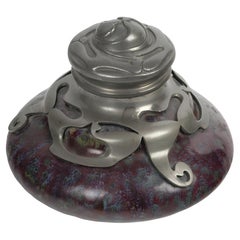
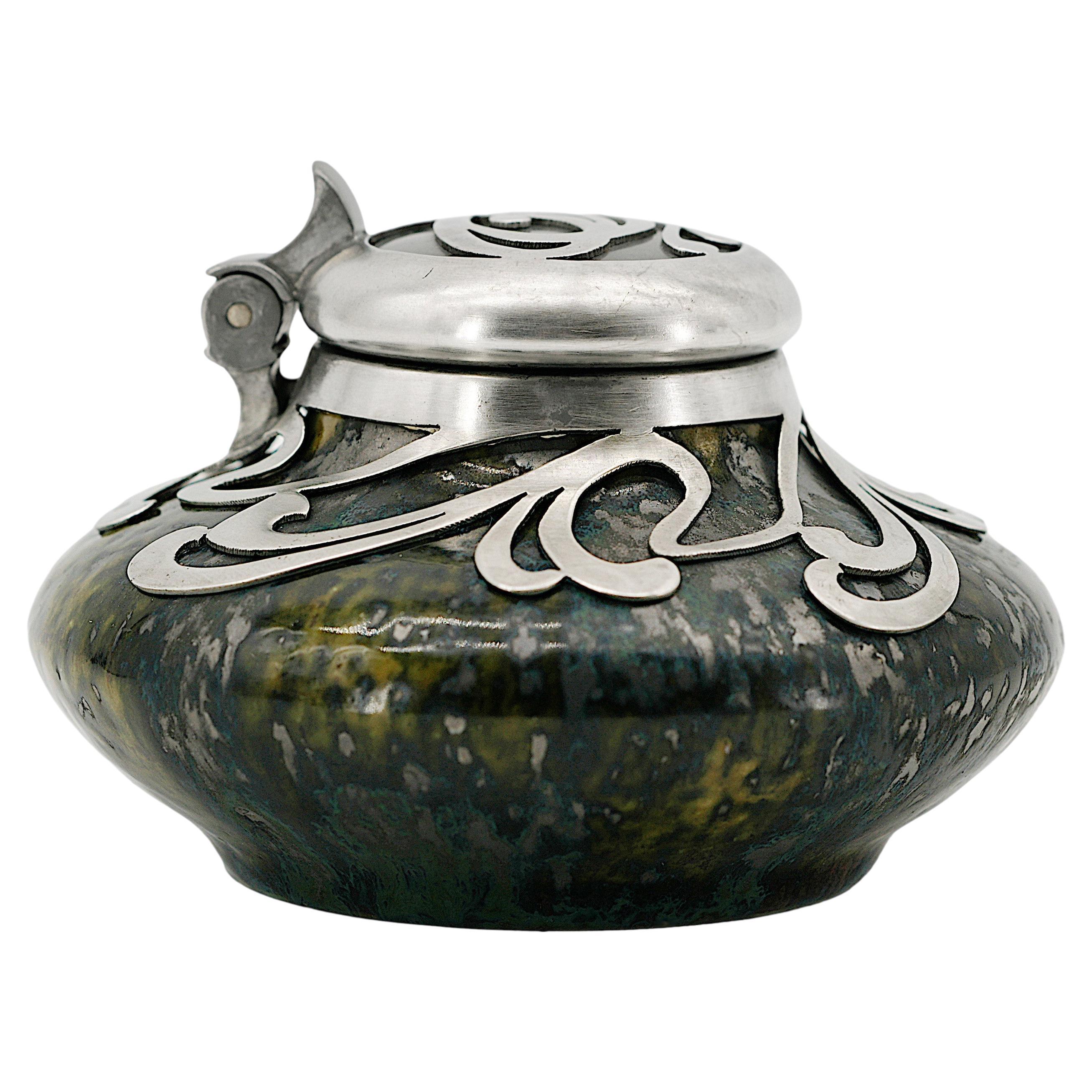
Pierre-Adrien Dalpayrat (1844-1910)  Art Nouveau Flambé Ceramic Inkwell, c.1900

Pierre-Adrien Dalpayrat (1844-1910) Art Nouveau Flambé Ceramic Inkwell, c.1900

By Pierre-Adrien Dalpayrat

Located in Saint-Ouen, FR

Pierre-Adrien Dalpayrat (1844-1910) Art Nouveau Flambé Ceramic Inkwell, c.1900 This elegant Art Nouveau inkwell (circa 1900) perfectly showcases the absolute mastery of ce-ramic gl...

Category

Antique 1890s French Art Nouveau Ceramics

Materials

Pewter

Antique Art Nouveau Inkwell, Signed Gaston Bigard, 1910s, France

Antique Art Nouveau Inkwell, Signed Gaston Bigard, 1910s, France

By Gaston Bigard

Located in Greven, DE

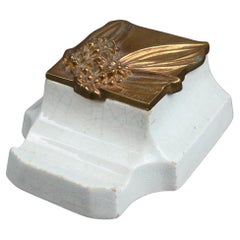
Exceptional beautiful inkwell by the french artist and sculptor Gaston Bigard. Signed at the lid "BIGARD". Ceramic with authentic craquele lacquer and a brass lid with beautiful Art ...

Category

Early 20th Century French Art Nouveau Inkwells

Materials

Brass

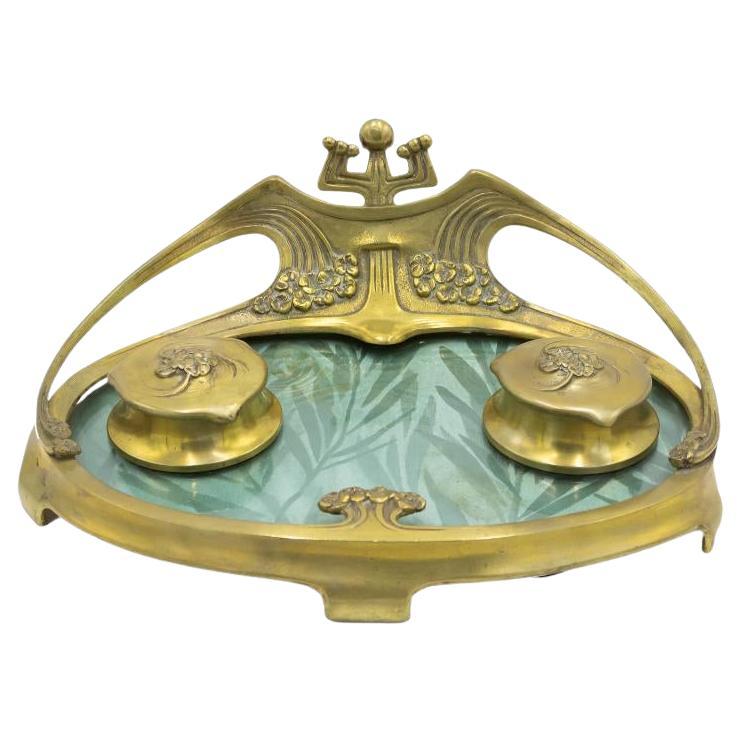
French Art Nouveau Bronze Dore Inkwell

French Art Nouveau Bronze Dore Inkwell

Located in Queens, NY

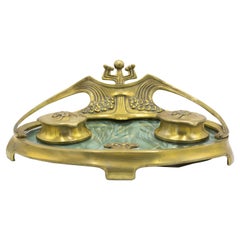
French Art Nouveau (Secessionist-style) bronze dore double inkwell with floral design and green fabric under glass base.  

Category

20th Century Art Nouveau Inkwells

Materials

Bronze

Pierre-Adrien DALPAYRAT French Art Nouveau Stoneware Inkwell, 1890

Pierre-Adrien DALPAYRAT French Art Nouveau Stoneware Inkwell, 1890

By Pierre-Adrien Dalpayrat

Located in Saint-Amans-des-Cots, FR

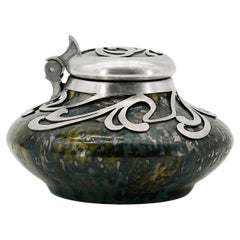
French Art Nouveau Inkwell by Pierre-Adrien Dalpayrat, France, circa 1890. A rare and exquisite Art Nouveau inkwell by renowned French ceramist Pierre-Adrien Dalpayrat (1844–1910). This finely crafted piece showcases Dalpayrat’s signature red copper-glazed stoneware, especially rich and luminous near the base. Elegantly mounted in pewter, the design exemplifies the organic flow and refined detail of the Art Nouveau period. Dimensions: Height: 3.54 in. (9 cm) Diameter: 5.12 in. (13 cm) Materials: Stoneware with pewter mount Condition: Excellent+++++, museum-quality preservation Markings: Incised signature "Dalpayrat 1500" under the base (see photo) This inkwell is a collectible example of French ceramic art at the turn of the century—perfect for collectors of Art Nouveau, 19th-century French ceramics, or the works of Dalpayrat. Adrien Dalpayrat (1844–1910): A Pioneer of French Ceramic Innovation Adrien Dalpayrat was a French ceramicist and researcher who played a key role in the revival of stoneware at the end of the 19th century. Born in 1844 in Limoges, Dalpayrat studied drawing and porcelain painting in his hometown before beginning his professional career at the Jules Vieillard faience factory in Bordeaux. There, he met his wife, Marie Tallerie, with whom he had two sons—Albert and Adolphe—who would later become his primary collaborators. Throughout his early career, Dalpayrat worked for several major ceramic manufacturers, including Ashwin (Valentine), Fouquet (Toulouse), François Blanc (Monaco), and Léon Sazerat (Limoges). In 1889, seeking greater independence, he moved to the Paris region and established his own studio in Bourg-la-Reine. Collaborations and Artistic Evolution Dalpayrat’s creative vision expanded through his collaboration with sculptor Alphonse Voisin-Delacroix. Together, they explored neo-Gothic and Palissy-inspired motifs, creating a remarkable ceramic bestiary. Following Voisin-Delacroix’s death in 1893, Dalpayrat partnered with Adèle Lesbros, which marked a shift in his work toward simpler, more refined vase forms influenced by Japonism. Japanese art had been introduced to France during the 1867 Universal Exhibition, but it wasn’t until the 1878 Exhibition, particularly through the ceremonial stoneware used in the Japanese tea ceremony, that Japonism truly captivated French artists. This influence led Dalpayrat to create vessels with organic, vegetal, and animal-inspired forms. Technical Mastery: The Secrets of Copper Red Among all the ceramists of his time who sought to replicate the elusive Chinese “sang de boeuf” (oxblood) glaze, Adrien Dalpayrat was arguably the most successful. He didn’t simply reproduce the legendary copper red—he transformed it. By manipulating glaze thickness, firing temperature, atmosphere, and copper oxide content, he developed a unique palette of flamed and mottled red glazes that became his signature: the renowned Dalpayrat red. He further enriched his pieces by introducing streaks and inclusions of turquoise, blue, green, and yellow—freeing the red glaze from monochromy and turning it into an expressive, living surface. His work pushed stoneware beyond function into expressive art, merging form and glaze in bold, sculptural harmony. Beyond Ceramics: Bronze Mounts and Architectural Works Dalpayrat also collaborated with renowned jewelers such as Ernest Cardeilhac and Keller to produce pieces mounted in gilt bronze, blending ceramics with decorative arts at the highest level. In an effort to make his work more accessible, he opened a second faience workshop focused on simpler, more affordable pieces inspired by Nevers and Rouen ware. However, this venture faced financial difficulties and closed by 1900. The main family studio followed in 1906 as the popularity of Art Nouveau declined. Dalpayrat then returned to Limoges, devoting his final years to painting and drawing until his death in 1910. Legacy and Recognition Despite financial struggles during his lifetime, Dalpayrat’s ceramics were widely acclaimed at major international exhibitions: Bronze medal, World's Columbian Exposition, Chicago (1893) Silver medal, Antwerp International Exhibition (1894) Gold medal, Exposition Universelle, Paris (1900) Today, his work is part of prestigious museum collections. In 2020, the Petit Palais in Paris acquired a large bird motif vase created in collaboration with Voisin-Delacroix, now on view in Room...

Category

Antique 1890s French Art Nouveau Inkwells
Materials

Pewter

Art Nouveau Inkwell, Denmark, Circa 1920.

Art Nouveau Inkwell, Denmark, Circa 1920.

Located in Saint-Ouen, FR

Art Nouveau inkwell, Denmark, circa 1920. Inkwell, circa 1920, glass and silver-plated metal, Art Nouveau period, Denmark. H: 15.5 cm, D: 12 cm Please contact us before placing you...

Category

Vintage 1920s Danish Art Nouveau Inkwells
Materials

Silver Plate

Art Nouveau Repousse Brass & Glass Inkwell

Art Nouveau Repousse Brass & Glass Inkwell

Located in Austin, TX

Circa 1900, this antique inkwell exemplifies the Art Nouveau period in decorative arts through the shape of its glass bowl and repousse brass-hinged cov...

Category

Early 20th Century European Art Nouveau Inkwells
Materials

Brass