Want more images or videos?
Request additional images or videos from the seller
1 of 20

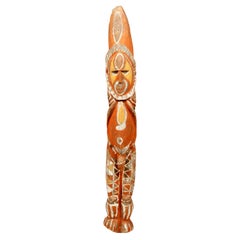
Garra Hook Sculpture on Display Stand Mid-Sepik River Papua New Guinea

$3,200
£2,416.83
€2,829.55
CA$4,546.29
A$4,625.26
CHF 2,650.74
MX$55,691.01
NOK 30,982.21
SEK 31,118.19
DKK 21,153.44

About the Item

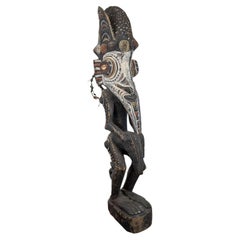
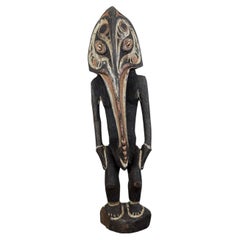
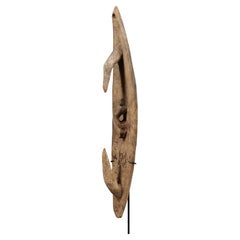
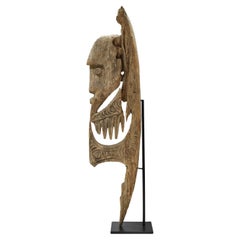
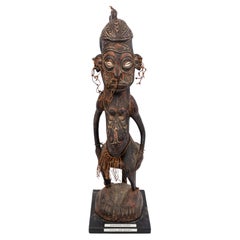
A Garra hook by Bahinemo People of Hustein Mountains from Mid-Sepik River region in Papua New Guinea. The highly sculptural mask is one of the most iconic and mysterious designs from PNG that often stirs the viewer's imagination. This hood figure was likely dated from the first half of 20th century circa 1940-50s. Bahinemo people from Hustein Mountains on the south end of the Mid Sepik River region created two types of hook mask called Garra. These masks are not meant to be worn. The first type, as this one belongs, features opposing hooks on a long thin curved backbone with sometimes a single discernible foot. It resembles the physical features of Yipwon found in Koriwori River region. In the center of the figure, sometimes there is a circular element suggestive of moon and sun, reflecting a cosmic composition. This figure, however, has a face in place with eyes inset with a cowrie shell. The figure was painted with earth pigment in alternate white and red ochre colors which has largely been preserved. There is a repair on the lowest hook upon close examination. The hook figure is displayed on a black mental stand, which is included if the buyer wishes. It is rest on the stand rather being fixed to it. The mask itself is 42" h x 8" w x 1" d.
  • Dimensions:
    Height: 42 in (106.68 cm)Width: 8 in (20.32 cm)Depth: 8 in (20.32 cm)
  • Style:
    Tribal (Of the Period)
  • Materials and Techniques:
  • Place of Origin:
  • Period:
  • Date of Manufacture:
    20th century
  • Condition:
    Repaired: The lowest hook was reattached, visible on the detail photos. Wear consistent with age and use. Patina throughout with pigment and crusting.
  • Seller Location:
    Atlanta, GA
  • Reference Number:
    1stDibs: LU945041595932

More From This Seller

View All
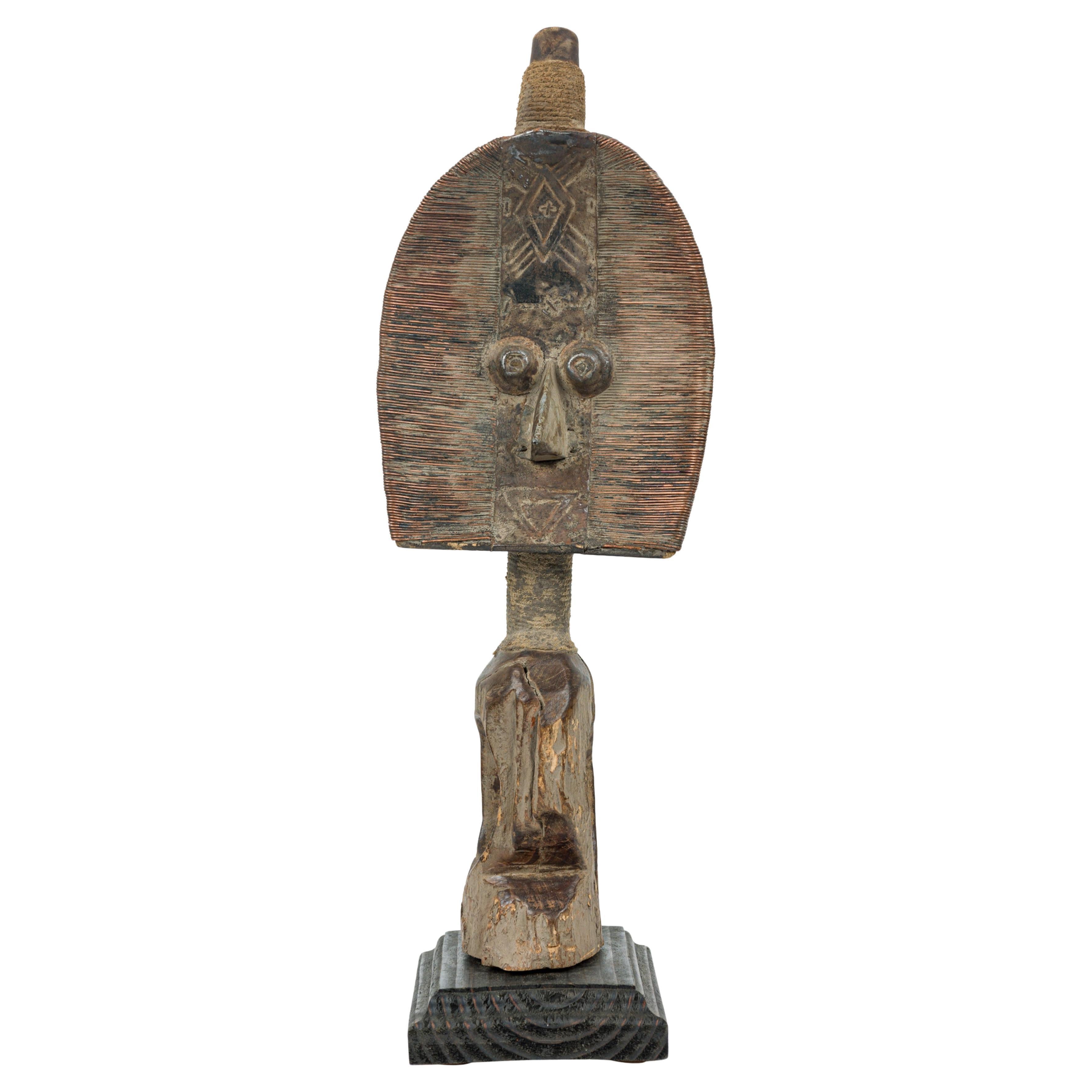
Kota Reliquary Figure Sculpture Mahongwe People Gabon

Kota Reliquary Figure Sculpture Mahongwe People Gabon

Located in Atlanta, GA

On offer is an African wooden and metal sculptural work called Boho na bwete from Northern part of Gabon made by Mahongwe people. Boho na bwete means Face of Ancestors in local language and the statue represents the deceased family members in an abstract way and was used as a reliquary figure fixed on top of the basket that contains the bundles of the ancestor's bones and remains, serving as a public shrine for worshipping. The style of the Kota figure...

Category

Mid-20th Century Gabonese Tribal Figurative Sculptures

Materials

Bronze, Copper

Bis Pole Sculpture by Asmat People

Bis Pole Sculpture by Asmat People

Located in Atlanta, GA

A ritual artifact from the tribe of the Asmat poeple, an ethnic group of New Guinea living in the Papua province of Indonesia and South-western regions of Papua New Guinea, bis or bisj pole is carved out of a wild Mangrove tree and can reach a stunning height Their carvings depict stacked human and animal figures standing and on top always phallic symbols, in the shape of a canoe prow. Bis poles...

Category

20th Century Papua New Guinean Tribal Tribal Art

Materials

Wood

Australian Aboriginal Ironwood Bima Figure Carving Tiwi Island

Australian Aboriginal Ironwood Bima Figure Carving Tiwi Island

By Myra Ann Tipiloura

Located in Atlanta, GA

Collected in Tiwi Island off the coast of Northern Australia, this Bima Figure Carving was carved and painted by Myra Ann Tipiloura out of Iron wood. It w...

Category

20th Century Australian Tribal Figurative Sculptures

Materials

Wood

African Fang Reliquary Wood Figurative Statue Gabon

African Fang Reliquary Wood Figurative Statue Gabon

Located in Atlanta, GA

Carved out of a single block of wood, this Gabon Fang male reliquary statue of stylized proportion impresses the viewers with a robust stance and meditative expression. Traditionally...

Category

Mid-20th Century Gabonese Tribal Figurative Sculptures

Materials

Copper

Yam Ancestor Figure TOTEM Pole Papua New Guinea with Provenance

Yam Ancestor Figure TOTEM Pole Papua New Guinea with Provenance

Located in Atlanta, GA

A yam ancestor TOTEM pole from the mid-Sepik River region of Papua New Guinea. Carved out of a solid wood by the Abelam people, who cultivated yams as their main crop, the pole featu...

Category

Early 20th Century Papua New Guinean Tribal Tribal Art

Materials

Wood

Fiber Polychrome Mask Yam Ancestor Papua New Guinea

Fiber Polychrome Mask Yam Ancestor Papua New Guinea

Located in Atlanta, GA

A well preserved Yam Ancestor mask professionally presented on a museum quality acrylic display stand. The mask was a classic tribal art piece from Abela...

Category

Mid-20th Century Papua New Guinean Tribal Masks

Materials

Acrylic, Natural Fiber

You May Also Like

Early 20th Century Sago Peg, Abelam/Wosera People, Papua New Guinea

Early 20th Century Sago Peg, Abelam/Wosera People, Papua New Guinea

Located in Point Richmond, CA

Sago peg, tapak, Abelam/Wosera people, East Sepik Province, Papua New Guinea Sago pegs are used to secure a screen mesh during the preparation of sago flour. This example depicts a ...

Category

Early 20th Century Papua New Guinean Tribal Abstract Sculptures

Materials

Shell

Large Iatmul Ceremonial Agiba Figure, East Sepik River, Papua New Guinea

Large Iatmul Ceremonial Agiba Figure, East Sepik River, Papua New Guinea

Located in Nottingham, GB

The Sepik River region of Papua New Guinea is celebrated as one of the world's great centres of indigenous sculpture, where carving traditions developed as an essential expression of...

Category

20th Century Tribal Art

Materials

Wood

Oceanic Ancestral Figure with Shell Inlay, Middle Sepik Region, Papua New Guinea

Oceanic Ancestral Figure with Shell Inlay, Middle Sepik Region, Papua New Guinea

Located in Nottingham, GB

The Sepik River region of Papua New Guinea has long been recognised as one of the great centres of Oceanic art, renowned for its extraordinary diversity of sculptural traditions. Stretching through remote villages connected by waterways and shared ceremonial practices, the region fostered distinctive artistic languages that gave visual form to ancestry, spirituality and communal identity. Carved figures depicting ancestors, protective spirits and mythological beings served as intermediaries between the visible and unseen worlds, occupying an essential place within ritual life. Styles vary considerably between communities, from the flowing forms associated with Iatmul carving to the dramatic hooked silhouettes of yipwon figures. Despite these differences, Sepik sculpture is united by its expressive power and its role in maintaining relationships between the living, their ancestors and the forces that shaped the world around them. This compelling ancestral figure originates from the Middle Sepik River region of Papua New Guinea and dates to the early to mid-twentieth century. Carved from dense hardwood, it embodies the dramatic abstraction and spiritual intensity for which Sepik sculpture is celebrated. The figure stands in a dynamic posture with sharply bent knees and angular arms, its hands splayed and feet flattened in a manner that conveys both tension and authority. The body has been deeply incised and enriched with natural earth pigments in red, white and black, creating a striking interplay between carved texture and painted surface. Blackened pigment defines the principal forms, while contrasting colours emphasise the limbs, facial features and other key details, heightening the visual impact of the composition. The head is particularly arresting. Elongated and mask-like in appearance, it features a pronounced brow and a dramatic beak-like hooked nose that projects confidently from the face. Set within hollowed sockets are a pair of inlaid cowrie shell eyes, their luminous surfaces animating the figure with an intense and watchful presence. This combination of angular anatomy, exaggerated facial structure and shell ornamentation is consistent with the carving traditions of the Iatmul peoples and related communities of the Middle Sepik, where ancestral imagery occupied a central role in ceremonial life. Figures of this type were often displayed within ceremonial structures or brought into ritual contexts to invoke the guidance, protection and authority of ancestral spirits. They acted as powerful reminders of lineage and continuity, reinforcing the bonds between generations while maintaining connections with the supernatural realm. Rich in character and sculptural strength, this figure exemplifies the expressive sophistication of Sepik art...

Category

20th Century Tribal Art
Materials

Wood

Early Papua New Guinea Weathered Sepik Stylized Double Hook Figure Mask

Early Papua New Guinea Weathered Sepik Stylized Double Hook Figure Mask

Located in Point Richmond, CA

Early Papua New Guinea abstract hook figure or mask with two opposing hooks, and central looped design, Sepik River area. Some chips missing to central loops. Small hole at top for s...

Category

Mid-20th Century Papua New Guinean Tribal Tribal Art

Materials

Organic Material

Yipwon Figure, Papua New Guinea

Yipwon Figure, Papua New Guinea

Located in Point Richmond, CA

Yiman (Alamblak) People, Southern Hills, Middle Sepik River 42 x 10 x 2 in. / 107 x 25 x 5 cm The Yipwon are the patron spirits of hunting and warfare.

Category

20th Century Papua New Guinean Other Figurative Sculptures

Materials

Wood

Papua New Guinean Polychromed Carved Figure

Papua New Guinean Polychromed Carved Figure

Located in Queens, NY

Papua New Guinean carved polychromed ancestral figure with fiber and shell detail

Category

20th Century Unknown Tribal Figurative Sculptures

Materials

Chrome