Want more images or videos?
Request additional images or videos from the seller
1 of 12

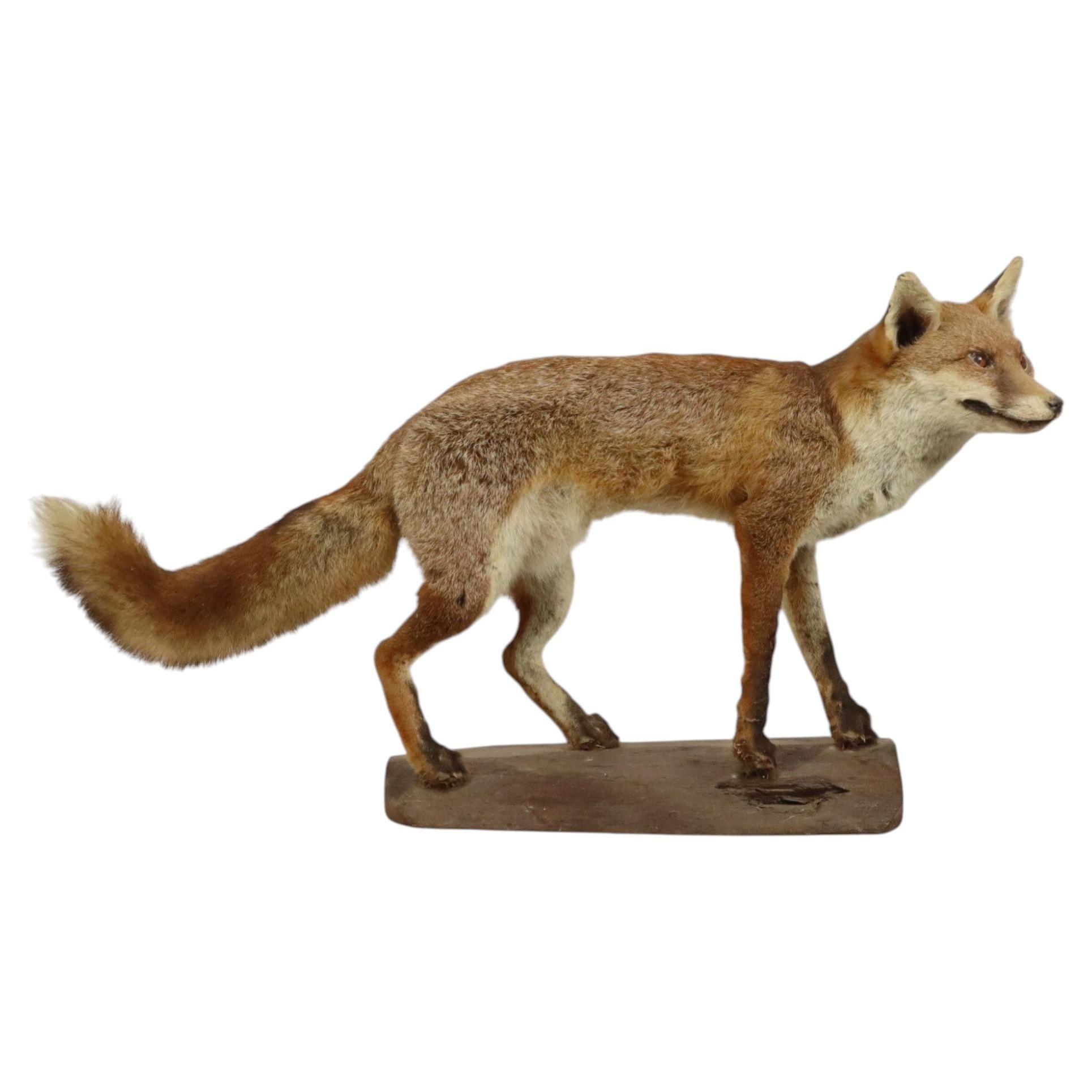
Fox Sculpture Wirework Garden `Ornament

$5,488.86
£4,000
€4,763.21
CA$7,694.64
A$7,813.27
CHF 4,460.24
MX$94,410.11
NOK 52,392.74
SEK 52,249.79
DKK 35,608.80

About the Item

A folk art, life-size, fox, wirework, garden sculpture Hand-sculpted using multiple layers of painted galvanized wire in red, white and black. Each sculpture is unique. This fox is very realistic and often mistaken for the real thing, creating humour in the landscape. “These beautiful, life-size, wire-work animals bring charm and character to any garden ..” This fox can be customised and ordered individually length 91cm., 3ft height 28cm., 11" depth 15cm., 6" WIREWORK SCULPTURE Wirework is an ancient art form, probably first practised by the Egyptians around 3000BC. Early examples have been discovered in the burial chambers of important people throughout the ancient world. In 2600BC, wire was used in gold and silver ribbons for entwining in the hair of courtly ladies in the Sumerian city of Ur. The art of wirework spread in various forms from Babylon to Baghdad, Damascus and Constantinople before finally reaching Europe. Wire was originally made by chiselling thin strips from a sheet of metal. The strips were either twisted and then rolled between two flat surfaces to smooth them or spirally wound around a mandrel. Today wire is made by drawing rods of metal through conically shaped holes in a draw-plate. This system was first used in Persia in the 6th century BC but did not reach Europe until the 10th century AD when wire was first being produced on a commercial scale. The iron wire trade made chain-mail, and also wool carders, girdles, chains, fish hooks and needles. Up until this time gold and silver wires were made almost exclusively for jewellery but during the Middle Ages embroidery became their principal use. In England, the two trades were governed by different bodies, the Broiders’ Company and the Girdler and Pinmakers’ Company. It was not until the late 17th century that they became distinctive guilds known as the Worshipful Company of Gold and Silver Wireworkers, and the Worshipful Company of Tin Plate Workers, or Wireworkers. By the mid-16th century, there were at least 6,000 wire drawers in London alone and it was around this time that the first mechanical drawing machines were used in England. The water-driven draw-plate system used in these machines was invented by Rudolf of Nuremberg in the 14th century, but was not introduced to England until 1564. Gold and silver wirework flourished until the time of the French Revolution (1789-99), when fashions changed and the industry went into decline. Because of the corrodible nature of iron, very few examples of the broad range of objects once made from iron wire have survived to this day, save the items mentioned above and a few toys and traps. By the early 19th century, tinning and black-japanning had become popular ways of protecting the wireworker’s craft. Not only did these treatments prevent rusting, they also helped cement items made from unsoldered wire. America imported its wire from England and Germany until 1812, when the war with England meant that supplies were cut off. From this point, the Americans started building their own factories for producing wire. By the mid-19th century, the steam engine enabled wire, woven wire and wire fencing to be mass produced. The industry flourished, reaching its peak in Europe and America at the turn of the century, when an impressive range of products was available, from wire whisks and baskets to wire gazebos. The craft of wireworking was applied to every possible household device until the advent of plastic gradually led to its demise. Alexander Calder (1898-1976) was the first artist who brought wire sculpture art to people's attention was Alexander Calder (, who made a series of wire sculptures in the 1920s after using wire to experiment with jewelry making. The artistic practice of wirework is now enjoying a renaissance in the fine and decorative arts.
  • Dimensions:
    Height: 11.03 in (28 cm)Width: 35.83 in (91 cm)Depth: 5.91 in (15 cm)
  • Materials and Techniques:
  • Place of Origin:
  • Period:
  • Date of Manufacture:
    2020
  • Production Type:
    New & Custom(One of a Kind)
  • Estimated Production Time:
    12-13 weeks
  • Condition:
  • Seller Location:
    BUNGAY, GB
  • Reference Number:
    1stDibs: LU3867332094152

More From This Seller

View All
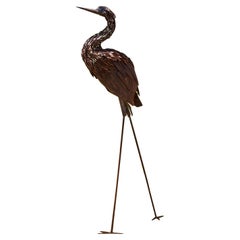
Sculpture Lifesize Crane Heron Wrought Iron

Sculpture Lifesize Crane Heron Wrought Iron

Located in BUNGAY, SUFFOLK

Realistic wrought iron life size, sculpture of a wading crane or large heron Stylish feature in the garden, pond, river, lake or home Measures: height ...

Category

20th Century English Animal Sculptures

Materials

Wrought Iron

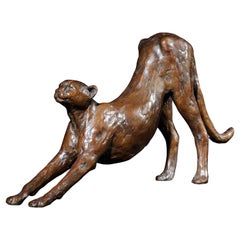
Cheetah Stretching Ingwe FoundryS31 Bronze Sculpture Maquette 3/15 Monogram BMR

Cheetah Stretching Ingwe FoundryS31 Bronze Sculpture Maquette 3/15 Monogram BMR

Located in BUNGAY, SUFFOLK

Bronze study of a stretching cheetah. RHS under the belly bearing Ingwe Foundry stamp, ‘S31’ or ‘S3I’, Edition 3/15, monogram BMR. Artist unknown. I have been unsuccessfully resarching who the artist could be. The stretching pose of the cheetah is contemplative with a graceful, ease and content expression suggesting its attunement and hierarchy within the landscape and the animal world. Its power is conveyed with a noble quality in the pose, the sleek form and the sinewy musculature. Beautifully handworked with rich brown patina. Almost certainly inspired by the work of Dylan Lewis...

Category

21st Century and Contemporary South African Animal Sculptures

Materials

Bronze

Lion Stone Sculpture Architectural Garden Renaissance

Lion Stone Sculpture Architectural Garden Renaissance

Located in BUNGAY, SUFFOLK

This sculpture has taken on a different character over time as it has weathered and the detailing has softened. Time has given it a pared down, minimalist quality juxtaposing the R...

Category

Antique 16th Century English Renaissance Statues

Materials

Limestone

Sculpture Goose Composite

Sculpture Goose Composite

Located in BUNGAY, SUFFOLK

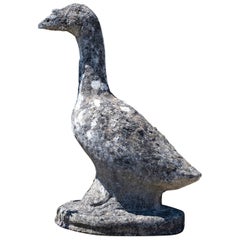
A fine Mid-Century Modern composite sculpture of a goose Beautifully sculpted with a realistic pose. Measures: length and depth 36cm., 14" height 64cm., 25".

Category

20th Century English Mid-Century Modern Animal Sculptures

Materials

Composition

Sculpture Marble Bird Singing

Sculpture Marble Bird Singing

Located in BUNGAY, SUFFOLK

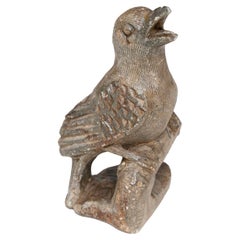
Charming sculpture of a bird perched on a bough singing. Measures: length 6cm., 2 1/2" depth 5cm., 2" height 13cm., 5".

Category

Antique 19th Century Italian Victorian Animal Sculptures

Materials

Marble

Paperweight Hedgehog Silver 1977 Inscribed CA 1991 Assay

Paperweight Hedgehog Silver 1977 Inscribed CA 1991 Assay

Located in BUNGAY, SUFFOLK

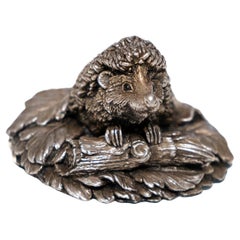
A charming small silver desk accessory or paperweight. Birmingham 1977. Modelled as a hedgehog with his front feet resting on a log on leafy ground looking up. Commemorative piec...

Category

20th Century English Paperweights

Materials

Britannia Standard Silver

You May Also Like

Vintage Sterling Silver Model Fox Figurine London 1979 by Vander

Vintage Sterling Silver Model Fox Figurine London 1979 by Vander

Located in London, GB

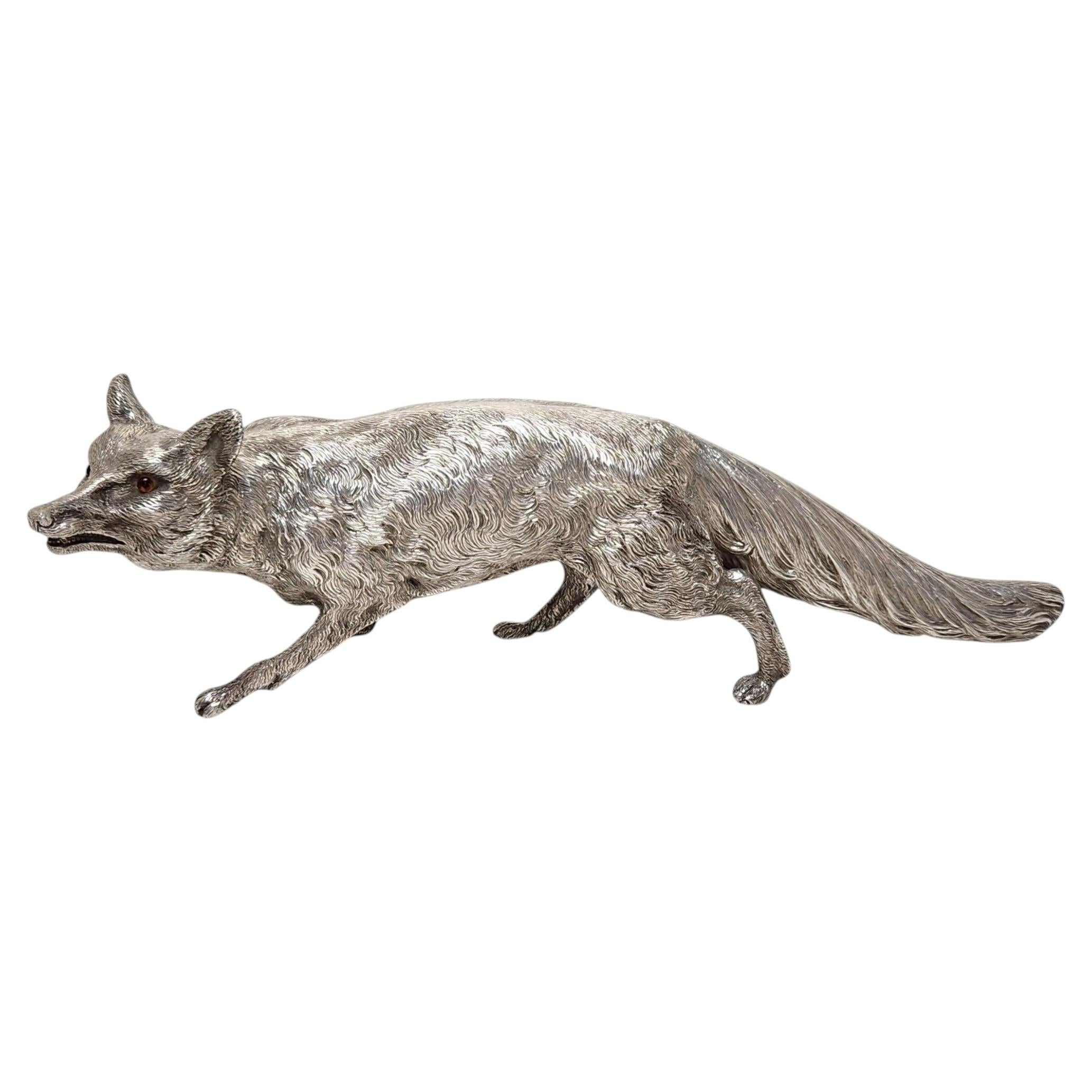
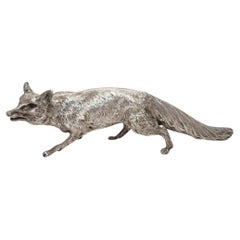
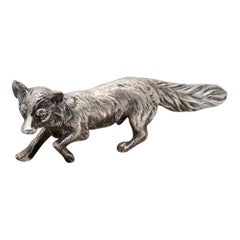
An exceptional Sterling Silver model of a Fox, captured in a natural stalking pose with remarkable attention to detail. The Silver Fox's expressive face is enhanced by striking amber...

Category

20th Century English Sterling Silver

Materials

Sterling Silver

Profusely relief silver fox

Profusely relief silver fox

Located in Porto, PT

Description: Silver fox, profusely embossed. Metal: Silver. Origin: European. Mark: Unreadable. Weight: 467.91 grams. Dimensions: 22.5cmx9cm. Content: 925/1000. Assay Mark: Yes - unr...

Category

20th Century European Animal Sculptures

Materials

Silver

Miniature Fox Handcast Solid Bronze Animal Sculpture by Javier de la Rosa

Miniature Fox Handcast Solid Bronze Animal Sculpture by Javier de la Rosa

By Alguacil & Perkoff Ltd.

Located in London, London

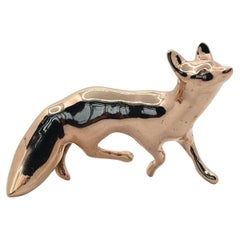
Polished bronze hand cast miniature fox sculpture by artist Javier de la Rosa. Javier De la Rosa has created a series of bronze cast miniature sculptures that celebrate animals and ...

Category

2010s British Organic Modern Animal Sculptures

Materials

Bronze

Mounted Fox on Oak Stump Vulpes Vulpes Vintage Taxidermy

Mounted Fox on Oak Stump Vulpes Vulpes Vintage Taxidermy

Located in Poperinge, BE

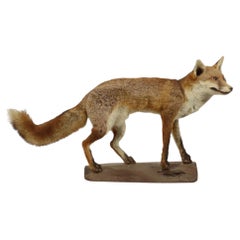
Beautiful mounted fox on an oak plank, Latin name Vulpes vulpes, vintage taxidermy from the second half of the 20th century. Exceptionally beautiful animal in a natural pose, mounte...

Category

Vintage 1960s Taxidermy

Materials

Animal Skin, Oak

Large Italian Ceramic Wolf/Fox Figure

Large Italian Ceramic Wolf/Fox Figure

Located in Charleston, SC

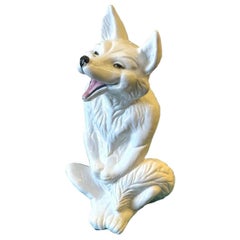
This is for one fabulous Large Italian Fox or baby wolf Ceramic Figure. He or she looks like she is smiling up at you. Hand painted in Italy circa 1970

Category

Mid-20th Century Italian Mid-Century Modern Animal Sculptures

Materials

Ceramic, Paint

French Bronze Ledge Cat Sculpture

French Bronze Ledge Cat Sculpture

Located in Dallas, TX

This French-made bronze cat sculpture from 1988 is the perfect way to add a unique, artistic touch to your space. The gold leaf finish and design suited for hanging off a ledge make it an eye-catching piece. Bring the perfect combination of vintage and modern...

Category

Antique 19th Century Animal Sculptures

Materials

Bronze