Want more images or videos?
Request additional images or videos from the seller
1 of 16

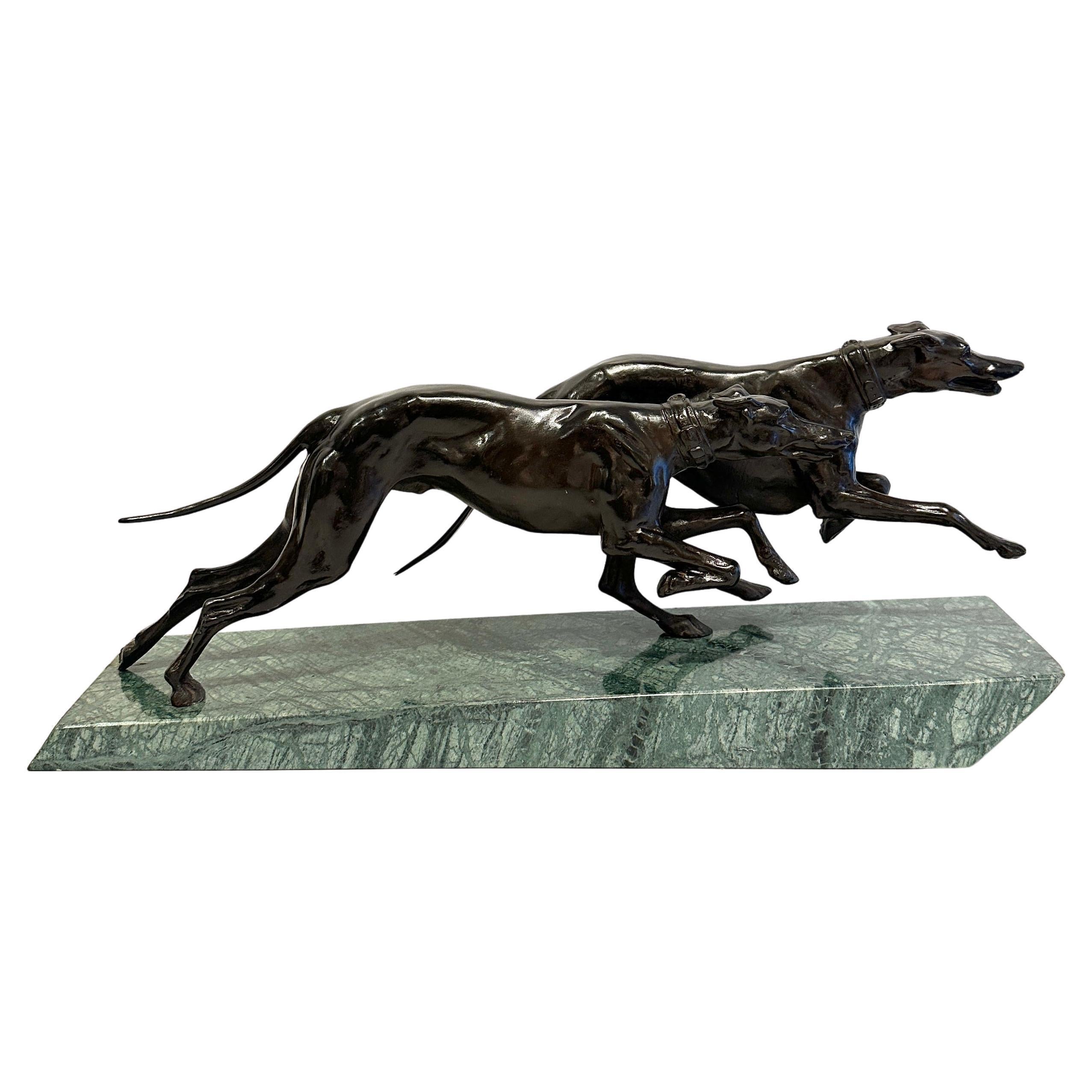
S. Kirk & Sons Sterling Silver Foxhounds Sculpture Limited Edition

$950
£718.29
€840.96
CA$1,351.61
A$1,374.84
CHF 789.02
MX$16,527.17
NOK 9,203.85
SEK 9,290.50
DKK 6,286.95

About the Item

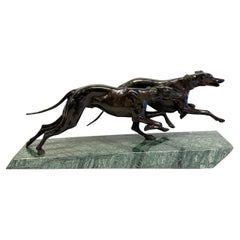
A nice sterling silver sculpture of 2 foxhounds running in sterling silver by the Venerable silversmiths S. Kirk and Sons. The piece is numbered 210 of 250. The silver dogs are mounted on a marble base. The figures are highly detailed and superbly cast. The figurines and plaque have quite a bit of tarnish and there are a few minor nicks to the marble base.
  • Dimensions:
    Height: 2.75 in (6.99 cm)Width: 5.5 in (13.97 cm)Depth: 2.25 in (5.72 cm)
  • Materials and Techniques:
  • Place of Origin:
  • Period:
  • Date of Manufacture:
    20th Century
  • Condition:
    Wear consistent with age and use. Minor losses. The figurines and plaque have quite a bit of tarnish and there are a few minor nicks to the marble base.
  • Seller Location:
    Palm Springs, CA
  • Reference Number:
    Seller: Bridges over Time SK2500121stDibs: LU835050794682

More From This Seller

View All
Frank Eliscu Bronze of a Jumping Horse

Frank Eliscu Bronze of a Jumping Horse

By Frank Eliscu

Located in Palm Springs, CA

A beautifully detailed bronze of a jumping horse on a marble base by the talented, noted American Sculptor Frank Eliscu. The artist is most known as the creator of the Heisman Trophy, one of American Sports’ most iconic symbols. This piece is beautifully detailed with sea shells forming the body of the whale or fish. The bronze is in good condition with some surface grime and a few imperfections to the marble base. From Wikipedia: Frank Eliscu (July 13, 1912 – June 19, 1996) was an American sculptor and art teacher who designed and created the Heisman Memorial Football Trophy in 1935[1] when he was only 23 years old. The first Heisman Trophy, a strong young bull of a football player cast in bronze, was presented to a college football player in 1935, and is considered one of the greatest honors a college athlete can receive. Over the years the Heisman Committee has paid tribute to Eliscu and his creation several times, and in 1985, the Heisman Committee invited him to speak at the 50th Anniversary Heisman ceremonies.[2] Eliscu amassed a body of work that spans from public fountains to ex-President Gerald Ford's inaugural medal (later given as a gift to Leonid Brezhnev when Ford visited Russia), to the five-story bronze frieze that decorates the glass panes above the doors to the Library of Congress. This massive sculpture won the Henry Hering Memorial Medal from the National Sculpture Society. Eliscu also is represented in the Metropolitan Museum of Art with his Sea Treasures.[3] A resident of New York and later Sarasota, Eliscu died in Sarasota, Florida on June 19, 1996 at the age of 83.[4] Family Frank Eliscu was born in Washington Heights, Manhattan. His parents were Charles Eliscu and Florence Kane who was of Jewish descent.[3] He had a sister, Rita Rothman and two brothers, William Eliscu and Nelson Eliscu. He married Mildred Norman and had one daughter, Norma Eliscu Banas. Education Eliscu graduated from Pratt Institute in 1931 and from New York Teacher's College in 1942. He was awarded a permanent teaching certificate in 1944. In 1941, Eliscu apprenticed with Rudolph Evans and worked with him on the sculpting of the statue of Thomas Jefferson for the Jefferson Memorial.[5] Military service Eliscu served in the army in World War II from 1942 to 1945. He was first put to work on camouflage and maps for the Allied invasion. In 1943, he developed a unique technique used by the US Army to rehabilitate facial disfigurements from war injuries. According to his discharge papers, "Made drawings in the operating room of surgical procedures, modeling of features for reconstructive surgery, and carving cartilage for grafting in plastic surgery, pigmentation of skin in plastic procedures. Had three assistants working under him. Served at Valley Forge General Hospital in Plastic Surgery Department."[6] Following his service, the unique research Eliscu did on tattooing pigmentation to cover the discoloration from skin grafts and for people with port wine stains was used at the New York Hospital. Eliscu applied for a patent for the tool he developed to use intradermal injections of permanent pigments.[7] Career Teacher, School of Industrial Art, NYC (currently called the High School of Art and Design) 1945 to 1970. As a sculptor, Eliscu had his first one-man show in 1929 at age 17. From there, Eliscu went on to a career that brought him international fame. He has two National Monuments to his credit, "Uncle Joe Cannon" at the Cannon House Office Building and "Falling Books", a four-story bronze at the James Madison Library of Congress.[8] The four-story falling books on the face of the Library of Congress building in Washington, D.C., took Eliscu 10 years to complete and in 1985 won him top honors from the National Sculpture Society. The heroic bronze, along with Eliscu's plaque of Uncle Joe Cannon in the same city, has been declared a national monument, and by law can never be removed or changed in any way.[2] He is represented in Brookgreen Gardens;[9] in the Metropolitan Museum with a medallion titled Sea Treasures, 1965;[10] in the Smithsonian Museum Archives, coins titled, Lewis & Clark, 1966;[11] and in National Academy of Fine Arts Museum, with a bronze, 1967. Eliscu created medals for the Society of Medalists...

Category

Vintage 1950s American Animal Sculptures

Materials

Bronze

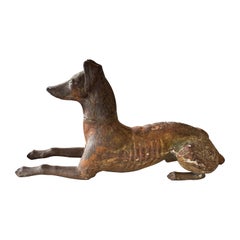
19th Century Cast Iron Greyhound Attr to J.W.Fiske

19th Century Cast Iron Greyhound Attr to J.W.Fiske

By J.W. Fiske & Company

Located in Palm Springs, CA

A wonderfully patinated cast iron greyhound or whippet by J.W. Fiske Company from the late 19th Century. Beautiful detail. It’s had many layers of paint over the years most of which...

Category

Antique Late 19th Century American Statues

Materials

Iron

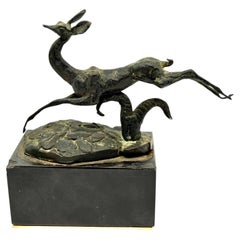
Bronze Stag by the noted American Sculptor Frank Eliscu Original Receipt

Bronze Stag by the noted American Sculptor Frank Eliscu Original Receipt

Located in Palm Springs, CA

A beautifully detailed bronze of a stag by the talented, noted American Sculptor Frank Eliscu. The artist is most known as the creator of the Heisman Trophy, one of American Sports’ most iconic symbols. This piece has the original sales receipt from 1959 taped to the base. It is dated 1959 and cost $125 plus tax then which was an enormous sum for the time. The bronze is in good condition with some surface grime and a few edge chips to the marble base. From Wikipedia: Frank Eliscu (July 13, 1912 – June 19, 1996) was an American sculptor and art teacher who designed and created the Heisman Memorial Football Trophy in 1935[1] when he was only 23 years old. The first Heisman Trophy, a strong young bull of a football player cast in bronze, was presented to a college football player in 1935, and is considered one of the greatest honors a college athlete can receive. Over the years the Heisman Committee has paid tribute to Eliscu and his creation several times, and in 1985, the Heisman Committee invited him to speak at the 50th Anniversary Heisman ceremonies.[2] Eliscu amassed a body of work that spans from public fountains to ex-President Gerald Ford's inaugural medal (later given as a gift to Leonid Brezhnev when Ford visited Russia), to the five-story bronze frieze that decorates the glass panes above the doors to the Library of Congress. This massive sculpture won the Henry Hering Memorial Medal from the National Sculpture Society. Eliscu also is represented in the Metropolitan Museum of Art with his Sea Treasures.[3] A resident of New York and later Sarasota, Eliscu died in Sarasota, Florida on June 19, 1996 at the age of 83.[4] Family Frank Eliscu was born in Washington Heights, Manhattan. His parents were Charles Eliscu and Florence Kane who was of Jewish descent.[3] He had a sister, Rita Rothman and two brothers, William Eliscu and Nelson Eliscu. He married Mildred Norman and had one daughter, Norma Eliscu Banas. Education Eliscu graduated from Pratt Institute in 1931 and from New York Teacher's College in 1942. He was awarded a permanent teaching certificate in 1944. In 1941, Eliscu apprenticed with Rudolph Evans and worked with him on the sculpting of the statue of Thomas Jefferson for the Jefferson Memorial.[5] Military service Eliscu served in the army in World War II from 1942 to 1945. He was first put to work on camouflage and maps for the Allied invasion. In 1943, he developed a unique technique used by the US Army to rehabilitate facial disfigurements from war injuries. According to his discharge papers, "Made drawings in the operating room of surgical procedures, modeling of features for reconstructive surgery, and carving cartilage for grafting in plastic surgery, pigmentation of skin in plastic procedures. Had three assistants working under him. Served at Valley Forge General Hospital in Plastic Surgery Department."[6] Following his service, the unique research Eliscu did on tattooing pigmentation to cover the discoloration from skin grafts and for people with port wine stains was used at the New York Hospital. Eliscu applied for a patent for the tool he developed to use intradermal injections of permanent pigments.[7] Career Teacher, School of Industrial Art, NYC (currently called the High School of Art and Design) 1945 to 1970. As a sculptor, Eliscu had his first one-man show in 1929 at age 17. From there, Eliscu went on to a career that brought him international fame. He has two National Monuments to his credit, "Uncle Joe Cannon" at the Cannon House Office Building and "Falling Books", a four-story bronze at the James Madison Library of Congress.[8] The four-story falling books on the face of the Library of Congress building in Washington, D.C., took Eliscu 10 years to complete and in 1985 won him top honors from the National Sculpture Society. The heroic bronze, along with Eliscu's plaque of Uncle Joe Cannon in the same city, has been declared a national monument, and by law can never be removed or changed in any way.[2] He is represented in Brookgreen Gardens;[9] in the Metropolitan Museum with a medallion titled Sea Treasures, 1965;[10] in the Smithsonian Museum Archives, coins titled, Lewis & Clark, 1966;[11] and in National Academy of Fine Arts Museum, with a bronze, 1967. Eliscu created medals for the Society of Medalists...

Category

Vintage 1950s American Animal Sculptures

Materials

Bronze

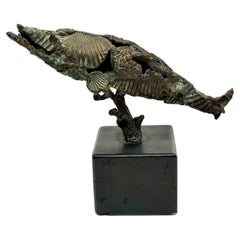
Bronze Whale Sculpture by the Noted American Frank Eliscu

Bronze Whale Sculpture by the Noted American Frank Eliscu

Located in Palm Springs, CA

A beautifully detailed bronze of a whale on a marble base by the talented, noted American Sculptor Frank Eliscu. The artist is most known as the creator of the Heisman Trophy, one of American Sports’ most iconic symbols. This piece is beautifully detailed with sea shells forming the body of the whale or fish. The bronze is in good condition with some surface grime and a few imperfections to the marble base. From Wikipedia: Frank Eliscu (July 13, 1912 – June 19, 1996) was an American sculptor and art teacher who designed and created the Heisman Memorial Football Trophy in 1935[1] when he was only 23 years old. The first Heisman Trophy, a strong young bull of a football player cast in bronze, was presented to a college football player in 1935, and is considered one of the greatest honors a college athlete can receive. Over the years the Heisman Committee has paid tribute to Eliscu and his creation several times, and in 1985, the Heisman Committee invited him to speak at the 50th Anniversary Heisman ceremonies.[2] Eliscu amassed a body of work that spans from public fountains to ex-President Gerald Ford's inaugural medal (later given as a gift to Leonid Brezhnev when Ford visited Russia), to the five-story bronze frieze that decorates the glass panes above the doors to the Library of Congress. This massive sculpture won the Henry Hering Memorial Medal from the National Sculpture Society. Eliscu also is represented in the Metropolitan Museum of Art with his Sea Treasures.[3] A resident of New York and later Sarasota, Eliscu died in Sarasota, Florida on June 19, 1996 at the age of 83.[4] Family Frank Eliscu was born in Washington Heights, Manhattan. His parents were Charles Eliscu and Florence Kane who was of Jewish descent.[3] He had a sister, Rita Rothman and two brothers, William Eliscu and Nelson Eliscu. He married Mildred Norman and had one daughter, Norma Eliscu Banas. Education Eliscu graduated from Pratt Institute in 1931 and from New York Teacher's College in 1942. He was awarded a permanent teaching certificate in 1944. In 1941, Eliscu apprenticed with Rudolph Evans and worked with him on the sculpting of the statue of Thomas Jefferson for the Jefferson Memorial.[5] Military service Eliscu served in the army in World War II from 1942 to 1945. He was first put to work on camouflage and maps for the Allied invasion. In 1943, he developed a unique technique used by the US Army to rehabilitate facial disfigurements from war injuries. According to his discharge papers, "Made drawings in the operating room of surgical procedures, modeling of features for reconstructive surgery, and carving cartilage for grafting in plastic surgery, pigmentation of skin in plastic procedures. Had three assistants working under him. Served at Valley Forge General Hospital in Plastic Surgery Department."[6] Following his service, the unique research Eliscu did on tattooing pigmentation to cover the discoloration from skin grafts and for people with port wine stains was used at the New York Hospital. Eliscu applied for a patent for the tool he developed to use intradermal injections of permanent pigments.[7] Career Teacher, School of Industrial Art, NYC (currently called the High School of Art and Design) 1945 to 1970. As a sculptor, Eliscu had his first one-man show in 1929 at age 17. From there, Eliscu went on to a career that brought him international fame. He has two National Monuments to his credit, "Uncle Joe Cannon" at the Cannon House Office Building and "Falling Books", a four-story bronze at the James Madison Library of Congress.[8] The four-story falling books on the face of the Library of Congress building in Washington, D.C., took Eliscu 10 years to complete and in 1985 won him top honors from the National Sculpture Society. The heroic bronze, along with Eliscu's plaque of Uncle Joe Cannon in the same city, has been declared a national monument, and by law can never be removed or changed in any way.[2] He is represented in Brookgreen Gardens;[9] in the Metropolitan Museum with a medallion titled Sea Treasures, 1965;[10] in the Smithsonian Museum Archives, coins titled, Lewis & Clark, 1966;[11] and in National Academy of Fine Arts Museum, with a bronze, 1967. Eliscu created medals for the Society of Medalists...

Category

Vintage 1950s American Animal Sculptures

Materials

Bronze

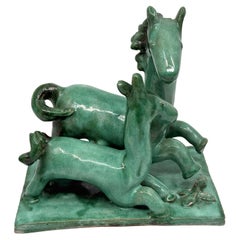
Kitty Rix for Wiener Werkstatte Ceramic Figues of Horses

Kitty Rix for Wiener Werkstatte Ceramic Figues of Horses

By Wiener Werkstätte, Kitty Rix

Located in Palm Springs, CA

A wonderful whimsical terracotta group of a mother horse and her foal by the Austrian Master Kitty Rix Tihacek. It is well marked and monogrammed on the base. It is impressed with th...

Category

Vintage 1920s Austrian Animal Sculptures

Materials

Terracotta

Vintage Bronze Horse

Vintage Bronze Horse

Located in Palm Springs, CA

A vintage bronze horse which is unsigned. Great quality. Mounted on a wood base. The base has some losses. Bronze is in good condition, with some minor ag...

Category

20th Century American Animal Sculptures

Materials

Bronze

You May Also Like

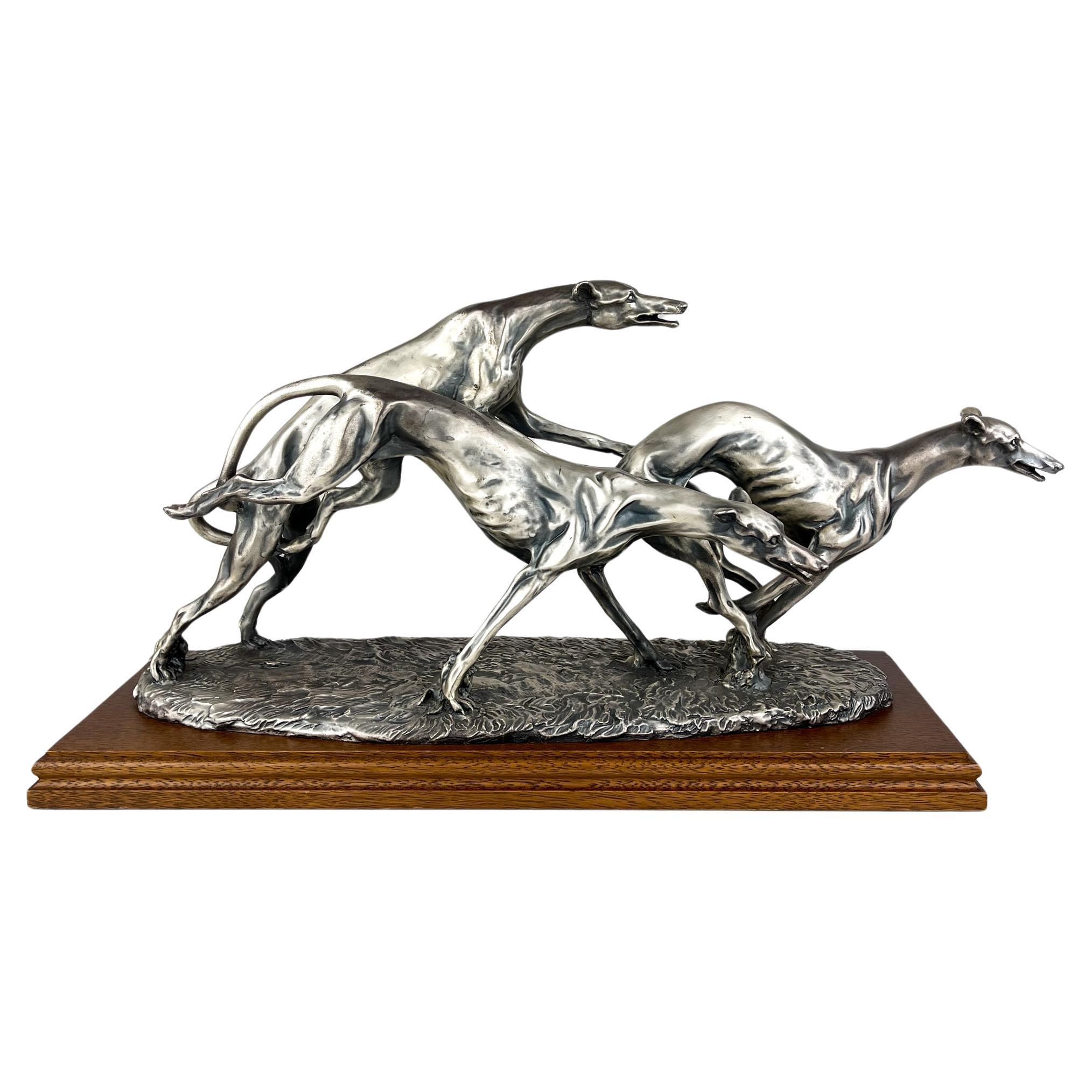
Vintage silver sculpture "Racing Greyhounds" by Angelo Schiavon, Italy 1960s

Vintage silver sculpture "Racing Greyhounds" by Angelo Schiavon, Italy 1960s

By Schiavon Argenterie

Located in Miklavž Pri Taboru, SI

Vintage silver sculpture "Racing Greyhounds" by Angelo Schiavon made in Italy in the 1960s. The famous Italian brand Schiavon was founded in 1957 by Mr. Angelo Schiavon, whose name h...

Category

Mid-20th Century Italian Mid-Century Modern Animal Sculptures

Materials

Silver

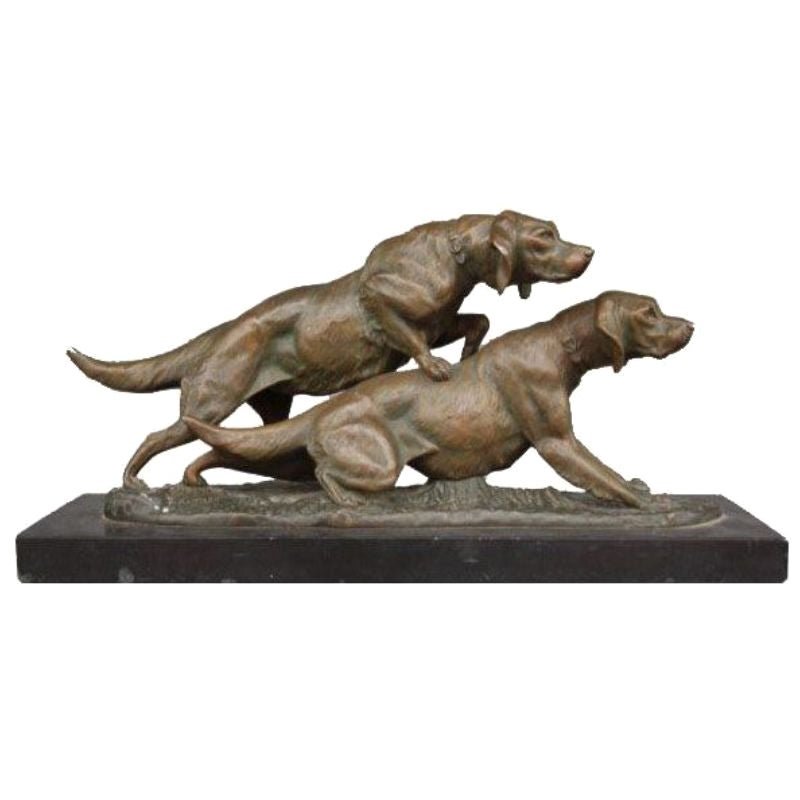
1940's Patinated Bronze Hounds on a Marble Base

1940's Patinated Bronze Hounds on a Marble Base

Located in Los Angeles, CA

Pair of patinated, cast bronze hounds in motion mounted on a marble base.

Category

Vintage 1940s Italian Animal Sculptures

Materials

Marble, Bronze

Military Interest - Sterling Silver Pair of Hound Dogs from London in 1929

Military Interest - Sterling Silver Pair of Hound Dogs from London in 1929

By Blackmore & Fletcher Ltd

Located in London, London

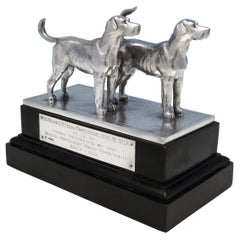
Hallmarked in London in 1929 by Blackmore & Fletcher Ltd. This handsome pair of sterling silver hound dogs stand proudly on a wooden plinth, and comprise a ...

Category

Vintage 1920s English Models and Miniatures

Materials

Sterling Silver

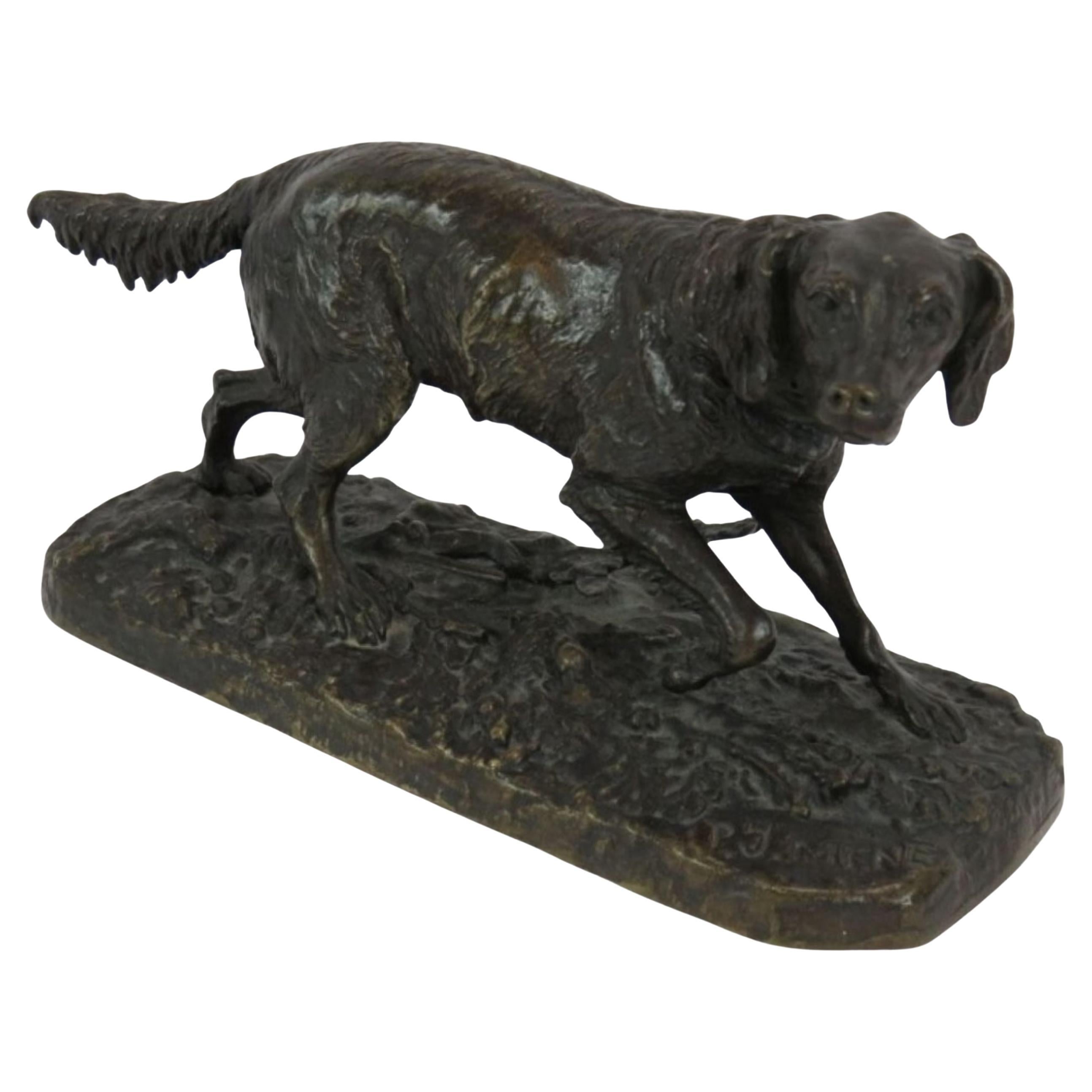
Antique 20thC Continental Silver Plated Hunting "Setter Dog" Statue c.1910

Antique 20thC Continental Silver Plated Hunting "Setter Dog" Statue c.1910

Located in Royal Tunbridge Wells, Kent

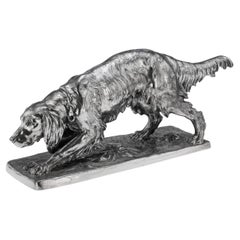
Antique 20th Century Continental silver-plated hunting dog. Finely crafted and impressive in scale, this statue portrays a Setter on the hunt, poised mid-prowl. Setters were original...

Category

20th Century Other Animal Sculptures

Materials

Silver Plate

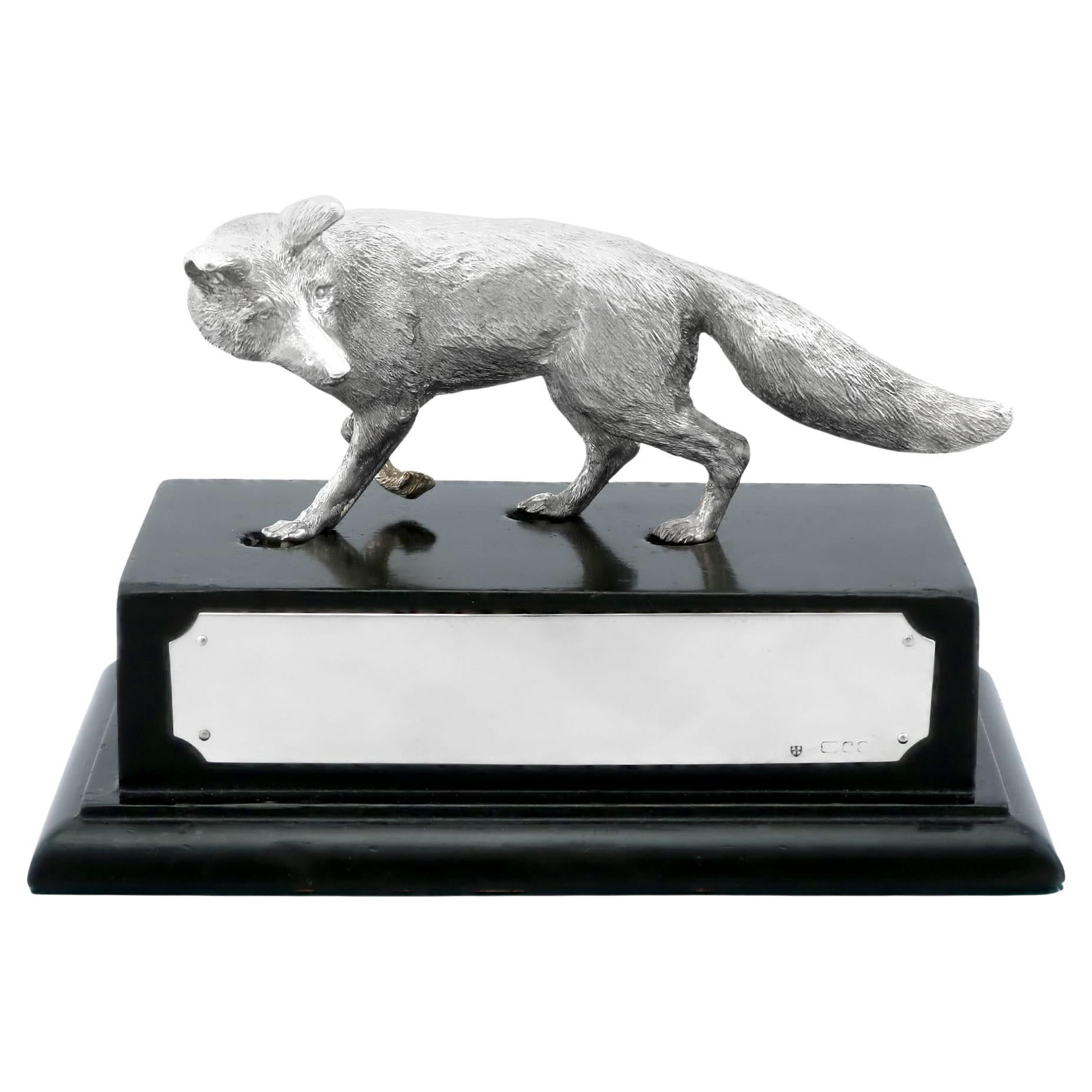
Vintage Sterling Silver Fox Sculpture by Tessiers Ltd., 1991

Vintage Sterling Silver Fox Sculpture by Tessiers Ltd., 1991

Located in Jesmond, Newcastle Upon Tyne

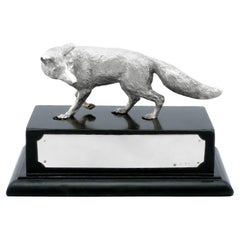
An exceptional, fine and impressive vintage cast sterling silver fox model on plinth; an addition to our animal silverware collection. This exceptional, fine and impressive vintage ...

Category

1990s English Animal Sculptures

Materials

Sterling Silver

19th C. French Bronze Hunting Dogs Sculpture on Marble Base Signed C. Masson

19th C. French Bronze Hunting Dogs Sculpture on Marble Base Signed C. Masson

By Clovis Edmond Masson

Located in Dallas, TX

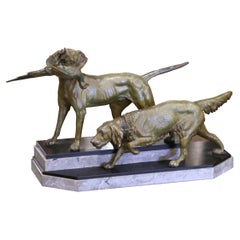
Signed C. Masson, this finely modeled late 19th-century French sculpture depicts a dynamic pair of hunting dogs, each carrying a game bird in its mouth. Cast in spelter and finished ...

Category

Antique Late 19th Century French Animal Sculptures

Materials

Spelter