Want more images or videos?
Request additional images or videos from the seller
1 of 16

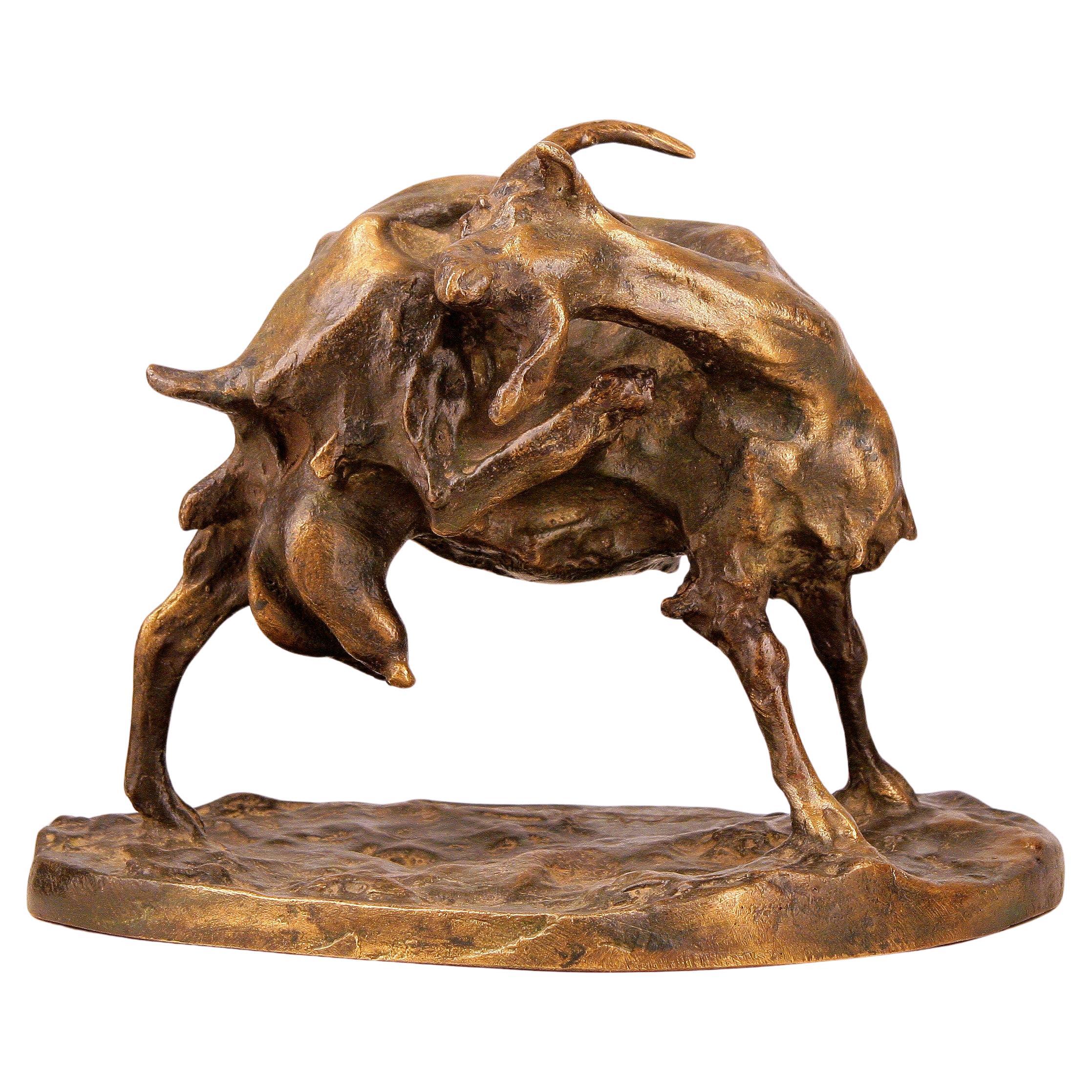
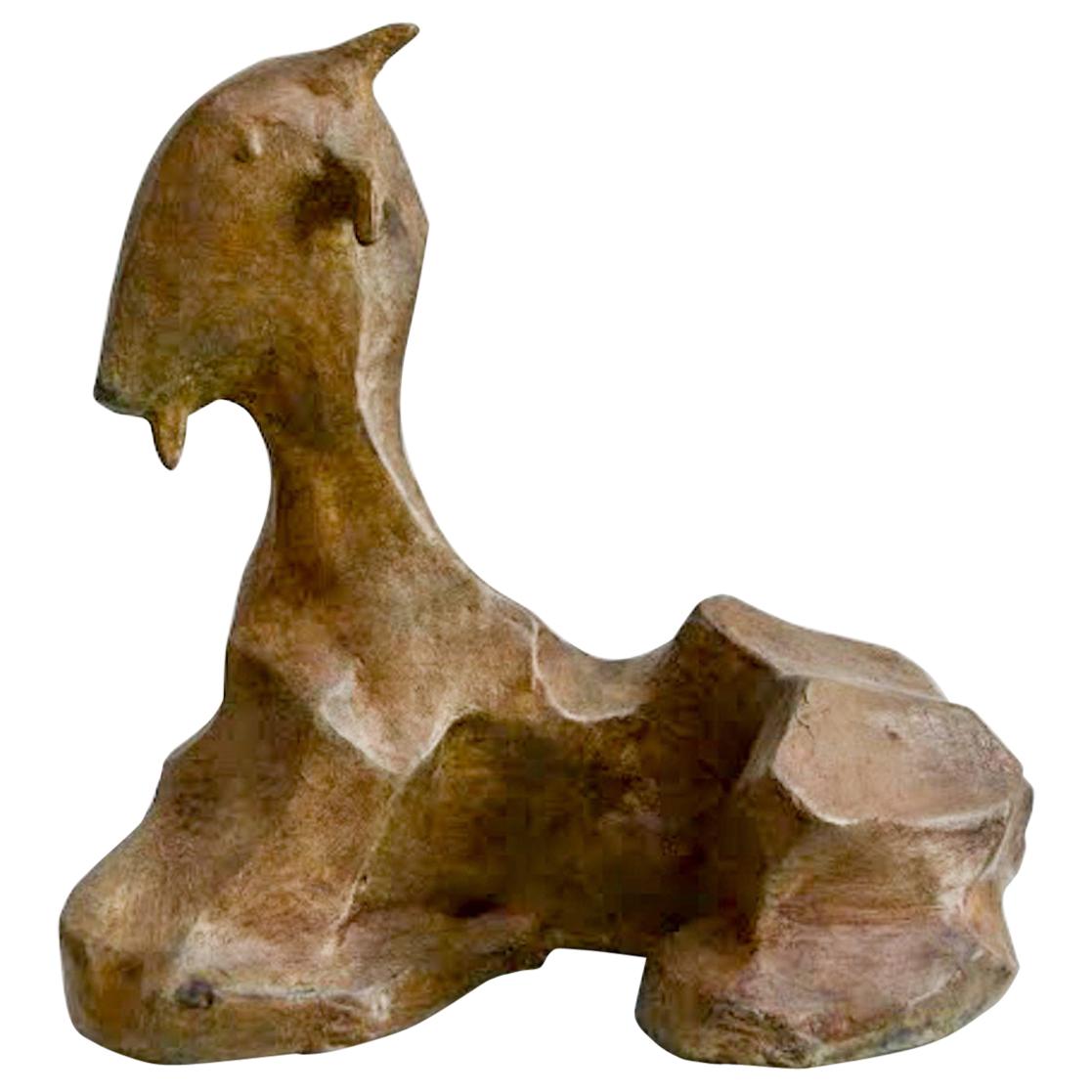
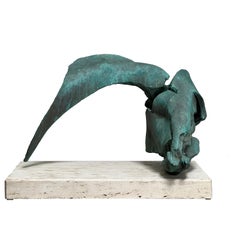
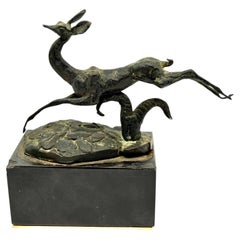
Small Bound Goat Bronze by Jack Zajak

$4,600
£3,477.87
€4,058.45
CA$6,545.57
A$6,640.25
CHF 3,791.23
MX$80,403.05
NOK 44,632.04
SEK 44,483.91
DKK 30,347.86

About the Item

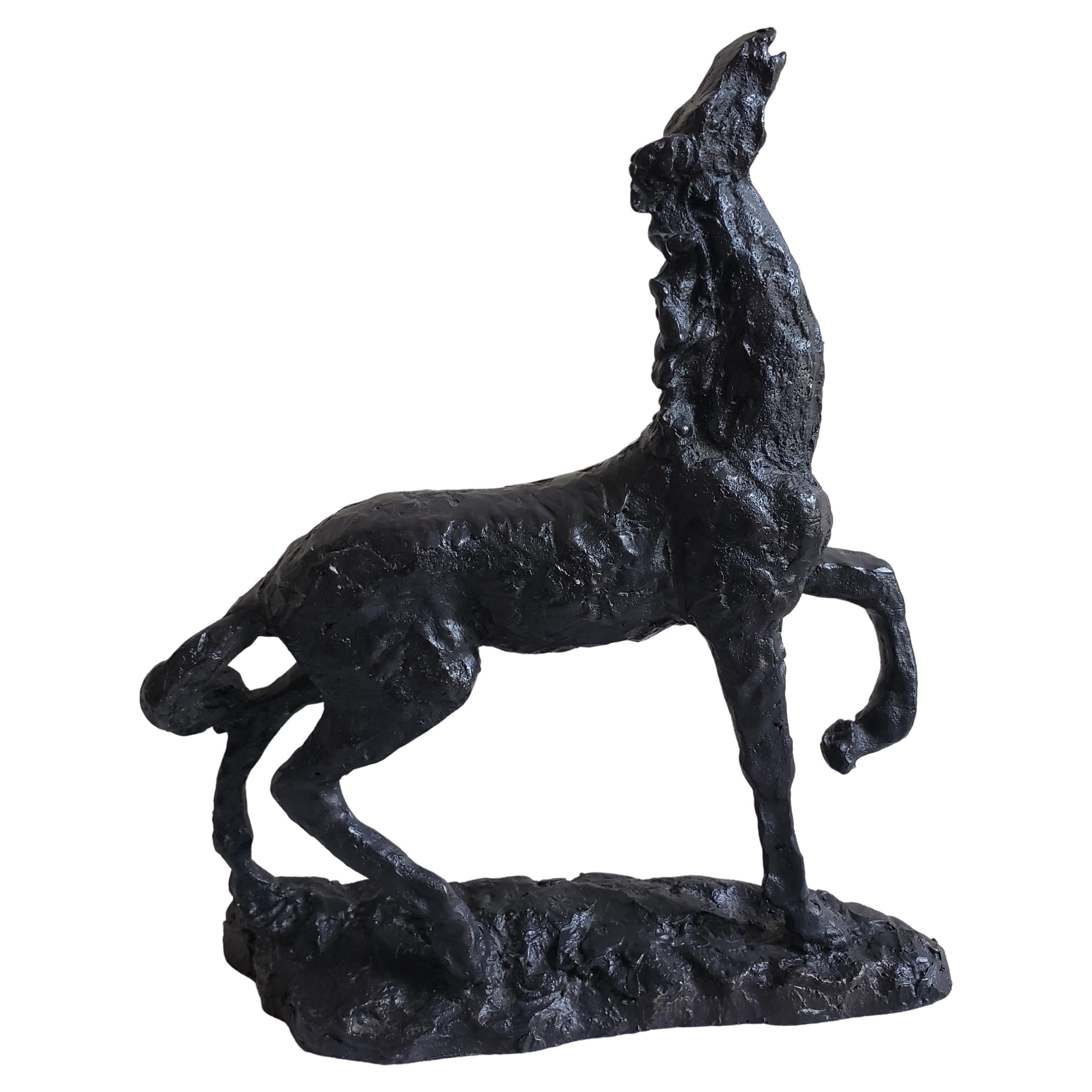
In 1954 Californian Jack Zajac (born 1929) won the prestigious Rome Prize to study painting at the American Academy in Rome. Moving into his new studio in the Italian capital he discovered clay left behind by the previous occupant and his creative medium changed forever. Fascinated by the goats he saw traveling through the Italian countryside they became one of his earliest sculptural inspirations. Though cast in bronze, one of the strongest and most durable of traditional sculpting materials, there is a lightness to Zajac's early caprine figures, at once representational and, at the same time, abstract. Edition numbered 5/12. Pedestal not included.
  • Creator:
    Jack Zajac (Artist)
  • Dimensions:
    Height: 2.75 in (6.99 cm)Width: 12 in (30.48 cm)Depth: 3.75 in (9.53 cm)
  • Materials and Techniques:
    Bronze,Cast
  • Period:
  • Date of Manufacture:
    1970
  • Condition:
    Wear consistent with age and use.
  • Seller Location:
    Dallas, TX
  • Reference Number:
    1stDibs: LU851845318452

More From This Seller

View All
Jack Zajac 'Bound Goat Thursday' Bronze Sculpture

Jack Zajac 'Bound Goat Thursday' Bronze Sculpture

By Jack Zajac

Located in Dallas, TX

Titled 'Bound Goat, Thursday' this bronze by Californian Jack Zajac (born 1929) is numbered 4 in an edition of 6. In 1954, having been awarded the prestigious Rome Prize in painting ...

Category

Vintage 1970s Animal Sculptures

Materials

Bronze

Jack Zajac Bronze Sculpture, 'Tortured Goat'

Jack Zajac Bronze Sculpture, 'Tortured Goat'

By Jack Zajac

Located in Dallas, TX

Having won the prestigious Rome Prize in 1954, Californian Jack Zajac (b. 1929) moved to Italy where he left painting behind and became a sculptor. On his weekend travels throughout ...

Category

Vintage 1960s American Animal Sculptures

Materials

Bronze

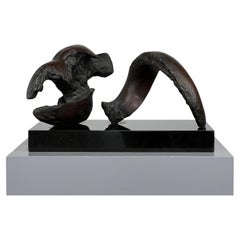
Scull and Horn, bronze sculpture by Jack Zajac

Scull and Horn, bronze sculpture by Jack Zajac

By Jack Zajac

Located in Dallas, TX

Titled 'Skull & Horn, Rome 4' this bronze by Californian Jack Zajac (born 1929) is numbered 2 in an edition of 12. In 1954, having been awarded the prestigious Rome Prize in painting...

Category

Vintage 1980s Italian Animal Sculptures

Materials

Stone, Bronze

'Small Skull & Horn after Orvieto V', bronze by Jack Zajac

'Small Skull & Horn after Orvieto V', bronze by Jack Zajac

By Jack Zajac

Located in Dallas, TX

Having been awarded the prestigious Rome Prize by the American Academy in 1954, California artist Jack Zajac (born 1929) moved to Italy. Inspired by the goats and sheep he found in t...

Category

Vintage 1970s American Modern Animal Sculptures

Materials

Marble, Bronze

Bronze Sculpture by Joel Perlman

Bronze Sculpture by Joel Perlman

Located in Dallas, TX

Though small in scale this 1982 bronze by Joel Perlman (b. 1943) is big in visual impact. A successful New York City sculptor for the last 30 years his work is in the permanent colle...

Category

Vintage 1980s American Abstract Sculptures

Materials

Bronze

Neil Goodman 'Watchbird V' Bronze Sculpture

Neil Goodman 'Watchbird V' Bronze Sculpture

Located in Dallas, TX

Neil Goodman's 'Watch Bird V' combines classic historical forms with shapes inspired by his childhood in the Rustbelt of Indiana. Cast in low relief and h...

Category

Vintage 1980s Abstract Sculptures

Materials

Bronze

You May Also Like

Dan Ostermiller Bronze Animal Sculpture, Signed 1994, USA, 13" Tall

Dan Ostermiller Bronze Animal Sculpture, Signed 1994, USA, 13" Tall

Located in Houston, TX

Dan Ostermiller is an American sculptor best known for his depictions of animals. As of 2012, he is president of the National Sculpture Society. He resides in Loveland, Colorado. ...

Category

1990s American Other Animal Sculptures

Materials

Bronze

Bronze Sculpture Abstract Brutalist Goat or Ram WPA Artist Mounted on Base

Bronze Sculpture Abstract Brutalist Goat or Ram WPA Artist Mounted on Base

By Benedict Michael Tatti

Located in Surfside, FL

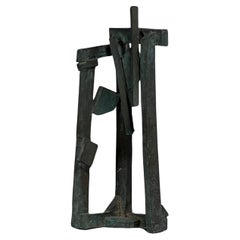
Benedict Tatti (1917-1993) worked in New York city as a sculptor, painter, educator, and video artist. He studied stone and wood carving under Louis Slobodkin at the Roerich Museum. He later attended the Leonardo da Vinci School of Art studying under Attilio Piccirelli. In l939 he taught adult classes with the Teachers Project of the WPA and attended the Art Students League for three and a half years on full scholarship. He studied under William Zorach and Ossip Zadkine and later became Zorach’s assistant. Later in his career, he attended the Hans Hofmann School of Fine Arts. During World War II, Tatti served in the United States Army Air Force, where he spent three years assigned to variety of projects. In 1948, Benedict Tatti married Adele Rosenberg in New York City. Throughout his career, Tatti continuously experimented with various media. From 1952-1963, Tatti executed sculptural models of architectural and consumer products for the industrial designers, Raymond Loewy Associates; later he became a color consultant for the firm. In the 1960s, influenced by the Abstract Expressionists, Tatti turned from carving directly in wood and stone to creating assemblage architecture sculptures, using bronze metal and other industrial materials. He was included in the important show "Aspects de la Sculpture Americaine", at Galerie Claude Bernard Paris, France, in October 1960 along with Ibram Lassaw, Theodore Roszak, David Smith, Louise Bourgeois, Danese Corey, Dorothy Dehner, Lin Emery, Lily Ente, David Hayes, Louise Nevelson, Tony Rosenthal, Richard Stankiewicz, Sam Szafran...

Category

Mid-20th Century Abstract Expressionist Abstract Sculptures

Materials

Bronze

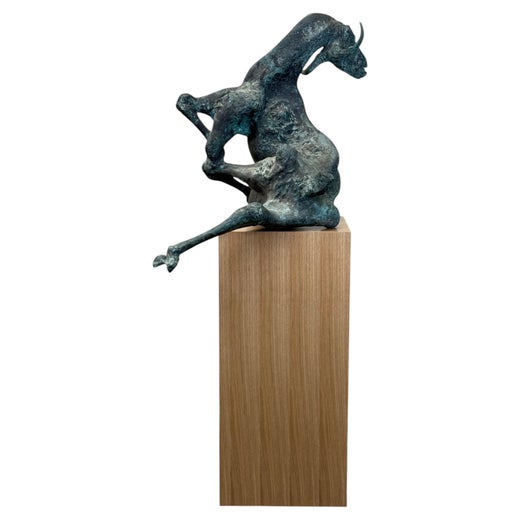
Mid-Century Brutalist Welded Bronze Sculpture of a Leaping Goat on Wood Base

Mid-Century Brutalist Welded Bronze Sculpture of a Leaping Goat on Wood Base

Located in New York, NY

This striking Mid-Century Brutalist sculpture of a leaping goat is a masterful example of welded bronze artistry. The dynamic composition captures the energy and grace of the goat mi...

Category

Vintage 1970s American Mid-Century Modern Animal Sculptures

Materials

Bronze

Mounted, Cast Bronze Modern Horse Sculpture by Italian Artist Primo Conti

Mounted, Cast Bronze Modern Horse Sculpture by Italian Artist Primo Conti

Located in Los Angeles, CA

A cast bronze, gilded modern horse sculpture mounted on a wooden base by Italian artist Primo Conti (1900- 1988). Measurements include mounting.

Category

20th Century Italian Animal Sculptures

Materials

Bronze

Whimsical Bronze Sculpture by Francisco del Toro, Mexico, 1992

Whimsical Bronze Sculpture by Francisco del Toro, Mexico, 1992

Located in Los Angeles, CA

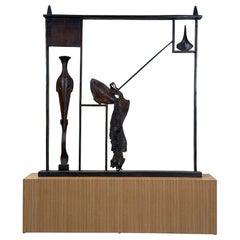
Expressive and evocative bronze sculpture by Francisco del Toro (Mexican, Guerrero, 20th century), signed Del Toro ’92. This one-of-a-kind piece showcases del Toro’s mastery in merging organic abstraction with emotional figuration, embodying both movement and introspection through its fluid, surreal form. The elongated figure, perched on a solid stone base, reveals a captivating dialogue between smooth, polished surfaces and rugged, textured elements — a hallmark of del Toro’s sculptural language. The patinated bronze transitions in tone from deep forest green to earthy bronze, emphasizing the interplay between form, texture, and light. Del Toro’s work often explores the human spirit’s resilience and transformation, with this particular sculpture exuding both strength and vulnerability. The head, seemingly emerging from raw material, evokes a timeless and almost mythological presence, while the sensuous curvature of the body connects to themes of fertility and creation found in Mexican modernist sculpture. An exceptional example of Mexican contemporary bronze art, ideal for collectors of Latin American sculpture...

Category

1990s Mexican Organic Modern Figurative Sculptures

Materials

Stone, Bronze

Bronze Stag by the noted American Sculptor Frank Eliscu Original Receipt

Bronze Stag by the noted American Sculptor Frank Eliscu Original Receipt

Located in Palm Springs, CA

A beautifully detailed bronze of a stag by the talented, noted American Sculptor Frank Eliscu. The artist is most known as the creator of the Heisman Trophy, one of American Sports’ most iconic symbols. This piece has the original sales receipt from 1959 taped to the base. It is dated 1959 and cost $125 plus tax then which was an enormous sum for the time. The bronze is in good condition with some surface grime and a few edge chips to the marble base. From Wikipedia: Frank Eliscu (July 13, 1912 – June 19, 1996) was an American sculptor and art teacher who designed and created the Heisman Memorial Football Trophy in 1935[1] when he was only 23 years old. The first Heisman Trophy, a strong young bull of a football player cast in bronze, was presented to a college football player in 1935, and is considered one of the greatest honors a college athlete can receive. Over the years the Heisman Committee has paid tribute to Eliscu and his creation several times, and in 1985, the Heisman Committee invited him to speak at the 50th Anniversary Heisman ceremonies.[2] Eliscu amassed a body of work that spans from public fountains to ex-President Gerald Ford's inaugural medal (later given as a gift to Leonid Brezhnev when Ford visited Russia), to the five-story bronze frieze that decorates the glass panes above the doors to the Library of Congress. This massive sculpture won the Henry Hering Memorial Medal from the National Sculpture Society. Eliscu also is represented in the Metropolitan Museum of Art with his Sea Treasures.[3] A resident of New York and later Sarasota, Eliscu died in Sarasota, Florida on June 19, 1996 at the age of 83.[4] Family Frank Eliscu was born in Washington Heights, Manhattan. His parents were Charles Eliscu and Florence Kane who was of Jewish descent.[3] He had a sister, Rita Rothman and two brothers, William Eliscu and Nelson Eliscu. He married Mildred Norman and had one daughter, Norma Eliscu Banas. Education Eliscu graduated from Pratt Institute in 1931 and from New York Teacher's College in 1942. He was awarded a permanent teaching certificate in 1944. In 1941, Eliscu apprenticed with Rudolph Evans and worked with him on the sculpting of the statue of Thomas Jefferson for the Jefferson Memorial.[5] Military service Eliscu served in the army in World War II from 1942 to 1945. He was first put to work on camouflage and maps for the Allied invasion. In 1943, he developed a unique technique used by the US Army to rehabilitate facial disfigurements from war injuries. According to his discharge papers, "Made drawings in the operating room of surgical procedures, modeling of features for reconstructive surgery, and carving cartilage for grafting in plastic surgery, pigmentation of skin in plastic procedures. Had three assistants working under him. Served at Valley Forge General Hospital in Plastic Surgery Department."[6] Following his service, the unique research Eliscu did on tattooing pigmentation to cover the discoloration from skin grafts and for people with port wine stains was used at the New York Hospital. Eliscu applied for a patent for the tool he developed to use intradermal injections of permanent pigments.[7] Career Teacher, School of Industrial Art, NYC (currently called the High School of Art and Design) 1945 to 1970. As a sculptor, Eliscu had his first one-man show in 1929 at age 17. From there, Eliscu went on to a career that brought him international fame. He has two National Monuments to his credit, "Uncle Joe Cannon" at the Cannon House Office Building and "Falling Books", a four-story bronze at the James Madison Library of Congress.[8] The four-story falling books on the face of the Library of Congress building in Washington, D.C., took Eliscu 10 years to complete and in 1985 won him top honors from the National Sculpture Society. The heroic bronze, along with Eliscu's plaque of Uncle Joe Cannon in the same city, has been declared a national monument, and by law can never be removed or changed in any way.[2] He is represented in Brookgreen Gardens;[9] in the Metropolitan Museum with a medallion titled Sea Treasures, 1965;[10] in the Smithsonian Museum Archives, coins titled, Lewis & Clark, 1966;[11] and in National Academy of Fine Arts Museum, with a bronze, 1967. Eliscu created medals for the Society of Medalists...

Category

Vintage 1950s American Animal Sculptures
Materials

Bronze