Want more images or videos?
Request additional images or videos from the seller
1 of 14

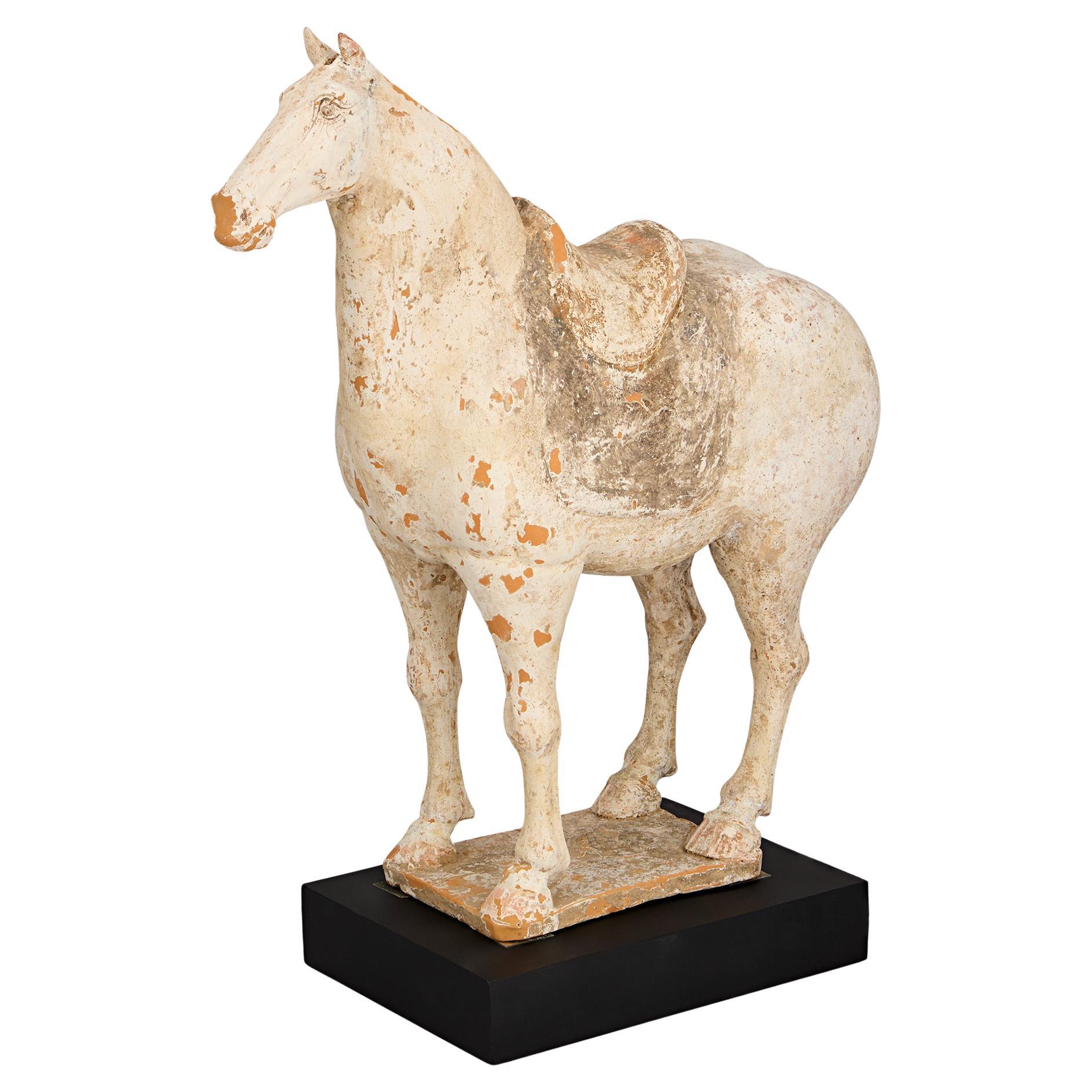
Tang Dynasty Large Pottery Polychromed Horse With Saddle

$14,000
£10,584.44
€12,356.14
CA$19,921.31
A$20,206.60
CHF 11,538.53
MX$244,708.51
NOK 135,836.64
SEK 135,385.82
DKK 92,363.04

About the Item

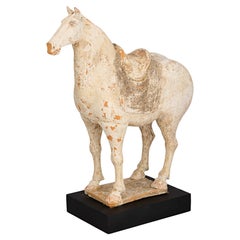
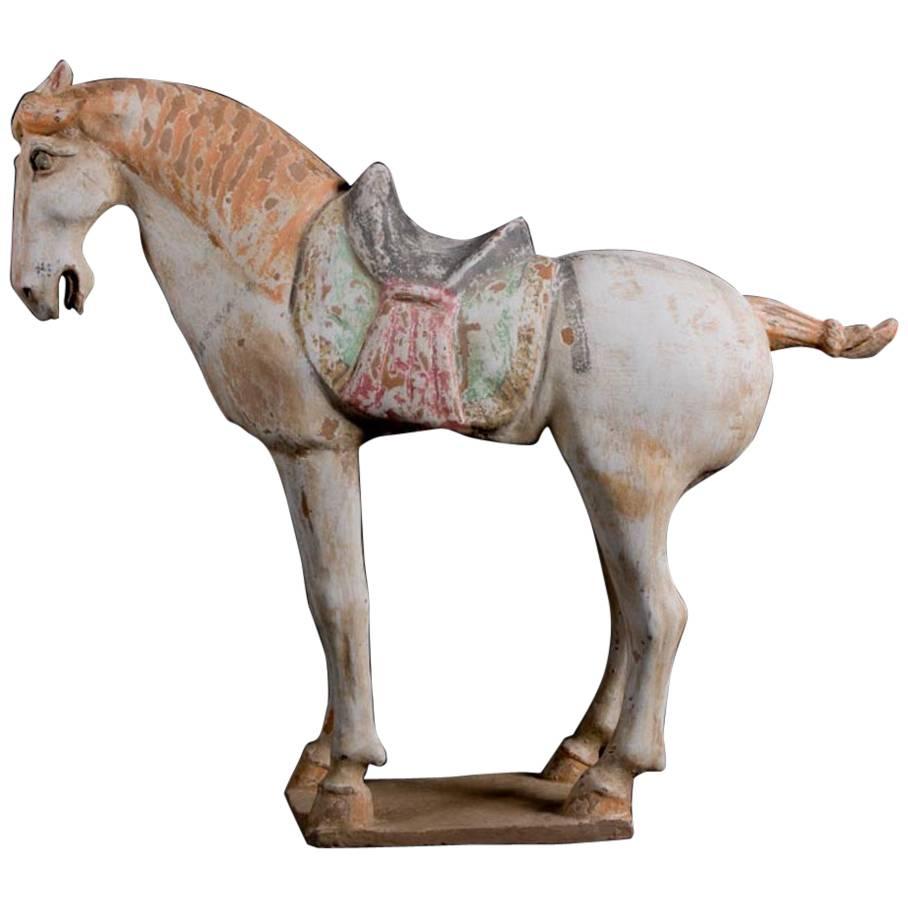
A Large Tang Dynasty Painted Pottery Horse with detachable saddle Accompanied by an Oxford Authentication Thermoluminescence Analysis Report Dimensions: Horse: 19 x W 21 x 7 inches (49 x 53 x 17 cm) Condition: Very good with wear commensurate of age and use. Evidence of professional restoration to rear right leg and ears. Difficult to see. Presents beautifully. This impressive Tang dynasty painted pottery horse represents a fine example of early Tang funerary sculpture, embodying both the artistic sophistication and cultural ideals of one of China's most prosperous periods. Standing in a composed and dignified posture, the horse lowers its head slightly while maintaining an alert and powerful presence. Its upright ears, elongated neck, broad chest, rounded abdomen, muscular hindquarters, and sturdy legs convey the strength and vitality associated with the prized horses of the Tang Empire. A separately modeled saddle rests upon the horse's back, complete with prominent saddle arches and draped saddlecloths extending along both flanks. Finely incised linear decoration across the saddle surface suggests woven textile patterns, demonstrating the sculptor's careful attention to equestrian equipment and ceremonial display. The horse is covered with a white slip, now weathered to a soft grayish-white tone through centuries of burial and natural aging. Particularly noteworthy are the surviving traces of red pigment preserved along the mane. These remnants suggest that the sculpture was originally more vividly painted, as was common among Tang tomb figures. COA and TL Testing the sculpture is accompanied by a Thermoluminescence (TL) Analysis Report issued by Oxford Authentication Ltd. (Sample No. C202b49), dated November 21, 2002, together with a Certificate of Authenticity dated November 24, 2002. These documents provide significant scientific and scholarly support for the dating of the piece. Unlike traditional connoisseurship, which relies primarily upon stylistic comparison and expert opinion, thermoluminescence testing is a scientific method used to determine the approximate date of a ceramic object's last firing. Oxford Authentication® has specialized in the authentication of ceramic antiquities through TL testing since 1997. According to the company, its reports are widely recognized and accepted by museums, auction houses, dealers, collectors, and courts of law throughout the world, serving as an important benchmark in the authentication of ancient ceramic objects. According to the report, samples were collected on November 5, 2002, by Phyllis Hsia, Oxford Authentication's representative for Southeast Asia. Three independent samples were taken from beneath the horse's head, from the right side of the body, and from beneath the saddle. Through laboratory analysis of the thermoluminescent signals retained within the ceramic matrix, Oxford Authentication estimated the date of the object's last firing. The results from all three samples were found to be consistent, indicating that the horse was last fired approximately 1,000 to 1,600 years before the date of testing. The report explicitly concludes that the results are “CONSISTENT with the suggested period of manufacture,” namely the Tang dynasty (618–907 AD). AVANTIQUES is dedicated to providing an exclusive curated collection of Fine Arts, Paintings, Bronzes, Asian treasures, Art Glass and Antiques. Our inventory represents time-tested investment quality items with everlasting decorative beauty. We look forward to your business and appreciate any reasonable offers. All of our curated items are vetted and guaranteed authentic and as described. Avantiques only deals in original antiques and never reproductions. We stand behind our treasures with a full money back return policy if the items are not as described. Please feel free to make any reasonable offers and thank you!
  • Dimensions:
    Height: 19 in (48.26 cm)Width: 21 in (53.34 cm)Depth: 7 in (17.78 cm)
  • Style:
    Tang (Of the Period)
  • Materials and Techniques:
  • Place of Origin:
  • Period:
  • Date of Manufacture:
    700
  • Condition:
    Repaired: Rear right leg and ears. Wear consistent with age and use.
  • Seller Location:
    Dallas, TX
  • Reference Number:
    1stDibs: LU1774250974372

More From This Seller

View All
Han Dynasty Pottery Horse and Rider

Han Dynasty Pottery Horse and Rider

Located in Dallas, TX

Han Dynasty painted pottery horse and rider A Chinese Han Dynasty painted pottery horse & rider. Made from grey pottery and cold-painted in white, red and black pigments. The rider dressed as a warrior and in the pose of holding reins for the horse. Comes with a custom sturdy lucite stand. Measures: Height: 13.5 inches (33cm). Length: 13 inches Depth: 5 inches Han Dynasty (206 BC – AD 220). Condition: Very good with past restoration to legs. The great influence of the horse throughout the history of China can...

Category

Antique 15th Century and Earlier Chinese Han Animal Sculptures

Materials

Pottery

Han Dynasty Polychromed Horse and Rider

Han Dynasty Polychromed Horse and Rider

Located in Dallas, TX

A fine Han dynasty polychrome painted terracotta horse and rider. The warrior is dressed in orange and black on a black horse. Measures: Height 14 inches (35 cm) Width 12.5 inches (32 cm). Condition: Excellent with tastefully undetectable repairs. During the unification of China under the Han dynasty, bands of mounted nomadic warriors from the north threatened the country. In order to thwart their attacks, the Chinese sought to import stronger, faster steeds from Central Asia (as opposed to the Mongol ponies used by the invaders), eventually leading to the creation of the Silk Road. This small sculpture of a mounted soldier reveals the crucial military role of the horse. When compared to the diminutive stature of the rider, the importance of the horse becomes readily apparent. This creature provided security and strength, allowing the empire to secure its borders and expand its influences across Central Asia. The magnificent regalia of the horse, including a brilliantly painted saddle in red and green/gold, reflect the respect this animal received. The warrior as well is gorgeously decorated with a painted red tunic and gray chest...

Category

Antique 15th Century and Earlier Chinese Han Figurative Sculptures

Materials

Terracotta

Han Dynasty Painted Pottery Horse And Detachable Rider.

Han Dynasty Painted Pottery Horse And Detachable Rider.

Located in Dallas, TX

Large Han Dynasty Pottery Horse And Rider. Painted Pottery Western Han Dynasty (206BCE- 220CE) Rider and tail is removable and are original in excellent condition. This is a rare exa...

Category

Antique 15th Century and Earlier Chinese Han Figurative Sculptures

Materials

Pottery

Northern Wei To Tang Dynasty Painted Pottery Horse And Rider

Northern Wei To Tang Dynasty Painted Pottery Horse And Rider

Located in Dallas, TX

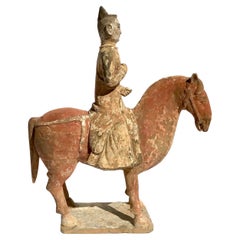
Chinese Tomb Painted Pottery Horse with Soldier Northern Wei to Tang Dynasty (386-534) Height 12.75 Inches x 11 Wide x 3.75 Deep Provenance: Weisbrod Chinese Art, Ltd., New York Co...

Category

Antique 15th Century and Earlier Chinese Tang Animal Sculptures

Materials

Pottery

Pair of Han Dynasty Pottery Horses and Equestrian Riders

Pair of Han Dynasty Pottery Horses and Equestrian Riders

Located in Dallas, TX

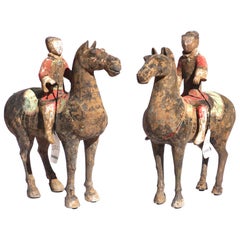
A wonderful pair of Ex Sotheby’s painted Polychrome Equestrian Horse and Riders made from gray pottery, Presents beautifully and guaranteed authentic with provenance and COA. Measures: Height 11.5 inches and width 11 inches Condition: Possible professional restorations but not detectable. Provenance: Sotheby’s London. 16th November, 1999. Lot 12 (2 of 4 horses in that lot). Sotheby’s New York, NY September 14, 2019. The importance of the horse in the history and culture of China can be viewed, in part, through the artistic legacy of this great civilization. In sculpture, painting, and literature, horses were glorified and revered. Horses were believed to be related to mythological dragons, reflecting their sacred status within society. During the unification of China under the Han Dynasty, bands of mounted nomadic warriors from the north threatened the country. In order to thwart their attacks, the Chinese sought to import stronger, faster steeds from Central Asia (as opposed to the Mongol ponies used by the invaders), eventually leading to the creation of the Silk Road. This small sculpture of a mounted soldier reveals the crucial military role of the horse. When compared to the diminutive stature of the rider, the importance of the horse becomes readily apparent. This creature provided security and strength, allowing the Empire to secure its borders and expand its influences across Central Asia. The magnificent regalia of the horse, including a brilliantly painted saddle in red and green/gold, reflect the respect this animal received. The warrior as well is gorgeously decorated with a painted red tunic and gray chest...

Category

Antique 15th Century and Earlier Chinese Chinoiserie Animal Sculptures

Materials

Pottery

Large 19th Century Parker American Carousel Horse

Large 19th Century Parker American Carousel Horse

By Parker

Located in Dallas, TX

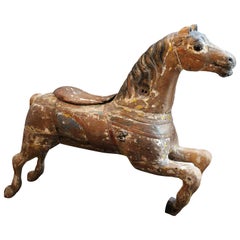
Carousel Horse (American, 19th C) Wood carved with traces of paint with stand. An amazing decorative statement; this charming wood carved carousel horse shows character with traces of its original paint and jointed construction. The glass eye balls and facial features is a focal point from tail to hoof. Probably coming originally from a Long Island New York fair carousel ride, this bold yet soft piece draws eyes and complimentary statements as soon as guests see it. Comes with decorative wood stand! Attributed to Parker carousel horses...

Category

Antique 1890s American American Classical Animal Sculptures

Materials

Wood

You May Also Like

Antique Tang Dynasty Terra Cotta Horse Figure with Sancai Glaze

Antique Tang Dynasty Terra Cotta Horse Figure with Sancai Glaze

Located in Queens, NY

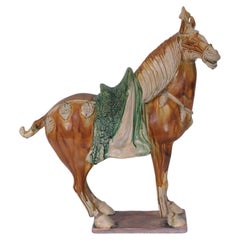
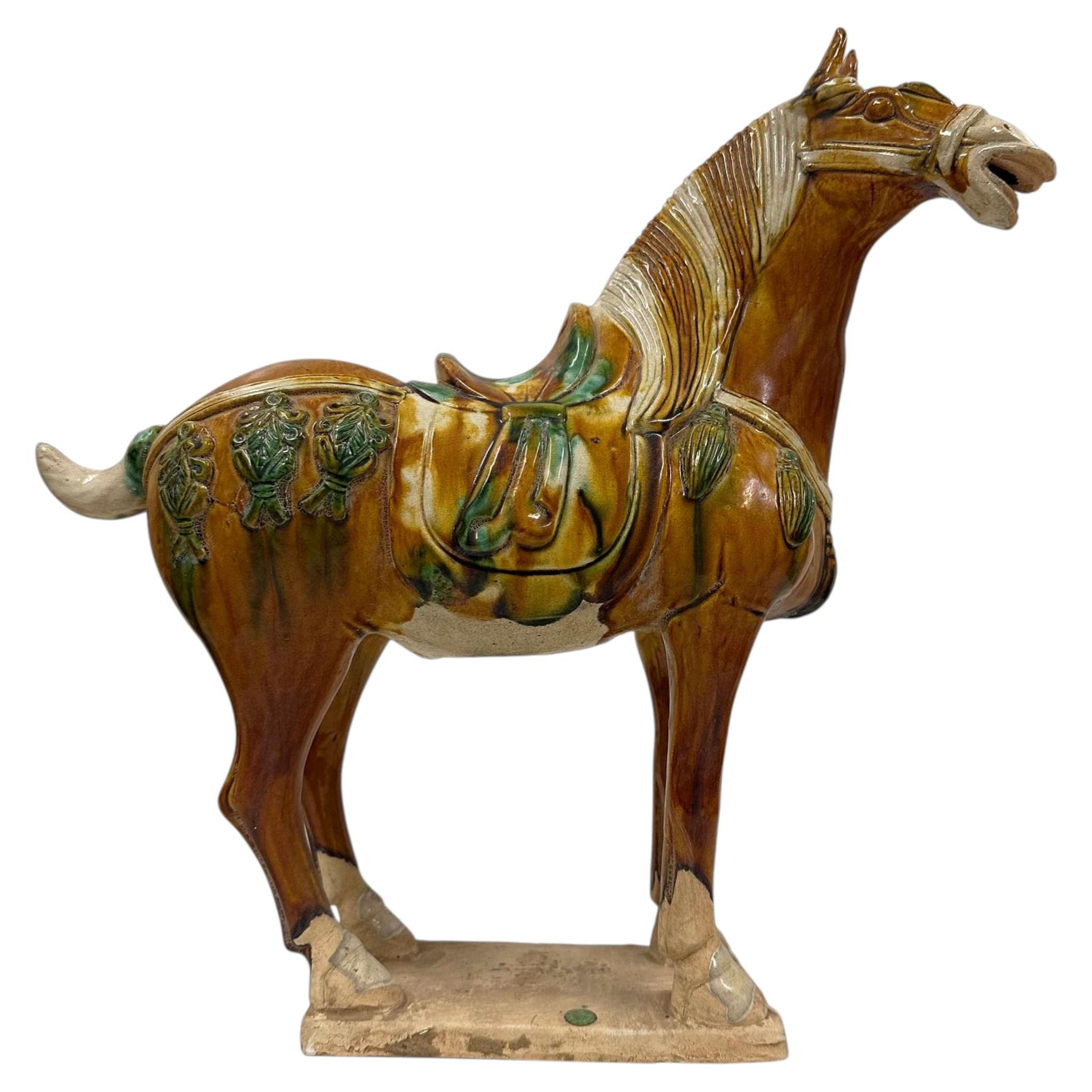
Antique Chinese Tang Dynasty-style terra cotta figure of a horse commonly used as a tomb figure for wealthy burials in the 7-8th centuries, and crafted with traditional tri-color gla...

Category

20th Century Chinese Export Figurative Sculptures

Materials

Terracotta

Large Early Tang Dynasty Painted Pottery Model of a Prancing Horse, TL Tested

Large Early Tang Dynasty Painted Pottery Model of a Prancing Horse, TL Tested

Located in Austin, TX

A magnificent and large early Tang dynasty (618-906 AD) model of a prancing or dancing horse, circa 7th century. The majestic animal is caught mid-motion, one leg raised, head grace...

Category

Antique 15th Century and Earlier Chinese Tang Antiquities

Materials

Pottery

Ming Period Large Pottery Horse with Saddle (15-16th Century)

Ming Period Large Pottery Horse with Saddle (15-16th Century)

Located in seoul, KR

The figure stands on a rectangular base. The horse is depicted in a poised stance, with strong, muscular legs and a slightly bowed head. The mane is carefully sculpted with deep, flowing grooves, adding a dynamic texture to the piece. The head features expressive details, including a well-defined muzzle, flared nostrils. The bridle and harness are delicately painted in faded green, contrasting against the creamy beige body. The saddle is adorned with intricate details, including decorative tassels and a textured pattern, indicative of the elaborate tack used in the Ming period. Traces of original polychrome pigments in green, black, and ochre remain on the surface, hinting at the sculpture’s once-vibrant appearance. The weathered patina and areas of flaking paint add to its historical authenticity, reflecting centuries of age. The overall craftsmanship and detailing exemplify the Ming Dynasty’s refined ceramic artistry, making this piece a remarkable representation of of asian culture during this period. Period: Ming Dynasty Medium: Green, black, and ochre glazed Pottery Type: Figure Condition : Good(chips on the upper saddle.) Provenance : Acquired in late 1990s from Hongkong Reference : Asian Civilisations Museum - Accession No. C-1384 / 1994-00441 - Ming Dynasty Figure of Horse (Type : Closely Related) * Ming Dynasty Glazed Pottery Figures Ming Dynasty glazed pottery figures are renowned for their bold color palette, intricate detailing, and lifelike forms, distinguishing them from earlier traditions. These figures, which depict officials, warriors, animals, and mythical creatures, are characterized by high-gloss lead-based glazes in green, amber, ochre, and sancai (three-color) combinations. The thickly applied glaze pools in recesses, creating depth and enhancing sculptural details. With dynamic postures, expressive facial features, and meticulously rendered drapery, these figures reflect the period’s advancement in ceramic craftsmanship, offering a greater sense of movement and realism compared to the rigid and stylized forms of earlier dynasties. A defining characteristic of Ming glazed pottery is its elaborate surface detailing, often achieved through raised relief elements and contrasting glazes. Equestrian figures, for example, feature carefully sculpted saddles, harnesses, and decorative embellishments, while human figures are adorned with intricate robes and headdresses. The large scale of these tomb figures, often more imposing than those from previous periods, underscores the increasing importance of funerary art during the Ming era. Unlike later Qing Dynasty figures...

Category

Antique 15th Century and Earlier Hong Kong Ming Antiquities
Materials

Pottery

Tang Dynasty Earthenware Horse

Tang Dynasty Earthenware Horse

Located in New Orleans, LA

Tang Dynasty Earthenware Horse Circa 618–907 CE This Tang dynasty earthenware horse retains traces of its original white pigment, a feature rarely preserved on sculptures of this pe...

Category

Antique 15th Century and Earlier Chinese Tang Animal Sculptures

Materials

Earthenware

Ming Period Large Pottery Horse with Saddle (15-16th Century)

Ming Period Large Pottery Horse with Saddle (15-16th Century)

Located in seoul, KR

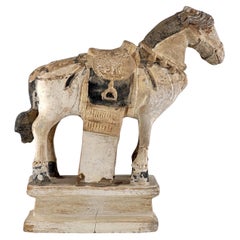
This Ming Dynasty painted pottery horse is depicted standing on a tiered rectangular pedestal. The horse has a well-proportioned body, with sturdy legs and a slightly arched neck. The eyes and muzzle are subtly outlined and incised. The mane is sculpted with deep, parallel grooves. The tail is long and slightly curved left, extending downward. The saddle is prominently featured at the center of the horse’s back, detailed with a raised, rounded seat and an attached stirrup hanging down one side. The saddlecloth is textured with a crosshatch pattern, bordered by a row of carved fringe-like elements. The horse's legs display subtle musculature, and the hooves are clearly defined, with black pigment accentuating their edges. The original painted pigments, including white, black, and ochre, are still visible, though faded in some areas. The black pigment highlights the mane, tail, and parts of the bridle, while the ochre tones accentuate the saddle and decorative elements. Period: Ming Dynasty Medium: Green, black, and ochre glazed Pottery Type: Figure Provenance : Acquired in late 1990s from Hongkong Reference : Asian Civilisations Museum - Accession No. C-1384 / 1994-00441 - Ming Dynasty Figure of Horse (Type : Closely Related) * Ming Dynasty Glazed Pottery Figures Ming Dynasty glazed pottery figures are renowned for their bold color palette, intricate detailing, and lifelike forms, distinguishing them from earlier traditions. These figures, which depict officials, warriors, animals, and mythical creatures, are characterized by high-gloss lead-based glazes in green, amber, ochre, and sancai (three-color) combinations. The thickly applied glaze pools in recesses, creating depth and enhancing sculptural details. With dynamic postures, expressive facial features, and meticulously rendered drapery, these figures reflect the period’s advancement in ceramic craftsmanship, offering a greater sense of movement and realism compared to the rigid and stylized forms of earlier dynasties. A defining characteristic of Ming glazed pottery is its elaborate surface detailing, often achieved through raised relief elements and contrasting glazes. Equestrian figures, for example, feature carefully sculpted saddles, harnesses, and decorative embellishments, while human figures are adorned with intricate robes and headdresses. The large scale of these tomb figures, often more imposing than those from previous periods, underscores the increasing importance of funerary art during the Ming era. Unlike later Qing Dynasty figures...

Category

Antique 15th Century and Earlier Hong Kong Ming Antiquities
Materials

Pottery