Want more images or videos?
Request additional images or videos from the seller
1 of 7

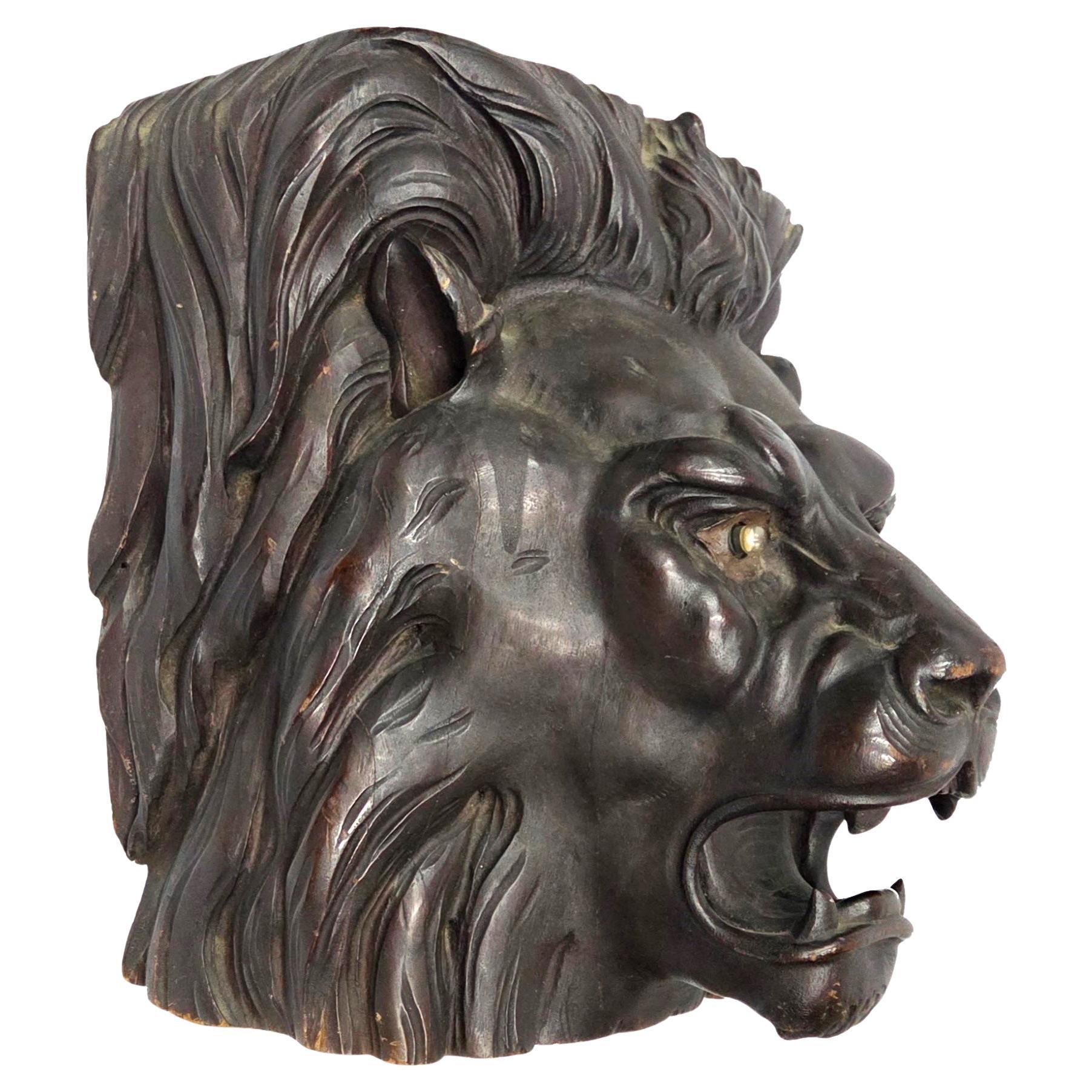
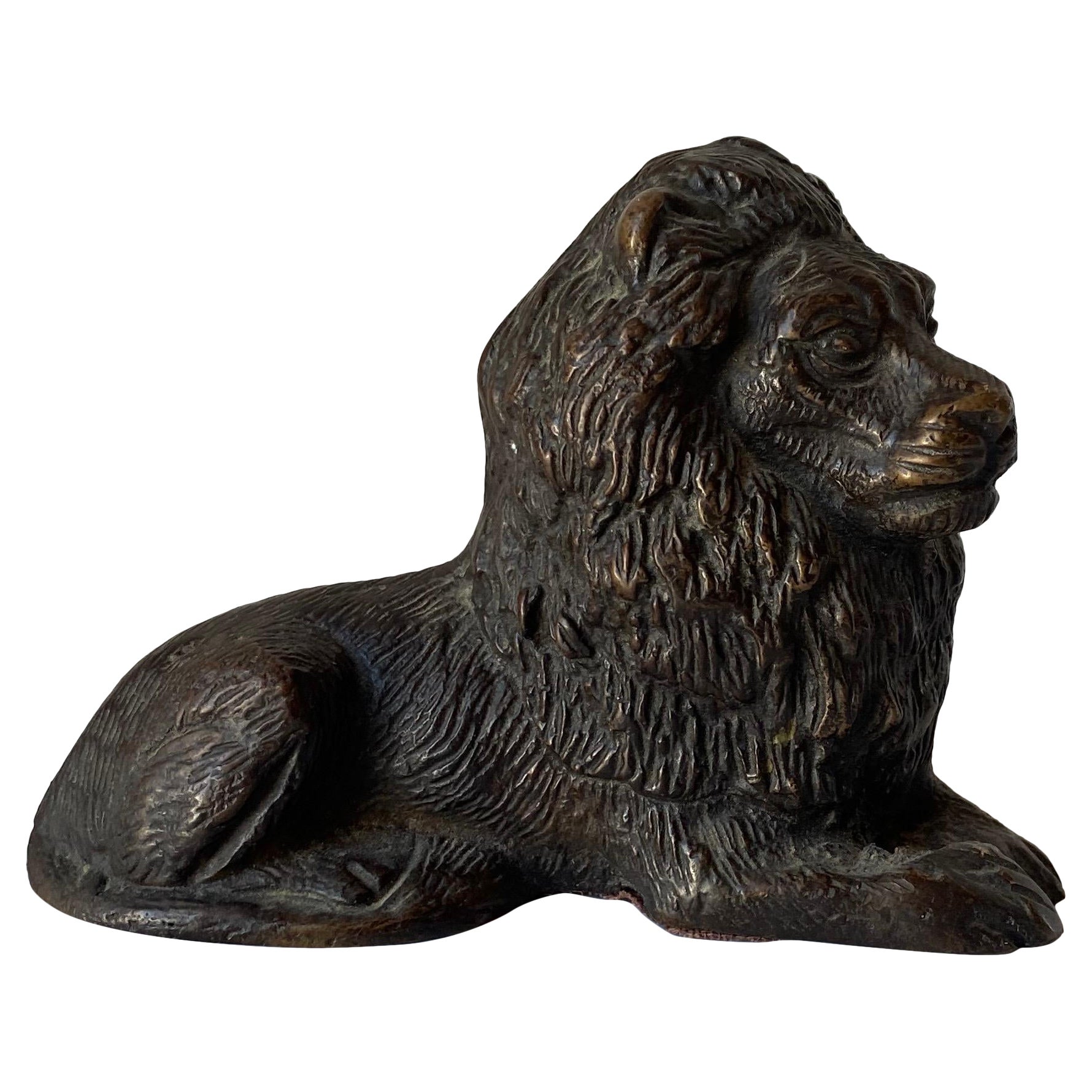
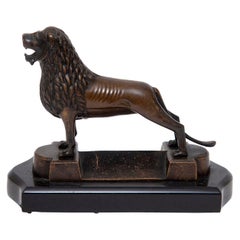
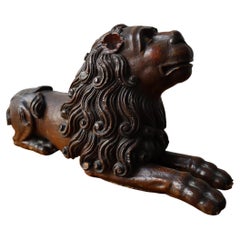
Venetian Boxwood Lion of Saint Mark on Ebony Plinth circa 1700

$2,295
£1,716.08
€2,004.28
CA$3,224.47
A$3,265.76
CHF 1,876.02
MX$39,601.59
NOK 21,761.56
SEK 22,150.77
DKK 14,984.10

About the Item

This boxwood sculpture of the Lion of Saint Mark, mounted upon a ripple-molded ebony plinth, serves as a sophisticated testament to the "Golden Age" of Venetian woodcarving at the turn of the 18th century. Stylistically and materially, the piece inhabits the restless, intellectual milieu of the Venetian Baroque, a period defined by theatricality, technical bravura, and the cross-pollination of Northern European craftsmanship with Italian dramatic form. Around the year 1700, the Venetian sculptural tradition was dominated by a "frantic" aesthetic—a reaction against the static nature of earlier classicism. This style, pioneered by the eccentric Francesco Pianta and codified by Giuseppe Torretti (1664–1743), prioritized the "non-finito" or "off-the-tool" finish. Unlike the fluid, sanded surfaces found in the furniture of Andrea Brustolon, this sculpture displays a granular, high-energy surface texture. The use of long, decisive gouges to define the lion’s mane suggests a carver who treated the dense boxwood as a monumental medium, capturing a sense of "agitation" and movement that mirrors the great marble works of the Gesuiti. While the sculpture lacks the extreme refinement of an autograph work by a master of the first rank, its technical competence and expensive mounting suggest it is a high-level production from the Circle of Giuseppe Torretti. Before his departure for Rome in 1710, Torretti’s bottega was a hub of virtuoso activity. The "humanized" or anthropomorphic facial expression of the lion—a hallmark of Torretti’s psychological approach to animalier subjects—suggests a senior assistant or a close family associate, such as his nephew Giuseppe Bernardi, working from a master’s bozzetto (model). The visibility of the chisel marks was a deliberate choice, intended to appeal to a sophisticated "Grand Tour" clientele who prized the visible hand of the artist and the raw vitality of the sculptural process. The pairing of materials is perhaps the object’s most significant diagnostic feature. The boxwood (Buxus sempervirens), prized for its ivory-like density, allowed for the anatomical precision and expressive "stern" brow of the lion. Its placement upon an ebony plinth featuring ripple-molding (Flammleisten) points to a fascinating cultural intersection. This specific woodworking technique, originated by Flemish and German cabinetmakers (forestieri), was highly fashionable in Venice circa 1690–1710. It frames the wild energy of the carving within a rigid, architectural order, marking it as a Cabinet Piece—an object of contemplation for a private collector’s study. The object’s biography extends beyond its Venetian origin into the 19th-century French market. The presence of a late 19th-century French newspaper fragment (likely La France or a contemporary financial daily) on the underside of the ebony base documents its migration. It suggests the piece was a prized acquisition of a French aristocrat or bourgeois collector during the height of the "Grand Tour" revival. The paper likely served as a protective measure to stabilize the ancient ebony against modern surfaces, ensuring that the work—already two centuries old at the time—retained its integrity. This Lion of Saint Mark is more than a symbol of the Republic; it is a survivor of a specific moment in art history when the boundaries between "craft" and "fine art" were blurred. Through its frantic tool-work and prestigious materials, it captures the essence of the Torretti workshop’s output: a work of vigorous personality and historical gravity that reflects the enduring allure of the Venetian Baroque. Specifications: Origin: Venice, Italy. Period: Late 17th / Early 18th Century (Circa 1690–1710). Style: Venetian Baroque. Material: Carved Boxwood (Buxus sempervirens) on a Ripple-Molded Ebony Plinth. Dimensions: 4.25" (w) x 5" (h) x 2" (d) Condition: Remarkable antique condition; features a stabilized late 19th-century French newspaper fragment on the underside of the base, documenting its historical migration. Historian's Note: The Lion of Saint Mark has served as the enduring symbol of Venetian power for a millennium, but this specific iteration captures the Republic at a fascinating stylistic crossroads. By 1700, Venice was the epicenter of a sculptural revolution led by Giuseppe Torretti (1664–1743). This piece exemplifies the transition from the theatricality of the high Baroque to a more emotive, humanized treatment of animal subjects. The use of boxwood is particularly significant; its extreme density allowed carvers to achieve a level of anatomical precision usually reserved for bronze or marble. When paired with ripple-molded ebony—a technique synonymous with the highest tier of Flemish and German cabinetry—the object becomes a "polymath" piece. It reflects the cosmopolitan nature of Venice as a melting pot of European craftsmanship. Its preservation, evidenced by the 19th-century French provenance on its base, underscores its perennial status as an object of desire for the European elite during the Grand Tour revival. For the contemporary collector, it remains a superlative example of the "non-finito" philosophy—where the raw vitality of the carving is prized above mere decorative finish.
  • Dimensions:
    Height: 5 in (12.7 cm)Width: 4.25 in (10.8 cm)Depth: 2 in (5.08 cm)
  • Style:
    Baroque (Of the Period)
  • Materials and Techniques:
  • Place of Origin:
  • Period:
    1690-1699
  • Date of Manufacture:
    Unknown
  • Condition:
    Wear consistent with age and use. Remarkable antique condition; features a stabilized late 19th-century French newspaper fragment on the underside of the base, documenting its historical migration.
  • Seller Location:
    Leesburg, VA
  • Reference Number:
    1stDibs: LU8166250631492

More From This Seller

View All
Bronze sculpture of a Persian Stallion by Jules Moigniez

Bronze sculpture of a Persian Stallion by Jules Moigniez

By Jules Moigniez

Located in Leesburg, VA

Bronze sculpture of a Persian Stallion by Jules Moigniez Probably cast by Auguste Gouge, after a model by Jules Moigniez France; ca. 1900 Bronze Approximate size: 7.75”H x 9.5”W x ...

Category

Antique Late 19th Century French Victorian Animal Sculptures

Materials

Bronze

An antique 18th century Walnut European Santos - Saint figure on a plinth

An antique 18th century Walnut European Santos - Saint figure on a plinth

Located in Leesburg, VA

An antique 18th century Walnut Figural Statue of Saint Peter on a plinth Anonymous Northern Europe, probably Belgium; first-half of the 18th century Walnut Approximate size: 17 (h) x 4.25 (w) x 4.25 (d) in. The present sculpture, perfectly suited for a curiosity cabinet or English-European country styled home, was likely realized for a church side chapel or choir stall niche. The serious look of the saint’s face...

Category

Antique Early 18th Century Belgian Baroque Figurative Sculptures

Materials

Walnut

An early 18th century Florentine Ebonized Wood Aedicule Case

An early 18th century Florentine Ebonized Wood Aedicule Case

Located in Leesburg, VA

An early 18th century Florentine ebonized wood aedicule case with gilt metal embellishments Ambit of Leonard van der Vinne Possibly first decade of the 18th century; Florence, Italy Approximate size: 83.5 (h) x 69 (w) x 23 (d) cm The cabinet’s centralized glass door is flanked by thick spiraling Solomonic columns surmounting a lower drawer. To the rear of the cabinet, the motif repeats in an eloquent display of perspectival treatment. The overall work is supported by a tiered base, elegantly conceived, and the cabinet is topped by a handsome pediment flanked by square plinths crested by gilt metal finials and an openwork frieze. The cabinet’s tempered and moderate form suggests an origin probably during the first decade or quarter of the 18th century. Although utilitarian in concept, the reserved and sublime expressiveness of this cabinet is managed with a quality and care respective of the influence of Florentine ebony cabinetry work conceived in the Galleria dei lavori or Grand Ducal Workshops of the 18th century Medici dynasty. In particular, its base mouldings echo a remarkable Night Clock...

Category

Antique Early 18th Century Italian Baroque Vitrines

Materials

Brass

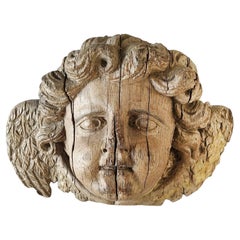
Antique 17th Century French Baroque Carved Oak Winged Cherub Bust

Antique 17th Century French Baroque Carved Oak Winged Cherub Bust

Located in Leesburg, VA

This distressed antique French winged cherub bust is a testament to the grandeur and craftsmanship of the 17th-century French Baroque. Carved from dense, heavy oak, this architectura...

Category

Antique 17th Century French Louis XIV Busts

Materials

Oak

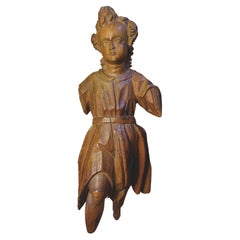
Baroque Period Bohemian Wooden Angel Sculpture Fragment

Baroque Period Bohemian Wooden Angel Sculpture Fragment

Located in Leesburg, VA

Rococo Period Bohemian Wooden Angel Sculpture Fragment Anonymous Bohemia; ca. 1700 Oak Approximate size: 17 (h) x 7 (w) x 4.75 (d) in. The present oakwood sculpture, with its cinc...

Category

Antique Early 1700s Czech Rococo Wall-mounted Sculptures

Materials

Oak

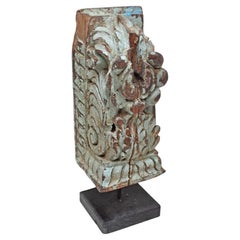
Original Hand-Carved South Asian Antique Architectural Bracket Fragment

Original Hand-Carved South Asian Antique Architectural Bracket Fragment

Located in Leesburg, VA

Original Hand-Carved South Asian Antique Architectural Bracket Fragment for display Anonymous Probably India; early-to-mid 20th century Wood Approximate size: 4.2 x 3.8 x 12 in. A...

Category

Early 20th Century Indian Anglo-Indian Mounted Objects

Materials

Wood, Paint

You May Also Like

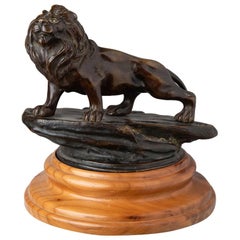
Brunswick Lion Bronze German Model Black Marble, 19th Century

Brunswick Lion Bronze German Model Black Marble, 19th Century

Located in BUNGAY, SUFFOLK

A German bronze model of the medieval Brunswick lion, mounted on a black marble plinth, late-19th century, The German prince, Henry, Duke of Saxony an...

Category

Antique 1880s German Baroque Revival Animal Sculptures

Materials

Bronze

Antique Bronze Lion Sculpture on Wood Base, French, Circa 1850

Antique Bronze Lion Sculpture on Wood Base, French, Circa 1850

Located in Alessandria, Piemonte

Antique lion bronze sculpture on a round wood base. I've not found signature, but it is a French statue. nr. O/7561   

Category

Antique Mid-19th Century French Other Animal Sculptures

Materials

Bronze

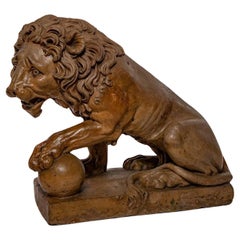
Hand-Crafted Terracotta Lion Sculpture, French Louis XV Style, 1700s

Hand-Crafted Terracotta Lion Sculpture, French Louis XV Style, 1700s

Located in ARMADALE, VIC

A superb terracotta lion, French 18th century Height: 70 cm Width: 38 cm Depth: 82 cm. Provenance: Private Australian Collection acquired in 1990s.

Category

Antique 18th Century French Louis XV Animal Sculptures

Materials

Terracotta

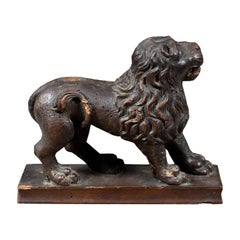
16th century Northern Italian Renaissance carved wood Lion sculpture

16th century Northern Italian Renaissance carved wood Lion sculpture

Located in Varmo, IT

Italian sculptor (16th century) - Lion in heraldic pose. 27.5 x 8 x h 23 cm. Full figure in carved walnut with dark patina, on a rectangular base. The lion is depicted in a herald...

Category

16th Century Renaissance Figurative Sculptures

Materials

Wood

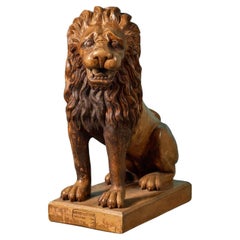
Antique French Terracotta Lion Sculpture by Mandeville & Bernier

Antique French Terracotta Lion Sculpture by Mandeville & Bernier

Located in Wormelow, Herefordshire

An antique French terracotta lion sculpture by Mandeville & Bernier. Dating to circa 1900, this impressive lion sculpture is of good scale, its detailed mane, large paws, and express...

Category

Early 20th Century French Victorian Statues

Materials

Terracotta

Antique Baroque Handcarved Lion Sculpture, Italian or Austrian

Antique Baroque Handcarved Lion Sculpture, Italian or Austrian

By Antonio Raggi

Located in Vienna, AT

Early fine carved sculpture of a lying lion. Attributed to the circle of Alessandro Vittoria, located in northern Italy/ Venice. Original late Renaissance or early Baroque figure. T...

Category

Antique 17th Century Italian Baroque Animal Sculptures

Materials

Wood