1 of 10

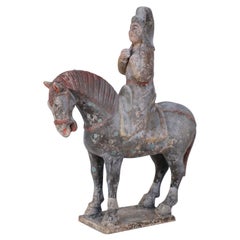
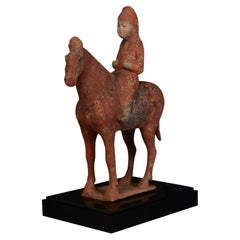
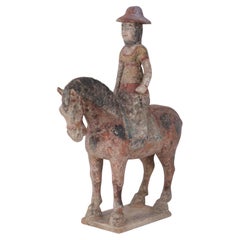
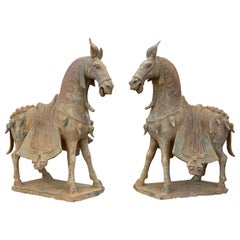
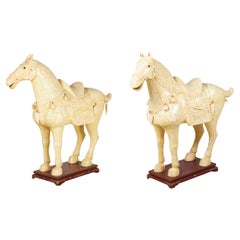
Chinese Han Dynasty Pottery Figures of Horse & Riders

$1,400List Price

You May Also Like

Han Dynasty Pottery Horse and Rider

Han Dynasty Pottery Horse and Rider

$3,600

H 13.5 in W 13 in D 5 in

Han Dynasty Pottery Horse and Rider

Located in Dallas, TX

Han Dynasty painted pottery horse and rider A Chinese Han Dynasty painted pottery horse & rider. Made from grey pottery and cold-painted in white, red and black pigments. The rider dressed as a warrior and in the pose of holding reins for the horse. Comes with a custom sturdy lucite stand. Measures: Height: 13.5 inches (33cm). Length: 13 inches Depth: 5 inches Han Dynasty (206 BC – AD 220). Condition: Very good with past restoration to legs. The great influence of the horse throughout the history of China can...

Category

Antique 15th Century and Earlier Chinese Han Animal Sculptures

Materials

Pottery

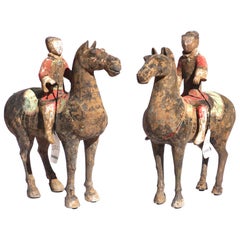
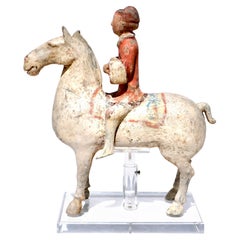
Pair of Han Dynasty Pottery Horses and Equestrian Riders

Pair of Han Dynasty Pottery Horses and Equestrian Riders

Located in Dallas, TX

A wonderful pair of Ex Sotheby’s painted Polychrome Equestrian Horse and Riders made from gray pottery, Presents beautifully and guaranteed authentic with provenance and COA. Measures: Height 11.5 inches and width 11 inches Condition: Possible professional restorations but not detectable. Provenance: Sotheby’s London. 16th November, 1999. Lot 12 (2 of 4 horses in that lot). Sotheby’s New York, NY September 14, 2019. The importance of the horse in the history and culture of China can be viewed, in part, through the artistic legacy of this great civilization. In sculpture, painting, and literature, horses were glorified and revered. Horses were believed to be related to mythological dragons, reflecting their sacred status within society. During the unification of China under the Han Dynasty, bands of mounted nomadic warriors from the north threatened the country. In order to thwart their attacks, the Chinese sought to import stronger, faster steeds from Central Asia (as opposed to the Mongol ponies used by the invaders), eventually leading to the creation of the Silk Road. This small sculpture of a mounted soldier reveals the crucial military role of the horse. When compared to the diminutive stature of the rider, the importance of the horse becomes readily apparent. This creature provided security and strength, allowing the Empire to secure its borders and expand its influences across Central Asia. The magnificent regalia of the horse, including a brilliantly painted saddle in red and green/gold, reflect the respect this animal received. The warrior as well is gorgeously decorated with a painted red tunic and gray chest...

Category

Antique 15th Century and Earlier Chinese Chinoiserie Animal Sculptures
Materials

Pottery

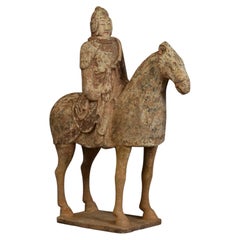
Northern Qi Dynasty, Antique Chinese Pottery Horse and Rider

Northern Qi Dynasty, Antique Chinese Pottery Horse and Rider

Located in Sampantawong, TH

Antique Chinese pottery horse and rider. Age: China, Northern Qi Dynasty, A.D. 550 - 577 Size: Height 36.5 C.M. / Width 10.5 C.M. / Length 28.5 C.M. Condition: Well-preserved old bu...

Category

Antique 15th Century and Earlier Chinese Antiquities

Materials

Pottery

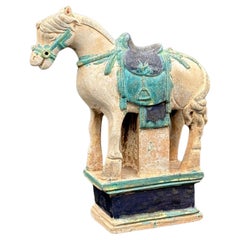
Antique Ming Dynasty Chinese Earthenware Horse Sculpture Míngqì Tomb Figure

Antique Ming Dynasty Chinese Earthenware Horse Sculpture Míngqì Tomb Figure

Located in Forney, TX

A scarce 600 year old (approx) Chinese pottery Ming Dynasty (1368-1644) large glazed earthenware míngqì tomb figure, modeled as horse sculpture with saddle, stirrups, and integral ba...

Category

Antique 15th Century and Earlier Chinese Ming Sculptures and Carvings

Materials

Earthenware

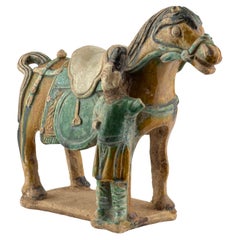
Ming Period Horse and Rider Pottery Figure

Ming Period Horse and Rider Pottery Figure

$1,163Sale Price|35% Off

H 7.88 in Dm 9.45 in

Ming Period Horse and Rider Pottery Figure

Located in seoul, KR

Statues of horse and rider, featuring glazes in green, amber, are set on rectangular bases. Period: Ming Dynasty Medium: Green and Amber-glazed Pottery Type: Figure Provenance : ...

Category

Antique 15th Century and Earlier East Asian Ming Antiquities

Materials

Pottery

Antique Tang Dynasty Terra Cotta Horse Rider Sculpture

Antique Tang Dynasty Terra Cotta Horse Rider Sculpture

Located in Queens, NY

Antique Chinese Tang Dynasty-style terra cotta tomb figure of a rider wearing robes and a red sash sitting on a horse that is painted in blue dots and a red bridle, with its head bow...

Category

20th Century Chinese Export Figurative Sculptures

Materials

Terracotta

Tang Dynasty, Antique Chinese Painted Pottery Horse and Rider

Tang Dynasty, Antique Chinese Painted Pottery Horse and Rider

Located in Sampantawong, TH

Antique Chinese painted pottery horse and rider. Age: China, Tang Dynasty, A.D. 618 - 907 Size excluding stand: Height 36.2 C.M. / Width 10.7 C.M. / Length 27.5 C.M. Condition: Wel...

Category

Antique 15th Century and Earlier Chinese Antiquities

Materials

Pottery

Antique Chinese Terra Cotta Horse Rider Sculpture, Tang Dynasty Style

Antique Chinese Terra Cotta Horse Rider Sculpture, Tang Dynasty Style

Located in Queens, NY

Antique Chinese Tang Dynasty-style terra cotta tomb figure of a girl wearing a red hat riding a brown horse, standing on a textured base.  

Category

20th Century Chinese Export Animal Sculptures

Materials

Terracotta

Northern Wei Dynasty Terracotta Horses, TL Tested,  '386 AD-535 AD'

Northern Wei Dynasty Terracotta Horses, TL Tested, '386 AD-535 AD'

$185,000 / set

H 23.42 in W 11.81 in D 20.47 in

Northern Wei Dynasty Terracotta Horses, TL Tested, '386 AD-535 AD'

Located in Miami, FL

A massive pottery pair of horses standing on all fours and striding with its right hoof forward. Extended snout ends in parted lips showing teeth beneath in a braying attitude. Low relief bridle on face and well defined eyes. Raised mane down back of the neck A fantastic example of the Wei dynasty horses. Large, exquisite walking Ferghana horses with great attention paid to anatomical detail were the choice of the wealthy. The horse was second only in importance to the dragon. It was supposed to possess magical powers which the early Chinese were eager to explore. It would be the horse that would carry the deceased to the next life and it would be the amount of horses that an individual owned that would guarantee his ongoing status in the hereafter. Thermoluminescence certificate from Madrid Labs included. In southern China, people turned to Daoism, and mingqi, as well as above-ground sculptures, became ever more infused with animal iconography and energized with dynamic lines. The north of China was eventually united by nomadic Tuoba invaders who founded the Northern Wei dynasty...

Category

Antique 15th Century and Earlier Chinese Han Antiquities

Materials

Terracotta