Video Loading
Want more images or videos?
Request additional images or videos from the seller
1 of 12

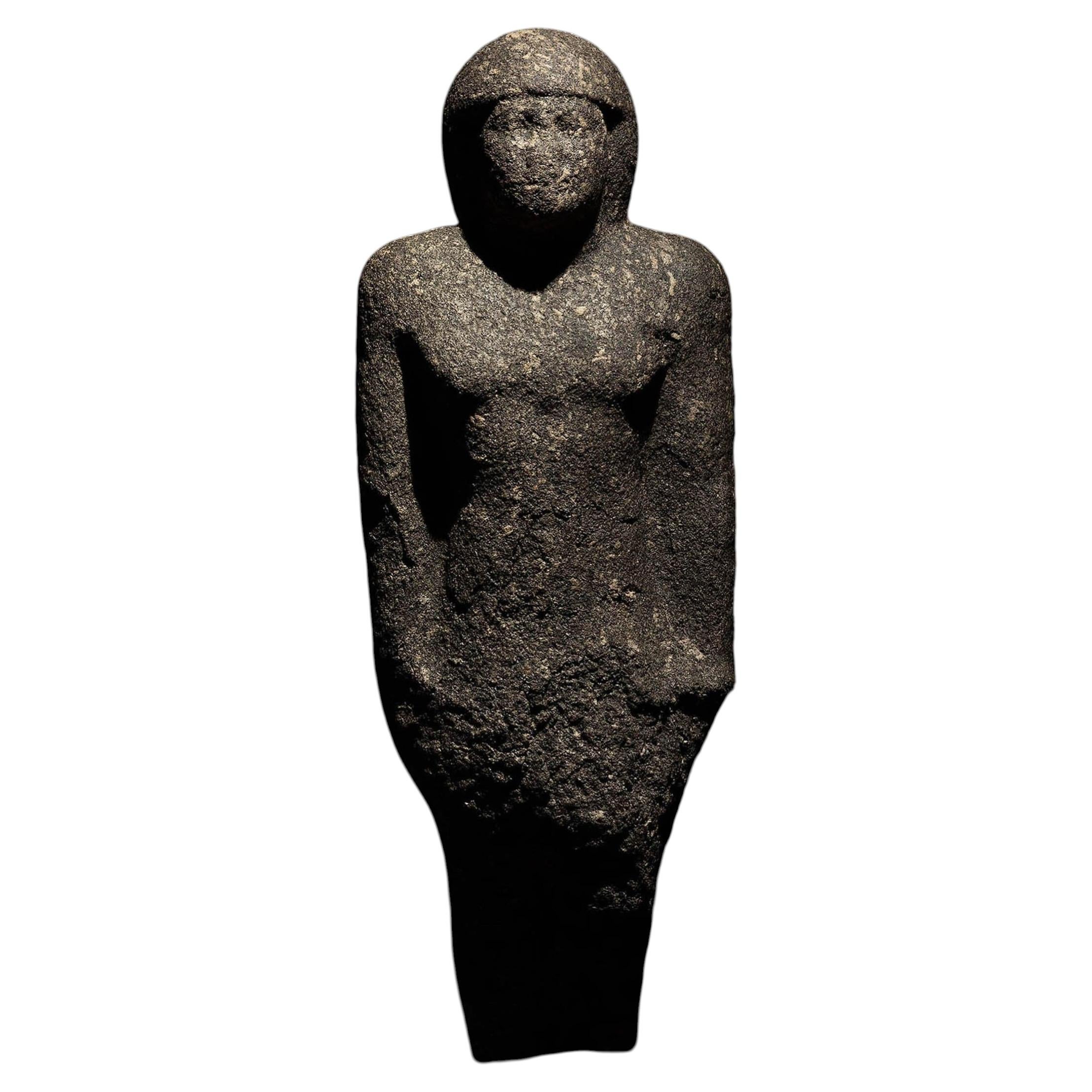
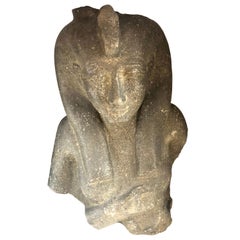
Ancient Egypt Sculpture of the Goddess Isis-Hathor in Diorite

$42,365.60
£31,485.05
€36,000VAT Included
CA$59,613.99
A$60,102.42
CHF 34,223.06
MX$730,570.15
NOK 403,986.68
SEK 402,826.93
DKK 274,477.68

About the Item

27 cm with the stand. Provenance - Private collection, Paris, France. Sculpture in an almost round shape of the goddess Isis-Hathor attached to a stela carved from a single block of diorite. It presents a very high relief becoming almost a free-standing sculpture. Given the relationship between both deities, the characteristics with which the figure is represented and the lack of inscriptions, it could be Isis as well as Hathor. The goddess, whose bust can be seen, has her right arm stretched downwards, and her left arm crossed under her chest. Her body is shown without any marked dress, but since in numerous sculptures of gods their clothing is not drawn, it is insinuated, but it is understood that she would be covered with a long dress tight to her body. Her face shows good carving on both of her eyes, but her nose and mouth have been eroded. The attributes that allow the identification of the goddesses are; her characteristic hairstyle, a voluptuous tripartite wig, which descends in front of the shoulders and down the back, in which lines have been marked by means of incisions to differentiate the strands. Above this wig stands a crown composed of two baca horns with a sun disk in the middle, insignia of both deities, with an upright cobra or the head of a vulture in the lower central part, now lost. Quite possibly the sculpture - stela was finished up to the feet of the goddess, surely upright and possibly with inscriptions identifying her and the owner or who acquired it to deposit it in a temple or chapel and receive favors from her. In this figure, the importance lies in the material used, a rock more typical of the elaboration or carving of crockery elements, such as plates and bowls, in stone, especially in the Predynastic period and during the first dynasties. Since the Old Kingdom, limestone, abundant and soft, was the most used for carving reliefs, stelae and sculptures. Some sculptures, especially of small dimensions, as far as deities or private ones are concerned, were carved in other types of rocks of superior hardness, becoming a luxury product. Without taking into account, obviously, large royal effigies, whether they were images of pharaohs or gods, provided by monarchs as a sign of devotion in temples or as public sculpture. Another characteristic that deserves to be mentioned is both the dimensions and the thickness of the figure, providing a certain appearance to the work. Both Isis and Hathor were two of the most important goddesses in the Egyptian pantheon. In many of the representations they embody similar attributes and powers, which led to a syncretism between them, depending on the performance with which they identified. The goddess Isis, according to the stories, was the daughter of Gueb and Nut, sister of Osiris, whose wife she was also considered. This deity was named as; «Great magician», «Great mother goddess», «Queen of the gods», «Fertilising force of nature», «Goddess of motherhood and birth». Osiris reigned in ancient Egypt with peace, harmony and wisdom. The Nile fertilized the land and the crops were bountiful. One day, Osiris went on a journey to meet other civilizations and left the kingdom under the command of his wife Isis. Seth, his envious brother, felt humiliated as he believed that he should rule and not Isis. On his return Osiris was assassinated by her brother and the goddess Isis, aided by other divinities such as Nephthys and Anubis, searched for and found her husband's chopped-up body, put it back together and, through special rites, brought him back to life. After that she physically joined her god becoming pregnant by him. Osiris's posthumous son would be Horus as a child, Harpocrates, who would later avenge his father by fighting Seth. Being one of the main deities, Isis was venerated throughout the history of Egypt, and in the last era her largest temple was erected on the island of Philae. The Greco-Roman world adopted her characteristics associating them with Aphrodite and Venus. Another of the main aspects of her: the condition of "mother of the god" would also be relevant in her cults, influencing Catholicism and Orthodox Christianity. Hathor is the goddess of the sky, love, joy, music and dance. She protective goddess of motherhood and children. This goddess is mainly represented as a woman with the ears or head of a cow, lyriform horns and a sun disk. She sometimes identifies with other goddesses such as Sekhmet and Tefnut in the guise of a lioness, and with Bastet and Isis, with whom she is almost confused, with whom she shares functions and legends. She was one of the many goddesses who took on the role of the Eye of Ra, Ra's female counterpart, and in this form, she had a vengeful nature that protected him from his enemies. The beneficent side of her represented music, dance, joy, love, sexuality, and maternal care, and she acted as the consort of various male deities and the mother of her children. These two aspects of the goddess exemplified the Egyptian conception of femininity. She crossed the border between worlds, helping deceased souls in their transition to life after death.
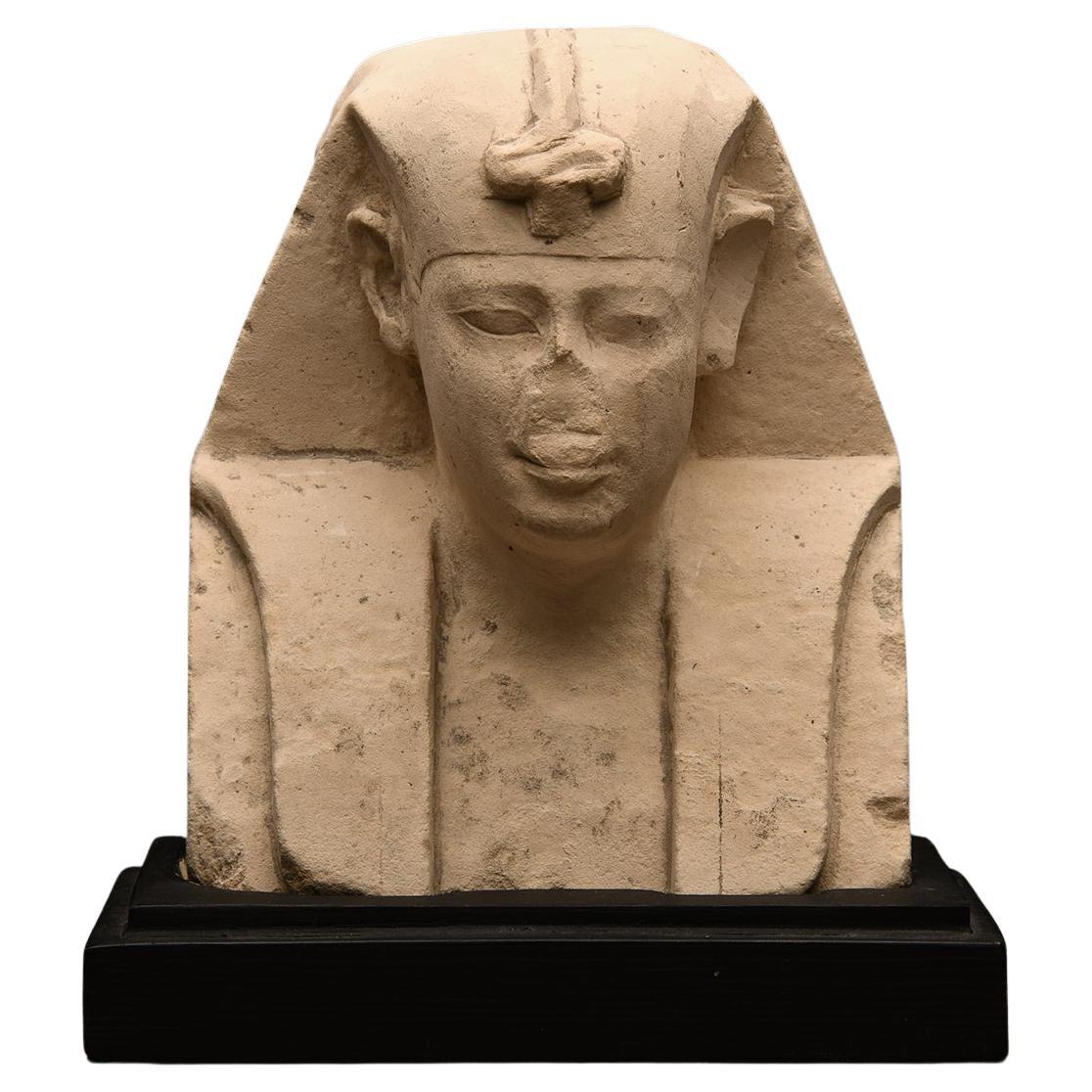
  • Dimensions:
    Height: 6.89 in (17.5 cm)Width: 6.3 in (16 cm)Depth: 4.14 in (10.5 cm)
  • Style:
    Egyptian (Of the Period)
  • Materials and Techniques:
  • Period:
  • Date of Manufacture:
    Late Period, 664 - 323 BC.
  • Condition:
    Wear consistent with age and use. Good state of conservation, without restorations, it shows wear on the nose and lips.
  • Seller Location:
    BARCELONA, ES
  • Reference Number:
    Seller: 210072031stDibs: LU10999250302492

More From This Seller

View All
Ancient Egypt, Nubia, Statue of Osiris in Granite

Ancient Egypt, Nubia, Statue of Osiris in Granite

Located in BARCELONA, ES

52.5 cm with the stand. Provenance - Private collection, Paris, France, 1975. - Private collection, Petrus Hermanus Meeuws, Maastricht, 2002. - Private collection, Paris, France, ac...

Category

Antique 15th Century and Earlier Egyptian Egyptian Busts

Materials

Granite

Ancient Egyptian Sculpture of a Noble in Granodiorite

Ancient Egyptian Sculpture of a Noble in Granodiorite

Located in BARCELONA, ES

Sculpture of a Noble. Ancient Egypt · Old Kingdom, 4th – 6th Dynasty, 2625 – 2450 BC. Material: Granodiorite. Size: Height 126 cm; width 42 cm and weight 170 kg; 190 cm with the ...

Category

Antique 15th Century and Earlier Egyptian Egyptian Busts

Materials

Stone

Ancient Egypt Torso of a statue of a Naophorus in basalt

Ancient Egypt Torso of a statue of a Naophorus in basalt

Located in BARCELONA, ES

25 cm with the stand. Provenance - Private collection, Ole Wanscher (1903–1985), Denmark. Acquired around 1960. - Art Ancient, London. - Art Market, United Kingdom, 2024. Torso of...

Category

Antique 15th Century and Earlier Egyptian Egyptian Figurative Sculptures

Materials

Stone

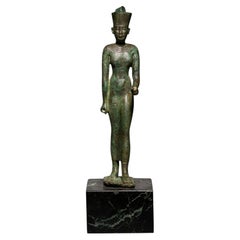
Ancient Egyptian Goddess Neith figure in bronze

Ancient Egyptian Goddess Neith figure in bronze

Located in BARCELONA, ES

Goddess Neith Ancient Egypt · Late Period, 664–332 BC. Bronze Bronze 21 cm with the stand. Condition: Good condition. It has a crack on the neck, which has been professionally repaired. Documentation: - Present in one of the photographs taken by Dutch photographer Willem van de Poll in October 1961 during a visit to Erich Maria Remarque and his wife, American actress Paulette Goddard, at their villa in Porto Ronco, Switzerland. - Certificate from Moreau Gobard dated July 13, 1978. Provenance: - Label on the bottom of the base, from the Erich Maria Remarque collection. Erich Maria Remarque (Germany, 1898 – Switzerland, 1970) was one of the most prominent European writers of the second third of the 20th century. Sent to the front during the First World War, he captured the horrors of the conflict in his immortal anti-war novel "All Quiet on the Western Front," published in 1929. His defiantly pacifist stance during the turbulent interwar period led Joseph Goebbels to label him unpatriotic in 1933; his works were removed from German bookstores, and their sale was banned throughout the country. Finally, his German citizenship was revoked in 1938, a year before the outbreak of the Second World War. By then, Remarque had gone into exile in Switzerland, fleeing the rise of Nazism. From there he went to the United States, where he obtained citizenship in 1947. A year later he settled permanently in Porto Ronco, Switzerland. Remarque continued writing and reflecting on the horrors of war for the rest of his career, forever marked by the violence that swept through Europe between the 1910s and 1940s. A firsthand connoisseur of the art world, Remarque was a great admirer of the Impressionists and, over time, became a scholar and expert collector. His collection included works by Toulouse-Lautrec, Monet, Degas, Renoir, Daumier, Cézanne, and Picasso, among others, as well as ancient Chinese bronzes and terracotta figurines, Coptic art...

Category

Antique 15th Century and Earlier Egyptian Egyptian Figurative Sculptures

Materials

Bronze

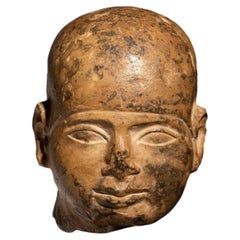
Ancient Egypt Sculpture of the God Ptah in hardened limestone

Ancient Egypt Sculpture of the God Ptah in hardened limestone

Located in BARCELONA, ES

16.4 cm with the stand. Provenance - Private collection, Marquis Pierre d'Archanges (1886 - 1973), France. Head of a sculpture, carved from a block of stone in round bulk with a d...

Category

Antique 15th Century and Earlier Egyptian Egyptian Figurative Sculptures

Materials

Limestone

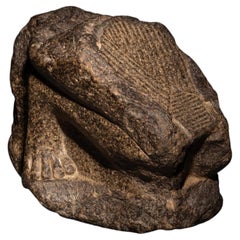
Ancient Egypt Bottom of a kneeling sculpture in black granite

Ancient Egypt Bottom of a kneeling sculpture in black granite

Located in BARCELONA, ES

17.5 cm with the stand. Provenance Private collection, London, United Kingdom. Acquired in the 1970s. Made of black granite, a recurring material in Egyptian statuary, this fragmen...

Category

Antique 15th Century and Earlier Egyptian Egyptian Figurative Sculptures

Materials

Granite

You May Also Like

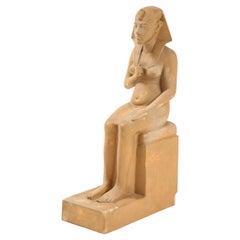
Grand Tour Statue of Pharaoh Hatshepsut After the Ancient Model

Grand Tour Statue of Pharaoh Hatshepsut After the Ancient Model

Located in Montreal, QC

Grand Tour statue of Pharaoh Hatshepsut after the ancient model. Hatshepsut was the fifth pharaoh of the Eighteenth Dynasty of Egypt and was the second historically confirmed female pharaoh, the first being Sobekneferu. The authentic ancient sculpture of Hatshepsut is located in Deir el-Bahri, Thebes, Egypt. Cast painted plaster. Provenance: The Collection of Charles de Beistegui, Château de Groussay. Charles de Beistegui (1894-1970), an enigmatic interior decorator whose passport was Spanish and whose wealth came from his family’s Mexican silver mines. Beistegui to indulge himself in the homes he decorated, such as his Chateau de Groussay...

Category

Antique Early 1900s Egyptian Egyptian Figurative Sculptures

Materials

Plaster

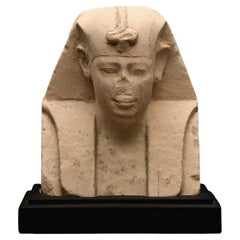
Ancient Egyptian Limestone Sculptor's Model

Ancient Egyptian Limestone Sculptor's Model

Located in Beverly Hills, CA

Heads of a king, like this one, became popular in the Late and Ptolemaic periods and may have been used as models for sculptors or votive offerings. In the form of a bust of a pharao...

Category

Antique 15th Century and Earlier Egyptian Egyptian Sculptures and Carvings

Materials

Limestone

Ancient Egyptian Sphinx Sculpture in Grey Marble, Ptolemaic Period

Ancient Egyptian Sphinx Sculpture in Grey Marble, Ptolemaic Period

Located in Beverly Hills, CA

A mythological composite creature that first appeared during the 4th Dynasty, the sphinx is one of the most iconic compositions in ancient Egyptian art. Featuring the body of a lion ...

Category

Antique 15th Century and Earlier Egyptian Egyptian Antiquities

Materials

Marble

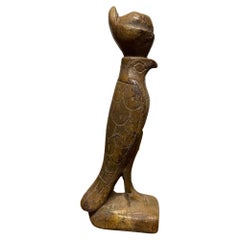
Grand Tour Ancient Egyptian Style Carved Soapstone Figure of Horus

Grand Tour Ancient Egyptian Style Carved Soapstone Figure of Horus

Located in Stamford, CT

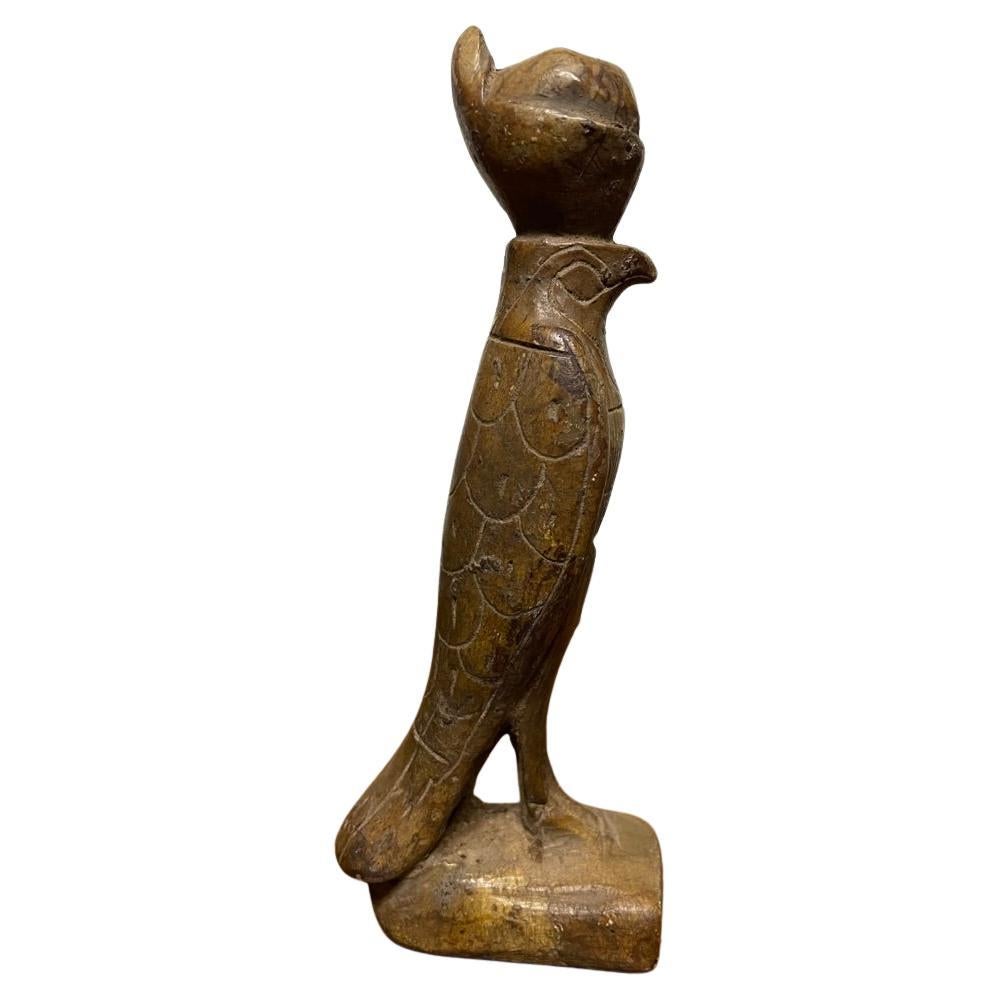
19th century Egyptian stone carving of Horus in the ancient style, the god in the form of a falcon. Quite possibly much earlier in date, it came from a collection that did have ancie...

Category

Antique Late 19th Century Egyptian Egyptian Animal Sculptures

Materials

Soapstone

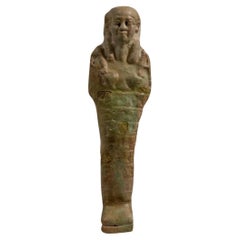
Ancient Egyptian Faience Ushabti Figure, c. 700-30 B.C.

Ancient Egyptian Faience Ushabti Figure, c. 700-30 B.C.

Located in Los Angeles, CA

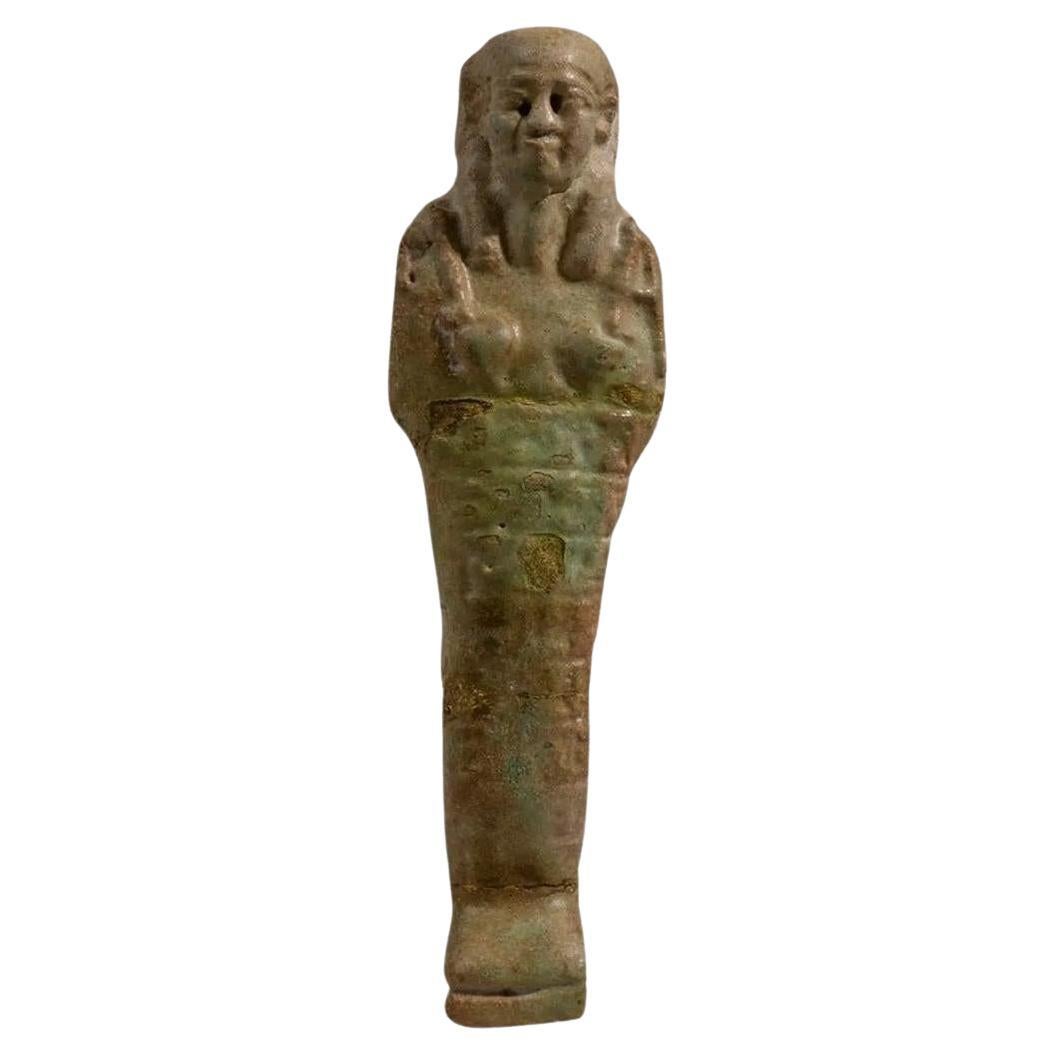
An impressive Ancient Egyptian Faience Ushabti figure, belonging to the c. 700-30 B.C. It consists of a molded pottery having a green glazed surface. The figure is wearing a royal wi...

Category

Antique 15th Century and Earlier Egyptian Figurative Sculptures

Materials

Pottery