Video Loading
Want more images or videos?
Request additional images or videos from the seller
1 of 11

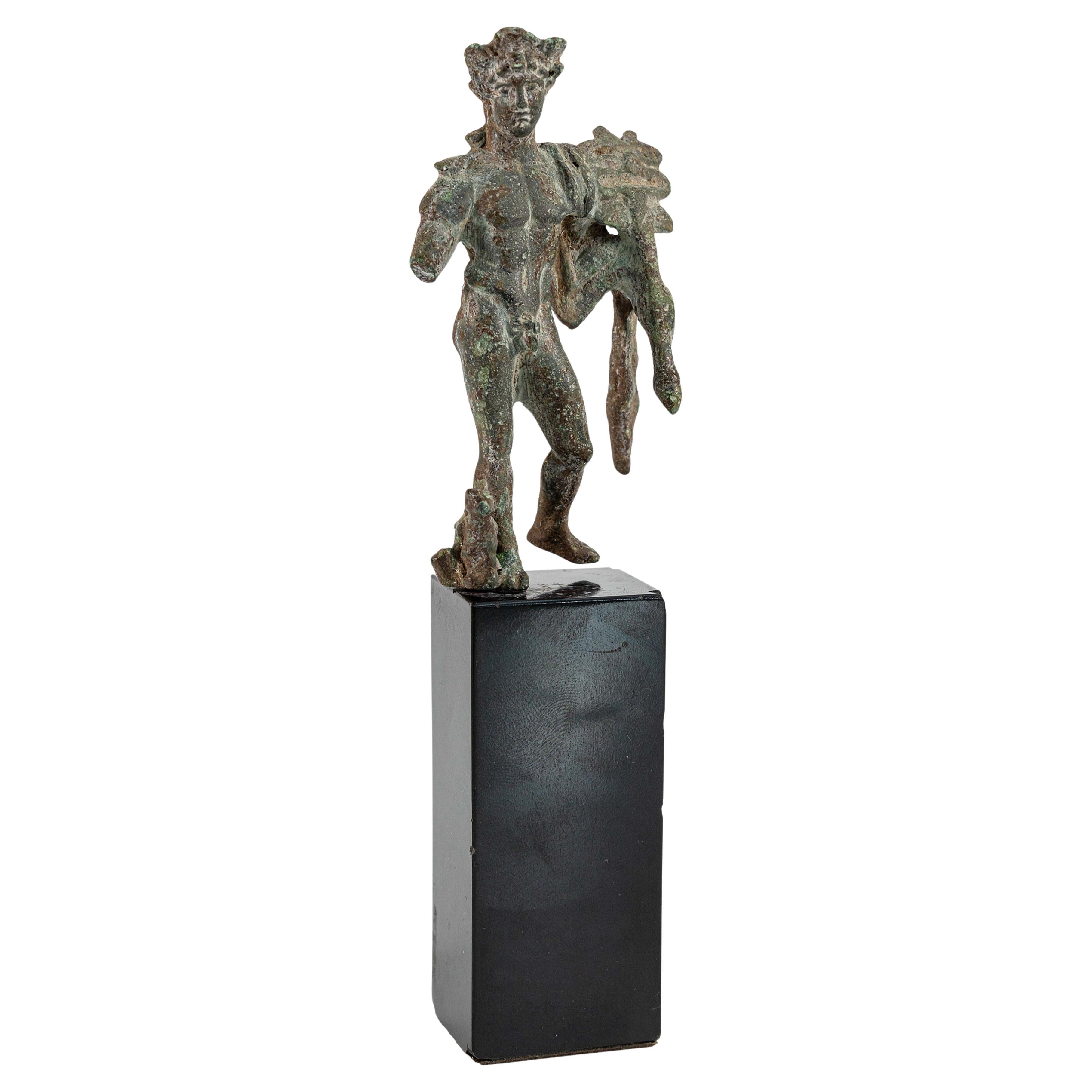
Figure of an actor. Ancient Greek, 3rd-2nd century BC. 9.8 cm. Bronze.

$21,157.05
£15,726.54
€18,000VAT Included
CA$29,659.32
A$30,116.61
CHF 17,192.17
MX$363,907.92
NOK 201,950.12
SEK 201,399.13
DKK 137,255.68

About the Item

Figure of an actor. Ancient Greek, 3rd-2nd century BC. 9.84 cm. Bronze. Condition: Intact, except for a crack in the ankle area. Provenance: - Private collection, Luxembourg, 1980. - Private collection, Germany, acquired at the Munich art market. - Royal-Athena Galleries, New York, 2012. - Private collection, Barbara S. Robinson, Ohio, acquired from the above on April 17, 2012. Copy of purchase invoice will be delivered. Description: Round bronze statuette representing an actor in an upright pose although slightly leaning backwards in an extremely naturalistic manner. The character expresses concentration and dignity, probably in the course of his performance on stage. He appears standing, with his hands joined in his lap, his legs together and his head slightly turned to his left. The figure stands on a pedestal in the shape of a low pillar, with four legs and moldings on its base and upper profile. The face is covered by a mask, which allows him to be identified as an actor. The long hair, worked with thick locks, the frown and the radial, flared beard, are the typical features of the mask of the slave character of the New Comedy, a genre focused on everyday themes, with characters from the family environment, in contrast with the mythological plots of previous times. This new type of theater, born at the end of the 4th century BC. and fully developed during Hellenism, it reflects the socio-political changes that were developing in Greece at that time, a time of political instability marked by great social and economic changes, after the Peloponnesian War and Macedonian domination. As is typical of an actor in this New Comedy, he wears a simple, everyday outfit, similar to that represented in other statuettes of the same type (fig. 1): short tunic with long sleeves, mantle rolled around the waist that crosses diagonally across the back to fall in front of the left shoulder, and fine leather boots. This type of figurines, made of bronze or terracotta, represent one of the most numerous manifestations of the taste for theater in Hellenistic Greece and have been found in various contexts, including funerary ones. They generally represent actors at the moment of performance, with perfectly detailed traditional masks and varied gestures, typical of the naturalism of Hellenistic art (figs. 2 and 3). Their popularity will be such that they will continue to proliferate in Roman times, following identical formal and expressive schemes and representing the same types (fig. 4). Theater was an artistic manifestation closely linked to philosophy and politics, key in the development of Greek and Roman thought. Through it, the god Dionysus/Bacchus, deity of wine, transformation and eternal life, was honored. Greek god of oriental origin, Dionysus embodied sensuality and the sensory, the alteration of the senses and elevation, achieved through the catharsis of theatrical performance or through the ecstasy caused by drunkenness. In both Greece and Rome, theater actors used masks in their performances. Made of stuccoed linen or terracotta and painted in bright colors, they followed conventional designs that allowed the represented character to be clearly identified, thanks to a very specific and different iconography for the characters of tragedy and comedy. The mask was not simply a functional object, but became the medium through which the actor channeled emotions, expressed characters, and transmitted stories to the audience. Representing universal gestures of pain, anger, joy or mockery, masks provided the key to understanding the complexities of the human experience that theater expresses. The most important role of the mask was that of transformation: an ordinary man could go beyond his true identity and become a mythological hero or a lustful satyr, an old fool or a beautiful young woman, a god or a slave. . In this costume he could say and do things that he would not say or do in everyday life, and he could present ridiculous, fantastic, inspiring, or even horrible or politically incorrect ideas and actions to the audience. The popularization and great appeal of theater led to the creation of a series of artistic objects with this theme; Common are terracotta and stone masks, sculpted as decorative elements; Small sculptures of actors, as in this case, were common, and even liturgies and theatrical scenes were represented in mosaics and frescoes. This piece has been made using the lost wax technique, a sculptural procedure by which a mold is first made from a prototype, traditionally carved in beeswax. The previous model is surrounded by a thick layer of soft material that solidifies, usually mud; Once hardened, it is placed inside an oven, which melts the wax figure, leaving it through specially created holes, and in its place molten metal is injected that takes the exact shape of the model. To extract the final piece it is necessary to destroy the mold. Comparative artworks: Fig. 1 Statuette of actor declaiming. Greek or Roman, 2nd-1st c. B.C. Bronze, 10.8 cm high. Museum of Fine Arts, Boston (USA), inv. 98.677. Fig. 2 Statuette of comic actor. Asia Minor, ca. 300 BC. - 30 A.D. Bronze, 7 cm high. British Museum, London, inv. 1842,0728.1104. Fig. 3 Support in the form of a chorus actor from a satirical play. Magna Graecia, ca. 350-300 B.C. Bronze, 15 cm high. British Museum, London, inv. 1849,0518.33. Fig. 4 Statuette of comic actor. Roman Empire, 1st-2nd c. A.D. Bronze, 7.2 cm high. Metropolitan Museum, New York, inv. 17.230.28.

  • Dimensions:
    Height: 3.88 in (9.84 cm)Width: 0.99 in (2.5 cm)Depth: 1.07 in (2.7 cm)
  • Style:
    Classical Greek (Of the Period)
  • Materials and Techniques:
    Bronze,Molded
  • Period:
  • Date of Manufacture:
    3rd-2nd century BC.
  • Condition:
    Wear consistent with age and use. Intact, except for a crack in the ankle area.
  • Seller Location:
    BARCELONA, ES
  • Reference Number:
    Seller: 220023751stDibs: LU10999251141012

More From This Seller

View All
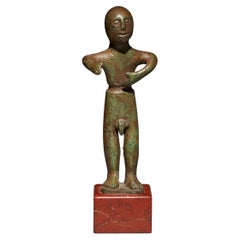
Magna Graecia Figure of an actor with a mask in terracotta

Magna Graecia Figure of an actor with a mask in terracotta

Located in BARCELONA, ES

Documents: Thermoluminescence test attached. Provenance: Private collection, France. Terracotta figure of an actor wearing a theatrical mask, produced in Magna Graecia and dating t...

Category

Antique 15th Century and Earlier Classical Greek Figurative Sculptures

Materials

Terracotta

Ancient Greek Figure of an actor with a theater mask in terracotta

Ancient Greek Figure of an actor with a theater mask in terracotta

Located in BARCELONA, ES

Provenance Private collection, France. Documents - Attached is thermoluminescence test. At the end of the 4th century BC, a style of clay modeling known as the "Tanagra style" deve...

Category

Antique 15th Century and Earlier Greek Classical Greek Figurative Sculpt...

Materials

Terracotta

Iberian, 3rd - 1st century BC. Ex-voto in bronze.

Iberian, 3rd - 1st century BC. Ex-voto in bronze.

Located in BARCELONA, ES

Ex-voto. Iberian · 3rd - 1st century BC. Bronze. 6.3 cm in height. Condition: Good state of preservation, without restorations. Provenance: - Private collection, Paris, France. ...

Category

Antique 15th Century and Earlier Archaistic Figurative Sculptures

Materials

Bronze

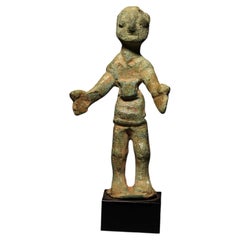
Iberian, 5h Century BC. Votive offering. 9.8 cm height.

Iberian, 5h Century BC. Votive offering. 9.8 cm height.

Located in BARCELONA, ES

Votive offering Iberian · 5h Century BC Bronze Height 9.8 cm Condition: Good condition. Provenance - Private collection, Mr. Pradesh, France. - La Reine Margot, Paris, 1982. - D...

Category

Antique 15th Century and Earlier Archaistic Figurative Sculptures

Materials

Bronze

Iberian Bronze Ex-Voto Sculpture, Archaistic Style, 1st Century BC

Iberian Bronze Ex-Voto Sculpture, Archaistic Style, 1st Century BC

Located in BARCELONA, ES

Ex-voto Iberian, 1st century BC. Bronze 7.2 cm height. Provenance - Private collection, Paris, France. Condition Good state of preservation. Description: The term Iberians re...

Category

Antique 15th Century and Earlier Archaistic Figurative Sculptures

Materials

Bronze

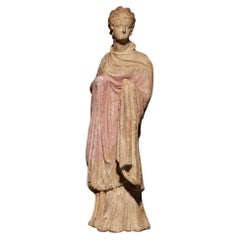
Magna Graecia Figure in terracotta

Magna Graecia Figure in terracotta

Located in BARCELONA, ES

Provenance Private collection, France. Documents - Attached is thermoluminescence test. The lady wears a long chiton, over the hem of which her toes peek out. Over the chiton, she ...

Category

Antique 15th Century and Earlier Classical Greek Figurative Sculptures

Materials

Terracotta

You May Also Like

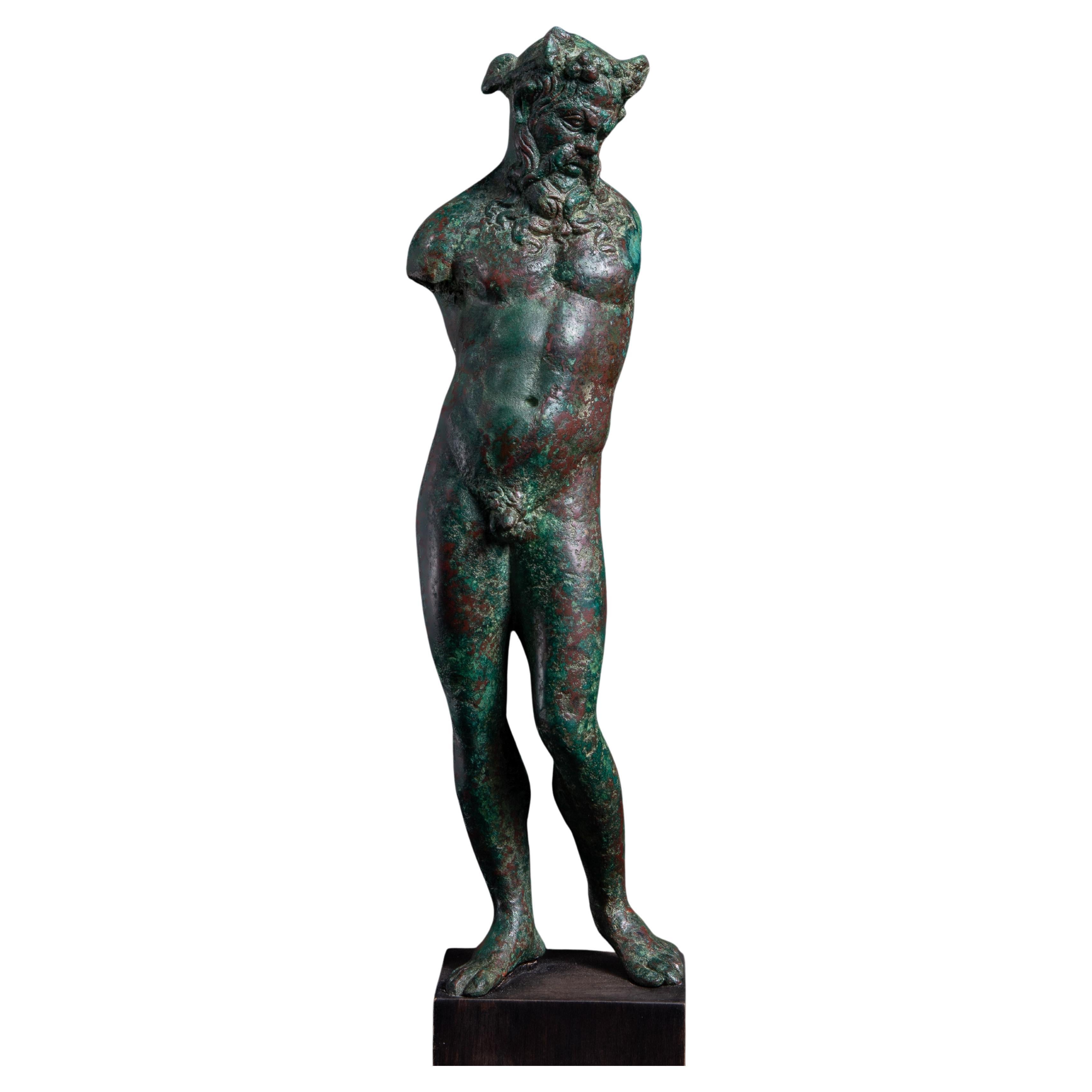
A Rare and Finely Detailed Greek Bronze Statuette of an Actor with Large Phallus

A Rare and Finely Detailed Greek Bronze Statuette of an Actor with Large Phallus

Located in London, GB

A Rare and Finely Detailed Greek Bronze Statuette of an Actor with Large Phallus Bronze Greek First half of 4th Century BC Size: 10.5cm high - 4¼ ins high Provenance: Ex Privat...

Category

Antique 15th Century and Earlier Greek Antiquities

Materials

Bronze

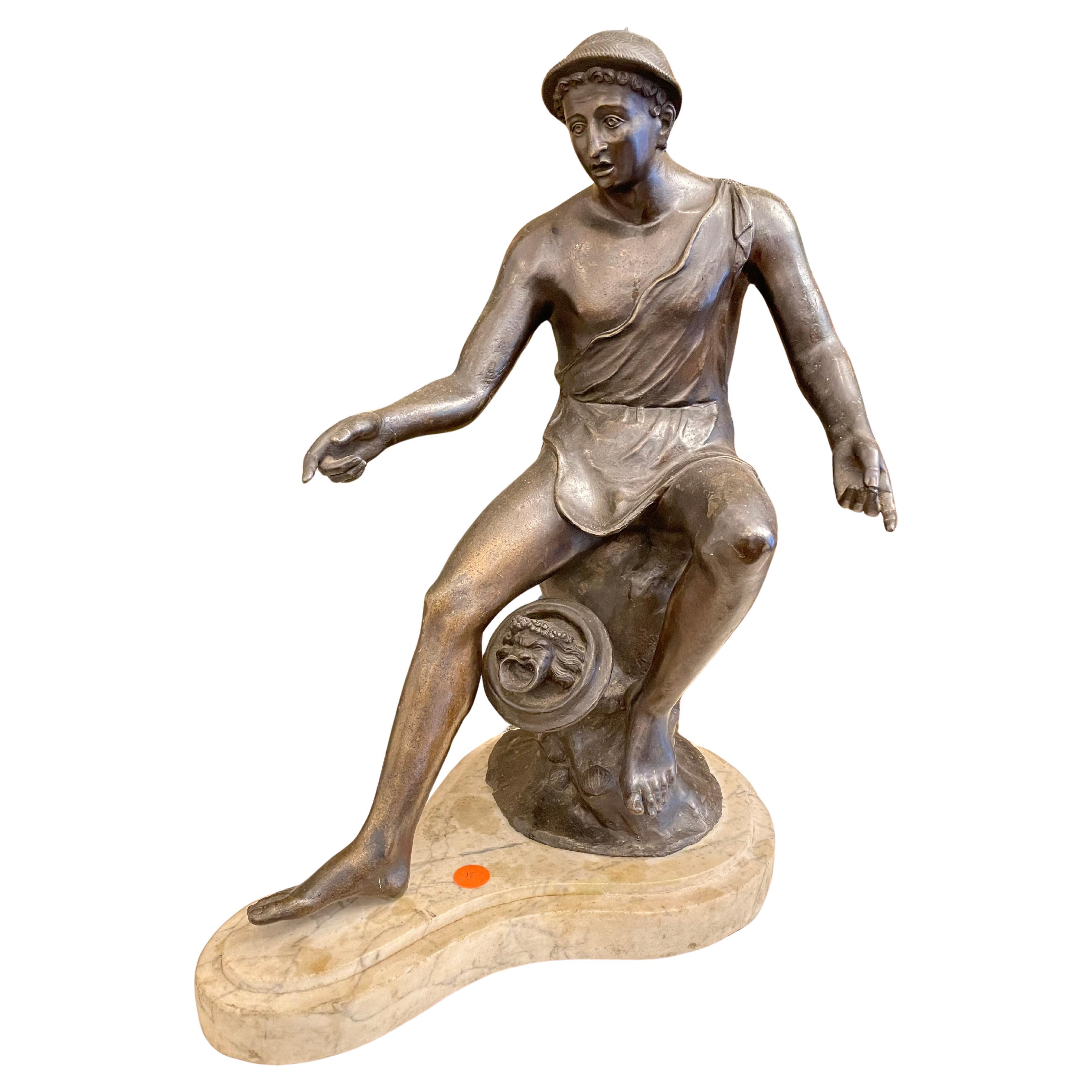
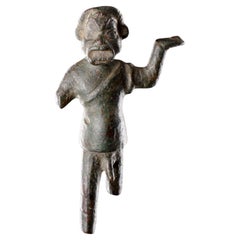
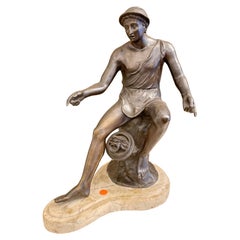
A Bronze Figure of the 1st Century CE Roman ‘Fisherman’, 19th Century

A Bronze Figure of the 1st Century CE Roman ‘Fisherman’, 19th Century

Located in ARMADALE, VIC

A Bronze Figure of the 1st Century CE Roman ‘Fisherman’, 19th Century Provenance: Private Australian Collection. Description: The male figure cast wearing a tunic and...

Category

Antique 19th Century French Figurative Sculptures

Materials

Bronze

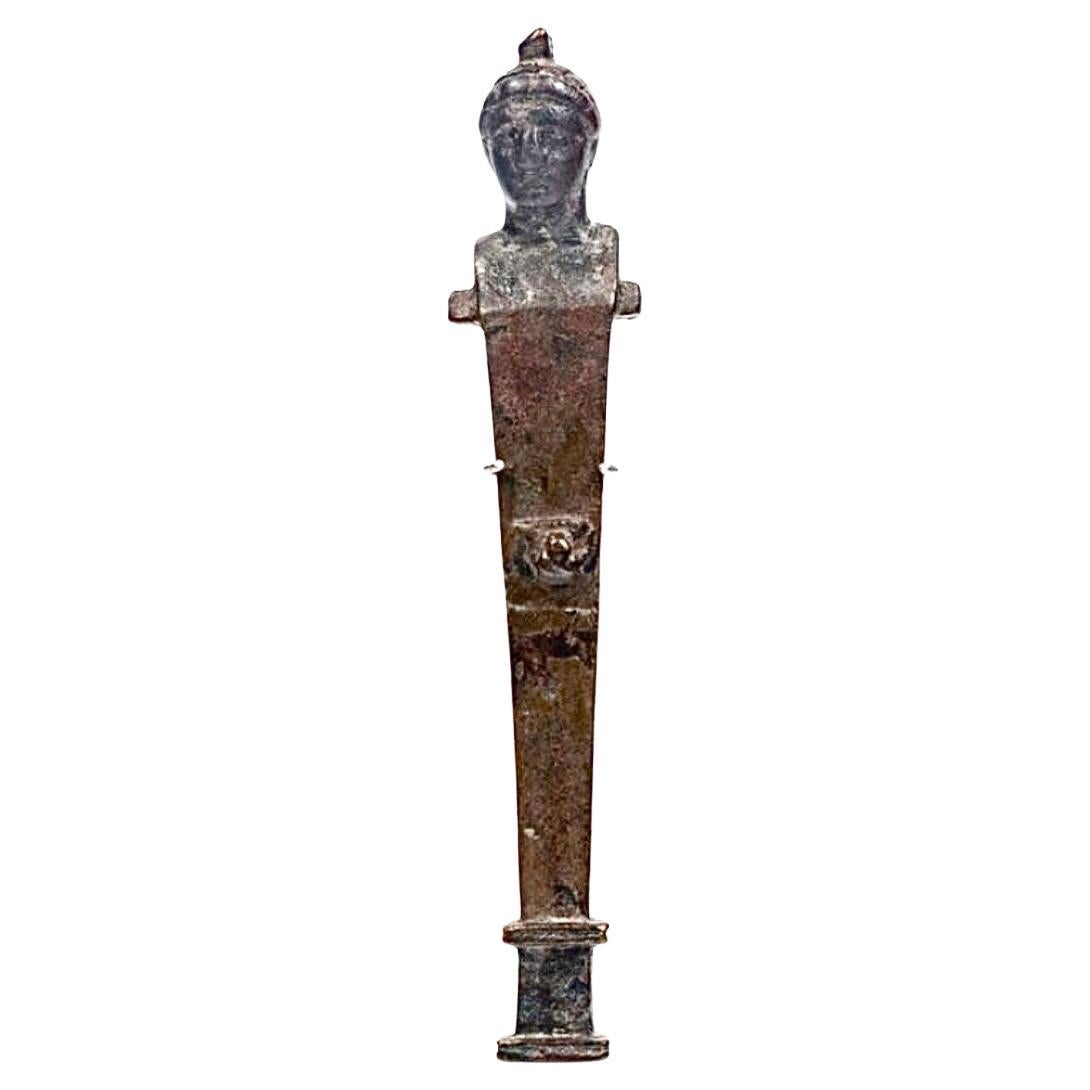
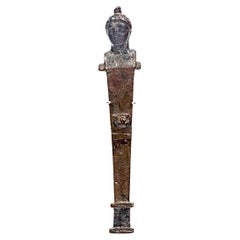
Ancient Roman Bronze Herm on Stand, 1st-4th Century AD

Ancient Roman Bronze Herm on Stand, 1st-4th Century AD

Located in Bradenton, FL

Ancient Roman Bronze Herm Statue dating from the 1st to 4th Century A.D. A herm was a statue consisting of a a head atop a square pillar, originally an artifact to honor the god Herm...

Category

Antique 15th Century and Earlier Italian Classical Roman Figurative Scul...

Materials

Bronze

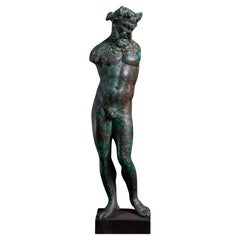
Hellenistic Bronze Statuette of Bearded Satyr

Hellenistic Bronze Statuette of Bearded Satyr

Located in London, GB

This finely cast bronze statuette of a bearded satyr - once exhibited at New York’s Metropolitan Museum - dates to the 2nd-3rd century BC. It is a superb example of the expressive na...

Category

Antique 15th Century and Earlier Classical Greek Figurative Sculptures

Materials

Bronze

1st Century AD Roman Bronze Statuette of Mercury Polykleitos Classic Antiquities

1st Century AD Roman Bronze Statuette of Mercury Polykleitos Classic Antiquities

Located in Keego Harbor, MI

A unique historic artifact – a Roman bronze statuette of Mercury, holding a caduceus, with ram at side, of Polykeitan style. Circa 1st Century A.D. Displayed on base pedestal. Polykl...

Category

Antique 15th Century and Earlier Italian Classical Roman Figurative Scul...

Materials

Bronze

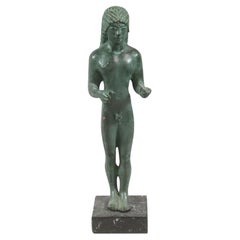
Bronze Statuette of a Kouros from the Sanctuary of Hera, Samos, Museums Replica

Bronze Statuette of a Kouros from the Sanctuary of Hera, Samos, Museums Replica

Located in Nuernberg, DE

Offered is a Mid-Century Modern Greek patinated sculpture. This Etruscan Greek Statue is an iconic Mid-Century Modern item of decor. It would look fabulous on a console table, in a b...

Category

Vintage 1960s German Mid-Century Modern Figurative Sculptures

Materials

Marble, Bronze