Want more images or videos?
Request additional images or videos from the seller
1 of 8

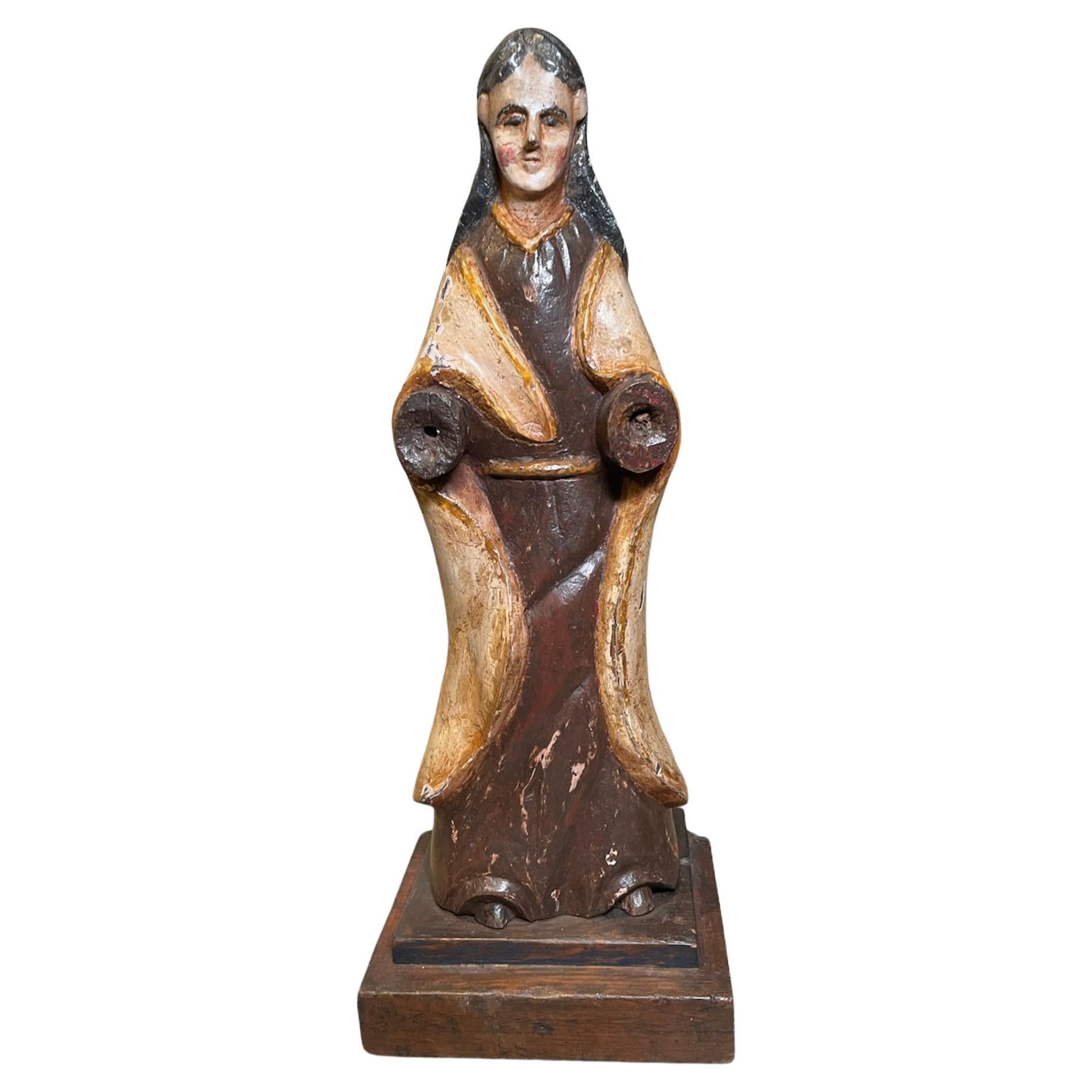
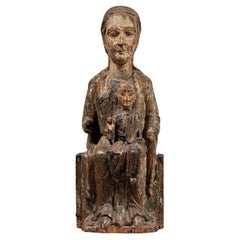
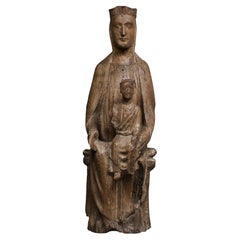
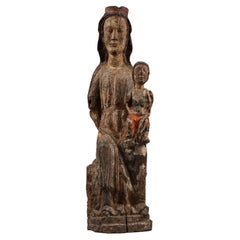
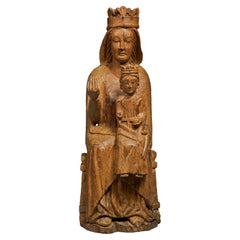
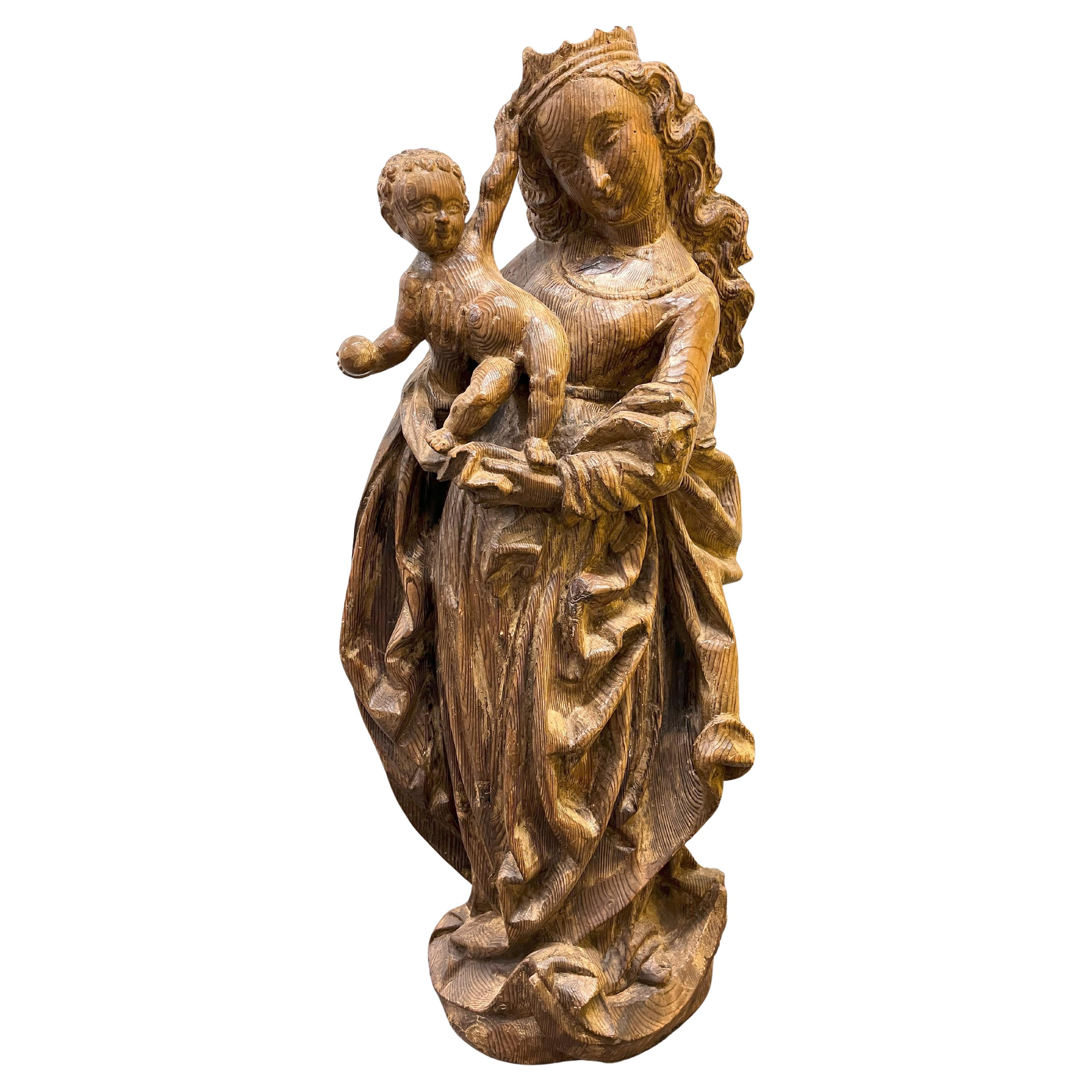
Madonna and Child Sedes Sapientiae “Throne of Wisdom” Devotional Wood Statue

$450
£340.24
€398.35
CA$640.24
A$651.24
CHF 373.74
MX$7,828.66
NOK 4,359.72
SEK 4,400.76
DKK 2,978.03

About the Item

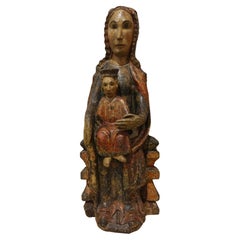
On offer is a hand-carved wooden statue representing the Madonna and Child. The Virgin Mary holds the infant Jesus in the style of traditional European Romanesque or early Gothic religious art. The composition follows a highly traditional medieval iconographic style known as Sedes Sapientiae. Mary is seated on a throne, acting physically and symbolically as the "Throne of Wisdom" for the Christ child seated on her lap. Both figures face directly forward. This rigid, symmetrical presentation is characteristic of early Christian and Romanesque sculptures, designed to emphasize divinity and solemnity rather than natural human interaction. Mary wears a crown-like headdress or circlet over her veil and an ornamental collar or necklace with carved circular details. The child also wears a matching crown or cap, signifying royalty and divine authority. The statue shows distinct, elongated vertical grain patterns consistent with a dense hardwood, likely oak, walnut, or fruitwood. It is carved from a single block of wood. The carver used elongated, simplified anatomy—evident in Mary's long, slender arms and fingers resting on the armrests—which mimics the architectural column-statues found in medieval cathedrals. The underside reveals small, dark pinholes, which are classic signs of historical woodworm. The rich, varied honey-brown color is the result of an applied stain or aged wax patina. While the sculpture heavily references 12th-to-14th-century European art, it is highly likely a 20th-century revival piece or a high-quality regional folk-art carving, common in regions with deep woodcarving traditions like Oberammergau in Germany, the Italian Alps or Spain. It was created as a devotional object or a decorative antiquarian piece, successfully capturing the austere, spiritual essence of medieval art. Signature/Maker’s mark: Nonexistent.
  • Dimensions:
    Height: 6.5 in (16.51 cm)Width: 2.25 in (5.72 cm)Depth: 2 in (5.08 cm)
  • Style:
    Gothic (In the Style Of)
  • Materials and Techniques:
  • Period:
  • Date of Manufacture:
    Circa 1950s-1980s
  • Condition:
    Wear consistent with age and use. Condition commensurate with age and use. Please review all photos.
  • Seller Location:
    San Francisco, CA
  • Reference Number:
    1stDibs: LU5199250774212

More From This Seller

View All
African or African American Wood Sculpture

African or African American Wood Sculpture

Located in San Francisco, CA

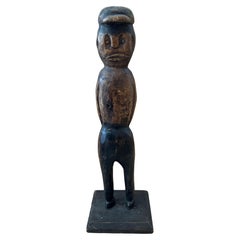
Really well done, cool hand carved man. I thought this was a piece of American folk art. I am now told that it’s possibly African in origin. So I’m not completely sure either way. I ...

Category

Early 20th Century African Folk Art Sculptures and Carvings

Materials

Hardwood

African Wood Sculpture

African Wood Sculpture

By Craft and Folk Art Museum

Located in San Francisco, CA

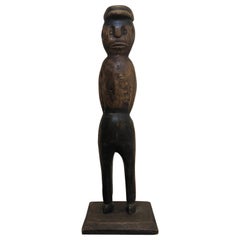
Very kool piece of African art. I am not exactly sure how old, but from bottom of base I would guess 1st quarter of 20th century. It is all wood and depicts wh...

Category

Vintage 1920s North American Folk Art Figurative Sculptures

Materials

Wood

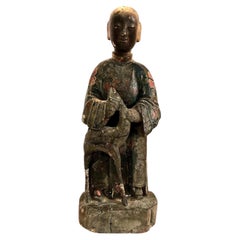
Chinese Qing Dynasty Lacquered and Polychrome Wood 18" Figure with a Deer

Chinese Qing Dynasty Lacquered and Polychrome Wood 18" Figure with a Deer

Located in San Francisco, CA

This sculpture is an antique Chinese lacquered and polychrome-painted wood figure dating from late in the Qing Dynasty (1644–1911). Hand-carved from a single piece of wood, set on an...

Category

Antique Late 19th Century Chinese Qing Figurative Sculptures

Materials

Wood, Lacquer, Paint

You May Also Like

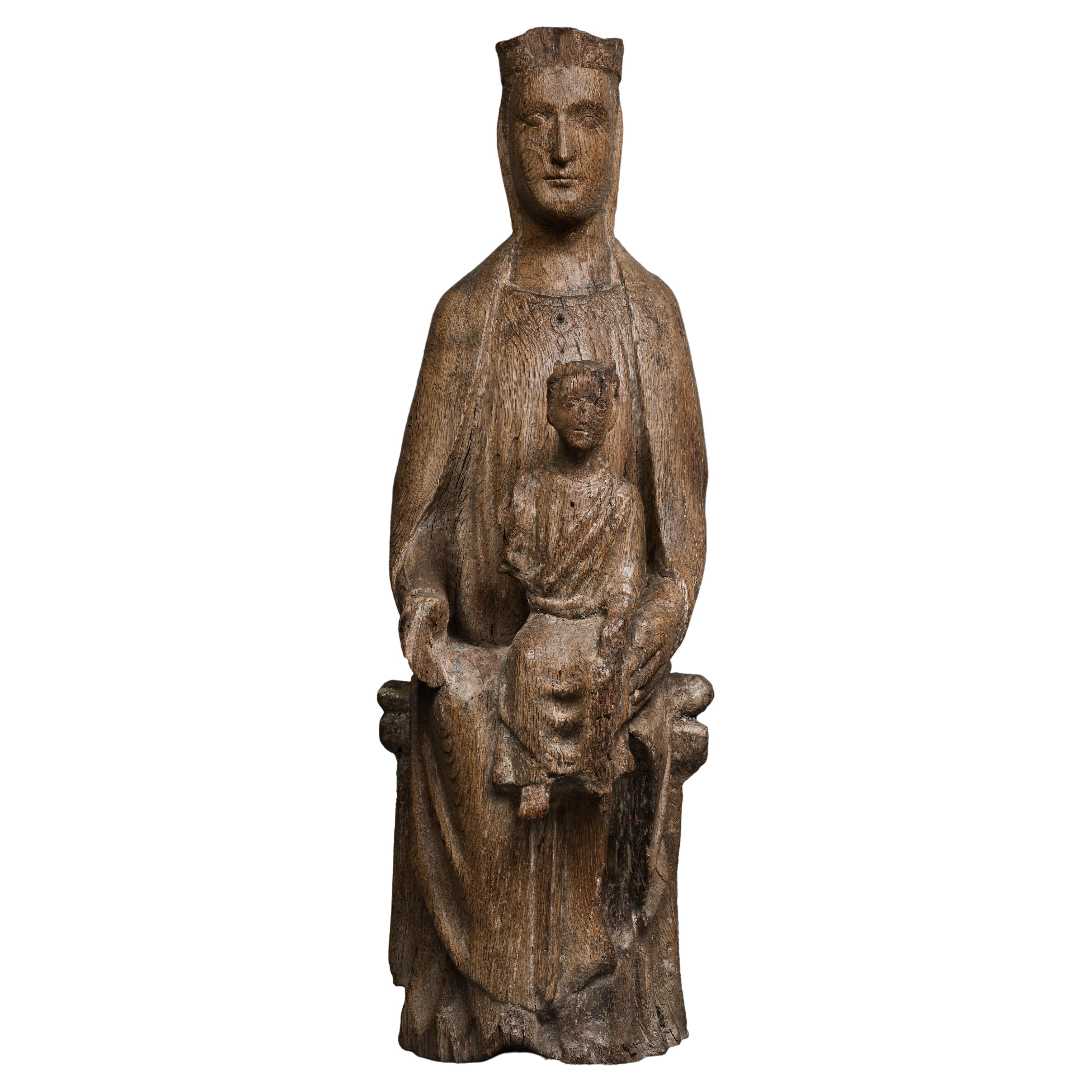
VIrgin and Child “Sedes Sapientiae" Seat of Holy Wisdom

VIrgin and Child “Sedes Sapientiae" Seat of Holy Wisdom

Located in PARIS, FR

Virgin and Child "Sedes Sapientiae" (Throne of Wisdom in Latin), carved in soft wood on the back. The Virgin Mary is depicted seated, holding the Infant Jesus on her lap: she thus s...

Category

Antique 15th Century and Earlier Italian Gothic Figurative Sculptures

Materials

Wood

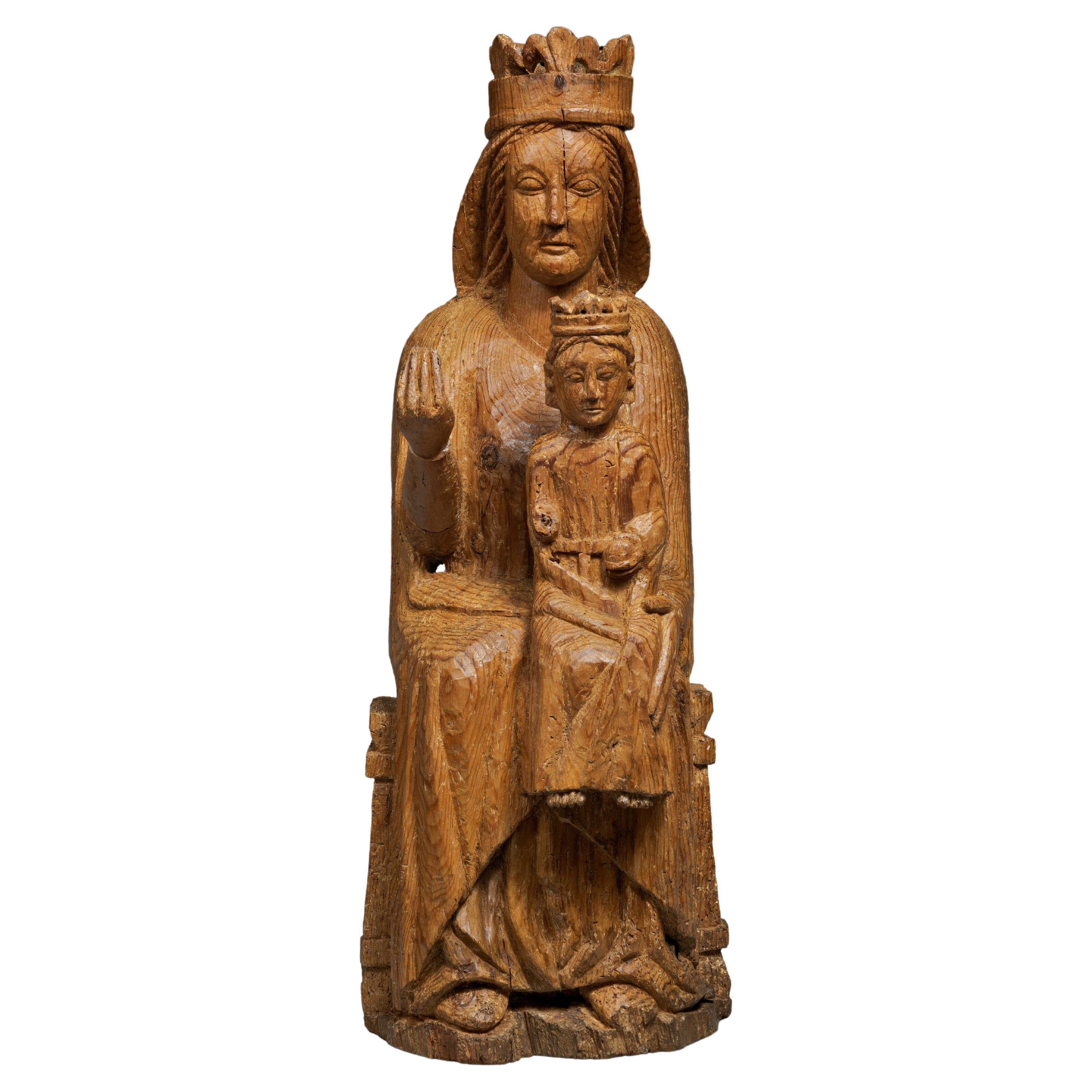
Virgin and Child "Sedes Sapientiae", Seat of Holy Wisdom

Virgin and Child "Sedes Sapientiae", Seat of Holy Wisdom

Located in Saint-Ouen, FR

Virgin and child sedes sapientiae, seat of holy wisdom Origin : Northern Spain, castile, navarre or galicia. Period : early 13th century. Heigh...

Category

Antique 15th Century and Earlier Figurative Sculptures

Materials

Wood

Virgin and Child in Majesty, also known as "Sedes Sapientae"

Virgin and Child in Majesty, also known as "Sedes Sapientae"

Located in Saint-Ouen, FR

VIRGIN AND CHILD IN MAJESTY, ALSO KNOWN AS "SEDES SAPIENTIAE"   ORIGIN : SPAIN, CATALOGNE PERIOD: EARLY 13th CENTURY   Height :  95 cm Width : 32 cm Depth : 28 cm   Softwood No polychromy     In the middle of the 12th century, the Virgin took her place in churches, seated in Majesty, serving as a throne for her son Jesus. She is then called Sedes Sapientiae, meaning the Throne of Wisdom. At that time, she is not represented for herself and only exists because she has been designated as Theotokos, the mother of God, at the Council of Ephesus in 431, where the divine nature of Christ was proclaimed from his birth.   The upright and perfectly hieratic bust of this Virgin and Child in Majesty is seated on a throne-bench. She is dressed in a tunic with a rounded neckline and covered with a fine mantle placed on her narrow shoulders. The supple and natural drapery follows the lines of the body.   Large curls frame her face with delicate and regular features, a long straight nose, almond-shaped eyes, and small lips.   She supports the Infant Jesus with her left hand. Like his mother, he is dressed in a long tunic, and his little feet are visible in the folds. He holds a small sphere in his left hand, while with his right hand, he gestures in blessing. The face of Christ bears a strong resemblance to his mother’s one, and he gives a slight smile.   The position of the Child is no longer as hieratic, nor frontal or central as in the early 12th century, but his face still turns towards the faithful.   The 13th century indeed emerges as a period of transition in the artistic domain. The statuary, while retaining certain characteristics still belonging to the habits of the previous century, also develops new formal solutions.   As a result, Mary maintains a hieratic and frontal position, while her son shifts to place himself well to the left on her knee. Similarly, while the Virgin seems perfectly still, Jesus, on the other hand, appears much more animated, especially in the positioning of his hands. His left hand holds the orb, and judging by the raised right arm directed towards the faithful, one can easily imagine that he was making a gesture of blessing.   The influence of the Sedes Sapientiae from previous centuries still seems particularly prevalent in this work.   These few characteristics allow dating this Spanish Virgin...

Category

Antique 15th Century and Earlier Spanish Gothic Figurative Sculptures
Materials

Softwood

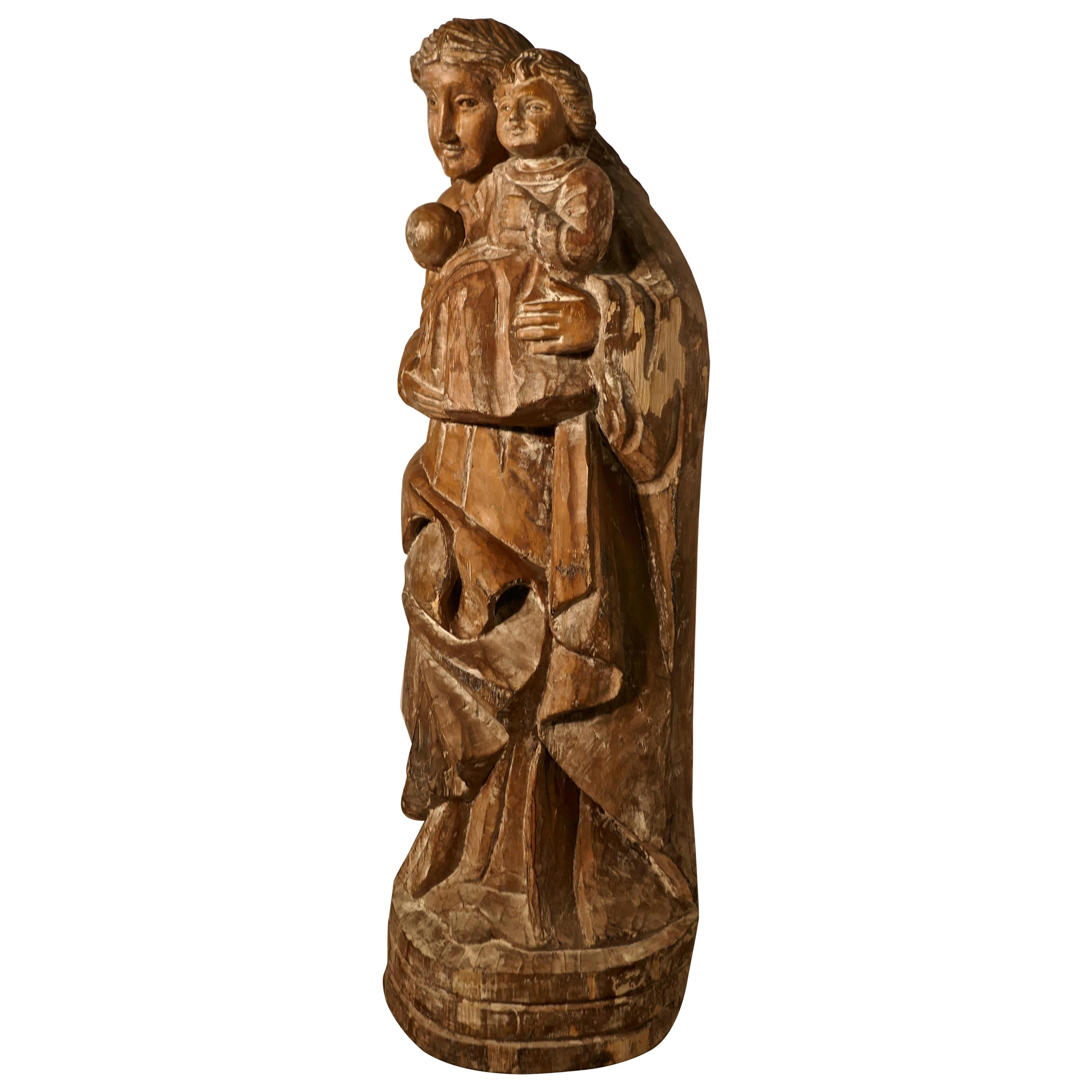
Religious Wood Statue of Our Lady and Child, 20th Century

Religious Wood Statue of Our Lady and Child, 20th Century

Located in Lisbon, PT

This captivating 20th-century wood sculpture depicts Our Lady holding the Child Jesus, crafted from warm wood with a timeless elegance. Standing at 84 cm tall, the statue exudes a s...

Category

20th Century Portuguese Baroque Figurative Sculptures
Materials

Wood