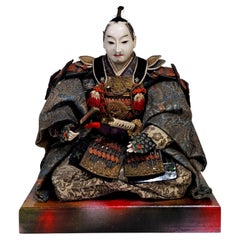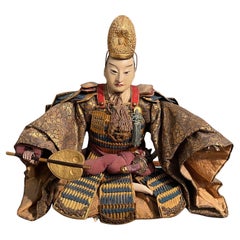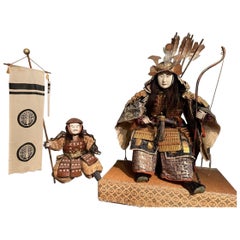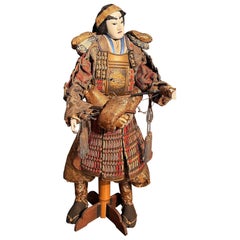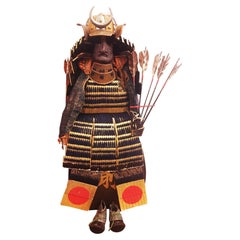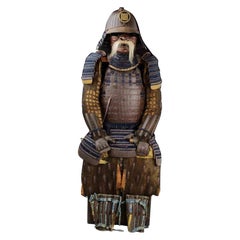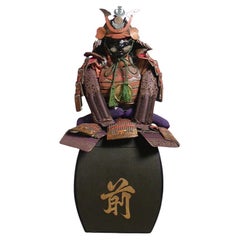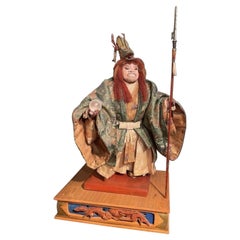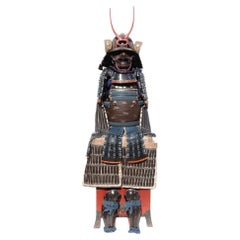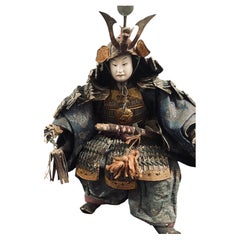
Japanese Edo Musha Ningyō Samurai Warrior Doll with Armor, circa 1750
Located in New York, NY
Ningyō Samurai Warrior Doll with Armor, circa 1750 A rare and exceptional Japanese Musha Ningyō (Samurai Warrior Doll), dating to the Edo Period (1603–1868), circa 1750. This outstanding 18th-century warrior doll represents the finest tradition of Japanese Musha Ningyō artistry. These ceremonial warrior figures were traditionally displayed during Tango no Sekku (Boys’ Day Festival), symbolizing bravery, protection, strength, and the noble virtues of the samurai class. The figure features a beautifully carved wooden head finished with fine white gofun — a traditional Japanese technique using layers of refined shell pigment to achieve a smooth, luminous surface. The powerful facial expression, sharply painted eyes, and commanding presence reflect the exceptional craftsmanship of Edo Period doll makers. The warrior is presented seated on a traditional military camp stool and dressed in elaborate samurai armor with intricate metal fittings, lacquered elements, and richly detailed decoration. The impressive helmet features a dramatic crescent moon crest with a dragon ornament, symbols historically associated with power, courage, and protection. The figure retains its original saihai battle command baton, carried by samurai leaders to direct troops. The costume is composed of luxurious silk brocade textiles with beautifully patterned robes, detailed armor plates, and faux fur boots...
Antique 1750s Japanese Japonisme Sculptures and Carvings
Silk, Wood