Want more images or videos?
Request additional images or videos from the seller
1 of 14

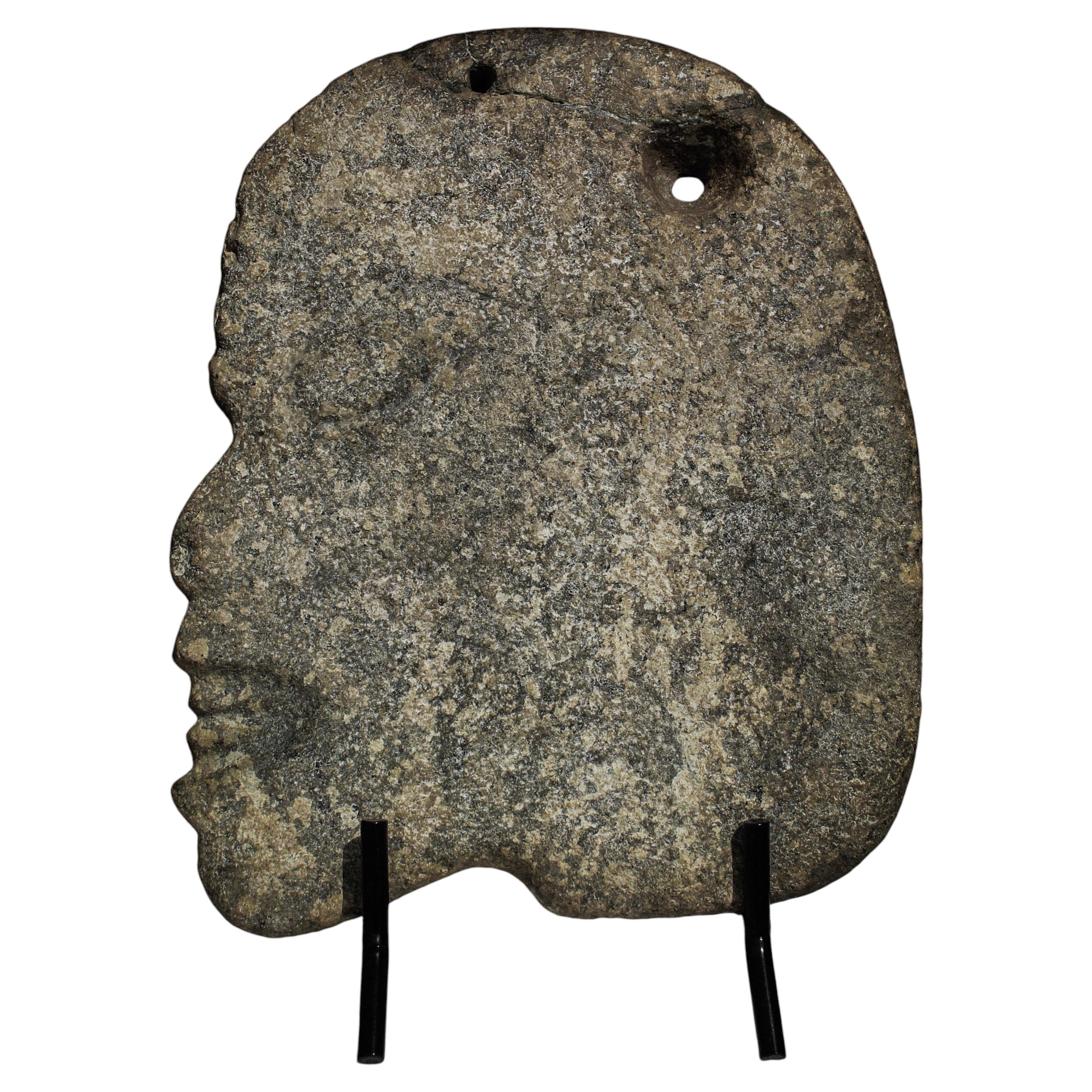
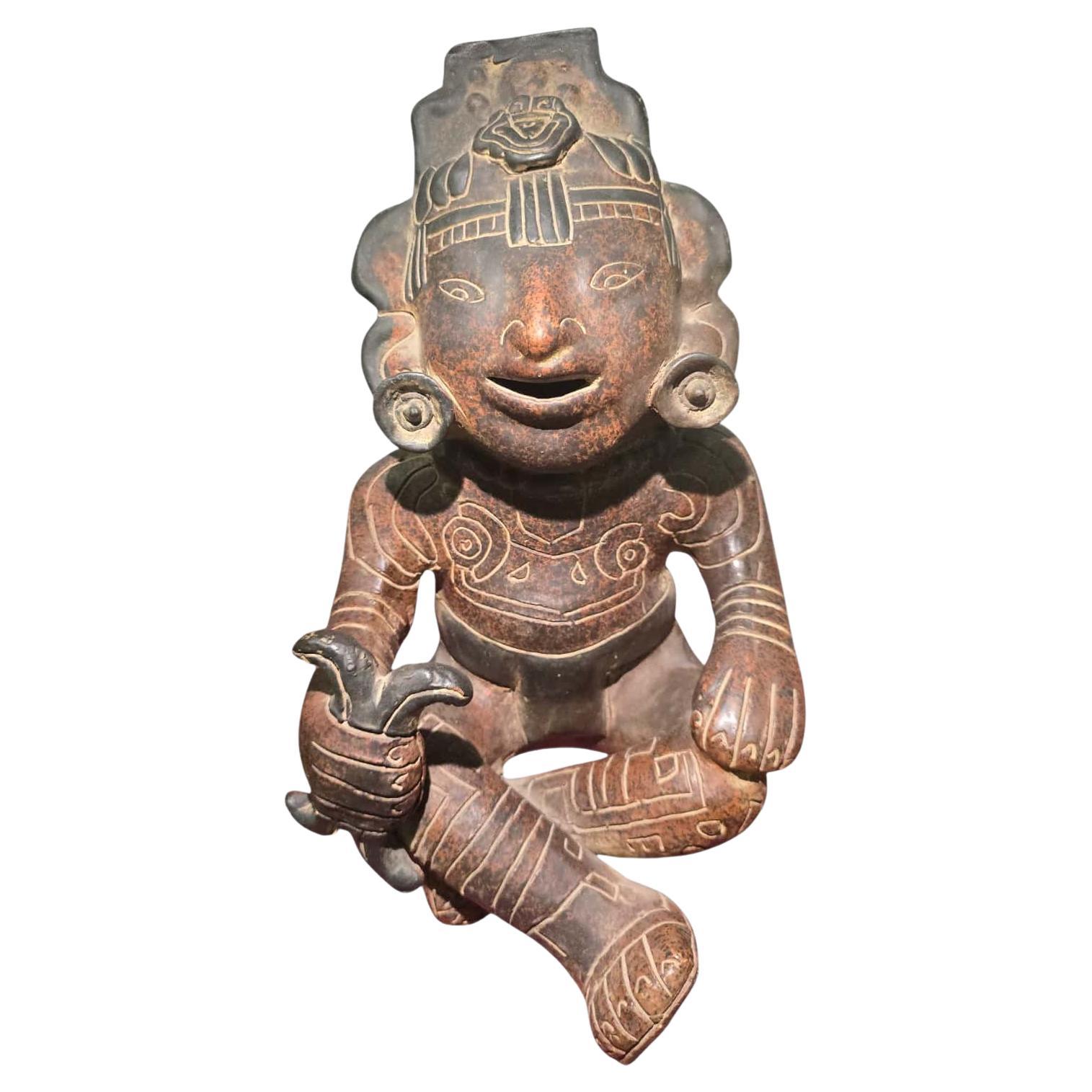
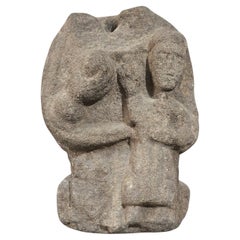
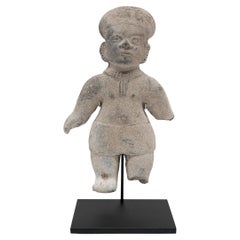
Stone Carved Anthropomorphic Sculpture From The Recuay Culture Peru 400bc-400ac

$51,923.89
£38,371.18
€44,000VAT Included
CA$72,052.19
A$73,359.58
CHF 42,248.50
MX$883,926.36
NOK 490,296.54
SEK 494,678.91
DKK 335,459.49

About the Item

ANTHROPOMORPHIC SCULPTURE CARVED IN STONE OF THE RECUAY CULTURE PERU 400BC-400AC Recuay is an archaeological culture of Ancient Peru that developed in the Sierra of the current Peruvian department of Áncash between 200 AD. C. until 600 d. C. It corresponds to the stage called Regional Developments, it has also been called the Huaylas or Santa culture. Like the other Early Intermediate cultures, little is known about this culture. The most accepted position is that it was an extension of the Chavin culture, after the influence of the "White on Red" style in the region. Regarding the political aspect of the recuay, there is a hypothesis that questions their autonomy and maintains that Recuay would be part of one of the many political units that made up the Moche state. The recuay style, characterized by its ceramics and stone sculpture, was initially described by Eduard Seler in 1893, based on ceramic specimens brought to the Ethnographic Museum in Berlin by Mariano M. Macedo. Seler named this style of pottery Recuay, based on the report that these pieces had been found in the town of Recuay. Later studies showed that this characteristic pottery was not originally from Recuay but from Copa, near Carhuaz, for which reason the name change to that of this town was proposed. Eventually the name of Huaylas was used for this culture. In 1919 Julio C. Tello explored the area and recovered lithic sculptures and Recuay-type ceramics. In the 1960s Rafael Larco Hoyle proposed changing the names of Recuay and Copa to Santa, arguing that the Recuay style had originated in the coastal regions of the Santa Valley. However, the name Recuay has persisted. Its chronology is also highly debatable. The time of its origin between 0 and 200 AD is discussed. C. and its end or collapse is commonly set to 600 d. C. probably caused by the invasion of the Huari conquerors. It encompassed almost the entire Callejón de Huaylas, a narrow valley fed by the Santa River and enclosed between two mountain ranges, the Cordillera Blanca to the west and the Cordillera Negra to the east. Its influence extended to the east to the Marañón river basin and to the west to the upper parts of the Santa, Casma and Huarmey valleys. To the north it reached the town of Pashash, in the province of Pallasca. The Copa area, Marca district, Recuay province, Ancash department seems to have been the center or main nucleus of cohesion of this culture. The name of the culture would then be justified, derived from the province of the same name. Other important settlements were those of Huilcahuaín (near the current city of Ancash), Cátac, Araucay, Tambo, Jancu, Upayacu and Pashash (near the current city of Cabana). Its main form of expression of art was through stone work (carving and masonry), inherited from its predecessor, the Chavín culture. In addition, they made sculptures in lumps that represent warriors with shields or trophy heads, with which they decorated their complex architectural constructions. They also made white clay pottery in a wide variety of shapes and a textile that reproduced the designs of the pottery. Title: Chair of power. Object: Ceremonial chair carved in stone, with a U-shaped seat, supported by a crouching ZOOMORPHIC figure. Typology: Lithic sculpture. Culture: Manteña (Manabi, Ecuador). Dimensions: 37X26X28CM Technique: Carving on stone block Provenance: Collection Dr. Professor: Udo Oberem (1923-1986) On November 24, 1986, Udo Oberem died suddenly and unexpectedly in Bonn, just before his 63rd birthday. The deceased was a number professor of ethnology — with special regard for Americanist studies („Alt-Amerikanistik") - at the Faculty of Philosophy of the University of Bonn and director of the Institute of Anthropology Cultural.
  • Dimensions:
    Height: 14.57 in (37 cm)Width: 10.24 in (26 cm)Depth: 11.03 in (28 cm)
  • Materials and Techniques:
  • Period:
  • Date of Manufacture:
    400
  • Condition:
  • Seller Location:
    Madrid, ES
  • Reference Number:
    1stDibs: LU5779235227422

More From This Seller

View All
Large Decorative Pre-Columbian Style Figure – 20th Century

Large Decorative Pre-Columbian Style Figure – 20th Century

Located in Madrid, ES

Impressive Pre-Columbian style figure from the 20th century, crafted in homage to ancient Mesoamerican art. The piece showcases stylized facial features and traditional ornamentation...

Category

Vintage 1950s Figurative Sculptures

Materials

Terracotta

Manteña Chair of Power Cachique of Prehispanic Ecuador 900 AD

Manteña Chair of Power Cachique of Prehispanic Ecuador 900 AD

Located in Madrid, ES

MANTEÑA CHAIR OF POWER CACHIQUE OF PREHISPANIC ECUADOR The chair has been carved from a block of detrital sedimentary rock, in which fossil remains can be seen. It is a calcarenite o...

Category

Antique 15th Century and Earlier Animal Sculptures

Materials

Stone

14th Century Romanesque Carved Stone Sculpture of the Virgin and Child

14th Century Romanesque Carved Stone Sculpture of the Virgin and Child

Located in Madrid, ES

Important and rare Romanesque stone sculpture, dating from the 14th century, depicting the Virgin Mary holding the Christ Child. Hand-carved in solid stone, the piece reflects the tr...

Category

Antique 15th Century and Earlier Figurative Sculptures

Materials

Stone

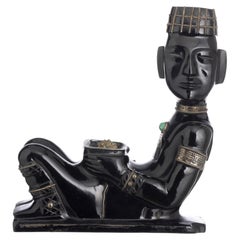
Beautiful CHACMOOL 20th Century Mexican Sculpture

Beautiful CHACMOOL 20th Century Mexican Sculpture

Located in Madrid, ES

CHACMOOL 20th Century Mexican onyx sculpture with silver and hard stone inlays. Minor flaws on the base. Dimensions: 20 x 17 cm good condition

Category

20th Century Mexican Modern Figurative Sculptures

Materials

Onyx

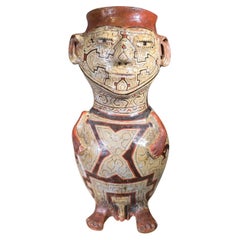
Large Shipibo vase in Peruvian argile – Début of the 20th century

Large Shipibo vase in Peruvian argile – Début of the 20th century

Located in Madrid, ES

Superb vase in traditional argile, made by the Shipibo-Conibo artisans of the Ucayali region in Pérou, at the debut of the 20th century. Ce se présente des motifs caractéristiques de...

Category

Vintage 1940s Figurative Sculptures

Materials

Terracotta

You May Also Like

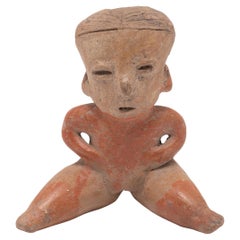
Nayarit Chinesco-Style Figure

Nayarit Chinesco-Style Figure

Located in Chicago, IL

This seated effigy figure was crafted in 300 BC to 300 AD from the ancient Nayarit region of Mexico and was likely used as a ritual or burial offering. The ceramic works of the Chine...

Category

Antique 15th Century and Earlier Mexican Pre-Columbian Figurative Sculpt...

Materials

Ceramic

Teotihuacan Redware Figure

Teotihuacan Redware Figure

Located in Chicago, IL

This intriguing redware figure was crafted in 400 A.D. from the ancient Teotihuacan region of Mexico. Earthenware figurines were made in great abundance throughout Teotihuacan's history. After 250 A.D. objects made from clay increased dramatically, serving a wide variety of purposes and functions from religious rituals to burial offerings. Figurines like this commemorated important people and events within the city of Teotihuacan and other parts of Mesoamerica, portraying individuals of different rank and status such as soldiers, merchants, bureaucrats, and occasionally divinities. This figure is adorned with an elaborate headdress, a thick beaded necklace...

Category

Antique 15th Century and Earlier Mexican Pre-Columbian Figurative Sculpt...

Materials

Ceramic

American Ancient Anasazi "Human Effigy" Male Stone Sculpture

American Ancient Anasazi "Human Effigy" Male Stone Sculpture

Located in South Burlington, VT

A Native American Human Effigy male statue, El Paso, Texas , sandstone, circa 1500 AD or before (1000-1400 AD) Dimensions: 11.25 inches tall and 4.5 in...

Category

Antique 15th Century and Earlier American Native American Objects

Materials

Sandstone

Vintage Boho Monumental Mayan Carved Stone Sculpture of Man

Vintage Boho Monumental Mayan Carved Stone Sculpture of Man

Located in West Palm Beach, FL

Immerse your space in the rich history and artistic power of this Vintage Boho Monumental Mayan Carved Stone Sculpture of Man. This extraordinary piece, hand-carved from substantial ...

Category

Early 20th Century Mexican Figurative Sculptures

Materials

Stone

Pre Columbian Large Jalisco Figure West Mexico Circa B.C. 100-300 A.D

Pre Columbian Large Jalisco Figure West Mexico Circa B.C. 100-300 A.D

Located in London, GB

A Pre Columbian Jalisco warrior figure Jalisco West Mexico circa B.C. 100-300 A.D, A stunning large pottery warrior figure wearing a banded headdress with disco arm ornaments , ...

Category

Antique 15th Century and Earlier Mexican Antiquities

Materials

Pottery

La Tolita-Tumaco Standing Female Figure

La Tolita-Tumaco Standing Female Figure

Located in Chicago, IL

This standing effigy was crafted in 500 A.D. - 1000 A.D. Mesoamerica using the gray clay paste that characterizes La Tolita-Tumaco ceramics of early Colombia-Ecuador. The art of La Tolita-Tumaco civilization is considered one of the most developed of the pre-Columbian period as metalwork and ceramics were the most popular form of cultural expression. The ceramic creations of this culture were often based on the human figure to create portraits of people and realistic daily scenes of life cycles and the human condition. This figure appears to be wearing a loincloth and is adorned with a beaded necklace and an elaborate coiffure or headdress. There are holes lining each ear indicating the potential use of ear spools...

Category

Antique 15th Century and Earlier South American Pre-Columbian Figurative...

Materials

Ceramic