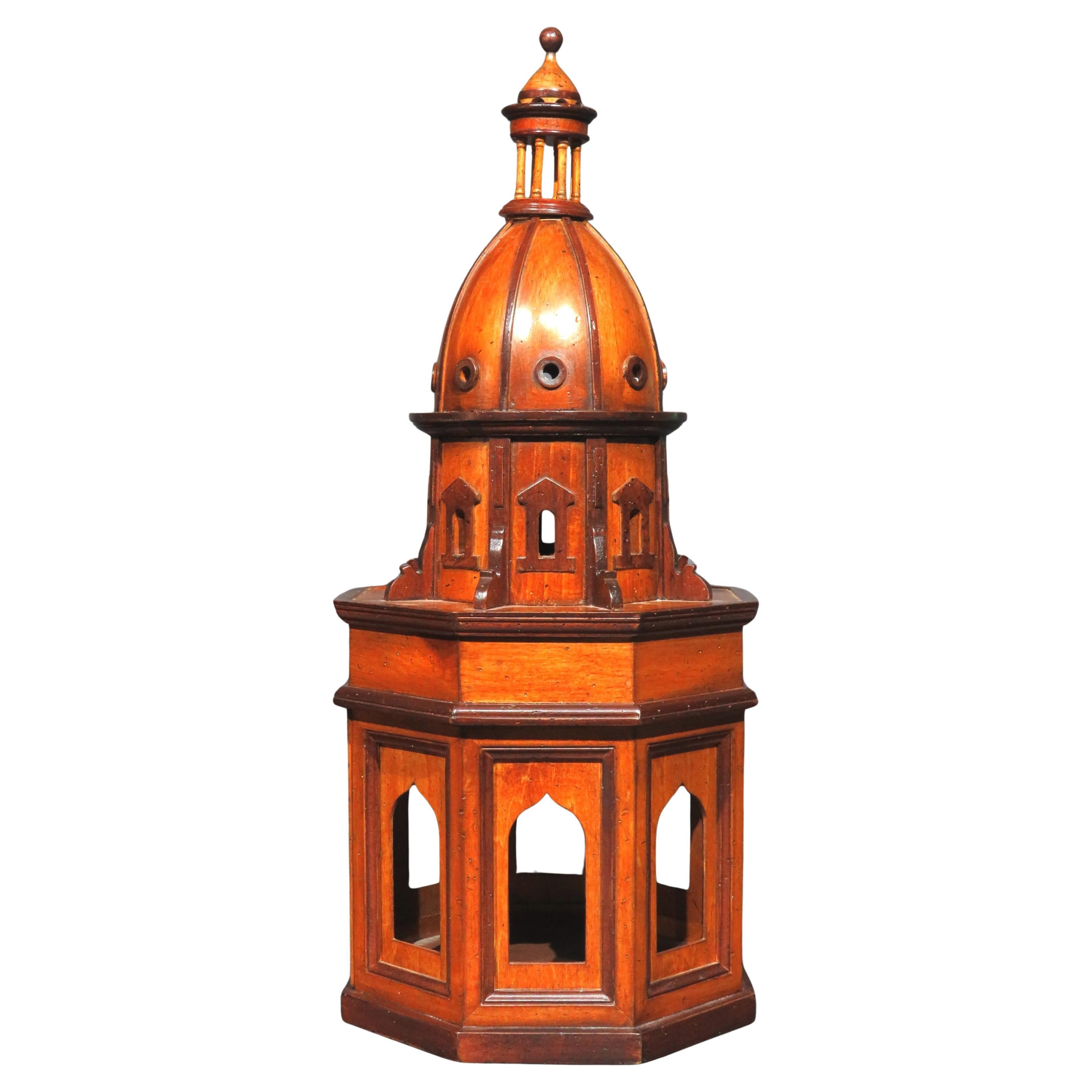
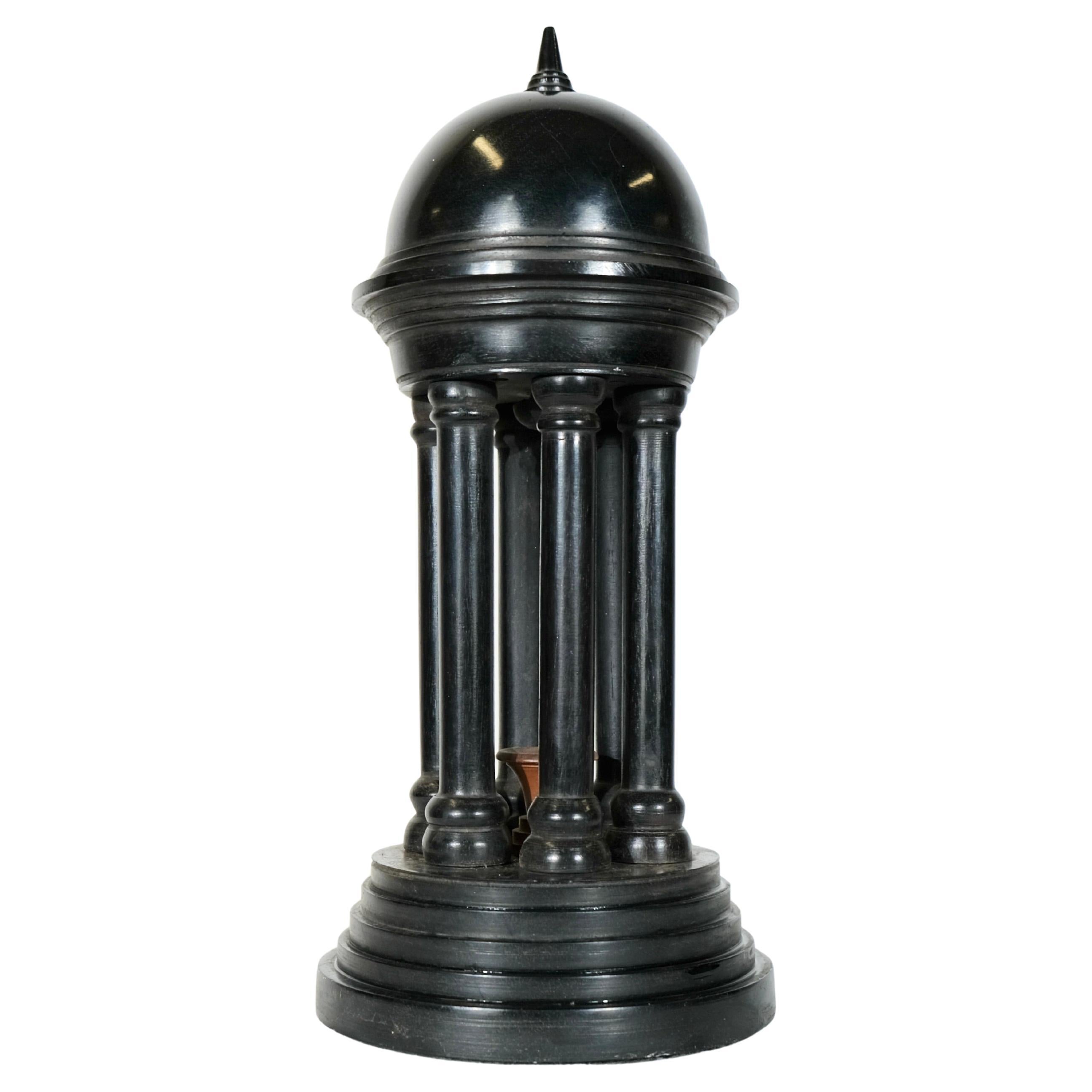
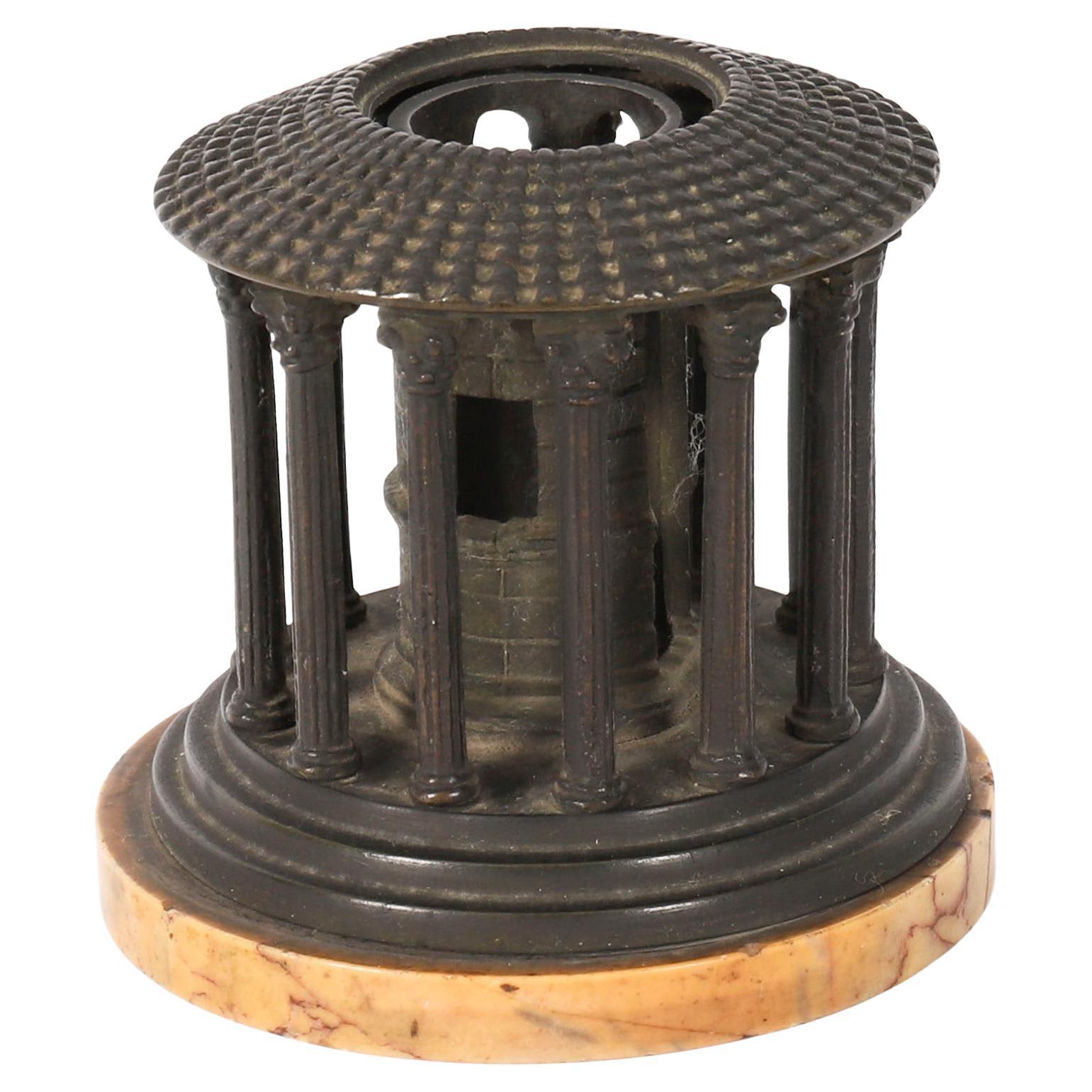
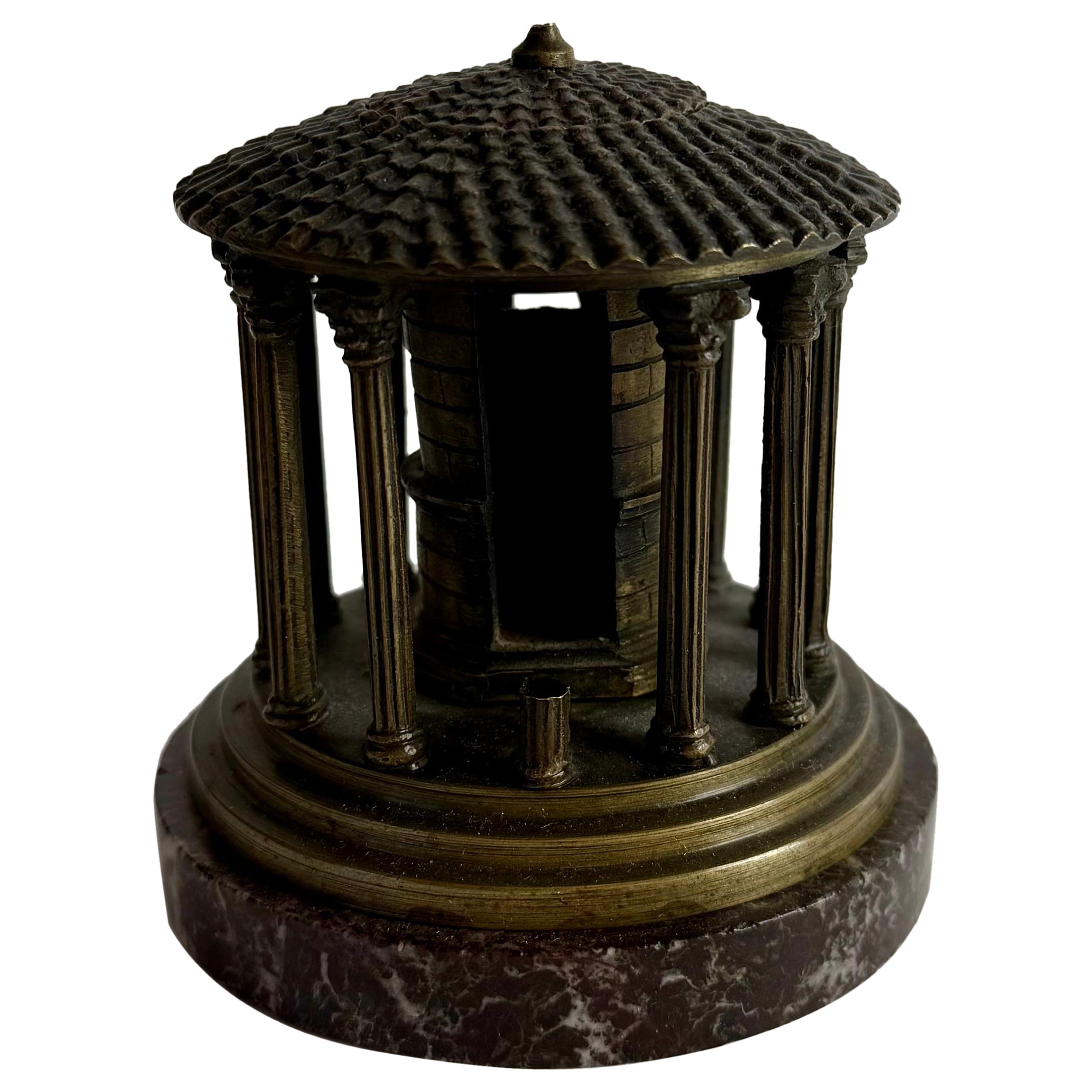
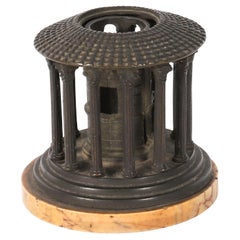
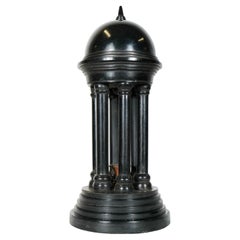
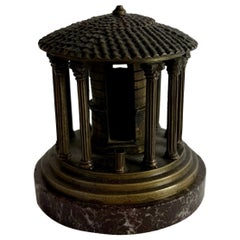
A fine antique North European turned wood architectural temple model, conceived as a small classical pavilion with a circular stepped base, ring-turned columns, arched supports, domed cupola, upper lantern, and turned finial. The form belongs to the 19th-century taste for architectural souvenirs, cabinet objects, and scholarly models, where classical and Renaissance building types were reduced into highly decorative table-top works. Comparable 19th-century North European temple models are cataloged with cupolas, round columns, turned finials, and circular plinths, supporting this classification.
The object is made of turned and carved hardwood, likely fruitwood or a closely related cabinet wood, with a warm honey-brown polished surface that emphasizes the lathe work and architectural rhythm. Its composition evokes a tholos or rotunda-type temple, with the repeated columns and domed crown giving it a distinctly Grand Tour character. While Grand Tour models were often produced in marble, alabaster, bronze, cork, and wood, their purpose was similar: to bring the architecture of antiquity and the European journey into the domestic interior.
The maker is unknown, and no visible signature or workshop mark is apparent. The workmanship suggests a skilled 19th-century turner or cabinetmaker, possibly working in a North European or Continental tradition of architectural display objects, apprentice pieces, and curiosity cabinet models. Its scale, sculptural profile, and layered construction make it suitable for cataloging under antique architectural model, Grand Tour temple model, turned wood pavilion, North European cabinet object, and 19th-century architectural souvenir.
Measurements: 10" h x 6.75" w.