Want more images or videos?
Request additional images or videos from the seller
1 of 5

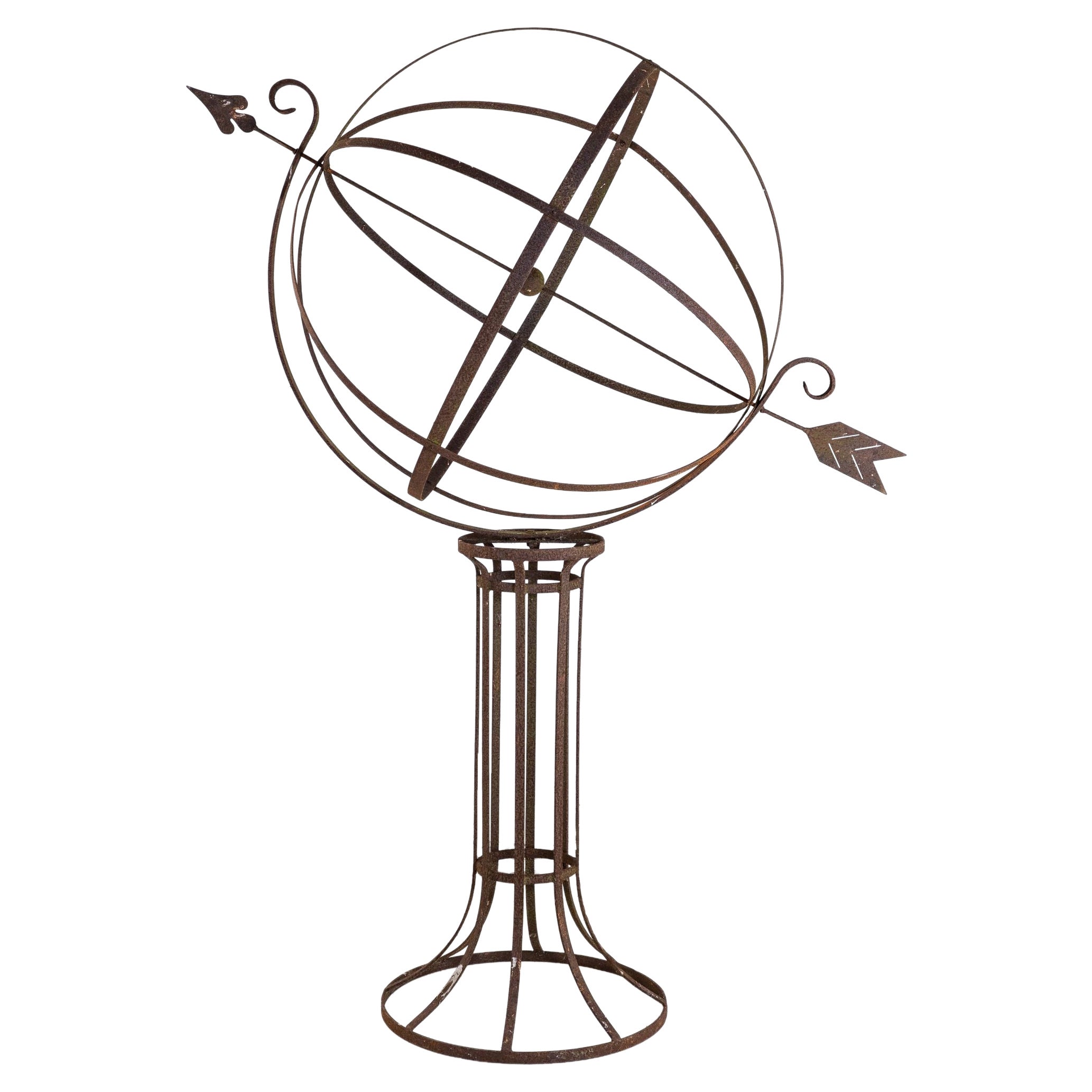
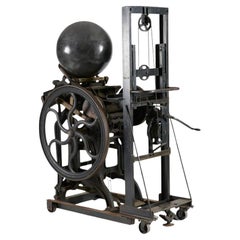
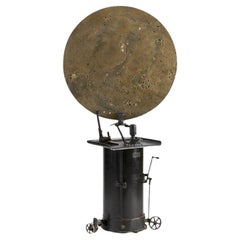
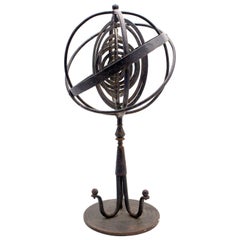
Armillary Sphere 06, Sculpture from the collection of Thierry Despont

$25,000
£18,913.40
€22,103.76
CA$35,780.33
A$36,355.86
CHF 20,596.45
MX$442,361.25
NOK 241,513.05
SEK 242,828.85
DKK 165,348.89

About the Item

Thierry Despont, best-known for his architectural practice—for his integral role in the restoration of the Statue of Liberty, his re-imagining of the Ritz in Paris, and the interiors of the Getty Center (as well as for his notable private clients like Bill Gates and Calvin Klein)—was nevertheless an accomplished painter, sculptor, author, and furniture maker. This sculpture, a paragon of balance and refinement, assimilates Despont's interests in astronomy and engineering toward an elegant result.
  • Creator:
    Thierry Despont (Designer)
  • Dimensions:
    Height: 65 in (165.1 cm)Width: 15 in (38.1 cm)Depth: 15 in (38.1 cm)
  • Materials and Techniques:
  • Place of Origin:
  • Period:
  • Date of Manufacture:
    2007
  • Condition:
  • Seller Location:
    New York, NY
  • Reference Number:
    Seller: DESPT 121stDibs: LU10569246604812

More From This Seller

View All
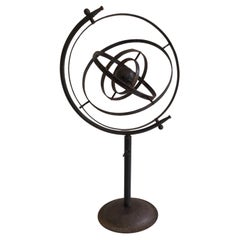
Armillary Sphere, Mechanical Sculpture, Thierry Despont, US, 21st century

Armillary Sphere, Mechanical Sculpture, Thierry Despont, US, 21st century

By Thierry Despont

Located in New York, NY

Thierry Despont was best-known for his very successful architectural practice—but he was also an accomplished artist. Some of his most interesting works are a series of sculptures fa...

Category

21st Century and Contemporary American Animal Sculptures

Materials

Steel

Armillary Sphere 01 Mixed Media Sculpture in Two Pieces, Thierry Despont

Armillary Sphere 01 Mixed Media Sculpture in Two Pieces, Thierry Despont

By Thierry Despont

Located in New York, NY

Thierry Despont was best-known for his very successful architectural practice—but he was also an accomplished artist. Some of his most interesting works are a series of sculptures fa...

Category

21st Century and Contemporary American Animal Sculptures

Materials

Steel

OR 08, Mechanical Sculpture from the collection of Thierry Despont

OR 08, Mechanical Sculpture from the collection of Thierry Despont

By Thierry Despont

Located in New York, NY

Thierry Despont was best-known for his very successful architectural practice—but he was also an accomplished artist. Some of his most interesting works are a series of sculptures fa...

Category

21st Century and Contemporary American Abstract Sculptures

Materials

Iron, Metal

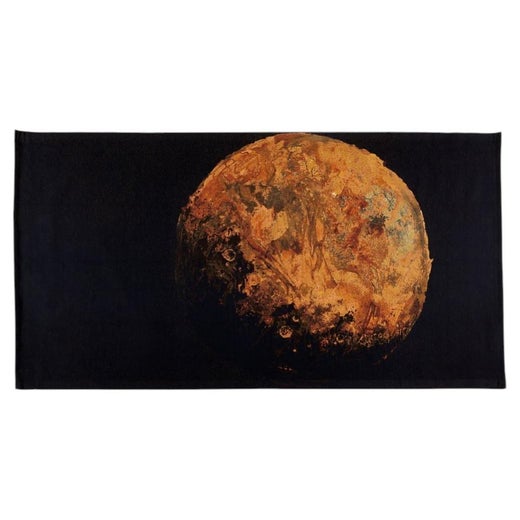
OR 06, Sculpture of Moon Disk from the collection of Thierry Despont

OR 06, Sculpture of Moon Disk from the collection of Thierry Despont

By Thierry Despont

Located in New York, NY

Thierry Despont, best-known as a very successful architect, was also an accomplished artist. In his sculptures practice, when not analyzing the smallest, most detailed creatures of t...

Category

21st Century and Contemporary American Abstract Sculptures

Materials

Metal

Thierry Despont, OR 07 Mechanical Sculpture, United States, 2007

Thierry Despont, OR 07 Mechanical Sculpture, United States, 2007

By Thierry Despont

Located in New York, NY

Thierry Despont was best-known for his very successful architectural practice—but he was also an accomplished artist. Some of his most interesting works are a series of sculptures fa...

Category

21st Century and Contemporary American Mounted Objects

Materials

Metal

Thierry Despont, Found Object Sculpture of a Mask on Stand, US, 2009

Thierry Despont, Found Object Sculpture of a Mask on Stand, US, 2009

By Thierry Despont

Located in New York, NY

Thierry Despont was best-known for his very successful architectural practice—but he was also an accomplished artist. Some of his most interesting works are a series of sculptures fa...

Category

Early 2000s American Mounted Objects

Materials

Metal

You May Also Like

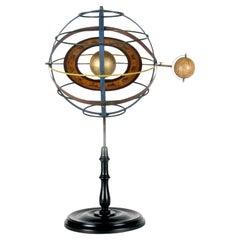
A Copernican armillary sphere, Paravia, Milan, Italy 1930

A Copernican armillary sphere, Paravia, Milan, Italy 1930

Located in Milan, IT

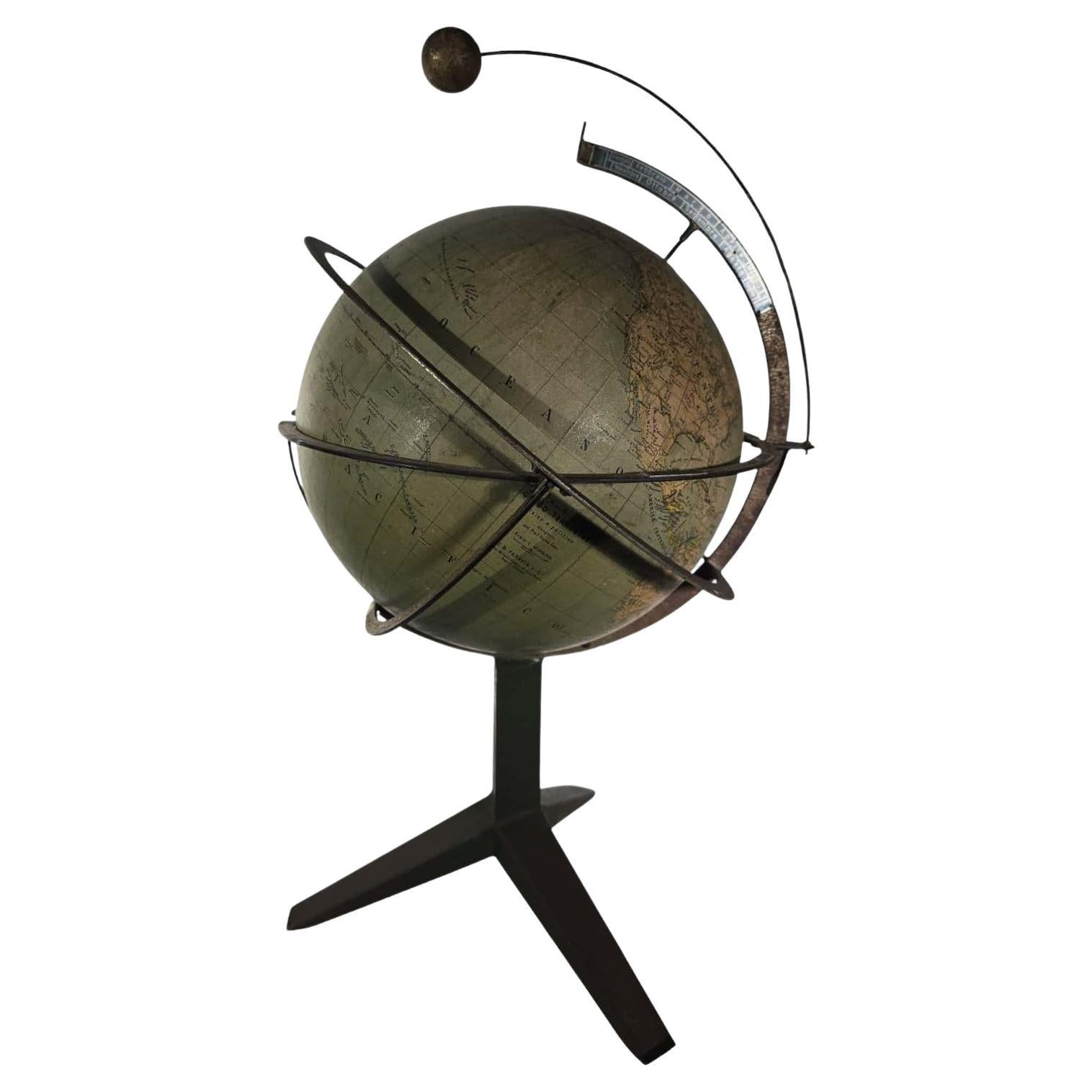
A Copernican armillary sphere made of iron, paper, brass and wood, with the Sun inside, and the Earth on the outside, made of wood and covered with paper. Pedestal made of turned and...

Category

Mid-20th Century Italian Other Scientific Instruments

Materials

Brass, Iron

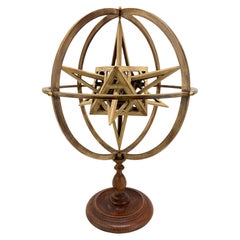
Jean-Marie Malzieu (b. 1948), Rotating Armillary Sphere Sculpture

Jean-Marie Malzieu (b. 1948), Rotating Armillary Sphere Sculpture

Located in Atlanta, GA

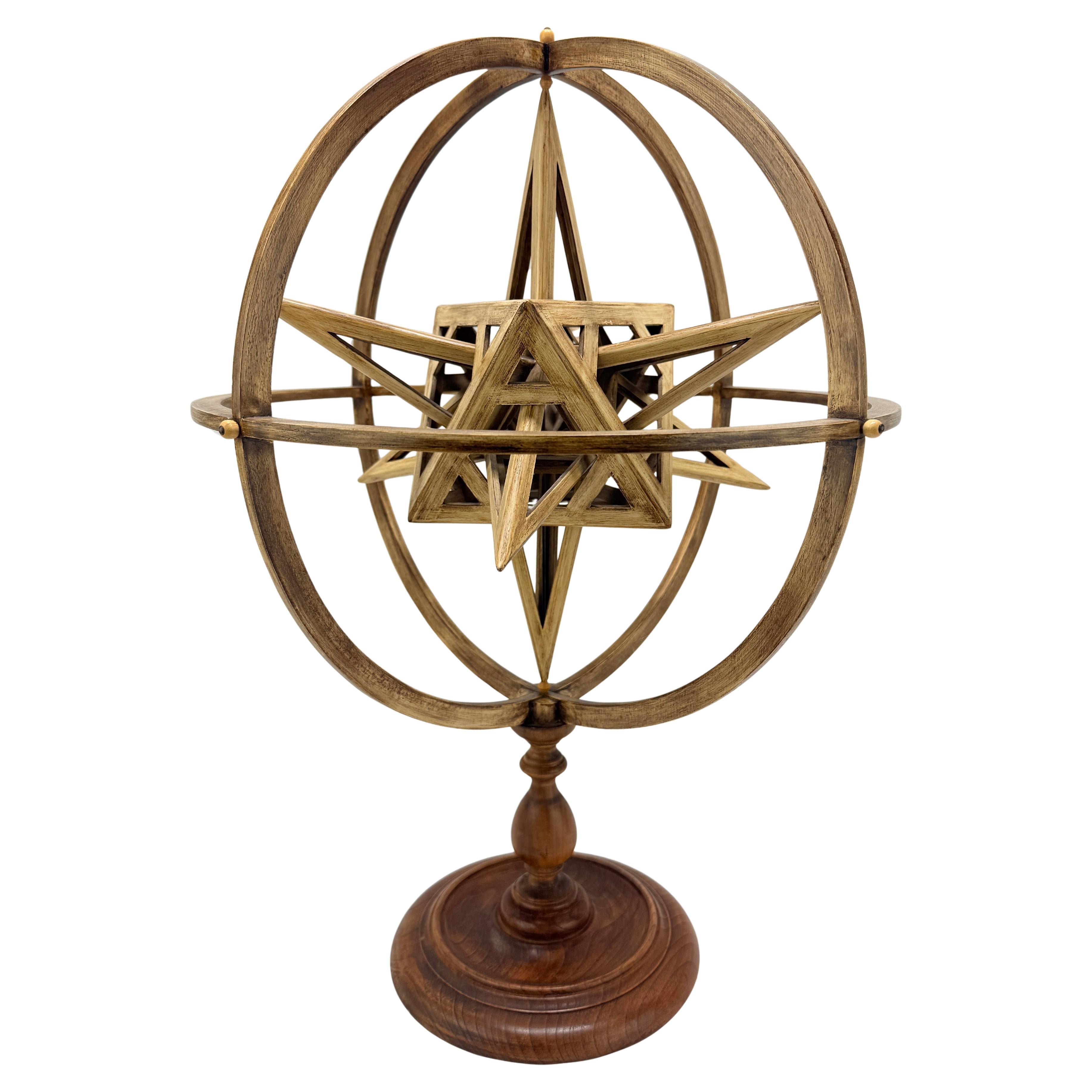
A striking hand-built wooden sculpture by the French artist Jean-Marie Malzieu (b. 1948), conceived as a celestial armillary cradling a nested constellation of star-polyhedra. Rising...

Category

20th Century French Arts and Crafts Mobiles and Kinetic Sculptures

Materials

Wood

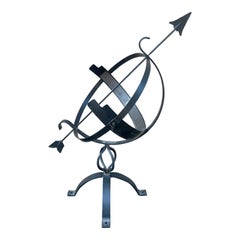
Large Classical Iron Armillary Sphere Garden Sculpture on Stand, English Estate

Large Classical Iron Armillary Sphere Garden Sculpture on Stand, English Estate

Located in Elkhart, IN

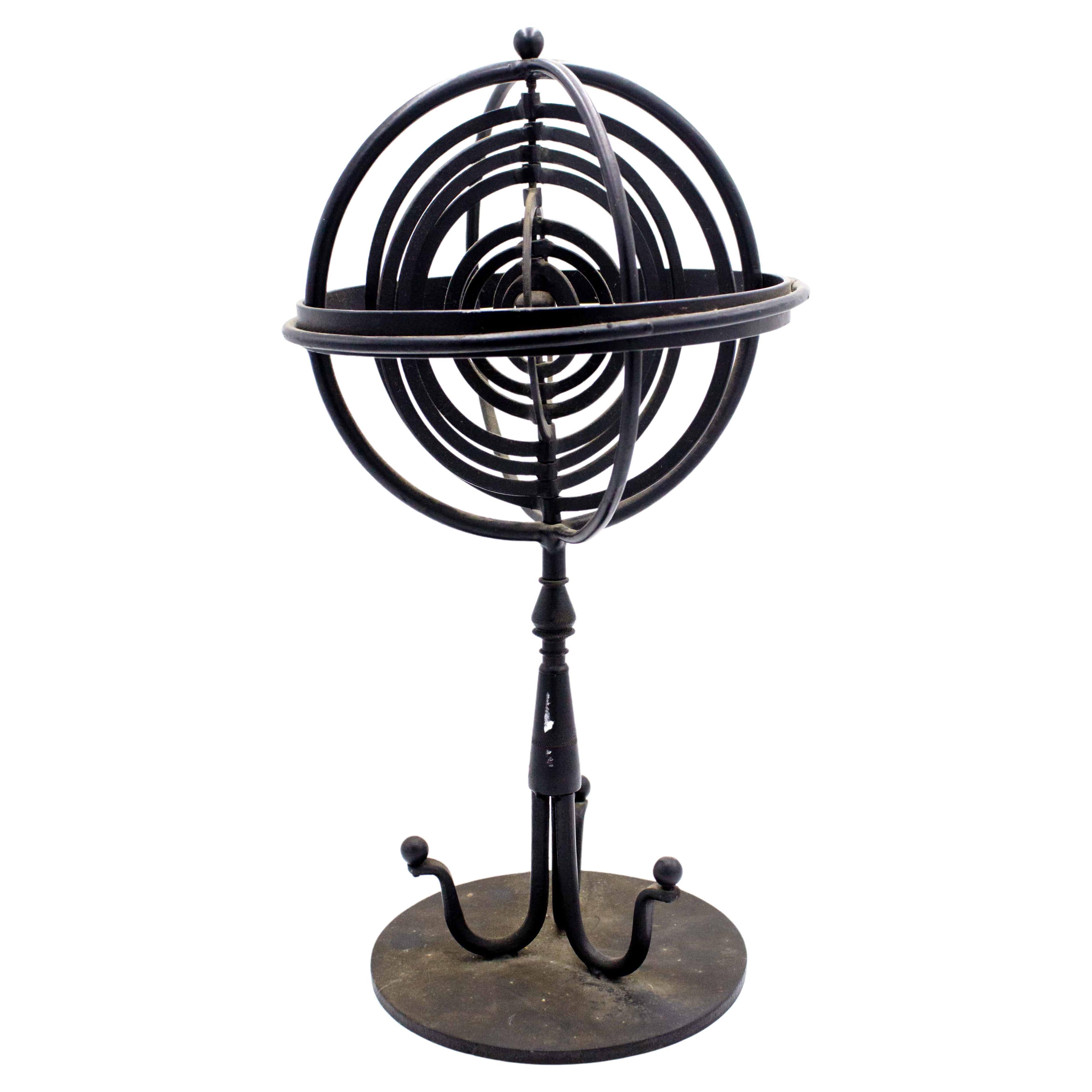
A beautifully crafted iron armillary half-sphere, evoking the timeless elegance of classical European gardens. Pieces like this are often found anchoring gravel courtyards, nestled w...

Category

Late 20th Century American French Provincial Garden Ornaments

Materials

Iron

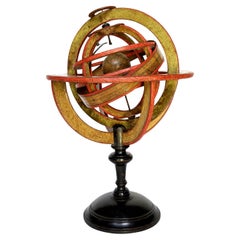
Ptolemaic Armillary Sphere, Charles-François Delamarche, Paris, ante 1798

Ptolemaic Armillary Sphere, Charles-François Delamarche, Paris, ante 1798

By Charles Francois Delamarche

Located in Milano, IT

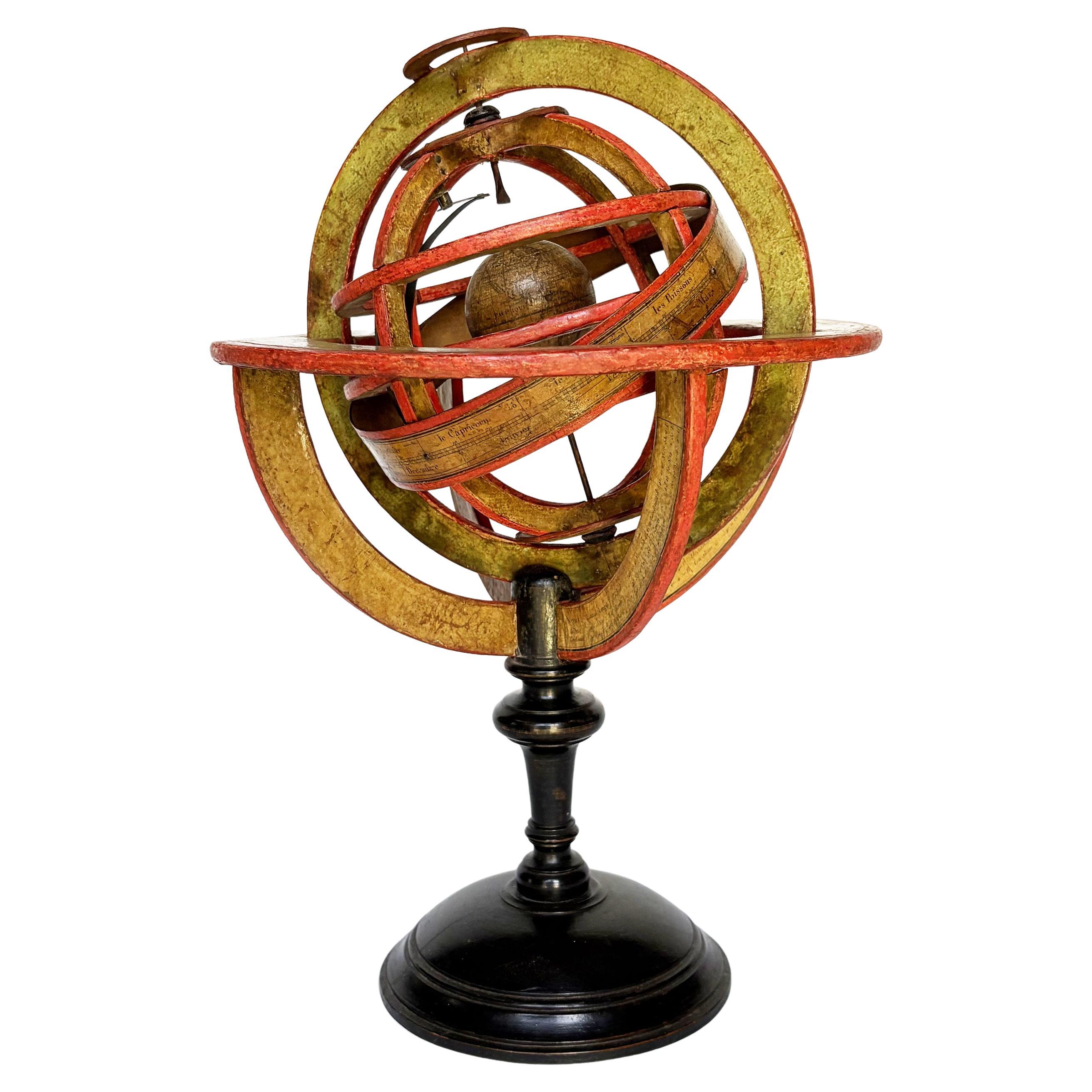
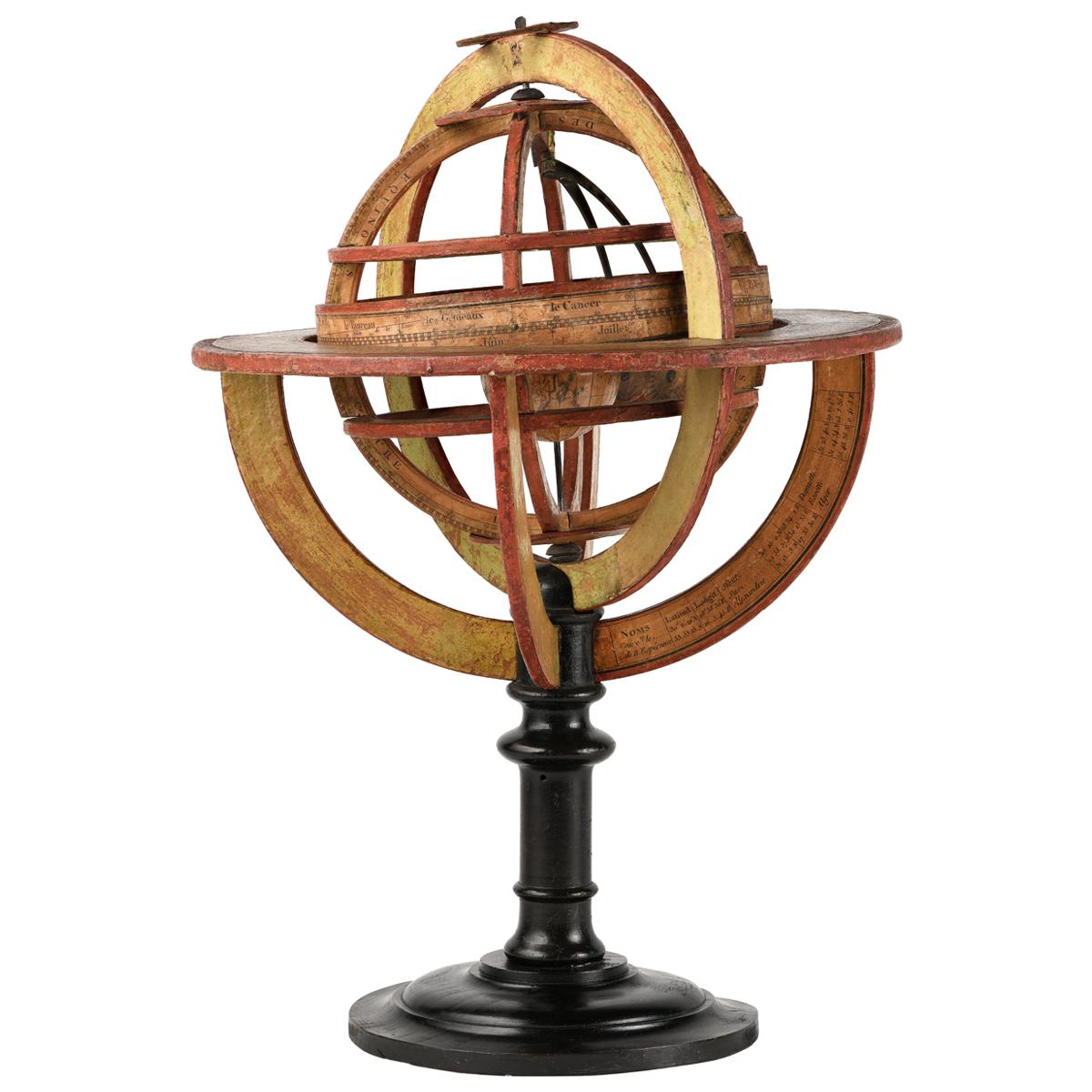
Ptolemaic armillary sphere Charles-François Delamarche Paris, ante 1798 Wood and papier-mâché covered with printed and partly hand-colored paper It measures 16.37 in in height x Ø 10.94 in (41.60 cm - Ø 27.80 cm) It weights 2.33 lb (1,058 g) State of conservation: consistent with its age and use, the paper shows some signs of use, stains and abrasions. The sphere is Ptolemaic, with the Earth placed at its center, surrounded by the Moon and the Sun mounted on two metal arms. The sphere is composed of six horizontal and two vertical rings (armillae), each bearing graduations and its own name. The first horizontal ring is illegible. The others, in descending order are: North Pole, Tropic of Cancer, Equator, Tropic of Capricorn, South Pole. The vertical rings consist of two double meridians. The sphere is then connected to the large meridian by two pins, a vertical ring inserted perpendicularly into the circle of the Horizon, in turn supported by four semicircles connected to the turned and black-stained wooden base. Each element is covered with printed paper. It contains various pieces of information: latitudes, length of days, names and zodiac symbols, calendar, wind directions, etc. The vertical circles mention the latitudes and longitudes of different cities: Rome, Bordeaux, Madrid, Boston, Batavia (Jakarta), Acapulco, etc. Even the small terrestrial globe is covered with printed paper: continents and oceans appear with numerous geographical markings indicating the most recent explorations. In the Pacific Ocean, west of South America bears the following inscription: GLOBE TERRESTRIAL à Paris chez Delamarche Géog Rue du Foin Jacques Au Collège de M.e Gervais The North American coasts are well delineated and California appears correctly as a peninsula - reports from Spanish explorers in the region had given rise to confusion as to whether it was connected to the mainland or not. The geographical nature of California was confirmed after the explorations of Juan Bautista de Anza (1774-1776). Alaska is not described and is only partially traced; it would become part of the United States in 1867. Various Pacific islands are indicated. Australia (the name definitely used from 1824) is called "Nouvelle Hollande." Tasmania is still represented as a peninsula and this is an important detail for the dating of our armillary sphere. The island is separated from Australia by Bass Strait, which was crossed by Matthew Flinders for the first time in 1798, showing that it was not a peninsula. Delamarche certainly would not have waited a long time to update such an important geographical datum: presumably he did so shortly after receiving the news. Charles-François Delamarche (1740-1817) founded his laboratory around 1770 and, in a few years, he became the most famous French cartographer and globe maker between the 18th and 19th centuries. After having acquired the laboratory of the late Didier Robert de Vaugondy (1723-1786; himself a renowned cartographer who continued the family business founded by his grandfather Nicolas Sanson in the seventeenth century) and after having purchased, between 1788 and around 1800, the businesses of Jean-Baptiste Fortin (1750-1831) and Jean Lattré (around 1750-1800), he began to call himself "Successeur de MM. Sanson and Robert de Vaugondi, Géographes du Roi and de M. Fortin, Ingénieur-mécanicien du Roi pour les globes et les sphères." Thus, at the end of the eighteenth century, Delamarche possessed the warehouse stocks, as well as the manufacturing skills of the globes of his main rivals in Paris. In addition to this aggressive acquisition policy, the key to its success also lay in the combination of high-quality cartography combined with extremely attractive globes and armillary spheres; and, of course, its famous red paint finishing touch. His laboratory was located on Rue de Foin St Jacques "au Collège Me. (or "Mtre") Gervais" in the Latin Quarter of Paris until around 1805, when he moved to rue du Jardinet No. 13. On the death of Charles-François in 1817, the reins of the company passed to his son Félix (1779-1835), who continued to publish, often in collaboration with the engraver Charles Dien, Sr. In 1835 the company first moved to rue du Jardinet No. 12 and a little later to rue du Battoir No. 7. Bibliography: Dekker, Elly, et al. Globes at Greenwich...

Category

Antique 1790s French Other Scientific Instruments
Materials

Wood, Paper