Want more images or videos?
Request additional images or videos from the seller
1 of 17

Art Decò Italian Signed Hand-Painted Wunderkammer Artwork

$1,647.41
£1,221.89
€1,400VAT Included
CA$2,311.57
A$2,348.75
CHF 1,330.64
MX$28,578.48
NOK 15,602.81
SEK 15,687.81
DKK 10,682.27

About the Item

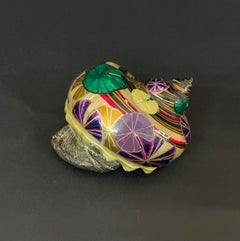
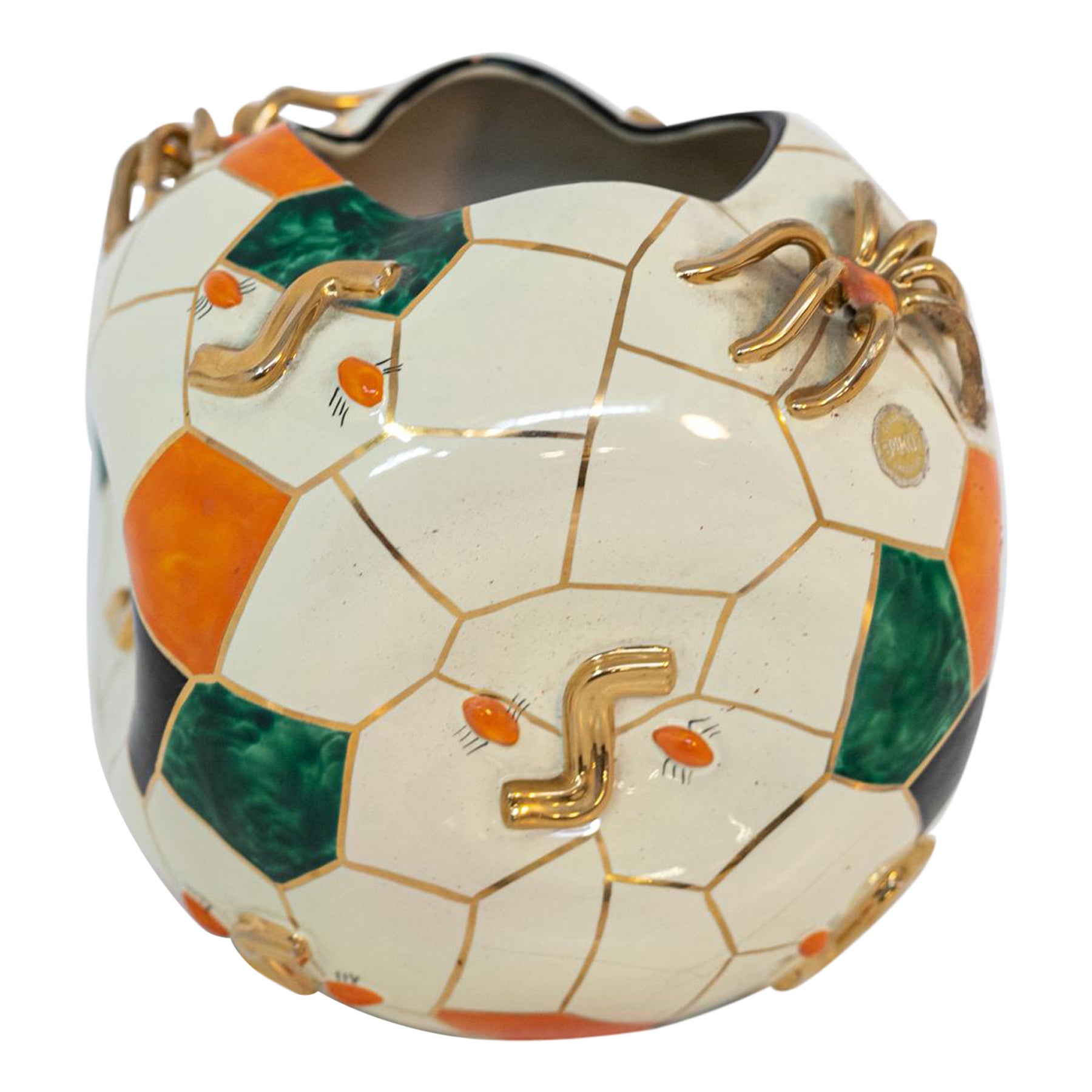
Art Decò Italian Signed Hand-Painted Wunderkammer Artwork Fully enamelled and hand-painted shell Features the F.D. monogram A magnificent objet d’art produced in Italy in the purest Art Deco style. This shell is decorated with incredible skill and imagination. Hand-painted across its entire surface with stunning decorative colored motifs. The FD monogram, together with the extraordinary craftsmanship of this exclusive piece worthy of the most prestigious noble cabinets of curiosities, suggests that these beautiful ‘Divertissements’ may be attributed to the great Italian Futurist artist Fortunato Depero. This object is part of a series of three. This artwork, never before on the market, comes from an important European private collection. Fortunato Depero (30 March 1892 – 29 November 1960) was an Italian futurist painter, writer, sculptor, and graphic designer. Although born in Fondo or in the neighboring village of Malosco, according to other sources (in the Italian Trentino region, at that time the County of Tyrol in the Austrian-Hungarian empire),Depero grew up in Rovereto and it was here he first began exhibiting his works, while serving as an apprentice to a marble worker. It was on a 1913 trip to Florence that he discovered a copy of the paper Lacerba and an article by one of the founders of the futurism movement, Filippo Tommaso Marinetti. Depero was inspired, and in 1914, moved to Rome and met fellow futurist Giacomo Balla. It was with Balla in 1915 that he wrote the manifesto Ricostruzione futurista dell’universo ("Futurist Reconstruction of the Universe") which expanded upon the ideas introduced by the other futurists. It sought the abstract equivalent for all forms and elements of the universe. The goal was to make the universe "more joyful" through an integral recreation. In the same year, he was designing stage sets and costumes for a ballet. In 1919, Depero founded the House of Futurist Art in Rovereto, which specialised in producing toys, tapestries and furniture in the futurist style. In 1925 he represented the futurists at the Exposition Internationale des Arts Décoratifs et Industriels Modernes(International Exposition of Modern Industrial and Decorative Arts), and presented a Futurist Hall at the Monza Biennial. In 1927, together with his friend, advertising agent and publisher Fedele Azari (Dinamo-Azari), Fortunato Depero designed Depero futurista 1913–1927 – the so-called "bolted book" – which was printed in letterpress with his direct supervision and involvement by the Mercurio print works of Rovereto. Depero futurista 1913–1927 was a commercial book to be sold, to promote and document the work of Depero, and to legitimise him as an artist. It was a showcase portfolio relating to a specific period (1913–1927), but also an atypical and pioneering artwork in the form of a book, an ideological declaration. It is a work that celebrates Depero, the artist, graphic designer and artisan, a blend described as ‘total fusion’ by Giacomo Balla and Depero in their manifesto of 1915 Ricostruzione futurista dell’universo. 1928 saw Depero move to New York City. From this year to 1930, his works were not successful. The city was still reeling from the effects of the Wall Street crash, so his paintings did not sell while the Futurist House, his first commercial enterprise there, closed after barely two months of operations. He experienced a degree of success later on, doing costumes for stage productions and designing covers for magazines including MovieMaker, The New Yorkerand Vogue, among others. He also dabbled in interior design during his stay, working on two restaurants which were later demolished to make way for the Rockefeller Center. He also did work for the New York Daily News and Macy's, and built a house on 23rd Street. In 1930, he returned to Italy. In the 1930s and 40s, Depero continued working, although due to futurism being linked with fascism, the movement started to wane. The artistic development of the movement in this period can mostly be attributed to him and Balla. One of the projects he was involved in during this time was Dinamo magazine, which he founded and edited. After the end of the Second World War, Depero had trouble with authorities in Europe and in 1947 decided to try New York again. This time, he found the reception not quite as welcoming. One of his achievements on his second stay in the United States was the publication of So I Think, So I Paint, a translation of his autobiography initially released in 1940: Fortunato Depero nelle opere e nella vita (literally, Fortunato Depero, his works and his life). From the winter of 1947 to late October 1949, Depero lived in a cottage in New Milford, Connecticut, relaxing and continuing with his long-standing plans to open a museum. His host was William Hillman, an associate of the then-President, Harry S. Truman. After New Milford, Depero returned to Rovereto, where he would live out his days. In August 1959, Galleria Museo Depero opened, fulfilling one of his long-term ambitions. On 29 November 1960, after being ill with diabetes and spending the last two years unable to paint due to hemiparesis, Depero died aged 68 in Rovereto. Many of his works are featured in the permanent collection of the Museum of Modern and Contemporary Art of Trento and Rovereto (MART). The Casa d'Arte Futurista Depero, Italy's only museum dedicated to the Futurist movement, containing 3,000 objects, is now one of MART's venues. Closed for many years for extensive refurbishment, the Casa d'Arte Futurista Depero reopened in 2009. A number of important artists, thinkers, and architects worked on the Casa with Depero―especially those who were from the region―including Fausto Melotti, Gino Pollini, and Carlo Belli. Depero's designs and artworks completed for advertising were mainly monochromatic or utilized a spot colour to emphasise text. His full-color designs followed Futurist color schemes featuring red, brown, ocher and the occasional accents of bright blue or aqua. From 22 February to 28 June 2014, the Center for Italian Modern Art exhibited Depero's work which engaged in dialogues with Dada and Metaphysical Painting, Espirit Nouveau, and Art Deco. From 10 October 2014 - 18 January 2015, the Museu Fundación Juan March Madrid, exhibited Futurist Depero (1913-1950).  The exhibition of nearly 300 pieces showed “renewed vision of Italian Futurism, which has gone down in history for the radical nature of its proposals: abolishing the art of the past and glorifying dynamism, the machine, speed and war”.
  • Attributed to:
    Fortunato Depero (Artist)
  • Dimensions:
    Height: 3.15 in (8 cm)Width: 4.73 in (12 cm)Depth: 5.91 in (15 cm)
  • Style:
    Art Deco (Of the Period)
  • Materials and Techniques:
  • Place of Origin:
  • Period:
  • Date of Manufacture:
    1935 ca.
  • Condition:
    Wear consistent with age and use. Minor fading.
  • Seller Location:
    Roma, IT
  • Reference Number:
    1stDibs: LU4827249327832

More From This Seller

View All
Art Decò Italian Signed Hand-Painted Wunderkammer Item

Art Decò Italian Signed Hand-Painted Wunderkammer Item

By Fortunato Depero

Located in Roma, IT

Art Decò Italian Signed Hand-Painted Wunderkammer Item Fully enamelled and hand-painted shell Features the F.D. monogram A magnificent objet d’art produced in Italy in the purest Ar...

Category

Vintage 1930s Italian Art Deco Mounted Objects

Materials

Shell

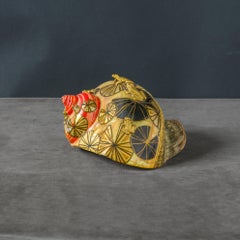
Art Decò Italian Signed Hand-Painted Cabinets of Curiosities Object

Art Decò Italian Signed Hand-Painted Cabinets of Curiosities Object

By Fortunato Depero

Located in Roma, IT

Fully enamelled and hand-painted shell Features the F.D. monogram A magnificent objet d’art produced in Italy in the purest Art Deco style. This shell is decorated with incredible s...

Category

Vintage 1930s Italian Art Deco Mounted Objects

Materials

Bronze

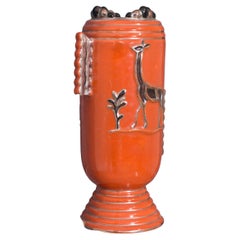
1930s Art Decò Italian Signed Ceramic Vase

1930s Art Decò Italian Signed Ceramic Vase

By Della Robbia

Located in Roma, IT

1930s Art Decò Italian Signed Ceramic Vase A beautiful vase in the purest Art Deco style, dating from the mid-1930s, featuring an exceptionally elegant decoration on the front depic...

Category

Vintage 1930s Italian Art Deco Ceramics

Materials

Ceramic

Mid-Century Modern Hand-Painted Ceramic Vase, Germany, 1950s

Mid-Century Modern Hand-Painted Ceramic Vase, Germany, 1950s

Located in Roma, IT

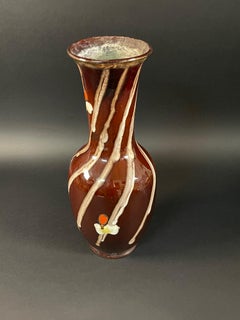
1950s Ceramic Signed Hand-Painted Vase Beautiful and elegant glazed ceramic vase in shades of brown with beautiful sinuous white streaks. The body features beautiful hand-painted f...

Category

Mid-20th Century German Mid-Century Modern Ceramics

Materials

Ceramic

Signed Rometti Art Deco Ceramic Vase, Italian, 20cm, 1930s

Signed Rometti Art Deco Ceramic Vase, Italian, 20cm, 1930s

By Rometti Ceramics 1

Located in Roma, IT

Wonderful and elegant italian Art Decò artwork by “Salamandra” ceramic Maison in Perugia Signed at the base This artwork, never before on the market, comes from an important Italian private collection Every item of our Gallery, upon request, is accompanied by a certificate of authenticity issued by Sabrina Egidi official Expert in Italian furniture for the Chamber of Commerce of Rome and for the Rome Civil Courts. The artistic ceramics factory “La Salamandra” was founded in Rome, in 1921, by Davide Fabbri...

Category

Early 20th Century Italian Art Deco Vases

Materials

Ceramic

Mid-Century Modern Ceramic Vase by Schramberg, Hand-Painted, Germany

Mid-Century Modern Ceramic Vase by Schramberg, Hand-Painted, Germany

By Schramberg Majolica

Located in Roma, IT

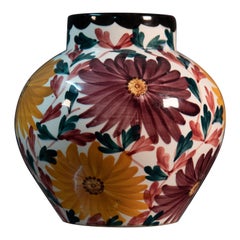
Beautiful polychrome ceramic vase of circular form Entirely hand-painted with floral motifs. Signed on the base Excellent condition This artwork, never before on the market, comes ...

Category

Mid-20th Century German Mid-Century Modern Pottery

Materials

Ceramic

You May Also Like

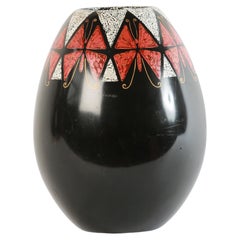
Art Deco Dinanderie Vase by Jean Dunand, Lacquered Brass, France 1939

Art Deco Dinanderie Vase by Jean Dunand, Lacquered Brass, France 1939

By Jean Dunand

Located in Köln, NW

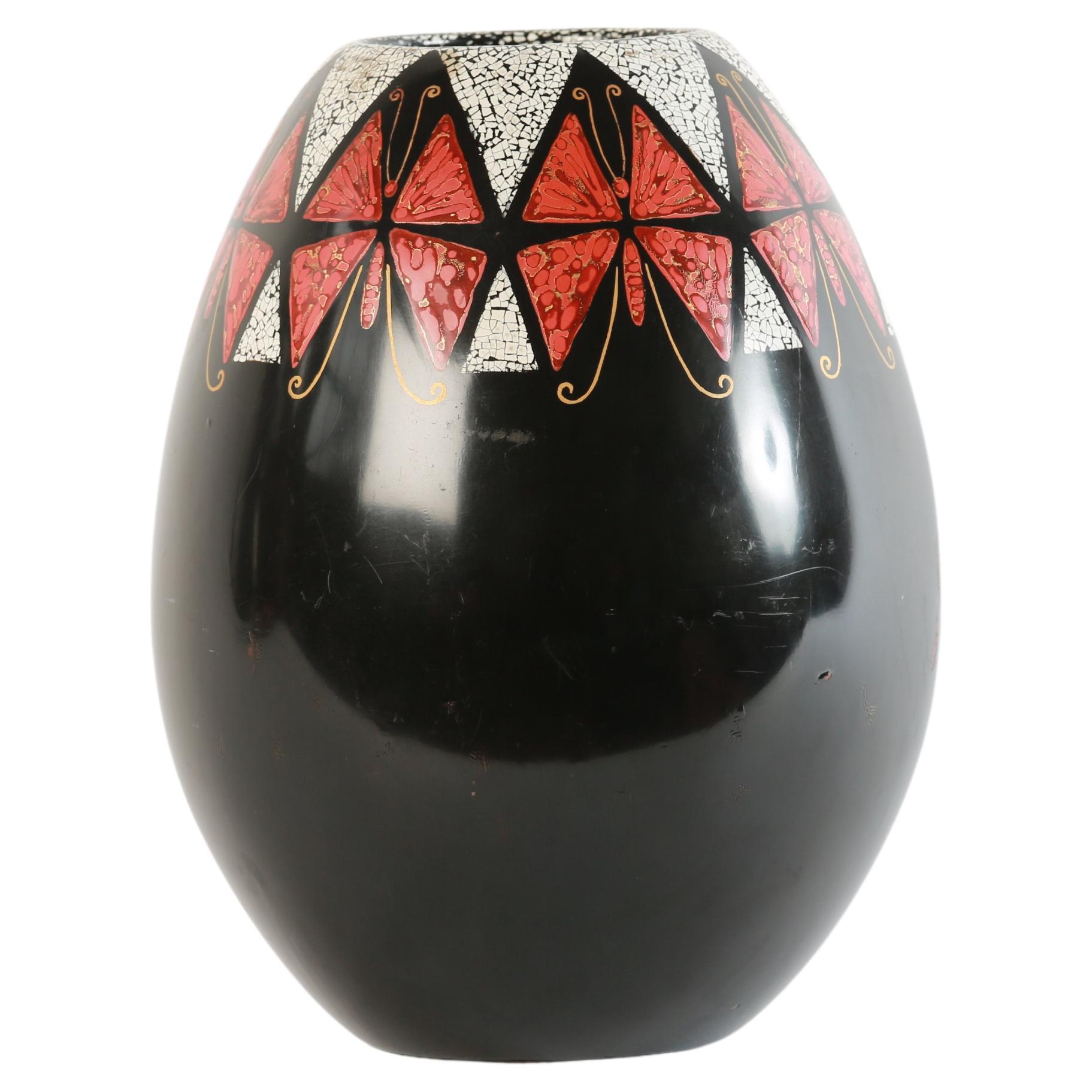
Decorative lacquered Art Déco Dinanderie vase. France 1939. Motif butterflies. Oval shape Fine inlay work Brass black lacquer. Marked R.Neykova 1939 on the underside. Unknown artist....

Category

Vintage 1930s French Art Deco Vases

Materials

Metal

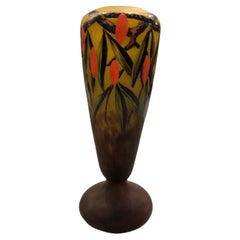
Vase Sign: Schneider, with enamel, 1920, Style: Art Deco, (Design: Arbousiers)

Vase Sign: Schneider, with enamel, 1920, Style: Art Deco, (Design: Arbousiers)

By Charles Schneider

Located in Ciudad Autónoma Buenos Aires, C

Logistics and International Shipping We provide a comprehensive export service so that your only concern is enjoying your acquisition. • Door-to-Door Service: Pieces located in our A...

Category

Vintage 1920s French Art Deco Glass

Materials

Art Glass

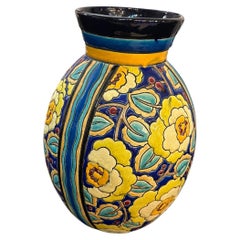
Ceramic Sign: Made in Belgium, Boch F. La louviere Fabrication Belge D.2813

Ceramic Sign: Made in Belgium, Boch F. La louviere Fabrication Belge D.2813

By Boch La Louviere

Located in Ciudad Autónoma Buenos Aires, C

Ceramic: Sign: Made in Belgium, Boch F. La louviere Fabrication Belge The Boch manufacture was established in Belgian La Louvière by Jean-François Boch, one of main owners of another...

Category

Vintage 1920s Belgian Art Deco Centerpieces

Materials

Ceramic

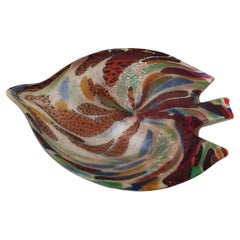
Murano, 1930, Italian, Attributed to Fratelli Toso Technical Avventurina

Murano, 1930, Italian, Attributed to Fratelli Toso Technical Avventurina

By Fratelli Toso

Located in Ciudad Autónoma Buenos Aires, C

Logistics and International Shipping We provide a comprehensive export service so that your only concern is enjoying your acquisition. • Door-to-Door Service: Pieces located in our Argentina galleries are shipped directly to your address via air freight. • Simplified Customs Management: We handle the processing of export permits and the payment of customs duties. You will receive your purchase without additional paperwork or surprise costs. • High-Security Packaging: Following FedEx international standards, each piece is protected in custom-made wooden crates, designed to withstand 1-meter impacts and ensure the integrity of the object during transit. • Note for shipments to the USA: To comply with shipping company regulations and ensure delivery at the destination, a valid tax ID (EIN, SSN, or ITIN) is required. • Domestic US Shipping: For those pieces available in our United States storage, logistics are managed through 1stdibs. Murano Technical Avventurina : We have specialized in the sale of Art Deco and Art Nouveau and Vintage styles since 1982. If you have any questions we are at your disposal. Pushing the button that reads 'View All From Seller'. And you can see more objects to the style for sale.  Fratelli Toso, Venice One of the oldest glass factories established in Murano, Fratelli Toso was founded in 1854 by six brothers who loved the art of glassmaking. With over 150 years of experience in the field, the Toso family improved their techniques and nowadays are one of the top award-winning manufacturers of Murano glass. Technical Avventurina : Avventurina is a Murano glass-making technique developed on Murano island in the 17th century. I was first mentioned in a document dating from 1614 as "a kind of stone with gilt stars inside", at which point it already mesmerized people with the unusual and attractive look. The technique owes its name to the fact that its discovery happened by chance thanks to a lucky coincidence, when a glass artisan is said to have accidentally dropped some metal shavings into the glass mixture. Italians say it happened "all'avventura", which in Italian means "by chance". The first documented recipe for the technique dates from 1644, when Murano master glassmaker Giovanni Darduin described how Avventurina glass should be created. The recipe involves adding various metal oxides such as copper and iron to the hot glass mixture, which will cause tiny particles of the metals to crystallize as the glass mixture cools off. Complicating the process, for such crystallization to occur the furnace had to get fully extinguished, and the metal particles would slowly separate from the glass base over a few days during the natural cooling of the glass. This was a very difficult process from a logistical perspective, since every time a glass furnace got extinguished it caused work to be paused, and re-igniting it was quite a big process, as it took time to fully heat it to the desired temperature. As industrial revolution set foot on Murano in the nineteenth century, the process got a remake. Large volumes of fine Avventurina paste were made and then skillfully stretched into glass canes, which were then re-melted for jewelry-making under a small flame, or for glass blowing. This Avventurina paste received worldwide acclaim and re-ignited the fame of Murano Glass workshops due to its use in Salviati mosaics...

Category

Vintage 1930s Italian Art Deco Centerpieces

Materials

Murano Glass

Italian Hand-Painted Ceramic Vase, Mid-Century Modern, 1960s, Italy

Italian Hand-Painted Ceramic Vase, Mid-Century Modern, 1960s, Italy

Located in Byron Bay, NSW

Italian 1960s Hand Painted ceramic vase. Signed ceramic by AT serial number 3969. Hand spited stripes and yellowed and blue decorations.  

Category

Vintage 1960s Italian Mid-Century Modern Ceramics

Materials

Ceramic