Want more images or videos?
Request additional images or videos from the seller
1 of 7

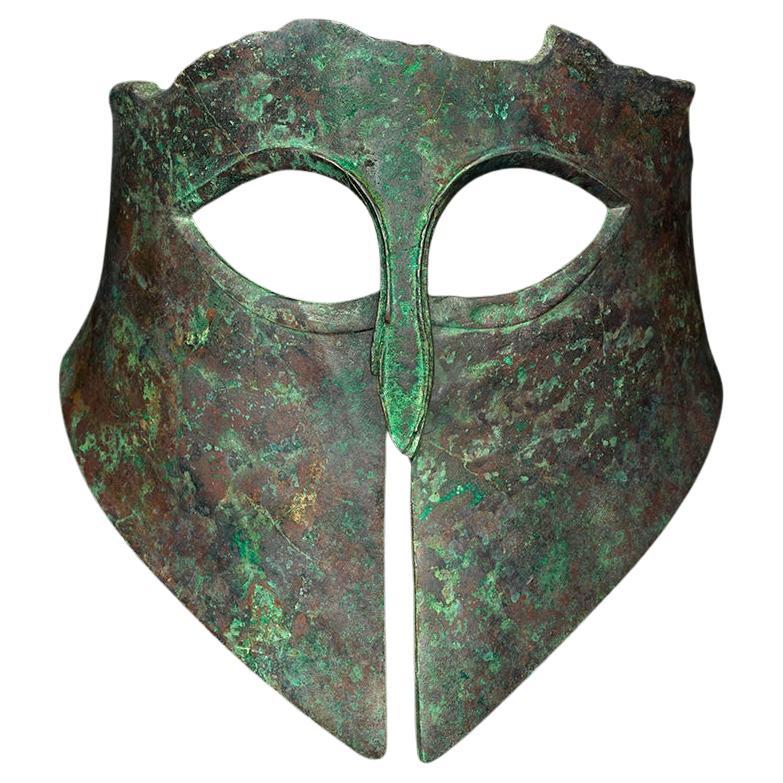
Roman Bronze Parade Helmet Fragment, circa A.D. 1st century

$11,008.65
£8,000VAT Included
€9,522.18
CA$15,357.62
A$15,579.76
CHF 8,895.21
MX$188,646.50
NOK 104,718.39
SEK 104,370.85
DKK 71,203.98

About the Item

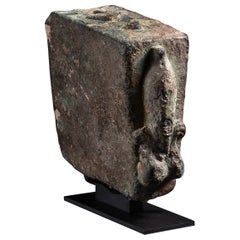
Provenance: German art market, 2002; With Jean-David Cahn AG, Basel, 2008; Private collection Switzerland; With Cahn International AG, Basel, 2018; Private collection, London - purchased from the above at TEFAF Maastricht 2018; Exhibited: Cahn, Tefaf Maastricht, 2018 "From the helmets hang plumes of yellow hair, not for any practical purpose but to make a fine show; and when the horses charge, if there happens to be even a slight breeze, they present a splendid spectacle when borne aloft by the breeze, small though it may be." - Arrian, Ars Tactica, 34.4 Finely cast in Bronze, with a dark green patina, and surface encrustation that betrays its age of nearly 2000 years old. This exquisite fragment of a Roman parade helmet would have covered the crown of the wearers head and have been joined at the front to a visor - likely in the form of a face mask with narrow cut-outs for eyes. This finely modelled, cast and chased section of his has been made from a single sheet of bronze that is only 1 mm thick. Roman parade helmets were often worn by mounted cavalry soldiers and featured idealised representations of hair. They are among the most visually compelling and conceptually rich artefacts to survive from the ancient world. Their rarity, artistic refinement, and symbolic complexity make them of profound importance to scholars of Roman imperial culture, identity, and military practice. Finely crafted with ornate details, they were not made for combat, but rather for ceremonial display—especially during hippika gymnasia, or the roman cavalry sports games. The design of these helmets merged martial prestige with theatrical spectacle, as described in the 2nd century A.D. by the Roman historian Arrian in ‘Ars Tactica’: "From the helmets hang plumes of yellow hair, not for any practical purpose but to make a fine show; and when the horses charge, if there happens to be even a slight breeze, they present a splendid spectacle when borne aloft by the breeze, small though it may be." - Arrian, Ars Tactica, 34.4 (‘Ars Tactica’ was a military treatise that focussed on military tactics, specifically Roman cavalry and infantry formations, drawing on both Macedonian and contemporary Roman practices. The work is considered a valuable source for understanding Roman military organization and training, particularly the training exercises for Roman cavalry.) Distinguished from utilitarian armour by their full-face masks and high-level of decoration, these helmets typically include exquisitely modelled hair that was cast in bronze and then meticulously chased. In many cases, the representation of hair serves not only to naturalise the mask but also to idealise it, evoking deities and mythic heroes. The effect is one of transformation: the wearer becomes an icon of Romanised virtue, imperial grandeur, or divine affiliation. The most famous example in the UK is perhaps the Ribchester Helmet, discovered in 1796 in Lancashire and now in the British Museum. Fashioned in bronze and originally tinned, it features a finely wrought face framed by luxuriant repoussé hair, once paired with an elaborate crest. Its discovery marked the beginning of scholarly fascination with Roman parade armour in Britain and beyond. Another is the Newstead Parade Helmet, that is made from iron and held by the National Museums of Scotland. In Europe, there exists a suite of comparable helmets attests to the wide geographical reach and symbolic consistency of the tradition. Among the most significant are the Nijmegen Helmets, held in Museum Het Valkhof in the Netherlands. Found near a major Roman cavalry base, these examples include male and female-faced masks with diadems and stylised hair, evoking themes of martial performance and divine impersonation. These helmets are exceptionally rare: only a few dozen are known, and complete examples with well-preserved hair detail are fewer still. Their distribution, from Britain to the Balkans, illustrates not only the diffusion of Roman military spectacle but also the localisation of Roman imperial aesthetics across diverse cultural zones. To scholars, these artefacts offer vital insights into the performative aspects of Roman military life, the aesthetics of elite identity, and the role of material culture in projecting power. The artistic treatment of hair—at once intimate and ideological—renders these helmets potent emblems of Rome’s visual and political imagination.
  • Dimensions:
    Height: 6.93 in (17.6 cm)Diameter: 6.93 in (17.6 cm)
  • Style:
    Classical Roman (Of the Period)
  • Materials and Techniques:
    Bronze,Cast
  • Place of Origin:
  • Period:
  • Date of Manufacture:
    circa A.D. 100
  • Condition:
    Wear consistent with age and use.
  • Seller Location:
    York, GB
  • Reference Number:
    1stDibs: LU10896249386512

More From This Seller

View All
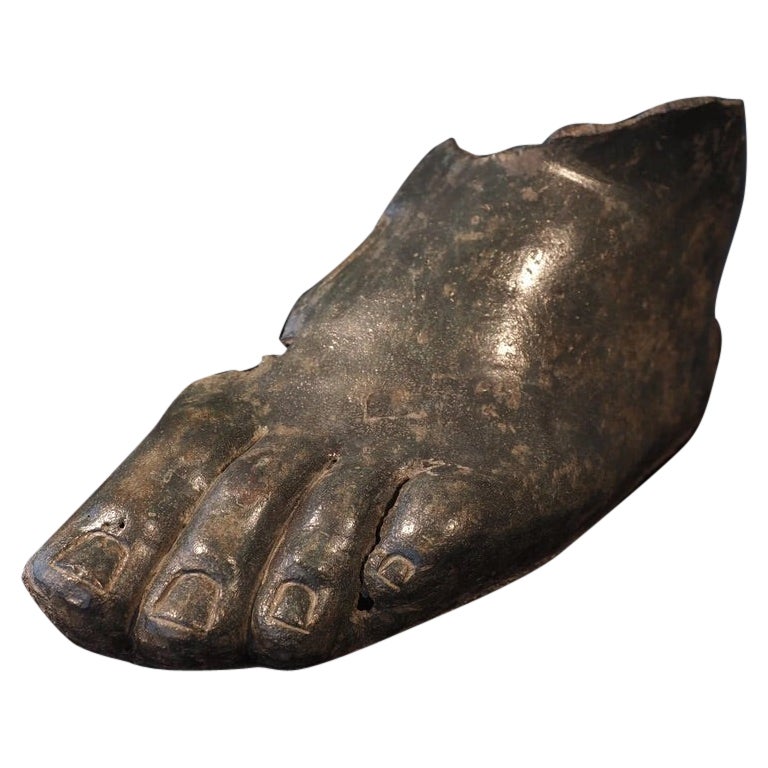
Ancient Roman Bronze Foot Fragment A.D. 1st-2nd Century

Ancient Roman Bronze Foot Fragment A.D. 1st-2nd Century

Located in York, GB

A finely cast bronze foot fragment from an ancient Roman statue with a wonderful green patina consummate with age. Provenance from the Mintici collection, Belgium 1970's-1990's.

Category

Antique 15th Century and Earlier Italian Classical Roman Figurative Scul...

Materials

Bronze

16th - 17th century Papal Tiara (triregnum) fragment, Italian (Papal States)

16th - 17th century Papal Tiara (triregnum) fragment, Italian (Papal States)

Located in York, GB

Papal Tiara (triregnum) fragment Italian (Papal States), circa 16th - 17th century White marble 20 cm wide 26 cm high 20 cm deep This fragmentary 16th / 17th century papal tiara w...

Category

Antique 16th Century Italian Figurative Sculptures

Materials

Marble

Cast bronze Chimaera paw foot, Ancient Greece, late 5th - early 4th century B.C.

Cast bronze Chimaera paw foot, Ancient Greece, late 5th - early 4th century B.C.

Located in York, GB

Provenance: Private collection, Germany, 1970s-1980s. Collection of Prince Saud bin Muhammed Al Thani (1966 – 2014); Thence by descent.

Category

Antique 15th Century and Earlier Italian Classical Greek Animal Sculptures

Materials

Bronze

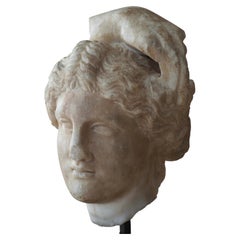
Ancient Roman Head of Apollo, circa 100 BC - 100 AD

Ancient Roman Head of Apollo, circa 100 BC - 100 AD

Located in York, GB

Head of Apollo Lyceus Ancient Roman, Circa 1st Century B.C.-1st Century A.D. 15 cm 11 cm 12 cm 23 cm high (inc base) Provenance: Nicholas Embiricos (1920 - 2011), acquired prior...

Category

Antique 15th Century and Earlier Italian Busts

Materials

Marble

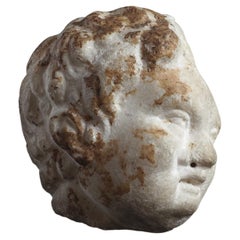
Ancient roman Head of Eros, in white marble, circa A.D. 2nd - 3rd century

Ancient roman Head of Eros, in white marble, circa A.D. 2nd - 3rd century

Located in York, GB

Provenance: Private collection, Belgium; Galerie Chenel, Paris; Private collection, London This beautiful little fragment was likely made for a larger relief sculpture, and is co...

Category

Antique 15th Century and Earlier Italian Classical Roman Figurative Scul...

Materials

Marble

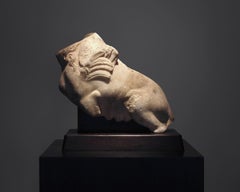
Ancient Roman Marble Sphinx Fragment, Hand-Carved, Circa A.D. 100-200

Ancient Roman Marble Sphinx Fragment, Hand-Carved, Circa A.D. 100-200

Located in York, GB

Provenance: Private collection, Canada and Israel (before 1955); by descent. Carved in white marble, this fragment preserves the body a Sphinx and dates to around the A.D. 2nd cent...

Category

Antique 15th Century and Earlier Italian Classical Roman Animal Sculptures

Materials

Marble

You May Also Like

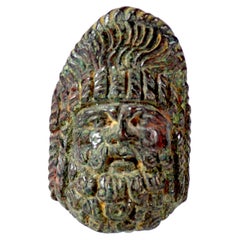
A Roman bronze applique in the shape of a theatre mask

A Roman bronze applique in the shape of a theatre mask

Located in UTRECHT, UT

Mask of a bearded deity, short beard and hair braided in the characteristic high hairstyle, with layered ringlets on either side. 4 cm (h) Green patina ...

Category

Antique 15th Century and Earlier Italian Classical Roman Antiquities

Materials

Bronze

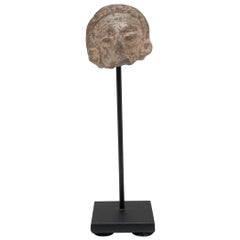
Pre-Columbian Ceramic Head Fragment

Pre-Columbian Ceramic Head Fragment

Located in Chicago, IL

This intriguing head fragment was once attached to a pre-Columbian bust or full effigy figurine. Earthenware figurines like this were made in great abundance throughout Mesoamerican history, serving a wide variety of purposes and functions from religious rituals to burial offerings. Figurines like this commemorated important people and events across Mesoamerica, portraying individuals of different rank and status such as soldiers, merchants, bureaucrats, and occasionally divinities. This figure is adorned with an elaborate headdress, or coiffure, and ear spools...

Category

Antique 15th Century and Earlier Central American Pre-Columbian Figurati...

Materials

Ceramic

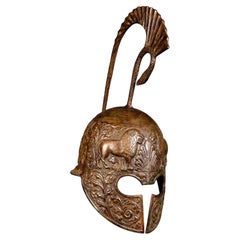
Vintage Greek Roman Decorative Full Size Bronze Handmade Display Helmet Model

Vintage Greek Roman Decorative Full Size Bronze Handmade Display Helmet Model

By Frederic Weinberg, Francesco Simoncini

Located in San Diego, CA

Exquisite hand crafted Greek bronze full size display helmet mode. This was made in the 1950's and probably from Italy. Wonderfull details and patina. Great design and form. No signa...

Category

Mid-20th Century Italian Abstract Sculptures

Materials

Bronze

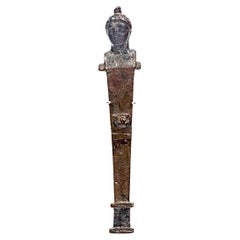
Ancient Roman Bronze Herm on Stand, 1st-4th Century AD

Ancient Roman Bronze Herm on Stand, 1st-4th Century AD

Located in Bradenton, FL

Ancient Roman Bronze Herm Statue dating from the 1st to 4th Century A.D. A herm was a statue consisting of a a head atop a square pillar, originally an artifact to honor the god Herm...

Category

Antique 15th Century and Earlier Italian Classical Roman Figurative Scul...

Materials

Bronze

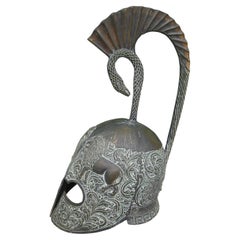
Vintage Greco-Roman Helmet in Bronze began 20th Century

Vintage Greco-Roman Helmet in Bronze began 20th Century

Located in Madrid, ES

Vintage Greco-Roman Helmet in bronze, following ancient designs. 43 x 18 x 28 cm Good condition

Category

Early 20th Century Italian Modern Historical Memorabilia

Materials

Bronze

Ancient Roman Bronze Ship Fitting with a Winged Phallus in high relief

Ancient Roman Bronze Ship Fitting with a Winged Phallus in high relief

Located in London, GB

A well-preserved and well-provenanced Roman bronze ship fitting – or protome – depicting an apotropaic winged phallus, with extensive marine encrustations attesting to millennia unde...

Category

Antique 15th Century and Earlier Italian Classical Roman Antiquities

Materials

Bronze